India- Pakistan Relation

By Adhyayan Academy Faculy

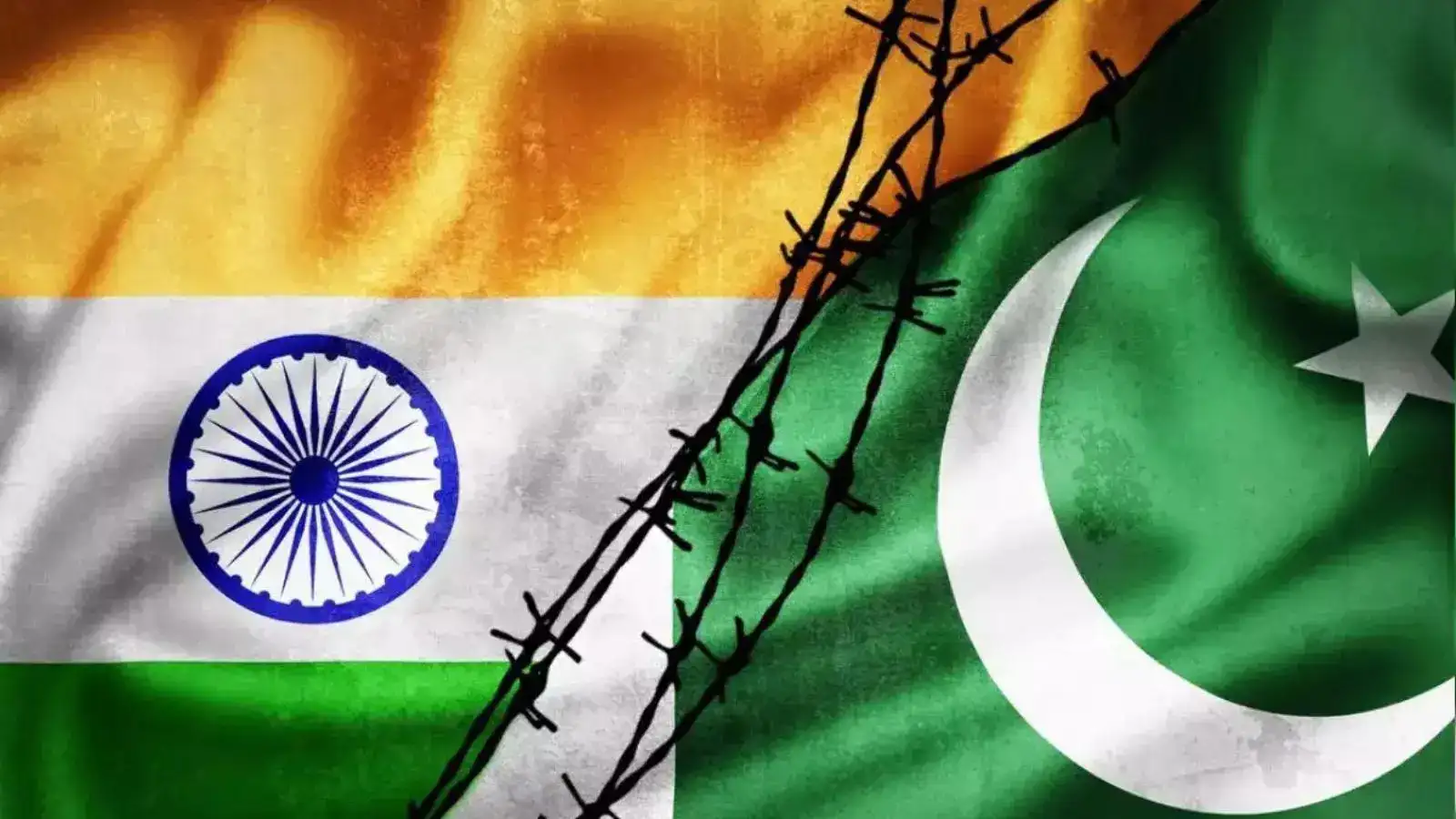
Two years after World War II, the United Kingdom formally dissolved British India, dividing it into two new nations: the Union of India and Pakistan. Initially by Indian Independence Act 1947, both got independence in August 1947, but remained under the dominion of Britain. In 1950 (26th January 1950), India emerged as a Sovereign secular republic with a Hindu-majority population and a large Muslim minority. Shortly afterwards, in 1956 (23 March 1956, Pakistan emerged as Sovereign Islamic republic with a Muslim-majority population and a relatively less Hindu minority.

This partition resulted in the displacement of up to 15 million people, with the death toll estimated to have reached between several hundred thousand and one million people as Hindus and Muslims migrated in opposite directions across the Radcliffe Line to reach India and Pakistan, respectively.

The India-Pakistan conflict of 1947:

The India-Pakistan conflict of 1947, often called the First Indo-Pak War or First Kashmir War, erupted shortly after the partition of British India into two independent nations, India and Pakistan, in August 1947. The conflict centred on the princely state of Jammu and Kashmir, leading to the first major military confrontation between the two newly formed countries.

Background of Kashmir Conflict:

When British rule ended in 1947, the princely states — like Jammu and Kashmir — were given three options (As per the Mountbatten Plan or 3rd June Plan):

Join India,

Join Pakistan, or

Remain independent.

Maharaja Hari Singh, the ruler of Jammu and Kashmir, did not want to join either India or Pakistan immediately. He preferred to stay independent.

To maintain peace and manage daily affairs (like trade, communication, and travel) while staying independent, he signed a Standstill Agreement with Pakistan. This agreement meant that things would continue as they were between Jammu and Kashmir and Pakistan.

Even though Maharaja Hari Singh wanted to stay independent, trouble soon started.

In October 1947, tribal militias (Pashtun and Hazara) from Pakistan’s North-West Frontier Province, supported by elements of the Pakistani military, invaded Kashmir with the aim of annexing it to Pakistan. They moved quickly, capturing areas and causing panic. The Maharaja’s forces were not strong enough to stop them.

Fearing that he would lose control over his kingdom, Maharaja Hari Singh asked India for help.

But India made it clear: before sending troops, Jammu and Kashmir would need to officially become a part of India. This was important because India could only send its army to defend its own territory — not an independent state.

So, on 26 October 1947, Maharaja Hari Singh signed the Instrument of Accession, officially agreeing to join India. Right after this on 27th October 1947, Indian troops were airlifted to Kashmir, marking the official start of the Indo-Pakistani War of 1947–1948. They fought back the invaders and pushed them away from important areas like Srinagar.

Escalation and Ceasefire:

By May 1948, regular Pakistani Army units joined the conflict, intensifying the fighting.

The frontlines gradually solidified into what later became known as the Line of Control (LoC).

The United Nations intervened, and UN Security Council Resolution 47 called for a ceasefire and a plebiscite to determine Kashmir’s future, though the plebiscite was never held.

Karachi Agreement (Cease-Fire Line in Jammu & Kashmir)

Signed on: 27 July 1949

Parties: Military representatives of India and Pakistan, under the supervision of the United Nations Commission for India and Pakistan (UNCIP)

Purpose: To formally establish and demarcate a cease-fire line (CFL) in the state of Jammu and Kashmir following the end of hostilities from the 1947–48 war.

Key Provisions:

The agreement defined an 830 km cease-fire line, which separated the territories controlled by India and Pakistan in Jammu and Kashmir.

The line was mapped and verified by both sides, with provisions for UN observers to monitor compliance.

Both sides agreed to maintain their respective positions behind the line and not to strengthen their defenses or move troops closer to the line, except as mutually agreed.

The agreement was strictly military and technical, not addressing political issues or the final status of Kashmir.

Significance: The cease-fire line established by this agreement became the basis for what is now known as the Line of Control (LoC), monitored by the United Nations Military Observer Group in India and Pakistan (UNMOGIP)

A formal ceasefire came into effect on 1 January 1949, leaving India in control of about two-thirds of the territory (including the Kashmir Valley, Jammu, and Ladakh), while Pakistan held roughly one-third (Azad Kashmir and Gilgit-Baltistan)

Liaquat Nehru Pact (1950) for the protection of minorities and rehabilitation of refugees.

  • Both governments agreed to ensure complete protection and security for minorities within their territories.
  • It was decided that minorities would have the right to migrate freely, return to their home countries, reclaim their property, and live without fear.
  • Measures were outlined for the rehabilitation of refugees, ensuring that they could return to their homes if they wished, or be settled properly if they chose to stay in their new countries.
  • Both countries committed to protecting the religious, cultural, and social rights of minorities, ensuring non-discrimination in access to jobs, educational opportunities, and other civil rights.
  • It was agreed to establish minority commissions in both countries to hear and address complaints from minorities and to ensure the implementation of the pact’s provisions.

In the early years as an independent state while India chooses to remain non-aligned, Pakistan US led military alliances like the SEATO (1954) and Baghdad Pact or CENTO (1955).

Indus Water Treaty (IWT):

The Indus Waters Treaty of 1960 is a landmark water-sharing agreement between India and Pakistan.

Mediated by:  World Bank

Signed on September 19, 1960, in Karachi by Indian Prime Minister Jawaharlal Nehru and Pakistani President Ayub Khan.

Key Provisions

River Allocation:

Western Rivers: Pakistan was allocated the Indus, Jhelum, and Chenab, which constitute about 80% of the Indus system’s water volume.

Eastern Rivers: India was given control over the Ravi, Sutlej, and Beas, with unrestricted use for irrigation, hydropower, and other purposes.

Limited Use by India: India was allowed limited use of the western rivers for domestic purposes, non-consumptive uses (e.g., hydropower), and restricted irrigation (e.g., 700,000 acres in Jammu and Kashmir).

Permanent Indus Commission: A bilateral body was established to monitor implementation, share data, and resolve disputes. It mandates regular meetings and inspections.

Dispute Resolution: The treaty outlines a tiered mechanism: issues are first addressed by the Indus Commission, then a neutral expert, and, if unresolved, an international Court of Arbitration.

Disputes: Pakistan has raised concerns over India’s hydropower projects on western rivers (e.g., Baglihar, Kishanganga dams), alleging violations of design or flow restrictions. These have been addressed via neutral experts or arbitration (e.g., Baglihar in 2007, Kishanganga in 2013)

Suspension of the Indus Waters Treaty

On 23 April 2025, following a targeted terrorist attack in Baisaran Valley of Pahalgam, Jammu and Kashmir, the Government of India in a meeting of the Cabinet Committee on Security declared the suspension of the Indus Waters Treaty with Pakistan citing national security concerns.

India-Pakistan war in 1965:

After the first war in 1947–48, tensions between India and Pakistan over Kashmir did not go away. Both countries still claimed the whole region.

In 1965, Pakistan launched a new plan called “Operation Gibraltar”. The idea was to secretly send Pakistani soldiers disguised as locals into Indian-administered Kashmir to create unrest and encourage people to rebel against Indian rule.

But the plan didn’t work. Local people didn’t support the infiltrators, and Indian forces quickly responded. This led to a full military conflict between the two countries.

Operation Grand Slam: On 1 September 1965, Pakistan launched a major offensive targeting Akhnoor in Jammu, aiming to cut off Indian supply lines. The attack initially made gains, but India countered by opening new fronts in Punjab and calling in its air force, forcing Pakistan to divert its troops and ultimately halting the offensive.

Ceasefire and Aftermath:

The United Nations intervened, and on 22 September 1965, both countries agreed to a ceasefire following UN Security Council Resolution 211.

By the end of the war, India had occupied 740 square miles of Pakistani territory, while Pakistan had made marginal gains of 210 square miles of Indian territory.

Both nations claimed victory, but the war ended in a military and political stalemate, with neither side achieving its primary objectives.

Tashkent Declaration:

To formalize peace, the Tashkent Declaration was signed on 10 January 1966 in Tashkent (now in Uzbekistan), mediated by Soviet Premier Alexei Kosygin.

Key provisions included:

  • Withdrawal of armed forces to pre-war positions as of 5 August 1965.
  • Restoration of diplomatic and economic relations.
  • Commitment to non-interference and peaceful resolution of disputes.
  • Prime Minister Lal Bahadur Shastri of India and President Ayub Khan of Pakistan signed the agreement, with Shastri passing away the next day in Tashkent.

India-Pakistan War of 1971: The Liberation of Bangladesh:

The 1971 India-Pakistan War, also known as the Third Indo-Pakistani War, was a pivotal conflict that resulted in the independence of Bangladesh. Unlike previous wars centered on Kashmir, this conflict stemmed from political and humanitarian crises in East Pakistan (now Bangladesh).

Causes and Background

Political Marginalization: East Pakistan, despite its larger population, faced systemic neglect and discrimination from West Pakistan’s ruling elite. The Awami League, led by Sheikh Mujibur Rahman, won a majority in the 1970 elections but was denied power by West Pakistan’s military junta under General Yahya Khan.

Operation Searchlight: On 26 March 1971, Pakistan launched a brutal military crackdown in East Pakistan to suppress Bengali demands for autonomy. The operation included mass killings, rape, and arson, leading to genocide and a refugee exodus of 10 million Bengalis to India.

Humanitarian Crisis: India faced immense economic strain and social disruption due to the refugee influx, prompting Prime Minister Indira Gandhi to intervene.

Key Events

Mukti Bahini Formation: Bengali military defectors, students, and civilians formed the Mukti Bahini (Liberation Army), which waged guerrilla warfare against Pakistani forces. India provided training, arms, and logistical support.

Indian Intervention: By late 1971, India openly supported Bangladesh’s independence. The Indian Army’s Eastern Command began preparing for operations as early as April 1971.

War Declaration: On 3 December 1971, Pakistan launched preemptive air strikes on Indian airbases (Operation Chengiz Khan), triggering full-scale war. India retaliated with coordinated air, land, and naval attacks.

Military Operations

Eastern Front: Indian forces, alongside Mukti Bahini, executed a three-pronged advance into East Pakistan from West Bengal, Assam, and Tripura. Key battles included the capture of Dhaka, aided by superior strategy and local support.

Western Front: Pakistan attacked India’s western borders but failed to gain significant ground. India captured 15,010 sq km of Pakistani territory but later returned it post-war.

Naval Blockade: The Indian Navy enforced a blockade, crippling Pakistani supply lines and sinking vessels, including the submarine PNS Ghazi

Surrender and Aftermath

Instrument of Surrender: On 16 December 1971, Pakistan’s Lt. Gen. A.A.K. Niazi surrendered to India’s Lt. Gen. Jagjit Singh Aurora in Dhaka. 93,000 Pakistani troops were taken prisoner-the largest surrender since World War II.

Birth of Bangladesh: The war established Bangladesh as an independent nation, with Sheikh Mujibur Rahman as its first leader.

Simla Agreement (1972):

  • Signed between Prime Minister Indira Gandhi and Zulfikar Ali Bhutto from Pakistan
  • The Shimla Agreement designated the ceasefire line of December 17, 1971, as being the new “Line-of-Control (LoC)” between the two countries, which neither side is to seek to alter unilaterally, and which “shall be respected by both sides without prejudice to the recognised position of either side”.
  • It also contains a, mutual commitment to the peaceful resolution of all issues through direct bilateral approaches

Operation Meghdoot in 1984 brought the Siachen Glacier under India’s control.

In 1998 under Operation Shakti, India conducted a series of five nuclear tests on May 11 and 13. These tests marked India’s declaration as a nuclear weapons state, demonstrating its capability to develop nuclear arms. Pakistan responds by detonating six nuclear devices of its own in the Chaghai Hills. The tests result in international sanctions being placed on both countries. In the same year, both countries carry out tests of long-range missiles.

In 1999 – Indian Prime Minister Atal Bihari Vajpayee undertook a bus journey to Lahore and met with Nawaz Sharif, his Pakistani counterpart. Both countries reaffirmed their commitment to the Simla Agreement, and agree to undertake a number of ‘Confidence Building Measures’ (CBMs). The two signed the Lahore Declaration:

Signed on February 21, 1999, during Indian Prime Minister Atal Bihari Vajpayee’s visit to Lahore, Pakistan in the backdrop of the two countries’ nuclear tests in 1998, which had heightened regional tensions.

It included commitment to:

  • peace, security, and mutual respect for sovereignty.
  • Agreement on measures to reduce the risk of accidental or unauthorized use of nuclear weapons,
  • Confidence-Building Measures (CBMs): Steps to enhance mutual trust and confidence in various fields, including economic cooperation and people-to-people contacts.

Kargil War: Breach of the Declaration

Operation Badr: By May 1999, Pakistani forces (including regular troops) infiltrated Indian-administered Kargil, occupying strategic posts vacated during winter.

Operation Vijay: In response India Launched operation Vijaya recapturing territories through ground assaults and air strikes.

Outcome: Pakistan withdrew by July 26 after international pressure, with India retaining control of previously held positions

Post Kargil War:

In October 1999, General Pervez Musharraf, the Pakistani chief of army staff, led a military coup, deposing Nawaz Sharif, the then prime minister, and installing himself as the head of the government.

Hijacking of Indian Airlines Flight-IC 814 in Indian airspace by members of Harkat-ul-Mujahideen, a Pakistan-based extremist group, highlighted Pakistan’s role in the supporting terrorism against India.

In 2001 – While tensions along the Line of Control remained high, 38 people were killed in an attack on the Kashmiri assembly in Srinagar. In July, Indian Prime Minister Atal Bihari Vajpayee and Pakistani President Pervez Musharraf meet for a two-day summit at Agra. That summit collapsed after two days, with both sides unable to reach agreement on the issue of Kashmir. On December 13, an armed attack on the Indian parliament in New Delhi left 14 people dead. India blamed Pakistan backed Lashkar-e-Taiba and Jaish-e-Muhammad for the attacks. The attacks lead to a mobilization of India’s (referred to as Operation Parakram) and Pakistan’s militaries along the LoC. This situation was also referred to as the Twin Peaks Crisis in the western writings. The crisis ended in October 2002, after behind the scenes international efforts (involving mainly the US).

Mumbai Attacks 2008:

On 26 November 2008, armed Pakistani gunmen open fire on civilians at several sites in Mumbai, India. The attacks prompt an almost three-day siege of the Taj Hotel, where gunmen remain holed up until all but one of them were killed in an Indian security forces operation. More than 160 people are killed in the attacks. Ajmal Kasab, the only attacker captured alive, said that the attackers were members of Lashkar-e-Taiba. In the wake of the attacks, India breaks off talks with Pakistan.

Pathankot, Uri, Pulwama and Surgical Strike:

In January 2016 Six gunmen attack an Indian air force base in Pathankot, killing seven soldiers in a battle that lasted nearly four days.

On September 2016 Suspected terrorists attack an Indian army base in Kashmir’s Uri and kill 18 soldiers. Four attackers are also killed. 11 days later, Indian Army announced that it has carried out “surgical strikes” to destroy terror launch pads across the Line of Control in Pakistan.

On14 February 2019, a terror attack was carried out in Pulwama in Jammu and Kashmir by a suicide bomber from Jai sh-e- Mohammad(JeM) resulting in the death of 40 CRPF personnel.

As a response:

  • India revoked Pakistan’s most favoured nation status
  • The customs duty on all Pakistani goods imported to India were raised to 200%
  • The government of India urged the Financial Action Task Force on Money Laundering (FATF) to put Pakistan on the blacklist.
  • On 26 February, twelve Mirage 2000 jets of the Indian Air Force crossed the Line of Control and dropped bombs into Balakot, Pakistan.

Post Pulwama Indo Pak Relation:

Kashmir: Political and Social Developments

Revocation of Article 370: In August 2019, India revoked Jammu and Kashmir’s special constitutional status, further straining relations. The move was condemned by Pakistan, which viewed it as a grave injustice and a violation of international agreements.

Lockdown and Crackdown: The region experienced prolonged lockdowns, communication blackouts, and mass detentions. India also redrew the electoral map and cracked down on independent media.

Military and Security Dynamics

Ceasefire Violations: Frequent exchanges of fire across the Line of Control (LOC) became the norm, with daily incidents reported in the years following Pulwama.

Indian Policy Shift: India adopted a more assertive posture, signalling willingness to conduct cross-border strikes and increase unpredictability in its responses to terrorism.

Pakistan’s Response: Pakistan maintained its policy of supporting the Kashmiri right to self-determination, rejected Indian accusations of state-sponsored terrorism, and threatened strong retaliation against any Indian military action.

Current Status (as of 2025)

Continued Tensions: Relations remain at their lowest point since 2019, with no signs of normalization. Recent attacks, such as the 2025 Pahalgam incident, have further escalated tensions, with both sides taking additional diplomatic and military measures.

 The 2025 Pahalgam attack was a terrorist attack on tourists by five armed terrorists near Pahalgam in Indian-administered Jammu and Kashmir in which 26 civilians were killed on 22 April 2025. The militants mainly targeted Hindu tourists, though a Christian tourist and a local Muslim were also killed. This incident is considered the deadliest attack on civilians in India since the 2008 Mumbai attacks.

The Resistance Front (TRF), an affiliate of Lashkar-e-Taiba, claimed responsibility for the incident. In its statement, TRF opposed the issuance of 85,000 domicile certificates to non-locals, viewing it as a step toward demographic alteration in the region. However, security agencies are yet to verify the authenticity of this claim.

The attack drew condemnations and statements of condolences from several countries including Iran, Israel, Italy, Saudi Arabia, the United Arab Emirates, the United Kingdom, the United States, and India’s neighbours including Afghanistan, Bangladesh, Bhutan, China, Pakistan, and Sri Lanka. The United Nations, the UN Security Council, and the European Union also issued similar statements

The Pahalgam Terror Attack had serious implications of India-Pakistan relations including: 

Security Setback:

The incident undermines the prevailing narrative of peace and stability post-Article 370 and exposes critical gaps in current counterterrorism frameworks.

Economic Blow to Tourism:

Pahalgam, a key tourist destination, may experience a significant drop in footfall during the peak summer season. This will adversely impact the local economy, particularly businesses and services dependent on tourism.

Diplomatic Ramifications:

The attack coincided with the visit of international dignitaries, casting a shadow over India’s internal security image and potentially aiding adversarial narratives, especially from Pakistan.

Communal Polarisation Risk:

The targeted nature of the killings, reportedly based on religious identity, suggests an intent to inflame communal tensions. Such acts threaten to disrupt societal harmony and align with the broader terrorist agenda of destabilisation through fear and division.
NISAR, A Gamechanger in Space Technology

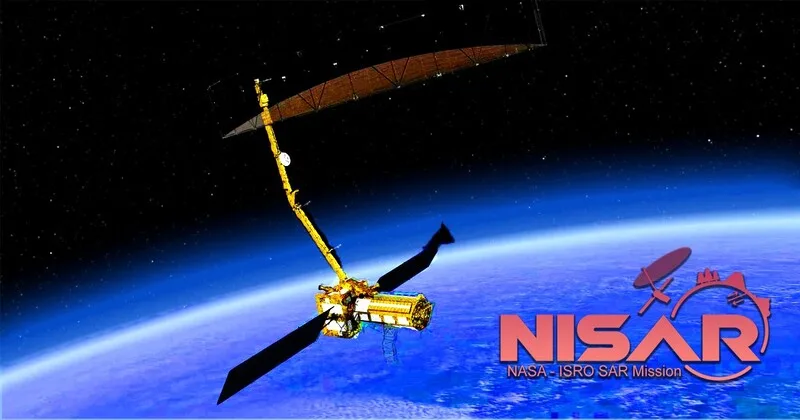
Designed to provide a detailed view of the Earth to observe and measure some of the planet’s most complex processes, including ecosystem disturbances, ice-sheet collapse, natural hazards, sea level rise, and groundwater issues, NISAR is a pioneer in space technology. Its radar, the first of its kind in space, will systematically map Earth, measuring changes of our planet’s surface as small as a centimetre.

India crossed a milestone in its space and climate ambitions on Wednesday with the successful launch of the NASA-ISRO Synthetic Aperture Radar (Nisar) satellite from the Satish Dhawan Space Centre in Sriharikota. The Rs. 12,000-crore mission has been over a decade in the making and is being considered as one of the world’s most advanced Earth observation missions. The 2393-kilogram satellite lifted off at 5:40 pm IST, July 30 aboard ISRO’s Geosynchronous Satellite Launch Vehicle (GSLV) into the vacuum of space.

The Nisar mission, a $1.5 billion joint venture between the Indian Space Research Organisation (ISRO) and the United States’ National Aeronautics and Space Administration (NASA), is now set to revolutionise climate monitoring and disaster response, not just for India, but worldwide.

First Dual-Band Radar Satellite for Earth Observation

Why it is so special?

NISAR is the world’s first Earth-observing satellite with dual-frequency synthetic aperture radar (SAR).

L-band radar (1.257 GHz) from NASA can penetrate dense forests and soil layers to detect ground deformation and subsurface movement.

S-band radar (3.2 GHz) from ISRO is optimised for surface-level changes like crop growth, biomass estimates, and water levels.

This dual-frequency advantage allows for all-weather, day-and-night imaging, even through clouds, smoke, or vegetation cover.

This combination of NASA’s L-band radar and ISRO’s S-band radar enables Nisar to capture the faintest shifts on Earth’s surface — whether under forests, clouds, or even in darkness — detecting movements as small as a few millimetres.

The implications for India, often at the frontline of climate change impacts and natural disasters, are profound.

Nisar’s freely accessible, near-real-time data will empower Indian researchers, disaster managers, and policymakers to monitor glacier movements in the Himalayas, detect fault-line shifts before earthquakes, track agricultural cycles, and manage water resources more effectively.

With this tool, India is set to improve forecasting for floods, droughts, and landslides, enabling rapid response and informed policy decisions.

NISAR is designed to support research and operations across six broad themes:

Solid Earth Processes – Tracking earthquakes, landslides, and land deformation.

Ecosystems – Monitoring forests, woody biomass, and biodiversity.

Ice and Snow Dynamics – Measuring glacial movements and polar ice thickness.

Coastal and Ocean Monitoring – Tracking shoreline erosion, oil spills, and storm surges.

Disaster Response – Providing near-real-time damage maps after floods, quakes, or cyclones.

Agriculture and Infrastructure – Supporting food security and monitoring subsidence near dams, roads, and reservoirs.

During natural disasters, NISAR can provide damage proxy maps within five hours, crucial for emergency relief planning and response.

The mission exemplifies balanced international collaboration:

ISRO contributed the spacecraft bus, the entire S-band radar system, Ka-band telemetry systems, and launch support via GSLV Mk-II.

NASA provided the L-band radar, radar structure, antenna, onboard avionics, and high-capacity data systems.

The satellite was integrated and tested in Bengaluru, symbolising “Made-in-India” ownership of a global science instrument.

To get my guidance for English/Bengali/ Economics or overall Guidance for WBCS or any other exams,please call or whatsapp @ 6295350330. This is the official number of Adhyayan Academy. My much awaited descriptive English /Bengali Course for 1 year is starting from 1st September. Admission is going on for my Clerkship Main/ WBSSC Group C Course. Mock Test Course for PSC Miscellaneous Main has also started.

For regular updates, follow us @ FB, YouTube or Telegram with following links

FB- https://www.facebook.com/Adhyayanacademyslg/

YouTube- https://www.youtube.com/@theadhyayanacademy

Telegram- https://t.me/theadhyayanacademy

Iran- Israel Conflict

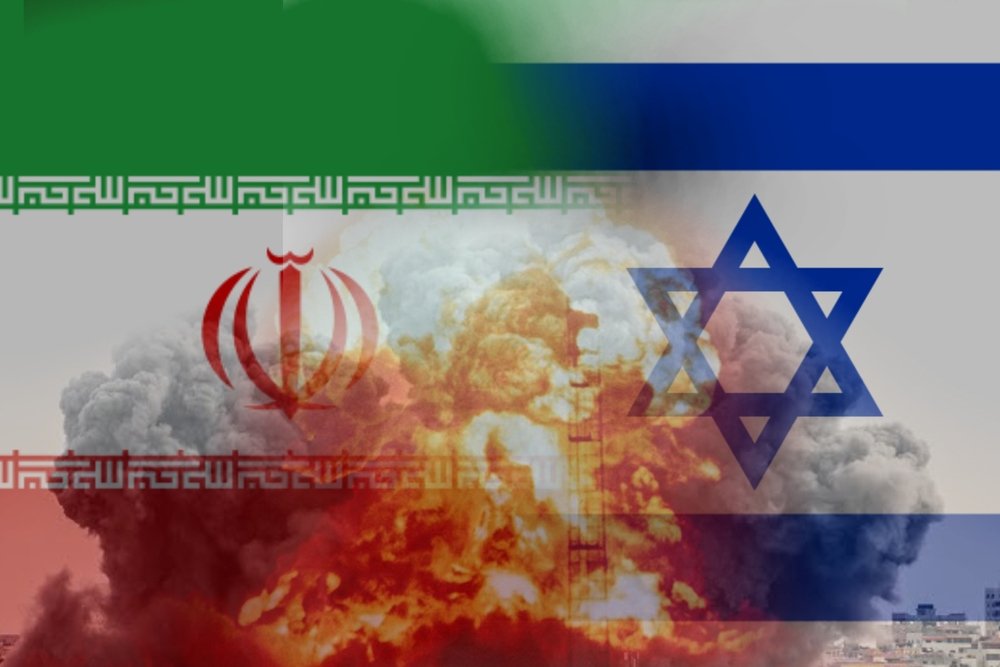
By mid-2025, Iran and Israel were locked in a war of attrition. Israel conducted targeted airstrikes on Iran’s nuclear, military, and civilian infrastructure. Iran launched multiple missile and drone attacks against Israeli cities, infrastructure, and military sites. The damage was significant on both sides, but casualties were asymmetrical: Iran reported over 220 deaths from Israeli strikes, while Israel reported about two dozen fatalities.

Iran’s missile capabilities were degraded by Israeli strikes early in the campaign, and Iran appeared to be holding back much of its arsenal. It was seen as focusing more on messaging and deterrence than trying to decisively defeat Israel. Israel, meanwhile, began to strike not only military sites but also civilian targets like refineries, power grids, and media centres—an attempt to pressure the Iranian regime internally.

The United States formally entered the Israel-Iran conflict with precision airstrikes targeting three of Iran’s key nuclear sites—Fordow, Natanz, and Isfahan. Conducted using B-2 stealth bombers equipped with bunker-busting bombs, the attack included a successful hit on the heavily fortified Fordow Uranium Enrichment Plant, a facility previously beyond Israel’s operational reach.

History- In 1948, the opposition of Arab states to Israel led to the first Arab-Israeli war. Iran was not a part of that conflict, and after Israel won, it established ties with the Jewish state. It was the second Muslim-majority country to do so after Turkey. Israel tried to counter the hostility of Arab states at the time with the “periphery doctrine” under its first Prime Minister David Ben Gurion.

The Pahlavi dynasty, under the Shah Mohammad Reza Pahlavi, ruled Iran then. It had US support, as did Israel, and the two countries maintained ties with each other, with Iran also selling oil to Israel amid its economic boycott by Arab states.

Iran was one of the first countries in the region to recognise Israel after its formation in 1948. It was only after 1979 that their diplomatic ties ended.

 The 1979 Revolution: In this phase, a religious state was established in Iran after the Shah was overthrown in the 1979 Islamic Revolution. The regime’s view of Israel changed, and it was seen as an occupier of Palestinian land. Iranian Supreme Leader Ayatollah Khomeini termed Israel “Little Satan” and the United States the “Great Satan”, seeing the two as parties interfering in the region. Iran also sought to grow its presence in the region, challenging the two major powers Saudi Arabia and Israel – both of whom were US allies.

Shadow War after 1979: After 1979, the ties between the countries worsened. While Israel and Iran have never engaged in direct military confrontation, both attempted to inflict damage on the other through proxies and limited strategic attacks. Israel has attacked Iranian nuclear facilities from time to time.

In the early 2010s, it targeted several facilities and nuclear scientists in a bid to prevent it from developing nuclear weapons. In 2010, the US and Israel are believed to have developed Stuxnet, a malicious computer virus was used to attack a uranium enrichment facility at Iran’s Natanz nuclear site, it was the “first publicly known cyberattack on industrial machinery”, according to Reuters.

The two countries have been engaged in multiple proxy conflicts, and actually came face to face during the 2006 Lebanon War.

Begin doctrine

The Begin doctrine effectively dictates that even the potential of an enemy having WMD or weapons of mass destruction (nuclear weapons) can justify preventive strikes from Israel.

Over the years, the ties devolved with little trust on either side. Iran’s support for Hamas and other Iran-backed regional actors, such as Hezbollah, especially after October 7, 2023, has drawn Israel’s ire. Last year, the Israel-Iran relations worsened more when for the first time Iran launched a direct attack aimed at targets within Israel.

Iran-Israel bilateral ties hit new lows when, on June 13 this year, Israel launched “Operation Rising Lion” against Iran.

Several factors have contributed to the recent escalation in the Israel-Iran conflict. Let’s take a closer look.

Ideology and Legitimacy: Iran views Israel as illegitimate and calls for its elimination. Conversely, Israel sees Iran’s ideology as a direct threat to its existence. This mutual existential fear perpetuates hostility.

Nuclear Ambitions: Israel’s primary concern is Iran’s nuclear program. Although Iran claims it is peaceful, Israel and others suspect clandestine weapons work. Israel has long declared it will not allow hostile states to acquire nuclear arms and has used pre-emptive force in the past.

Security and Regional Power: Iran seeks to expand its influence through its military and proxies. Israel, surrounded by unfriendly states, feels strategically encircled. This drives each side to challenge the other militarily, diplomatically, and through intelligence operations.

Geopolitical Alliances: Iran is aligned with powers like Syria, Russia, and China, and supports non-state actors. Israel is backed by the U.S. and increasingly by Gulf Arab states. Each country sees the other’s alliances as threats to its own position in the region.

Prime Minister of Israel, Benjamin Netanyahu framed the biggest attack on Iran in decades as an attempt to remove the “nuclear threat” to Israel. Addressing the people of Iran in a video message, he said the time had come for them to stand up for their freedom from an “evil and oppressive regime”, which has “never been weaker”.

Further explaining Israel’s “pre-emptive strikes”, Netanyahu said Iran had “taken steps that it has never taken before… to weaponize enriched uranium,” and “if not stopped, Iran could produce a nuclear weapon in a very short time,” perhaps even “within a few months.”

Notably, the great strategic concern in Israel is Iran possessing nuclear weapons, and to that end, it has previously launched attacks on scientists (although more targeted and tactical ones). Iran says it is not looking to develop weapons, and has simply invested in nuclear power over the decades.

Natanz nuclear facility

It is Iran’s main uranium enrichment facility, where the country produces most of its nuclear fuel. Located in the central province of Isfahan, the Natanz facility is “the beating heart of the Iranian nuclear programme,” analysts say.

 IAEA’s Board of Governors censured Iran: Israel’s attacks came one day after the International Atomic Energy Agency’s (IAEA) Board of Governors censured Iran for the first time in 20 years for not working with its inspectors. On June 12 IAEA passed a resolution declaring Iran as being non-compliant with its non-proliferation obligations. The resolution came on the back of a recent IAEA investigation that found Iran was conducting “secret nuclear activities” at three locations.

Possible Consequences

1. Fears of surging oil prices: Just as global shipping lines and traders had started to breathe a sigh of relief from elevated freight rates, with vessels returning to the crucial Red Sea route from the longer Cape of Good Hope passage, a conflict between two major West Asian powers — Iran and Israel — has reignited fears of surging oil prices and more trade disruptions.

Since the war began on June 13, global Brent crude prices have risen by around 11 per cent — from levels of $67.34 per barrel on June 12 to around $74.6 per barrel on Tuesday. This is a significant spike — and several global financial firms are projecting that oil could cross $100 per barrel in case the crisis continues and worsens.

According to the US Energy Information Administration (EIA), at the end of 2023, Iran accounted for 12 per cent of global oil reserves, with the world’s third largest proven reserves after Venezuela and Saudi Arabia. Iran also has the second largest reserves of natural gas after Russia. However, Western sanctions have ensured that only around 4 per cent of global oil supplies comes from Iran. The primary customer of Iranian oil is China.

2. Risk of wider energy disruption: Experts warn that Iran may respond by closing the strategic Strait of Hormuz — a key passage through which 20–25 per cent of global oil supply transits, as well as a critical corridor for LNG shipments from Qatar and the UAE. Qatar, notably, is among the top LNG suppliers to India.

Strait of Hormuz

Strait of Hormuz is a critical narrow waterway between Iran and Oman, and connects the Persian Gulf with the Gulf of Oman and the Arabian Sea

Red Sea shipping route

The nearly 2,000-km Red Sea connects the Mediterranean Sea with the Indian Ocean via the narrow Suez Canal. Before the Suez Canal’s construction, ships had to go around the Cape of Good Hope in South Africa to travel between Europe and Asia.

3. Rising freight rates: With the escalation in Iran-Israel conflict, there is possibility that freight rates will increase. There is also a possibility that global governance would also be impacted by continuing instability in the Middle East.

4. Nuclear Proliferation Risks: Iran’s possible withdrawal from the Nuclear Non-Proliferation Treaty (NPT) could trigger a regional arms race, undermining global non-proliferation norms.

Impact of the Iran-Israel conflict on India?

The Israel-Iran conflict triggered serious concern among major stakeholders in the region, including India. Indian Ministry of External Affairs urged both Israel and Iran “to avoid any escalatory steps,” saying India has “close and friendly” relations with the two nations.

Operation Sindhu

India announced launching ‘Operation Sindhu’ to evacuate Indian nationals from Iran as fears of an all-out Israeli-American military strikes on Iran increased.

Nonetheless, escalated Israel-Iran conflict puts India’s regional connectivity strategy like the International North South Transport Corridor, and the Chabahar port at risk.  India’s key connectivity projects like the Chabahar port in Iran, which links it to Afghanistan and Central Asia, could be affected by regional turmoil.  The India-Middle East-Europe Economic Corridor (IMEC) faces risks from the conflict, threatening its progress and impacting bilateral trade and regional economic dynamics.

Notably, The International North South Transport Corridor (INSTC), which was initiated by Russia, India, and Iran, is a multi-modal transportation project linking the Indian Ocean and Persian Gulf to the Caspian Sea via Iran, and onward to northern Europe via St Petersburg in Russia. This corridor aims to reduce transit times to about 25 days — 20 days fewer than the Suez Canal route — and cut freight costs by 30 per cent.

With nearly 8 million Indian nationals residing in West Asia, their safety becomes a critical concern, especially if evacuation becomes necessary.

Chabahar is a deep-water port in Iran’s Sistan-Baluchistan province. It is the Iranian port that is the closest to India, and is located in the open sea, providing easy and secure access for large cargo ships. The port is also part of the proposed INSTC. Chabahar is of strategic importance for India. It offers New Delhi an alternative route that bypasses Pakistan, which does not allow India land access for trade with Afghanistan and Central Asia.

India must tread carefully, preserving its strategic partnerships with both Israel and Iran, while navigating a complex landscape of rising sanctions and geopolitical alignments.

One Nation, One Election (ONOE)

One Nation, One Election (ONOE) is a proposal under consideration by the Government of India to synchronise all elections in the country either on a single day or within a specific time frame, with an objective of cutting election cost. One of its most notable proposals is to simultaneously conduct elections to the Lok Sabha & state legislative assemblies of all 28 states & 8 union territories. For the purpose of ONOE, MoS Law & Justice Arjun Ram Meghwal introduced The Constitution (129th Amendment) Bill, 2024 in Lok Sabha that the bill further to amend the Constitution of India on 17 December 2024, the purposed bill was referred to Joint Parliamentary Committee on 19 December 2024 after being passed in the Lok Sabha with 269 votes being in favour of the bill and 198 votes against passing the motion.

History

The years 1951-52, 1962 and 1967 witnessed simultaneous elections dating back the concept of one nation one election to the early years of Indian Independence. This process was only discontinued after the 1967 elections due to the premature dissolution of a few state assemblies and Lok Sabha in 1970. Since then, the elections are being conducted separately which is only leading to increased costs.

Recommendations Earlier

Law Commission of India (170th Report, 1999): Advocated simultaneous elections, emphasizing the reduction of election-related disruptions and costs.

Parliamentary Standing Committee (2015): Highlighted the benefits of ONOE, including curbing electoral expenses and ensuring uninterrupted governance.

NITI Aayog Report (2017): Proposed a roadmap to reintroduce ONOE.

Advantages

Cost Reduction: It could save money by eliminating the need for separate election cycles. For example, the 2024 Loksabha elections cost a total of around Rs 1 lakh Cr in comparison to Rs 10 Cr of the first LS Election.

Focus on Long-Term Governance: It encourages politicians to prioritize long-term governance over short-term gains.

Increased Voter Turnout: Voters are less fatigued, as they only participate once every few years, potentially boosting voter turnout.

Level Playing Field: Smaller parties can compete more effectively with larger ones due to reduced overall election expenses.

Efficient Use of Security Forces: It allows security forces to be deployed more efficiently for other purposes.

Challenges and complexities of simultaneous elections

Overshadowing regional issues: Conducting elections simultaneously to the Lok Sabha and all State assemblies would result in national issues overshadowing regional and State specific issues.

Force Deployment: Arrangement of police or para military forces to maintain law and order situation during such simultaneous elections will be a mammoth task.

Impact on the Regional parties: Simultaneous elections may create a system where National political parties would have a significant advantage over regional parties.

Political accountability: Frequent elections hold lawmakers accountable, while fixed terms may provide unwarranted stability without performance scrutiny challenging democratic principles.

Concerns Regarding Federalism: Constitutional Amendments concerning the term of the state legislative assemblies under Article 172 can be carried out without ratification by states. Thus, opinion and say of States is reduced.

Logistical Issues: Organizing ONOE would require significant resources, including a vast supply of electronic voting machines and trained personnel to oversee the process.

Amendments Needed

The implementation of the One Nation, One Election policy is not feasible within the current constitutional framework. To enable this policy, certain essential amendments to the Constitution are necessary, including:

Article 83: Concerning the duration of the Houses of Parliament, amendments are required to fix the tenure and timing for the dissolution of the Lok Sabha.

Article 85: Pertaining to sessions, prorogation, and dissolution of Parliament, clear guidelines must be established to prevent arbitrary or ambiguous dissolution of sessions.

Article 172: Governing the duration of State Legislatures, amendments are needed to synchronize their tenure with that of the Lok Sabha.

Article 174: Similar to Article 85, this article deals with sessions, prorogation, and dissolution of State Legislatures. Amendments are required to standardize procedures and timelines.

 The Lok Sabha election in India is already the biggest even of democracy all over the world. To add the state legislature elections to it is not just a matter of regular debate. It is a gigantic step and for that nationwide consensus is needed. Discussions among the political parties with special attention to the regional parties is the need of the hour. Upholding the governing principles of national integrity, popular plurality and cooperative federalism must be the sole purpose of such a mammoth shift in the course of our democracy.

 Temples/Mosques/Monasteries/Monuments/ Architecture

  1.  The Khajuraho temples are a group of Hindu and Jain temples in Madhya Pradesh, India, built between 950 and 1050 AD by the Chandela dynasty. These temples showcase the Nagara style of architecture,
  2. Bodh Gaya is located almost 96 kilometrese away from Patna, Bihar and is one of the UNESCO World Heritage sites in India. It’s an important religious centre for the Buddhists as this was the place where Mahatma Buddha attained enlightenment. The holy Bodhi Tree is the site where Siddhartha gained Enlightenment and became Gautam Buddha. The famous Mahabodhi Temple was established in the reign of Ashoka the Great in about approximately 250 BCE.
  3. The Statue of Liberty was designed and built in France. It was a gift from the people of France to the United States to commemorate the centennial of American independence. The statue was designed by French sculptor Frédéric Auguste Bartholdi and its metal framework was built by French engineer Gustave Eiffel, who also designed the Eiffel Tower in Paris. The statue was then disassembled and shipped to the United States, where it was reassembled on Liberty Island in New York Harbor and dedicated on October 28, 1886.
  4. The Buddhist Monuments located at Sanchi in Madhya Pradesh are a World Heritage Site in India and they are the oldest stone structures in India. Originally commissioned by emperor Ashoka in 3rd century BCE, the Sanchi Stupa is located 46 kilometer north-east of Bhopal.
  5. The Jantar Mantar is an astronomical observatory built in 18th century Rajasthan. It is an astronomical observatory which was built by the Rajput King Sawai Jai Singh of Rajasthan in 1738 CE
  6. The Burj Khalifa, the tallest building in the world, is located in Dubai, United Arab Emirates (UAE).
  7. Hampi is a UNESCO World Heritage site located in the Northern part of Karnataka. It lies within the ruins of the ancient, prosperous kingdom of Vijayanagar
  8. The nickname of the clock tower in London is “Big Ben.”
  9. The Elephanta caves are located on an island in the Arabian City, not very far from the city of Mumbai.
  10. The Ellora Caves are an important UNESCO World Heritage site and an archaeological site, ranging 29 kilometers Northwest of the city of Aurangabad, Maharashtra. The Ellora Caves are well known for their Indian-rock cut architecture. The presence of Hindu, Buddhist and Jain temples and sculptures portray the tolerance which was extended towards different faiths and beliefs in Ancient Indian History.
  11. Rumtek Monastery is located in which Indian state?

Ans- Sikkim

  1. Hemis monastery in Leh, Ladakh.
  2. Tawang monastery- Arunachal Pradesh
  3. Angkor Wat, the largest religious monument in the world, was built in the early 12th century by King Suryavarman II as a Hindu temple dedicated to Vishnu. It’s located in present-day Cambodia, within the city of Angkor, which served as the capital of the Khmer Empire from the 9th to the 15th centuries. Initially a Hindu temple, it was later transformed into a Buddhist temple.
  4. Bahai temple is in New Delhi
  5. Dilwara temple in Mount Abu, Rajasthan- Jain temple.
  6. In which place Shringeri Math is situated, which established by Shankaracharya?

Ans- Rameshwaram.

  1. In which state’s Sabarimala pilgrimage, the pilgrims have taken the oath of cleanliness?

(a) Karnataka

(b) Kerala

(c) Telangana

(d) Tamil Nadu

Ans: (b) Kerala

  1. The residence of the Prime Minister of which country is called ‘Temple Trees’?

(a) Nepal

(b) Myanmar

(c) Sri Lanka

(d) Bangladesh

Ans: (c) Sri Lanka

  • The Char Dham Highway project connects the four holy places of Yamunotri, Gangotri, Kedarnath, and Badrinath. In which Indian state are all these religious places located?

(a) Uttarakhand

(b) Himachal Pradesh

(c) Arunachal Pradesh

(d) Sikkim

Ans: (a) Uttarakhand

  • The largest temple complex in India is the Sri Ranganathaswamy Temple located in Srirangam, Tamil Nadu
  • Tawang monastery is the largest monastery in India. is also known as Galden Namgyal Lhatse.
  • The world’s largest mosque is Masjid al-Haram, located in Mecca, Saudi Arabia. It is also known as the Great Mosque of Mecca and encloses the Kaaba.
  • The largest mosque in India is the Taj-ul-Masajid, located in Bhopal, Madhya Pradesh. It has a capacity for around 175,000 worshippers.
  • The Seven Wonders of the World are a group of places around the globe that are considered to be of great importance. These are: The Colosseum in Italy, Petra in Jordan, Chichén Itzá in Mexico, Christ the Redeemer in Brazil, Machu Picchu in Peru, Taj Mahal in India and The Great Wall of China.
  • The tallest statue in the world is the Statue of Unity, located in Gujarat, India. It depicts Sardar Vallabhbhai Patel, a prominent figure in India’s independence movement, and stands at a height of 182 meters (597 feet).
  • The highest monastery in the world is generally accepted to be Rongbuk Monastery, located in Tibet.
  • The highest temple in India is Tungnath Temple, located in Uttarakhand, at an altitude of 12,073 feet (3,680 meters)
  • The five temples that make up the Panch Kedar are: Kedarnath, Tungnath, Rudranath, Madhyamaheshwar, and Kalpeshwar. These temples are dedicated to Lord Shiva and are located in the Garhwal region of Uttarakhand, India. Shiva temples.
  • Adi Shankaracharya established four mathas to propagate his teachings and maintain the continuity of Sanatana Dharma. These are:

Sringeri Sharada Peetham: Located in Sringeri, Karnataka.

Jyotir Math: Located in Joshimath, Uttarakhand.

Dwarka Sharada Peetham: Located in Dwarka, Gujarat.

Govardhan Math: Located in Puri, Odisha.

  • World Architecture Day- 6 Oct
  • Tulsi Manas Mandir is located at Varanasi, UP.
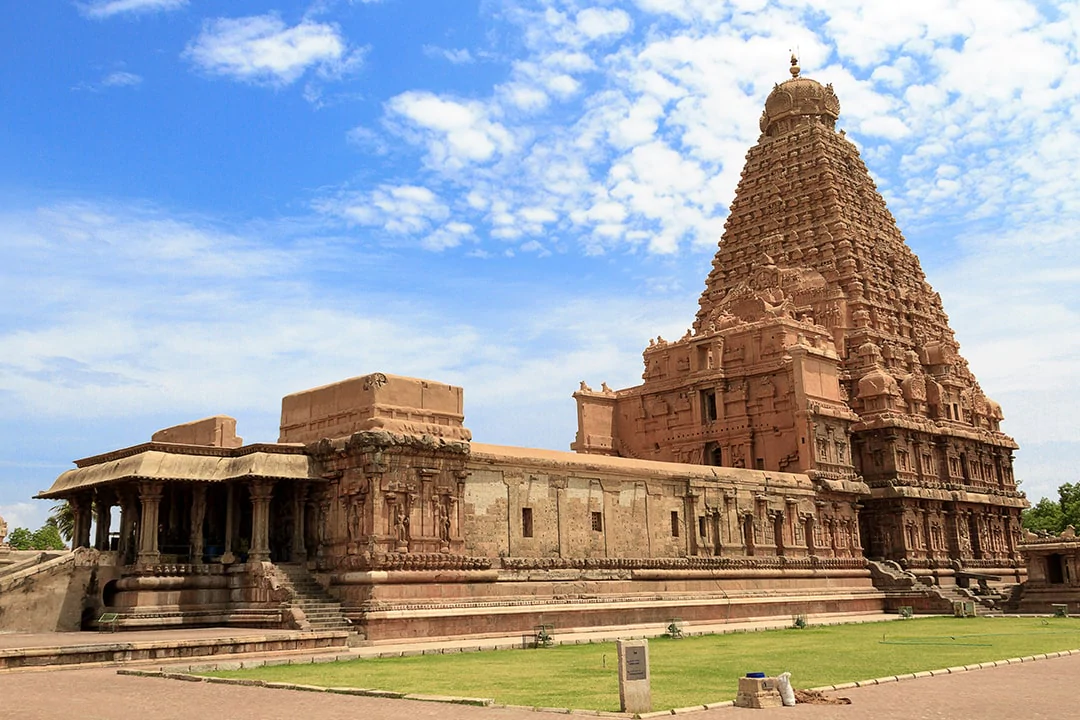
  • Brihadeshwara temple or Raja Rajeswara temple is located at Thanjavur, Tamil Nadu. It was built by Raj Raja Chola I.
  • Sun Temple at Konark, Odissa is also known as Black Pagoda. Built by Narasimhadeva 1.
  • Ellora temple was built during the Rashtrakuta dynasty.
  • The Charminar at Hyderabad was built by Mohd. Kuli Qutub Shah in 1591 to commemorate the end of plague in the city.
  • Kailash temple is located at Ellora, Maharashtra.
  • Moti Masjid was built by Aurangzeb.
  • Le Corbusier designed the planned city of Chandigarh.
  • Bimal Patel is the architect of India’s new Parliament building.
  • Golconda fort is in Hyderabad, Telengana. It was bult by Sultan Quli Qutub ul Mulk.
  • The Vesara style of temple architecture mainly evolved, practised, and developed by the influence of the Chalukyas of Kalyani.
  • Jagannath Temple (Puri) is believed to be constructed in the 12th century by King Anatavarman Chodaganga Deva of the Eastern Ganga Dynasty.
  • Known as the “Architect of the Poor”, Laurie Baker was responsible for the revolutionised mass housing concept in Kerala.
  • G Wittet designed the Gateway of India in Mumbai, borrowing several elements of Mughal style
  • The Victoria terminus station in Mumbai is an example of Victorian Gothic revival architecture in India, deriving themes from Indian traditional architecture. It was designed by FW Stevens.
  • There are 44 World Heritage Sites in India, 6th most in the world.  Out of these, 36 are cultural, seven are natural, and one, Khangchendzonga National Park, is of mixed type, listed for both cultural and natural properties. India has the sixth-most sites worldwide. The first sites to be listed were the Ajanta Caves, Ellora Caves, Agra Fort, and Taj Mahal, all of which were inscribed in the 1983 session of the World Heritage Committee. The most recent site listed is the Maratha Military Landscapes of India, in 2025.
  • Italy has the most UNESCO World Heritage Sites with a total of 60. It is followed by China with 59 sites, and then Germany with 54
  • Uttar Pradesh is the Indian state with the most international airports. As of 2025, it has five international airports: Chaudhary Charan Singh International Airport in Lucknow, Lal Bahadur Shastri International Airport in Varanasi, Kushinagar International Airport, Maharishi Valmiki International Airport in Ayodhya, and Noida International Airport in Jewar.
  • Maharashtra is the Indian state with the highest number of UNESCO World Heritage Sites, boasting a total of 5 sites. These include the Ajanta Caves, Ellora Caves, Elephanta Caves, Chhatrapati Shivaji Maharaj Terminus, and the Western Ghats (a natural site).
  • Tamil Nadu is the Indian state with the most temples. It’s often referred to as the “land of temples” due to the sheer number of Hindu temples found there, estimated to be over 400,000.
  • The oldest church in India is believed to be the St. Thomas Syro-Malabar Church in Palayur, Kerala, which is said to have been established in 52 AD by St. Thomas the Apostle.

To get Saptarshi Sir’s guidance for PSC Miscellaneous Mains/ Clerkship Main/ English/Economy or for overall WBCS or other exam preparation, call or WhatsApp us @6295350330. Classes for PSC Miscellaneous Main and Clerkship Main have already started. WBCS New batch is also going on. You can also download our app for online guidance using the link

https://play.google.com/store/apps/details?id=co.penny.oecgd&pcampaignid=web_share

For free notes, daily quizzes, word games and many other surprises, please join our Telegram Group using the link below

https://t.me/theadhyayanacademy

The Manipur Unrest- A detailed study

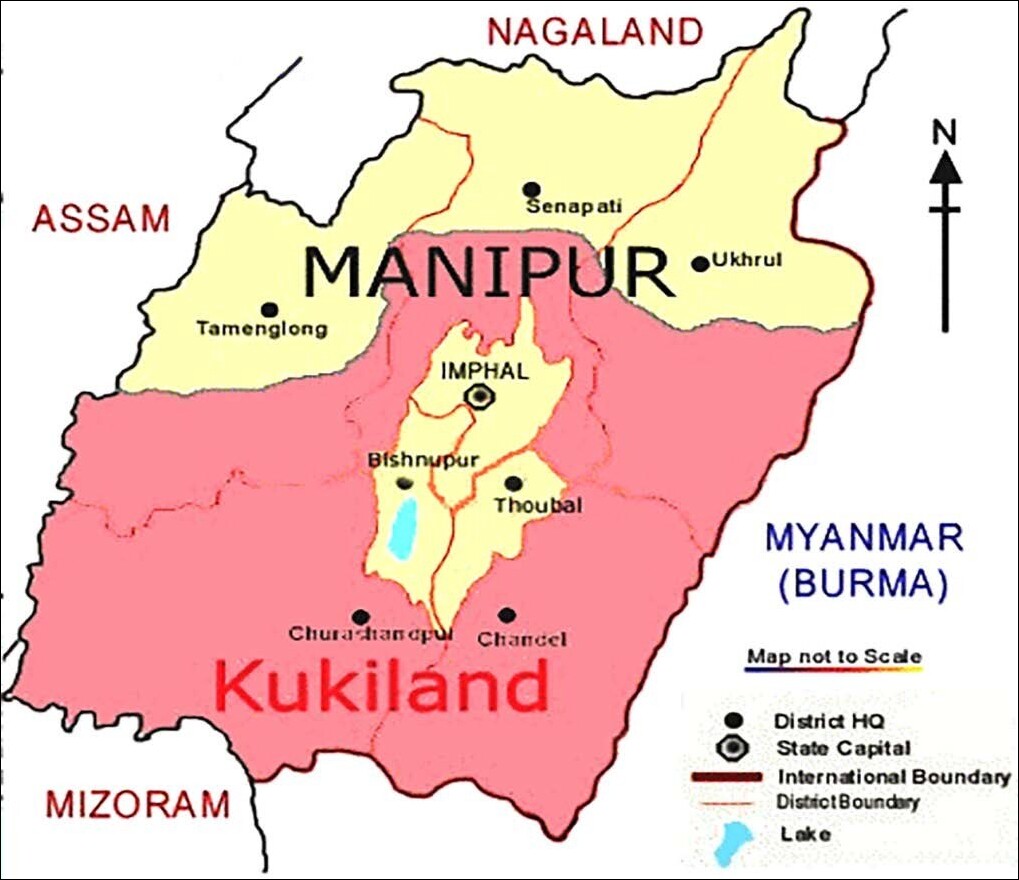
Demography– Manipur is a state in northeast India, bordering Myanmar to its east and south. The Imphal Valley constitutes about 10% of the geographical area of the state with 57% of the population predominantly Meitei, who are majority Hindus, with minorities of Muslims and native Sanamahism followers. The surrounding hills constitute 90% of the geographical area of the state with 43% of the population belonging to 34 tribal groups broadly categorised as Nagas and Kukis (25% and 15% roughly), who follow Christianity.

 The Nagas dominate the northern districts while the Kukis are predominant in the south. The tribal people have the Scheduled Tribe (ST) status, whereas the Meitei have been accorded Other Backward Class (OBC) status, with some classified as Scheduled Castes (SC) in certain areas.

Historical Perspective– Historical ethnic conflicts and tensions between Kukis (Hill tribe) and Meiteis in Manipur have contributed to the unrest, as both communities compete for political representation, resources, and cultural recognition.

Most of the Meiteis live in the Imphal valley while the tribals live in the hill districts. The Meiteis are more educated and also better represented in business and politics of the state than Kukis and Nagas.

Meitei dominate the political establishment in Manipur with 40 out of the 60 Assembly constituencies.

People from the hill areas claim that despite hill districts of Manipur comprising 89% of the geographical area, there were only 20 MLAs from these areas in the Manipur Assembly.

Meiteis are limited to only around 10% of the land in the state, as the rest of the state is classified as tribal areas.

They live in the small patch of plain area in the state, the Imphal Valley, while the Kuki(tribals) reside in the protected Hill Areas, exclusively reserved for them.

Being classified as non-tribals, Meitei people can’t buy land in over 90% of the state.

While the tribals can buy land in Imphal Valley, thereby further reducing the land availability.

The Hill Areas in Manipur comprising 90% of the total land in Manipur are declared by the government under the provisions of Article 371C of the Constitution.

The Beginning– In 2020, as the Centre began the first delimitation process in the state since 1973, the Meitei community alleged that the Census figures used in the exercise did not accurately reflect the population break-up. Meitei leaders have alleged that there has been a sudden mushrooming of villages in Churachandpur district.

The then Chief Minister N Biren Singh repeatedly echoed and fed these fears — pointing to the presence of Myanmarese in Churachandpur, and linking them to the cultivation of poppy, and repeatedly making references to “foreigners” and “outsiders” and “Drug traffickers”.

Since 2012, there has been a constant demand led by the Scheduled Tribes Demand Committee of Manipur (STDCM) for granting the Scheduled Tribe (ST) status to the Meitei community.

The Meitei Tribe Union had filed a petition before the Manipur High Court and had argued that the Meitei community was once recognised as a “tribe” before the merger of the princely state of Manipur with the Union of India in 1949 and that it lost its identity as a tribe after the merger.

On 20 April 2023, a judge of the Manipur High Court directed the state government to “consider the request of the Meitei community to be included in the Scheduled Tribes (ST) list”.

The Kukis feared that the ST status would allow the Meiteis purchase land in the prohibited hilly areas.

The Eruption– The tribal groups called for a total shutdown on 28 April 2023 in protest of the state government actions.

Violence erupted on May 3, 2023, after tribal communities protested a Manipur High Court order granting the Meitei community certain benefits, including land ownership in protected areas and quotas in government jobs.

Incidents of sexual violence have garnered both national and international attention, bringing to light the harrowing reality faced by women in Manipur.

Meitei mobs have repeatedly targeted women as a means of control of the rival faction, including burning homes and subjecting them to assaults, and even forcing women to strip under threats of violence or shooting them in the face, causing disfigurement.

The Meitei groups have also attacked people from their own community who have spoken out against them.

In a shocking charge, the CBI has alleged that personnel from the Manipur Police allegedly drove the two women to a mob of around 1,000 people, which stripped and paraded them before they were gang-raped, in an incident that shook the nation.

The 26-second clip showed two Kuki tribal women paraded naked by a mob of men who were groping their genitals and assaulting them.

In August 2023, India’s Supreme Court expressed concerns over what it termed the “absolute breakdown of law and order” in Manipur.

The authorities have also failed to protect members of the Meitei community. In November 2024, about 35 armed Kuki militants attacked the camp of the Central Reserve Police Force, paramilitary police, and the adjacent police station in Jiribam district, allegedly looking for “Meitei people.” They abducted and killed three women and three children including an 8-month-old infant from the Meitei community, and burned to death two older Meitei men.

As of December 2024, the 42 special investigation teams created by the Supreme Court had filed charges in only 6 percent of the 3,023 registered cases, including murders, 9 cases of sexual crimes against women, and 2,888 cases of looting, arson, and other property crimes.

Regional Implications and Challenges

In the absence of any hint of immediate peace, the prolonged conflict, nearing a civil war, is causing a significant and irreversible shift in how the people of Manipur perceive each other and New Delhi. Decades of effort to build trust between the different groups since the ethnic clashes of the 1990s, and confidence-building measures with New Delhi after the rise of insurgent groups in the 1950s, were shattered overnight on May 3, 2023.

Tragically, in the post-May 3, 2023 period the harmony between the Meiteis and Kukis has been disturbed by an ever-increasing divide owing to the persistent violence. No one feels safe in areas dominated by the rival ethnic community, resulting in large-scale migration to safer areas, including Assam and Mizoram. Schools and educational institutions remained closed, and with the internet shutdown, online classes were unavailable. Under such circumstances, youths are being compelled to take up arms. The tourism industry has also suffered, with patients from Myanmar stopping medical visits. Retail inflation at 9.7 percent in September 2023 has led to economic insecurity, and unprovoked attacks on farmers and road blockages have caused food security concerns.

Additionally, the conflict has affected mental health, with rising post-traumatic stress disorder (PTSD) cases since the violence began. The government’s inability to address the violence and daily insecurities has fostered a sense of alienation and distrust towards New Delhi. Insurgent groups are gaining popularity as protectors, with dormant groups reactivating and many returning from their bases in unstable Myanmar. If unchecked, these developments can accelerate the radicalization of youth, which is detrimental to India’s national security.

Geopolitically, Manipur holds strategic importance as it shares a border with Myanmar and serves as a gateway to Southeast Asia for India. Also, Manipur is crucial for India’s Act East Policy (AEP), which aims to develop cultural links, trade, tourism, and connectivity with Southeast Asia. The trilateral highway project linking India, Myanmar, and Thailand starts from Moreh in Manipur and ends at Mae Sot in Thailand. Therefore, stability of the region is crucial for India’s foreign policy. With China’s growing power and influence in the conflict-ridden Myanmar, instability in Manipur can benefit China. Additionally, the conflict has also tarnished India’s global image, with organizations and states like Human Rights Watch, the European Union, the United Nations, Genocide Watch, and the United States expressing serious concerns.

Unrest persists– Two years after ethnic violence erupted between Meitei and Kukis and the resignation of the CM Singh and President’s Rule being imposed, violent clashes are still common in the state. So far, more than 260 people have lost their lives in the clashes, around 2000 people have been injured and over 70,000 people have been displaced.

Steps needed to restore peace– It is important to identify the victims and rehabilitate them and those in rehabilitation camps, with the help of the Govt and the civil society.

The government should foster the participation of the civil society of the region in the decision-making process to instil a sense of ownership and belonging. A huge quantity of weapons and ammunition are still being held by the warring communities in the conflict-driven state of Manipur.

The entire civil society needs to be disarmed on priority.

The Mizoram Accord of 1986 between the Government of India and the Mizo National Front (MNF) serves as an example of successful engagement with all stakeholders.

The repeal of AFSPA, Armed Forces Special Powers Act 1958, is necessary to improve the human rights situation in the region.

The government should ensure that the legal system is fair and transparent to prevent the misuse of power by security forces.

The authorities should ensure that people have the right to return when conditions are in place for a safe and voluntary process carried out in accordance with the United Nations Guiding Principles on Internal Displacement, with full and meaningful participation of all affected communities, including the equal participation of women.

To get Saptarshi Sir’s guidance for PSC Miscellaneous Mains/ Clerkship Main/ English/Economy or for overall WBCS or other exam preparation, call or WhatsApp us @6295350330. Classes for PSC Miscellaneous Main and Clerkship Main have already started. WBCS New batch is also going on. You can also download our app for online guidance using the link

https://play.google.com/store/apps/details?id=co.penny.oecgd&pcampaignid=web_share

For free notes, daily quizzes, word games and many other surprises, please join our Telegram Group using the link below

https://t.me/theadhyayanacademy

India’s Quest for Space

This article consists of the following contents which are extremely important for any competitive examination for both objective and descriptive questions.

History of space research in India

Major milestones of India’s space technology

Indian Regional Navigation Satellite System

Rakesh Sharma

Gaganayan Mission

Chandrayaan Mission with special emphasis on Chandrayaan 3

Axiom 4 and Shubhanshu Shukla

The space research activities were initiated in India during the early 1960’s, when applications using satellites were in experimental stages even in the United States. With the live transmission of Tokyo Olympic Games across the Pacific by the American Satellite ‘Syncom-3’ demonstrating the power of communication satellites, Dr. Vikram Sarabhai, the founding father of Indian space programme, quickly recognized the benefits of space technologies for India.

As a first step, the Department of Atomic Energy formed the INCOSPAR (Indian National Committee for Space Research) under the leadership of Dr. Sarabhai and Dr. Ramanathan in 1962. The Indian Space Research Organisation (ISRO) was later formed on August 15, 1969. The prime objective of ISRO is to develop space technology and its application to various national needs. It is one of the six largest space agencies in the world. The Department of Space (DOS) and the Space Commission were set up in 1972 and ISRO was brought under DOS on June 1, 1972.

Since inception, the Indian space programme has been orchestrated well and had three distinct elements such as, satellites for communication and remote sensing, the space transportation system and application programmes. Two major operational systems have been established – the Indian National Satellite (INSAT) for telecommunication, television broadcasting, and meteorological services and the Indian Remote Sensing Satellite (IRS) for monitoring and management of natural resources and Disaster Management Support.

Major milestones in Indian Space Programme

Indian Space Programme began at Thumba Equatorial Rocket Launching Station (TERLS) located at Thumba near Thiruvanathapuram. Thumba was selected for being rocket launching station because geomagnetic equator of the earth passes over Thumba. The geomagnetic equator of the earth passes over Thumba.

On November 21, 1963, the first sounding rocket was launched from TERLS. The first rocket, a Nike-Apache was procured from the US. A sounding rocket is a rocket, which is intended for assessing the physical parameters of the upper atmosphere.

The Satellite Telecommunication Earth Station was set up at Ahmedabad on January 1, 1967.

India’s first indigenous sounding rocket, RH-75, was launched on November 20, 1967.

Aryabhata – First Indian Satellite was launched on April 19, 1975. It was launched from the former Soviet Union. It provided India with the basis of learning satellite technology and designing.

During 1975-76, ISRO along with NASA developed means of using space communications system for TV broadcasting. This resulted in the creation of the project Satellite Instructional Television Experiment (SITE). It was a one-year program covering Indian villages and districts. The main purpose of SITE was to experiment usage of satellite broadcasting to educate the masses. SITE, hailed as ‘the largest sociological experiment in the world’ benefited around 200,000 people, covering 2400 villages of six states and transmitted development-oriented programmes using the American Technology Satellite (ATS-6).

During January 1, 1977 — January 1, 1979, Satellite Telecommunication Experiments Project (STEP), a joint project of ISRO-and Post and Telegraphs Department (P&T) using the Franco-German Symphonie satellite was taken up. Conceived as a sequel to SITE which focused on Television, STEP was for telecommunication experiments.

Bhaskara-I – an experimental satellite for earth observations was launched on June 7, 1979.

First Experimental launch of SLV-3 with Rohini Technology Payload on board (August 10, 1979). Satellite could not be placed in orbit. Satellite Launch Vehicle-3 (SLV-3) is the first launch vehicle of India.

Ariane Passenger Payload Experiment (APPLE), an experimental geo-stationary communication satellite was successfully launched on June 19, 1981. It became the forerunner for future communication satellite system.

Indian National Satellite system (INSAT)-1A was launched on April 10, 1982. This system was for the communication, broadcasting and meteorology.

On April 2, 1984, the first Indo-Soviet manned space mission was launched. Wing Commander Rakesh Sharma (born 13 January 1949) became the first Indian citizen to go into space. He flew aboard in the Soviet rocket Soyuz T-11, as part of a three member Soviet-Indian crew as part of the Soviet Interkosmos programme.

Sharma retired as a wing commander and later joined Hindustan Aeronautics Limited (HAL) in 1987, serving as the chief test pilot in the HAL Nashik Division until 1992, before moving on to Bangalore to work as HAL’s chief test pilot. Sharma retired from flying in 2001

The first operational Indian Remote Sensing Satellite, IRS-1A was launched on March 17, 1988.

On March 24, 1987, the first developmental launch of Augmented Satellite Launch Vehicle (ASLV) that supported a larger payload than the SLV-3 and was meant to be low-cost happened.

Second developmental launch of Polar Satellite Launch Vehicle (PSLV) with IRS-P2, on board took place on October 15, 1994. Satellite successfully placed in Polar Sun synchronous Orbit. PSLV went on to become a favoured carrier for satellites of various countries due to its reliability and cost efficiency, promoting unprecedented international collaboration.

The first developmental launch of Geosynchronous Satellite Launch Vehicle (GSLV)-D1 with GSAT-1 on board took off from Sriharikota on April 18, 2001. It was developed keeping in mind the heavier and more demanding Geosynchronous communication satellites.

INSAT-4CR weighing 2130 kg and launched by GSLV-F04 on September 2, 2007 is the heaviest satellite launched from India.

PSLV-C11 successfully launches CHANDRAYAAN-1 from Sriharikota on October 22, 2008. Chandrayaan-1 is a scientific investigation – by spacecraft – of the Moon. The name Chandrayaan means “Chandra- Moon, Yaan-vehicle”, –in Indian languages (Sanskrit and Hindi) , – the lunar spacecraft. Chandrayaan-1 is the first Indian planetary science and exploration mission. Chandrayaan-1 was operational for 312 days till August 28, 2009.

November 5, 2013 – PSLV – C25 successfully launches Mars Orbiter Mission (Mangalyaan) Spacecraft from Sriharikota.

India’s communication satellite, GSAT-17 was inducted into the INSAT/GSAT system on June 29, 2017 from Kourou, French Guiana by Ariane-5 VA-238.

India’s Polar Satellite Launch Vehicle, in its forty-third flight (PSLV-C41) in XL configuration launched IRNSS-1I Satellite. The ‘XL’ configuration of PSLV is used for the twentieth time. The IRNSS-1I is the eighth satellite to join the NavIC navigation satellite constellation and was launched on April 12, 2018.

India’s next generation high throughput communication satellite, GSAT-11 was successfully launched on December 05, 2018 from Kourou launch base, French Guiana by Ariane-5 VA-246. Weighing about 5854 kg, GSAT-11 is the heaviest satellite built by ISRO.

Gaganyaan Programme – Two unmanned & one manned flight has been planned. Estimates for Phase-I expenditure- Rs 9023 Crores. Gaganyaan Programme will establish a broader framework for collaboration between ISRO, academia, industry, national agencies and other scientific organizations. The Gaganyaan Mission will be led by V. R. Lalithambika, the former Director of the Directorate of the Human Spaceflight Programme with ISRO Chairman S Somnath and S. Unnikrishnan Nair, Director of Vikram Sarabhai Space Centre. The Hindustan Aeronautics Limited (HAL)-manufactured crew module underwent its first uncrewed experimental flight on 18 December 2014. On 27 February 2024, Prime Minister Narendra Modi revealed the identities of the first four Indian astronauts (Gaganyatris): Gp Capt Prasanth Balakrishnan Nair, Gp Capt Ajit Krishnan, Gp Capt Angad Pratap and Gp Capt (then Wg Cdr) Shubhanshu Shukla. Axiom‑4 represents a milestone for the Indian Human Spaceflight Programme, integrating with ISRO’s Gaganyaan initiative. While Gaganyaan remains India’s independent crewed program, Ax‑4 provides the first opportunity for an Indian astronaut—Shubhanshu Shukla—to fly on a commercial mission to the ISS.

Geosynchronous Satellite Launch Vehicle, GSLV MkIII-M1 rocket, carrying Chandrayaan-2 spacecraft was launched from the Satish Dhawan Space Centre, Sriharikota in Andhra Pradesh on July 22, 2019. Chandrayaan-2 is India’s second mission to the moon. It comprises a fully indigenous Orbiter, Lander (Vikram) and Rover (Pragyan). The Rover Pragyan is housed inside Vikram lander. Chandrayaan-2 has several science payloads to facilitate a more detailed understanding of the origin and evolution of the Moon. To know more about Chandrayan 2, click here.

ISRO undertakes PSLV-C53/DS-EO mission on June 30, 2022. PSLV-C53 is the second dedicated commercial mission of New Space India Limited (NSIL).

Indian Regional Navigation Satellite System (IRNSS): NavIC

IRNSS is an independent regional navigation satellite system being developed by India. It is designed to provide accurate position information service to users in India as well as the region extending up to 1500 km from its boundary, which is its primary service area. An Extended Service Area lies between primary service area and area enclosed by the rectangle from Latitude 30 deg South to 50 deg North, Longitude 30 deg East to 130 deg East.

IRNSS will provide two types of services, namely, Standard Positioning Service (SPS) which is provided to all the users and Restricted Service (RS), which is an encrypted service provided only to the authorised users. The IRNSS System is expected to provide a position accuracy of better than 20 m in the primary service area.

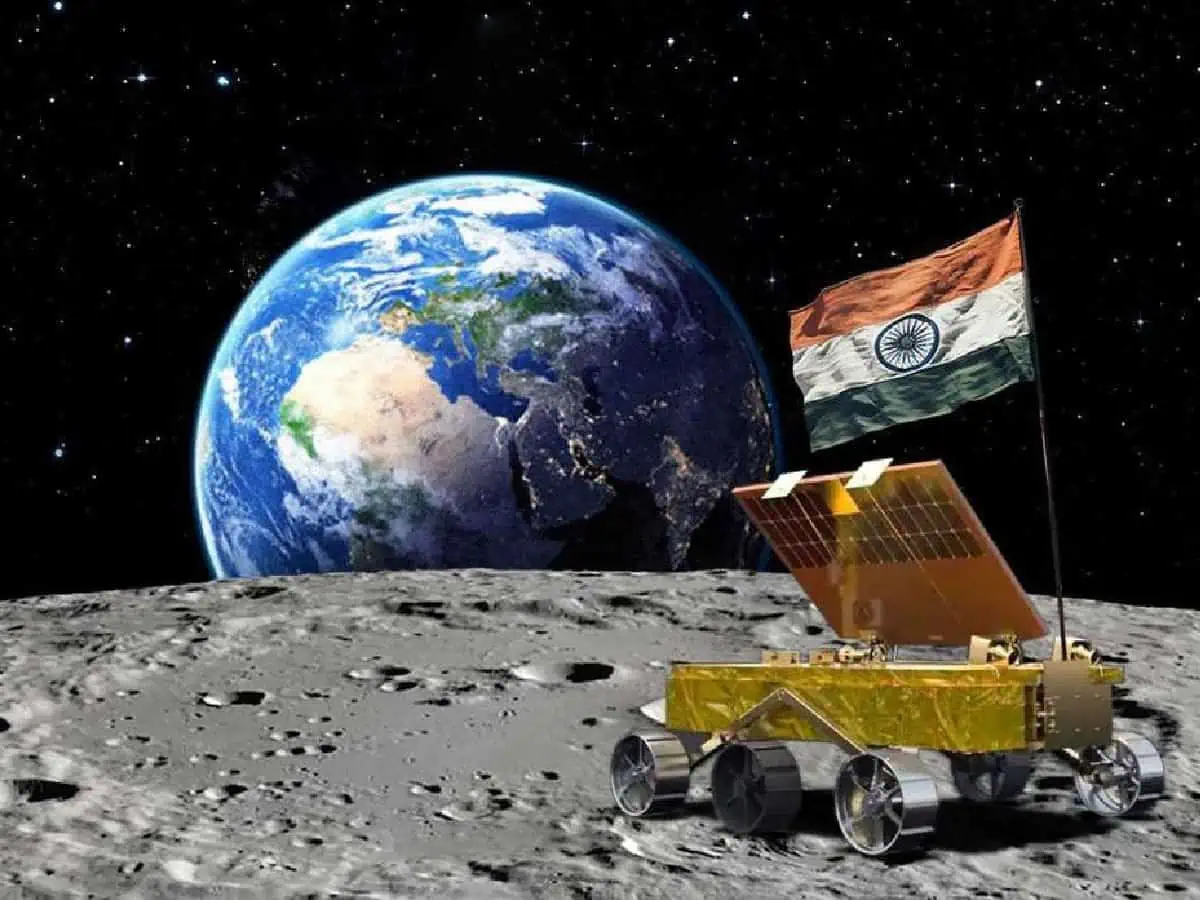
Chandrayaan-3 was a lunar mission by ISRO focused on demonstrating safe landing and roving capabilities on the Moon. It was a follow-up mission to Chandrayaan-2 to demonstrate end-to-end capability in safe landing and roving on the lunar surface. It consisted of a Lander (Vikram), a Rover (Pragyan), and a Propulsion module. The mission successfully landed on the lunar south pole on August 23, 2023, making India the first country to achieve this feat. On July 14, 2023, Chandrayaan- 3 took off from the Satish Dhawan Space Centre in Sriharikota. The spacecraft seamlessly entered lunar orbit on August 5, 2023. The historic moment unfolded when the lander made a successful touchdown near the Lunar south pole on Aug 23, 2023.The mission’s objectives included conducting in-situ scientific experiments on the lunar surface, such as analysing the elemental composition and thermal properties.

  • Major Findings:

Lunar Surface Temperature Surprise: Chandra’s Surface Thermophysical Experiment (ChaSTE) measured temperatures reaching 70 degrees Celsius, surprising scientists who expected temperatures between 20 to 30 degrees Celsius.

Lunar Surface Elements Confirmed: The Laser-Induced Breakdown Spectroscopy instrument onboard ‘Pragyan’ rover confirmed the presence of Sulphur on the lunar surface near the south pole. Elements such as Aluminium, Calcium, Iron, Chromium, Titanium, Manganese, Silicon, and Oxygen were also detected.

Leadership in Space Technology:

It joins the elite group of nations—Russia, the US, and China—with demonstrated lunar soft-landing capability

India’s indigenous cryogenic engines and efforts to declutter the orbit showcase its leadership in space technology.

Positioning India as a global hub in the New Space economy

Built on a shoestring budget of just Rs 715 Crore, it is a landmark in India’s quest for the space.

Increasing interest in space tourism may lead to private space parks.

Convergence with smart space robots can create in-orbit manufacturing hubs, fostering economic activities

Over 500 space-tech startups, MSMEs, and industries fuel the New Space movement in India.

Shubhanshu Shukla is a group captain and test pilot with the Indian Air Force (IAF) and gaganyatri (astronaut) with the Indian Space Research Organisation (ISRO). As of July 2025, he is serving as the mission pilot for Axiom Mission 4, a privately organised mission to the International Space Station (ISS). Shukla is the first ISRO astronaut to visit the ISS and the second Indian to travel to space, following Rakesh Sharma’s mission in 1984.

Axiom Mission 4 (Ax‑4) was a private crewed spaceflight to the International Space Station (ISS) operated by Axiom Space in partnership with SpaceX and NASA. The mission launched atop a SpaceX Falcon 9 Block 5 rocket, which placed the Crew Dragon Grace spacecraft into low Earth orbit. This was the maiden flight of Grace (C213), the fifth and final Crew Dragon capsule to be built. The four-person crew included commander Peggy Whitson, an Axiom Space employee and former NASA astronaut; pilot Shubhanshu Shukla of the Indian Space Research Organisation (ISRO); and mission specialists Sławosz Uznański-Wiśniewski, a European Space Agency (ESA) project astronaut from Poland, and Tibor Kapu, representing the Hungarian Space Office. The mission marked the first government-sponsored human spaceflight in over 40 years, and only the second overall, for India, Hungary, and Poland. Each of these countries previously flew one astronaut as part of the Soviet Union’s Interkosmos program. While those earlier missions docked with Salyut 6 or Salyut 7, Ax-4 was the first government-sponsored mission from any of the three nations to reach the ISS.

LUPEX: Lunar Polar Exploration Mission- a collaborative effort between ISRO and JAXA(Japan), is poised to explore the Moon’s polar regions.

Shukrayaan 1: It is a planned mission to send an orbiter to Venus, the second planet from the Sun. It is expected to study Venus’s geological and volcanic activity, emissions on the ground, wind speed, cloud cover, and other planetary characteristics.

To get Saptarshi Sir’s guidance for PSC Miscellaneous Mains/ Clerkship Main/ English/Economy or for overall WBCS or other exam preparation, call or WhatsApp us @6295350330. Classes for PSC Miscellaneous Main and Clerkship Main have already started. WBCS New batch is also going on. You can also download our app for online guidance using the link

https://play.google.com/store/apps/details?id=co.penny.oecgd&pcampaignid=web_share

For free notes, daily quizzes, word games and many other surprises, please join our Telegram Group using the link below

https://t.me/theadhyayanacademy

India’s Missile Defence Systems

Synopsis

Air-to-Air Missile- MICA, Astra

Surface to Surface Missile- Agni, Prithvi, Brahmos

Short Range SAM (Surface to Air)- Trishul (Precision issues led to the import of Barak Missiles from Israel.)

Medium Range SAM-Akash (3 variants)

Long Range SAM- Barak 8

Medium Range Ballistic Missile- Agni I

Intermediate Range Ballistic Missile- Agni II to Agni V

ICBM or Inter Continental Ballistic Missile- Agni V

Short Range Ballistic Missile- Prithvi I and II, Dhanush

Medium Range Ballistic Missile- Shaurya, Prahaar

Supersonic Cruise Missile- Brahmos I

Hypersonic Cruise Missile- Brahmos II

Subsonic Cruise Missile- Nirbhay

Submarine Launched Ballistic Missile- Sagarika K5

Anti-Tank Guided Missile- Nag, Amogha, Helina

The Indian Armed Forces uses various types of ballistic and cruise missiles. In India, the Defence Research and Development Organisation is the major body that is involved in the research and development of missiles. Public sector units (Bharat Dynamics Ltd-BDL, Bharat Electronics Ltd-BEL) and some of the private organizations (Tata Advanced Systems, Larsen & Toubro, and Kalyani Rafael Advanced Systems ) are involved in the manufacture of the missiles, often in collaboration with foreign manufacturers. India is one of seven countries in the world with intercontinental ballistic missiles (ICBMs) and one of four countries with anti-ballistic missile systems. Since 2016, India has been a member of Missile Technology Control Regime (MTCR).

Ballistic Missile Defence System

Aimed at intercepting aerial threat from ballistic missiles that have ranges up to 5000km at altitudes both outside (exo) and inside (endo) the atmosphere

1st layer: Endo

The single stage solid rocket-propelled Advanced Air Defence (AAD) low-altitude interceptor missile. (Ashwin) The AAD interceptor missile is primarily designed to intercept enemy missiles in the endo-atmosphere at altitudes of 20-40 kilometres.

2nd layer: Exo

Prithvi Air Defence Vehicle known as Pradyumna Ballistic Missile Interceptor is designed to destroy missiles with ranges 300-2000 km at exo-atmosphere (about 80km altitude).

First successful interception in 2006

For higher altitudes up to 150 km, Agni-V-based ballistic interceptors would be used. (because of 5000km range)

Multi-Layered Air Defence System: S-400

Alternatives: THAAD and Patriot

India has signed a deal with Russia to acquire S-400 TRIUMF multi-layered air defence system.

S-400 is known as Russia’s most advanced long-range surface-to-air missile defence system.

S-400 layered defence system can intercept all types of aerial targets including aircraft, unmanned aerial vehicles (UAV), and ballistic and cruise missiles up to the range of 400km, at an altitude of up to 30km

Capable of firing three types of missiles to create a layered defence.

USA is offering THAAD and Patriot as alternative to S-400 to India.

Barak-8 Long and Medium Range SAM (Surface to Air Missile)

Medium-range surface-to-air missile system being developed jointly by India and Isreal.

It will have an interception range of 70-100 km.

Part of naval air defence system to be used aboard INS Vikrant (under construction)

Maximum speed of Mach 2.

Notable Deployment: In Ladakh against China

Akash Medium-Range Surface to Air Missile System

India has 2 regiments of the indigenous Akash systems which are capable of multi-target engagement.

It can strike targets up to a range of 25km and altitude of 18,000m.

The Akash has been developed by the Defence Research and Development Organisation (DRDO) and manufactured by Bharat Dynamics Limited (BDL) and Bharat Electronics Limited (BEL). It has become the backbone of India’s air defence system.

The Akash is a medium-range surface-to-air missile system designed to protect vital areas from aerial attacks. It can strike targets at distances of up to 45 kilometres and altitudes between 4 and 25 kilometres.

  • Type: Medium-range surface-to-air missile (SAM)
  • Range: Up to 45 km
  • Altitude engagement: 4–25 km
  • Targets: Fighter jets, cruise missiles, UAVs, air-to-surface missiles

Multi-layered Air Defence System for Delhi

India is developing a multi-layered air defence system for its cities besides air defence system for tactical battle areas.

1st layer: 2-tier Ballistic Missile Defence System

2nd Layer: S-400 layered defence system

3rd Layer: Barak-8 long and medium range SAM

4th Layer: Akash medium-range surface to air missile system

5th Layer: NASAMS-2

NASAMS-2

India is acquiring NASAMS-2 from US.

NASAMS 2 will form the inner-most layer of Delhi Area Air Defence Plan that has been conceived of.

It will be deployed to protect vital assets and people in the National Capital region of Delhi including President’s house, Parliament etc.

It renders quick-reaction 3-dimensional protection at low altitudes of 5 km to various types of aerial threats ranging from drones to ballistic missiles.

Hypersonic Missiles

Travels at Mach 5 or higher (more than one mile per second)

They typically consist of a Supersonic Combustion Ramjet or Scramjet propulsion system to enable such high speeds.

Scramjet engine collects oxygen from the atmosphere as it is travelling and mixes the oxygen with its hydrogen fuel, creating the combustion needed for hypersonic travel.

India is developing a Hypersonic Technology Demonstrator Vehicle (HSTDV)

It is an unmanned scramjet (allowing supersonic combustion) demonstration vehicle that can cruise to a speed of Mach 6 (or six times the speed of sound) and rise up to an altitude of 32 km in 20 seconds. It has been developed by DRDO.

There are 2 types of Hypersonic Weapon Delivery Systems

Hypersonic Cruise Missiles (HCM)

Hypersonic Glide Vehicle (HGV)

They are a mix of the speed of a ballistic missile and manoeuvring capabilities of a cruise missile

While cruise missiles achieve speeds of 550 mile per hour, the hypersonic missiles aircrafts can reach speeds more than 3500 miles per hour.

Capable of penetrating any antimissile defence system currently available that are designed to intercept cruise and ballistic missiles.

Specifically designed for increased survivability against modern ballistic missile defence systems.

Project Kusha is a major indigenous air defence initiative led by India’s Defence Research and Development Organisation (DRDO). Its primary goal is to develop a long-range, multi-layered surface-to-air missile (SAM) system capable of countering advanced aerial threats, including hypersonic weapons traveling at speeds up to Mach 7 (about 8,645 km/h).

Unmanned Aerial Vehicle

An Unmanned Aerial Vehicle, commonly known as a drone, is an aircraft without any human pilot, crew, or passengers on board.

Panchi

  • The wheeled variant of the Unmanned Aerial Vehicle (UAV) Nishant, can take off and land on tiny airstrips.
  • It has all of the surveillance capabilities of the UAV Nishant plus greater endurance because it does not need to carry the airbags and parachute system that the UAV Nishant does.

Nishant UAV

  • Inducted into the Army is a multi-mission UAV with Day/Night operational capability.
  • Intended for battlefield surveillance, tracking and localization of targets, and artillery firing correction.
  • Operated by an easy-to-use Ground Control Station + image processing system to examine UAV-sent images.

Anti-satellite weapons (ASAT)

  • India successfully tested its ASAT missile in March 2019.
  • A live satellite in low Earth orbit was destroyed by the ASAT missile (283-kilometer).
  • According to the DRDO, the missile can fire down objects traveling at a speed of 10 km per second from an altitude of 1200 km.

Pinaka Missile System

  • Pinaka is an indigenous multi-barrel rocket launch system developed for the Indian Army by the Defence Research and Development Organization (DRDO).
  • Its weapon system includes a cutting-edge guidance package, as well as an advanced navigation and control system.
  • The Pinaka Mark-II Rocket is converted into a missile by integrating with the navigation, control, and guidance system, which improves accuracy and range.
  • The Indian Regional Navigation Satellite System assists the missile’s navigation system (IRNSS).
  • It is an artillery missile system capable of striking enemy land with pinpoint accuracy up to a range of 75 kilometers.
  • The weapon system’s first version, known as Mark I, had a range of 40 kilometers.
  • The upgraded version of Pinaka Mark II has an extended range of 70 to 80 km.

Mission Shakti

Mission Shakti was launched to build highly effective anti-satellite weaponry (ASAT). It is a collaboration between the Defence Research and Development Organization (DRDO) and the Indian Space Research Organization (ISRO) (ISRO).

ASAT (anti-satellite) system is a missile-based system used to attack moving satellites.

The primary objective of Mission Shakti was to demonstrate India’s capability to safeguard its space assets by developing the technology to shoot down satellites in orbit. The successful test showcased India’s anti-satellite missile technology.

  • The successful test made India the fourth country in the world, after the United States, Russia, and China, to possess the capability to shoot down satellites in space.
  • The test raised discussions and concerns about the militarization of space and the need for international norms and agreements regarding space activities.

Fact File

  1. India’s first indigenously developed missile was Prithvi, a short-range ballistic missile. It was developed under the Integrated Guided Missile Development Program (IGMDP) and first tested in 1988. Prithvi is a surface-to-surface missile with a range of 150 km
  2. Dr. APJ Abdul Kalam spent four decades as a scientist and science administrator, mainly at the Defence Research and Development Organisation (DRDO) and Indian Space Research Organisation (ISRO) and was intimately involved in India’s civilian space programme and military missile development efforts. He was known as the “Missile Man of India” for his work on the development of ballistic missile and launch vehicle technology. He also played a pivotal organisational, technical, and political role in Pokhran-II nuclear tests in 1998, India’s second such test after the first test in 1974.
  3. Operation Trident (India vs Pak 1971) saw the first use of anti-ship missiles in South east Asia region.
  4. Nag anti-tank missile is the only missile in the world to have full fibre glass body.
  5. The Brahmos are named after the rivers Brahmaputra and Moskva.

To get Saptarshi Sir’s guidance for PSC Miscellaneous Mains/ Clerkship Main/ English/Economy or for overall WBCS or other exam preparation, call or WhatsApp us @6295350330. Classes for PSC Miscellaneous Main and Clerkship Main have already started. WBCS New batch is also going on. You can also download our app for online guidance using the link

https://play.google.com/store/apps/details?id=co.penny.oecgd&pcampaignid=web_share

For free notes, daily quizzes, word games and many other surprises, please join our Telegram Group using the link below

https://t.me/theadhyayanacademy

Alzheimer’s Disease

Alzheimer’s disease is a progressive form of dementia, resulting in severe loss of memory and cognitive ability and abnormalities in behavioral pattern. Three cardinal factors can be associated with the onset of Alzheimer’s- Age, Genetics and Family history. During the course of the disease, excessive amount of the chemical substance glutamate is released which in turn causes excessive brain cell damage and degeneration. There is no cure for the disease although the rate of damage can be slowed down by proper medication. Mostly people over 65 years of age are the victims of this incurable disease.

Dementia or memory loss is rather a symptom that can be due to a plethora of reasons and Alzheimer’s is one of those. It can also be due to Parkinson’s, traumatic injury etc. In every case, there is degeneration of the nerves resulting in incoordination of activities.

Key Characteristics of Alzheimer’s Disease:

  • Memory Loss: The most common early symptom is difficulty remembering recent events. 
  • Cognitive Decline: Alzheimer’s affects thinking, reasoning, and judgment, impacting language, attention, and other cognitive functions. 
  • Behavioral Changes: Individuals may experience changes in personality, mood, and behavior. 
  • Progression: The disease progresses through stages, from mild cognitive impairment to moderate and severe dementia. 

Researchers have primarily identified one gene Apolipoprotein E (APOE) for the onset of Alzheimer’s in older people. The disease is irreversible and leads to severe conditions like loss of speech and basic motor functions. However, in many cases, it is nonidentifiable at the early stages. Present-day city lifestyle often contributes to the onset of this nervous disorder. Therefore a healthy lifestyle is often suggested to avoid chances of Alzheimer’s.

 There is no particular diagnostic technique to pinpoint this disease. Doctors mostly rely on the symptoms to diagnose the disease. However, CT scan (Computed tomography scan), PET scan (Positron emission tomography scan) or MRI (Magnetic resonance imaging) are often conducted to diagnose the condition of the brain resulting from the Alzheimer’s.

There is no proper medication to cure this disease. However, associated symptoms like depression, hallucination, agitation, aggression etc can be treated by antidepressants, antipsychotics, tranquilizers etc. Doctors often use drugs like donepezil or memantine to treat Alzheimer’s. Memantine is known to reduce the release of glutamate and thereby lessens brain degeneration.

Alzheimer’s has no cure, but two treatments — donanemab (Kisunla™) and lecanemab (Leqembi®) — demonstrate that removing beta-amyloid, one of the hallmarks of Alzheimer’s disease, from the brain reduces cognitive and functional decline in people living with early Alzheimer’s. Other treatments can temporarily slow the worsening of dementia symptoms and improve quality of life for those with living Alzheimer’s and their caregivers. Today, there is a worldwide effort underway to find better ways to treat the disease, delay its onset and prevent it from developing.

There are over 55 million people worldwide living with dementia, and Alzheimer’s disease is the most common form, accounting for 60-70% of those cases. Therefore, the number of Alzheimer’s patients globally is estimated to be between 33 million and 38.5 million. Alzheimer’s disease is a growing concern in India, with an estimated 5.3 million people currently living with dementia, the most common cause of which is Alzheimer’s. The prevalence of Alzheimer’s and other dementias in India is around 7.4% among adults aged 60 and older. This number is projected to significantly increase, potentially doubling by 2030 and tripling by 2050, posing a major challenge to the healthcare system. 

Alzheimer’s patients are to be treated with utmost care, empathy and love. No medication but proper care, disciplined lifestyle, socialization, active participation in cognitive exercises can reduce the damages caused by this disease. Care and love are often seen to produce magical effects on patients. So next time you meet a person suffering from Alzheimer’s, don’t forget to give him a hug and show that you care.

Important National and International Days

Brought to you by Adhyayan Academy

Please note that this is one of the most important topics for any examination like UPSC CSE, WBCS, PSC Clerkship, SSC CGL, Miscellaneous or others. Read and memorize every date very carefully.

Date                                       Day       

1st January           Global Peace Day

6th January         World War Orphans Day

9th January         Pravasi Bharatiya Divas NRI Day

10th January-      World Hindi Day

12th January      National Youth Day (Birth Day of Swami Vivekanand)

15th January      Army Day of India ((Field Marshall K.M. Cariappa took over the

command of Army on this day in 1949 from the British)

24th January      National Girl Child Day of India

25th January      India Tourism Day, National Voters Day

28th January      Data protection day

30th January        Martyr’s Day, World Leprosy Eradication Day

2nd February     World Wetlands Day

4th February      World Cancer Day

20th February    World Day of Social Justice

21st February    International Mother Language Day

27 February        World Sustainable Energy Day

28 February        National Science Day

3rd March           World Wildlife Day

8 March               International Women’s Day

15 March             World Consumer Rights Day

21 March             World Forestry Day

22 March             World Water Day

23rd March         World Meteorological Day

24 March             World Tuberculosis (TB) Day

27 March             World Theatre Day

2 April                   World Autism Awareness Day

7 April                   World Health Day

21 April                 National Civil Service Day

22 April               World Earth Day

24 April                 National Panchayati Day

1st May                International Labour Day

3rd May               Press Freedom Day

8th May               World Red Cross Day

21st May             Anti-terrorism day

24th May             Commonwealth Day

31st May             Anti-Tobacco Day

5th June               World Environment Day

12th June            World Day Against Child Labour

14th June            World Blood Donor Day

20th June            World Refugee Day

21st June             International Yoga Day, World Music Day

27th June            World Diabetes Day

1st July                 National Doctor’s Day

11th July              World Population Day

26th July              Kargil Vijay Diwas

29th July              International Tiger Day

6th August          Hiroshima Day

9th August          Quit India Day and Nagasaki Day

12th August                       International Youth Day

29th August                       National Sports Day

5th September                  Teachers’ Day (Dr. Radhakrishnan’s birthday)

8th September                  World Literacy Day

15th September                 Engineer’s Day in India

16th September                World Ozone Day

27th September                World Tourism Day

2nd October                       Mahatma Gandhi’s birthday, International Day of Non-violence

5th October                       World Teacher’s Day

11th October                     International Girl Child Day

16th October                     World Food Day

24th October                     UN Day

31st October                      Rastriya Ekta Diwas (in memory of Sardar Patel), National Integration Day (In memory of Indira Gandhi)

5th November                   World Radiography Day

29th November                 International Day of Solidarity with Palestinian People

1st December                      World Aids Day

2nd December                     World Computer literacy day, International Day of Abolition of slavery

3rd December                     International Day of People with disabilities

10th December                   Human Right Day

23rd December                   Kisan Divas (Farmer’s Day)

29th December                   International Bio-diversity day

For getting my personal guidance for PSC Miscellaneous Mains/ WBCS , pls call or whatsapp now- 6295350330

For WBCS online course, download our app now

https://play.google.com/store/apps/details?id=co.penny.oecgd&pcampaignid=web_share