Article 370 was a temporary provision in the Constitution of India that granted special autonomous status to the erstwhile State of Jammu and Kashmir (J&K). It was placed in Part XXI of the Constitution, titled “Temporary, Transitional and Special Provisions.” The provision was incorporated on 17 October 1949 and came into force with the Constitution on 26 January 1950. It was made largely inoperative in August 2019, and the Supreme Court upheld this decision in December 2023.
Historical Background
After the partition of British India in 1947, princely states were given the option to accede to India or Pakistan or remain independent. The ruler of Jammu and Kashmir, Maharaja Hari Singh, initially sought to remain independent. In October 1947, tribal invaders from Pakistan attacked the state. Facing a military crisis, the Maharaja signed the Instrument of Accession with India on 26 October 1947, ceding control only over three subjects: defence, external affairs, and communications.
The special circumstances of accession (ongoing war, UN involvement, and incomplete integration) led to the inclusion of Article 370 as a temporary arrangement. N. Gopalaswami Ayyangar, a member of the Drafting Committee, explained in the Constituent Assembly that the state was “not yet ripe” for full integration.
Key Provisions of Article 370
Only Article 1 (name and territory of India) and Article 370 itself applied fully to J&K automatically.
Other provisions of the Indian Constitution could be extended to J&K only with the concurrence of the state government (and later, the Constituent Assembly of J&K).
The state was allowed to have its own Constitution (adopted in 1956) and a separate flag.
The President could issue orders under Article 370(1) to apply constitutional provisions with modifications or exceptions.
Article 370(3) empowered the President to declare the article inoperative, but only on the recommendation of the Constituent Assembly of J&K.
Through Presidential Orders (especially the 1954 Order), Article 35A was inserted, empowering the J&K legislature to define “permanent residents” and grant them special privileges regarding property ownership, government jobs, scholarships, and settlement.
Over the decades, many more provisions of the Indian Constitution were extended to J&K through successive Presidential Orders, gradually reducing the practical autonomy.
Abrogation in 2019
On 5 August 2019, the Union Government issued Constitution (Application to Jammu and Kashmir) Order, 2019 (C.O. 272). This order superseded the 1954 Order and applied all provisions of the Indian Constitution to J&K. It also amended Article 367 (interpretation clause) to replace “Constituent Assembly” with “Legislative Assembly” in Article 370.
On 6 August 2019, the President issued C.O. 273, declaring that all clauses of Article 370 ceased to be operative (except a modified Clause 1). Parliament simultaneously passed the Jammu and Kashmir Reorganisation Act, 2019, which bifurcated the state into two Union Territories:
Jammu and Kashmir (with a legislature)
Ladakh (without a legislature)
The changes came into effect on 31 October 2019. Article 35A also ceased to operate.
Supreme Court Judgment (2023)
A five-judge Constitution Bench headed by Chief Justice D.Y. Chandrachud unanimously upheld the abrogation on 11 December 2023 in In Re: Article 370 of the Constitution.
Key holdings:
Article 370 was a temporary and transitional provision (based on its text, historical context, and placement in Part XXI).
Jammu and Kashmir did not retain any element of internal sovereignty after the Instrument of Accession and the adoption of the Indian Constitution.
The President’s power under Article 370(3) continued even after the dissolution of the J&K Constituent Assembly in 1957.
The use of Article 367 to amend Article 370 was held invalid, but the overall application of the Constitution and the declaration under C.O. 273 were upheld.
The Court directed that Assembly elections be held by 30 September 2024 and that statehood of Jammu and Kashmir be restored “at the earliest.”
Review petitions were later dismissed.
Current Status (as of November 2026)
Article 370 remains in the text of the Constitution but is inoperative except for a modified residual clause.
Jammu and Kashmir is a Union Territory with a Legislative Assembly. The first elections after reorganisation were held in 2024, and an elected government under Chief Minister Omar Abdullah took office in October 2024.
Full statehood has not yet been restored, despite the Supreme Court’s direction and repeated assurances by the Union Government. The issue remains a major political demand of regional parties.
Ladakh continues as a separate Union Territory without a legislature.
Politically, parties such as the National Conference continue to demand restoration of the pre-2019 special status, though the Supreme Court judgment has significantly narrowed the constitutional path for such restoration.
Perspectives
Supporters of abrogation argue that Article 370 created a permanent barrier to full constitutional integration, prevented the application of many progressive laws (especially for women, Scheduled Castes, Scheduled Tribes, and other backward classes), and contributed to separatism and underdevelopment.
Critics contend that the manner of abrogation (during President’s Rule and without the concurrence of an elected assembly) undermined federal principles and the original terms of accession, and that the loss of special status eroded the distinct identity and rights of the region.
Conclusion
Article 370 originated as a temporary constitutional bridge to integrate Jammu and Kashmir under exceptional historical circumstances. Over seven decades it evolved into a symbol of asymmetric federalism. Its effective abrogation in 2019, upheld by the Supreme Court in 2023, marked a major constitutional shift. While the legal special status has ended, the political demand for full statehood and the broader debate over the region’s integration continue.
Key Dates
Instrument of Accession: 26 October 1947
Article 370 incorporated: 17 October 1949
Abrogation (C.O. 272 & 273): 5–6 August 2019
Bifurcation into two Union Territories: 31 October 2019
Agnipath recruits young personnel (“Agniveers”) into the Indian Army, Navy and Air Force below officer rank for a fixed 4-year tenure (including ~6 months training).
Key features:
Age: generally 17.5–21 years (one-time relaxation to 23 for 2022 cycle).
Monthly package (70% in-hand, 30% to corpus fund matched by government):
Year 1: ₹30,000
Year 2: ₹33,000
Year 3: ₹36,500
Year 4: ₹40,000
Seva Nidhi (tax-free exit package after 4 years): ~₹11.71 lakh (own contribution + equal government match + interest). No pension or gratuity for the Agniveer period.
Retention: only 25% selected on merit for regular (permanent) service (further ~15 years with full benefits). Remaining 75% exit.
Other: non-contributory life insurance (~₹48 lakh), risk/hardship allowances, skill certificates. Death-on-duty compensation up to ₹1 crore; disability up to ₹44 lakh.
Objectives: younger force (lower average age), contain long-term pension burden, induct tech-adaptable youth, and release disciplined civilians.
Approximately 3 lakh Agniveers are currently serving. The first batch (~18,300 due to complete 4 years by end-2026) was approaching exit when the changes were announced.
Recent Changes (Union Cabinet, 4 November 2026)
Announced by CDS General N.S. Raja Subramani after force assessments. Primarily applies to the ~3 lakh currently serving Agniveers (future batches under review).
Revised framework:
After 4 years: top 25% still selected on merit for immediate regular enrolment (unchanged).
Remaining 75%: offered optional additional 2-year engagement (“Second Tour of Duty”).
After total 6 years: those who complete the extension and are willing can be considered for regular enrolment (subject to selection criteria such as physical fitness, firing, medical, discipline and technical proficiency). This creates a pathway for nearly all willing and eligible Agniveers (no fixed percentage ceiling at the second stage).
Higher pay during extension: ~₹43,500 (5th year) and ~₹47,500 (6th year), plus allowances.
Enhanced Seva Nidhi for those exiting after 6 years (higher government contribution).
Seniority protected: those absorbed after 6 years rank immediately after their batchmates absorbed after 4 years.
Scheme not scrapped; Agnipath continues with this mid-course correction.
Those taking the extension generally lose earlier special reservations in CAPFs/state police. Marriage during the extended period and other service conditions are under discussion.
Critical Analysis
Strengths of the original scheme and the revision
The scheme addressed real structural pressures. Defence pensions form a large share of the budget (around 22% in recent years, with the absolute bill rising under OROP and normal growth), crowding out capital expenditure on modernisation. A younger entry profile and short initial tenure were intended to lower average age and create a pool of skilled, disciplined youth for civilian life. Competitive 25% retention can incentivise performance.
The November 2026 changes respond to operational feedback. Four years is widely regarded as too short to develop a seasoned soldier (veterans note 8–9 years is more realistic for reliable tank crews, artillery teams or small detachments). Retaining trained personnel avoids wasting training investment and helps address manpower shortfalls (annual regular retirements are roughly 50–60,000 while Agniveer intake has been lower, and the Army has faced gaps relative to authorised strength). Higher pay and a clearer pathway improve morale and alignment with recruits’ aspirations. The government and CDS frame it as a planned review rather than a rollback.
Limitations and criticisms
The original design faced strong pushback in 2022 over job security, lack of pension and the short tenure. Critics (including retired officers such as Maj Gen Yash Mor and Adm Arun Prakash) argued it risked combat effectiveness, unit cohesion and the traditional ethos of long-term service. An internal assessment reportedly noted reduced camaraderie due to competition for the 25% slots. Manpower arithmetic was problematic: at 25% retention, replacing annual retirements would require far higher intake than achieved. Nepal’s reservations also affected traditional Gorkha recruitment.
The revision is a partial, reactive fix rather than a comprehensive redesign. It was announced weeks before the first batch’s exit and ahead of assembly elections in recruitment-heavy states (Uttar Pradesh, Punjab, Uttarakhand), leading opponents to call it a political “U-turn” or damage control. It dilutes the original fiscal logic: higher eventual regular numbers will increase future salary and pension liabilities, even if the Agniveer phase itself remains non-pensionable. Uncertainty is deferred rather than removed—selection after six years remains criteria-based and not automatic. Seniority differentials and the two-tier process can breed resentment or unhealthy competition. Remaining gaps include marriage restrictions (barred in the first four years), shorter leave than regulars, clarity on full pensionable service for those absorbed after six years, and risk cover parity.
Veterans’ reactions are mixed: many welcome retention of trained soldiers; others view it as an incomplete correction or argue the scheme should be scrapped in favour of traditional recruitment (with selective short-service options). Broader manpower restructuring (force size, role of CAPFs for border duties, technology substitution) remains unfinished. Policy instability itself can affect long-term recruitment quality and institutional trust.
Overall assessment
The changes are a pragmatic course correction that prioritises operational needs and human factors over pure fiscal maximalism. They make the scheme more viable in the near term by retaining experience and reducing abrupt exits. However, they do not fully resolve the tension between a leaner, cheaper force and a professional, cohesive, experienced one. Sustainable reform will likely require clearer long-term criteria for absorption, transparency on costs and benefits, adjustments to service conditions, and integration with wider defence manpower and modernisation planning rather than successive ad-hoc tweaks.
Uniform Civil Code (UCC) refers to the proposal for a common set of laws governing personal matters—marriage, divorce, succession, inheritance, adoption, and related family rights—applicable to all citizens of India irrespective of religion. It is a Directive Principle under Article 44 of the Constitution, which states that the State shall endeavour to secure a Uniform Civil Code throughout the territory of India. Personal laws currently vary by community (Hindu, Muslim, Christian, Parsi, etc.), while some secular laws (such as the Special Marriage Act) already exist.
Constitutional and Historical Context
Article 44 is non-justiciable (not enforceable in courts).
Marriage, divorce, inheritance and succession fall under the Concurrent List (Entry 5), so both Parliament and State legislatures can legislate.
Goa has long followed a civil code rooted in the Portuguese Civil Code of 1867 (continued after liberation), often cited as an existing model, though it contains some community-specific exceptions.
The 21st Law Commission (2018) concluded that a full UCC was “neither necessary nor desirable at this stage.” It recommended reforming discriminatory provisions within each personal law for gender equality rather than imposing uniformity across communities. It received over 75,000 responses.
Current Status (as of November 2026)
India does not yet have a nationwide Uniform Civil Code. Progress has been driven primarily at the state level:
Uttarakhand: Fully in force since 27 January 2025. First post-Independence state to implement a comprehensive UCC. Covers marriage, divorce, succession, inheritance and live-in relationships. Exempts Scheduled Tribes. Amended in 2026 for procedural improvements.
Gujarat: Enacted (passed March 2026; President’s assent September 2026; published in gazette October 2026). Comes into force on a date notified by the state government after rules are framed. Exempts Scheduled Tribes and certain protected customary groups.
Assam: Enacted (passed May 2026; President’s assent September 2026). First North-Eastern state to enact UCC. Similar scope and exemptions for Scheduled Tribes.
Madhya Pradesh: Bill passed (approved unanimously in a special Cabinet meeting in August 2026); further steps pending.
Other states (Maharashtra, Chhattisgarh, Rajasthan, etc.) have set up drafting committees.
Union Law Minister Arjun Ram Meghwal has stated that the government is committed to implementing UCC across the country, citing its constitutional basis. Home Minister Amit Shah has expressed confidence that it will be implemented in all 21 BJP/NDA-ruled states before the 2029 general elections. There is no central UCC bill currently under active consideration in Parliament; the focus has shifted to state-level models, with Uttarakhand’s law often treated as a template.
Implementation Data from Uttarakhand (First Year)
Over 5 lakh applications received by early 2026 (around 4.74–4.8 lakh approved).
Marriage registrations form the bulk (roughly 4.2 lakh applications).
Live-in relationship registrations have been relatively low.
Nearly all marriage registrations are now processed online, with certificates typically issued in about five days on average.
Amendments in 2026 strengthened penalties for fraud/coercion, replaced certain procedural terms, aligned references with the new criminal codes (BNS/BNSS), and eased some appeal and data-sharing rules related to privacy concerns.
Key Features of Recent State UCC Laws
Common elements across Uttarakhand, Gujarat and Assam codes include:
Mandatory registration of marriages and live-in relationships.
Prohibition of polygamy/bigamy.
Uniform rules on succession and inheritance (spouses, children and parents generally recognised as primary heirs).
Recognition of rights of children from live-in relationships in some provisions.
Exemptions for Scheduled Tribes (whose customary laws are protected under the Constitution, including Articles 371A/G and the Sixth Schedule).
Arguments For and Against
Potential Advantages
Greater gender equality by removing discriminatory provisions across personal laws.
Simplification and reduced litigation in family matters.
Promotion of national integration and equality before the law.
Aligns with the constitutional directive in Article 44.
Main Concerns
Possible impact on religious freedom and minority rights (Articles 25–26).
Risk of imposing majority norms on diverse communities.
Practical difficulties in reconciling tribal and customary practices.
Privacy issues raised by mandatory live-in relationship registration (especially in the Uttarakhand model).
The 21st Law Commission’s view that reforming existing personal laws for equality within communities may be preferable to a single code at this stage.
Summary
The Uniform Civil Code remains a Directive Principle rather than a completed nationwide law. While there is no central legislation in force, several BJP-ruled states have enacted or are advancing state-level codes, with Uttarakhand being the only one fully operational as of November 2026. Implementation has focused on marriage registration, succession and live-in relationships, with Scheduled Tribes generally exempted. Political commitment at the Centre and in NDA-ruled states points toward further expansion by 2029, but nationwide uniformity would still require either a central law or coordinated state action, and continues to generate debate on gender justice, federalism, diversity and individual rights.
Democrats achieved a historic “blue wave” in the 2026 midterm elections, seizing control of both the U.S. House of Representatives and the Senate. This marks a sweeping repudiation of President Donald Trump and the Republican Party midway through Trump’s second term. It is the first time since 2006 that both chambers flipped in a midterm.
Senate Results
Democrats secured at least 54 seats to Republicans’ 44, with a net gain of +7. Two races (Alaska and Mississippi) remained too close to call as of November 5, potentially allowing further Democratic gains (up to 56–44).
Democrats needed a net gain of four seats for a majority (accounting for the vice-presidential tie-breaker). They exceeded this by flipping Republican-held or open seats in deep-red or Republican-leaning states:
Texas: James Talarico defeated Ken Paxton (first Democratic senator from Texas since 1993/1988).
Kansas: Adam Hamilton (first Democrat since 1932).
South Carolina: Annie Andrews defeated Darline Graham (sister of the late Lindsey Graham).
Ohio: Sherrod Brown defeated Jon Husted.
Iowa: Josh Turek defeated Ashley Hinson.
Maine: Troy Jackson defeated longtime incumbent Susan Collins.
North Carolina: Roy Cooper won an open seat.
Democrats also held competitive seats (e.g., Jon Ossoff in Georgia, Abdul El-Sayed in Michigan).
House Results
Democrats won control of the House with strong margins. As of early November 5 (Economist data), Democrats held 235 seats to Republicans’ 146 (381 of 435 called), a gain of roughly +30. Other outlets reported Democrats at 228–240+ with dozens of races still counting; some projections pointed to a final Democratic range of 251–268.
This represents the largest popular-vote margin for the House since 1976 in some reporting. Democrats flipped numerous districts, including those Trump carried by double digits (even 15–20+ points) in 2024, and performed strongly in suburban and rural areas. Republicans lost ground in ~99% of counties with substantial vote counts.
Governors and State Races
Democrats made major gains among governorships (36 states held races). Notable flips included:
Texas: Gina Hinojosa defeated three-term Republican Greg Abbott (first Latina governor and first Democratic governor since 1994).
Gains or holds in Iowa, Ohio, Georgia (Keisha Lance Bottoms — first Black woman elected governor of a U.S. state), and others.
Democrats also flipped multiple state legislative chambers (estimates of up to a dozen), ending long Republican majorities in places like Texas (House), Wisconsin, and North Carolina. Republicans failed to flip any Democratic-held congressional seats, governorships, or major state legislative chambers in early tallies.
Voter Turnout and Historic Firsts
Turnout was high for a midterm: roughly 122.7 million ballots counted (~48.8% of eligible voters), the second-highest midterm turnout in over a century (behind 2018). Early voting was substantial.
Notable firsts:
Abdul El-Sayed (Michigan) — first Muslim elected to the U.S. Senate.
Chris Pappas (New Hampshire) — first openly gay man elected to the Senate.
Keisha Lance Bottoms (Georgia) — first Black woman elected governor.
Gina Hinojosa (Texas) — first Latina governor of Texas.
Potential for Hakeem Jeffries to become the first Black Speaker of the House.
Key Drivers of the Democratic Wave
Voters delivered a clear rebuke of the Trump administration, driven primarily by economic discontent:
Cost of living and inflation: High prices (especially fuel/diesel, up sharply) and broader affordability concerns were decisive for a large majority of voters. Exit polls showed ~88% citing the cost of living as important or decisive, and three-quarters viewing the economy negatively.
U.S.-Iran war: The conflict (ongoing since roughly February 2026) disrupted energy supplies, raised gas/diesel prices (diesel reportedly up ~65% in some periods), increased household costs (hundreds of dollars per household in affected areas), and contributed to inflation and higher mortgage rates. Polls showed majority opposition to the war’s costs; it was widely linked to voter anger. Trump and some Republicans later acknowledged its role in the losses.
Other factors included general dissatisfaction with the direction of the country, Trump’s approval ratings, and rejection of some Trump-backed candidates in red states.
The wave reached deep into traditionally Republican territory across the South and Midwest.
Implications
For the remainder of Trump’s presidency: Democrats control both chambers of Congress. This enables investigations, oversight, and resistance to the administration’s agenda (including potential challenges to the Iran policy, spending, and nominations). Significant gridlock is likely; Trump has indicated he will veto Democratic priorities.
Political landscape: Strengthens Democrats heading into 2028. Sets up Hakeem Jeffries as a likely Speaker and elevates new Democratic figures (e.g., Talarico, El-Sayed).
Broader effects: Possible pressure on foreign policy (Iran, energy markets, Ukraine aid, tariffs). Some international observers noted reduced likelihood of escalation in the Iran conflict due to domestic constraints.
Vice-President of India — Dr S. Radhakrishnan (1952)
Prime Minister of India — Jawaharlal Nehru (1947)
Deputy Prime Minister — Sardar Vallabhbhai Patel (1947)
Indian Governor-General — C. Rajagopalachari (1948)
Governor-General of British India (first) — Warren Hastings (GG of Bengal 1773) (1773)
Viceroy of India — Lord Canning (1858)
Chief Justice of India — H. J. Kania (1950)
Speaker of Lok Sabha — G. V. Mavalankar (1952)
Chief Election Commissioner — Sukumar Sen (1950)
Attorney General of India — M. C. Setalvad (1950)
Comptroller and Auditor General — V. Narahari Rao (1950)
Finance Commission Chair — K. C. Neogy (1951)
National Human Rights Commission Chair — Justice Ranganath Misra (1993)
Lokpal of India — Justice Pinaki Chandra Ghose (2019)
President of Indian National Congress — Womesh Chunder Bonnerjee (1885)
Indian ICS officer — Satyendranath Tagore (1863)
Dalit President — K. R. Narayanan (1997)
Sikh Prime Minister — Manmohan Singh (2004)
Muslim President — Dr Zakir Husain (1967)
Tribal President (ST) — Droupadi Murmu (2022)
Exam note: Rajendra Prasad is the only President elected twice. Radhakrishnan was first Vice-President and later President. C. Rajagopalachari was the last Governor-General and the only Indian to hold that office.
Women in high office
Prime Minister — Indira Gandhi (1966)
President — Pratibha Patil (2007)
Governor of a state — Sarojini Naidu (Uttar Pradesh) (1947)
Chief Minister — Sucheta Kripalani (Uttar Pradesh) (1963)
Speaker of Lok Sabha — Meira Kumar (2009)
Judge of the Supreme Court — M. Fathima Beevi (1989)
Chief Justice of a High Court — Leila Seth (Himachal Pradesh) (1991)
Cabinet minister (Central) — Rajkumari Amrit Kaur (Health) (1947)
Railway Minister — Mamata Banerjee (2009)
External Affairs Minister (Cabinet) — Sushma Swaraj (2014)
Full-time Finance Minister — Nirmala Sitharaman (2019)
Full-time Defence Minister — Nirmala Sitharaman (2017)
UPSC Chairperson — Rose Millian Bathew (R. M. Bathew) (1992)
IAS officer (first woman to join IAS) — Anna Rajam Malhotra (1951)
IPS officer — Kiran Bedi (1972)
Ambassador of India — C. B. Muthamma (1954 batch / envoy 1970)
Lok Sabha MP (first sitting after 1952 general election among noted firsts) — Several; often cited: Renuka Ray & others in early Houses (1952)
President of INC — Annie Besant (1917); first Indian woman: Sarojini Naidu (1925) (1917 / 1925)
Trap: Indira Gandhi held additional charge of Finance and Defence at times. Questions that say “first full-time woman Finance / Defence Minister” want Nirmala Sitharaman. First woman INC President is Annie Besant; first Indian woman INC President is Sarojini Naidu.
2. Defence and security
Commander-in-Chief of Indian Army (Indian) — Gen. K. M. Cariappa (1949)
Chief of Air Staff (Indian) — Air Marshal Subroto Mukerjee (1954)
Chief of Naval Staff (Indian) — Vice Admiral R. D. Katari (1958)
Field Marshal — S. H. F. J. Manekshaw (1973)
Marshal of the Air Force — Arjan Singh (2002)
Chief of Defence Staff — Gen. Bipin Rawat (2020)
Param Vir Chakra — Major Somnath Sharma (posthumous, 1947 war) (1950)
Woman to receive Ashoka Chakra — Neerja Bhanot (posthumous) (1987)
Woman to fly a fighter jet solo (IAF) — Avani Chaturvedi (MiG-21) (2018)
Women fighter pilots batch — Avani Chaturvedi, Bhawana Kanth, Mohana Singh (2016 commissioned)
Woman Lieutenant General (AFMS) — Puneeta Arora (2004)
Defence Minister of independent India — Baldev Singh (1947)
Only two Field Marshals: Sam Manekshaw (1973) and K. M. Cariappa (honorary, 1986). Only one Marshal of the IAF: Arjan Singh. CDS was created in 2019; Rawat took charge in 2020.
3. Science, space and technology
Satellite of India — Aryabhata (launched from USSR) (1975)
Satellite launched from Indian soil — Rohini RS-1 on SLV-3 (Sriharikota) (1980)
Nuclear reactor — Apsara, Bhabha Atomic Research Centre, Trombay (1956)
Nuclear explosion / test — Pokhran-I, “Smiling Buddha” (18 May 1974)
Pokhran-II tests — Operation Shakti (May 1998)
Indian in space — Rakesh Sharma (Soyuz T-11) (1984)
Indian-origin woman in space — Kalpana Chawla (NASA, Columbia) (1997)
Moon mission — Chandrayaan-1 (2008)
Mars mission / first Asian nation at Mars in first attempt — Mangalyaan (MOM) (2013–14)
Soft landing near lunar south pole — Chandrayaan-3 (Vikram / Pragyan) (2023)
Solar mission — Aditya-L1 (2023)
Human spaceflight programme name — Gaganyaan (ongoing)
IISc Bangalore founder — J. N. Tata (Institute opened 1909) (1909)
Sharma’s line from space — “Saare Jahan Se Achha” — is sometimes asked. Kalpana Chawla was an Indian-born American astronaut; Sunita Williams is Indian-origin. Gaganyaan will make the first Indian in space on an Indian vehicle when it flies.
4. Economy, banks and infrastructure
Census of India (complete modern) — 1872 (non-synchronous); 1881 first synchronous (1872 / 1881)
Railway (passenger) — Bombay to Thane (16 Apr 1853)
Telegraph line — Kolkata–Diamond Harbour (1850–51)
Postal stamp (India) — Scinde Dawk; then lithographed issues (1852 / 1854)
Newspaper in India (English) — Hicky’s Bengal Gazette, Calcutta (1780)
Hindi daily (often cited) — Udant Martand (weekly, Calcutta) (1826)
Reserve Bank of India — Established (1935)
First Indian Governor of RBI — C. D. Deshmukh (1943)
Nationalisation of RBI — 1949
Imperial Bank becomes SBI — 1955
Bank nationalisation (14 banks) — 19 Jul 1969
Second dose of bank nationalisation — 6 banks (1980)
Planning Commission — 1950
NITI Aayog (replaced Planning Commission) — 2015
Five-Year Plan — First Plan (Harrod–Domar) (1951–56)
Linguistic state — Andhra State (from Madras) (1953)
Woman Chairperson of SBI — Arundhati Bhattacharya (2013)
5. Sports
Olympic medal associated with India (athletics) — Norman Pritchard, Paris (2 silvers) (1900)
Olympic medal after Independence (individual) — Khashaba Dadasaheb Jadhav, wrestling bronze, Helsinki (1952)
Grand Slam title (men’s doubles) — Mahesh Bhupathi (1997)
Grand Slam mixed / doubles (women) — Sania Mirza (2009 onwards)
Wording is everything. “First Olympic medal by an Indian after Independence” = K. D. Jadhav. “First individual Olympic gold” = Bindra. “First Olympic gold for India” can mean hockey 1928. Pritchard’s medals are credited to India in IOC tables
Nobel Prize (Indian / from British India) — Rabindranath Tagore, Literature (Gitanjali) (1913)
Nobel Prize in Physics — C. V. Raman (1930)
Nobel Prize in Medicine (Indian-origin) — Har Gobind Khorana (1968)
Bharat Ratna (first recipients) — C. Rajagopalachari, S. Radhakrishnan, C. V. Raman (1954)
Woman Bharat Ratna — Indira Gandhi (1971)
Bharat Ratna to a sportsperson — Sachin Tendulkar (2014)
Jnanpith Award — G. Sankara Kurup (Malayalam) (1965)
Woman Jnanpith — Ashapurna Devi (1976)
Oscar for an Indian — Bhanu Athaiya, costume design, Gandhi (1983)
Oscar for a film (India official / Satyajit Ray honorary) — Ray: Honorary Oscar (1992)
Booker Prize (Indian writer) — Arundhati Roy, The God of Small Things (1997)
Magsaysay Award (Indian, early) — Vinoba Bhave (1958) among early Indians (1958)
Tagore was the first Asian Nobel laureate. Mother Teresa was an Indian citizen by then. Questions sometimes distinguish “first Indian-origin Nobel in science” (Khorana / Raman depending on wording).
7. Education, press, culture and society
University (modern) — University of Calcutta (also Bombay & Madras same year) (1857)
Indian woman doctor (western medicine, often cited) — Anandibai Joshi (degree USA 1886); Kadambini Ganguly practised in India (1886 / 1886–87)
Woman teacher (modern school for girls) — Savitribai Phule, Pune (1848)
Talkie film in India — Alam Ara (Ardeshir Irani) (1931)
Bengali talkie — Jamai Shashthi / later full features; Dena Paona often cited 1931 (1931)
Indian woman to climb Everest — Bachendri Pal (1984)
Summit of Everest (Tenzing with Hillary) — Tenzing Norgay & Edmund Hillary (29 May 1953)
Miss World from India — Reita Faria (1966)
Miss Universe from India — Sushmita Sen (1994)
Woman to swim the English Channel (India) — Arati Saha (1959)
8. West Bengal and eastern India (State PSC + UPSC)
Indian Nobel laureate (Literature) — Bengali — Rabindranath Tagore (1913)
President of INC (first session, Bombay; Bengali) — W. C. Bonnerjee (1885)
Indian ICS — Satyendranath Tagore (1863)
English newspaper in India — Hicky’s Bengal Gazette, Calcutta (1780)
Hydroelectric plant in India — Sidrapong, Darjeeling (1897)
IIT — IIT Kharagpur (1951)
IIM (one of the first two) — IIM Calcutta (1961)
Woman graduates of Calcutta University — Kadambini Ganguly, Chandramukhi Basu (1883)
Woman CM of West Bengal — Mamata Banerjee (2011)
Railway Minister (woman) from Bengal politics — Mamata Banerjee (2009)
Oscar-related cinema (Ray honorary) — Satyajit Ray (1992)
Jnanpith in Bengali (first woman Jnanpith is Bengali) — Ashapurna Devi (1976)
First sitting of Constituent Assembly — New Delhi; many Bengal members including B. C. Roy later CM (1946)
9. Rapid revision — male / female pairs
President — First man: Rajendra Prasad; First woman: Pratibha Patil
Prime Minister — First man: Jawaharlal Nehru; First woman: Indira Gandhi
Governor of a state — First man: — (many); First woman: Sarojini Naidu
Chief Minister — First man: —; First woman: Sucheta Kripalani
Supreme Court judge — First man: H. J. Kania (CJI); First woman: M. Fathima Beevi
Lok Sabha Speaker — First man: G. V. Mavalankar; First woman: Meira Kumar
Space — First man: Rakesh Sharma; First woman: Kalpana Chawla
Everest (Indian woman / Indian summit) — First man: Tenzing Norgay (1953); First woman: Bachendri Pal (1984)
Nobel (citizen / India-linked) — First man: Tagore; First woman: Mother Teresa
Bharat Ratna — First man: Three in 1954; First woman: Indira Gandhi
Olympic individual gold — First man: Abhinav Bindra; First woman: — (none yet as of mid-2020s)
Olympic medal (woman) — First man: —; First woman: Karnam Malleswari
IAS / IPS — First man: Satyendranath Tagore (ICS); First woman: Anna R. Malhotra / Kiran Bedi
10. Practice MCQs
Choose the correct answer. Keys are immediately below each block of five.
Who was the first President of India? A. Dr S. Radhakrishnan B. Dr Rajendra Prasad C. Dr Zakir Husain D. V. V. Giri Answer: B. Dr Rajendra Prasad (1950).
The first Indian Governor-General of independent India was: A. Lord Mountbatten B. Lord Canning C. C. Rajagopalachari D. Dr Rajendra Prasad Answer: C. C. Rajagopalachari (1948). Mountbatten was the first GG of independent India, but not Indian.
Who was the first woman Prime Minister of India? A. Pratibha Patil B. Indira Gandhi C. Sushma Swaraj D. Sucheta Kripalani Answer: B. Indira Gandhi (1966).
The first woman Governor of an Indian state was: A. Vijaya Lakshmi Pandit B. Sarojini Naidu C. Sucheta Kripalani D. Padmaja Naidu Answer: B. Sarojini Naidu, Uttar Pradesh, 1947.
Who was the first Chief Justice of India? A. M. Patanjali Sastri B. P. B. Gajendragadkar C. H. J. Kania D. B. N. Rau Answer: C. H. J. Kania (1950).
India’s first satellite was: A. Rohini B. INSAT-1A C. Aryabhata D. Bhaskara Answer: C. Aryabhata, 1975, launched from the USSR.
The first Indian in space was: A. Rakesh Sharma B. Kalpana Chawla C. Ravish Malhotra D. Sunita Williams Answer: A. Rakesh Sharma, 1984.
Smiling Buddha refers to: A. Chandrayaan-1 B. Pokhran-I (1974) C. Pokhran-II (1998) D. Apsara reactor Answer: B. The 18 May 1974 nuclear test at Pokhran.
Sidrapong is famous as India’s first: A. Oil field B. Nuclear reactor C. Hydroelectric plant D. Steel plant Answer: C. Hydroelectric plant, Darjeeling, 1897.
Who was the first Indian to win an individual Olympic gold medal? A. K. D. Jadhav B. Abhinav Bindra C. Rajyavardhan Rathore D. Neeraj Chopra Answer: B. Abhinav Bindra, Beijing 2008.
The first Indian woman to win an Olympic medal was: A. P. T. Usha B. Saina Nehwal C. Karnam Malleswari D. Mary Kom Answer: C. Karnam Malleswari, Sydney 2000.
India’s first individual Olympic medal after Independence was won by: A. Norman Pritchard B. Dhyan Chand C. K. D. Jadhav D. Milkha Singh Answer: C. K. D. Jadhav, wrestling bronze, 1952.
Who was the first woman IPS officer of India? A. Kiran Bedi B. Kanchan Chaudhary Bhattacharya C. C. B. Muthamma D. Anna Rajam Malhotra Answer: A. Kiran Bedi, 1972 batch.
The first woman judge of the Supreme Court of India was: A. Leila Seth B. M. Fathima Beevi C. Ruma Pal D. Indu Malhotra Answer: B. Justice M. Fathima Beevi, 1989.
Who among the following was the first Field Marshal of India? A. K. M. Cariappa B. K. S. Thimayya C. Sam Manekshaw D. Bipin Rawat Answer: C. Sam Manekshaw, 1973. Cariappa was made Field Marshal later, in 1986.
The first Chief of Defence Staff of India was: A. General Bipin Rawat B. General Manoj Mukund Naravane C. Admiral Karambir Singh D. Air Chief Marshal B. S. Dhanoa Answer: A. General Bipin Rawat, 2020.
Who was the first Indian Nobel laureate? A. C. V. Raman B. Rabindranath Tagore C. Mother Teresa D. Amartya Sen Answer: B. Rabindranath Tagore, 1913.
The first recipients of the Bharat Ratna (1954) did NOT include: A. C. Rajagopalachari B. S. Radhakrishnan C. C. V. Raman D. Jawaharlal Nehru Answer: D. Nehru received it in 1955.
India’s first passenger railway ran between: A. Calcutta and Hooghly B. Bombay and Thane C. Madras and Arcot D. Delhi and Meerut Answer: B. Bombay–Thane, 16 April 1853.
Who was the first woman Chief Minister of an Indian state? A. Nandini Satpathy B. Sucheta Kripalani C. Shashikala Kakodkar D. J. Jayalalithaa Answer: B. Sucheta Kripalani, Uttar Pradesh, 1963.
The first Indian woman to climb Mount Everest was: A. Santosh Yadav B. Premlata Agarwal C. Bachendri Pal D. Arunima Sinha Answer: C. Bachendri Pal, 1984.
PARAM 8000 is remembered as India’s first: A. Satellite B. Supercomputer C. Nuclear submarine D. Fighter aircraft Answer: B. Supercomputer, C-DAC Pune, 1991.
Who was the first Speaker of the Lok Sabha? A. G. V. Mavalankar B. M. A. Ayyangar C. Hukam Singh D. Neelam Sanjiva Reddy Answer: A. G. V. Mavalankar.
The first linguistic state of independent India was: A. Gujarat B. Andhra State C. Kerala D. Maharashtra Answer: B. Andhra State, 1953.
Who was the first woman to receive the Bharat Ratna? A. Mother Teresa B. Indira Gandhi C. M. S. Subbulakshmi D. Lata Mangeshkar Answer: B. Indira Gandhi, 1971.
Adhyayan Academy has just started a fresh WBCS Course titled Rishi Bankim Chandra WBCS Batch 2026. For admission in the batch, call or whatsapp @6295350330
1905- Albert Einstein’s formulation of special relativity
1907- Bakelite, the world’s first fully synthetic plastic, invented in New York by Leo Baekeland, who coins the term “plastics”.
1911- Roald Amundsen first reaches the South Pole
1912- The African National Congress is founded. End of the Chinese Empire. Republic of China established. First Balkan war.
1913- Second Balkan war
1914- Panama Canal opens. In the Banana Wars, the United States occupation of Haiti begins. World War I started.
1917- Russian Revolution. The first Pulitzer Prizes announced. October Revolution in the Russian Republic.
Spanish Flu- 1918-1920
1918- The Armistice of 11 November 1918 ends World War I.
1919- Paris Peace Conference writes Treaty of Versailles that punishes Germany. Communist International established in the Kremlin to coordinate Communist parties worldwide. The International Labour Organization is established.
1920- January 10: League of Nations founded. Prohibition in the United States begins.
1921- The Italian National Fascist Party is established by Benito Mussolini.
1922- British Broadcasting Corporation (BBC) established. Irish Free State is established, while the province of Northern Ireland is created within The United Kingdom. Fascism first appeared in Italy with the rise to power of Benito Mussolini in 1922
1923- Time Magazine is first published. Mustafa Kemal Atatürk becomes the first President of the newly established Republic of Turkey.
1924- Vladimir Lenin died. The first edition of the Winter Olympic Games is hosted in Chamonix, France. The Caliphate is abolished by Kemal Atatürk. Ramsay MacDonald becomes Prime Minister of the United Kingdom; first Labour Party prime minister.
1927- The United Kingdom of Great Britain and Ireland officially becomes the United Kingdom of Great Britain and Northern Ireland. The Jazz Singer, the first “talkie”, is released. World population reaches two billion. Soviet general secretary Joseph Stalin becomes dictator of the Soviet Union.
1929- The first Academy Awards are presented. Wall Street Crash of 1929 and the beginning of the Great Depression.
1931- Statute of Westminster creates the British Commonwealth of Nations. Christ the Redeemer, one of the seven wonders of the world completed.
1932- The neutron is discovered by James Chadwick. The Nazi party becomes the largest single party in the German parliament.
1933- January 30: Adolf Hitler becomes Chancellor of Germany. Prohibition in the United States is abolished. Germany announces its withdrawal from the League of Nations and the World Disarmament Conference, after the U.S., the U.K. and France deny its request to increase its defence armaments under the Versailles Treaty. Japan announces it will leave the League of Nations.
1934- With the death of Paul von Hindenburg, Hitler declares himself Führer of Germany. Mao Zedong begins the Long March.
1935- Reza Shah of Iran asks the international community to formally adopt the name “Iran” to refer to the country, instead of the name “Persia”.
1936- Beginning of the Spanish Civil War.
1937- Snow White and the Seven Dwarfs is the first feature-length animated movie released.
1939- End of Spanish Civil War; Francisco Franco becomes dictator of Spain. Nazi invasion of Poland triggers World War II in Europe. Soviet invasion of Poland begins 16 days later. Britain and France declare war on Germany; World War II begins. World War II officially began on 1 September 1939, when Hitler unleashed his Blitzkrieg, or lightning war, against Poland
1940- Battle of Britain, the first entirely aerial military campaign, becomes the first significant defeat for the Axis powers. Leon Trotsky is assassinated in Mexico.
1941- December 7: The Japanese Attack on Pearl Harbor leads to the USA joining World War II.
1943- A famine in Bengal kills up to 3 million people.
1944- June 6: D-Day landings in Normandy. Adolf Hitler survives the 20 July plot to assassinate him led by Claus von Stauffenberg. First operational electronic computer, Colossus, comes online.
1945- In early February 1945, the three Allied leaders, Franklin Roosevelt, Winston Churchill, and Joseph Stalin, met at newly liberated Yalta in the Crimea in the Soviet Union in the Yalta Conference. Hitler committed suicide on 30 April 1945. Execution of Mussolini. End of World War II in Europe. The Holocaust ends after ~12 million deaths, including 6 million Jews. The Allied team produced two nuclear weapons for use in the war, one powered by uranium-235 and the other by plutonium as fissionable material, named “Little Boy” and “Fat Man”. These were dropped on the Japanese cities of Hiroshima and Nagasaki on 6 and 9 August 1945 each. Following the end of the war, the Allies famously prosecuted numerous German officials for war crimes and other offenses in the Nuremberg Trials
June 26: United Nations founded (UN Charter).
1946- First images of the Earth taken from space. In March 1946, Winston Churchill gave a now famous speech while visiting Westminster College in the US which is usually credited as the first use of the term Iron Curtain to refer to the separation of Soviet and Western areas of influence in Europe
1947- Harry Truman establishes the Truman Doctrine of containment of Communism.
1948- The World Health Organization (WHO) founded. The Organisation for Economic Co-operation and Development (OECD) founded. The Soviet Sever-2 expedition becomes the first party to indisputably set foot on the North Pole. The Marshall Plan, an American initiative for foreign aid of $13 billion to 16 Western European countries, comes into effect. The Arab–Israeli War begins. December 10: The Universal Declaration of Human Rights adopted by the United Nations General Assembly.
Beginning of apartheid in South Africa.
1949- The First Indo-Pakistani War ends. COMECON founded by USSR and the Eastern Bloc. The Creation of NATO. Creation of NATO-backed Federal Republic of Germany (West Germany). Albert II became the first mammal launched into space. October 1: Chinese Communist Revolution: Establishment of the People’s Republic of China under CCP Chairman Mao Zedong; The Republic of China relocates to Taiwan. Creation of the socialist German Democratic Republic (East Germany).
1950- North Korean invasion of South Korea begins the Korean War. UN forces reclaim Seoul and invade North Korea. Alan Turing publishes the Turing test, one of the most influential yet controversial concepts in artificial intelligence research.
1952- Queen Elizabeth II becomes Monarch of the Commonwealth realms. Egyptian Revolution under Gamal Abdel Nasser overthrows King Farouk and ends British occupation.
1953- Death of Stalin. Coronation of Elizabeth II. The first colour television is produced.
1955- Death of Albert Einstein. The first large-scale Asian–African or Afro–Asian Conference also known as the Bandung Conference, was a meeting of Asian and African states, most of which were newly independent, which took place on 18–24 April 1955 in Bandung, West Java, Indonesia. Signing of the Warsaw Pact.
1956- Nasser’s nationalisation of the Suez Canal triggers the Suez crisis.
1957- Launch of Sputnik 1 and the beginning of the Space Age. Treaty of Rome, which would eventually lead to the European Union. Laika becomes the first animal launched into Earth orbit. Beginning of the Asian flu in China, leading to a worldwide pandemic that lasts until the following year.
1959- Beginning of the Vietnam War, which lasts until 1975. First documented AIDS cases.
1960- First crewed descent to the deepest point on Earth, the Mariana Trench. Sirimavo Bandaranaike becomes Prime Minister of Ceylon and the first female Prime Minister in the world. The Beatles form in Liverpool. Year of Africa: Independence of 17 African nations.
1961- Construction of the Berlin Wall. UN Secretary General Dag Hammarskjöld dies in a plane crash.
1962- The Cuban Missile Crisis nearly causes nuclear war.
1963- Martin Luther King Jr. delivers “I Have a Dream” speech at the March on Washington for Jobs and Freedom. Assassination of John F. Kennedy. Vice President Lyndon B. Johnson assumes office as President of the United States.
1967- The Six-Day War, a conflict between Israel and Arab states that resulted in Israel occupying the Gaza Strip, the Sinal Peninsula, the West Bank and the Golan Heights. Association of Southeast Asian Nations (ASEAN) founded.
1968- Assassination of Martin Luther King Jr.
1969- June 20- Apollo 11 Moon landing, in which Neil Armstrong and Buzz Aldrin become the first two humans on the Moon.
1971- Idi Amin seizes power in Uganda.
1972- September 5–6: The Munich massacre, perpetrated by the Black September terrorist organization and aimed at the Israeli Olympic team, results in 17 total deaths.
1973- The first space station, Skylab, is launched. The Yom Kippur War also known as the 1973 Arab–Israeli War, the fourth Arab–Israeli War, the October War or the Ramadan War was fought from 6 to 25 October 1973 between Israel and a coalition of Arab states led by Egypt and Syria.
1974- Watergate scandal: Resignation of Richard Nixon; Vice President Gerald Ford assumes office as President of the United States, the first person not elected as either President or Vice President to take the role.
1975- Microsoft founded in Albuquerque, New Mexico, by Bill Gates and Paul Allen. The Fall of Saigon ends the Vietnam War.
1976- 1976 Argentine coup d’état leads to a military dictatorship in Argentina. Steve Wozniak invents the Apple I and Steve Jobs then convinces Wozniak to sell the system, giving birth to Apple Computer. Operation Entebbe, a successful counter-terrorist hostage-rescue mission carried out by commandos of the Israel Defense Forces (IDF) at Entebbe Airport in Uganda.
1978- The War in Afghanistan begins with the Saur Revolution. Discovery of Pluto’s moon Charon. The Camp David Accords are signed between Israel and Egypt. Louise Brown is the first child successfully born after her mother received in vitro fertilisation treatment. Invention of artificial insulin.
1979- The Iranian Revolution ends. Shah Reza Pahlavi is overthrown and forced into exile. Margaret Thatcher becomes the first female Prime Minister of the United Kingdom. The Uganda–Tanzania War ends with defeat for Uganda and the exile of Idi Amin. The Iran hostage crisis begins. The Soviet–Afghan War begins with the Soviet invasion of Afghanistan. Implementation of China’s one-child policy.
1980- WHO announces the eradication of smallpox. Launch of Cable News Network (CNN). Beginning of the Iran–Iraq War.
1981- Iran releases the 52 U.S. hostages held in Tehran after 444 days. The AIDS epidemic officially begins in the United States, having originated in Africa; making this to be an ongoing pandemic.
1982- The Hama massacre in Syria, a conflict between Syria and the Muslim Brotherhood, results in a decisive Syrian victory and about 10,000 deaths. Falklands War between UK and Argentina. The Falklands War) was a ten-week undeclared war between Argentina and the United Kingdom in 1982 over two British dependent territories in the South Atlantic: the Falkland Islands and its territorial dependency, South Georgia and the South Sandwich Islands. The conflict began on 2 April 1982, when Argentina invaded and occupied the Falkland Islands, followed by the invasion of South Georgia the next day.
First Israeli invasion of Lebanon begins. Michael Jackson releases his landmark album Thriller, the best-selling album of all time.
1983- The Bombing of U.S. Embassy in Beirut results in 63 deaths. Sri Lankan Civil War begins. End of dictatorship in Argentina.
1984- The human immunodeficiency virus (HIV) is recognized as the cause of HIV/AIDS, and research on zidovudine and other treatments gets underway.
1985- 73 years after its infamous disaster, the wreck of the Titanic is found off the coast of Newfoundland by a joint French–American expedition led by Jean-Louis Michel of IFREMER and Robert Ballard of the Woods Hole Oceanographic Institution. Windows 1.0, the first Microsoft Windows operating system, released. First use of DNA fingerprinting.
1986- The Space Shuttle Challenger breaks apart 73 seconds into its flight, killing all seven crew members aboard. Return of Halley’s Comet. The Chernobyl disaster in Ukraine.
1987- The Intermediate-Range Nuclear Forces Treaty is signed in Washington, D.C., by U.S. President Ronald Reagan and Soviet leader Mikhail Gorbachev.
1988- Beginning of the perestroika (“restructuring”), a political movement for reformation within the Communist Party of the Soviet Union during the 1980s associated with Gorbachev and his glasnost (“openness”) policy reform. Morris worm, first computer virus distributed through the Internet. Israeli–Palestinian conflict; beginning with the independent State of Palestine being proclaimed from Algiers.
1989- Revolutions of 1989 bring down Communist and authoritarian regimes around the world. Tiananmen Square Massacre, in which troops armed with assault rifles and accompanied by tanks fired at student-led demonstrations held in Tiananmen Square, Beijing, resulting in an undisclosed number of deaths (estimated in hundreds to thousands). An unknown Chinese protester, “Tank Man”, stands in front of a column of military tanks on Chang’an Avenue in Beijing, temporarily halting them, an incident which achieves iconic status internationally through images taken by Western photographers. November 9: Fall of the Berlin Wall; the Revolutions of 1989 and the collapse of the Soviet Bloc begin in Europe, which leads to the end of the Cold War. The Communist government of Czechoslovakia falls during the Velvet Revolution.
1990- Nelson Mandela is released from Victor Verster Prison, Robben Island outside Cape Town, South Africa after 27 years as a political prisoner. End of the dictatorship of Augusto Pinochet in Chile. Gulf War begins. German reunification. Tim Berners-Lee publishes the first web site, which described the World Wide Web project. Myanmar Armed Forces place Aung San Suu Kyi under house arrest.
1991- The Gulf War ends in US withdrawal and a failed uprising. Elizabeth II becomes the first British monarch to address the U.S. Congress during a 13-day royal visit in Washington, D.C. Boris Yeltsin becomes the first President of Russia. Michael Schumacher, regarded as one of the greatest Formula One drivers in history, makes his Formula One debut at the Belgian Grand Prix.
1992- The Maastricht Treaty is signed, creating the European Union. The Bosnian War begins.
1993- Velvet Divorce between Czech Republic and Slovakia. Oslo accords end First Intifada between Israel and Palestine. Battle of Mogadishu (Black Hawk Down) leaves over 3,000-4,000 people dead. Colombian drug lord Pablo Escobar is gunned down by police.
1994- Establishment of North American Free Trade Agreement (NAFTA). End of apartheid in South Africa and election of Nelson Mandela. The First Chechen War begins. Construction of the Three Gorges Dam begins in Hubei, China.
1995- Establishment of the World Trade Organization. NATO bombing raids in Bosnia end the Bosnian War. Release date of Windows 95.
1996- A sudden storm engulfs Mount Everest with several climbing teams high on the mountain, leaving eight people dead. By the end of the month, at least four other climbers die in the worst season of fatalities on the mountain to date. Dolly the sheep becomes the first successful cloned mammal. The Taliban government takes control of Afghanistan, creating the Islamic Emirate of Afghanistan.
1997- Diana, Princess of Wales is killed in a car accident in Paris. Handover of Hong Kong from the United Kingdom to China.
1998- Nicholas II of Russia and his family are buried in St. Catherine Chapel, 80 years after he and his family were killed by the Bolsheviks in 1918. Google is founded by Larry Page and Sergey Brin. The impeachment of Bill Clinton begins as a result of the Clinton–Lewinsky scandal.
1999- Hugo Chavez becomes President of Venezuela. Euro introduced to the international markets. Coins and banknotes enter circulation in participating countries in 2002. The Second Chechen War begins. Vladimir Putin becomes the President of Russia. The U.S. turns over complete administration of the Panama Canal to the Panamanian Government, as stipulated in the Torrijos–Carter Treaties of 1977
2000- Dot-com bubble bursts, causing stock markets worldwide to crash. Pope John Paul II apologizes for the wrongdoings by members of the Roman Catholic Church throughout the ages. Vladimir Putin is elected President of Russia. Israeli withdrawal from Lebanon. The 2000 Camp David Summit, aimed at reaching a “final status” agreement between the Palestinians and the Israelis, was held between United States president Bill Clinton, Israeli prime minister Ehud Barak and Palestinian Authority chairman Yasser Arafat.
The Battle of the Atlantic took place from 1942 to 1944 and was described as “longest, largest, and most complex naval battle in history”
Johannes Erwin Eugen Rommel popularly known as The Desert Fox was a German field marshal during World War II
Two wars and a near-war in the 1950s became the focus for capitalist versus communist struggle. The first war was the Korean War, fought between People’s Republic of China-backed North Korea and mainly United States-backed South Korea. The Korean Peninsula was a Japanese colony between 1910 and 1945, when Soviet and American troops invaded and divided it along the 38th parallel. A communist government controlled the territory north of the border and a capitalist one controlled the South, with both authorities considering the other one illegitimate and claiming sovereignty over the entire peninsula. North Korea’s invasion of South Korea on 25 June 1950 led to United Nations intervention. General Douglas MacArthur led troops from the United States, Canada, Australia, Great Britain, and other countries in repulsing the Northern invasion. However, the war reached a stalemate after Chinese intervention pushed U.N. forces back, and an Armistice ended hostilities in July 1953, leaving the two Koreas divided and tense for the rest of the century.
After the second war, the Vietnam War, was perhaps the third most visible war of the 20th century. After the French withdrawal from its former colony, on 21 July 1954, Vietnam became partitioned into two halves, much like Korea, along the 17th parallel. Fighting between North and South eventually escalated into a regional war. The United States provided aid to South Vietnam and contributed to propaganda efforts against the North, but was not directly involved until the Gulf of Tonkin Resolution, passed in reaction to a supposed North Vietnamese attack upon American destroyers, brought the U.S. into the war as a belligerent. The war was initially viewed as a fight to contain communism, but, as more Americans were drafted and news of events such as the Tet Offensive and My Lai massacre leaked out, American sentiment turned against the war. U.S. President Richard Nixon was elected partially on a promise to end the war. This Nixon Doctrine involved a gradual pullout of American forces; South Vietnamese units were supposed to replace them, backed up by American air power. The plan went awry, with Nixon deliberately sabotaging peace talks for political gain, and the war spilled into neighboring Cambodia while South Vietnamese forces were pushed further back. Eventually, the U.S. and North Vietnam signed the Paris Peace Accords, ending U.S. involvement in the war. With the threat of U.S. retaliation gone, the North proceeded to violate the ceasefire and invaded the South with full military force. Saigon was captured on 30 April 1975, and Vietnam was unified under Communist rule a year later, effectively bringing an end to one of the most unpopular wars of all time
The Cuban Missile Crisis illustrates just how close to the brink of nuclear war the world came during the Cold War. Cuba, under Fidel Castro’s socialist government, had formed close ties with the Soviet Union. This was obviously disquieting to the United States, given Cuba’s proximity. When Lockheed U-2 spy plane flights over the island revealed that Soviet missile launchers were being installed, U.S. President John F. Kennedy instituted a naval blockade and publicly confronted the Soviet Union. After a tense week, the Soviet Union backed down and ordered the launchers removed, not wanting to risk igniting a new world war
With Cold War tensions running high, the Soviet Union and United States took their rivalry to the stars in 1957 with the Soviet launch of Sputnik. The USSR reached several important milestones, such as the first craft on the Moon (Luna 2) the first human in space (Yuri Gagarin) and the first spacewalk (Alexey Leonov on Voskhod 2). The U.S. pulled ahead eventually with its Mercury, Gemini, and Apollo programs, which culminated in Apollo 11 astronauts landing on the Moon on 20 July 1969
On 26 December 1991, the Soviet Union was officially disbanded into its constituent republics, thus putting a final line under the already exhausted Cold War
On 22 April, Pakistan based terrorist group “The Resistance Front” (TRF) perpetrated a devastating attack in Pahalgam, India. In this attack 26 innocent tourists were killed in cold blood after segregating them based on their religion. TRF is an offshoot of the well-known Pakistan backed terrorist organisation Lashkar-e-Taiba.
The Response
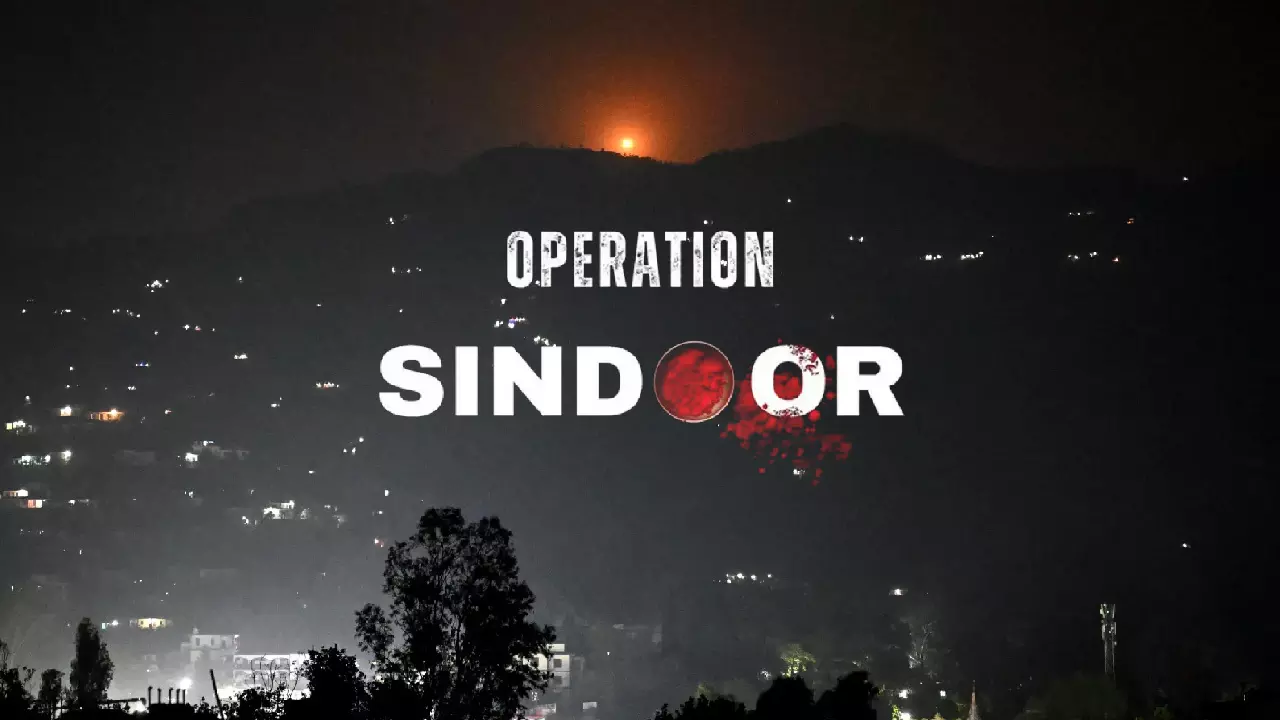
Post the attack, TRF claimed the responsibility for this attack not once but twice within a few hours. Pakistan’s subsequent refusal to acknowledge or curb these terrorists’ networks compelled India to take a responsible but resolute action. In response, on the night of 7–8 May 2025, the Government of India executed “Operation Sindoor,”. The response was non escalatory, precise and targeted terrorist training camps at nine different locations within Pakistan and Pakistan Occupied Kashmir. No military targets were engaged. However, in the early hours of 8 May, Pakistan, in an escalated response launched coordinated drone and missile strikes targeting over a dozen Indian military installations across the Northern and Western theatres, including Srinagar, Jammu, Pathankot, Amritsar, Ludhiana, Bathinda and Bhuj. India’s robust Integrated Counter-drone Grid and layered Air Defence systems intercepted these attacks, recovering debris conclusively traced to Pakistani origin.
Objective and Success
India’s strategic calculus in Operation Sindoor was informed by an unwavering objective: to uphold national sovereignty and protect civilian lives without precipitating a broader military conflagration. By confining military action to terrorist infrastructure, India underscored its non-escalatory posture and respect for established international norms. Pakistan’s reputation as the epicentre of global terrorism is rooted in a number of instances, there are several terrorist attacks around the world where Pakistani fingerprints have been found. Earlier in pursuit of justice for the victims of terrorist attack be it Mumbai in 2008, Pathankot in 2016, Pulwama in 2019 or many others, India provided forensic evidence and urged Pakistan to bring the perpetrators of these attacks to justice. India has also submitted an updated dossier to the UN 1267 Sanctions Committee, documenting Pakistan’s complicity in sheltering and abetting designated terrorist operatives.
Meanwhile, Pakistan’s repeated stone-walling of joint investigative teams despite India’s full cooperation in forensic, call-data and on-site evidence sharing for Mumbai 2008 and Pathankot 2016 probes reveals that its calls for new “joint investigations” are nothing more than delaying tactics. In these circumstances, India has also placed the Indus Water Treaty in abeyance: demographic changes, evolving climate realities and several such factors have led to fundamental changes in the circumstances in which the treaty was concluded. Constant refusal of Pakistan for Government-to-Government negotiations to discuss the modifications is itself a ‘Violation of the Treaty’ and a breach of its spirit of “goodwill and friendship”.
Weapons Used
Indian Air Force (IAF) used advanced systems like SCALP Cruise Missiles, HAMMER Precision-Guided Bombs, and Loitering Munitions also known as “kamikaze drones” to carry out these operations with high accuracy and minimal collateral damage.
Global Implications
Redefining Counter–Terrorism Norms: The operation legitimises conventional military force against sub-conventional terrorist threats, reshaping global counter-terror doctrines.
Erosion of International Mediation Space: India’s assertive stance signals diminishing reliance on third-party mediators, reinforcing its strategic autonomy in regional conflicts.
Doctrinal Influence on Democracies: Other nations grappling with cross-border terrorism may adopt similar proactive military postures, inspired by India’s precedent.
Turbulence in South Asian geopolitics: India-Pakistan relations further deteriorate, reducing the scope for diplomatic dialogue and regional cooperation.
China’s recalibrated strategy: Beijing may either deepen its strategic alignment with Pakistan or reassess its military calculus in the India-China-Pakistan triangle.
Challenges Ahead
Military Escalation Risks: Increased likelihood of Pakistani retaliation or cross-border escalation heightens fears of prolonged conflict or a two-front war with China.
Diplomatic Tightrope: India must balance military assertiveness with global expectations of restraint while maintaining the trust and support of key partners like the US and France.
Evolving Terrorist Threats: Terrorist groups may change tactics by focusing on soft targets, inciting communal unrest, or using asymmetric warfare to undermine internal peace.
Internal Security Vulnerabilities: Increased risk of radicalisation, cross-border infiltration, cyber-attacks, and urban terrorism demands enhanced vigilance and intelligence.
Pakistan’s propaganda leverage: Islamabad may exploit the operation to portray India as the aggressor, consolidate domestic unity, and push a victimhood narrative internationally.
Way Forward
Formally, national doctrine must be formulated outlining India’s response to cross-border terror, eliminating ambiguity and enhancing strategic credibility.
India must own & shape global narrative by presenting her actions as a lawful defence under international norms, particularly Article 51 of the UN Charter.
Upgrading border surveillance, integrating intelligence through fusion centres, and strengthening local policing to pre-empt future threats.
India must sustain global pressure on Pakistan by utilising her growing geopolitical and economic influence through G20, QUAD, SCO, and UNSC engagements.
India must maintain high preparedness for counter-escalation and reinforce deterrence through calibrated force posture and war gaming.
Final Words
Operation Sindoor is a principle-driven military response underpinned by strategic restraint. It was in response to a barbaric terrorist attack on innocent tourists which originated from Pakistan. India had a right to response which it did, in a responsible, restrained, measured and a non-escalatory manner. It marks a pivotal shift in India’s security doctrine—from reactive diplomacy to assertive deterrence—conveying a clear message that terrorism will invite swift retribution and that the responsibility to prevent escalation now rests with the adversary.
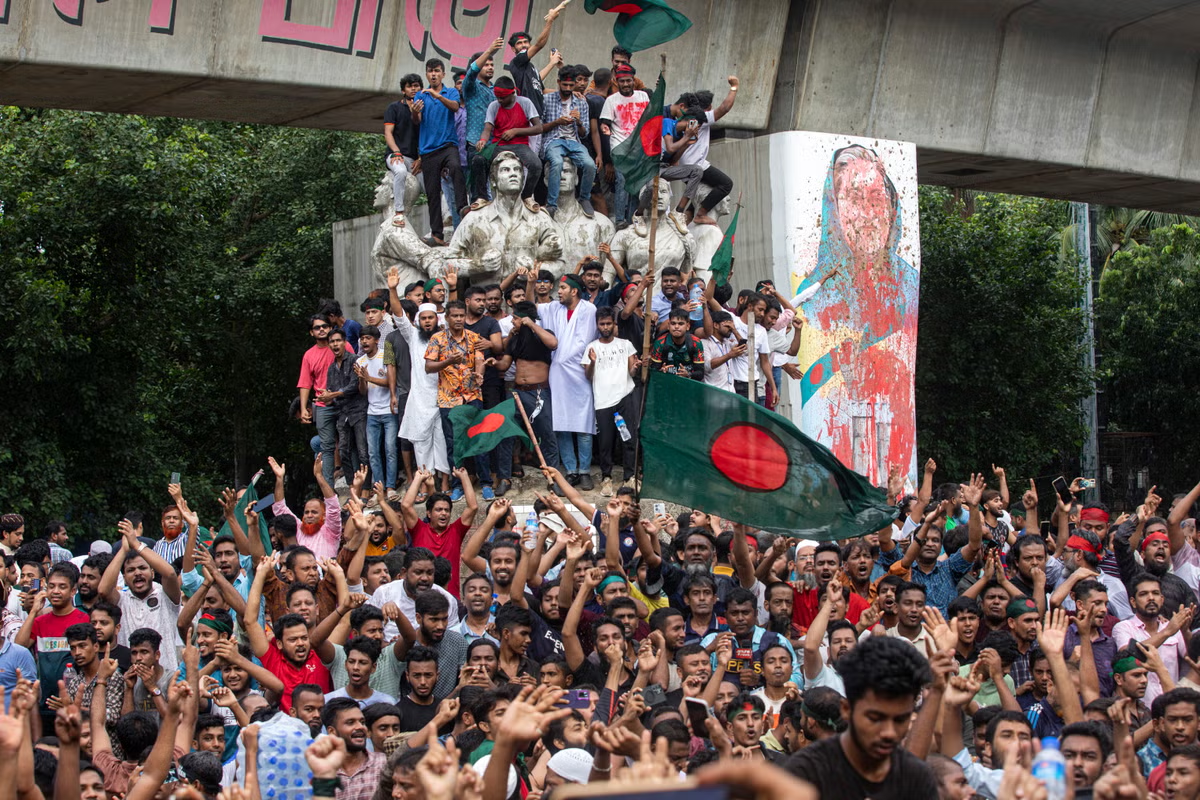
The July Revolution, also known as the July Mass Uprising or the Student-People’s Uprising was a pro-democracy mass uprising in Bangladesh in 2024. It began as a quota reform movement in early June 2024, led by the Students Against Discrimination, after the Bangladesh Supreme Court invalidated the government’s 2018 circular regarding job quotas in the public sector. By early August, the movement evolved into a non-cooperation movement. On 4 August, thousands of protesters convened at Dhaka’s Shahbag intersection in the morning, obstructing it as a form of civil disobedience to demand the resignation of the government. This was followed by hundreds of casualties. The following day, the protesters called for the Long March to Dhaka in defiance of a nationwide curfew to press Sheikh Hasina to resign. The long march of crowded people to Ganabhaban forced her to resign. She, along with her sister Sheikh Rehana, then fled the country to India via military on 5 August 2024. Hasina’s ouster triggered a constitutional crisis, leading to the formation of an interim government led by the country’s only Nobel laureate, Muhammad Yunus, as the chief adviser.
By early August 2024, the unrest resulted in a significant death toll. Initial official reports claimed 215 deaths, but a United Nations investigation later confirmed that at least 650 people were killed. In August, the Interim Government’s Health and Welfare Adviser, Nurjahan Begum, reported that over 1,000 individuals had been killed in the uprising and more than 400 students had lost their eyesight. Additionally, more than 20,000 were injured, and over 11,000 were arrested nationwide. Among the deceased were at least 32 children, according to UNICEF. In January 2025, the interim government of Bangladesh published a gazette containing the initial finalized list of 834 recorded deaths. However, the actual number of casualties may be higher due to restrictions imposed by the previous government, which included barring hospitals from sharing data, confiscating CCTV footage, and burying some victims without proper identification. There were visuals of Indians especially the Hindus were being tortured, temples were being demolished and the statues of the founding father of Bangladesh being destroyed all over the country.
On 12 February 2025, the United Nations Office of the High Commissioner for Human Rights published a thorough report on the events that took place from 1 July to 5 August 2024, which suggested a death toll of 1,400.
Triggered by the reinstatement of a quota system for allocation of civil service positions, initially peaceful student protests in Bangladesh that started in mid-June 2024 were followed by violence and serious human rights violations committed by security forces. Hundreds of people were killed, including at least 32 children, and thousands injured. There are strong indications, warranting further independent investigation, that the security forces used unnecessary and disproportionate force in their response to the situation. Alleged violations included extrajudicial killings, arbitrary arrests and detention, enforced disappearances, torture and ill-treatment, and severe restrictions on exercise of freedoms of expression and peaceful assembly.
Bangladesh introduced a Reservation Policy in 1972. Till 1976, 80 per cent of Government jobs fell under the Reserve category and only 20 per cent of jobs were to be filled on the basis of merit. 30 per cent was reserved for freedom fighters, 10 per cent for war-affected women, and, 40 per cent for the backward districts.
In 1976, the quotas were decreased from 80 per cent to 60 per cent. In 1982, the quotas were reduced to 55 per cent, with three changes. One, the 10 per cent quota for women was thrown open to all women, not just war-affected women. Two, the quota for backward districts was further reduced from 20 per cent to 10 per cent. And, three, a new five per cent quota was introduced for indigenous communities. In 1997, the children of freedom fighters became eligible for the reservation. And, in 2010, it was extended to include grandchildren of freedom fighters.
In 2012, the quotas were increased to 56 per cent by giving a one per cent quota to persons with disabilities. Protests against Bangladesh quota policy were not new. Anti-quota protests took place six years ago. Then, like now, the protests began at Shahbagh in Dhaka, before spreading to other parts of the country.
In January 2018, a petition was filed in the Dhaka High Court seeking re-evaluation of quota policy. In March that year, Dhaka High Court rejected the petition. Protests broke out in April. In October of 2018, the Government abolished the quota for freedom fighters’ families.
On 5 June 2024, the Dhaka High Court ruled that the 2018 Government decision to abolish the quota was illegal, and, re-instated the quota. Subsequently, the Government moved the country’s top court against the High Court ruling. On 1 July, protests broke out. On 4 July, the Bangladesh Supreme Court upholds the High Court ruling. On 11 July, the Supreme Court suspended the High Court ruling, pending a hearing on the Government’s appeal on 7 August.
A combative Bangladesh Prime Minister Sheikh Hasina tried to suppress the movement and initially launched verbal attacks against those who were protesting and called them ‘Razakars’. Razakar is a Persian word meaning volunteer. But, in Bangladesh, it is a pejorative term that stands for traitor. It is used for those accused of collaborating with Pakistan’s Army in 1971 to betray the country. The Razakar was a paramilitary force created by Pakistan to commit war crimes, including massacring civilians, looting, and, rape. The Bangladesh Government brands all collaborators of the Pakistani forces as Razakar.
The Dhaka High Court said: “The freedom fighters are pride of our nation. Thus, we are of the view that during the period of August 15, 1975, to 1996, the freedom fighters, their children and grandchildren have been suffering socially, economically and politically, which makes them one of the most backward sections of the citizen of this country”.
There were compelling arguments to be made against quotas, too. For one, protesters argued that a problem arises when freedom fighters’ quota-holders use it multiple times: First at the time of university admission and later when applying for coveted government jobs. And, two, Bangladesh is facing high youth unemployment. That, coupled with stagnant job-growth in private sector makes a government job with a regular source of income that much more desirable to youths.
Post-Hasina, India lacks deep institutional links with the interim government and broader political spectrum. India’s decision to host Sheikh Hasina in exile has been perceived in Bangladesh as political interference, further exacerbating tensions. Bangladesh is a key partner in China’s Belt and Road Initiative (BRI) and receives significant Chinese investments in infrastructure projects such as ports, roads, energy, telecom, and the Teesta River Restoration. Illegal immigration from Bangladesh continues to strain India’s northeastern states, causing socio-economic and political tensions. The Rohingya refugee crisis has further complicated the issue.
Bangladesh is India’s largest trade partner in South Asia, while India is its second-largest trade partner in Asia. In FY 2023-24, the total bilateral trade stood at USD 12.9 billion.
India’s exports to Bangladesh stood at USD 11.06 billion and India’s imports from Bangladesh were at USD 1.8 billion.
Persistent issues of cross-border terrorism, insurgency support, and trafficking remain with Insurgent groups like United Liberation Front of Asom have reportedly operated camps in Border regions.
Despite economic ties, public perception has soured due to perceived Indian interference in Bangladesh’s internal politics. On the other hand, hatred towards India is not new in Bangladesh. Bangladesh’s mostly uneducated young generation is continually taught by the fundamentalists there to harbour hatred against India in the name of religion. India’s role and Indira Gandhi’s role in the independence of Bangladesh from the clutches of the Pakistan are continually undermined by the heretics there. Coupled with the notorious allies like Pakistan and China, Bangladesh is a constant source of concern for India even though as a nation it has reached the unfathomable bottom of moral, intellectual and existential degradation.
Prime Minister Narendra Modi met with Bangladesh’s Chief Adviser Muhammad Yunus in Bangkok on the sidelines of the BIMSTEC (Bay of Bengal Multi-Sectoral Technical and Economic Cooperation) Summit. This marks their first official interaction since the ouster of former Prime Minister Sheikh Hasina. This opens new vistas for relationship between the two nations. However, India must work on her diplomatic, commercial, cultural and historical leverage on the neighbour. Protection of the Indians irrespective of their religions in Bangladesh must be a priority of the Government. China’s influence on the tiny, inefficient nation must be met with a counter policy of assistance on the basis of loyalty. The water treaty, trade leverages, linguistic proximity, far superior military and intellectual prowess -everything must be rationally, judicially and diplomatically used to make the relation work in favour of India.
1971 3–16 December Third war with Pakistan, culminating in the creation of Bangladesh
Himachal Pradesh becomes the 18th Indian state
A cyclone in the Bay of Bengal, in Orissa State in India, kills 10,000.
16 December – Victory Day of Bangladesh: The Pakistan Army surrenders to the Joint Force i.e. Mukti Bahini (Freedom Force) and the Indian Armed Forces, officially ending the Bangladesh Liberation War and creating the new nation state of Bangladesh.
24th Constitutional amendment act:
Affirmed the power of Parliament to amend any part of the constitution including Fundamental Rights.
India defeated West Indies in Port of Spain Trinidad for the first time ever to clinch the rubber 1-0. Sunil Gavaskar creates world record for scoring 774 runs in four tests. Ajit Wadekar was the captain.
India defeated England in the third and the final Test at the Oval. This happens to be India’s first victory ever on the English soil.
Contempt of Courts Act, 1971
North-Eastern Council Act, 1971
North-Eastern Areas (Reorganisation) Act, 1971
Twenty-year treaty of friendship signed with Soviet Union.
1972 Manipur, Tripura and Meghalaya get statehood.
Japan Air Lines Flight 471 crashed at Palam, Delhi killing 82 of the 87 on board.
India and Bangladesh sign a friendship treaty, after the withdrawal of the Indian troops.
Following Pakistan’s surrender to India in the Indo-Pakistani War of 1971, both nations sign the historic bilateral Simla Agreement, agreeing to settle their disputes peacefully.
Expulsion of Indians from Uganda under Idi Amin regime
M. G. Ramachandran, forms the All-India Anna Dravida Munnetra Kazhagam by splitting from Dravida Munnetra Kazhagam starting a new phase in Dravidian movement
Jharkhand Mukti Morcha was formed for independent statehood of Jharkhand from Bihar on birthday of Birsa Munda
Armed Forces (Assam and Manipur) Special Powers (Amendment) Act amended to include new states and union territories of Northeast India.
Supreme Court of India began hearing of Kesavananda Bharati v. State of Kerala case
Wild Life (Protection) Act, 1972 enacted.
Postal Index Number (PIN Code) introduced in India.
India won Bronze in Hockey in Olympics. India’s only medal in that edition.
1973 P. V. Narasimha Rao resigns as Chief minister of Andhra Pradesh following the resignation of ministers from Coastal Andhra post the 1972 Jai Andhra movement.
Verdict of Kesavananda Bharati v. State of Kerala pronounced. Supreme Court of India upholds basic structure doctrine
Project Tiger launched
Finance Minister Yashwantrao B. Chavan presented a budget with a large deficit, leading to it being called the “Black Budget”.
State of Mysore is renamed Karnataka State.
Chipko movement in Garhwal division
Indira Gandhi inaugurates world’s first Women Police Station in the world at Kozhikode
Bharatiya Jana Sangh leader Atal Bihari Vajpayee and two other leaders drove a Bullock cart to the Parliament of India on the first day of winter session to protest against fuel price hike in India following the oil crisis.
Foreign Exchange Regulation Act was passed.
Code of Criminal Procedure (CrPC) was enacted
1974 18 May the Smiling Buddha is the first nuclear device in underground test.
Bihar Movement started as a movement by students in Bihar led by the veteran Gandhian socialist Jayaprakash Narayan, against misrule and corruption in the Government of Bihar.
smallpox epidemic in East India
A railway strike started by 1.7 million workers of Indian Railways. The strike lasted for 20 days till 27 May 1974 and was the largest recorded industrial action in the world.
Sirima–Gandhi Pact signed to solve the statelessness of Sri Lankan Tamils
India played the first ever ODI. Opposition- England. Played in England.
Coal Mines (Nationalisation) Act, 1973
Thirty-fourth Amendment:
This amendment primarily focused on land reforms and included revised ceiling laws in the Ninth Schedule of the Constitution.
Thirty-fifth Amendment:
This amendment related to the status of Sikkim, granting it the status of an “Associate State” of India.
1975 15 May Sikkim becomes part of Indian Union after a referendum in the Sikkim Assembly.
Satyajit Ray’s documentary Sikkim banned.
Indira Gandhi became the first Prime Minister of India to testify in a court. She appeared before Allahabad High Court in State of Uttar Pradesh v. Raj Narain case
The first Indian satellite, Aryabhata, goes into Earth’s orbit.
Farakka Barrage across Ganges commissioned in West Bengal.
Justice Jagmohanlal Sinha declared PM Indira Gandhi’s election to parliament from Rae Bareli (Lok Sabha constituency) in 1971 Indian general election null and void.
A state of emergency is declared by Prime Minister Indira Gandhi during which the press is censored and 100,000 are jailed.
Kerala Legislative Assembly passed the Kerala Scheduled Tribes (Restriction on Transfer of Lands and Restoration of Alienated Lands) Act, 1975, for restoring land rights to tribals
India’s pathetic performance in 1975 World Cup Cricket. Only victory against East Africa.
Sarvepalli Radhakrishnan, philosopher and statesman, first Vice President of India and second President of India died.
1976 The Rajan case, an infamous case of Police brutality during the Emergency Period. The victim, P. Rajan, a final year Engineering student at Regional Engineering College, Calicut was arrested by police, taken to Kakkayam and allegedly tortured severely which led to his death. It is believed that his body was thrown into the Kakkayam Dam.
A family planning initiative involves the vasectomy of thousands of men and tubal ligation of women, either for payment or under coercive conditions. (The minimum age for marriage is also raised to 21 years for men and 18 years for women.) The son of then-Prime Minister Indira Gandhi, Sanjay Gandhi, is largely blamed for what turned out to be a failed program.
The 42nd amendment Act, 1976, was enacted during the Emergency by the Indian National Congress government headed by Indira Gandhi, changing “Sovereign Democratic Republic” to “Sovereign Socialist Secular Democratic Republic” and modifying “unity of the Nation” to “unity and integrity of the Nation”.
The Regional Rural Banks Act, 1976:
This act established Regional Rural Banks to provide credit and other facilities to small and marginal farmers, agricultural laborers, and artisans in rural areas
India competed at the 1976 Summer Olympics in Montreal, Quebec, Canada and won no medal. This was the first Olympics since 1928 in which the Indian Men’s hockey team did not win an Olympic Medal.
Death of singer Mukesh.
The Indian cricket team defeated the West Indies in a test match at Port of Spain, successfully chasing a then-record target of 403 runs.
Mother Teresa was nominated for the Nobel Peace Prize.
An Indian Airlines Boeing 737 was hijacked to Lahore.
1977 Prime Minister Indira Gandhi, via a radio broadcast, announced that the Lok Sabha would be dissolved and fresh elections would be held in March.
Indira Gandhi’s Congress Party loses general elections. Janata Party comes to power. The Communist Party of India (Marxist) comes into power in West Bengal.
The first non-Congress government sweeps to power following Indira Gandhi’s defeat at the general elections. Morarji Desai becomes prime minister.
M. G. Ramachandran sworn in as Chief Minister of Tamil Nadu. He became the first film actor to be the Chief Minister of an Indian state.
More than 10,000 people die when the 1977 Andhra Pradesh cyclone hits India’s southeast coast. The storm disrupts life for 5.4 million people in 830 villages, and damages 14,000 km2 of cropland.
Emergency was withdrawn in March.
1978 Air India Flight 855, a Boeing 747 passenger jet, crashes into the Arabian Sea after taking off shortly near Bombay, killing all 213 on board.
Morarji Desai led government demonetizes high denomination banknotes
Indira Gandhi is re-elected to the Indian parliament
Indira Gandhi is arrested and jailed for a week for breach of privilege and contempt of parliament.
Operation Barga was a land reform initiative launched in West Bengal, India, in 1978.
The 44th Amendment of the Indian Constitution, enacted in 1978, primarily aimed to address the excesses of the Emergency period (1975-1977) and restore some of the fundamental rights that had been curtailed. It made significant changes to the constitution, including removing ‘Right to Property’ from the list of fundamental rights and making it a legal right. It also introduced safeguards regarding the declaration of national emergencies and strengthened the powers of the judiciary.
India won 15 medals at the Commonwealth Games.
Air Chief Marshal Idris Hassan Latif: He became the first Muslim Chief of Air Staff of the Indian Air Force.
The Janata Party’s internal strife created an opening for Indira Gandhi’s political comeback.
Launch of District Industrial Centre by Minister of Industries George Fernandes
1979 President of India makes official the decision to set up the Mandal Commission
The police under direction of Jyoti Basu, Chief Minister of Communist Party of India (Marxist) -led government of West Bengal, surrounds and opens fire on unarmed refugee settlement of Morichjhapi island in Sunderbans, West Bengal. (Marichjhapi massacre)
The Janata Party splits. Chaudhary Charan Singh becomes Prime Minister.
Charan Singh of Bharatiya Lok Dal, coalition partner of Janata Party became Prime Minister of India with outside support of Congress (I).
C. H. Mohammed Koya sworn in as Chief minister of Kerala. He is the first Muslim League leader to become Chief Minister of an Indian state.
Morvi dam burst, the worst flood disaster in independent India, happens in Gujarat, killing 15000 people
Mother Teresa was awarded Nobel Peace Prize at Oslo
The EVM was designed by a team led by A.G. Rao and Ravi Poovaiah, professors at IIT Bombay. The system was developed for the Election Commission of India by state-owned Electronics Corporation of India (ECIL) and Bharat Electronics Ltd (BEL). Starting in the late 1990s, they were introduced in Indian elections in a phased manner.
The EVMs were first trialled in May 1982 in the by-election to Paravur assembly constituency in Kerala in a limited number of polling stations.
In 1998, the machines were used on an experimental basis across 25 state assembly constituencies during the assembly elections in Rajasthan, Madhya Pradesh and Delhi.
In May 2001, EVMs were used in all constituencies for the state assembly elections in Tamil Nadu, Kerala, Puducherry and West Bengal. In 2004, in the General Election, the EVMs were used in all 543 Parliamentary Constituencies for the first time. Since the time, all state assembly and parliamentary elections are held using the EVMs.
Speaking about innovative solutions, the photosensitive indelible ink was developed to mark the fingers of those who cast their vote, to prevent electoral fraud like double voting. To this day, the special formula to create this ink has not been made public. Research into indelible ink was commenced by the Council of Scientific and Industrial Research (CSIR). In the 1950s, M. L. Goel worked on this research at the Chemical Division of the National Physical Laboratory of India. The ink used contains silver nitrate, which makes it photo-sensitive.
Chaudhary Charan Singh was the only PM of India who did not face the parliament.
Morarji Desai was the oldest PM of India at the time of taking oath (84 years) and he was the first PM to resign. He ws also the first non-Congress PM of India.
BR Ambedkar was defeated in the 1951 LS Election.
Bhairon Singh Shekhawat was the first Vice-President to resign. Jagdeep Dhankhar was the second.
VP Singh was the first PM to step down after facing no confidence motion.
The only person who worked twice as the Acting Prime Minister for 13 days each – Gulzarilal Nanda.
The original name of Lal Bahadur Shastri was Lal Bahadur Varma. He got the surname Shastri (Scholar) after passing out from Kashi Vidyapeeth in Varanasi.
Indira Gandhi was the first person who belonged to Rajya Sabha during nomination as Prime Minister.
Rajiv Gandhi was Pilot by profession. He was the youngest ever Prime Minister of India. He was sworn in as Prime Minister the same day when Indira Gandhi was assassinated.
P V Narsimha Rao was the first Prime Minister from non-Hindi belt (South India).
P V Narsimha Rao was the only PM who was multilinguist and knew and speak 14 languages – Marathi, Hindi, Oriya, Bengali, Gujrati, Tamil, Urdu, English, French, Arabic, Spanish, German and Parsian apart from mother tongue Telugu.
First visually impaired person to become member of parliament – Sadhan Gupta. He belonged to CPI(M) from West Bengal.
The Delimitation Commission, set up under the Delimitation Act, 2002, was entrusted with the task of readjusting all parliamentary and assembly constituencies in the country in all the states of India, except the state of Jammu and Kashmir, based on population ascertained in 2001 Census.
Atal Bihari Vajpayee was the first parliamentarian to give a speech in Hindi to the United Nations General Assembly.
Between 1952 and 2020, two seats were reserved in the Lok Sabha for members of the Anglo-Indian community. They were nominated by the President of India on the advice of the Government of India. In 2020, it was abolished under the 104th Constitutional Amendment Act, 2019.
Lok Sabha constituency in India in terms of number of electors.
Largest: Malkajgiri
State/UT: Telangana
Smallest: Lakshadweep
State/UT: Lakshadweep
Lok Sabha constituency in India in terms of area.
Largest: Ladakh
Smallest: Chandni Chowk
Parliament Library is the second largest library in India after National Library of Belvedere Estate, Kolkata. Parliament library was founded in year 1921.
The old Parliament building was designed by Edwin Lutyens and Herbert Baker and was inaugurated by Lord Irvin, the then Governor General of India in 1927.
Narendra Modi was born in the year India became a Republic, 1950.
in 1980, Dr Prannoy Roy and Ashok Lahiri conducted the first exit poll for India Today magazine, which they repeated during the 1984 election. In 1996, an exit poll was conducted by Doordarshan, by journalist Nalini Singh, with the fieldwork and data gathering carried out by Centre for the Study of Developing Societies (CSDS).
The first IAS officer to become a Member of Parliament (MP) was Yashwant Sinha. He served as an IAS officer before resigning to enter politics and later became an MP. He served as the Minister of Finance from 1990 to 1991 and again from 1998 to 2002, and also as the Minister of External Affairs from 2002 to 2004.
In November 2013, NOTA was introduced in five state elections. Even if the number of electors opting for the NOTA option is more than the number of votes polled by any of the candidates, the candidate who secures the largest number of votes has to be declared elected.
Postal voting in India is done only through the “Electronically Transmitted Postal Ballot Papers (ETPB)” system of the Election Commission of India, where ballot papers are distributed to the registered eligible voters, and they return the votes by post. When the counting of votes commences, these postal votes are counted before those from the Electronic Voting Machines.
During the first election, India’s population was 36 Crore out of which 17.3 crore had the right to vote and the voter turnout was 45.7%
There were 489 seats in the first LS Election. The number of constituencies was increased to 543 in 1977.
The Indian Constitution’s 61st Amendment lowered the age of majority from 21 to 18 for voting in the Lok Sabha and Legislative Assemblies. The Constitution (61st Amendment) Act, 1988, amended Article 326 of the Indian Constitution.
n the 2014 general election, VVPAT was operational in 8 constituencies (Lucknow, Gandhinagar, Bangalore South, Chennai Central, Jadavpur, Raipur, Patna Sahib and Mizoram) as a pilot project.
The last election in India cost around Rs 1 Lakh crore in comparison to a meagre Rs 38 Crore in the first election in 1951.