



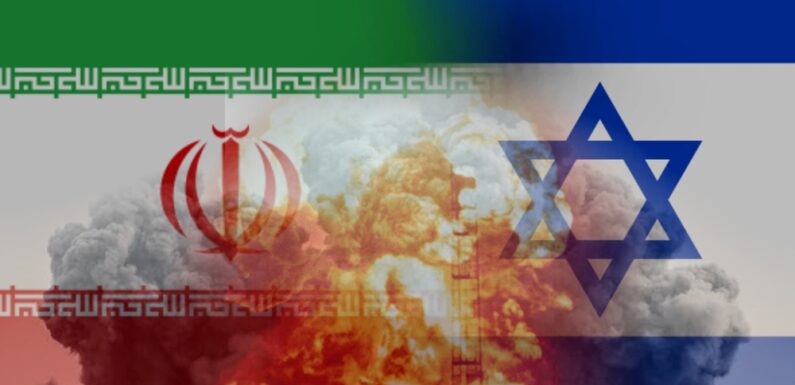
By mid-2025, Iran and Israel were locked in a war of attrition. Israel conducted targeted airstrikes on Iran’s nuclear, military, and civilian infrastructure. Iran launched multiple missile and drone attacks against Israeli cities, infrastructure, and military sites. The damage was significant on both sides, but casualties were asymmetrical: Iran reported over 220 deaths from Israeli strikes, while Israel reported about two dozen fatalities.
Iran’s missile capabilities were degraded by Israeli strikes early in the campaign, and Iran appeared to be holding back much of its arsenal. It was seen as focusing more on messaging and deterrence than trying to decisively defeat Israel. Israel, meanwhile, began to strike not only military sites but also civilian targets like refineries, power grids, and media centres—an attempt to pressure the Iranian regime internally.
The United States formally entered the Israel-Iran conflict with precision airstrikes targeting three of Iran’s key nuclear sites—Fordow, Natanz, and Isfahan. Conducted using B-2 stealth bombers equipped with bunker-busting bombs, the attack included a successful hit on the heavily fortified Fordow Uranium Enrichment Plant, a facility previously beyond Israel’s operational reach.
History- In 1948, the opposition of Arab states to Israel led to the first Arab-Israeli war. Iran was not a part of that conflict, and after Israel won, it established ties with the Jewish state. It was the second Muslim-majority country to do so after Turkey. Israel tried to counter the hostility of Arab states at the time with the “periphery doctrine” under its first Prime Minister David Ben Gurion.
The Pahlavi dynasty, under the Shah Mohammad Reza Pahlavi, ruled Iran then. It had US support, as did Israel, and the two countries maintained ties with each other, with Iran also selling oil to Israel amid its economic boycott by Arab states.
Iran was one of the first countries in the region to recognise Israel after its formation in 1948. It was only after 1979 that their diplomatic ties ended.
The 1979 Revolution: In this phase, a religious state was established in Iran after the Shah was overthrown in the 1979 Islamic Revolution. The regime’s view of Israel changed, and it was seen as an occupier of Palestinian land. Iranian Supreme Leader Ayatollah Khomeini termed Israel “Little Satan” and the United States the “Great Satan”, seeing the two as parties interfering in the region. Iran also sought to grow its presence in the region, challenging the two major powers Saudi Arabia and Israel – both of whom were US allies.
Shadow War after 1979: After 1979, the ties between the countries worsened. While Israel and Iran have never engaged in direct military confrontation, both attempted to inflict damage on the other through proxies and limited strategic attacks. Israel has attacked Iranian nuclear facilities from time to time.
In the early 2010s, it targeted several facilities and nuclear scientists in a bid to prevent it from developing nuclear weapons. In 2010, the US and Israel are believed to have developed Stuxnet, a malicious computer virus was used to attack a uranium enrichment facility at Iran’s Natanz nuclear site, it was the “first publicly known cyberattack on industrial machinery”, according to Reuters.
The two countries have been engaged in multiple proxy conflicts, and actually came face to face during the 2006 Lebanon War.
Begin doctrine
The Begin doctrine effectively dictates that even the potential of an enemy having WMD or weapons of mass destruction (nuclear weapons) can justify preventive strikes from Israel.
Over the years, the ties devolved with little trust on either side. Iran’s support for Hamas and other Iran-backed regional actors, such as Hezbollah, especially after October 7, 2023, has drawn Israel’s ire. Last year, the Israel-Iran relations worsened more when for the first time Iran launched a direct attack aimed at targets within Israel.
Iran-Israel bilateral ties hit new lows when, on June 13 this year, Israel launched “Operation Rising Lion” against Iran.
Several factors have contributed to the recent escalation in the Israel-Iran conflict. Let’s take a closer look.
Ideology and Legitimacy: Iran views Israel as illegitimate and calls for its elimination. Conversely, Israel sees Iran’s ideology as a direct threat to its existence. This mutual existential fear perpetuates hostility.
Nuclear Ambitions: Israel’s primary concern is Iran’s nuclear program. Although Iran claims it is peaceful, Israel and others suspect clandestine weapons work. Israel has long declared it will not allow hostile states to acquire nuclear arms and has used pre-emptive force in the past.
Security and Regional Power: Iran seeks to expand its influence through its military and proxies. Israel, surrounded by unfriendly states, feels strategically encircled. This drives each side to challenge the other militarily, diplomatically, and through intelligence operations.
Geopolitical Alliances: Iran is aligned with powers like Syria, Russia, and China, and supports non-state actors. Israel is backed by the U.S. and increasingly by Gulf Arab states. Each country sees the other’s alliances as threats to its own position in the region.
Prime Minister of Israel, Benjamin Netanyahu framed the biggest attack on Iran in decades as an attempt to remove the “nuclear threat” to Israel. Addressing the people of Iran in a video message, he said the time had come for them to stand up for their freedom from an “evil and oppressive regime”, which has “never been weaker”.
Further explaining Israel’s “pre-emptive strikes”, Netanyahu said Iran had “taken steps that it has never taken before… to weaponize enriched uranium,” and “if not stopped, Iran could produce a nuclear weapon in a very short time,” perhaps even “within a few months.”
Notably, the great strategic concern in Israel is Iran possessing nuclear weapons, and to that end, it has previously launched attacks on scientists (although more targeted and tactical ones). Iran says it is not looking to develop weapons, and has simply invested in nuclear power over the decades.
Natanz nuclear facility
It is Iran’s main uranium enrichment facility, where the country produces most of its nuclear fuel. Located in the central province of Isfahan, the Natanz facility is “the beating heart of the Iranian nuclear programme,” analysts say.
IAEA’s Board of Governors censured Iran: Israel’s attacks came one day after the International Atomic Energy Agency’s (IAEA) Board of Governors censured Iran for the first time in 20 years for not working with its inspectors. On June 12 IAEA passed a resolution declaring Iran as being non-compliant with its non-proliferation obligations. The resolution came on the back of a recent IAEA investigation that found Iran was conducting “secret nuclear activities” at three locations.
Possible Consequences
1. Fears of surging oil prices: Just as global shipping lines and traders had started to breathe a sigh of relief from elevated freight rates, with vessels returning to the crucial Red Sea route from the longer Cape of Good Hope passage, a conflict between two major West Asian powers — Iran and Israel — has reignited fears of surging oil prices and more trade disruptions.
Since the war began on June 13, global Brent crude prices have risen by around 11 per cent — from levels of $67.34 per barrel on June 12 to around $74.6 per barrel on Tuesday. This is a significant spike — and several global financial firms are projecting that oil could cross $100 per barrel in case the crisis continues and worsens.
According to the US Energy Information Administration (EIA), at the end of 2023, Iran accounted for 12 per cent of global oil reserves, with the world’s third largest proven reserves after Venezuela and Saudi Arabia. Iran also has the second largest reserves of natural gas after Russia. However, Western sanctions have ensured that only around 4 per cent of global oil supplies comes from Iran. The primary customer of Iranian oil is China.
2. Risk of wider energy disruption: Experts warn that Iran may respond by closing the strategic Strait of Hormuz — a key passage through which 20–25 per cent of global oil supply transits, as well as a critical corridor for LNG shipments from Qatar and the UAE. Qatar, notably, is among the top LNG suppliers to India.
Strait of Hormuz
Strait of Hormuz is a critical narrow waterway between Iran and Oman, and connects the Persian Gulf with the Gulf of Oman and the Arabian Sea
Red Sea shipping route
The nearly 2,000-km Red Sea connects the Mediterranean Sea with the Indian Ocean via the narrow Suez Canal. Before the Suez Canal’s construction, ships had to go around the Cape of Good Hope in South Africa to travel between Europe and Asia.
3. Rising freight rates: With the escalation in Iran-Israel conflict, there is possibility that freight rates will increase. There is also a possibility that global governance would also be impacted by continuing instability in the Middle East.
4. Nuclear Proliferation Risks: Iran’s possible withdrawal from the Nuclear Non-Proliferation Treaty (NPT) could trigger a regional arms race, undermining global non-proliferation norms.
Impact of the Iran-Israel conflict on India?
The Israel-Iran conflict triggered serious concern among major stakeholders in the region, including India. Indian Ministry of External Affairs urged both Israel and Iran “to avoid any escalatory steps,” saying India has “close and friendly” relations with the two nations.
Operation Sindhu
India announced launching ‘Operation Sindhu’ to evacuate Indian nationals from Iran as fears of an all-out Israeli-American military strikes on Iran increased.
Nonetheless, escalated Israel-Iran conflict puts India’s regional connectivity strategy like the International North South Transport Corridor, and the Chabahar port at risk. India’s key connectivity projects like the Chabahar port in Iran, which links it to Afghanistan and Central Asia, could be affected by regional turmoil. The India-Middle East-Europe Economic Corridor (IMEC) faces risks from the conflict, threatening its progress and impacting bilateral trade and regional economic dynamics.
Notably, The International North South Transport Corridor (INSTC), which was initiated by Russia, India, and Iran, is a multi-modal transportation project linking the Indian Ocean and Persian Gulf to the Caspian Sea via Iran, and onward to northern Europe via St Petersburg in Russia. This corridor aims to reduce transit times to about 25 days — 20 days fewer than the Suez Canal route — and cut freight costs by 30 per cent.
With nearly 8 million Indian nationals residing in West Asia, their safety becomes a critical concern, especially if evacuation becomes necessary.
Chabahar is a deep-water port in Iran’s Sistan-Baluchistan province. It is the Iranian port that is the closest to India, and is located in the open sea, providing easy and secure access for large cargo ships. The port is also part of the proposed INSTC. Chabahar is of strategic importance for India. It offers New Delhi an alternative route that bypasses Pakistan, which does not allow India land access for trade with Afghanistan and Central Asia.
India must tread carefully, preserving its strategic partnerships with both Israel and Iran, while navigating a complex landscape of rising sanctions and geopolitical alignments.

Note gulo bengali language a pawa gele khub valo hoto.