Important World Events 1901- 2000

1901- December 10: First Nobel Prizes awarded.

1904- U.S. began construction of the Panama Canal

1905- Albert Einstein’s formulation of special relativity

1907- Bakelite, the world’s first fully synthetic plastic, invented in New York by Leo Baekeland, who coins the term “plastics”.

1911- Roald Amundsen first reaches the South Pole

1912- The African National Congress is founded. End of the Chinese Empire. Republic of China established. First Balkan war.

1913- Second Balkan war

1914- Panama Canal opens. In the Banana Wars, the United States occupation of Haiti begins. World War I started.

1917- Russian Revolution. The first Pulitzer Prizes announced. October Revolution in the Russian Republic.

Spanish Flu- 1918-1920

1918- The Armistice of 11 November 1918 ends World War I.

1919- Paris Peace Conference writes Treaty of Versailles that punishes Germany. Communist International established in the Kremlin to coordinate Communist parties worldwide. The International Labour Organization is established.

1920- January 10: League of Nations founded. Prohibition in the United States begins.

1921- The Italian National Fascist Party is established by Benito Mussolini.

1922- British Broadcasting Corporation (BBC) established. Irish Free State is established, while the province of Northern Ireland is created within The United Kingdom. Fascism first appeared in Italy with the rise to power of Benito Mussolini in 1922

1923- Time Magazine is first published. Mustafa Kemal Atatürk becomes the first President of the newly established Republic of Turkey.

1924- Vladimir Lenin died. The first edition of the Winter Olympic Games is hosted in Chamonix, France. The Caliphate is abolished by Kemal Atatürk. Ramsay MacDonald becomes Prime Minister of the United Kingdom; first Labour Party prime minister.

1925- Hitler’s Mein Kampf is published.

1927- The United Kingdom of Great Britain and Ireland officially becomes the United Kingdom of Great Britain and Northern Ireland. The Jazz Singer, the first “talkie”, is released. World population reaches two billion. Soviet general secretary Joseph Stalin becomes dictator of the Soviet Union.

1929- The first Academy Awards are presented. Wall Street Crash of 1929 and the beginning of the Great Depression.

1931- Statute of Westminster creates the British Commonwealth of Nations. Christ the Redeemer, one of the seven wonders of the world completed.

1932- The neutron is discovered by James Chadwick. The Nazi party becomes the largest single party in the German parliament.

1933- January 30: Adolf Hitler becomes Chancellor of Germany. Prohibition in the United States is abolished. Germany announces its withdrawal from the League of Nations and the World Disarmament Conference, after the U.S., the U.K. and France deny its request to increase its defence armaments under the Versailles Treaty. Japan announces it will leave the League of Nations.

1934- With the death of Paul von Hindenburg, Hitler declares himself Führer of Germany. Mao Zedong begins the Long March.

1935- Reza Shah of Iran asks the international community to formally adopt the name “Iran” to refer to the country, instead of the name “Persia”.

1936- Beginning of the Spanish Civil War.

1937- Snow White and the Seven Dwarfs is the first feature-length animated movie released.

1939- End of Spanish Civil War; Francisco Franco becomes dictator of Spain. Nazi invasion of Poland triggers World War II in Europe. Soviet invasion of Poland begins 16 days later. Britain and France declare war on Germany; World War II begins. World War II officially began on 1 September 1939, when Hitler unleashed his Blitzkrieg, or lightning war, against Poland

1940- Battle of Britain, the first entirely aerial military campaign, becomes the first significant defeat for the Axis powers. Leon Trotsky is assassinated in Mexico.

1941- December 7: The Japanese Attack on Pearl Harbor leads to the USA joining World War II.

1943- A famine in Bengal kills up to 3 million people.

1944- June 6: D-Day landings in Normandy. Adolf Hitler survives the 20 July plot to assassinate him led by Claus von Stauffenberg. First operational electronic computer, Colossus, comes online.

1945- In early February 1945, the three Allied leaders, Franklin Roosevelt, Winston Churchill, and Joseph Stalin, met at newly liberated Yalta in the Crimea in the Soviet Union in the Yalta Conference. Hitler committed suicide on 30 April 1945. Execution of Mussolini. End of World War II in Europe. The Holocaust ends after ~12 million deaths, including 6 million Jews. The Allied team produced two nuclear weapons for use in the war, one powered by uranium-235 and the other by plutonium as fissionable material, named “Little Boy” and “Fat Man”. These were dropped on the Japanese cities of Hiroshima and Nagasaki on 6 and 9 August 1945 each. Following the end of the war, the Allies famously prosecuted numerous German officials for war crimes and other offenses in the Nuremberg Trials

 June 26: United Nations founded (UN Charter).

1946- First images of the Earth taken from space. In March 1946, Winston Churchill gave a now famous speech while visiting Westminster College in the US which is usually credited as the first use of the term Iron Curtain to refer to the separation of Soviet and Western areas of influence in Europe

1947- Harry Truman establishes the Truman Doctrine of containment of Communism.

1948- The World Health Organization (WHO) founded. The Organisation for Economic Co-operation and Development (OECD) founded. The Soviet Sever-2 expedition becomes the first party to indisputably set foot on the North Pole. The Marshall Plan, an American initiative for foreign aid of $13 billion to 16 Western European countries, comes into effect. The Arab–Israeli War begins. December 10: The Universal Declaration of Human Rights adopted by the United Nations General Assembly.

Beginning of apartheid in South Africa.

1949- The First Indo-Pakistani War ends. COMECON founded by USSR and the Eastern Bloc. The Creation of NATO. Creation of NATO-backed Federal Republic of Germany (West Germany). Albert II became the first mammal launched into space. October 1: Chinese Communist Revolution: Establishment of the People’s Republic of China under CCP Chairman Mao Zedong; The Republic of China relocates to Taiwan. Creation of the socialist German Democratic Republic (East Germany).

1950- North Korean invasion of South Korea begins the Korean War. UN forces reclaim Seoul and invade North Korea. Alan Turing publishes the Turing test, one of the most influential yet controversial concepts in artificial intelligence research.

1952- Queen Elizabeth II becomes Monarch of the Commonwealth realms. Egyptian Revolution under Gamal Abdel Nasser overthrows King Farouk and ends British occupation.

1953- Death of Stalin. Coronation of Elizabeth II. The first colour television is produced.

1955- Death of Albert Einstein. The first large-scale Asian–African or Afro–Asian Conference also known as the Bandung Conference, was a meeting of Asian and African states, most of which were newly independent, which took place on 18–24 April 1955 in Bandung, West Java, Indonesia. Signing of the Warsaw Pact.

1956- Nasser’s nationalisation of the Suez Canal triggers the Suez crisis.

1957- Launch of Sputnik 1 and the beginning of the Space Age. Treaty of Rome, which would eventually lead to the European Union. Laika becomes the first animal launched into Earth orbit. Beginning of the Asian flu in China, leading to a worldwide pandemic that lasts until the following year.

1958- NASA formed.

1959- Beginning of the Vietnam War, which lasts until 1975. First documented AIDS cases.

1960- First crewed descent to the deepest point on Earth, the Mariana Trench. Sirimavo Bandaranaike becomes Prime Minister of Ceylon and the first female Prime Minister in the world. The Beatles form in Liverpool. Year of Africa: Independence of 17 African nations.

1961- Construction of the Berlin Wall. UN Secretary General Dag Hammarskjöld dies in a plane crash.

1962- The Cuban Missile Crisis nearly causes nuclear war.

1963- Martin Luther King Jr. delivers “I Have a Dream” speech at the March on Washington for Jobs and Freedom. Assassination of John F. Kennedy. Vice President Lyndon B. Johnson assumes office as President of the United States.

1967- The Six-Day War, a conflict between Israel and Arab states that resulted in Israel occupying the Gaza Strip, the Sinal Peninsula, the West Bank and the Golan Heights. Association of Southeast Asian Nations (ASEAN) founded.

1968- Assassination of Martin Luther King Jr.

1969- June 20- Apollo 11 Moon landing, in which Neil Armstrong and Buzz Aldrin become the first two humans on the Moon.

1971- Idi Amin seizes power in Uganda.

1972- September 5–6: The Munich massacre, perpetrated by the Black September terrorist organization and aimed at the Israeli Olympic team, results in 17 total deaths.

1973- The first space station, Skylab, is launched. The Yom Kippur War also known as the 1973 Arab–Israeli War, the fourth Arab–Israeli War, the October War or the Ramadan War was fought from 6 to 25 October 1973 between Israel and a coalition of Arab states led by Egypt and Syria.

1974- Watergate scandal: Resignation of Richard Nixon; Vice President Gerald Ford assumes office as President of the United States, the first person not elected as either President or Vice President to take the role.

1975- Microsoft founded in Albuquerque, New Mexico, by Bill Gates and Paul Allen. The Fall of Saigon ends the Vietnam War.

1976- 1976 Argentine coup d’état leads to a military dictatorship in Argentina. Steve Wozniak invents the Apple I and Steve Jobs then convinces Wozniak to sell the system, giving birth to Apple Computer. Operation Entebbe, a successful counter-terrorist hostage-rescue mission carried out by commandos of the Israel Defense Forces (IDF) at Entebbe Airport in Uganda.

1978- The War in Afghanistan begins with the Saur Revolution. Discovery of Pluto’s moon Charon. The Camp David Accords are signed between Israel and Egypt. Louise Brown is the first child successfully born after her mother received in vitro fertilisation treatment. Invention of artificial insulin.

1979- The Iranian Revolution ends. Shah Reza Pahlavi is overthrown and forced into exile. Margaret Thatcher becomes the first female Prime Minister of the United Kingdom. The Uganda–Tanzania War ends with defeat for Uganda and the exile of Idi Amin. The Iran hostage crisis begins. The Soviet–Afghan War begins with the Soviet invasion of Afghanistan. Implementation of China’s one-child policy.

1980- WHO announces the eradication of smallpox. Launch of Cable News Network (CNN). Beginning of the Iran–Iraq War.

1981- Iran releases the 52 U.S. hostages held in Tehran after 444 days. The AIDS epidemic officially begins in the United States, having originated in Africa; making this to be an ongoing pandemic.

1982- The Hama massacre in Syria, a conflict between Syria and the Muslim Brotherhood, results in a decisive Syrian victory and about 10,000 deaths. Falklands War between UK and Argentina. The Falklands War) was a ten-week undeclared war between Argentina and the United Kingdom in 1982 over two British dependent territories in the South Atlantic: the Falkland Islands and its territorial dependency, South Georgia and the South Sandwich Islands. The conflict began on 2 April 1982, when Argentina invaded and occupied the Falkland Islands, followed by the invasion of South Georgia the next day.

First Israeli invasion of Lebanon begins. Michael Jackson releases his landmark album Thriller, the best-selling album of all time.

1983- The Bombing of U.S. Embassy in Beirut results in 63 deaths. Sri Lankan Civil War begins. End of dictatorship in Argentina.

1984- The human immunodeficiency virus (HIV) is recognized as the cause of HIV/AIDS, and research on zidovudine and other treatments gets underway.

1985- 73 years after its infamous disaster, the wreck of the Titanic is found off the coast of Newfoundland by a joint French–American expedition led by Jean-Louis Michel of IFREMER and Robert Ballard of the Woods Hole Oceanographic Institution. Windows 1.0, the first Microsoft Windows operating system, released. First use of DNA fingerprinting.

1986- The Space Shuttle Challenger breaks apart 73 seconds into its flight, killing all seven crew members aboard. Return of Halley’s Comet. The Chernobyl disaster in Ukraine.

1987- The Intermediate-Range Nuclear Forces Treaty is signed in Washington, D.C., by U.S. President Ronald Reagan and Soviet leader Mikhail Gorbachev.

1988- Beginning of the perestroika (“restructuring”), a political movement for reformation within the Communist Party of the Soviet Union during the 1980s associated with Gorbachev and his glasnost (“openness”) policy reform. Morris worm, first computer virus distributed through the Internet. Israeli–Palestinian conflict; beginning with the independent State of Palestine being proclaimed from Algiers.

1989- Revolutions of 1989 bring down Communist and authoritarian regimes around the world. Tiananmen Square Massacre, in which troops armed with assault rifles and accompanied by tanks fired at student-led demonstrations held in Tiananmen Square, Beijing, resulting in an undisclosed number of deaths (estimated in hundreds to thousands). An unknown Chinese protester, “Tank Man”, stands in front of a column of military tanks on Chang’an Avenue in Beijing, temporarily halting them, an incident which achieves iconic status internationally through images taken by Western photographers. November 9: Fall of the Berlin Wall; the Revolutions of 1989 and the collapse of the Soviet Bloc begin in Europe, which leads to the end of the Cold War. The Communist government of Czechoslovakia falls during the Velvet Revolution.

1990- Nelson Mandela is released from Victor Verster Prison, Robben Island outside Cape Town, South Africa after 27 years as a political prisoner. End of the dictatorship of Augusto Pinochet in Chile. Gulf War begins. German reunification. Tim Berners-Lee publishes the first web site, which described the World Wide Web project. Myanmar Armed Forces place Aung San Suu Kyi under house arrest.

1991- The Gulf War ends in US withdrawal and a failed uprising. Elizabeth II becomes the first British monarch to address the U.S. Congress during a 13-day royal visit in Washington, D.C. Boris Yeltsin becomes the first President of Russia. Michael Schumacher, regarded as one of the greatest Formula One drivers in history, makes his Formula One debut at the Belgian Grand Prix.

1992- The Maastricht Treaty is signed, creating the European Union. The Bosnian War begins.

1993- Velvet Divorce between Czech Republic and Slovakia. Oslo accords end First Intifada between Israel and Palestine. Battle of Mogadishu (Black Hawk Down) leaves over 3,000-4,000 people dead. Colombian drug lord Pablo Escobar is gunned down by police.

1994- Establishment of North American Free Trade Agreement (NAFTA). End of apartheid in South Africa and election of Nelson Mandela. The First Chechen War begins. Construction of the Three Gorges Dam begins in Hubei, China.

1995- Establishment of the World Trade Organization. NATO bombing raids in Bosnia end the Bosnian War. Release date of Windows 95.

1996- A sudden storm engulfs Mount Everest with several climbing teams high on the mountain, leaving eight people dead. By the end of the month, at least four other climbers die in the worst season of fatalities on the mountain to date. Dolly the sheep becomes the first successful cloned mammal. The Taliban government takes control of Afghanistan, creating the Islamic Emirate of Afghanistan.

1997- Diana, Princess of Wales is killed in a car accident in Paris. Handover of Hong Kong from the United Kingdom to China.

1998- Nicholas II of Russia and his family are buried in St. Catherine Chapel, 80 years after he and his family were killed by the Bolsheviks in 1918. Google is founded by Larry Page and Sergey Brin. The impeachment of Bill Clinton begins as a result of the Clinton–Lewinsky scandal.

1999- Hugo Chavez becomes President of Venezuela. Euro introduced to the international markets. Coins and banknotes enter circulation in participating countries in 2002. The Second Chechen War begins. Vladimir Putin becomes the President of Russia. The U.S. turns over complete administration of the Panama Canal to the Panamanian Government, as stipulated in the Torrijos–Carter Treaties of 1977

2000- Dot-com bubble bursts, causing stock markets worldwide to crash. Pope John Paul II apologizes for the wrongdoings by members of the Roman Catholic Church throughout the ages. Vladimir Putin is elected President of Russia. Israeli withdrawal from Lebanon. The 2000 Camp David Summit, aimed at reaching a “final status” agreement between the Palestinians and the Israelis, was held between United States president Bill Clinton, Israeli prime minister Ehud Barak and Palestinian Authority chairman Yasser Arafat.

The Battle of the Atlantic took place from 1942 to 1944 and was described as “longest, largest, and most complex naval battle in history”

Johannes Erwin Eugen Rommel popularly known as The Desert Fox was a German field marshal during World War II

Two wars and a near-war in the 1950s became the focus for capitalist versus communist struggle. The first war was the Korean War, fought between People’s Republic of China-backed North Korea and mainly United States-backed South Korea. The Korean Peninsula was a Japanese colony between 1910 and 1945, when Soviet and American troops invaded and divided it along the 38th parallel. A communist government controlled the territory north of the border and a capitalist one controlled the South, with both authorities considering the other one illegitimate and claiming sovereignty over the entire peninsula. North Korea’s invasion of South Korea on 25 June 1950 led to United Nations intervention. General Douglas MacArthur led troops from the United States, Canada, Australia, Great Britain, and other countries in repulsing the Northern invasion. However, the war reached a stalemate after Chinese intervention pushed U.N. forces back, and an Armistice ended hostilities in July 1953, leaving the two Koreas divided and tense for the rest of the century.

After the second war, the Vietnam War, was perhaps the third most visible war of the 20th century. After the French withdrawal from its former colony, on 21 July 1954, Vietnam became partitioned into two halves, much like Korea, along the 17th parallel. Fighting between North and South eventually escalated into a regional war. The United States provided aid to South Vietnam and contributed to propaganda efforts against the North, but was not directly involved until the Gulf of Tonkin Resolution, passed in reaction to a supposed North Vietnamese attack upon American destroyers, brought the U.S. into the war as a belligerent. The war was initially viewed as a fight to contain communism, but, as more Americans were drafted and news of events such as the Tet Offensive and My Lai massacre leaked out, American sentiment turned against the war. U.S. President Richard Nixon was elected partially on a promise to end the war. This Nixon Doctrine involved a gradual pullout of American forces; South Vietnamese units were supposed to replace them, backed up by American air power. The plan went awry, with Nixon deliberately sabotaging peace talks for political gain, and the war spilled into neighboring Cambodia while South Vietnamese forces were pushed further back. Eventually, the U.S. and North Vietnam signed the Paris Peace Accords, ending U.S. involvement in the war. With the threat of U.S. retaliation gone, the North proceeded to violate the ceasefire and invaded the South with full military force. Saigon was captured on 30 April 1975, and Vietnam was unified under Communist rule a year later, effectively bringing an end to one of the most unpopular wars of all time

The Cuban Missile Crisis illustrates just how close to the brink of nuclear war the world came during the Cold War. Cuba, under Fidel Castro’s socialist government, had formed close ties with the Soviet Union. This was obviously disquieting to the United States, given Cuba’s proximity. When Lockheed U-2 spy plane flights over the island revealed that Soviet missile launchers were being installed, U.S. President John F. Kennedy instituted a naval blockade and publicly confronted the Soviet Union. After a tense week, the Soviet Union backed down and ordered the launchers removed, not wanting to risk igniting a new world war

With Cold War tensions running high, the Soviet Union and United States took their rivalry to the stars in 1957 with the Soviet launch of Sputnik. The USSR reached several important milestones, such as the first craft on the Moon (Luna 2) the first human in space (Yuri Gagarin) and the first spacewalk (Alexey Leonov on Voskhod 2). The U.S. pulled ahead eventually with its Mercury, Gemini, and Apollo programs, which culminated in Apollo 11 astronauts landing on the Moon on 20 July 1969

On 26 December 1991, the Soviet Union was officially disbanded into its constituent republics, thus putting a final line under the already exhausted Cold War
Operation Sindoor- The Saga of Valour

Background

On 22 April, Pakistan based terrorist group “The Resistance Front” (TRF) perpetrated a devastating attack in Pahalgam, India.  In this attack 26 innocent tourists were killed in cold blood after segregating them based on their religion. TRF is an offshoot of the well-known Pakistan backed terrorist organisation Lashkar-e-Taiba. 

The Response

Post the attack, TRF claimed the responsibility for this attack not once but twice within a few hours.  Pakistan’s subsequent refusal to acknowledge or curb these terrorists’ networks compelled India to take a responsible but resolute action. In response, on the night of 7–8 May 2025, the Government of India executed “Operation Sindoor,”.  The response was non escalatory, precise and targeted terrorist training camps at nine different locations within Pakistan and Pakistan Occupied Kashmir.  No military targets were engaged.  However, in the early hours of 8 May, Pakistan, in an escalated response launched coordinated drone and missile strikes targeting over a dozen Indian military installations across the Northern and Western theatres, including Srinagar, Jammu, Pathankot, Amritsar, Ludhiana, Bathinda and Bhuj. India’s robust Integrated Counter-drone Grid and layered Air Defence systems intercepted these attacks, recovering debris conclusively traced to Pakistani origin.

Objective and Success

India’s strategic calculus in Operation Sindoor was informed by an unwavering objective: to uphold national sovereignty and protect civilian lives without precipitating a broader military conflagration. By confining military action to terrorist infrastructure, India underscored its non-escalatory posture and respect for established international norms. Pakistan’s reputation as the epicentre of global terrorism is rooted in a number of instances, there are several terrorist attacks around the world where Pakistani fingerprints have been found. Earlier in pursuit of justice for the victims of terrorist attack be it Mumbai in 2008, Pathankot in 2016, Pulwama in 2019 or many others, India provided forensic evidence and urged Pakistan to bring the perpetrators of these attacks to justice.  India has also submitted an updated dossier to the UN 1267 Sanctions Committee, documenting Pakistan’s complicity in sheltering and abetting designated terrorist operatives.

Meanwhile, Pakistan’s repeated stone-walling of joint investigative teams despite India’s full cooperation in forensic, call-data and on-site evidence sharing for Mumbai 2008 and Pathankot 2016 probes reveals that its calls for new “joint investigations” are nothing more than delaying tactics. In these circumstances, India has also placed the Indus Water Treaty in abeyance: demographic changes, evolving climate realities and several such factors have led to fundamental changes in the circumstances in which the treaty was concluded.  Constant refusal of Pakistan for Government-to-Government negotiations to discuss the modifications is itself a ‘Violation of the Treaty’ and a breach of its spirit of “goodwill and friendship”.

Weapons Used

Indian Air Force (IAF) used advanced systems like SCALP Cruise Missiles, HAMMER Precision-Guided Bombs, and Loitering Munitions also known as “kamikaze drones” to carry out these operations with high accuracy and minimal collateral damage.

Global Implications

Redefining Counter–Terrorism Norms: The operation legitimises conventional military force against sub-conventional terrorist threats, reshaping global counter-terror doctrines.

Erosion of International Mediation Space: India’s assertive stance signals diminishing reliance on third-party mediators, reinforcing its strategic autonomy in regional conflicts.

Doctrinal Influence on Democracies: Other nations grappling with cross-border terrorism may adopt similar proactive military postures, inspired by India’s precedent.

Turbulence in South Asian geopolitics: India-Pakistan relations further deteriorate, reducing the scope for diplomatic dialogue and regional cooperation.

China’s recalibrated strategy: Beijing may either deepen its strategic alignment with Pakistan or reassess its military calculus in the India-China-Pakistan triangle.

Challenges Ahead

Military Escalation Risks: Increased likelihood of Pakistani retaliation or cross-border escalation heightens fears of prolonged conflict or a two-front war with China.

Diplomatic Tightrope: India must balance military assertiveness with global expectations of restraint while maintaining the trust and support of key partners like the US and France.

Evolving Terrorist Threats: Terrorist groups may change tactics by focusing on soft targets, inciting communal unrest, or using asymmetric warfare to undermine internal peace.

Internal Security Vulnerabilities: Increased risk of radicalisation, cross-border infiltration, cyber-attacks, and urban terrorism demands enhanced vigilance and intelligence.

Pakistan’s propaganda leverage: Islamabad may exploit the operation to portray India as the aggressor, consolidate domestic unity, and push a victimhood narrative internationally.

Way Forward

Formally, national doctrine must be formulated outlining India’s response to cross-border terror, eliminating ambiguity and enhancing strategic credibility.

India must own & shape global narrative by presenting her actions as a lawful defence under international norms, particularly Article 51 of the UN Charter.

Upgrading border surveillance, integrating intelligence through fusion centres, and strengthening local policing to pre-empt future threats.

India must sustain global pressure on Pakistan by utilising her growing geopolitical and economic influence through G20, QUAD, SCO, and UNSC engagements.

India must maintain high preparedness for counter-escalation and reinforce deterrence through calibrated force posture and war gaming.

Final Words

Operation Sindoor is a principle-driven military response underpinned by strategic restraint.  It was in response to a barbaric terrorist attack on innocent tourists which originated from Pakistan. India had a right to response which it did, in a responsible, restrained, measured and a non-escalatory manner. It marks a pivotal shift in India’s security doctrine—from reactive diplomacy to assertive deterrence—conveying a clear message that terrorism will invite swift retribution and that the responsibility to prevent escalation now rests with the adversary.

India in Decades- Part 6- 2010 to 2023

2010                                     16 people are killed in a bomb explosion at German Bakery in the city of Pune, Maharashtra.

                                                An Indian man is set on fire in Melbourne, Australia, in the latest in a series of attacks on Indian nationals in the country.

                                                Environment ministers from the G4 bloc (IBSA Dialogue Forum & China) meet in New Delhi, India, to agree a common position ahead of future climate change talks.

                                                Russia signs a nuclear reactor deal with India which will see it build 16 nuclear reactors in India.

                                                India test fires two short range missiles, the Dhanush and Prithvi II

                                                The Indian government initiates The Right of Children to Free and Compulsory Education Act to provide free and compulsory education to all children aged between 6 and 14 years, making education a fundamental right for millions of children

                                                India launches its new 2011 biometric census, the largest census in the world.

                                                2010 Dantewada ambush: At least 70 Indian soldiers are killed in an attack by Naxalites in the Dantewada district of Chhattisgarh

                                                Ajmal Kasab, the only surviving member of a group responsible for the 2008 Mumbai attacks, is sentenced to death

                                                The Supreme Court of India tentatively approves the Tamil Nadu government’s new quota law, providing 69% of employment in educational institutions to scheduled castes and tribes and other backward classes.

                                                XIX Commonwealth Games, were held in Delhi, India, from 3 to 14 October 2010.

                                                2010 Kabaddi World Cup in Punjab won by India by defeating Pakistan on 12 April 2010.

                                                Jyoti Basu died

2011                                     102 pilgrims died due to stampede in Sabarimala (Kerala)

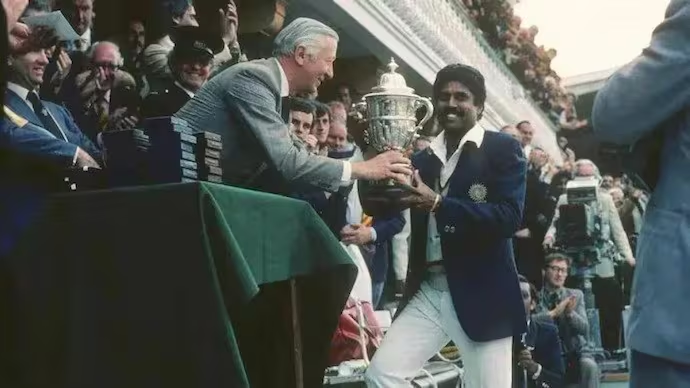
                                                India beat Sri Lanka and wins the 2011 Cricket World Cup.

                                                Dorjee Khandu, Chief Minister of Arunachal Pradesh since 2007, dies in a helicopter crash.

                                                Mamata Banerjee sworn in as the first woman and 11th Chief Minister of West Bengal

                                                West Bengal defeats Manipur to win Santosh Trophy

                                                Gorkhaland Territorial Administration (GTA) agreement signed.

                                                F1 2011 Race comes to India at the Buddha International Circuit, Noida

                                                7 billionth baby born on 31 October 2011, Nargis in Uttar Pradesh

                                                Maoist leader Kishenji killed in encounter in West Bengal.

                                                Lok Sabha passes Lokpal Bill

                                                Orissa was officially renamed Odisha in 2011

                                                MF Hussain, the legendary painter died

                                                Bhimsen Joshi died

                                                Shammi Kappr, Dev Anand, Jagjit Singh died

2012                                     25 July  Pranab Mukherjee, the former Finance Minister is elected as the 13th president of India.

                                                Soumitra Chatterjee selected for Dadasaheb Phalke award for 2011.

                                                London Olympics, this was India’s most successful Olympics in terms of total medal tally till then having won a total of 6 medals (0 gold, 2 silver and 4 bronze).

                                                Ajmal Kasab hanged on account of the 2008 Mumbai Attacks.

                                                2012 Nirbhaya Case – A female physiotherapy student was beaten and gang raped in Delhi, when the victim and a male companion boarded a bus in South Delhi in the evening, after watching a movie. The incident triggered huge outrage and protests across the country and forced the Government of India to react and work on safety for women. Public protests took place in Delhi, where thousands of protesters clashed with police, and other force units.

                                                Sachin Tendulkar scores his 100th International Hundred against Bangladesh in Asia Cup

                                                Sania Mirza and Mahesh Bhupathi won Mixed Doubles Title of the French Open.

                                                Pt. Ravi Shankar, IK Gujral, Yash Chopra,Sunil Gangopadhyayay died

2013                                     Indian helicopter bribery scandal comes to light.

                                                Terror attacks in Hyderabad in Dilsukhnagar area.

Mars Orbiter Mission, is successfully launched into Mars orbit by the Indian Space Research Organisation (ISRO).

100th Indian Science Conference was organised in Kolkata by the Indian Science Congress Association.

Lok Sabha and Rajya Sabha pass the Criminal Law (Amendment) Act, 2013

Lok Sabha passes the National Food Security Bill, 2013

The Sexual Harassment of Women at Workplace (Prevention, Prohibition and Redressal) Act, 2013 came into effect after being approved by Ministry of Women and Child Development

Kedarnath disaster

Bharatiya Mahila Bank, India’s first all-women commercial bank, starts its operations.

Indian cinema completes 100 years. The first Indian silent film Raja Harishchandra was released in 1913.

Rituparno Ghosh died

2014                                     Narendra Modi elected as prime minister of India, Congress was routed in the general elections.

                                                 The state of Telangana was officially formed on 2 June 2014.

Street Vendors Act, 2014 was passed by Rajya Sabha after Lok Sabha passed it on 6 September 2013

India’s second navigation satellite IRNSS-1B was successfully placed in orbit

Supreme Court of India recognised transgender people / hijras as constituting a third gender.

The Pradhan Mantri Jan Dhan Yojana was formally launched

NASA and ISRO signed an agreement to collaborate on an earth-observing satellite called NISAR and future Mars missions

Prime Minister, Narendra Modi launched the Swachh Bharat Abhiyan cleanliness drive

The recipients of the 2014 Nobel Peace Prize were announced, awarded to India’s Kailash Satyarthi and Pakistan’s Malala Yousafzai

Mumbai Monorail began operating.

Bengaluru Metro Green Line starts operation

Rohit Sharma’s 264 against Sri Lanka was scored in 2014 at Eden Gardens. The highest ever individual ODI score till date.

2015                                     NITI Aayog was established to replace Planning Commission of India

Amaravathi was announced to be name of the new capital of Andhra Pradesh, to be built near Thullur.

The Micro Units Development and Refinance Agency Bank (MUDRA Bank) was launched by Prime Minister Narendra Modi

The first International Yoga Day was held

The Digital India programme was launched by Prime Minister Narendra Modi

Shanghai Cooperation Organisation (SCO) decided to induct India as a full member.

India’s first space observatory Astrosat launched

Home Minister Rajnath Singh inaugurated the Indian Police Foundation (IPF) and the Indian Police Institute (IPI) in New Delhi

The birth anniversary of Sardar Vallabhbhai Patel was observed as Rashtriya Ekta Diwas

Vistara, a Tata Sons-Singapore Airlines joint-venture airline made its first flight

Chennai Metro commenced operations.

India was defeated by Australia by 95 runs at the Sydney Cricket Ground in the semi-final of the ICC WC 2015

2016                                     Terror Attacks on Pathankot Air Base.

Police horse Shaktiman was attacked with a stick by BJP cabinet minister Ganesh Joshi during a protest organized by BJP against the Chief Minister of Uttarakhand. The attack and the horse’s later death sparked worldwide outrage

Bihar state imposed a liquor ban

Goods and Services Tax (India) Bill passed in Parliament

2016 Uri attack: Four Jaish-e-Mohammed terrorists attacked an Indian Army brigade headquarters in Uri near the Line of Control, killing 19 soldiers in a pre-dawn ambush.

The Indian Army conducted a surgical strike in response to the Uri attack.

2016 Baramulla attack occurred.

The Indian government demonetized ₹500 and ₹1000 banknotes with immediate effect, causing political uproar on 8th November

                                                India becomes a member of Missile Technology Control Regime.

India signs a billion-dollar defence deal with France to buy 36 Rafale fighter jets.

India launches its first space laboratory, Astro Sat, in its biggest project since its Mars orbiter mission in 2014.

2016 Nagrota army base attack occurred.

The Supreme Court of India ordered cinemas to play national anthem before films

Jayalalithaa died

PV Sindhu and Shakshi Malik win silver and bronze medals in Rio Olympics

2017                                     30 June The Goods and Services Tax (GST) launched, the biggest tax reform in history of India.

                                                Indian Navy’s oldest serving aircraft carrier, INS Viraat is decommissioned after 30 years of service

                                                2017 Unnao rape case.

                                                Kochi Metro inaugurated.

                                                Gorkhaland agitations in Darjeeling, West Bengal.

                                                Ram Nath Kovind took oath as 14th President of India.

                                                Venkaiah Naidu took oath as 13th Vice President of India.

                                                Supreme Court bans instant triple talaq calling it unconstitutional. Instructed central government to pass law in parliament for triple talaq

                                                FIFA U-17 World Cup kick-off in India

                                                Manushi Chhillar wins miss world 2017 and becomes the 6th Miss World from India.

2018                                     The state of Telangana started providing round-the-clock uninterrupted free power supply to 2.3 million agricultural consumers, becoming the first state in the country to do so

                                                290,000 doctors across the country participated in a strike for 12 hours to protest against the National Medical Commission Bill, which seeks to replace the Medical Council of India with National Medical Commission

                                                Bellandur Lake, a heavily polluted lake in Bangalore city caught fire and burned for nearly 30 hours.

                                                Prime Minister, Narendra Modi wins a no confidence motion in the Lok Sabha moved by the Telugu Desam Party over the non-allocation of enough funds to the state of Andhra Pradesh. Interestingly TDP was the party to support BJP in 2024 to form the government.

                                                A five-judge bench of Supreme Court of India unanimously decriminalized Section 377 of Indian Penal Code which criminalize Homosexuality in Navtej Singh Johar v. Union of India case

                                                Former prime minister Atal Bihari Vajpayee dies at 93. He was the first Indian prime minister who was not a member of the Indian National Congress party to have served a full five-year term in office

                                                Supreme Court of India allows entry of women to Sabarimala.

                                                Prime Minister of India inaugurates world tallest statue, Statue of Unity at Gujarat

                                                India hosts Afghanistan for their first-ever Test. India won by an innings and 62 runs

                                                India won 2018 Blind Cricket World Cup.

2019                                     14 February        A convoy of vehicles carrying Central Reserve Police Force (CRPF) personnel on the Jammu–Srinagar National Highway was attacked by a vehicle-borne suicide bomber in the Pulwama district, Jammu and Kashmir, India.

26 February        The 2019 Balakot airstrike was conducted by India, when Indian warplanes crossed the de facto border in the disputed region of Kashmir, and dropped bombs in the vicinity of the town of Balakot in Khyber Pakhtunkhwa province in Pakistan.

27 February        The 2019 Balakot strike from Indian side was given a reply named “Swift Retort”. After a dog fight between Pakistani and Indian Fighter Pilots. Indian Wing Commander Abhinandan Varthaman was captured by the Pakistani side. However, acting to the pressure of various global leaders and bound by the Vienna Convention. Pakistan was Forced to release the Indian Pilot with all due respect.

                                                Narendra Modi gets re-elected as the Prime Minister of India.

The state of Jammu and Kashmir divided into two separate union territories known as Jammu Kashmir and Ladakh by scrapping of Article 370 of the Constitution of India.

Government approves merger of Dena Bank and Vijaya Bank with Bank of Baroda.

Prime Minister of India flagged of the first Vande Bharat Express.

India becomes 4th nation to have Anti-satellite missile

India bans triple talaq.

Millions of residents in Jammu and Kashmir still have no communication with the outside world, eleven days after the Government of India imposed restrictions on 5 August

The President of United States Donald Trump and the Indian Prime Minister Narendra Modi address 50,000 Indian Americans at the Howdy, Modi: Shared Dreams Bright Futures rally in NRG Stadium in Houston, Texas

The Supreme Court of India rules in favour of Hindus over Ram Janmabhoomi temple.

The Citizenship (Amendment) Act, 2019 was passed by the Parliament of India on 11 December 2019. It amended the Citizenship Act of 1955 by providing a path to Indian citizenship for members of Hindu, Sikh, Buddhist, Jain, Parsi, and Christian religious minorities, who had fled persecution from Pakistan, Bangladesh and Afghanistan before December 2014.

2020                                     The first COVID-19 case of the country was reported in Kerala’s Thrissur district.

                                                The 104th Constitutional Amendment which extends reservation for Scheduled Castes and Scheduled Tribes in Loksabha and Legislative assemblies came into effect. The amendment ends Anglo-Indian reserved seats in the Lok Sabha

                                                2020 Delhi Legislative Assembly election’s results announced with Aam Aadmi Party securing 62 of 70 seats to claim an absolute majority in the elections.

                                                U.S. President Donald Trump visited India for a two-day state visit, addressed a “Namaste (Welcome) Trump” event with Prime Minister Narendra Modi in Ahmedabad.

                                                22 March – Janata Curfew: India observed a 14-hour lockdown to prevent the spread of the COVID-19 pandemic.

                                                On 24th March COVID-19 lockdown in India: Prime Minister, Narendra Modi announced a 21-day lockdown throughout India from midnight of 25 March to 14 April to prevent the spread of the COVID-19 pandemic.

                                                Cyclone Amphan hit the eastern part of India and lead to flood like situation in many South-eastern states.

                                                National Education Policy 2020 (NEP 2020), a new policy on education in India approved by the Union Cabinet.

                                                Hathras gang rape and murder in UP

                                                Goa declared first ‘Har Ghar Jal’ State by the Jal Shakti Ministry.

                                                The Uttar Pradesh state cabinet cleared the ordinance of the Uttar Pradesh Prohibition of Unlawful Religious Conversion Ordinance on 24 November 2020 following which it was approved and signed by state Governor Anandiben Patel on 28 November 2020

                                                Madhya Pradesh government approved an anti-conversion bill similar to the Uttar Pradesh one

2021                                     . 16 January – The Indian Government begins a mass vaccination campaign for COVID-19. The vaccine for preventing COVID-19 is prepared by Bharat Biotech.

                                                A 500-page transcript of WhatsApp chat between Arnab Goswami and former Broadcast Audience Research Council CEO Partho Dasgupta was leaked to media. The transcripts revealed that Arnab Goswami was privy to top secret information regarding 2019 Balakot airstrike and 2019 Pulwama attack. It also carried derogatory remarks made by Arnab Goswami on political activists, opposition leaders, media persons like Navika Kumar, celebrity like Kangana Ranaut etc

                                                The Supreme Court issues a stay order thereby suspending the implementation of the three new farm laws in the wake of the ongoing farmer protests

                                                The Motera cricket stadium in Ahmedabad was renamed as Narendra Modi Stadium. It is the world largest cricket stadium with a seating capacity of 132,000

                                                The Gujarat Assembly amends the Freedom of Religion Act, 2003, bringing in stringent provisions against forcible conversion through marriage or allurement, with the intention of targeting “love jihad”. Gujarat became the 3rd state to do so, after Uttar Pradesh and Madhya Pradesh passed similar bills in 2020

                                                A French online journal Mediapart came out with an investigative journalism piece on the Rafale deal controversy, based on an investigation by the French anti-corruption agency Agence Francaise Anticorruption (AFA). In the report, Mediapart alleged that the jet manufacturer had paid nearly one million Euros to an Indian middleman

                                                Nearly 150 decomposed and bloated Human Dead bodies were found floating in River Ganges at Chausa, Buxar district, Bihar. It is believed that these bodies belonged to under-reported death cases of COVID-19 pandemic from neighboring state of Uttar Pradesh

                                                Fugitive Indian diamond trader Mehul Choksi, who committed the Punjab National Bank Scam, is arrested in Dominica

                                                Press Trust of India reports on the basis of data compiled from Swiss National Bank that, funds parked by Indian individuals and firms in Swiss banks rose to a 13 year high of 2.55 billion Swiss franc (over Rs 20,700 crore INR) in 2020.

                                                Government of India creates new ministry named Ministry of Co-operation to strengthen the Cooperative movement in India

                                                Indian weightlifter Saikhom Mirabai Chanu won Olympic silver medal in 2020 Summer Olympics held at Tokyo.

                                                Indian player P. V. Sindhu won Olympic bronze medal in 2020 Summer Olympics held at Tokyo. Becoming the first women athlete and second athlete after Sushil Kumar to win two Olympic medals in Olympics for India

                                                Indian Boxer Lovlina Borgohain, won Olympic bronze medal in 2020 Summer Olympics held at Tokyo in Welterweight category

                                                India men’s national field hockey team won Olympic bronze medal in 2020 Summer Olympics held at Tokyo. This was the first medal for hockey in 40 years in Olympics.

                                                Indian Wrestler, Ravi Kumar Dahiya won Olympic silver medal in 2020 Summer Olympics held at Tokyo

                                                Rajiv Gandhi Khel Ratna Award renamed as Major Dhyan Chand Khel Ratna Award by Prime Minister of India.

                                                Indian athlete Neeraj Chopra won Olympic gold medal in Javelin throw and Indian Wrestler Bajrang Punia won Olympic bronze medal in 2020 Summer Olympics held at Tokyo and India made its highest medal tally in an Olympics with 7 medals

                                                Lok Sabha passes the 127th Constitutional amendment bill, which restores states power to make their own Other Backward Class lists and reverses Supreme Court of India’s May 5, 2021 verdict on Maratha quota

                                                Charanjit Singh Channi assumes office as List of chief ministers of Punjab. He is the first dalit chief minister of the state

                                                Tata Group gets nod to acquire 100% stakes of Air India from Government of India through its subsidiary Talace Private Ltd, as part of Disinvestment of Public Sector Units in India.

                                                Indian men’s football team wins eighth SAFF Championship by beating Nepal with 3–0 margin

                                                Indian model Harnaaz Sandhu wins Miss Universe.

                                                The Karnataka state cabinet approves an anti-conversion ‘love jihad’ bill, making it a law in December 2021

                                                The Chief of Defence Staff Bipin Rawat and 12 others are killed in a chopper crash near Coonoor, Nilgiris district, Tamil Nadu

2022                                     Tableau’s of non Bharatiya Janata Party ruling states like Kerala, Tamil Nadu, West Bengal and Odisha gets rejected by Ministry of Defence from taking part in Republic Day parade sparking controversy

                                                2022 Karnataka hijab row the high court’s interim order was implemented in all schools and colleges across Karnataka, with students, and in some cases teachers, being asked to remove hijabs and burqas outside the school gates.

                                                India’s first private train under the Bharat Gaurav scheme is launched at Southern Railway zone between Coimbatore and Shirdi. This train is operated by South Star Rail based in Tamil Nadu

                                                Prime Minister Narendra Modi commissioned India’s first indigenous aircraft lifter IINS Vikrant in Kochi.

Droupadi Murmu is elected as President of India, making her the first tribal woman and youngest person to the office.

8 Cheetahs transported to Kuno National Park of India’s Madhya Pradesh through a specially designated flight from Namibia, on account of Narendra Modi’s birthday.

5G telecom services launched in India, primarily in selected 13 cities of the country

D. Y. Chandrachud takes oath as the 50th Chief Justice of India, succeeding Uday Lalit.

2023                                     A train collision in Odisha results in at least 296 deaths and more than 1,200 others injured.

                                                Several Indian wrestlers, most notably Bajrang Punia, Vinesh Phogat and Sakshi Malik, protest at the Jantar Mantar, New Delhi against the Wrestling Federation of India (WFI). Vinesh Phogat accused WFI president Brij Bhushan Sharan Singh of sexual harassment.

                                                India surpasses China as the world’s most populous country.

                                                A new income tax law comes into effect. It is a significant change on the old 1961 statute, and contains a controversial “angel tax” provision seeking to capture some of the income entering the country from foreign investors funding India’s start-ups

                                                Ethnic violence breaks out between Kuki and Meitei communities in the state of Manipur.

                                                The New Parliament House in New Delhi is inaugurated by Prime Minister Narendra Modi.

                                                Rajya Sabha passes the Forest Conservation Act Amendment Bill, which allows diversion of forest land for security and strategic purposes

                                                The controversial Delhi Ordinance Bill, which gives power to the central government on appointments and transfers of officials of National Capital, is passed in the Rajya Sabha

                                                Chandrayaan-3 becomes the first space mission to land near the Lunar south pole

                                                In G20 summit held in New Delhi, a consensus is achieved in the form of Delhi Declaration. The summit also witnessed African Union getting a permanent membership in G20

                                                19 September – Women’s Reservation Bill, 2023 (IAST: Nari Shakti Vandan Adhiniyam), was introduced in Lok Sabha on during the special session of Parliament. This legislation seeks to allocate 33 percent of the seats in the directly elected Lok Sabha and state legislative assemblies for women.

20 September – Lok Sabha passes the bill with 454 votes in favour and two against.

21 September – The Rajya Sabha passes the bill unanimously with 214 votes in favour and none against.

28 September 2023 – President Murmu signs the bill.

The Supreme Court of India refuses to legalize same-sex marriage saying it is up to parliament

The Indian Space Research Organisation (ISRO) successfully launches Aditya-L1, India’s first solar observation mission.

2023 IIT-BHU gang rape: A 22-year-old B. Tech student is gang raped by 3 members of the BJP IT Cell in Varanasi, Uttar Pradesh.

2023 Cricket World Cup final: India loses to Australia in the final match of the 2023 Cricket World Cup.

Uttarakhand tunnel rescue: 41 construction workers are rescued from a road tunnel collapse after being trapped for more than two weeks

Please note that entire current affairs of 2024 including thousands of GK information are there in our free Adhyayan Yearbook 2024. To get the copy free, please send a whatsapp to 6295350330

India in Decades- Part 4- 1970s

1971                                     3–16 December                 Third war with Pakistan, culminating in the creation of Bangladesh

                                                Himachal Pradesh becomes the 18th Indian state

                                                A cyclone in the Bay of Bengal, in Orissa State in India, kills 10,000.

                                                16 December – Victory Day of Bangladesh: The Pakistan Army surrenders to the Joint Force i.e. Mukti Bahini (Freedom Force) and the Indian Armed Forces, officially ending the Bangladesh Liberation War and creating the new nation state of Bangladesh.

                                                24th Constitutional amendment act​:

Affirmed the power of Parliament to amend any part of the constitution including Fundamental Rights.

India defeated West Indies in Port of Spain Trinidad for the first time ever to clinch the rubber 1-0. Sunil Gavaskar creates world record for scoring 774 runs in four tests. Ajit Wadekar was the captain.

India defeated England in the third and the final Test at the Oval. This happens to be India’s first victory ever on the English soil.

Contempt of Courts Act, 1971

North-Eastern Council Act, 1971

North-Eastern Areas (Reorganisation) Act, 1971

Twenty-year treaty of friendship signed with Soviet Union.

1972                                     Manipur, Tripura and Meghalaya get statehood.

Japan Air Lines Flight 471 crashed at Palam, Delhi killing 82 of the 87 on board.

India and Bangladesh sign a friendship treaty, after the withdrawal of the Indian troops.

Following Pakistan’s surrender to India in the Indo-Pakistani War of 1971, both nations sign the historic bilateral Simla Agreement, agreeing to settle their disputes peacefully.

Expulsion of Indians from Uganda under Idi Amin regime

M. G. Ramachandran, forms the All-India Anna Dravida Munnetra Kazhagam by splitting from Dravida Munnetra Kazhagam starting a new phase in Dravidian movement

Jharkhand Mukti Morcha was formed for independent statehood of Jharkhand from Bihar on birthday of Birsa Munda

Armed Forces (Assam and Manipur) Special Powers (Amendment) Act amended to include new states and union territories of Northeast India.

Supreme Court of India began hearing of Kesavananda Bharati v. State of Kerala case

Wild Life (Protection) Act, 1972 enacted.

Postal Index Number (PIN Code) introduced in India.

India won Bronze in Hockey in Olympics. India’s only medal in that edition.

1973                                     P. V. Narasimha Rao resigns as Chief minister of Andhra Pradesh following the resignation of ministers from Coastal Andhra post the 1972 Jai Andhra movement.

Verdict of Kesavananda Bharati v. State of Kerala pronounced. Supreme Court of India upholds basic structure doctrine

Project Tiger launched

Finance Minister Yashwantrao B. Chavan presented a budget with a large deficit, leading to it being called the “Black Budget”.

State of Mysore is renamed Karnataka State.

Chipko movement in Garhwal division

Indira Gandhi inaugurates world’s first Women Police Station in the world at Kozhikode

Bharatiya Jana Sangh leader Atal Bihari Vajpayee and two other leaders drove a Bullock cart to the Parliament of India on the first day of winter session to protest against fuel price hike in India following the oil crisis.

Foreign Exchange Regulation Act was passed.

Code of Criminal Procedure (CrPC) was enacted

1974                                     18 May the Smiling Buddha is the first nuclear device in underground test.

Bihar Movement started as a movement by students in Bihar led by the veteran Gandhian socialist Jayaprakash Narayan, against misrule and corruption in the Government of Bihar.

smallpox epidemic in East India

A railway strike started by 1.7 million workers of Indian Railways. The strike lasted for 20 days till 27 May 1974 and was the largest recorded industrial action in the world.

Sirima–Gandhi Pact signed to solve the statelessness of Sri Lankan Tamils

India played the first ever ODI. Opposition- England. Played in England.

Coal Mines (Nationalisation) Act, 1973

Thirty-fourth Amendment:

This amendment primarily focused on land reforms and included revised ceiling laws in the Ninth Schedule of the Constitution.

Thirty-fifth Amendment:

This amendment related to the status of Sikkim, granting it the status of an “Associate State” of India.

1975                                     15 May Sikkim becomes part of Indian Union after a referendum in the Sikkim Assembly.

                                                Satyajit Ray’s documentary Sikkim banned.

                                                Indira Gandhi became the first Prime Minister of India to testify in a court. She appeared before Allahabad High Court in State of Uttar Pradesh v. Raj Narain case

                                                The first Indian satellite, Aryabhata, goes into Earth’s orbit.

                                                Farakka Barrage across Ganges commissioned in West Bengal.

                                                Justice Jagmohanlal Sinha declared PM Indira Gandhi’s election to parliament from Rae Bareli (Lok Sabha constituency) in 1971 Indian general election null and void.

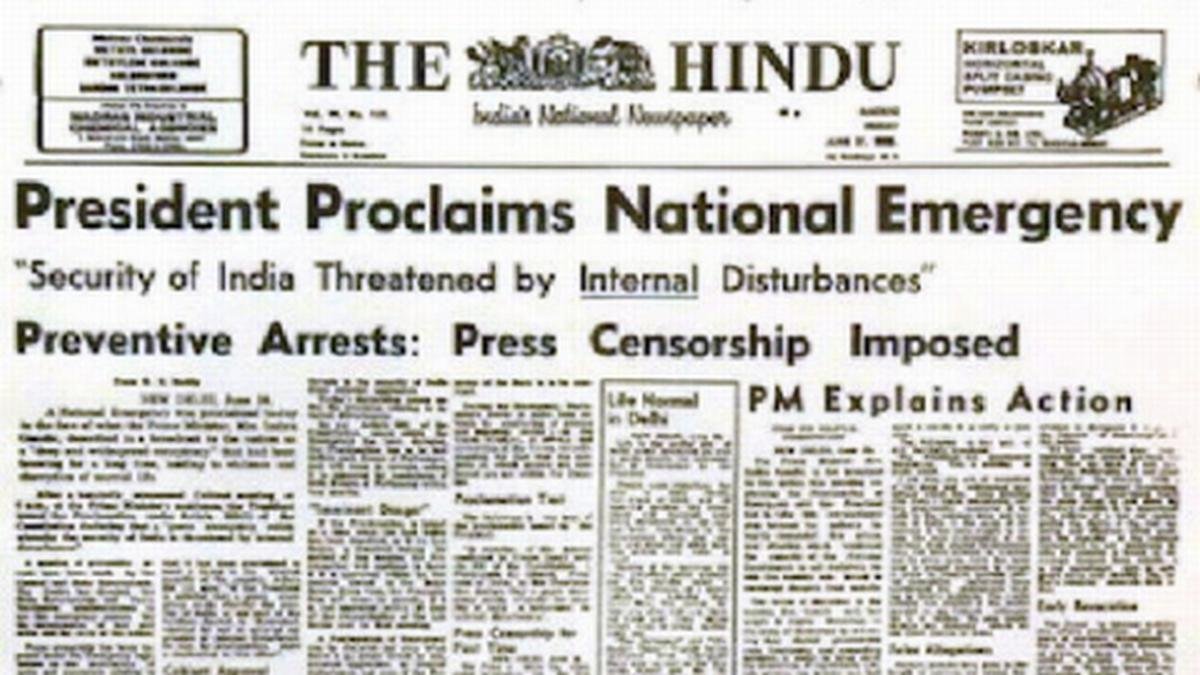
                                                A state of emergency is declared by Prime Minister Indira Gandhi during which the press is censored and 100,000 are jailed.

                                                Kerala Legislative Assembly passed the Kerala Scheduled Tribes (Restriction on Transfer of Lands and Restoration of Alienated Lands) Act, 1975, for restoring land rights to tribals

                                                India’s pathetic performance in 1975 World Cup Cricket. Only victory against East Africa.

                                                Sarvepalli Radhakrishnan, philosopher and statesman, first Vice President of India and second President of India died.

1976                                     The Rajan case, an infamous case of Police brutality during the Emergency Period. The victim, P. Rajan, a final year Engineering student at Regional Engineering College, Calicut was arrested by police, taken to Kakkayam and allegedly tortured severely which led to his death. It is believed that his body was thrown into the Kakkayam Dam.

                                                A family planning initiative involves the vasectomy of thousands of men and tubal ligation of women, either for payment or under coercive conditions. (The minimum age for marriage is also raised to 21 years for men and 18 years for women.) The son of then-Prime Minister Indira Gandhi, Sanjay Gandhi, is largely blamed for what turned out to be a failed program.

                                                The 42nd amendment Act, 1976, was enacted during the Emergency by the Indian National Congress government headed by Indira Gandhi, changing “Sovereign Democratic Republic” to “Sovereign Socialist Secular Democratic Republic” and modifying “unity of the Nation” to “unity and integrity of the Nation”.

                                                The Regional Rural Banks Act, 1976:

This act established Regional Rural Banks to provide credit and other facilities to small and marginal farmers, agricultural laborers, and artisans in rural areas

India competed at the 1976 Summer Olympics in Montreal, Quebec, Canada and won no medal. This was the first Olympics since 1928 in which the Indian Men’s hockey team did not win an Olympic Medal.

Death of singer Mukesh.

The Indian cricket team defeated the West Indies in a test match at Port of Spain, successfully chasing a then-record target of 403 runs.

Mother Teresa was nominated for the Nobel Peace Prize.

An Indian Airlines Boeing 737 was hijacked to Lahore.

1977                                     Prime Minister Indira Gandhi, via a radio broadcast, announced that the Lok Sabha would be dissolved and fresh elections would be held in March.

Indira Gandhi’s Congress Party loses general elections. Janata Party comes to power. The Communist Party of India (Marxist) comes into power in West Bengal.

The first non-Congress government sweeps to power following Indira Gandhi’s defeat at the general elections. Morarji Desai becomes prime minister.

M. G. Ramachandran sworn in as Chief Minister of Tamil Nadu. He became the first film actor to be the Chief Minister of an Indian state.

More than 10,000 people die when the 1977 Andhra Pradesh cyclone hits India’s southeast coast. The storm disrupts life for 5.4 million people in 830 villages, and damages 14,000 km2 of cropland.

Emergency was withdrawn in March.

1978                                     Air India Flight 855, a Boeing 747 passenger jet, crashes into the Arabian Sea after taking off shortly near Bombay, killing all 213 on board.

                                                Morarji Desai led government demonetizes high denomination banknotes

                                                Indira Gandhi is re-elected to the Indian parliament

                                                Indira Gandhi is arrested and jailed for a week for breach of privilege and contempt of parliament.

                                                Operation Barga was a land reform initiative launched in West Bengal, India, in 1978.

                                                The 44th Amendment of the Indian Constitution, enacted in 1978, primarily aimed to address the excesses of the Emergency period (1975-1977) and restore some of the fundamental rights that had been curtailed. It made significant changes to the constitution, including removing ‘Right to Property’ from the list of fundamental rights and making it a legal right. It also introduced safeguards regarding the declaration of national emergencies and strengthened the powers of the judiciary.

                                                India won 15 medals at the Commonwealth Games.

                                                Air Chief Marshal Idris Hassan Latif: He became the first Muslim Chief of Air Staff of the Indian Air Force.

                                                The Janata Party’s internal strife created an opening for Indira Gandhi’s political comeback.

                                                Launch of District Industrial Centre by Minister of Industries George Fernandes

1979                                     President of India makes official the decision to set up the Mandal Commission

                                                The police under direction of Jyoti Basu, Chief Minister of Communist Party of India (Marxist) -led government of West Bengal, surrounds and opens fire on unarmed refugee settlement of Morichjhapi island in Sunderbans, West Bengal. (Marichjhapi massacre)

The Janata Party splits. Chaudhary Charan Singh becomes Prime Minister.

Charan Singh of Bharatiya Lok Dal, coalition partner of Janata Party became Prime Minister of India with outside support of Congress (I).

C. H. Mohammed Koya sworn in as Chief minister of Kerala. He is the first Muslim League leader to become Chief Minister of an Indian state.

Morvi dam burst, the worst flood disaster in independent India, happens in Gujarat, killing 15000 people

Mother Teresa was awarded Nobel Peace Prize at Oslo

TRYSEM scheme launched.

Dhyan Chand, legendary field hockey player died

Jay Prakash Narayan died.

Election- Democracy in India- Interesting Facts

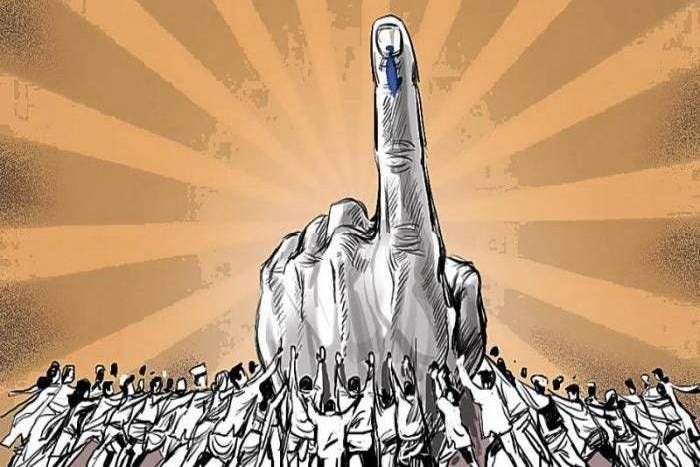
The EVM was designed by a team led by A.G. Rao and Ravi Poovaiah, professors at IIT Bombay. The system was developed for the Election Commission of India by state-owned Electronics Corporation of India (ECIL) and Bharat Electronics Ltd (BEL). Starting in the late 1990s, they were introduced in Indian elections in a phased manner.

The EVMs were first trialled in May 1982 in the by-election to Paravur assembly constituency in Kerala in a limited number of polling stations.

In 1998, the machines were used on an experimental basis across 25 state assembly constituencies during the assembly elections in Rajasthan, Madhya Pradesh and Delhi.

In May 2001, EVMs were used in all constituencies for the state assembly elections in Tamil Nadu, Kerala, Puducherry and West Bengal. In 2004, in the General Election, the EVMs were used in all 543 Parliamentary Constituencies for the first time. Since the time, all state assembly and parliamentary elections are held using the EVMs.

Speaking about innovative solutions, the photosensitive indelible ink was developed to mark the fingers of those who cast their vote, to prevent electoral fraud like double voting. To this day, the special formula to create this ink has not been made public. Research into indelible ink was commenced by the Council of Scientific and Industrial Research (CSIR). In the 1950s, M. L. Goel worked on this research at the Chemical Division of the National Physical Laboratory of India. The ink used contains silver nitrate, which makes it photo-sensitive.

Chaudhary Charan Singh was the only PM of India who did not face the parliament.

Morarji Desai was the oldest PM of India at the time of taking oath (84 years) and he was the first PM to resign. He ws also the first non-Congress PM of India.

BR Ambedkar was defeated in the 1951 LS Election.

Bhairon Singh Shekhawat was the first Vice-President to resign. Jagdeep Dhankhar was the second.

VP Singh was the first PM to step down after facing no confidence motion.

The only person who worked twice as the Acting Prime Minister for 13 days each – Gulzarilal Nanda.

The original name of Lal Bahadur Shastri was Lal Bahadur Varma. He got the surname Shastri (Scholar) after passing out from Kashi Vidyapeeth in Varanasi.

Indira Gandhi was the first person who belonged to Rajya Sabha during nomination as Prime Minister.

Rajiv Gandhi was Pilot by profession. He was the youngest ever Prime Minister of India. He was sworn in as Prime Minister the same day when Indira Gandhi was assassinated.

P V Narsimha Rao was the first Prime Minister from non-Hindi belt (South India).

P V Narsimha Rao was the only PM who was multilinguist and knew and speak 14 languages – Marathi, Hindi, Oriya, Bengali, Gujrati, Tamil, Urdu, English, French, Arabic, Spanish, German and Parsian apart from mother tongue Telugu.

First visually impaired person to become member of parliament – Sadhan Gupta. He belonged to CPI(M) from West Bengal.

The Delimitation Commission, set up under the Delimitation Act, 2002, was entrusted with the task of readjusting all parliamentary and assembly constituencies in the country in all the states of India, except the state of Jammu and Kashmir, based on population ascertained in 2001 Census.

Atal Bihari Vajpayee was the first parliamentarian to give a speech in Hindi to the United Nations General Assembly.

Between 1952 and 2020, two seats were reserved in the Lok Sabha for members of the Anglo-Indian community. They were nominated by the President of India on the advice of the Government of India. In 2020, it was abolished under the 104th Constitutional Amendment Act, 2019.

Lok Sabha constituency in India in terms of number of electors.

Largest: Malkajgiri

State/UT: Telangana

Smallest: Lakshadweep

State/UT: Lakshadweep

Lok Sabha constituency in India in terms of area.

Largest: Ladakh

Smallest: Chandni Chowk

Parliament Library is the second largest library in India after National Library of Belvedere Estate, Kolkata. Parliament library was founded in year 1921.

The old Parliament building was designed by Edwin Lutyens and Herbert Baker and was inaugurated by Lord Irvin, the then Governor General of India in 1927.

Narendra Modi was born in the year India became a Republic, 1950.

in 1980, Dr Prannoy Roy and Ashok Lahiri conducted the first exit poll for India Today magazine, which they repeated during the 1984 election. In 1996, an exit poll was conducted by Doordarshan, by journalist Nalini Singh, with the fieldwork and data gathering carried out by Centre for the Study of Developing Societies (CSDS).

The first IAS officer to become a Member of Parliament (MP) was Yashwant Sinha. He served as an IAS officer before resigning to enter politics and later became an MP. He served as the Minister of Finance from 1990 to 1991 and again from 1998 to 2002, and also as the Minister of External Affairs from 2002 to 2004.

In November 2013, NOTA was introduced in five state elections. Even if the number of electors opting for the NOTA option is more than the number of votes polled by any of the candidates, the candidate who secures the largest number of votes has to be declared elected.

Postal voting in India is done only through the “Electronically Transmitted Postal Ballot Papers (ETPB)” system of the Election Commission of India, where ballot papers are distributed to the registered eligible voters, and they return the votes by post. When the counting of votes commences, these postal votes are counted before those from the Electronic Voting Machines.

During the first election, India’s population was 36 Crore out of which 17.3 crore had the right to vote and the voter turnout was 45.7%

There were 489 seats in the first LS Election. The number of constituencies was increased to 543 in 1977.

The Indian Constitution’s 61st Amendment lowered the age of majority from 21 to 18 for voting in the Lok Sabha and Legislative Assemblies. The Constitution (61st Amendment) Act, 1988, amended Article 326 of the Indian Constitution.

n the 2014 general election, VVPAT was operational in 8 constituencies (Lucknow, Gandhinagar, Bangalore South, Chennai Central, Jadavpur, Raipur, Patna Sahib and Mizoram) as a pilot project.

 The last election in India cost around Rs 1 Lakh crore in comparison to a meagre Rs 38 Crore in the first election in 1951.

India in Decades- Part 2- 1990s

1990                                     Muslim separatist groups begin campaign of violence against Hindus in Kashmir resulting in Exodus of Kashmiri Hindus.

                                                Indian Airlines Flight 605 crashes near the HAL Airport in Bangalore.

Leander Paes He won the 1990 Wimbledon junior title and was briefly ranked the number one junior player in the world.

                                                The last Indian troops are withdrawn from Sri Lanka

                                                The government devalued the rupee and initiated economic reforms.

                                                Operation Floodlight (a literacy drive in Ernakulam)

                                                V P Singh announces implementation of Mandal commission report.

Rajiv Goswami, a commerce student in Deshbandhu College attempted Self-immolation as part of Mandal Commission protests of 1990.

V.P. Singh resigns as prime minister and is succeeded by Janata Dal dissident Chandra Shekhar.

TN Sheshan- 10th Chief Election Commissioner of India

1991                                     Rajiv Gandhi is assassinated by a suicide bomber sympathetic to Sri Lanka’s Tamil Tigers.

                                                Indian National Congress leader P.V. Narasimha Rao becomes Prime Minister.

                                                The Government of India constitutes the Company Law Board as an independent quasi-judicial body thus giving up direct control on matters of company law.

An economic reform programme or Economic liberalisation in India is begun by Prime Minister P. V. Narasimha Rao.

The government of India announces its New Industrial Policy, marking the start of India’s economic reforms.

J. Jayalalithaa is sworn in as chief minister of Tamil Nadu for the first time.

Shiv Sena workers led by Shishir Shinde vandalised Wankhede Stadium Cricket pitch to stop a cricket match between India and Pakistan.

Rapid Action Force established by Union Home Ministry.

Union Territory of Delhi was given the special status of ‘National Capital Territory of Delhi.’ 69th Amendment.

1992                                     Scam of Harshad Mehta was exposed by journalist Sucheta Dalal, which consisted of SBI 500 Crore Scam and illegal usage of loophole in banking system. December    

The demolition of the Babri Masjid, triggering the Bombay riots.

                                                Over 200 people die in Cuttack in Odisha, after drinking illegally brewed                                                  liquor in the 1992 Odisha liquor deaths incident.

Konkani language, Nepali language and Meitei language (officially known as Manipuri language) included in the constitutional scheduled languages’ list and made one of the official languages of the Indian Republic through 71st amendment of Constitution of India.

Zee Television, a Hindi language satellite and cable television station, a first officially regular broadcasting service to start in Mumbai.

Indian Rupee exchange rate collapsed. It was 20 Rs to 1 dollar in January 1992 and it became 30 Rs to 1 dollar in December 1992. A huge 50% depreciation in value

Government of India establishes SEBI, stock exchange regulator.

73rd and 74th Amendment Act, 1992

Panchayati Raj institutions and Urban local bodies were given constitutional status.

India bags no medal at the Olympics

1993                                     A series of bomb blasts, thought to be planted by underworld figures, rock the country’s commercial capital of Bombay, killing some 260 people

                                                Latur earthquake shakes Maharashtra

                                                The All Parties Hurriyat Conference is formed in Kashmir.

                                                supreme court recognised a fundamental right to primary education in the right to life under article 21

                                                The Indian Voter ID card, also known as the Electors Photo Identity Card (EPIC), was introduced nationwide in 1993

1994                                     Kupwara massacre in J&K

                                                S. R. Bommai v. Union of India verdict by Supreme Court of India.

                                                Plague breakout in India from Surat

National Telecommunications policy (NTP) in 1994 which brought changes in the ownership, service and regulation of the national telecommunications infrastructure.

                                                Aishwarya Rai was crowned Miss World 1994 in Sun City, South Africa

                                                Pre-Conception and Pre-Natal Diagnostic Techniques Act, 1994

Sushmita Sen became the first Indian woman to win the Miss Universe title

                                                Airports Authority of India Act 1994

1995                                     West Bengal Chief Minister Jyoti Basu made the first call from Kolkata to inaugurate the cellular services in India.

                                                India joins the World Trade Organization (WTO) which has replaced GATT.

                                                Purulia arms drop case

                                                India’s first internet service started by VSNL

                                                Delhi Metro Rail Corporation Limited founded.

1996                                     Congress suffers its worst electoral defeat ever as BJP emerges as the largest single party.                               

The Amarnath Yatra tragedy in which at least 194 pilgrims are reported to have frozen to death in northern Kashmir after being stranded by violent rain and snow storms.

TN Sheshan received the Ramon Magsaysay Award for government service

In general elections the ruling Congress Party is defeated and Bharatiya Janata Party becomes the largest single party in parliament. Phoolan Devi, former bandit queen is elected to Parliament from the Samajwadi Party.

Atal Bihari Vajpayee, leader of the Bharatiya Janata Party, is elected the new prime minister of India, replacing P. V. Narasimha Rao of the Indian National Congress. However, the party does not receive an overall majority and Vajpayee resigns thirteen days later rather than face a no confidence vote, and is replaced by the United Front, led by Deve Gowda. 13 days Government by Vapayee.

Deve Gowda is sworn in as the head of the United Front, a coalition of 13 parties which Congress supported but did not join. Gowda’s new cabinet brings in powerful regional figures, mixing low-caste and Muslim leaders with veterans of the socialist movement.

At least 194 pilgrims are reported to have frozen to death in northern Kashmir after being stranded by violent rain and snow storms in the Amarnath Yatra tragedy.

Michael Jackson arrived in Mumbai as a part of his History World Tour

Chinese President Jiang Zemin begins his three-day visit, the first visit by a Chinese head of state to India.

Leander Paes won a bronze medal for India in men’s singles at the 1996 Atlanta Olympic Games making him the first Asian in Olympic history to win a tennis medal and the only Indian to date. It was India’s sole medal in 1996 Olympics.

World Cup Cricket in India. India loses in Semi Final against Sri Lanka in Kolkata.

1997                                     India’s Missionaries of Charity chooses Sister Nirmala to succeed Mother Teresa as its leader.

                                                Inder Kumar Gujral, a new leader acceptable to Congress, is sworn in as prime minister.

                                                Jagmohan Dalmiya elected as the president of International Cricket Council

                                                K.R. Narayanan is elected president, defeating T.N. Seshan. First Dalit President.

                                                Mother Teresa dies of heart failure in Kolkata.

                                                Elizabeth II pays a state visit to India.

Arundhati Roy wins Booker Prize for her debut novel The God of Small Things.

 In 1997, an autonomous body was established in the name of Prasar Bharti to take care of the public service broadcasting under the Prasar Bharti Act. All India Radio and Doordarshan, which earlier were working as media units under the Ministry of I&B became constituents of the body.

                                                TRAI (telecom regulator) is established.

1998                                     BJP forms coalition government under Prime Minister Atal Bihari Vajpayee.

India and Pakistan carry out nuclear tests, leading to widespread international condemnation.

EVM machines were used on an experimental basis across 25 state assembly constituencies during the assembly elections in Rajasthan, Madhya Pradesh and Delhi.

The National Highway Development Project is launched.

Netaji Subhas Open University started functioning in Kolkata

Gulzarilal Nanda, Interim Prime Minister of India died.

1999                                     Vajpayee makes a historic bus trip to Pakistan to meet Premier Nawaz Sharif and to sign bilateral Lahore peace declaration.

                                                India’s 13-month-old BJP-led Second Vajpayee government falls after losing a no confidence motion in the Lok Sabha by just one vote

                                                Australian Christian missionary Graham Staines and his two sons were burned to death by Bajrang Dal activists in Kendujhar district, Odisha

Indian Army launches operations to evict Pakistani forces occupying Indian positions on the icy heights in Kargil district, known as the Kargil War.

The Odissa Cyclone devastates eastern state of Odisha, leaving at least 10,000 dead.

Leander Paes and Mahesh Bhupathi became the first Indian pair to win doubles title in Wimbledon Championship.

Two crowded trains collide head-on at a railway station in Gaisal, West Bengal killing 286 people.

Parliamentary elections are held, in which the National Democratic Alliance led by Prime Minister Vajpayee’s BJP wins 298 seats, the Congress-led Alliance 134, and others 105.

Heavily armed hijackers take over an Indian Airlines Airbus carrying 189 people from Kathmandu (Nepal) to New Delhi. After a detour to the United Arab Emirates, it lands at Kandahar, Afghanistan, on 25 December. On 28 December the hijackers make three demands, including the release of 35 terrorists and a sum of $200 million. On 31 December the hijackers, who stabbed a man on the plane to death, free their hostages after reaching agreement with India for the release of three terrorists in Kashmir.

Shankar Dayal Sharma, former president of India and Chief Minister of MP died.

India in Decades- First Part 1980s

1980                                     Indira Gandhi returns to power heading the Congress party splinter group, Congress (Indira).

                                                Sanjay Gandhi is killed in a plane crash near Safdarjung Airport.

BJP formed

The Indian Hockey team won the Gold in the Olympics, the last till date.

B. P. Mandal, chairman of the Backward Classes Commission, submitted his report to the government.

The infamous Bhagalpur blinding case which was later depicted in the Bollywood movie ‘Gangajal’

                                                The Forest (Conservation) Act, 1980

1981                                     Subhas Mukhopadhyay, Physician created World’s second IVF died

                                                Infosys is founded in Pune.

                                                Nargis Dutta died

                                                Census in India

Around 45 people got killed due to a stampede at Qutb Minar resulting in closure of Minaret for tourists

1982                                     INSAT-1A launched; deactivated in September.

NABARD established through act of Parliament following B. Sivaraman Committee recommendation.

                                                9th Asian Games held in Delhi.
                                                Doordarshan begins testing of Colour television broadcast in India

                                                Acharya Vinoba Bhave died

Bijon Setu massacre seventeen Ananda Margis were set ablaze at Bijon Setu in Dhakuria in south Kolkata. No one has been convicted of the murders

EVMs introduced in India

Future Prime Minister of India Manmohan Singh becomes Governor of the Reserve Bank of India

1983                                     N. T. Rama Rao NTR’s nine-month-old Telugu Desam assumes power in AP becoming a challenger post Loknayak Jayprakash Narayan against Indira Gandhi.

India won World Cup for the first time, in one day international Cricket led by Kapil Dev.

                                                Bandit queen Phoolan Devi surrenders.

Subrahmanyan Chandrasekhar received the Nobel Prize in Physics

Nellie massacre: over 2,000 people, mostly Bangladeshi Muslims, were massacred during the Assam agitation

1984                                     Squadron Leader Rakesh Sharma is launched into space, aboard the Soyuz T-11.

Troops storm Golden Temple, the Sikhs’ most holy shrine, after Jarnail Singh Bhindranwale seeks refuge inside. There are a movement to flush out Sikh separatism and calls for secularism, called Operation Blue Star. “Anti-Sikh Riots 1984”.

Indira Gandhi is assassinated by her bodyguards; her son, Rajiv, takes over.

Many Sikhs were killed due to the assassination of Indira Gandhi. see 1984 anti-Sikh riots.

Bachendri Pal becomes first Indian women to reach the summit of Mount Everest

India’s first metro Kolkata metro started

India bags no medal at the Olympics

Bhopal disaster: A methyl isocyanate leak from a Union Carbide pesticide plant in Bhopal, Madhya Pradesh, kills more than 2,000 people outright and injures anywhere from 15,000 to 22,000 others

The first 3D film in India My Dear Kuttichathan was released

1985                                     Karamchedu massacre of Dalits in Andhra Pradesh.

                                                Narmada Bachao Andolan started by Medha Patkar

                                                Bombing on Air India Flight 182- Kanishka

Terrorist and Disruptive Activities (Prevention) Act TADA came into effect after presidential assent.

India wins B&H World Champion Cricket Trophy. Ravi Shastri Player of the Series.

Indira Gandhi National Open University is established by an Act of Indian Parliament.

The Narcotic Drugs and Psychotropic Substances Act is passed by Parliament came into force.

The Administrative tribunals in Delhi, Mumbai, Calcutta and Allahabad were established by Administrative Tribunals Act, 1985.

Chakravarty Committee was set up by the RBI to review the working of monetary system. Its recommendations had far reached consequences eventually removing India from the 500-year-old silver standard

The 52nd Amendment of the Indian Constitution, enacted in 1985, is also known as the Anti-Defection Law

1986                                      Contract signed between the Government of India and Swedish arms company Bofors for supply of 410 155 mm Howitzer field guns. (Bofors deal)

Operation Black Thunder conducted to flush out remaining Sikh extremists from the Golden Temple

                                                a new National Policy on Education announced by the Government

                                                Inland Waterways Authority of India came into existence.

Supreme Court of India delivered landmark judgement which upholds Freedom of speech and expression in Bijoe Emmanuel Vs State of Kerala case. In this case court said that no law mandates singing National Anthem of India compulsory

Environment Protection Act that was passed in month of May in consequence to Bhopal disaster, came into force.

                                                Consumer Protection Act

Australia-India test cricket match ends in a tie at the M. A. Chidambaram Stadium, Chepauk, Chennai, becoming only the second tied test in the history.

1987                                     India deploys troops for peacekeeping operation in Sri Lanka’s ethnic

conflict.

Board for Industrial and Financial Reconstruction set up and became operational with effect from May reflecting concerns related to Industrial Sickness and republic day

Sunil Gavaskar becomes the first man to score 10,000 runs in Test cricket

The Union territory was split, and Goa was elevated as India’s twenty-fifth state, with Daman and Diu remaining Union Territories

Operation Poomalai by India in Jaffna.

Roop Kanwar case – last known incident of Sati in India, occurred at Sikar district

The South Asian Games are held in Calcutta

World Cup Cricket in India for the first time

Mizoram became the 23rd state of India on February 20, 1987

Arunachal Pradesh became a state on February 20, 1987

1988                                     SEBI was established by The Government of India on 12 April 1988 and given statutory powers in 1992 with SEBI Act 1992 being passed by the Indian Parliament.

                                                Viswanathan Anand became first Grandmaster (chess) from India

                                                Janata Dal formed under the leadership of V. P. Singh.

                                                The National Housing Bank established as an apex body of housing finance and to promote activities in housing development.

                                                Rajya Sabha passes the Sixty-first Amendment of the Constitution of India which brings down voting age from 21 to 18

                                                First Cabinet meeting outside New Delhi held at Sariska, Rajastham

                                                The infamous Rupan Deol Bajaj case involving KPS Gill.

India bags no medal at the Olympics

                                                Maximum lending rate abolished. Banks free to charge customers according to their credit record.

                                                Death of Raj Kapoor

1989                                     Falling public support leads to a Congress defeat in general election.

                                                The National Front (India), headed by V. P. Singh and led by Janata Dal, is formed and storms into power with outside support from BJP and CPI(M).

                                                16-year-old Sachin Tendulkar makes his test debut against Pakistan

                                                The first Darjeeling Gorkha Hill Council elections took place and Gorkha National Liberation Front under leadership of Subhash Ghisingh.

                                                India’s first Intermediate-range ballistic missile, Agni was successfully launched from Chandipur, Odisha. It elevated India into a prestige league of only five nations in world with IRBM strategic capability. This was a landmark moment under Integrated Guided Missile Development Programme

Please note that this additions may be made to this content. So, keep checking.

Duare Sarkar- An Analysis

West Bengal government’s flagship governance model – Duare Sarkar. Duare Sarkar is a paradigm shift from traditional public administration to an e-governance-driven service delivery mechanism, in which the government is found available at the doorsteps of citizens, “Leaving no one behind.” The scheme was launched in December, 2020. Through this outreach camps are held at Gram Panchayat level at the blocks and ward level at the municipalities. So far, approximately 1 lakh such outreach camps have been held in different editions of Duare Sarkar and more than 60% of the state population reaped the benefits of such schemes. Schemes like Lakshmir Bhandar, Rupashree, Caste certificate, Swasthya Saathi, Kanyashree, Taposhili Bondhu, Shikshashree, Kisaan Credit Card have been facilitated through Duare Sarkar. As of the latest edition, total 37 schemes have been brought under the umbrella of Duare Sarkar. Under this governance model, intimation is given to the residents about the schedule of such camps and in the first phase, facilitation is done to apply for the schemes whereas in the later phases, applications are collected and services are delivered. Linking of Duare Sarkar with innovative schemes like Paray Samadhan has increased its outreach.

In addition, the Duare Sarkar campaign includes the Paray Samadhan component, which was designed to address the numerous petitions and applications received from citizens. These petitions often highlighted gaps in infrastructure, supply and services, and manpower in public institutions. Through Paray Samadhan, the government seeks to resolve local issues through small interventions and community participation, with the ultimate goal of solving community-level problems at the local level. As part of the project, the West Bengal government has identified the key stakeholders – State Government, Common Service Centres (CSCs), and citizens. A citizen can book an appointment at the Common Service Centre (CSC) to avail of any service. A CSC member will visit the citizen’s address as per the scheduled appointment. During the visit, the CSC executives will provide information and assistance on the service chosen by the citizen

For this unique model of governance, the West Bengal government received ‘platinum award’ from President Draupadi Murmu at the ‘Digital India Awards’, instituted by the Centre’s ministry of Electronics & IT apart from the prestigious SKOCH Award and Duare Sarkar has been universally hailed as a paradigm shift from the regular mode of governance.

How the scheme has changed the governance landscape?

  • Doorstep service delivery
  • Time bound approach
  • All-inclusive approach
  • A shift from bureaucratic red-tapism
  •  Single window mode of governance
  • Humanitarian approach of governance
  • Digital governance
  • Strengthening of the Panchayati Raj Institutions

Criticisms

  • Political manoeuvring in venue selection
  • Growth of intermediaries in the name of facilitation
  • Increase in number of frivolous applications
  • Undeserving beneficiaries are reaping benefits due to lack of scrutiny
  • Lack of accountability in case of failure of service delivery
  • Heavily dependent of internet connectivity which is often below par in rural areas

Way Forward

However, the impact of Duare Sarkar in changing the dynamics of governance in West Bengal is undeniable. It has certainly improved the interaction between the state government and its citizens; between the rural and urban areas. It has bridged the gap between the public and the government while ensuring that public services are extended to the rural populace in a better way. It has brought effectiveness, efficiency, and accountability to the processes that were otherwise lacking in the delivery of public services. The roll-out of the project has led to the seamless delivery of various government welfare programs and initiatives to its citizens in a timely and transparent fashion, bringing about positive change for the betterment of the state. For better governance, the time frame should be enhanced for better scrutiny of the applications. Use of AI may be encouraged for screening of applications. The number of venues may be increased for better dispersion. Overall, holistic management, better accountability with more vigilant approach is recommended for such novel initiative to reach out to maximum beneficiaries.

To get admission in our Sociology Optional, download our app now using the following link

https://play.google.com/store/apps/details?id=co.penny.oecgd&pcampaignid=web_share

Sociology Course Link

https://oecgd.courses.store/679799

Cryptocurrency

Cryptocurrency is a form of digital currency that uses cryptography to secure transactions and control the creation of new units. Bitcoin, launched in 2009, was the first widely adopted cryptocurrency. Unlike regular currencies which are issued by central banks, cryptocurrencies operate independently of any central authority. The transactions are recorded on a decentralised public ledger called the blockchain.

Types of Cryptocurrencies

Cryptocurrencies can be categorized based on their purpose and functionality. The main types include:

Bitcoin (BTC)

The first and most well-known cryptocurrency. Primarily used as a digital store of value and a medium of exchange. Often referred to as “digital gold.”

Altcoins (Alternative Coins)

Cryptocurrencies other than Bitcoin, often developed to improve or offer different features. Examples include:

Ethereum (ETH): Focused on smart contracts and decentralized applications (dApps).

Litecoin (LTC): Known for faster transaction speeds than Bitcoin.

Ripple (XRP): Designed for fast, low-cost international payments.

Stablecoins

Cryptocurrencies pegged to stable assets like fiat currency or commodities (e.g., USD or gold) to reduce price volatility.

Examples: Tether (USDT), USD Coin (USDC), DAI.

Utility Tokens

Used within specific platforms to access services, pay fees, or participate in network governance.

Examples: Binance Coin (BNB), Chainlink (LINK).

Security Tokens

Represent ownership of an asset, such as real estate or stocks, and are subject to securities regulations.

Examples: Tokens issued during security token offerings (STOs).

Privacy Coins

Focus on anonymous transactions by concealing user identities and transaction details.

Examples: Monero (XMR), Zcash (ZEC).

Meme Coins

Cryptocurrencies inspired by internet memes or jokes, often speculative and community-driven.

Examples: Dogecoin (DOGE), Shiba Inu (SHIB).

Governance Tokens

Allow holders to vote on decisions regarding the development and management of a blockchain or decentralized application.

Examples: Uniswap (UNI), Aave (AAVE).

Central Bank Digital Currencies (CBDCs)

Digital currencies issued by central banks, representing fiat currencies in a digital format.

Examples: Digital Yuan (China), e-Krona (Sweden).

Impact

Bringing the next level of globalisation as the cryptocurrency is digital currency and easily available across the international borders.

Emergence of one currency for the countries of the world which are decentralised and not related to any country. This may make fiat money redundant in the future.

It has made it easier for entrepreneurs to reach international markets rather than strictly sticking to the national markets.

Fast and Cheap Transactions: Cryptocurrencies are way cheaper to use to execute international transactions making transactions faster and accurate, there are less chances of fraud.

However, it takes away the sovereign power of issuing currency. Thus, making economic policy of the government ineffective. It also makes capital more volatile posing risk to macroeconomic stability.

New Investment Destination: There is a limited supply of cryptocurrency – partially like gold. Moreover, the last few years have seen the price of cryptocurrencies rising faster than other financial instruments.

Due to this, cryptocurrencies can become a preferred investment destination. People are investing more here than keeping in banks.

Use of cryptocurrency by terrorist organization, drug cartels etc negatively impacts the global society and the anonymity of its use has potential to increase crime.

Blockchain Technology: The transactions are recorded in encrypted ‘blocks’ that are chained together chronologically and distributed across the network.

This creates an immutable, transparent ledger of all transactions validated by consensus algorithms.

Cryptocurrency Limitations

Cryptocurrencies, while offering numerous benefits, also come with certain limitations, including high volatility, susceptibility to criminal activities, and potential threats to energy security.

High volatility: Cryptocurrencies, due to the lack of a central regulatory agency, are subject to high fluctuations.

For instance, the Reserve Bank of India has warned against cryptocurrency transactions, citing potential risks to financial stability.

Financial instability: The widespread adoption of cryptocurrencies and large volume of anonymous transactions could undermine monetary policy effectiveness, exacerbate fiscal risks, and threaten global financial stability.

The IMF, for example, has warned El Salvador, which has adopted Bitcoin as legal tender, about the risks associated with unregulated assets.

Cyber threats: Cryptocurrency platforms are vulnerable to hackers and malicious use, leading to potential issues such as system trading manipulation and other fraudulent activities.

For instance, private keys stored by wallet service providers are often prone to malware or hacking.

Criminal activities: The anonymous nature of transactions raises concerns about potential misuse for activities like terror financing and money laundering.

A global framework has been suggested for dealing with crypto assets, which includes licensing crypto service providers and implementing anti-money laundering and counter-terrorist financing standards.

The legal status of cryptocurrencies in India

It has been a topic of considerable debate and regulatory scrutiny. Cryptocurrencies are not illegal in India, meaning individuals can buy, hold, and trade cryptocurrencies. However, the Indian government and regulatory bodies have expressed concerns over the risks associated with cryptocurrencies and have been working towards establishing a regulatory framework.

Regulatory Developments:

1. Supreme Court Ruling (2020): The Supreme Court of India lifted the Reserve Bank of India’s (RBI) ban on cryptocurrency transactions. The RBI had initially imposed restrictions that prevented banks and financial institutions from providing services related to cryptocurrencies. The Supreme Court’s decision was seen as a significant victory for the Indian crypto industry.

2. Taxation: In the 2022 budget, the Indian government announced a 30% tax on income from cryptocurrency transactions, along with a 1% tax deducted at source (TDS) on such transactions. This move was interpreted as a step towards recognizing and regulating the crypto market, even though cryptocurrencies have not been given legal tender status.

3. Regulatory Proposals: The Indian government has been considering the introduction of a specific legislative framework for cryptocurrencies. There have been discussions about a bill that aims to regulate digital currencies, which might include provisions for the creation of an official digital currency issued by the RBI, and for the regulation or banning of certain private cryptocurrencies.

4. RBI’s Stance: The Reserve Bank of India has maintained a cautious stance towards cryptocurrencies, citing concerns over financial stability, investor protection, and the potential for misuse for illicit activities. The RBI has also been exploring the possibility of launching an official digital currency (Central Bank Digital Currency – CBDC).

At present, El Salvador and the Central African Republic (CAR) are the only two countries in the world where Bitcoin functions as a legal currency.

Cryptocurrency represents a revolutionary shift in finance, offering decentralized, secure, and transparent transactions. While challenges like volatility and regulation persist, its potential to enhance financial inclusion and foster innovation is undeniable. As adoption grows, cryptocurrencies may reshape economies, enabling a more accessible, efficient, and borderless digital financial ecosystem.

Those willing to be a part of my biggest academic project ‘Eklavya Descriptive Bengali English Course’ 2025-26 are requested to send a WhatsApp to 6295350330, the official number of Adhyayan Academy. Before they send their WhatsApp, they are also requested to go through the article below

10 Years of AMRUT

India marks a significant milestone as the Atal Mission for Rejuvenation and Urban Transformation (AMRUT) completes 10 years since its launch on June 25, 2015. Introduced as a transformative initiative to improve the quality of life in urban areas, AMRUT has focused on delivering basic infrastructure and services—especially water supply, sewerage, urban mobility, and green spaces—to citizens across 500 cities and towns and almost 60% of the total urban population of India.

Rajasthan was the first state in the country to submit State Annual Action Plan under (AMRUT). The scheme is dependent with public–private partnership (PPP) model. If required, various other schemes like Swachh Bharat Mission, Housing for All 2022, along with the local state schemes like that related to water supply and sewerage and other infrastructure related schemes can be linked to AMRUT.

Nodal Ministry: Ministry of Housing and Urban Affairs

Scheme Type: Centrally sponsored scheme, funds shared among States and UTs based on urban population and number of towns.

Mission

The purpose of Atal Mission for Rejuvenation and Urban Transformation (AMRUT) is to

  • ensure that every household has access to a tap with assured supply of water and a sewerage connection
  •  (ii) increase the amenity value of cities by developing greenery and well-maintained open spaces (e.g. parks)
  • (iii) reduce pollution by switching to public transport or constructing facilities for non-motorized transport (e.g. Walking and cycling).

Implementation

SAAP (State Annual Action Plans) is a consolidated plan of all the city level SLIPs (Service Level Improvement Plan) of all proposed AMRUT cities in the respective states. A formulation on City level SLIP is done based on diligent estimation of ambiguities in the availability of infrastructure like water supply, sewerage network, draining system, transportation facilities, available digital and internet facilities, industrial facilities etc. 135litres per capita per day is another factor in the process including water supply and sewerage connections to all urban households

AMRUT 2.0 was launched on 1 October 2021 for a period of 05 years. Its objectives are universal coverage of water supply from 500 cities to about 4,900 statutory towns in the country and coverage of sewerage/septage management in 500 cities covered in the first phase of the AMRUT scheme.

AMRUT 2.0 aims to promote the circular economy of water through the development of a City Water Balance Plan (CWBP) by recycling/reuse of treated sewage, rejuvenation of water bodies and water conservation.

Important Initiatives so far:

‘AMRUT Mitra’ involved 10,000+ women Self-Help Group (SHG) members.1,762 projects worth ₹147 crore approved. It involves women Self Help Groups (SHGs) in water demand management, water quality testing, water infrastructure operations, and other water sectoral projects. So far, 1762 projects worth ₹140 crore have been approved under this initiative

Drink from Tap (DFT) through 381 projects worth ₹23,490 crore sanctioned, likely to benefit 8 lakh households.3,630 contractors/officials trained.

3,032 water bodies approved for rejuvenation, covering 1.09 lakh acre area.

Capacities of States augmented by training over 90,000 contractors, plant operators, plumbers, women, youth, officials etc.

Challenges:

A NITI Aayog report indicates that around 21 major cities will deplete their groundwater, leaving 40% of India’s population without access to drinking water by 2030.

Nearly 31% of urban Indian households lack piped water while 67.3% are not connected to a piped sewerage system.

Pollution of water bodies: For example, large water bodies like Bellandur Lake (Bengaluru) have become heavily polluted due to industrial effluents and untreated sewage flowing into them.

Unplanned concretization prevents water from percolating into the soil and recharging the water table.

In Bengaluru, the number of lakes has decreased from 262 in 1961 to about 81 currently.

Conclusion

As AMRUT completes a decade, it marks a significant shift in India’s urban development approach, focused on inclusive planning, efficient service delivery, and sustainable growth. By strengthening local bodies and improving core services like water, sanitation, and green spaces, the Mission has laid a strong foundation for future-ready, liveable cities across the country.

Those willing to be a part of my biggest academic project ‘Eklavya Descriptive Bengali English Course’ 2025-26 are requested to send a WhatsApp to 6295350330, the official number of Adhyayan Academy. Before they send their WhatsApp, they are also requested to go through the article below