Important World Events 1901- 2000

1901- December 10: First Nobel Prizes awarded.

1904- U.S. began construction of the Panama Canal

1905- Albert Einstein’s formulation of special relativity

1907- Bakelite, the world’s first fully synthetic plastic, invented in New York by Leo Baekeland, who coins the term “plastics”.

1911- Roald Amundsen first reaches the South Pole

1912- The African National Congress is founded. End of the Chinese Empire. Republic of China established. First Balkan war.

1913- Second Balkan war

1914- Panama Canal opens. In the Banana Wars, the United States occupation of Haiti begins. World War I started.

1917- Russian Revolution. The first Pulitzer Prizes announced. October Revolution in the Russian Republic.

Spanish Flu- 1918-1920

1918- The Armistice of 11 November 1918 ends World War I.

1919- Paris Peace Conference writes Treaty of Versailles that punishes Germany. Communist International established in the Kremlin to coordinate Communist parties worldwide. The International Labour Organization is established.

1920- January 10: League of Nations founded. Prohibition in the United States begins.

1921- The Italian National Fascist Party is established by Benito Mussolini.

1922- British Broadcasting Corporation (BBC) established. Irish Free State is established, while the province of Northern Ireland is created within The United Kingdom. Fascism first appeared in Italy with the rise to power of Benito Mussolini in 1922

1923- Time Magazine is first published. Mustafa Kemal Atatürk becomes the first President of the newly established Republic of Turkey.

1924- Vladimir Lenin died. The first edition of the Winter Olympic Games is hosted in Chamonix, France. The Caliphate is abolished by Kemal Atatürk. Ramsay MacDonald becomes Prime Minister of the United Kingdom; first Labour Party prime minister.

1925- Hitler’s Mein Kampf is published.

1927- The United Kingdom of Great Britain and Ireland officially becomes the United Kingdom of Great Britain and Northern Ireland. The Jazz Singer, the first “talkie”, is released. World population reaches two billion. Soviet general secretary Joseph Stalin becomes dictator of the Soviet Union.

1929- The first Academy Awards are presented. Wall Street Crash of 1929 and the beginning of the Great Depression.

1931- Statute of Westminster creates the British Commonwealth of Nations. Christ the Redeemer, one of the seven wonders of the world completed.

1932- The neutron is discovered by James Chadwick. The Nazi party becomes the largest single party in the German parliament.

1933- January 30: Adolf Hitler becomes Chancellor of Germany. Prohibition in the United States is abolished. Germany announces its withdrawal from the League of Nations and the World Disarmament Conference, after the U.S., the U.K. and France deny its request to increase its defence armaments under the Versailles Treaty. Japan announces it will leave the League of Nations.

1934- With the death of Paul von Hindenburg, Hitler declares himself Führer of Germany. Mao Zedong begins the Long March.

1935- Reza Shah of Iran asks the international community to formally adopt the name “Iran” to refer to the country, instead of the name “Persia”.

1936- Beginning of the Spanish Civil War.

1937- Snow White and the Seven Dwarfs is the first feature-length animated movie released.

1939- End of Spanish Civil War; Francisco Franco becomes dictator of Spain. Nazi invasion of Poland triggers World War II in Europe. Soviet invasion of Poland begins 16 days later. Britain and France declare war on Germany; World War II begins. World War II officially began on 1 September 1939, when Hitler unleashed his Blitzkrieg, or lightning war, against Poland

1940- Battle of Britain, the first entirely aerial military campaign, becomes the first significant defeat for the Axis powers. Leon Trotsky is assassinated in Mexico.

1941- December 7: The Japanese Attack on Pearl Harbor leads to the USA joining World War II.

1943- A famine in Bengal kills up to 3 million people.

1944- June 6: D-Day landings in Normandy. Adolf Hitler survives the 20 July plot to assassinate him led by Claus von Stauffenberg. First operational electronic computer, Colossus, comes online.

1945- In early February 1945, the three Allied leaders, Franklin Roosevelt, Winston Churchill, and Joseph Stalin, met at newly liberated Yalta in the Crimea in the Soviet Union in the Yalta Conference. Hitler committed suicide on 30 April 1945. Execution of Mussolini. End of World War II in Europe. The Holocaust ends after ~12 million deaths, including 6 million Jews. The Allied team produced two nuclear weapons for use in the war, one powered by uranium-235 and the other by plutonium as fissionable material, named “Little Boy” and “Fat Man”. These were dropped on the Japanese cities of Hiroshima and Nagasaki on 6 and 9 August 1945 each. Following the end of the war, the Allies famously prosecuted numerous German officials for war crimes and other offenses in the Nuremberg Trials

 June 26: United Nations founded (UN Charter).

1946- First images of the Earth taken from space. In March 1946, Winston Churchill gave a now famous speech while visiting Westminster College in the US which is usually credited as the first use of the term Iron Curtain to refer to the separation of Soviet and Western areas of influence in Europe

1947- Harry Truman establishes the Truman Doctrine of containment of Communism.

1948- The World Health Organization (WHO) founded. The Organisation for Economic Co-operation and Development (OECD) founded. The Soviet Sever-2 expedition becomes the first party to indisputably set foot on the North Pole. The Marshall Plan, an American initiative for foreign aid of $13 billion to 16 Western European countries, comes into effect. The Arab–Israeli War begins. December 10: The Universal Declaration of Human Rights adopted by the United Nations General Assembly.

Beginning of apartheid in South Africa.

1949- The First Indo-Pakistani War ends. COMECON founded by USSR and the Eastern Bloc. The Creation of NATO. Creation of NATO-backed Federal Republic of Germany (West Germany). Albert II became the first mammal launched into space. October 1: Chinese Communist Revolution: Establishment of the People’s Republic of China under CCP Chairman Mao Zedong; The Republic of China relocates to Taiwan. Creation of the socialist German Democratic Republic (East Germany).

1950- North Korean invasion of South Korea begins the Korean War. UN forces reclaim Seoul and invade North Korea. Alan Turing publishes the Turing test, one of the most influential yet controversial concepts in artificial intelligence research.

1952- Queen Elizabeth II becomes Monarch of the Commonwealth realms. Egyptian Revolution under Gamal Abdel Nasser overthrows King Farouk and ends British occupation.

1953- Death of Stalin. Coronation of Elizabeth II. The first colour television is produced.

1955- Death of Albert Einstein. The first large-scale Asian–African or Afro–Asian Conference also known as the Bandung Conference, was a meeting of Asian and African states, most of which were newly independent, which took place on 18–24 April 1955 in Bandung, West Java, Indonesia. Signing of the Warsaw Pact.

1956- Nasser’s nationalisation of the Suez Canal triggers the Suez crisis.

1957- Launch of Sputnik 1 and the beginning of the Space Age. Treaty of Rome, which would eventually lead to the European Union. Laika becomes the first animal launched into Earth orbit. Beginning of the Asian flu in China, leading to a worldwide pandemic that lasts until the following year.

1958- NASA formed.

1959- Beginning of the Vietnam War, which lasts until 1975. First documented AIDS cases.

1960- First crewed descent to the deepest point on Earth, the Mariana Trench. Sirimavo Bandaranaike becomes Prime Minister of Ceylon and the first female Prime Minister in the world. The Beatles form in Liverpool. Year of Africa: Independence of 17 African nations.

1961- Construction of the Berlin Wall. UN Secretary General Dag Hammarskjöld dies in a plane crash.

1962- The Cuban Missile Crisis nearly causes nuclear war.

1963- Martin Luther King Jr. delivers “I Have a Dream” speech at the March on Washington for Jobs and Freedom. Assassination of John F. Kennedy. Vice President Lyndon B. Johnson assumes office as President of the United States.

1967- The Six-Day War, a conflict between Israel and Arab states that resulted in Israel occupying the Gaza Strip, the Sinal Peninsula, the West Bank and the Golan Heights. Association of Southeast Asian Nations (ASEAN) founded.

1968- Assassination of Martin Luther King Jr.

1969- June 20- Apollo 11 Moon landing, in which Neil Armstrong and Buzz Aldrin become the first two humans on the Moon.

1971- Idi Amin seizes power in Uganda.

1972- September 5–6: The Munich massacre, perpetrated by the Black September terrorist organization and aimed at the Israeli Olympic team, results in 17 total deaths.

1973- The first space station, Skylab, is launched. The Yom Kippur War also known as the 1973 Arab–Israeli War, the fourth Arab–Israeli War, the October War or the Ramadan War was fought from 6 to 25 October 1973 between Israel and a coalition of Arab states led by Egypt and Syria.

1974- Watergate scandal: Resignation of Richard Nixon; Vice President Gerald Ford assumes office as President of the United States, the first person not elected as either President or Vice President to take the role.

1975- Microsoft founded in Albuquerque, New Mexico, by Bill Gates and Paul Allen. The Fall of Saigon ends the Vietnam War.

1976- 1976 Argentine coup d’état leads to a military dictatorship in Argentina. Steve Wozniak invents the Apple I and Steve Jobs then convinces Wozniak to sell the system, giving birth to Apple Computer. Operation Entebbe, a successful counter-terrorist hostage-rescue mission carried out by commandos of the Israel Defense Forces (IDF) at Entebbe Airport in Uganda.

1978- The War in Afghanistan begins with the Saur Revolution. Discovery of Pluto’s moon Charon. The Camp David Accords are signed between Israel and Egypt. Louise Brown is the first child successfully born after her mother received in vitro fertilisation treatment. Invention of artificial insulin.

1979- The Iranian Revolution ends. Shah Reza Pahlavi is overthrown and forced into exile. Margaret Thatcher becomes the first female Prime Minister of the United Kingdom. The Uganda–Tanzania War ends with defeat for Uganda and the exile of Idi Amin. The Iran hostage crisis begins. The Soviet–Afghan War begins with the Soviet invasion of Afghanistan. Implementation of China’s one-child policy.

1980- WHO announces the eradication of smallpox. Launch of Cable News Network (CNN). Beginning of the Iran–Iraq War.

1981- Iran releases the 52 U.S. hostages held in Tehran after 444 days. The AIDS epidemic officially begins in the United States, having originated in Africa; making this to be an ongoing pandemic.

1982- The Hama massacre in Syria, a conflict between Syria and the Muslim Brotherhood, results in a decisive Syrian victory and about 10,000 deaths. Falklands War between UK and Argentina. The Falklands War) was a ten-week undeclared war between Argentina and the United Kingdom in 1982 over two British dependent territories in the South Atlantic: the Falkland Islands and its territorial dependency, South Georgia and the South Sandwich Islands. The conflict began on 2 April 1982, when Argentina invaded and occupied the Falkland Islands, followed by the invasion of South Georgia the next day.

First Israeli invasion of Lebanon begins. Michael Jackson releases his landmark album Thriller, the best-selling album of all time.

1983- The Bombing of U.S. Embassy in Beirut results in 63 deaths. Sri Lankan Civil War begins. End of dictatorship in Argentina.

1984- The human immunodeficiency virus (HIV) is recognized as the cause of HIV/AIDS, and research on zidovudine and other treatments gets underway.

1985- 73 years after its infamous disaster, the wreck of the Titanic is found off the coast of Newfoundland by a joint French–American expedition led by Jean-Louis Michel of IFREMER and Robert Ballard of the Woods Hole Oceanographic Institution. Windows 1.0, the first Microsoft Windows operating system, released. First use of DNA fingerprinting.

1986- The Space Shuttle Challenger breaks apart 73 seconds into its flight, killing all seven crew members aboard. Return of Halley’s Comet. The Chernobyl disaster in Ukraine.

1987- The Intermediate-Range Nuclear Forces Treaty is signed in Washington, D.C., by U.S. President Ronald Reagan and Soviet leader Mikhail Gorbachev.

1988- Beginning of the perestroika (“restructuring”), a political movement for reformation within the Communist Party of the Soviet Union during the 1980s associated with Gorbachev and his glasnost (“openness”) policy reform. Morris worm, first computer virus distributed through the Internet. Israeli–Palestinian conflict; beginning with the independent State of Palestine being proclaimed from Algiers.

1989- Revolutions of 1989 bring down Communist and authoritarian regimes around the world. Tiananmen Square Massacre, in which troops armed with assault rifles and accompanied by tanks fired at student-led demonstrations held in Tiananmen Square, Beijing, resulting in an undisclosed number of deaths (estimated in hundreds to thousands). An unknown Chinese protester, “Tank Man”, stands in front of a column of military tanks on Chang’an Avenue in Beijing, temporarily halting them, an incident which achieves iconic status internationally through images taken by Western photographers. November 9: Fall of the Berlin Wall; the Revolutions of 1989 and the collapse of the Soviet Bloc begin in Europe, which leads to the end of the Cold War. The Communist government of Czechoslovakia falls during the Velvet Revolution.

1990- Nelson Mandela is released from Victor Verster Prison, Robben Island outside Cape Town, South Africa after 27 years as a political prisoner. End of the dictatorship of Augusto Pinochet in Chile. Gulf War begins. German reunification. Tim Berners-Lee publishes the first web site, which described the World Wide Web project. Myanmar Armed Forces place Aung San Suu Kyi under house arrest.

1991- The Gulf War ends in US withdrawal and a failed uprising. Elizabeth II becomes the first British monarch to address the U.S. Congress during a 13-day royal visit in Washington, D.C. Boris Yeltsin becomes the first President of Russia. Michael Schumacher, regarded as one of the greatest Formula One drivers in history, makes his Formula One debut at the Belgian Grand Prix.

1992- The Maastricht Treaty is signed, creating the European Union. The Bosnian War begins.

1993- Velvet Divorce between Czech Republic and Slovakia. Oslo accords end First Intifada between Israel and Palestine. Battle of Mogadishu (Black Hawk Down) leaves over 3,000-4,000 people dead. Colombian drug lord Pablo Escobar is gunned down by police.

1994- Establishment of North American Free Trade Agreement (NAFTA). End of apartheid in South Africa and election of Nelson Mandela. The First Chechen War begins. Construction of the Three Gorges Dam begins in Hubei, China.

1995- Establishment of the World Trade Organization. NATO bombing raids in Bosnia end the Bosnian War. Release date of Windows 95.

1996- A sudden storm engulfs Mount Everest with several climbing teams high on the mountain, leaving eight people dead. By the end of the month, at least four other climbers die in the worst season of fatalities on the mountain to date. Dolly the sheep becomes the first successful cloned mammal. The Taliban government takes control of Afghanistan, creating the Islamic Emirate of Afghanistan.

1997- Diana, Princess of Wales is killed in a car accident in Paris. Handover of Hong Kong from the United Kingdom to China.

1998- Nicholas II of Russia and his family are buried in St. Catherine Chapel, 80 years after he and his family were killed by the Bolsheviks in 1918. Google is founded by Larry Page and Sergey Brin. The impeachment of Bill Clinton begins as a result of the Clinton–Lewinsky scandal.

1999- Hugo Chavez becomes President of Venezuela. Euro introduced to the international markets. Coins and banknotes enter circulation in participating countries in 2002. The Second Chechen War begins. Vladimir Putin becomes the President of Russia. The U.S. turns over complete administration of the Panama Canal to the Panamanian Government, as stipulated in the Torrijos–Carter Treaties of 1977

2000- Dot-com bubble bursts, causing stock markets worldwide to crash. Pope John Paul II apologizes for the wrongdoings by members of the Roman Catholic Church throughout the ages. Vladimir Putin is elected President of Russia. Israeli withdrawal from Lebanon. The 2000 Camp David Summit, aimed at reaching a “final status” agreement between the Palestinians and the Israelis, was held between United States president Bill Clinton, Israeli prime minister Ehud Barak and Palestinian Authority chairman Yasser Arafat.

The Battle of the Atlantic took place from 1942 to 1944 and was described as “longest, largest, and most complex naval battle in history”

Johannes Erwin Eugen Rommel popularly known as The Desert Fox was a German field marshal during World War II

Two wars and a near-war in the 1950s became the focus for capitalist versus communist struggle. The first war was the Korean War, fought between People’s Republic of China-backed North Korea and mainly United States-backed South Korea. The Korean Peninsula was a Japanese colony between 1910 and 1945, when Soviet and American troops invaded and divided it along the 38th parallel. A communist government controlled the territory north of the border and a capitalist one controlled the South, with both authorities considering the other one illegitimate and claiming sovereignty over the entire peninsula. North Korea’s invasion of South Korea on 25 June 1950 led to United Nations intervention. General Douglas MacArthur led troops from the United States, Canada, Australia, Great Britain, and other countries in repulsing the Northern invasion. However, the war reached a stalemate after Chinese intervention pushed U.N. forces back, and an Armistice ended hostilities in July 1953, leaving the two Koreas divided and tense for the rest of the century.

After the second war, the Vietnam War, was perhaps the third most visible war of the 20th century. After the French withdrawal from its former colony, on 21 July 1954, Vietnam became partitioned into two halves, much like Korea, along the 17th parallel. Fighting between North and South eventually escalated into a regional war. The United States provided aid to South Vietnam and contributed to propaganda efforts against the North, but was not directly involved until the Gulf of Tonkin Resolution, passed in reaction to a supposed North Vietnamese attack upon American destroyers, brought the U.S. into the war as a belligerent. The war was initially viewed as a fight to contain communism, but, as more Americans were drafted and news of events such as the Tet Offensive and My Lai massacre leaked out, American sentiment turned against the war. U.S. President Richard Nixon was elected partially on a promise to end the war. This Nixon Doctrine involved a gradual pullout of American forces; South Vietnamese units were supposed to replace them, backed up by American air power. The plan went awry, with Nixon deliberately sabotaging peace talks for political gain, and the war spilled into neighboring Cambodia while South Vietnamese forces were pushed further back. Eventually, the U.S. and North Vietnam signed the Paris Peace Accords, ending U.S. involvement in the war. With the threat of U.S. retaliation gone, the North proceeded to violate the ceasefire and invaded the South with full military force. Saigon was captured on 30 April 1975, and Vietnam was unified under Communist rule a year later, effectively bringing an end to one of the most unpopular wars of all time

The Cuban Missile Crisis illustrates just how close to the brink of nuclear war the world came during the Cold War. Cuba, under Fidel Castro’s socialist government, had formed close ties with the Soviet Union. This was obviously disquieting to the United States, given Cuba’s proximity. When Lockheed U-2 spy plane flights over the island revealed that Soviet missile launchers were being installed, U.S. President John F. Kennedy instituted a naval blockade and publicly confronted the Soviet Union. After a tense week, the Soviet Union backed down and ordered the launchers removed, not wanting to risk igniting a new world war

With Cold War tensions running high, the Soviet Union and United States took their rivalry to the stars in 1957 with the Soviet launch of Sputnik. The USSR reached several important milestones, such as the first craft on the Moon (Luna 2) the first human in space (Yuri Gagarin) and the first spacewalk (Alexey Leonov on Voskhod 2). The U.S. pulled ahead eventually with its Mercury, Gemini, and Apollo programs, which culminated in Apollo 11 astronauts landing on the Moon on 20 July 1969

On 26 December 1991, the Soviet Union was officially disbanded into its constituent republics, thus putting a final line under the already exhausted Cold War
Indian Railways- Amazing Facts

Contrary to popular belief, the first train in India was the Red Hill Railway, which ran from Red Hills to Chintadripet bridge in 1837. Sir Arthur Cotton was credited with building the train, which was mainly used for transporting granite. However, India’s first passenger train started its service on 16 April 1853, covering a stretch of 33 km from Mumbai to Thane. The train carried 400 passengers. Interestingly, this day was also declared a public holiday.

The first electric train in India ran on 3 February 1925, between Bombay Victoria Terminal and Kurla Harbour. Later, the electric line was extended to Nashik’s Igatpuri district and then to Pune.

​​​​​​​Bholu the guard elephant is the mascot of the Indian Railways. Bholu was designed by the National Institute of Design in 2002 in honour of the 150th anniversary of the Indian Railways. Bholu is seen holding a signal lamp with a green light in it, which symbolises movement, assurance to trains and passengers to go ahead without fear.

The Vivek Express (Train Number 22503/22504) is the longest train route in India, running between Dibrugarh and Kanyakumari

The first Rajdhani Express train in India was the Howrah-New Delhi Rajdhani Express, which began operations on March 1, 1969

In 1956, the first air-conditioned train plied between Howrah and New Delhi.

Hubli station in Karnataka now has the longest railway platform in India surpassing the earlier renewed platform at Gorakhpur Railway Station in Uttar Pradesh.

Indian Railways’ longest tunnel is Pir Panjal that links Kashmir Valley with Banihal in Jammu.

Station with the shortest name is Odisha

Venkatanarasimharajuvaripeta is the station with the longest name.

Lalu Prasad Yadav, who remained Railways Minister from 2004 to May 2009, presented the railway budget 6 times in a row.

In 1986, computerized ticketing and reservations were introduced

In 1994, the first live telecast of the railway budget took place.

Four sites of Indian Railways have been declared as “World Heritage sites” by the UNESCO. They are Darjeeling-Himalayan Railway, Nilgiri Mountain, Mumbai CST, and Kalka-Shimla Railways.

The world’s highest rail bridge is owned by Indian Railways, and it is being constructed over Chenab River in Jammu and Kashmir. It is five times the length of the Qutub Minar.

In 1988, the first Shatabdi Express was introduced between New Delhi and Jhansi.

As of 2025, it manages the fourth largest national railway system in the world.

​​​​​​​Bori Bunder, located in Mumbai was the first railway station in India.

In the year 1999, Mamata Banerjee became the first female Railway Minister. In 2000, she became the first female to present the Railway budget and is the only woman to do so for two different governing coalitions (NDA and UPA).

Indian Railways is divided into 18 administrative zones (17 operational), headed by general managers which are further subdivided into 68 operating divisions, headed by divisional railway managers (DRM)

The first locomotive manufacturing unit was commissioned in 1950 at Chittaranjan with the first coach manufacturing unit set-up at Madras in 1955.

John Matthai presented the first Railway Budget for Independent India on 20 November,1947 which was Interim Railway Budget and only after 3 months he presented his second Railway Budget on 24 February,1948

In 1951, the Indian Railways was established by the amalgamation of 42 different railway companies operating in the country, spanning a total of 55,000 km (34,000 mi).

The first railway budget was presented in 1924.

The Railway Budget was presented every year, a few days before the Union budget, till 2016. Modi government on 21 September 2016 approved merger of the Rail and General budgets from the next year, ending a 92-year-old practice of a separate budget for the nation’s largest transporter.

​​​​​​​Mathura junction is the largest railway junction in India, with as many as 7 routes emerging from this station. Mathura junction also has 10 platforms, with connectivity to all major cities of India.

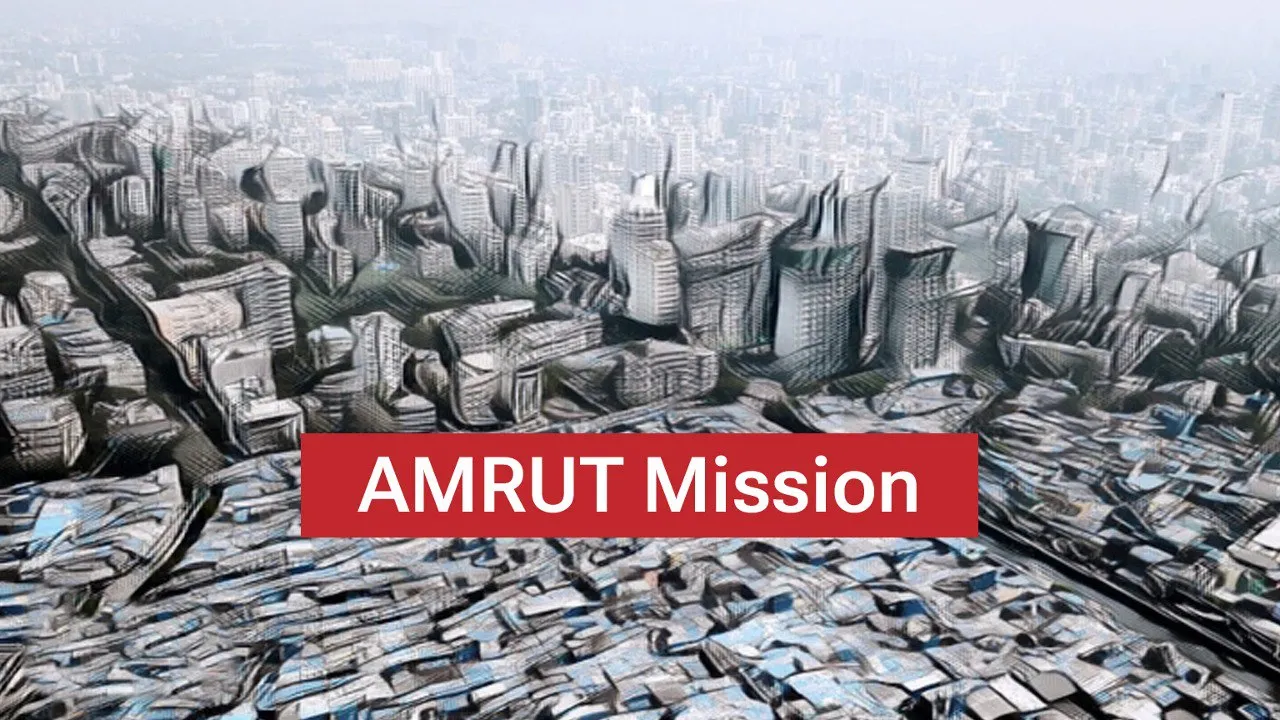
10 Years of AMRUT

India marks a significant milestone as the Atal Mission for Rejuvenation and Urban Transformation (AMRUT) completes 10 years since its launch on June 25, 2015. Introduced as a transformative initiative to improve the quality of life in urban areas, AMRUT has focused on delivering basic infrastructure and services—especially water supply, sewerage, urban mobility, and green spaces—to citizens across 500 cities and towns and almost 60% of the total urban population of India.

Rajasthan was the first state in the country to submit State Annual Action Plan under (AMRUT). The scheme is dependent with public–private partnership (PPP) model. If required, various other schemes like Swachh Bharat Mission, Housing for All 2022, along with the local state schemes like that related to water supply and sewerage and other infrastructure related schemes can be linked to AMRUT.

Nodal Ministry: Ministry of Housing and Urban Affairs

Scheme Type: Centrally sponsored scheme, funds shared among States and UTs based on urban population and number of towns.

Mission

The purpose of Atal Mission for Rejuvenation and Urban Transformation (AMRUT) is to

  • ensure that every household has access to a tap with assured supply of water and a sewerage connection
  •  (ii) increase the amenity value of cities by developing greenery and well-maintained open spaces (e.g. parks)
  • (iii) reduce pollution by switching to public transport or constructing facilities for non-motorized transport (e.g. Walking and cycling).

Implementation

SAAP (State Annual Action Plans) is a consolidated plan of all the city level SLIPs (Service Level Improvement Plan) of all proposed AMRUT cities in the respective states. A formulation on City level SLIP is done based on diligent estimation of ambiguities in the availability of infrastructure like water supply, sewerage network, draining system, transportation facilities, available digital and internet facilities, industrial facilities etc. 135litres per capita per day is another factor in the process including water supply and sewerage connections to all urban households

AMRUT 2.0 was launched on 1 October 2021 for a period of 05 years. Its objectives are universal coverage of water supply from 500 cities to about 4,900 statutory towns in the country and coverage of sewerage/septage management in 500 cities covered in the first phase of the AMRUT scheme.

AMRUT 2.0 aims to promote the circular economy of water through the development of a City Water Balance Plan (CWBP) by recycling/reuse of treated sewage, rejuvenation of water bodies and water conservation.

Important Initiatives so far:

‘AMRUT Mitra’ involved 10,000+ women Self-Help Group (SHG) members.1,762 projects worth ₹147 crore approved. It involves women Self Help Groups (SHGs) in water demand management, water quality testing, water infrastructure operations, and other water sectoral projects. So far, 1762 projects worth ₹140 crore have been approved under this initiative

Drink from Tap (DFT) through 381 projects worth ₹23,490 crore sanctioned, likely to benefit 8 lakh households.3,630 contractors/officials trained.

3,032 water bodies approved for rejuvenation, covering 1.09 lakh acre area.

Capacities of States augmented by training over 90,000 contractors, plant operators, plumbers, women, youth, officials etc.

Challenges:

A NITI Aayog report indicates that around 21 major cities will deplete their groundwater, leaving 40% of India’s population without access to drinking water by 2030.

Nearly 31% of urban Indian households lack piped water while 67.3% are not connected to a piped sewerage system.

Pollution of water bodies: For example, large water bodies like Bellandur Lake (Bengaluru) have become heavily polluted due to industrial effluents and untreated sewage flowing into them.

Unplanned concretization prevents water from percolating into the soil and recharging the water table.

In Bengaluru, the number of lakes has decreased from 262 in 1961 to about 81 currently.

Conclusion

As AMRUT completes a decade, it marks a significant shift in India’s urban development approach, focused on inclusive planning, efficient service delivery, and sustainable growth. By strengthening local bodies and improving core services like water, sanitation, and green spaces, the Mission has laid a strong foundation for future-ready, liveable cities across the country.

Those willing to be a part of my biggest academic project ‘Eklavya Descriptive Bengali English Course’ 2025-26 are requested to send a WhatsApp to 6295350330, the official number of Adhyayan Academy. Before they send their WhatsApp, they are also requested to go through the article below

Aparajita Bill

In the wake of the infamous RG Kar Rape and murder incident that shook the entire world, the West Bengal government introduced a new bill in the West Bengal Legislative Assembly on 3 September 2024 named the Aparajita Woman and Child Bill (West Bengal Criminal Laws and Amendment), 2024. West Bengal became the first state in India to make an amendment in central laws for crimes of a sexual nature against women and children. The bill was passed unanimously in the assembly and was sent to the Governor C. V. Ananda Bose and to President Droupadi Murmu for assent. The bill will amend the application of the recently updated Indian penal code in West Bengal. It entailed death penalty for convicts of rape and other unnatural sexual offences if it resulted in death of the victim or left the victim in a vegetative state. It also provides for a life sentence without parole for those convicted in other cases. In addition, a special task force led by a female officer will be created to help accelerate investigations into rape cases, dedicated courts will be created to fast-track these types of cases, penalties will be introduced for unreasonable delays in investigations, and a time limit of 21 days (with a possible 15-day extension) to issue a decision will be instituted.

The proposed bill aims to amend several legal provisions, including those in the Bharatiya Nyaya Sanhita (BNS) 2023, the Bhartiya Nagrik Suraksha Sanhita (BNSS) 2023, and the Protection of Children from Sexual Offences Act 2012 (POCSO). It is intended to apply to survivors and victims across all age groups.

The Bill proposes capital punishment for individuals convicted of rape if the act results in the victim’s death or leaves her in a vegetative state.

Under BNS Laws, the penalties for rape are as follows: a fine and a minimum of 10 years imprisonment for rape; a minimum of 20 years imprisonment for gang rape, which may extend to life imprisonment; and a minimum of 20 years of rigorous imprisonment for rape resulting in the victim’s death or a vegetative state, with the possibility of life imprisonment or the death penalty.

Time-Bound Investigations and Trials: Investigations into rape cases are mandated to be completed within 21 days of the initial report and trial to be completed within 30 days. Extensions are permissible only with written justification from a senior police officer.

Under BNSS laws, the time limit for investigation and trial is 2 months from the date of FIR.

It also mandates the creation of 52 special courts dedicated to expediting the handling of sexual violence cases.

Aparajita Task Force: The Bill calls for the establishment of a specialized task force at the district level, led by a deputy superintendent of police dedicated to investigation of rape and other atrocities against women and children.

Before West Bengal, the Andhra Pradesh (Disha Bill) and Maharashtra (Shakti Bill) Assemblies had passed laws prescribing the death penalty for rape by amending the criminal laws in force at the time.

The Disha Bill 2019 introduced the death penalty as punishment for the crimes of rape, including against a minor below 16 years of age, gang rape and for repeat offenders.

The Shakti Bill 2020 too introduced the death penalty in rape cases and provided shortened timelines for concluding the investigation and trial.

Neither of the Bills has received the mandatory assent of the President yet.

There have been many instances in which state amendments to central laws have been contested in Courts. For instance:

State of West Bengal v. Union of India (1964): In this the Supreme Court invalidated the West Bengal Land Reforms Act, 1955, for conflicting with the central Land Acquisition Act, 1894, affirming Parliament’s supremacy.

The Aparajita Bill is a vital step toward addressing sexual violence in West Bengal, reflecting a legislative response to public outrage. However, effective implementation requires a balanced approach that combines punitive measures with rehabilitation, public awareness, and infrastructural support. A coordinated effort between the state and centre will ensure lasting protection for women and children, fostering long-term societal change and enhanced safety.

Latest News: Raising concerns over the death penalty provisions in The Aparajita Women and Child (West Bengal Criminal Laws Amendment) Bill, 2024, West Bengal Governor C.V. Ananda Bose returned the legislation to the State government for further consideration on 25th July, 2025.

Those willing to be a part of my biggest academic project ‘Eklavya Descriptive Bengali English Course’ 2025-26 are requested to send a whatsapp to 6295350330 , the official number of Adhyayan Academy. Before they send their whatsapp, they are also requested to go through the article below

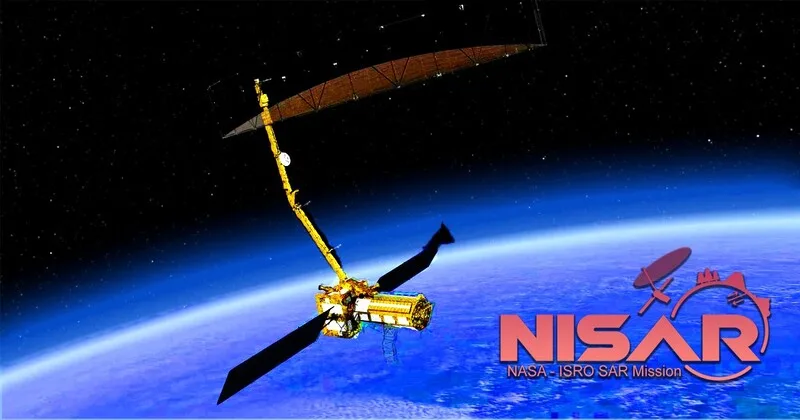
NISAR, A Gamechanger in Space Technology

Designed to provide a detailed view of the Earth to observe and measure some of the planet’s most complex processes, including ecosystem disturbances, ice-sheet collapse, natural hazards, sea level rise, and groundwater issues, NISAR is a pioneer in space technology. Its radar, the first of its kind in space, will systematically map Earth, measuring changes of our planet’s surface as small as a centimetre.

India crossed a milestone in its space and climate ambitions on Wednesday with the successful launch of the NASA-ISRO Synthetic Aperture Radar (Nisar) satellite from the Satish Dhawan Space Centre in Sriharikota. The Rs. 12,000-crore mission has been over a decade in the making and is being considered as one of the world’s most advanced Earth observation missions. The 2393-kilogram satellite lifted off at 5:40 pm IST, July 30 aboard ISRO’s Geosynchronous Satellite Launch Vehicle (GSLV) into the vacuum of space.

The Nisar mission, a $1.5 billion joint venture between the Indian Space Research Organisation (ISRO) and the United States’ National Aeronautics and Space Administration (NASA), is now set to revolutionise climate monitoring and disaster response, not just for India, but worldwide.

First Dual-Band Radar Satellite for Earth Observation

Why it is so special?

NISAR is the world’s first Earth-observing satellite with dual-frequency synthetic aperture radar (SAR).

L-band radar (1.257 GHz) from NASA can penetrate dense forests and soil layers to detect ground deformation and subsurface movement.

S-band radar (3.2 GHz) from ISRO is optimised for surface-level changes like crop growth, biomass estimates, and water levels.

This dual-frequency advantage allows for all-weather, day-and-night imaging, even through clouds, smoke, or vegetation cover.

This combination of NASA’s L-band radar and ISRO’s S-band radar enables Nisar to capture the faintest shifts on Earth’s surface — whether under forests, clouds, or even in darkness — detecting movements as small as a few millimetres.

The implications for India, often at the frontline of climate change impacts and natural disasters, are profound.

Nisar’s freely accessible, near-real-time data will empower Indian researchers, disaster managers, and policymakers to monitor glacier movements in the Himalayas, detect fault-line shifts before earthquakes, track agricultural cycles, and manage water resources more effectively.

With this tool, India is set to improve forecasting for floods, droughts, and landslides, enabling rapid response and informed policy decisions.

NISAR is designed to support research and operations across six broad themes:

Solid Earth Processes – Tracking earthquakes, landslides, and land deformation.

Ecosystems – Monitoring forests, woody biomass, and biodiversity.

Ice and Snow Dynamics – Measuring glacial movements and polar ice thickness.

Coastal and Ocean Monitoring – Tracking shoreline erosion, oil spills, and storm surges.

Disaster Response – Providing near-real-time damage maps after floods, quakes, or cyclones.

Agriculture and Infrastructure – Supporting food security and monitoring subsidence near dams, roads, and reservoirs.

During natural disasters, NISAR can provide damage proxy maps within five hours, crucial for emergency relief planning and response.

The mission exemplifies balanced international collaboration:

ISRO contributed the spacecraft bus, the entire S-band radar system, Ka-band telemetry systems, and launch support via GSLV Mk-II.

NASA provided the L-band radar, radar structure, antenna, onboard avionics, and high-capacity data systems.

The satellite was integrated and tested in Bengaluru, symbolising “Made-in-India” ownership of a global science instrument.

To get my guidance for English/Bengali/ Economics or overall Guidance for WBCS or any other exams,please call or whatsapp @ 6295350330. This is the official number of Adhyayan Academy. My much awaited descriptive English /Bengali Course for 1 year is starting from 1st September. Admission is going on for my Clerkship Main/ WBSSC Group C Course. Mock Test Course for PSC Miscellaneous Main has also started.

For regular updates, follow us @ FB, YouTube or Telegram with following links

FB- https://www.facebook.com/Adhyayanacademyslg/

YouTube- https://www.youtube.com/@theadhyayanacademy

Telegram- https://t.me/theadhyayanacademy

5 Years of National Education Policy

This year marks the completion of 5 years of National Education Policy (NEP) which was launched in 2020. The NEP 2020 is based on the recommendations of Kasturirangan and T.S.R. Subramanian committees. NEP 2020 is India’s 3rd education policy since independence. NEP 2020 lays emphasis on reforms in education at all levels from pre-primary to higher education. It aims to transform the Indian education system to meet the demands of the 21st century. The new policy replaces the previous National Policy on Education, 1986.

Major provisions

School education:

Universalization of education by 2030 through 100% GER (Gross Enrolment Ratio) from pre-primary to secondary.

Open schooling system (no admission requirements) for out-of-school children.

5+3+3+4 curriculum system replacing existing 10+2 system.

Foundational Stage: This is further subdivided into two parts: 3 years of preschool or anganwadi, followed by classes 1 and 2 in primary school. This will cover children of ages 3–7 years. The focus of studies will be in activity-based learning.

Preparatory Stage: Classes 3 to 5, which will cover the ages of 8–10 years. It will gradually introduce subjects like speaking, reading, writing, physical education, languages, art, science and mathematics.

Middle Stage: Classes 6 to 8, covering children between ages 11 and 13. It will introduce students to the more abstract concepts in subjects of mathematics, sciences, social sciences, arts and humanities.

Secondary Stage: Classes 9 to 12, covering the ages of 14–18 years. It is again subdivided into two parts: classes 9 and 10 covering the first phase while classes 11 and 12 covering the second phase. These 4 years of study are intended to inculcate multidisciplinary study, coupled with depth and critical thinking. Multiple options of subjects will be provided.

Instead of exams being held every academic year, school students will only attend three exams, in classes 2, 5 and 8

Teaching in mother tongue up to class 5 with no imposition of any language.

It recommends additional recruitment of teachers to ensure a pupil-teacher ratio (PTR) of under 30:1, with a preference for 25:1 in socio-economically disadvantaged areas.

The NEP envisages less high-stakes board exams. From 2026, CBSE plans to allow class 10 students to sit for board exams twice a year.

Early Childhood Care and Education (ECCE):

NEP aims to make ECCE universal by 2030. NCERT’s Jaadui Pitara Learning Kits are already in use & MoWCD has issued a National ECCE Curriculum.

Higher education:

National Higher Education Regulatory Council (NHERC): to regulate higher education, including teacher education, while excluding medical and legal education.

Holistic UG (Undergraduate) education with provisions of a flexible curriculum, integration of vocational education, multiple entries & exit points with respective degrees, and also undergraduate programs in regional languages.

Introduction of Four-Year Undergraduate Programs

Multiple Entry-Exit system with academic credits.

Academic Bank of Credits to enable transfers of credits between institutions

HECI (Higher Education Commission of India) as umbrella regulator except for legal and medical education.

Higher Education Grants Council (HEGC): to fund and finance universities and colleges, based on transparent criteria. This will replace the existing University Grants Commission.

Promotion of multilingualism in schools and colleges.

Engineering in regional languages: The government will also announce the launch of engineering degrees in regional languages in about 14 smaller institutions.

Common test for college entry: CUET, introduced in 2020, is now a key route to undergraduate admissions.

Establishment of Indian campus abroad & foreign universities campuses in India.

The National Testing Agency will be given the additional responsibility of conducting entrance examinations for admissions to universities across the country, in addition to the JEE Main and NEET

Teacher Education & Training:

Teacher Education: A 4-year integrated B.Ed. degree will be the minimum qualification for teaching by 2030.

Continuous Professional Development (CPD): Teachers will be required to participate in 50 hours of CPD every year.

Increased Public Investment: Aims to increase public investment in education to 6% of GDP

Gender Inclusion Fund: To build the country’s capacity to provide equitable quality education for all girls.

Special Education Zones (SEZs): To be declared for disadvantaged regions and groups.

Digital Education: National Educational Technology Forum (NETF) will be created as an autonomous body to provide a platform for the free exchange of ideas on the use of technology to improve learning, assessment, planning, and administration.

PARAKH (Performance Assessment, Review, and Analysis of Knowledge for Holistic Development): A new National Assessment Centre to set norms, standards, and guidelines for student assessment. Under PARAKH, Progress Cards are developed that go beyond marks & include peer & self-assessment.

Significance

In early August 2021, Karnataka became the first state to issue an order with regard to implementing NEP.

On 26 August 2021, Madhya Pradesh implemented NEP 2020.

Structural Overhaul: The traditional 10+2 system is replaced by the 5+3+3+4 model, aligning Indian education with global standards. This structure prioritizes foundational learning (ages 3–8), prepares students for critical thinking, and allows flexibility in subject choices at the secondary level.

Focus on Early Childhood Education: Universalization of Early Childhood Care and Education (ECCE) for children aged 3-6 is a cornerstone, ensuring all children enter primary school with a strong foundation.

Mother Tongue and Multilingualism: NEP 2020 recommends teaching in the mother tongue or regional language up to at least Grade 5 (preferably Grade 8), which studies show improves comprehension and retention.

Holistic and Multidisciplinary Education: NEP 2020 moves away from rote memorization, emphasizing critical thinking, creativity, and conceptual understanding. It supports a multidisciplinary approach at all levels, encouraging integration of arts, sciences, and vocational subjects for a broader learning experience.

Skill Development and Vocational Education: Vocational training and skill development are introduced from early grades, aiming to make students “future-ready” and better prepared for the job market.

Multilingualism in Education:

Anuvadini App & e-KUMBH Portal: AICTE’s Anuvadini App facilitates translation of engineering, medical, law, UG, PG, and skill books into Indian languages; these are accessible via the e-KUMBH portal.

Multilingual Content on SWAYAM: Study materials are made available in multiple Indian languages on the SWAYAM platform to support diverse learners.

CSTT Terminology Compilation: The Commission for Scientific and Technical Terminology (CSTT) has compiled over 30 lakh scientific and technical terms in 22 Indian languages, with 16 lakh terms digitized.

ASMITA Initiative: Aims to produce 22,000 books in 5 years across 22 languages, supporting academic translation and original writing.

Regional Language Education in Engineering: 41 engineering institutes across 10 states permitted to offer education in 12 regional languages, promoting technical education in mother tongues.

Multilingual National Exams: CUET, JEE (Mains), and NEET (UG) are conducted in 12 Indian languages, enhancing access and fairness in national-level entrance tests.

Promoting Equity and Inclusion: Initiatives like the Gender Inclusion Fund and Special Education Zones (SEZs) demonstrate a strong commitment to ensuring equitable access to quality education for all, especially girls, children with disabilities, and socio-economically disadvantaged groups.

Focus on foundational skills: NIPUN Bharat, launched in 2021, seeks to ensure every child can read & do basic math by the end of class 3.

The Pradhan Mantri Uchchatar Shiksha Abhiyan (PM-USHA) is the flagship centrally sponsored scheme for higher education reform. It supports the transformation of state universities and colleges by providing funding tied to performance-based outcomes. The scheme has been instrumental in:

Promoting digital infrastructure, internationalization, and academic autonomy

Advancing equity and inclusion through targeted interventions in underserved regions.

International Campuses of Indian Universities

As part of its global outreach, India has begun establishing international campuses of its premier higher education institutions. These initiatives aim to position India as a global knowledge hub and expand access to quality education worldwide9.

IIT Madras–Zanzibar: MoU signed on 5 July 2023; campus established in Zanzibar, Tanzania with classes commenced under partnership between MoE (India) and MoEVT (Zanzibar).

IIT Delhi–Abu Dhabi: MoU signed on 15 July 2023 with Abu Dhabi Department of Education and Knowledge (ADEK); campus is operational and marks IIT Delhi’s first international presence.

IIM Ahmedabad–Dubai: MoU signed on 8 April 2025 with UAE Government for establishing the IIMA Dubai Campus in Dubai International Academic City; will offer full-time MBA and executive education programmes.

Foreign Universities in India

Prestigious institutions like Deakin and Wollongong Universities (Australia) have launched campuses in GIFT City, Gujarat, and the University of Southampton (UK) has set up in Gurugram marking a new era of global academic presence in India. Six universities from UK, Australia, USA and Italy have been given LoA for setting up their campuses in India

Challenges

Funding Concerns: The policy reiterates the long-standing recommendation to increase public investment in education to 6% of GDP. However, achieving this target has been a persistent challenge for decades, and the NEP 2020 does not provide a concrete roadmap or immediate financial commitment to ensure this increase. Without adequate funding, many of the proposed reforms will remain on paper.

3-Language Formula: NEP proposes 3 languages in school, at least 2 of them Indian. But this provision has been politicized in several States for e.g. in TN, which follows a Tamil-English model, it has been seen as an attempt to impose Hindi language.

Teacher Education Overhaul has not happened: The National Curriculum Framework for Teacher Education, due in 2021, is yet to be released. The 4-year integrated B.Ed course has been announced under the Integrated Teacher Education Programme, but colleges offering existing programmes like Bachelor of Elementary Education are pushing back.

Access to Technology: While the NEP emphasizes technology integration and online learning, the existing digital divide in India (especially between urban and rural areas, and across socio-economic strata) remains a significant barrier. Many students and teachers lack access to reliable internet, devices, and digital literacy. The digital divide is also causing the education divide in India. Today, over 90 percent of students do not have devices that allow them to access online learning holistically.

Increased Privatization: Critics argue that the policy, while advocating for public investment, also opens doors for increased private sector participation, potentially leading to the commercialization of education and making quality education less accessible to the poor.

Over-centralization (Centre v/s State): While the idea of a single overarching regulator (HECI) aims for streamlining, some critics worry about potential over-centralization and reduced autonomy for institutions. The policy centralizes power in the central government, potentially reducing states’ autonomy and flexibility to address local educational needs and contexts. Several oppositions ruled States have pushed back against key NEP provisions for e.g. Kerala, TN, West Bengal have refused to sign MoUs with Centre to set up PM-SHRI Schools, citing clauses that require full adoption of NEP.

The way forward?

A national level consensus is much needed to reap the fruits of the policy. States must be given some sort of independence in modifying the policy to an extent on the basis of regional aspirations. Efforts must be undertaken to increase funding for education. Rural infrastructure needs to be overhauled. The digital divide must be breached. More transparency and regularity must be maintained in case of recruitment of teachers. The National Testing Agency has often found to be committing monumental blunders. The agency must be reformed. In sync with the Policy, a National Employment Policy must be frame worked.

Only then, the policy can bring drastic changes in the education system across the country.

To get my guidance for English/Bengali/ Economics or overall Guidance for WBCS or any other exams,please call or whatsapp @ 6295350330. This is the official number of Adhyayan Academy. My much awaited descriptive English /Bengali Course for 1 year is starting from 1st September. Admission is going on for my Clerkship Main/ WBSSC Group C Course. Mock Test Course for PSC Miscellaneous Main has also started.

For regular updates, follow us @ FB, YouTube or Telegram with following links

FB- https://www.facebook.com/Adhyayanacademyslg/

YouTube- https://www.youtube.com/@theadhyayanacademy

Telegram- https://t.me/theadhyayanacademy

‘Operation Barga’ in West Bengal

Operation Barga was a land reform movement, throughout rural West Bengal for recording the names of sharecroppers (bargadars) while avoiding the time-consuming method of recording through the settlement machinery. It bestowed on the bargadars, the legal protection against eviction by the landlords (jotedars), and entitled them to the due share of the produce. Operation Barga was launched in 1978 and concluded by the mid-1980s. Introduced in 1978, and given legal backing in 1979 and 1980, Operation Barga became a popular but controversial measure for land reforms. The ultimate aim of these land reforms was to facilitate the conversion of the state’s bargadars into landowners, in line with the Directive Principles of State Policy of the Indian Constitution. To date, Op Barga has recorded the names of approximately 1.5 million bargadars. The initiative has been studied and admired as a model for land reform in other regions, emphasizing the importance of recognizing and protecting the rights of marginalized farmers. 

The operation was divided into the following five distinct steps:

Identification of the priority pockets with large concentration of bargadars.

Camping by the Government Officials at the priority pockets.

Meeting between the bargadars and the government officials.

The collective participation of the villagers in the reconnaissance and field verification to establish the claims of sharecroppers.

Issue of temporary certificates called ‘parchas’ to confirm sharecroppers as evidence of their rights enabling them to obtain bank credit.

To begin with, group meetings between Officials and Bargadars were organized during “settlement camps” (also called “Reorientation camps”), where the bargadars could discuss their grievances. The first such camp was held at Halusai in Polba taluk in Hooghly district from 18 to 20 May 1978. An empirical analysis of the impact of Operation Barga on agricultural production, productivity, employment, income including its distribution and on the qualitative improvement in the utilization of barga land was conducted during the period 1986–88 in the three districts of Birbhum, Burdwan and Jalpaiguri in West Bengal.

Operation Barga was successful in enumerating the Bargadars. Over the period 1977–90, the fraction of registered sharecroppers rose from 23 to 65%. During the same period of time in West Bengal, there was expansion in public and private irrigation and there was technological change as well. These reforms, along with the guaranteed crop share and bargadar’s increased stake in the land led to an increase in agricultural output. By the end of 1982 about 1.2 million sharecroppers were recorded, out of the total estimated number of about 2.0-3.5 million.

By the end of June 1994 around 1460,000 bargadars had been recorded over an area of over 451,800 hectares. The most remarkable achievement of the programme, as reported in the 1986-88 study, was that it enhanced social status of the bargadars and security of tenancy.

West Bengal enjoyed a subsequent dramatic increase in farm output per unit of land, as well as farming incomes. By comparing the output of farms before and after the implementation of Operation Barga, economists concluded that both improved work motivation and investment occurred. One study suggested that Operation Barga was responsible for around 28% of the regional growth in agricultural productivity from 1979 to 1993. The empowerment of the bargadars also had positive spillover effects, as local governments became more responsive to the needs of poor farmers.

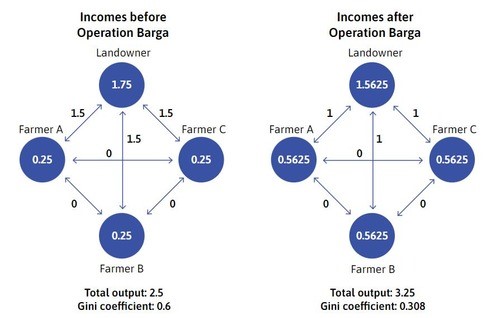
The above image shows how Operation Barga reduced Gini coefficient in WB

Operation Barga (and West Bengal’s land reforms in general) have been criticized for their small scope and inability to solve all the major problems. This criticism has been mainly due to policies not accounting for the high population-to-landmass ratio in Bengal (the highest in the country), the small and highly segregated land holding patterns and failure of the Government to develop agri-industrial markets for farm produce. These failures, critics contend, have distributed poverty rather than creating prosperity.

The United Nations- At a Glance

The United Nations is an international organization founded in 1945 after the Second World War by 51 countries committed to maintaining international peace and security, developing friendly relations among nations and promoting social progress, better living standards and human rights.

Despite the problems encountered by the League of Nations in arbitrating conflict and ensuring international peace and security prior to World War II, the major Allied powers agreed during the war to establish a new global organization to help manage international affairs. This agreement was first articulated when U.S. President Franklin D. Roosevelt and British Prime Minister Winston Churchill signed the Atlantic Charter in August 1941. The name United Nations was originally used to denote the countries allied against Germany, Italy, and Japan. On January 1, 1942, 26 countries signed the Declaration by United Nations, which set forth the war aims of the Allied powers.

As the Second World War raged, the leaders of the United Kingdom, China, the United States and the Soviet Union, under intense pressure from the press and public, discussed the details of a post-war organization. In 1944 representatives meeting at Dumbarton Oaks in Washington, DC, prepared a blueprint for an international organization. Towards the end of the war representatives of 50 countries gathered in San Francisco between April and June 1945 to hammer out the final text that would lay the foundations of international cooperation. This was the Charter of the United Nations, signed on 26 June by 50 countries. Poland, the 51st country, was not able to send a representative to the San Francisco conference but is considered an original member.

Purposes of the United Nations

Due to its unique international character, and the powers vested in its founding Charter, the Organization can take action on a wide range of issues, and provide a forum for its Member States to express their views.

The UN has 4 main purposes

  • To keep peace throughout the world;
  • To develop friendly relations among nations;
  • To help nations work together to improve the lives of poor people, to conquer hunger, disease and illiteracy, and to encourage respect for each other’s rights and freedoms;
  • To be a centre for harmonizing the actions of nations to achieve these goals.

Structure and Organization of the United Nations The Charter established six principal organs of the United Nations: the General Assembly, the Security Council, the Economic and Social Council, the Trusteeship Council, the International Court of Justice, and the Secretariat. The United Nations family, however, is much larger, encompassing 15 agencies and several programmes and bodies

General Assembly

The General Assembly is the main deliberative organ of the UN and is composed of representatives of all Member States. The work of the United Nations year-round derives largely from the mandates given by the General Assembly. Comprising all Member States of the United Nations, it provides a unique forum for multilateral discussion of the full spectrum of international issues covered by the Charter. The General Assembly is the main deliberative, policymaking and representative organ of the UN. All 193 Member States of the UN are represented in the General Assembly, making it the only UN body with universal representation.  Each year, in September, the full UN membership meets in the General Assembly Hall in New York for the annual General Assembly session, and general debate, which many heads of state attend and address. Decisions on important questions, such as those on peace and security, admission of new members and budgetary matters, require a two-thirds majority of the General Assembly. Decisions on other questions are by simple majority.  The General Assembly, each year, elects a GA President to serve a one-year term of office.

Security Council

The Security Council has primary responsibility, under the UN Charter, for the maintenance of international peace and security. The Council is composed of five permanent members – China, France, Russian Federation, the United Kingdom and the United States – and ten non-permanent members. The non-permanent members are elected by the General Assembly for two-year terms. Each Council member has one vote. Decisions on procedural matters are made by an affirmative vote of at least nine of the 15 members. Decisions on substantive matters require nine votes, including the concurring votes of all five permanent members. This rule is often referred to as the “veto” power. A reform of the Security Council, including its membership, is under consideration.

Since its first meeting, the Security Council has taken permanent residence at the United Nations Headquarters in New York City.

Economic and Social Council

The Economic and Social Council (ECOSOC) is the principal organ to coordinate the economic, social and related work of the United Nations and the specialized agencies and institutions. Voting in the Council is by simple majority; each member has one vote. The United Nations Economic and Social Council (ECOSOC) is headquartered in New York City

International Court of Justice

The International Court of Justice, located at the Hague in the Netherlands, is the principal judicial organ of the United Nations. It settles legal disputes between States and gives advisory opinions to the UN and its specialized agencies. Its Statute is an integral part of the United Nations Charter.

Trusteeship Council

The Trusteeship Council was established in 1945 by the UN Charter to provide international supervision for 11 Trust Territories placed under the administration of 7 Member States, and ensure that adequate steps were taken to prepare the Territories for self-government and independence. By 1994, all Trust Territories had attained self-government or independence. Its work completed, the Council has amended its rules of procedure to meet as and where occasion may require.

Secretariat

The Secretariat – an international staff working in duty stations around the world – carries out the diverse day-to-day work of the Organization. It services the other principal organs of the United Nations and administers the programmes and policies laid down by them.

At its head is the Secretary-General, who is appointed by the General Assembly on the recommendation of the Security Council for a five-year, renewable term. The Secretary-General is a symbol of United Nations ideals and a spokesman for the interests of the world’s peoples, in particular the poor and vulnerable among them.

The duties carried out by the Secretariat are as varied as the problems dealt with by the United Nations. These range from administering peacekeeping operations to mediating international disputes, from surveying economic and social trends and problems to preparing studies on human rights and sustainable development. Secretariat staff also inform the world’s communications media about the work of the United Nations; organize international conferences on issues of worldwide concern; and interpret speeches and translate documents into the Organization’s official languages.

As international civil servants, staff members and the Secretary-General answer to the United Nations alone for their activities, and take an oath not to seek or receive instructions from any Government or outside authority. Under the Charter, each Member State undertakes to respect the exclusively international character of the responsibilities of the Secretary-General and the staff and to refrain from seeking to influence them improperly in the discharge of their duties.

The United Nations, while headquartered in New York, maintains a significant presence in Addis Ababa, Bangkok, Beirut, Geneva, Nairobi, Santiago and Vienna, and has offices all over the world. Currently, the United Nations has 193 Member States.

How does a country become a Member of the United Nations?

Membership in the United Nations, in accordance with the Charter, “is open to all peace-loving States that accept the obligations contained in the United Nations Charter and, in the judgment of the Organization, are able to carry out these obligations”. The recognition of a new State or Government is an act that only other States and Governments may grant or withhold. It generally implies readiness to assume diplomatic relations. The United Nations is neither a State nor a Government, and therefore does not possess any authority to recognize either a State or a Government. As an organization of independent States, it may admit a new State to its membership or accept the credentials of the representatives of a new Government.

States are admitted to membership in the United Nations by decision of the General Assembly upon the recommendation of the Security Council. The procedure is briefly as follows:

  1. The State submits an application to the Secretary-General and a letter formally stating that it accepts the obligations under the Charter.
  2. The Security Council considers the application. Any recommendation for admission must receive the affirmative votes of 9 of the 15 members of the Council, provided that none of its five permanent members have voted against the application.
  3. If the Council recommends admission, the recommendation is presented to the General Assembly for consideration. A two-thirds majority vote is necessary in the Assembly for admission of a new State.
  4. Membership becomes effective the date the resolution for admission is adopted.

Funding

The UN budget for 2024 was $3.59 billion, not including additional resources donated by members, such as peacekeeping forces. Including specialized agencies of the UN, the UN System Chief Executives Board for Coordination reports total expenses of $67.4 billion in 2022 for 43 United Nations entities.

The UN is financed from assessed and voluntary contributions from its member states. The General Assembly approves the regular budget and determines the assessment for each member. This is broadly based on the relative capacity of each nation to pay, as measured by its gross national income (or GNI), with adjustments for external debt and low per capita income.

The Assembly has established the principle that the UN should not be unduly dependent on any one member to finance its operations. Thus, there is a “ceiling” rate, setting the maximum amount that any member can be assessed for the regular budget. In December 2000, the Assembly revised the scale of assessments in response to pressure from the United States. As part of that revision, the regular budget ceiling was reduced from 25% to 22%. For the least developed countries (or LDCs), a ceiling rate of 0.01% is applied. In addition to the ceiling rates, the minimum amount assessed to any member nation (or “floor” rate) is set at 0.001% of the UN budget ($31,000 for the two-year budget 2021–2022).

A large share of the UN’s expenditure addresses its core mission of peace and security, and this budget is assessed separately from the main organizational budget. The peacekeeping budget for the 2021–2022 fiscal year is $6.38 billion, supporting 66,839 personnel deployed in 12 missions worldwide. UN peace operations are funded by assessments, using a formula derived from the regular funding scale that includes a weighted surcharge for the five permanent Security Council members, who must approve all peacekeeping operations. This surcharge serves to offset discounted peacekeeping assessment rates for less developed countries. The largest contributors to the UN peacekeeping budget for 2023–2024 are: the United States (26.94%), China (18.68%), Japan (8.03%), Germany (6.11%), the United Kingdom (5.35%), France (5.28%), Italy (3.18%), Canada (2.62%), South Korea (2.57%) and Russia (2.28%).

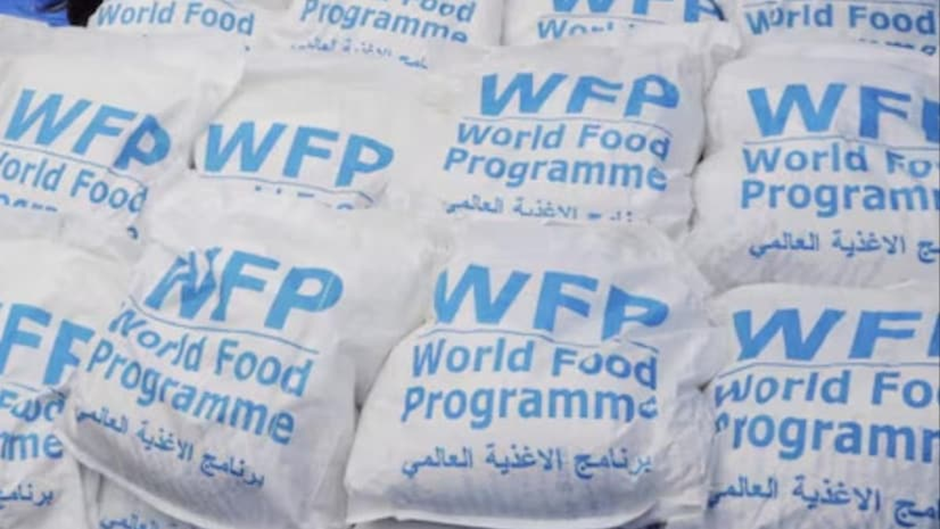
Special UN programmes not included in the regular budget, such as UNICEF and the World Food Programme, are financed by voluntary contributions from member governments, corporations, and private individuals.

Awards

A number of agencies and individuals associated with the UN have won the Nobel Peace Prize in recognition of their works. Two secretaries-general, Dag Hammarskjöld and Kofi Annan, were each awarded the prize; as were Ralph Bunche, a UN negotiator, René Cassin, a contributor to the Universal Declaration of Human Rights, and the American Secretary of State Cordell Hull for his role in the organization’s founding. Lester B. Pearson, the Canadian Secretary of State for External Affairs, was awarded the prize in 1957 for his role in organizing the UN’s first peacekeeping force to resolve the Suez Crisis.

UNICEF won the prize in 1965, the International Labour Organization in 1969, the UN Peacekeeping Forces in 1988, the International Atomic Energy Agency (which reports to the UN) in 2005, and the UN-supported Organisation for the Prohibition of Chemical Weapons in 2013. The UN High Commissioner for Refugees was awarded the prize in 1954 and 1981, becoming one of only two recipients to win the prize twice. The UN as a whole was awarded the prize in 2001, sharing it with Annan. In 2007, the IPCC received the prize “for their efforts to build up and disseminate greater knowledge about man-made climate change, and to lay the foundations for the measures that are needed to counteract such change.

UN Programs

UNDP

Headquarters: New York City, USA

The United Nations Development Programme (UNDP) works in nearly 170 countries and territories, helping to eradicate poverty, reduce inequalities and build resilience so countries can sustain progress. As the UN’s development agency, UNDP plays a critical role in helping countries achieve the Sustainable Development Goals.

UNEP

Headquarters: Nairobi, Kenya

The United Nations Environment Programme (UNEP) established in 1972, is the voice for the environment within the United Nations system. UNEP acts as a catalyst, advocate, educator and facilitator to promote the wise use and sustainable development of the global environment.

UNFPA

Headquarters: New York City, USA

The United Nations Population Fund (UNFPA) is the lead UN agency for delivering a world where every pregnancy is wanted, every birth is safe, and every young person’s potential is fulfilled.

UN-HABITAT

Headquarters: Nairobi, Kenya

The mission of the United Nations Human Settlements Programme (UN-HABITAT) is to promote socially and environmentally sustainable human settlements development and the achievement of adequate shelter for all.

UNICEF

Headquarters: New York City, USA

The United Nations Children’s Fund (UNICEF) works in 190 countries and territories to save children’s lives, to defend their rights, and to help them fulfil their potential, from early childhood through adolescence.

WFP

Headquarters: Rome, Italy

The World Food Programme aims to eradicate hunger and malnutrition. The world’s largest humanitarian agency, WFP helps almost 100 million people in approximately 88 countries with assistance every year through food or cash distributions and more. The World Food Programme was awarded the Nobel Peace Prize in 2020. 

UN Specialized Agencies

The UN specialized agencies are autonomous international organizations working with the United Nations. All were brought into relationship with the UN through negotiated agreements. Some existed before the First World War. Some were associated with the League of Nations. Others were created almost simultaneously with the UN or later.

FAO

Headquarters: Rome, Italy

The Food and Agriculture Organization leads international efforts to fight hunger. It is both a forum for negotiating agreements between developing and developed countries and a source of technical knowledge and information to aid development.

ICAO

Headquarters: Montreal, Canada

The International Civil Aviation Organization develops standards for global air transport and assists its 192 Member States in sharing the world’s skies to their socio-economic benefit.

IFAD

Headquarters: Rome, Italy

The International Fund for Agricultural Development, since it was created in 1977, has focused exclusively on rural poverty reduction, working with poor rural populations in developing countries to eliminate poverty, hunger and malnutrition; raise their productivity and incomes; and improve the quality of their lives.

ILO

Headquarters: Geneva, Switzerland

The International Labour Organization promotes international labour rights by formulating international standards on the freedom to associate, collective bargaining, the abolition of forced labour, and equality of opportunity and treatment.

IMF

Headquarters: Washington, DC, USA

The International Monetary Fund fosters economic growth and employment by providing temporary financial assistance to countries to help ease balance of payments adjustment and technical assistance. The IMF currently has $28 billion in outstanding loans to 74 nations.

IMO

Headquarters: London, United Kingdom

The International Maritime Organization has created a comprehensive shipping regulatory framework, addressing safety and environmental concerns, legal matters, technical cooperation, security, and efficiency.

ITU

Headquarters: Geneva, Switzerland

The International Telecommunication Union is the United Nations specialized agency for information and communication technologies. It is committed to connecting all the world’s people – wherever they live and whatever their means. Through our work, we protect and support everyone’s fundamental right to communication.

UNESCO

Headquarters: Paris, France

The United Nations Educational, Scientific and Cultural Organization focuses on everything from teacher training to helping improve education worldwide to protecting important historical and cultural sites around the world.

UNIDO

Headquarters: Vienna, Austria

The United Nations Industrial Development Organization is the specialized agency of the United Nations that promotes industrial development for poverty reduction, inclusive globalization and environmental sustainability.

UN Tourism

Headquarters: Madrid, Spain

The World Tourism Organization is the United Nations agency responsible for the promotion of responsible, sustainable and universally accessible tourism.

UPU

Headquarters: Bern, Switzerland

The Universal Postal Union is the primary forum for cooperation between postal sector players. It  helps to ensure a truly universal network of up-to-date products and services.

WHO

Headquarters: Geneva, Switzerland

The World Health Organization is the directing and coordinating authority on international health within the United Nations system. The objective of WHO is the attainment by all peoples of the highest possible level of health. Health, as defined in the WHO Constitution, is a state of complete physical, mental and social well-being and not merely the absence of disease or infirmity.

WIPO

Headquarters: Geneva, Switzerland

The World Intellectual Property Organization protects intellectual property throughout the world through 23 international treaties.

WMO

Headquarters: Geneva, Switzerland

The World Meteorological Organization facilitates the free international exchange of meteorological data and information and the furtherance of its use in aviation, shipping, security, and agriculture, among other things.

World Bank

Headquarters: Washington, DC, USA

The World Bank focuses on poverty reduction and the improvement of living standards worldwide by providing low-interest loans, interest-free credit, and grants to developing countries for education, health, infrastructure, and communications, among other things. The World Bank works in over 100 countries.

International Bank for Reconstruction and Development (IBRD)

International Centre for Settlement of Investment Disputes (ICSID)*

International Development Association (IDA)

International Finance Corporation (IFC)

Multilateral Investment Guarantee Agency (MIGA)*

* International Centre for Settlement of Investment Disputes (ICSID) and Multilateral Investment Guarantee Agency (MIGA) are not specialized agencies in accordance with Articles 57 and 63 of the Charter, but are part of the World Bank Group.

Other Entities and Bodies

UNAIDS

Headquarters: Geneva, Switzerland

The Joint United Nations Programme on HIV/AIDS (UNAIDS) leads and inspires the world to achieve its shared vision of zero new HIV infections, zero discrimination and zero AIDS-related deaths. UNAIDS unites the efforts of 11 UN organizations—UNHCR, UNICEF, WFP, UNDP, UNFPA, UNODC, UN Women, ILO, UNESCO, WHO and the World Bank—and works closely with global and national partners towards ending the AIDS epidemic by 2030 as part of the Sustainable Development Goals.

UNHCR

Headquarters: Geneva, Switzerland

The United Nations High Commissioner for Refugees – UNHCR protects refugees worldwide and facilitates their return home or resettlement.

UNIDIR

Headquarters: Geneva, Switzerland

The United Nations Institute for Disarmament Research is a voluntarily funded autonomous institute within the United Nations. An impartial actor, the Institute generates ideas and promotes action on disarmament and security. UNIDIR brings together states, international organizations, civil society, the private sector and academia to work together—internationally, regionally and locally—to build and implement creative solutions that will benefit all states and peoples.

UNITAR

Headquarters: Geneva, Switzerland

An autonomous UN body established in 1963, the United Nations Institute for Training and Research is a training arm of the United Nations System, and has the mandate to enhance the effectiveness of the UN through diplomatic training, and to increase the impact of national actions through public awareness-raising, education and training of public policy officials.

UNOPS

Headquarters: Copenhagen, Denmark

The mission of the United Nations Office for Project Services is to help people build better lives and help countries achieve peace and sustainable development. UNOPS helps the UN, governments and other partners to manage projects, and deliver sustainable infrastructure and procurement in an efficient way.

CTBTO

Headquarters: Vienna, Austria

The Preparatory Commission for the Comprehensive Nuclear-Test-Ban Treaty Organization promotes the Comprehensive Nuclear-Test-Ban Treaty (which is not yet in force) and the build-up of the verification regime so that it is operational when the Treaty enters into force.

IAEA

Headquarters: Vienna, Austria

The International Atomic Energy Agency, is the world’s centre for cooperation in the nuclear field. The Agency works with its Member States and multiple partners worldwide to promote the safe, secure and peaceful use of nuclear technologies.

ICC

Headquarters: The Hague, Netherlands

The International Criminal Court investigates and, where warranted, tries individuals charged with the gravest crimes of concern to the international community: genocide, war crimes, crimes against humanity and the crime of aggression. As a court of last resort, it seeks to complement, not replace, national courts.

IOM

Headquarters: Geneva, Switzerland

The International Organization for Migration works to help ensure the orderly and humane management of migration, to promote international cooperation on migration issues, to assist in the search for practical solutions to migration problems and to provide humanitarian assistance to migrants in need, including refugees and internally displaced people.

OPCW

Headquarters: The Hague, Netherlands

The Organisation for the Prohibition of Chemical Weapons is the implementing body of the Chemical Weapons Convention (CWC), which entered into force in 1997. OPCW Member States work together to achieve a world free of chemical weapons.

UNFCCC

Headquarters: Bonn, Germany

The UNFCCC Secretariat (UN Climate Change) was established in 1992 when countries adopted the United Nations Framework Convention on Climate Change (UNFCCC). With the subsequent adoption of the Kyoto Protocol in 1997 and the Paris Agreement in 2015, Parties to these three agreements have progressively reaffirmed the Secretariat’s role as the United Nations entity tasked with supporting the global response to the threat of climate change.

WTO

Headquarters: Geneva, Switzerland

The World Trade Organization is a forum for governments to negotiate trade agreements, and a place where member governments try to sort out the trade problems, they face with each other.

ITC

Headquarters: Geneva, Switzerland

The International Trade Centre (ITC) is the only development agency that is fully dedicated to supporting the internationalization of small and medium-sized enterprises (SMEs). Established in 1964, the ITC is the joint agency of the World Trade Organization and the United Nations.

The work of the United Nations today

The work of the United Nations reaches every corner of the globe. Although best known for peacekeeping, peacebuilding, conflict prevention and humanitarian assistance, there are many other ways the United Nations and its System (specialized agencies, funds and programmes) affect our lives and make the world a better place. The Organization works on a broad range of fundamental issues, from sustainable development, environment and refugees protection, disaster relief, counter terrorism, disarmament and non-proliferation, to promoting democracy, human rights, gender equality and the advancement of women, governance, economic and social development and international health, clearing landmines, expanding food production, and more, in order to achieve its goals and coordinate efforts for a safer world for this and future generations.

Present Heads

                António Guterres (Chair of CEB) Secretary-General of the United Nations

                 Qu Dongyu, Director-General, FAO

                 Gilbert F. Houngbo, Director-General, ILO

                 Audrey Azoulay, Director-General, UNESCO

                 Juan Carlos Salazar, Secretary-General, ICAO

                 Ajay Banga, President, World Bank Group

                 Kristalina Georgieva, Managing Director, IMF

               Adhanom Ghebreyesus, Director-General, WHO

                Celeste Saulo, Secretary-General, WMO

                 Arsenio Dominguez, Secretary-General, IMO

                Daren Tang, Director-General, WIPO

                Gerd Müller, Director-General, UNIDO

                Rafael Mariano Grossi, Director-General, IAEA

                Ngozi Okonjo-Iweala, Director-General, WTO

                Rebeca Grynspan, Secretary-General, UNCTAD

                Achim Steiner, Administrator, UNDP

                Inger Andersen, Executive Director, UNEP

                Filippo Grandi, High Commissioner, UNHCR

                Catherine M. Russell, Executive Director, UNICEF

Challenges before the UN today.

The challenges are multifaceted. Climate change has reached an unforeseen peak. Polar ice meltdown, catastrophic storms, inundations, earthquakes have made millions of people homeless. Terrorism has shaken the very root of the whole world. The first year of the new millennium witnessed the horrifying incident of 9/11 attack on America. Even after 25 years, terrorism remains one of the principal concerns of the UN as evident in the statement of the UNSC after the heinous attacks on the civilians on the soil of J&K in India. The UNSC has “condemned in the strongest terms” the terrorist attack in Jammu and Kashmir, stressing that those responsible should be held accountable and the organisers and sponsors of this “reprehensible act of terrorism” should be brought to justice.

Preventing the spread of nuclear weapons and promoting disarmament are critical goals for the UN. The proliferation of nuclear technology and tensions between nuclear-armed states, such as the United States, Russia, and North Korea, present ongoing challenges to international security. Human Rights and Humanitarian Crises

The UN is tasked with promoting and protecting human rights worldwide. Humanitarian crises, such as those in Syria, Myanmar, and Venezuela, pose significant challenges to upholding human rights. Balancing the principles of sovereignty and the responsibility to protect is an ongoing debate within the UN system.

The 21st century has seen a significant increase in forced migration and refugee crises. Large-scale population-forced migration is a global calamity that calls for coordinated action from the international community under the direction of world leaders. A record-breaking number of migrants and refugees are crossing international boundaries to escape war, persecution, poverty, and other severe situations. Large-scale population relocation affects the social, economic, and political landscape in ways that go beyond casualties. The UN High Commissioner for Refugees (UNHCR) works to provide protection and assistance to displaced persons, but issues related to immigration policies, border control, and xenophobia have complicated efforts to address this challenge.

Political Divisions among Member States of the United Nations also remains a major concern for the UN. We have seen how the ongoing war between Russia and Ukraine has caused unimaginable sufferings to millions.

Global health concern is another area the UN has to battle with. We have seen how helpless the world felt during the Covid pandemic.

The need for UN reform is imperative to adapt to the evolving global landscape and to fulfil its mission of promoting international peace, security, and development effectively. This reform should be pursued to enhance the UN’s capacity to address current and future challenges while upholding the principles of equality, justice, and cooperation among nations. The world today is vastly different from what it was in 1945 when the UN was established. New global powers have emerged, and the geopolitical landscape has shifted dramatically. Reforming the UN’s decision-making structures, particularly the Security Council, is essential to reflect these changes and ensure equitable representation among nations. Ensuring that UN resources are allocated efficiently and transparently is essential. Reform should focus on optimising budgetary practices and eliminating waste to ensure that funds are directed toward programs that have a real impact on global development.

To get Saptarshi Sir’s guidance for English/Economy or for overall WBCS/ PSC Miscellaneous Main or other exam preparation, call or WhatsApp us @6295350330. Classes for PSC Miscellaneous Main have already started. WBCS New batch is also going on. You can also download our app for online guidance using the link

https://play.google.com/store/apps/details?id=co.penny.oecgd&pcampaignid=web_share

Digital Divide and India

Saptarshi Nag

The digital age presents a double-edged sword. While urban centres flourish with advanced technology and internet access, rural communities struggle to bridge the digital divide. This lack of access creates a significant barrier to education, healthcare, and economic progress, further widening the social gap. The digital divide is the gap created by unequal access to modern telecommunications technology among different demographic groups and regions. This can include inequalities in access to computers, smartphones, and the internet.

When the term “digital divide” was first used in the late 20th century, it described the gap between those with cell phone access and those without it. The term has since expanded to include the technical and financial ability to use available technology and access the internet. However, the meaning of the “digital divide” is constantly shifting with the development of technology.

In India, this ‘Divide’ is far more prominent than other developing nations. The digital divide in the access and usage of ICTs and the internet has also led to an exclusionary consequence in three sectors of utmost significance: education, health and finance. In a country plagued by high socioeconomic inequality, the digitalisation process cannot be posited as the panacea for the inherent challenges of the physical world. It becomes particularly problematic when half of the population neither has access to gadgets and the internet or the technological know-how to move to a digital environment. In such circumstances, the digitalisation process becomes unequal, favouring the digitally connected while excluding the rest, and in certain cases, exacerbating the already existing inequalities.

India, the largest democracy and the most populous nation in the world having a population of almost 1.4 billion people, out of which approximately 350 million people are uneducated and only a paltry percentage of the people have access to the internet. But surprisingly, despite such demoralizing numbers, India presently serves as one of the worlds’ leading IT hubs.  Though superficially, this might seem to be paradoxical, in reality, there is a lot more to it.  Digitalization and Information and Communication Technology (ICT) serve as the basis of modern society. The development of ICTs and the rapid pace of digitalization have necessitated multiple social, economic, and environmental changes globally. While on India is happy to go cashless and order daily consumable items by just a click, the other India continues to suffer from the plight of poverty, illiteracy both academic and digital, hunger and alienation from the rest of India.

The reasons behind such divide are not hard to find. While poverty, lack of education, lack of intent, poor infrastructure, lack of electrification, improper connectivity, difficult terrains all contribute to such gap, the implications of this divide are even more concerning. Socio-economic immobility, rising unemployment, denial of access to basic amenities and several government schemes, digital fraud for the newbies, increasing socio-economic and digital inequality, unfulfillment of potential of a substantial share of a population are to name a few. Unfortunately, almost every government schemes are today being implemented through digital platforms. Every beneficiary must be digitally incorporated in the databases to have access to the facilities the Central or the state Governments are providing. However, as the beneficiaries mostly are digitally illiterate especially in the rural areas, they are often misled and cheated by unscrupulous middlemen. While the deserving is left uncared for, the shrewd undeserving lot takes the advantage of digital knowledge. This leads to widespread corruption at the grassroot level.

Addressing the digital divide is crucial to unlock India’s economic potential and promote social equality. Government initiatives like the National Digital Literacy Mission and the Pradhan Mantri Gramin Digital Saksharta Abhiyan have been introduced to increase digital literacy. National Education Policy, 2020 also aims at making “India a global knowledge superpower” by introducing several changes from the school to college level in the Indian education system with special emphasis on digital education. However, there is a need to ramp up efforts to improve digital infrastructure, particularly in rural areas, and ensure physical access to ICT for all sections of society.

Further, underprivileged groups need to be motivated to incorporate technology into their daily lives, and digital skills must be imparted to bridge the gap. Stronger regulation and efforts to reduce the cost of Edtech products can improve access to online education. Initiatives like the NDHM (National Digital Health Mission) should be accompanied by measures to enhance digital infrastructure and promote digital literacy to ensure the effective delivery of healthcare services.

India has grand growth aspirations, but bridging India’s digital divide is crucial for inclusive growth and to harness the full potential of technology. By addressing disparities in internet usage, mobile ownership, and access to digital services, India can create a more equitable society and unlock economic opportunities for all its citizens.

While AI (Artificial Intelligence) is defining the new age, for a substantial part of Indian population, the A and the I should start with Am I digitally literate?

Understanding India’s Demographic Dividend

Saptarshi Nag

Demographic dividends occur in countries that see declines in both fertility and mortality rates. A country that experiences low birth rates in conjunction with low death rates receives an economic dividend or benefit from the increase in productivity of the working population that ensues. As fewer births are registered, the number of young dependents grows smaller relative to the working population. With fewer people to support and more people in the labour force, an economy’s resources are freed up and invested in other areas to accelerate a country’s economic development and the future prosperity of its populace.

To receive a demographic dividend, a country must go through a demographic transition where it switches from a largely rural agrarian economy with high fertility and mortality rates to an urban industrial society characterized by low fertility and mortality rates. In the initial stages of this transition, fertility rates fall, leading to a labour force that is temporarily growing faster than the population dependent on it. All else being equal, per capita income grows more rapidly during this time too. This economic benefit is the first dividend received by a country that has gone through the demographic transition.

There are four main areas where a country can find demographic dividends:

Savings: During the demographic period, personal savings grow and can be used to stimulate the economy.

Labor supply: More workers are added to the labour force, including more women.

Human capital: With fewer births, parents are able to allocate more resources per child, leading to better educational and health outcomes.

Economic growth: GDP per capita is increased due to a decrease in the dependency ratio.

According to United Nations Population Fund (UNFPA), demographic dividend means, “the economic growth potential that can result from shifts in a population’s age structure, mainly when the share of the working-age population (15 to 64) is larger than the non-working-age share of the population (14 and younger, and 65 and older)”.

Where the world economies are struggling with declining birth rates, tight labour markets and an ageing population, India is standing at the cusp of an unprecedented opportunity—all thanks to its demographic. With the world’s largest youth population1 with the median age of 28.4 years, India is not only strengthening its competitive advantage but also setting trends in consumer and discretionary spending. India will have 1.04 billion working age persons by 2030, highest of any large economy.

So, what is a youth? As defined by the National Youth Policy, the population in the age group of 18-29 years is considered youth. India has over 371.4 million youth, as per 2021 census projections, making up for approximately 27% of the total population.

Imagine a country where half of the population is in its prime working years. Here, innovation meets ambition as the youthful workforce is poised to redefine global growth. That’s India for you.

More than four in 10 people in India are under 25 years old. For investors seeking expansion opportunities, this offers a substantial pool of potential workers across various industries, including technology, manufacturing and services.

A young population can help India’s economic growth and innovation since it represents a larger workforce with the potential for improved productivity and increased consumer demand. India’s demographics offer various advantages for investors, notably among which are:

A trained workforce boosts economic prosperity with the potential to boost economic output, innovation and productivity in the nation.

A rising young population increases demand for products and services, driving economic activity.

A young population that openly embraces technology breakthroughs and invests in digital infrastructure can help India overcome development challenges and become a global technological leader.

Investments in infrastructure, especially in metropolitan and rural areas, are crucial to tapping and promoting the potential for productivity and economic growth among the nation’s youth.

India’s booming IT and BPO services export story is a testament to its ability to capitalise on demographic advantages. It has the largest pool of English-speaking science, technology, engineering and mathematics (STEM) graduates of an estimated two million. Thereby providing a competitive edge over other regions. The nation will have nearly 18 million STEM graduates by 2027, a sign of India’s growing influence in the science and tech sector. According to the All-India Higher Education survey, women constituted 42.6% of total STEM graduates in 2021-22, which makes a compelling argument for inclusive development and gender equality. Although we have a substantial pool of female STEM graduates, it remains underutilised mainly because women either do not join the mainstream workforce or drop out early in this field. This presents an opportunity not only for the government and policymakers but also for investors to foster equitable growth.

“India still has some time to benefit from its demographic dividend for economic growth but is aging faster than many realize,” McKinsey Global Institute said in its report ‘Dependency and depopulation? Confronting the consequences of a new demographic reality’. “Despite very fast progress, India is still a low-income country, so it needs to “get rich before it gets old,” it added.

In absolute numbers, India will have 1.04b working age persons by 2030. Correspondingly, India’s dependency ratio would be the lowest in its history by 2030 at 31.2%. India’s young dependency ratio —the number of children below 15 years of age relative to total population — is expected to overtake the old dependency ratio (ratio of population aged above 65 years relative to total population) by 2056. 

India would remain the largest provider of human resources in the world. About 24.3% of the incremental global workforce over the next decade will come from India. This is significant considering the rapidly ageing population in the developed world, creating potential challenges to labour supply in various sectors of the global economy.

The fact that India has a relatively young population with a median age of 28.4 years is equally important. Approximately 26% of the population is below 14 years and ~67% is between the age of 15 to 64 years and 7% above the age of 65. In contrast, the population over 65 years in US is ~17% and Europe is over ~21%.

The potential contribution of the growing population to India’s GDP growth would depend, among other factors, on the rate of growth and size of total population and its contribution to the size of working age population who may be absorbed in productive employment.

This young population not only reinforces India’s competitive advantage in the services and manufacturing sectors, but also unleashes the consumption power of a young population towards discretionary expenditure.

Challenges associated with Demographic Dividend in India

Unemployment is still the biggest monster in India. While we boast of magical economic progress in the past decade or so, have we really been able to allow our younger generation to reap the fruit? It has been shared recently that the central government has been able to produce only around 2 million jobs in the past decade in stark contrast to 20 million jobs promised a decade earlier. As per the India Employment Report 2024, India’s working population increased from 61% in 2011 to 64% in 2021, and it is projected to reach 65 % in 2036. On the other hand, the percentage of youth involved in economic activities declined to 37% in 2022.

Most jobs created in the future will demand high skills, and the lack of skills in the workforce of India is a big challenge. It might result in India not being able to take advantage of the opportunities because of lack of skills and low human capital base. India still suffers from the lack of skill-based education.

India holds the 130th rank out of the 189 countries in the UNDP’s Human Development Index. Hence, the education and health parameters have to be substantially enhanced to make the workforce of India skilled and efficient.

According to the India Ageing Report 2023 of United Nations Population Fund, India’s elderly population is growing rapidly, with a decadal growth rate of 41% and by 2050, over 20% of India’s population will be elderly.

Resource Scarcity- The rapid growth of the population has a negative effect on resource usage and its access.

For example- Cities like Delhi and Bangalore and the State of Rajasthan have been facing severe water stress.

Also, as per a recent survey of the Central Water Commission, India’s per capita water availability has dropped from 1,816 cubic metres in 2001 to approximately 1,486 cubic metres in 2024, leading the country towards water stress.

Unplanned Urbanisation: It comes with issues such as overburdened infrastructure, traffic congestion and pollution, slum growth on the outskirts of cities, housing challenges and environmental degradation.

India’s urban population is expected to grow from 410 million in 2014 to 814 million by 2050. India is projected to add 4 new megacities by 2030 which could lead to more unplanned urbanisation and slum related issues.

India’s informal nature of economy would prove to be another obstacle in yielding the opportunity for major economic growth during the demographic transition in India. Almost 92% of the total workforce in India is in unorganized sector.

The Labour Force Participation Rate (LFPR) in India, which represents the percentage of working-age individuals engaged in or seeking work, has not been too much encouraging. In May 2025, the overall LFPR was 54.8%. These results lead to a big concern that the growth in the future could turn out to be jobless growth because of de-globalisation, deindustrialisation, the fourth industrial revolution and technological progress.

What is the way-out?

  1. Forward-looking policies

Countries like Singapore, Taiwan and South Korea have already shown us how demographic dividend can be reaped to achieve incredible economic growth by adopting forward-looking policies and programmes to empower the youth in terms of their education, skills and health choices. Enhancement of quality and accessibility of education across all demographics, focusing on marginalized communities is the need of the hour. We need to promote vocational training and skill development aligned with industry needs to enhance employability. We must invest in digital literacy and technological skills to meet the demands of a digital economy.

  • Inclusion Growth and Gender Equality

Implementation of policies promoting gender equality and empowerment, ensuring equal access to education and employment.

Supporting initiatives that enhance social cohesion and reduce inequalities.

According to International Labour Organization estimates, only 24% of women were participating in the workforce in 2022, so getting more women to enter the workforce will be pivotal for future growth.

  • To invest more in children and adolescents

 India ranks poorly in Asia in terms of private and public human capital spending. It needs to invest more in children and adolescents, particularly in nutrition and learning during early childhood. Given that India’s workforce starts at a younger age, a greater focus needs to be on transitioning from secondary education to universal skilling and entrepreneurship, as done in South Korea.

  • Investing in Healthcare

Health spending has not kept pace with India’s economic growth. The public spending on health has remained flat at around 1% of GDP. Evidence suggests that better health facilitates improved economic production. Hence, it is important to draft policies to promote health during the demographic dividend. We need more finance for health as well as better health facilities from the available funding. We need to provide universal access to high-quality primary education and basic healthcare. The unmet need for family planning in India at 9.4% as per the latest National Family Health Survey-5 (2019-21) is high as compared to 3.3% in China and 6.6% in South Korea, which needs to be bridged.

  • Are our states equal to us?

India needs to address the diversity between States. While India is a young country, the status and pace of population ageing vary among States. Southern States, which are advanced in demographic transition, already have a higher percentage of older people. These differences in age structure reflect differences in economic development and health – and remind us of States’ very different starting points at the outset of the 2030 Sustainable Development Goals Agenda. But this also offers boundless opportunities for States to work together, especially on demographic transition, with the north-central region as the reservoir of India’s workforce.

  • Progressive Federal Outlook

India needs to address the diversity, heterogeneity and disparity among the States. While India is a young country, the status and pace of population ageing vary among States. Southern States, which are advanced in demographic transition, already have a higher percentage of older people. These differences in age structure reflect differences in economic development and health – and remind us of States’ very different starting points at the outset of the 2030 Sustainable Development Goals Agenda. But this also offers boundless opportunities for States to work together, especially on demographic transition, with the north-central region as the reservoir of India’s workforce.

  • Tackling Urban Migration

                By 2030, India’s urban population is projected to reach 600 million, with over 40% of the country’s population living in urban areas. This rapid urbanization is driven by migration from rural areas, seeking better economic opportunities and lifestyles. This influx of people will put significant strain on urban infrastructure and resources, requiring substantial investments in infrastructure development and urban planning. There is a need to focus on urban policy planning to give the migrating people access to basic amenities, healthcare services, and social services.

  • Harnessing the trend

Leveraging consumption trends like e-commerce and fintech, the digital revolution, rising internet access and the youth’s strong online engagement, there is immense potential for online shopping and financial services. The expanding middle class and urbanisation also contribute to an increasing demand for food delivery and home services.