IT & Telecommunication in India- Interesting Facts

The first mobile phone call in India was made on July 31, 1995. The phone used was a Nokia handset on the Modi Telstra network (India’s first mobile network), which operated in Kolkata (then Calcutta). The first call was made by Jyoti Basu, then Chief Minister of West Bengal, to Sukh Ram, then Union Communications Minister. However, the first mobile phone set in India was Motorola DynaTAC 8000X.

Prof. S. P. Chakravarti is known as the father of electronics and telecommunications engineering in India

India’s telecommunication network is the second largest in the world by number of telephone users (both fixed and mobile phones) with over 1.19 billion subscribers as of September 2024. India is also home to the second highest internet users in the world.

In 1850, the first experimental electric telegraph line was started between Kolkata and Diamond Harbour.

First wireless telegraph station established between Sagar Island and Sandhead island, UK.

1913–1914 – First Automatic Exchange installed in Shimla.

First Electronics and Telecommunications Engineering department started in India at the Government Engineering College, Jabalpur IN 1947

1960 – First subscriber trunk dialling (STD) route commissioned between Lucknow and Kanpur.

1995 – First mobile telephone service started on non-commercial basis on 15 August 1995 in Delhi.

1995 – Internet Introduced in India starting with Laxmi Nagar, Delhi 15 August 1995

Radio broadcasting was initiated in 1927 but became state responsibility only in 1930. In 1937 it was given the name All India Radio and since 1957 it has been called Akashvani.

In 1997, an autonomous body was established in the name of Prasar Bharti to take care of the public service broadcasting under the Prasar Bharti Act. All India Radio and Doordarshan, which earlier were working as media units under the Ministry of I&B became constituents of the body.

In 1985, the Department of Telecom (DoT) was separated from Indian Post & Telecommunication Department. DoT was responsible for telecom services in entire country until 1986 when Mahanagar Telephone Nigam Limited (MTNL) and Videsh Sanchar Nigam Limited (VSNL) were carved out of DoT to run the telecom services of metro cities (Delhi and Mumbai) and international long-distance operations respectively

National Telecommunications policy (NTP) in 1994 which brought changes in the ownership, service and regulation of the national telecommunications infrastructure.

In 1997, the government set up TRAI (Telecom Regulatory Authority of India) which reduced the interference of Government in deciding tariffs and policymaking.

the Indian mobile market has turned into a four-player market, with Jio as the number-one player, with revenue market share of 34%, Airtel India in second position, with revenue market share of 28% and Vi, with revenue market share of 27%. The government operator BSNL/MTNL is in the distant 4th position, with an approximate market share of 11%

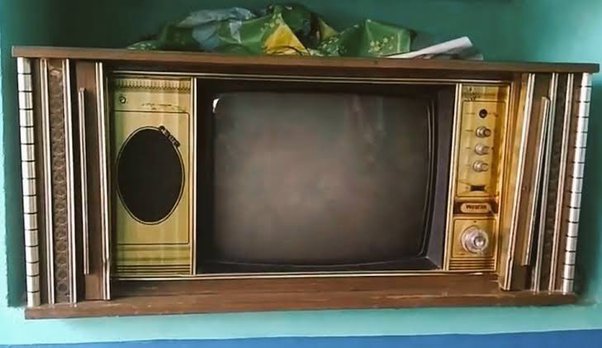
Television broadcasting began in India in 1959 by Doordarshan

FM broadcasting began on 23 July 1977 in Chennai, then Madras.

Radio City Bangalore, started on 3 July 2001, is India’s first private FM radio station.

India’s first colour television broadcast was a test run by Doordarshan on April 25, 1982. This marked a significant step in Indian television history, transitioning from black and white to vibrant colour broadcasts. The official launch of colour television transmissions followed on August 15, 1982.

India’s first television serial was Hum Log, which began airing on Doordarshan on July 7, 1984.

In October 1992, India saw the launch of Zee TV, the first privately owned Indian channel to broadcast over cable followed by the Asia Television Network (ATN).

The first Indian over-the-top (OTT) platform was BigFlix, launched by Reliance Entertainment in 2008.

In 2010 Digivive launched India’s first OTT mobile app called nexGTv.

India’s first publicly available internet service, which included broadband options, was launched by Videsh Sanchar Nigam Limited (VSNL) on August 15, 1995.

The first male VJ in India was Kenny (of Irish-Italian descent), who joined Channel [V] soon after its launch according to Hindustan Times.

Ameen Sayani is widely recognized as India’s first radio jockey. He is best known for hosting the popular “Binaca Geet Mala” program on Radio Ceylon starting in 1952.

The first live sports broadcast in India was a cricket match, specifically the India vs. England Test match in 1982

India in Decades- Part 2- 1990s

1990                                     Muslim separatist groups begin campaign of violence against Hindus in Kashmir resulting in Exodus of Kashmiri Hindus.

                                                Indian Airlines Flight 605 crashes near the HAL Airport in Bangalore.

Leander Paes He won the 1990 Wimbledon junior title and was briefly ranked the number one junior player in the world.

                                                The last Indian troops are withdrawn from Sri Lanka

                                                The government devalued the rupee and initiated economic reforms.

                                                Operation Floodlight (a literacy drive in Ernakulam)

                                                V P Singh announces implementation of Mandal commission report.

Rajiv Goswami, a commerce student in Deshbandhu College attempted Self-immolation as part of Mandal Commission protests of 1990.

V.P. Singh resigns as prime minister and is succeeded by Janata Dal dissident Chandra Shekhar.

TN Sheshan- 10th Chief Election Commissioner of India

1991                                     Rajiv Gandhi is assassinated by a suicide bomber sympathetic to Sri Lanka’s Tamil Tigers.

                                                Indian National Congress leader P.V. Narasimha Rao becomes Prime Minister.

                                                The Government of India constitutes the Company Law Board as an independent quasi-judicial body thus giving up direct control on matters of company law.

An economic reform programme or Economic liberalisation in India is begun by Prime Minister P. V. Narasimha Rao.

The government of India announces its New Industrial Policy, marking the start of India’s economic reforms.

J. Jayalalithaa is sworn in as chief minister of Tamil Nadu for the first time.

Shiv Sena workers led by Shishir Shinde vandalised Wankhede Stadium Cricket pitch to stop a cricket match between India and Pakistan.

Rapid Action Force established by Union Home Ministry.

Union Territory of Delhi was given the special status of ‘National Capital Territory of Delhi.’ 69th Amendment.

1992                                     Scam of Harshad Mehta was exposed by journalist Sucheta Dalal, which consisted of SBI 500 Crore Scam and illegal usage of loophole in banking system. December    

The demolition of the Babri Masjid, triggering the Bombay riots.

                                                Over 200 people die in Cuttack in Odisha, after drinking illegally brewed                                                  liquor in the 1992 Odisha liquor deaths incident.

Konkani language, Nepali language and Meitei language (officially known as Manipuri language) included in the constitutional scheduled languages’ list and made one of the official languages of the Indian Republic through 71st amendment of Constitution of India.

Zee Television, a Hindi language satellite and cable television station, a first officially regular broadcasting service to start in Mumbai.

Indian Rupee exchange rate collapsed. It was 20 Rs to 1 dollar in January 1992 and it became 30 Rs to 1 dollar in December 1992. A huge 50% depreciation in value

Government of India establishes SEBI, stock exchange regulator.

73rd and 74th Amendment Act, 1992

Panchayati Raj institutions and Urban local bodies were given constitutional status.

India bags no medal at the Olympics

1993                                     A series of bomb blasts, thought to be planted by underworld figures, rock the country’s commercial capital of Bombay, killing some 260 people

                                                Latur earthquake shakes Maharashtra

                                                The All Parties Hurriyat Conference is formed in Kashmir.

                                                supreme court recognised a fundamental right to primary education in the right to life under article 21

                                                The Indian Voter ID card, also known as the Electors Photo Identity Card (EPIC), was introduced nationwide in 1993

1994                                     Kupwara massacre in J&K

                                                S. R. Bommai v. Union of India verdict by Supreme Court of India.

                                                Plague breakout in India from Surat

National Telecommunications policy (NTP) in 1994 which brought changes in the ownership, service and regulation of the national telecommunications infrastructure.

                                                Aishwarya Rai was crowned Miss World 1994 in Sun City, South Africa

                                                Pre-Conception and Pre-Natal Diagnostic Techniques Act, 1994

Sushmita Sen became the first Indian woman to win the Miss Universe title

                                                Airports Authority of India Act 1994

1995                                     West Bengal Chief Minister Jyoti Basu made the first call from Kolkata to inaugurate the cellular services in India.

                                                India joins the World Trade Organization (WTO) which has replaced GATT.

                                                Purulia arms drop case

                                                India’s first internet service started by VSNL

                                                Delhi Metro Rail Corporation Limited founded.

1996                                     Congress suffers its worst electoral defeat ever as BJP emerges as the largest single party.                               

The Amarnath Yatra tragedy in which at least 194 pilgrims are reported to have frozen to death in northern Kashmir after being stranded by violent rain and snow storms.

TN Sheshan received the Ramon Magsaysay Award for government service

In general elections the ruling Congress Party is defeated and Bharatiya Janata Party becomes the largest single party in parliament. Phoolan Devi, former bandit queen is elected to Parliament from the Samajwadi Party.

Atal Bihari Vajpayee, leader of the Bharatiya Janata Party, is elected the new prime minister of India, replacing P. V. Narasimha Rao of the Indian National Congress. However, the party does not receive an overall majority and Vajpayee resigns thirteen days later rather than face a no confidence vote, and is replaced by the United Front, led by Deve Gowda. 13 days Government by Vapayee.

Deve Gowda is sworn in as the head of the United Front, a coalition of 13 parties which Congress supported but did not join. Gowda’s new cabinet brings in powerful regional figures, mixing low-caste and Muslim leaders with veterans of the socialist movement.

At least 194 pilgrims are reported to have frozen to death in northern Kashmir after being stranded by violent rain and snow storms in the Amarnath Yatra tragedy.

Michael Jackson arrived in Mumbai as a part of his History World Tour

Chinese President Jiang Zemin begins his three-day visit, the first visit by a Chinese head of state to India.

Leander Paes won a bronze medal for India in men’s singles at the 1996 Atlanta Olympic Games making him the first Asian in Olympic history to win a tennis medal and the only Indian to date. It was India’s sole medal in 1996 Olympics.

World Cup Cricket in India. India loses in Semi Final against Sri Lanka in Kolkata.

1997                                     India’s Missionaries of Charity chooses Sister Nirmala to succeed Mother Teresa as its leader.

                                                Inder Kumar Gujral, a new leader acceptable to Congress, is sworn in as prime minister.

                                                Jagmohan Dalmiya elected as the president of International Cricket Council

                                                K.R. Narayanan is elected president, defeating T.N. Seshan. First Dalit President.

                                                Mother Teresa dies of heart failure in Kolkata.

                                                Elizabeth II pays a state visit to India.

Arundhati Roy wins Booker Prize for her debut novel The God of Small Things.

 In 1997, an autonomous body was established in the name of Prasar Bharti to take care of the public service broadcasting under the Prasar Bharti Act. All India Radio and Doordarshan, which earlier were working as media units under the Ministry of I&B became constituents of the body.

                                                TRAI (telecom regulator) is established.

1998                                     BJP forms coalition government under Prime Minister Atal Bihari Vajpayee.

India and Pakistan carry out nuclear tests, leading to widespread international condemnation.

EVM machines were used on an experimental basis across 25 state assembly constituencies during the assembly elections in Rajasthan, Madhya Pradesh and Delhi.

The National Highway Development Project is launched.

Netaji Subhas Open University started functioning in Kolkata

Gulzarilal Nanda, Interim Prime Minister of India died.

1999                                     Vajpayee makes a historic bus trip to Pakistan to meet Premier Nawaz Sharif and to sign bilateral Lahore peace declaration.

                                                India’s 13-month-old BJP-led Second Vajpayee government falls after losing a no confidence motion in the Lok Sabha by just one vote

                                                Australian Christian missionary Graham Staines and his two sons were burned to death by Bajrang Dal activists in Kendujhar district, Odisha

Indian Army launches operations to evict Pakistani forces occupying Indian positions on the icy heights in Kargil district, known as the Kargil War.

The Odissa Cyclone devastates eastern state of Odisha, leaving at least 10,000 dead.

Leander Paes and Mahesh Bhupathi became the first Indian pair to win doubles title in Wimbledon Championship.

Two crowded trains collide head-on at a railway station in Gaisal, West Bengal killing 286 people.

Parliamentary elections are held, in which the National Democratic Alliance led by Prime Minister Vajpayee’s BJP wins 298 seats, the Congress-led Alliance 134, and others 105.

Heavily armed hijackers take over an Indian Airlines Airbus carrying 189 people from Kathmandu (Nepal) to New Delhi. After a detour to the United Arab Emirates, it lands at Kandahar, Afghanistan, on 25 December. On 28 December the hijackers make three demands, including the release of 35 terrorists and a sum of $200 million. On 31 December the hijackers, who stabbed a man on the plane to death, free their hostages after reaching agreement with India for the release of three terrorists in Kashmir.

Shankar Dayal Sharma, former president of India and Chief Minister of MP died.

India in Decades- First Part 1980s

1980                                     Indira Gandhi returns to power heading the Congress party splinter group, Congress (Indira).

                                                Sanjay Gandhi is killed in a plane crash near Safdarjung Airport.

BJP formed

The Indian Hockey team won the Gold in the Olympics, the last till date.

B. P. Mandal, chairman of the Backward Classes Commission, submitted his report to the government.

The infamous Bhagalpur blinding case which was later depicted in the Bollywood movie ‘Gangajal’

                                                The Forest (Conservation) Act, 1980

1981                                     Subhas Mukhopadhyay, Physician created World’s second IVF died

                                                Infosys is founded in Pune.

                                                Nargis Dutta died

                                                Census in India

Around 45 people got killed due to a stampede at Qutb Minar resulting in closure of Minaret for tourists

1982                                     INSAT-1A launched; deactivated in September.

NABARD established through act of Parliament following B. Sivaraman Committee recommendation.

                                                9th Asian Games held in Delhi.
                                                Doordarshan begins testing of Colour television broadcast in India

                                                Acharya Vinoba Bhave died

Bijon Setu massacre seventeen Ananda Margis were set ablaze at Bijon Setu in Dhakuria in south Kolkata. No one has been convicted of the murders

EVMs introduced in India

Future Prime Minister of India Manmohan Singh becomes Governor of the Reserve Bank of India

1983                                     N. T. Rama Rao NTR’s nine-month-old Telugu Desam assumes power in AP becoming a challenger post Loknayak Jayprakash Narayan against Indira Gandhi.

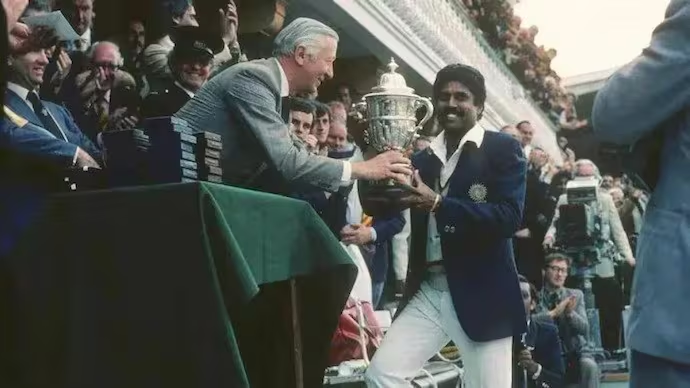
India won World Cup for the first time, in one day international Cricket led by Kapil Dev.

                                                Bandit queen Phoolan Devi surrenders.

Subrahmanyan Chandrasekhar received the Nobel Prize in Physics

Nellie massacre: over 2,000 people, mostly Bangladeshi Muslims, were massacred during the Assam agitation

1984                                     Squadron Leader Rakesh Sharma is launched into space, aboard the Soyuz T-11.

Troops storm Golden Temple, the Sikhs’ most holy shrine, after Jarnail Singh Bhindranwale seeks refuge inside. There are a movement to flush out Sikh separatism and calls for secularism, called Operation Blue Star. “Anti-Sikh Riots 1984”.

Indira Gandhi is assassinated by her bodyguards; her son, Rajiv, takes over.

Many Sikhs were killed due to the assassination of Indira Gandhi. see 1984 anti-Sikh riots.

Bachendri Pal becomes first Indian women to reach the summit of Mount Everest

India’s first metro Kolkata metro started

India bags no medal at the Olympics

Bhopal disaster: A methyl isocyanate leak from a Union Carbide pesticide plant in Bhopal, Madhya Pradesh, kills more than 2,000 people outright and injures anywhere from 15,000 to 22,000 others

The first 3D film in India My Dear Kuttichathan was released

1985                                     Karamchedu massacre of Dalits in Andhra Pradesh.

                                                Narmada Bachao Andolan started by Medha Patkar

                                                Bombing on Air India Flight 182- Kanishka

Terrorist and Disruptive Activities (Prevention) Act TADA came into effect after presidential assent.

India wins B&H World Champion Cricket Trophy. Ravi Shastri Player of the Series.

Indira Gandhi National Open University is established by an Act of Indian Parliament.

The Narcotic Drugs and Psychotropic Substances Act is passed by Parliament came into force.

The Administrative tribunals in Delhi, Mumbai, Calcutta and Allahabad were established by Administrative Tribunals Act, 1985.

Chakravarty Committee was set up by the RBI to review the working of monetary system. Its recommendations had far reached consequences eventually removing India from the 500-year-old silver standard

The 52nd Amendment of the Indian Constitution, enacted in 1985, is also known as the Anti-Defection Law

1986                                      Contract signed between the Government of India and Swedish arms company Bofors for supply of 410 155 mm Howitzer field guns. (Bofors deal)

Operation Black Thunder conducted to flush out remaining Sikh extremists from the Golden Temple

                                                a new National Policy on Education announced by the Government

                                                Inland Waterways Authority of India came into existence.

Supreme Court of India delivered landmark judgement which upholds Freedom of speech and expression in Bijoe Emmanuel Vs State of Kerala case. In this case court said that no law mandates singing National Anthem of India compulsory

Environment Protection Act that was passed in month of May in consequence to Bhopal disaster, came into force.

                                                Consumer Protection Act

Australia-India test cricket match ends in a tie at the M. A. Chidambaram Stadium, Chepauk, Chennai, becoming only the second tied test in the history.

1987                                     India deploys troops for peacekeeping operation in Sri Lanka’s ethnic

conflict.

Board for Industrial and Financial Reconstruction set up and became operational with effect from May reflecting concerns related to Industrial Sickness and republic day

Sunil Gavaskar becomes the first man to score 10,000 runs in Test cricket

The Union territory was split, and Goa was elevated as India’s twenty-fifth state, with Daman and Diu remaining Union Territories

Operation Poomalai by India in Jaffna.

Roop Kanwar case – last known incident of Sati in India, occurred at Sikar district

The South Asian Games are held in Calcutta

World Cup Cricket in India for the first time

Mizoram became the 23rd state of India on February 20, 1987

Arunachal Pradesh became a state on February 20, 1987

1988                                     SEBI was established by The Government of India on 12 April 1988 and given statutory powers in 1992 with SEBI Act 1992 being passed by the Indian Parliament.

                                                Viswanathan Anand became first Grandmaster (chess) from India

                                                Janata Dal formed under the leadership of V. P. Singh.

                                                The National Housing Bank established as an apex body of housing finance and to promote activities in housing development.

                                                Rajya Sabha passes the Sixty-first Amendment of the Constitution of India which brings down voting age from 21 to 18

                                                First Cabinet meeting outside New Delhi held at Sariska, Rajastham

                                                The infamous Rupan Deol Bajaj case involving KPS Gill.

India bags no medal at the Olympics

                                                Maximum lending rate abolished. Banks free to charge customers according to their credit record.

                                                Death of Raj Kapoor

1989                                     Falling public support leads to a Congress defeat in general election.

                                                The National Front (India), headed by V. P. Singh and led by Janata Dal, is formed and storms into power with outside support from BJP and CPI(M).

                                                16-year-old Sachin Tendulkar makes his test debut against Pakistan

                                                The first Darjeeling Gorkha Hill Council elections took place and Gorkha National Liberation Front under leadership of Subhash Ghisingh.

                                                India’s first Intermediate-range ballistic missile, Agni was successfully launched from Chandipur, Odisha. It elevated India into a prestige league of only five nations in world with IRBM strategic capability. This was a landmark moment under Integrated Guided Missile Development Programme

Please note that this additions may be made to this content. So, keep checking.

 Temples/Mosques/Monasteries/Monuments/ Architecture

  1.  The Khajuraho temples are a group of Hindu and Jain temples in Madhya Pradesh, India, built between 950 and 1050 AD by the Chandela dynasty. These temples showcase the Nagara style of architecture,
  2. Bodh Gaya is located almost 96 kilometrese away from Patna, Bihar and is one of the UNESCO World Heritage sites in India. It’s an important religious centre for the Buddhists as this was the place where Mahatma Buddha attained enlightenment. The holy Bodhi Tree is the site where Siddhartha gained Enlightenment and became Gautam Buddha. The famous Mahabodhi Temple was established in the reign of Ashoka the Great in about approximately 250 BCE.
  3. The Statue of Liberty was designed and built in France. It was a gift from the people of France to the United States to commemorate the centennial of American independence. The statue was designed by French sculptor Frédéric Auguste Bartholdi and its metal framework was built by French engineer Gustave Eiffel, who also designed the Eiffel Tower in Paris. The statue was then disassembled and shipped to the United States, where it was reassembled on Liberty Island in New York Harbor and dedicated on October 28, 1886.
  4. The Buddhist Monuments located at Sanchi in Madhya Pradesh are a World Heritage Site in India and they are the oldest stone structures in India. Originally commissioned by emperor Ashoka in 3rd century BCE, the Sanchi Stupa is located 46 kilometer north-east of Bhopal.
  5. The Jantar Mantar is an astronomical observatory built in 18th century Rajasthan. It is an astronomical observatory which was built by the Rajput King Sawai Jai Singh of Rajasthan in 1738 CE
  6. The Burj Khalifa, the tallest building in the world, is located in Dubai, United Arab Emirates (UAE).
  7. Hampi is a UNESCO World Heritage site located in the Northern part of Karnataka. It lies within the ruins of the ancient, prosperous kingdom of Vijayanagar
  8. The nickname of the clock tower in London is “Big Ben.”
  9. The Elephanta caves are located on an island in the Arabian City, not very far from the city of Mumbai.
  10. The Ellora Caves are an important UNESCO World Heritage site and an archaeological site, ranging 29 kilometers Northwest of the city of Aurangabad, Maharashtra. The Ellora Caves are well known for their Indian-rock cut architecture. The presence of Hindu, Buddhist and Jain temples and sculptures portray the tolerance which was extended towards different faiths and beliefs in Ancient Indian History.
  11. Rumtek Monastery is located in which Indian state?

Ans- Sikkim

  1. Hemis monastery in Leh, Ladakh.
  2. Tawang monastery- Arunachal Pradesh
  3. Angkor Wat, the largest religious monument in the world, was built in the early 12th century by King Suryavarman II as a Hindu temple dedicated to Vishnu. It’s located in present-day Cambodia, within the city of Angkor, which served as the capital of the Khmer Empire from the 9th to the 15th centuries. Initially a Hindu temple, it was later transformed into a Buddhist temple.
  4. Bahai temple is in New Delhi
  5. Dilwara temple in Mount Abu, Rajasthan- Jain temple.
  6. In which place Shringeri Math is situated, which established by Shankaracharya?

Ans- Rameshwaram.

  1. In which state’s Sabarimala pilgrimage, the pilgrims have taken the oath of cleanliness?

(a) Karnataka

(b) Kerala

(c) Telangana

(d) Tamil Nadu

Ans: (b) Kerala

  1. The residence of the Prime Minister of which country is called ‘Temple Trees’?

(a) Nepal

(b) Myanmar

(c) Sri Lanka

(d) Bangladesh

Ans: (c) Sri Lanka

  • The Char Dham Highway project connects the four holy places of Yamunotri, Gangotri, Kedarnath, and Badrinath. In which Indian state are all these religious places located?

(a) Uttarakhand

(b) Himachal Pradesh

(c) Arunachal Pradesh

(d) Sikkim

Ans: (a) Uttarakhand

  • The largest temple complex in India is the Sri Ranganathaswamy Temple located in Srirangam, Tamil Nadu
  • Tawang monastery is the largest monastery in India. is also known as Galden Namgyal Lhatse.
  • The world’s largest mosque is Masjid al-Haram, located in Mecca, Saudi Arabia. It is also known as the Great Mosque of Mecca and encloses the Kaaba.
  • The largest mosque in India is the Taj-ul-Masajid, located in Bhopal, Madhya Pradesh. It has a capacity for around 175,000 worshippers.
  • The Seven Wonders of the World are a group of places around the globe that are considered to be of great importance. These are: The Colosseum in Italy, Petra in Jordan, Chichén Itzá in Mexico, Christ the Redeemer in Brazil, Machu Picchu in Peru, Taj Mahal in India and The Great Wall of China.
  • The tallest statue in the world is the Statue of Unity, located in Gujarat, India. It depicts Sardar Vallabhbhai Patel, a prominent figure in India’s independence movement, and stands at a height of 182 meters (597 feet).
  • The highest monastery in the world is generally accepted to be Rongbuk Monastery, located in Tibet.
  • The highest temple in India is Tungnath Temple, located in Uttarakhand, at an altitude of 12,073 feet (3,680 meters)
  • The five temples that make up the Panch Kedar are: Kedarnath, Tungnath, Rudranath, Madhyamaheshwar, and Kalpeshwar. These temples are dedicated to Lord Shiva and are located in the Garhwal region of Uttarakhand, India. Shiva temples.
  • Adi Shankaracharya established four mathas to propagate his teachings and maintain the continuity of Sanatana Dharma. These are:

Sringeri Sharada Peetham: Located in Sringeri, Karnataka.

Jyotir Math: Located in Joshimath, Uttarakhand.

Dwarka Sharada Peetham: Located in Dwarka, Gujarat.

Govardhan Math: Located in Puri, Odisha.

  • World Architecture Day- 6 Oct
  • Tulsi Manas Mandir is located at Varanasi, UP.
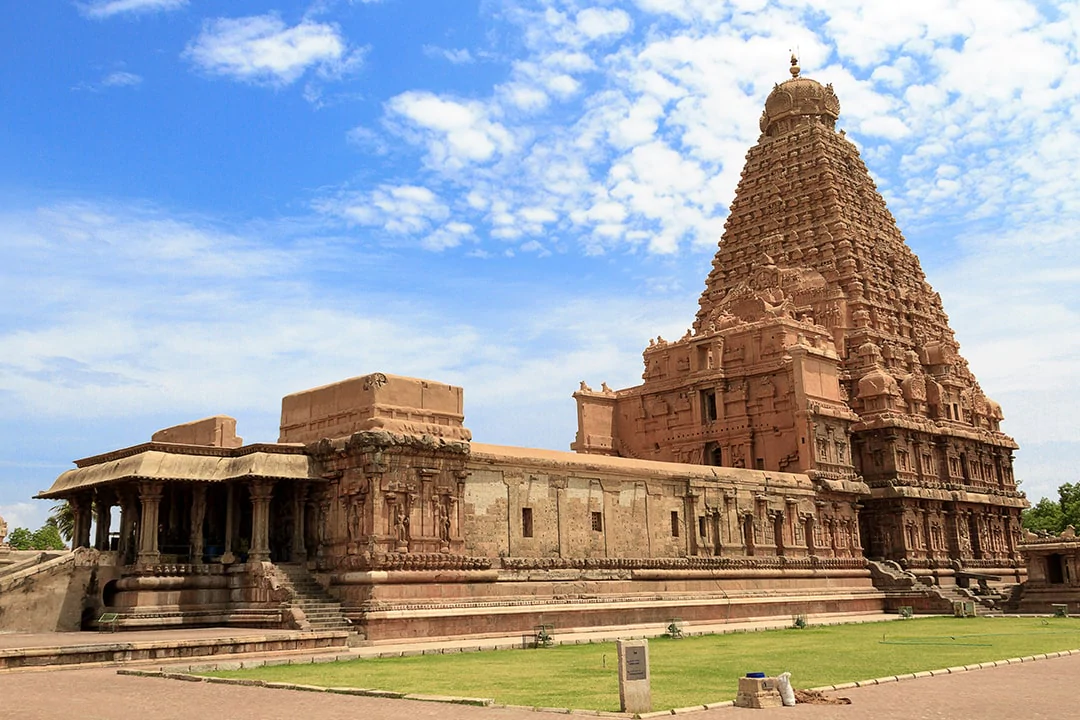
  • Brihadeshwara temple or Raja Rajeswara temple is located at Thanjavur, Tamil Nadu. It was built by Raj Raja Chola I.
  • Sun Temple at Konark, Odissa is also known as Black Pagoda. Built by Narasimhadeva 1.
  • Ellora temple was built during the Rashtrakuta dynasty.
  • The Charminar at Hyderabad was built by Mohd. Kuli Qutub Shah in 1591 to commemorate the end of plague in the city.
  • Kailash temple is located at Ellora, Maharashtra.
  • Moti Masjid was built by Aurangzeb.
  • Le Corbusier designed the planned city of Chandigarh.
  • Bimal Patel is the architect of India’s new Parliament building.
  • Golconda fort is in Hyderabad, Telengana. It was bult by Sultan Quli Qutub ul Mulk.
  • The Vesara style of temple architecture mainly evolved, practised, and developed by the influence of the Chalukyas of Kalyani.
  • Jagannath Temple (Puri) is believed to be constructed in the 12th century by King Anatavarman Chodaganga Deva of the Eastern Ganga Dynasty.
  • Known as the “Architect of the Poor”, Laurie Baker was responsible for the revolutionised mass housing concept in Kerala.
  • G Wittet designed the Gateway of India in Mumbai, borrowing several elements of Mughal style
  • The Victoria terminus station in Mumbai is an example of Victorian Gothic revival architecture in India, deriving themes from Indian traditional architecture. It was designed by FW Stevens.
  • There are 44 World Heritage Sites in India, 6th most in the world.  Out of these, 36 are cultural, seven are natural, and one, Khangchendzonga National Park, is of mixed type, listed for both cultural and natural properties. India has the sixth-most sites worldwide. The first sites to be listed were the Ajanta Caves, Ellora Caves, Agra Fort, and Taj Mahal, all of which were inscribed in the 1983 session of the World Heritage Committee. The most recent site listed is the Maratha Military Landscapes of India, in 2025.
  • Italy has the most UNESCO World Heritage Sites with a total of 60. It is followed by China with 59 sites, and then Germany with 54
  • Uttar Pradesh is the Indian state with the most international airports. As of 2025, it has five international airports: Chaudhary Charan Singh International Airport in Lucknow, Lal Bahadur Shastri International Airport in Varanasi, Kushinagar International Airport, Maharishi Valmiki International Airport in Ayodhya, and Noida International Airport in Jewar.
  • Maharashtra is the Indian state with the highest number of UNESCO World Heritage Sites, boasting a total of 5 sites. These include the Ajanta Caves, Ellora Caves, Elephanta Caves, Chhatrapati Shivaji Maharaj Terminus, and the Western Ghats (a natural site).
  • Tamil Nadu is the Indian state with the most temples. It’s often referred to as the “land of temples” due to the sheer number of Hindu temples found there, estimated to be over 400,000.
  • The oldest church in India is believed to be the St. Thomas Syro-Malabar Church in Palayur, Kerala, which is said to have been established in 52 AD by St. Thomas the Apostle.

To get Saptarshi Sir’s guidance for PSC Miscellaneous Mains/ Clerkship Main/ English/Economy or for overall WBCS or other exam preparation, call or WhatsApp us @6295350330. Classes for PSC Miscellaneous Main and Clerkship Main have already started. WBCS New batch is also going on. You can also download our app for online guidance using the link

https://play.google.com/store/apps/details?id=co.penny.oecgd&pcampaignid=web_share

For free notes, daily quizzes, word games and many other surprises, please join our Telegram Group using the link below

https://t.me/theadhyayanacademy

Important Festivals/ Fairs of India

Andhra Pradesh –              Ugadi, Flamingo festival

Arunachal Pradesh          Boori Boot, Myoko, Dree, Pongtu, Murung, Solang, Mopin, Monpa festival

Assam                                  Ambubachi, Bhogali Bihu, Baishagu, Dehing Patkai, ‘Me-Dam-Me-Phi’

Bihar                                    Chhath Puja, Bihula, Sonepur fair

Chhattisgarh                      Maghi Purnima, Bastar Dussehra

Goa                                      Sunburn festival, Ladain, Mando

Gujarat                                 Navratri, Janmashtami, Kutch Utsav, Uttarayana

Himachal Pradesh            Rakhadumni, Gochi Festival, Doongri

Haryana                               Surajkund fair

Jammu and Kashmir        Har Navami, Chhari, Bahu Mela, Dosmoche,

Jharkhand                           Karam Utsav, Sarhul, Rohini, Tusu

Karnataka                            Mysore Dasara, Ugadi

Kerala                                   Onam, Vishu

Madhya Pradesh              Lok-rang Utsav, Tejaji, Khujaraho festival, Hari Jiroti

Meghalaya                           Nongkrem festival, Khasis festival, Wangla, Sajibu Cheiraoba

Maharashtra                       Ganesh Utsav, Gudi Padva

Manipur                               Yaoshang, Porag, Chavang Kut, Sangai

Mizoram                              Chapchar kut , Mim kut

Nagaland                             Hornbill festival, Moatsu Festival,Sekrenyi

Odisha                                  Nabakalebar festival

Punjab                                  Lohri, Baisakhi

Rajasthan                            Gangaur, Teej, Bundi, Puskar camel fair,

Sikkim                                 Losar

Tamil Nadu                         Pongal, Natyanjali Festival

Telangana                            Bonalu, Bathukamma

Tripura                                  Kharchi Puja

West Bengal                       Durga Puja

Uttaranchal                         Ganga Dussehra

Uttar Pradesh                    Ganga Mahotsav, , Khichdi, Kalanamak rice festival, Bateswar fair

To get Saptarshi Sir’s guidance for PSC Miscellaneous Mains/ Clerkship Main/ English/Economy or for overall WBCS or other exam preparation, call or WhatsApp us @6295350330. Classes for PSC Miscellaneous Main and Clerkship Main have already started. WBCS New batch is also going on. You can also download our app for online guidance using the link

https://play.google.com/store/apps/details?id=co.penny.oecgd&pcampaignid=web_share

For free notes, daily quizzes, word games and many other surprises, please join our Telegram Group using the link below

https://t.me/theadhyayanacademy