
One Nation, One Election (ONOE)

One Nation, One Election (ONOE) is a proposal under consideration by the Government of India to synchronise all elections in the country either on a single day or within a specific time frame, with an objective of cutting election cost. One of its most notable proposals is to simultaneously conduct elections to the Lok Sabha & state legislative assemblies of all 28 states & 8 union territories. For the purpose of ONOE, MoS Law & Justice Arjun Ram Meghwal introduced The Constitution (129th Amendment) Bill, 2024 in Lok Sabha that the bill further to amend the Constitution of India on 17 December 2024, the purposed bill was referred to Joint Parliamentary Committee on 19 December 2024 after being passed in the Lok Sabha with 269 votes being in favour of the bill and 198 votes against passing the motion.

History

The years 1951-52, 1962 and 1967 witnessed simultaneous elections dating back the concept of one nation one election to the early years of Indian Independence. This process was only discontinued after the 1967 elections due to the premature dissolution of a few state assemblies and Lok Sabha in 1970. Since then, the elections are being conducted separately which is only leading to increased costs.

Recommendations Earlier

Law Commission of India (170th Report, 1999): Advocated simultaneous elections, emphasizing the reduction of election-related disruptions and costs.

Parliamentary Standing Committee (2015): Highlighted the benefits of ONOE, including curbing electoral expenses and ensuring uninterrupted governance.

NITI Aayog Report (2017): Proposed a roadmap to reintroduce ONOE.

Advantages

Cost Reduction: It could save money by eliminating the need for separate election cycles. For example, the 2024 Loksabha elections cost a total of around Rs 1 lakh Cr in comparison to Rs 10 Cr of the first LS Election.

Focus on Long-Term Governance: It encourages politicians to prioritize long-term governance over short-term gains.

Increased Voter Turnout: Voters are less fatigued, as they only participate once every few years, potentially boosting voter turnout.

Level Playing Field: Smaller parties can compete more effectively with larger ones due to reduced overall election expenses.

Efficient Use of Security Forces: It allows security forces to be deployed more efficiently for other purposes.

Challenges and complexities of simultaneous elections

Overshadowing regional issues: Conducting elections simultaneously to the Lok Sabha and all State assemblies would result in national issues overshadowing regional and State specific issues.

Force Deployment: Arrangement of police or para military forces to maintain law and order situation during such simultaneous elections will be a mammoth task.

Impact on the Regional parties: Simultaneous elections may create a system where National political parties would have a significant advantage over regional parties.

Political accountability: Frequent elections hold lawmakers accountable, while fixed terms may provide unwarranted stability without performance scrutiny challenging democratic principles.

Concerns Regarding Federalism: Constitutional Amendments concerning the term of the state legislative assemblies under Article 172 can be carried out without ratification by states. Thus, opinion and say of States is reduced.

Logistical Issues: Organizing ONOE would require significant resources, including a vast supply of electronic voting machines and trained personnel to oversee the process.

Amendments Needed

The implementation of the One Nation, One Election policy is not feasible within the current constitutional framework. To enable this policy, certain essential amendments to the Constitution are necessary, including:

Article 83: Concerning the duration of the Houses of Parliament, amendments are required to fix the tenure and timing for the dissolution of the Lok Sabha.

Article 85: Pertaining to sessions, prorogation, and dissolution of Parliament, clear guidelines must be established to prevent arbitrary or ambiguous dissolution of sessions.

Article 172: Governing the duration of State Legislatures, amendments are needed to synchronize their tenure with that of the Lok Sabha.

Article 174: Similar to Article 85, this article deals with sessions, prorogation, and dissolution of State Legislatures. Amendments are required to standardize procedures and timelines.

 The Lok Sabha election in India is already the biggest even of democracy all over the world. To add the state legislature elections to it is not just a matter of regular debate. It is a gigantic step and for that nationwide consensus is needed. Discussions among the political parties with special attention to the regional parties is the need of the hour. Upholding the governing principles of national integrity, popular plurality and cooperative federalism must be the sole purpose of such a mammoth shift in the course of our democracy.
Digital Divide and India

Saptarshi Nag

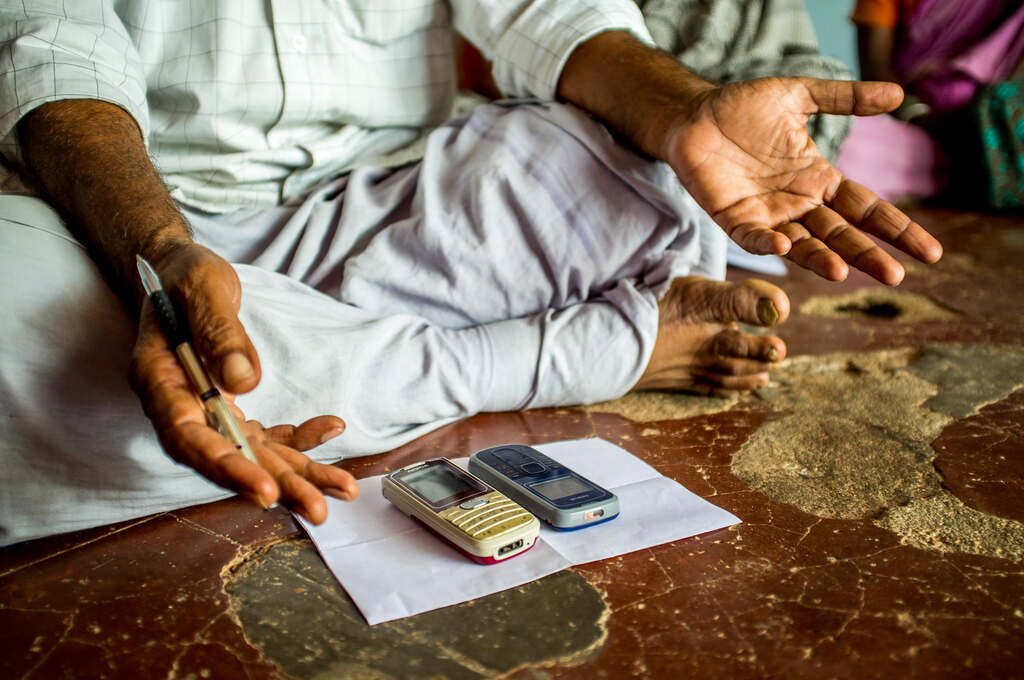
The digital age presents a double-edged sword. While urban centres flourish with advanced technology and internet access, rural communities struggle to bridge the digital divide. This lack of access creates a significant barrier to education, healthcare, and economic progress, further widening the social gap. The digital divide is the gap created by unequal access to modern telecommunications technology among different demographic groups and regions. This can include inequalities in access to computers, smartphones, and the internet.

When the term “digital divide” was first used in the late 20th century, it described the gap between those with cell phone access and those without it. The term has since expanded to include the technical and financial ability to use available technology and access the internet. However, the meaning of the “digital divide” is constantly shifting with the development of technology.

In India, this ‘Divide’ is far more prominent than other developing nations. The digital divide in the access and usage of ICTs and the internet has also led to an exclusionary consequence in three sectors of utmost significance: education, health and finance. In a country plagued by high socioeconomic inequality, the digitalisation process cannot be posited as the panacea for the inherent challenges of the physical world. It becomes particularly problematic when half of the population neither has access to gadgets and the internet or the technological know-how to move to a digital environment. In such circumstances, the digitalisation process becomes unequal, favouring the digitally connected while excluding the rest, and in certain cases, exacerbating the already existing inequalities.

India, the largest democracy and the most populous nation in the world having a population of almost 1.4 billion people, out of which approximately 350 million people are uneducated and only a paltry percentage of the people have access to the internet. But surprisingly, despite such demoralizing numbers, India presently serves as one of the worlds’ leading IT hubs.  Though superficially, this might seem to be paradoxical, in reality, there is a lot more to it.  Digitalization and Information and Communication Technology (ICT) serve as the basis of modern society. The development of ICTs and the rapid pace of digitalization have necessitated multiple social, economic, and environmental changes globally. While on India is happy to go cashless and order daily consumable items by just a click, the other India continues to suffer from the plight of poverty, illiteracy both academic and digital, hunger and alienation from the rest of India.

The reasons behind such divide are not hard to find. While poverty, lack of education, lack of intent, poor infrastructure, lack of electrification, improper connectivity, difficult terrains all contribute to such gap, the implications of this divide are even more concerning. Socio-economic immobility, rising unemployment, denial of access to basic amenities and several government schemes, digital fraud for the newbies, increasing socio-economic and digital inequality, unfulfillment of potential of a substantial share of a population are to name a few. Unfortunately, almost every government schemes are today being implemented through digital platforms. Every beneficiary must be digitally incorporated in the databases to have access to the facilities the Central or the state Governments are providing. However, as the beneficiaries mostly are digitally illiterate especially in the rural areas, they are often misled and cheated by unscrupulous middlemen. While the deserving is left uncared for, the shrewd undeserving lot takes the advantage of digital knowledge. This leads to widespread corruption at the grassroot level.

Addressing the digital divide is crucial to unlock India’s economic potential and promote social equality. Government initiatives like the National Digital Literacy Mission and the Pradhan Mantri Gramin Digital Saksharta Abhiyan have been introduced to increase digital literacy. National Education Policy, 2020 also aims at making “India a global knowledge superpower” by introducing several changes from the school to college level in the Indian education system with special emphasis on digital education. However, there is a need to ramp up efforts to improve digital infrastructure, particularly in rural areas, and ensure physical access to ICT for all sections of society.

Further, underprivileged groups need to be motivated to incorporate technology into their daily lives, and digital skills must be imparted to bridge the gap. Stronger regulation and efforts to reduce the cost of Edtech products can improve access to online education. Initiatives like the NDHM (National Digital Health Mission) should be accompanied by measures to enhance digital infrastructure and promote digital literacy to ensure the effective delivery of healthcare services.

India has grand growth aspirations, but bridging India’s digital divide is crucial for inclusive growth and to harness the full potential of technology. By addressing disparities in internet usage, mobile ownership, and access to digital services, India can create a more equitable society and unlock economic opportunities for all its citizens.

While AI (Artificial Intelligence) is defining the new age, for a substantial part of Indian population, the A and the I should start with Am I digitally literate?