India in Decades- Part 6- 2010 to 2023

2010                                     16 people are killed in a bomb explosion at German Bakery in the city of Pune, Maharashtra.

                                                An Indian man is set on fire in Melbourne, Australia, in the latest in a series of attacks on Indian nationals in the country.

                                                Environment ministers from the G4 bloc (IBSA Dialogue Forum & China) meet in New Delhi, India, to agree a common position ahead of future climate change talks.

                                                Russia signs a nuclear reactor deal with India which will see it build 16 nuclear reactors in India.

                                                India test fires two short range missiles, the Dhanush and Prithvi II

                                                The Indian government initiates The Right of Children to Free and Compulsory Education Act to provide free and compulsory education to all children aged between 6 and 14 years, making education a fundamental right for millions of children

                                                India launches its new 2011 biometric census, the largest census in the world.

                                                2010 Dantewada ambush: At least 70 Indian soldiers are killed in an attack by Naxalites in the Dantewada district of Chhattisgarh

                                                Ajmal Kasab, the only surviving member of a group responsible for the 2008 Mumbai attacks, is sentenced to death

                                                The Supreme Court of India tentatively approves the Tamil Nadu government’s new quota law, providing 69% of employment in educational institutions to scheduled castes and tribes and other backward classes.

                                                XIX Commonwealth Games, were held in Delhi, India, from 3 to 14 October 2010.

                                                2010 Kabaddi World Cup in Punjab won by India by defeating Pakistan on 12 April 2010.

                                                Jyoti Basu died

2011                                     102 pilgrims died due to stampede in Sabarimala (Kerala)

                                                India beat Sri Lanka and wins the 2011 Cricket World Cup.

                                                Dorjee Khandu, Chief Minister of Arunachal Pradesh since 2007, dies in a helicopter crash.

                                                Mamata Banerjee sworn in as the first woman and 11th Chief Minister of West Bengal

                                                West Bengal defeats Manipur to win Santosh Trophy

                                                Gorkhaland Territorial Administration (GTA) agreement signed.

                                                F1 2011 Race comes to India at the Buddha International Circuit, Noida

                                                7 billionth baby born on 31 October 2011, Nargis in Uttar Pradesh

                                                Maoist leader Kishenji killed in encounter in West Bengal.

                                                Lok Sabha passes Lokpal Bill

                                                Orissa was officially renamed Odisha in 2011

                                                MF Hussain, the legendary painter died

                                                Bhimsen Joshi died

                                                Shammi Kappr, Dev Anand, Jagjit Singh died

2012                                     25 July  Pranab Mukherjee, the former Finance Minister is elected as the 13th president of India.

                                                Soumitra Chatterjee selected for Dadasaheb Phalke award for 2011.

                                                London Olympics, this was India’s most successful Olympics in terms of total medal tally till then having won a total of 6 medals (0 gold, 2 silver and 4 bronze).

                                                Ajmal Kasab hanged on account of the 2008 Mumbai Attacks.

                                                2012 Nirbhaya Case – A female physiotherapy student was beaten and gang raped in Delhi, when the victim and a male companion boarded a bus in South Delhi in the evening, after watching a movie. The incident triggered huge outrage and protests across the country and forced the Government of India to react and work on safety for women. Public protests took place in Delhi, where thousands of protesters clashed with police, and other force units.

                                                Sachin Tendulkar scores his 100th International Hundred against Bangladesh in Asia Cup

                                                Sania Mirza and Mahesh Bhupathi won Mixed Doubles Title of the French Open.

                                                Pt. Ravi Shankar, IK Gujral, Yash Chopra,Sunil Gangopadhyayay died

2013                                     Indian helicopter bribery scandal comes to light.

                                                Terror attacks in Hyderabad in Dilsukhnagar area.

Mars Orbiter Mission, is successfully launched into Mars orbit by the Indian Space Research Organisation (ISRO).

100th Indian Science Conference was organised in Kolkata by the Indian Science Congress Association.

Lok Sabha and Rajya Sabha pass the Criminal Law (Amendment) Act, 2013

Lok Sabha passes the National Food Security Bill, 2013

The Sexual Harassment of Women at Workplace (Prevention, Prohibition and Redressal) Act, 2013 came into effect after being approved by Ministry of Women and Child Development

Kedarnath disaster

Bharatiya Mahila Bank, India’s first all-women commercial bank, starts its operations.

Indian cinema completes 100 years. The first Indian silent film Raja Harishchandra was released in 1913.

Rituparno Ghosh died

2014                                     Narendra Modi elected as prime minister of India, Congress was routed in the general elections.

                                                 The state of Telangana was officially formed on 2 June 2014.

Street Vendors Act, 2014 was passed by Rajya Sabha after Lok Sabha passed it on 6 September 2013

India’s second navigation satellite IRNSS-1B was successfully placed in orbit

Supreme Court of India recognised transgender people / hijras as constituting a third gender.

The Pradhan Mantri Jan Dhan Yojana was formally launched

NASA and ISRO signed an agreement to collaborate on an earth-observing satellite called NISAR and future Mars missions

Prime Minister, Narendra Modi launched the Swachh Bharat Abhiyan cleanliness drive

The recipients of the 2014 Nobel Peace Prize were announced, awarded to India’s Kailash Satyarthi and Pakistan’s Malala Yousafzai

Mumbai Monorail began operating.

Bengaluru Metro Green Line starts operation

Rohit Sharma’s 264 against Sri Lanka was scored in 2014 at Eden Gardens. The highest ever individual ODI score till date.

2015                                     NITI Aayog was established to replace Planning Commission of India

Amaravathi was announced to be name of the new capital of Andhra Pradesh, to be built near Thullur.

The Micro Units Development and Refinance Agency Bank (MUDRA Bank) was launched by Prime Minister Narendra Modi

The first International Yoga Day was held

The Digital India programme was launched by Prime Minister Narendra Modi

Shanghai Cooperation Organisation (SCO) decided to induct India as a full member.

India’s first space observatory Astrosat launched

Home Minister Rajnath Singh inaugurated the Indian Police Foundation (IPF) and the Indian Police Institute (IPI) in New Delhi

The birth anniversary of Sardar Vallabhbhai Patel was observed as Rashtriya Ekta Diwas

Vistara, a Tata Sons-Singapore Airlines joint-venture airline made its first flight

Chennai Metro commenced operations.

India was defeated by Australia by 95 runs at the Sydney Cricket Ground in the semi-final of the ICC WC 2015

2016                                     Terror Attacks on Pathankot Air Base.

Police horse Shaktiman was attacked with a stick by BJP cabinet minister Ganesh Joshi during a protest organized by BJP against the Chief Minister of Uttarakhand. The attack and the horse’s later death sparked worldwide outrage

Bihar state imposed a liquor ban

Goods and Services Tax (India) Bill passed in Parliament

2016 Uri attack: Four Jaish-e-Mohammed terrorists attacked an Indian Army brigade headquarters in Uri near the Line of Control, killing 19 soldiers in a pre-dawn ambush.

The Indian Army conducted a surgical strike in response to the Uri attack.

2016 Baramulla attack occurred.

The Indian government demonetized ₹500 and ₹1000 banknotes with immediate effect, causing political uproar on 8th November

                                                India becomes a member of Missile Technology Control Regime.

India signs a billion-dollar defence deal with France to buy 36 Rafale fighter jets.

India launches its first space laboratory, Astro Sat, in its biggest project since its Mars orbiter mission in 2014.

2016 Nagrota army base attack occurred.

The Supreme Court of India ordered cinemas to play national anthem before films

Jayalalithaa died

PV Sindhu and Shakshi Malik win silver and bronze medals in Rio Olympics

2017                                     30 June The Goods and Services Tax (GST) launched, the biggest tax reform in history of India.

                                                Indian Navy’s oldest serving aircraft carrier, INS Viraat is decommissioned after 30 years of service

                                                2017 Unnao rape case.

                                                Kochi Metro inaugurated.

                                                Gorkhaland agitations in Darjeeling, West Bengal.

                                                Ram Nath Kovind took oath as 14th President of India.

                                                Venkaiah Naidu took oath as 13th Vice President of India.

                                                Supreme Court bans instant triple talaq calling it unconstitutional. Instructed central government to pass law in parliament for triple talaq

                                                FIFA U-17 World Cup kick-off in India

                                                Manushi Chhillar wins miss world 2017 and becomes the 6th Miss World from India.

2018                                     The state of Telangana started providing round-the-clock uninterrupted free power supply to 2.3 million agricultural consumers, becoming the first state in the country to do so

                                                290,000 doctors across the country participated in a strike for 12 hours to protest against the National Medical Commission Bill, which seeks to replace the Medical Council of India with National Medical Commission

                                                Bellandur Lake, a heavily polluted lake in Bangalore city caught fire and burned for nearly 30 hours.

                                                Prime Minister, Narendra Modi wins a no confidence motion in the Lok Sabha moved by the Telugu Desam Party over the non-allocation of enough funds to the state of Andhra Pradesh. Interestingly TDP was the party to support BJP in 2024 to form the government.

                                                A five-judge bench of Supreme Court of India unanimously decriminalized Section 377 of Indian Penal Code which criminalize Homosexuality in Navtej Singh Johar v. Union of India case

                                                Former prime minister Atal Bihari Vajpayee dies at 93. He was the first Indian prime minister who was not a member of the Indian National Congress party to have served a full five-year term in office

                                                Supreme Court of India allows entry of women to Sabarimala.

                                                Prime Minister of India inaugurates world tallest statue, Statue of Unity at Gujarat

                                                India hosts Afghanistan for their first-ever Test. India won by an innings and 62 runs

                                                India won 2018 Blind Cricket World Cup.

2019                                     14 February        A convoy of vehicles carrying Central Reserve Police Force (CRPF) personnel on the Jammu–Srinagar National Highway was attacked by a vehicle-borne suicide bomber in the Pulwama district, Jammu and Kashmir, India.

26 February        The 2019 Balakot airstrike was conducted by India, when Indian warplanes crossed the de facto border in the disputed region of Kashmir, and dropped bombs in the vicinity of the town of Balakot in Khyber Pakhtunkhwa province in Pakistan.

27 February        The 2019 Balakot strike from Indian side was given a reply named “Swift Retort”. After a dog fight between Pakistani and Indian Fighter Pilots. Indian Wing Commander Abhinandan Varthaman was captured by the Pakistani side. However, acting to the pressure of various global leaders and bound by the Vienna Convention. Pakistan was Forced to release the Indian Pilot with all due respect.

                                                Narendra Modi gets re-elected as the Prime Minister of India.

The state of Jammu and Kashmir divided into two separate union territories known as Jammu Kashmir and Ladakh by scrapping of Article 370 of the Constitution of India.

Government approves merger of Dena Bank and Vijaya Bank with Bank of Baroda.

Prime Minister of India flagged of the first Vande Bharat Express.

India becomes 4th nation to have Anti-satellite missile

India bans triple talaq.

Millions of residents in Jammu and Kashmir still have no communication with the outside world, eleven days after the Government of India imposed restrictions on 5 August

The President of United States Donald Trump and the Indian Prime Minister Narendra Modi address 50,000 Indian Americans at the Howdy, Modi: Shared Dreams Bright Futures rally in NRG Stadium in Houston, Texas

The Supreme Court of India rules in favour of Hindus over Ram Janmabhoomi temple.

The Citizenship (Amendment) Act, 2019 was passed by the Parliament of India on 11 December 2019. It amended the Citizenship Act of 1955 by providing a path to Indian citizenship for members of Hindu, Sikh, Buddhist, Jain, Parsi, and Christian religious minorities, who had fled persecution from Pakistan, Bangladesh and Afghanistan before December 2014.

2020                                     The first COVID-19 case of the country was reported in Kerala’s Thrissur district.

                                                The 104th Constitutional Amendment which extends reservation for Scheduled Castes and Scheduled Tribes in Loksabha and Legislative assemblies came into effect. The amendment ends Anglo-Indian reserved seats in the Lok Sabha

                                                2020 Delhi Legislative Assembly election’s results announced with Aam Aadmi Party securing 62 of 70 seats to claim an absolute majority in the elections.

                                                U.S. President Donald Trump visited India for a two-day state visit, addressed a “Namaste (Welcome) Trump” event with Prime Minister Narendra Modi in Ahmedabad.

                                                22 March – Janata Curfew: India observed a 14-hour lockdown to prevent the spread of the COVID-19 pandemic.

                                                On 24th March COVID-19 lockdown in India: Prime Minister, Narendra Modi announced a 21-day lockdown throughout India from midnight of 25 March to 14 April to prevent the spread of the COVID-19 pandemic.

                                                Cyclone Amphan hit the eastern part of India and lead to flood like situation in many South-eastern states.

                                                National Education Policy 2020 (NEP 2020), a new policy on education in India approved by the Union Cabinet.

                                                Hathras gang rape and murder in UP

                                                Goa declared first ‘Har Ghar Jal’ State by the Jal Shakti Ministry.

                                                The Uttar Pradesh state cabinet cleared the ordinance of the Uttar Pradesh Prohibition of Unlawful Religious Conversion Ordinance on 24 November 2020 following which it was approved and signed by state Governor Anandiben Patel on 28 November 2020

                                                Madhya Pradesh government approved an anti-conversion bill similar to the Uttar Pradesh one

2021                                     . 16 January – The Indian Government begins a mass vaccination campaign for COVID-19. The vaccine for preventing COVID-19 is prepared by Bharat Biotech.

                                                A 500-page transcript of WhatsApp chat between Arnab Goswami and former Broadcast Audience Research Council CEO Partho Dasgupta was leaked to media. The transcripts revealed that Arnab Goswami was privy to top secret information regarding 2019 Balakot airstrike and 2019 Pulwama attack. It also carried derogatory remarks made by Arnab Goswami on political activists, opposition leaders, media persons like Navika Kumar, celebrity like Kangana Ranaut etc

                                                The Supreme Court issues a stay order thereby suspending the implementation of the three new farm laws in the wake of the ongoing farmer protests

                                                The Motera cricket stadium in Ahmedabad was renamed as Narendra Modi Stadium. It is the world largest cricket stadium with a seating capacity of 132,000

                                                The Gujarat Assembly amends the Freedom of Religion Act, 2003, bringing in stringent provisions against forcible conversion through marriage or allurement, with the intention of targeting “love jihad”. Gujarat became the 3rd state to do so, after Uttar Pradesh and Madhya Pradesh passed similar bills in 2020

                                                A French online journal Mediapart came out with an investigative journalism piece on the Rafale deal controversy, based on an investigation by the French anti-corruption agency Agence Francaise Anticorruption (AFA). In the report, Mediapart alleged that the jet manufacturer had paid nearly one million Euros to an Indian middleman

                                                Nearly 150 decomposed and bloated Human Dead bodies were found floating in River Ganges at Chausa, Buxar district, Bihar. It is believed that these bodies belonged to under-reported death cases of COVID-19 pandemic from neighboring state of Uttar Pradesh

                                                Fugitive Indian diamond trader Mehul Choksi, who committed the Punjab National Bank Scam, is arrested in Dominica

                                                Press Trust of India reports on the basis of data compiled from Swiss National Bank that, funds parked by Indian individuals and firms in Swiss banks rose to a 13 year high of 2.55 billion Swiss franc (over Rs 20,700 crore INR) in 2020.

                                                Government of India creates new ministry named Ministry of Co-operation to strengthen the Cooperative movement in India

                                                Indian weightlifter Saikhom Mirabai Chanu won Olympic silver medal in 2020 Summer Olympics held at Tokyo.

                                                Indian player P. V. Sindhu won Olympic bronze medal in 2020 Summer Olympics held at Tokyo. Becoming the first women athlete and second athlete after Sushil Kumar to win two Olympic medals in Olympics for India

                                                Indian Boxer Lovlina Borgohain, won Olympic bronze medal in 2020 Summer Olympics held at Tokyo in Welterweight category

                                                India men’s national field hockey team won Olympic bronze medal in 2020 Summer Olympics held at Tokyo. This was the first medal for hockey in 40 years in Olympics.

                                                Indian Wrestler, Ravi Kumar Dahiya won Olympic silver medal in 2020 Summer Olympics held at Tokyo

                                                Rajiv Gandhi Khel Ratna Award renamed as Major Dhyan Chand Khel Ratna Award by Prime Minister of India.

                                                Indian athlete Neeraj Chopra won Olympic gold medal in Javelin throw and Indian Wrestler Bajrang Punia won Olympic bronze medal in 2020 Summer Olympics held at Tokyo and India made its highest medal tally in an Olympics with 7 medals

                                                Lok Sabha passes the 127th Constitutional amendment bill, which restores states power to make their own Other Backward Class lists and reverses Supreme Court of India’s May 5, 2021 verdict on Maratha quota

                                                Charanjit Singh Channi assumes office as List of chief ministers of Punjab. He is the first dalit chief minister of the state

                                                Tata Group gets nod to acquire 100% stakes of Air India from Government of India through its subsidiary Talace Private Ltd, as part of Disinvestment of Public Sector Units in India.

                                                Indian men’s football team wins eighth SAFF Championship by beating Nepal with 3–0 margin

                                                Indian model Harnaaz Sandhu wins Miss Universe.

                                                The Karnataka state cabinet approves an anti-conversion ‘love jihad’ bill, making it a law in December 2021

                                                The Chief of Defence Staff Bipin Rawat and 12 others are killed in a chopper crash near Coonoor, Nilgiris district, Tamil Nadu

2022                                     Tableau’s of non Bharatiya Janata Party ruling states like Kerala, Tamil Nadu, West Bengal and Odisha gets rejected by Ministry of Defence from taking part in Republic Day parade sparking controversy

                                                2022 Karnataka hijab row the high court’s interim order was implemented in all schools and colleges across Karnataka, with students, and in some cases teachers, being asked to remove hijabs and burqas outside the school gates.

                                                India’s first private train under the Bharat Gaurav scheme is launched at Southern Railway zone between Coimbatore and Shirdi. This train is operated by South Star Rail based in Tamil Nadu

                                                Prime Minister Narendra Modi commissioned India’s first indigenous aircraft lifter IINS Vikrant in Kochi.

Droupadi Murmu is elected as President of India, making her the first tribal woman and youngest person to the office.

8 Cheetahs transported to Kuno National Park of India’s Madhya Pradesh through a specially designated flight from Namibia, on account of Narendra Modi’s birthday.

5G telecom services launched in India, primarily in selected 13 cities of the country

D. Y. Chandrachud takes oath as the 50th Chief Justice of India, succeeding Uday Lalit.

2023                                     A train collision in Odisha results in at least 296 deaths and more than 1,200 others injured.

                                                Several Indian wrestlers, most notably Bajrang Punia, Vinesh Phogat and Sakshi Malik, protest at the Jantar Mantar, New Delhi against the Wrestling Federation of India (WFI). Vinesh Phogat accused WFI president Brij Bhushan Sharan Singh of sexual harassment.

                                                India surpasses China as the world’s most populous country.

                                                A new income tax law comes into effect. It is a significant change on the old 1961 statute, and contains a controversial “angel tax” provision seeking to capture some of the income entering the country from foreign investors funding India’s start-ups

                                                Ethnic violence breaks out between Kuki and Meitei communities in the state of Manipur.

                                                The New Parliament House in New Delhi is inaugurated by Prime Minister Narendra Modi.

                                                Rajya Sabha passes the Forest Conservation Act Amendment Bill, which allows diversion of forest land for security and strategic purposes

                                                The controversial Delhi Ordinance Bill, which gives power to the central government on appointments and transfers of officials of National Capital, is passed in the Rajya Sabha

                                                Chandrayaan-3 becomes the first space mission to land near the Lunar south pole

                                                In G20 summit held in New Delhi, a consensus is achieved in the form of Delhi Declaration. The summit also witnessed African Union getting a permanent membership in G20

                                                19 September – Women’s Reservation Bill, 2023 (IAST: Nari Shakti Vandan Adhiniyam), was introduced in Lok Sabha on during the special session of Parliament. This legislation seeks to allocate 33 percent of the seats in the directly elected Lok Sabha and state legislative assemblies for women.

20 September – Lok Sabha passes the bill with 454 votes in favour and two against.

21 September – The Rajya Sabha passes the bill unanimously with 214 votes in favour and none against.

28 September 2023 – President Murmu signs the bill.

The Supreme Court of India refuses to legalize same-sex marriage saying it is up to parliament

The Indian Space Research Organisation (ISRO) successfully launches Aditya-L1, India’s first solar observation mission.

2023 IIT-BHU gang rape: A 22-year-old B. Tech student is gang raped by 3 members of the BJP IT Cell in Varanasi, Uttar Pradesh.

2023 Cricket World Cup final: India loses to Australia in the final match of the 2023 Cricket World Cup.

Uttarakhand tunnel rescue: 41 construction workers are rescued from a road tunnel collapse after being trapped for more than two weeks

Please note that entire current affairs of 2024 including thousands of GK information are there in our free Adhyayan Yearbook 2024. To get the copy free, please send a whatsapp to 6295350330
Indian States- Fact Sheet

In 1947, at the time of India’s independence, there were 12 states in the newly formed Indian Union. These were Assam, Bengal, Bihar, Bombay, Central India, Central Provinces, Madras, Mysore, Orissa, Punjab, Rajputana, and United Provinces. 

Punjab is the state with no National Parks

Madras Presidency was renamed as Tamil Nadu in 1969

In 1973, the Mysore state was renamed Karnataka

Arunachal Pradesh became a Union Territory in 1972 and then an independent state of India in 1987, with Itanagar as its capital. It was earlier known as North East Frontier Agency

Nyishi is the most major tribe of Arunachal Pradesh. The vast majority of Arunachal Pradesh speaks Tani languages of the Tibeto-Burman language family.

The first state in India to be formed on a linguistic basis was Andhra Pradesh, officially created on October 1, 1953.

The Andhra Pradesh Reorganisation Act, 2014, resulted in the bifurcation of Andhra Pradesh into two states: Telangana and residuary Andhra Pradesh. 

Following the ‘Swachh Survekshan 2020,’ Chhattisgarh once again gained the title of the cleanest state

Goa has the greatest GDP per capita of any Indian state, more than two and a half times that of the country as a whole.

Haryana is home to the legendary Bharata dynasty, after which the country was named Bharat. First state in India to achieve 100% electrification back in 1970.  Haryana was carved out of Punjab in 1966. Haryana has produced the highest number of Olympic medalists. Specifically, Haryana has produced 8 individual Olympic medalists, more than any other Indian state,

The Neelakurinji (Strobilanthes kunthiana) is a flower that blooms once every 12 years. It is known for its mass blooming, which transforms hillsides into a sea of blue. This phenomenon typically occurs in the Western Ghats of India, particularly in the Nilgiri Hills.

The world’s only floating post office is also on Srinagar’s Dal Lake. The post office is inside a houseboat and it has a philately museum too.

Gahirmatha is a beach and marine sanctuary in Odisha, India, renowned as the world’s largest nesting ground for Olive Ridley Sea turtles. It’s located in the Kendrapara district, separating the Bhitarkanika Mangroves from the Bay of Bengal

Indian Giant Squirrel is the state animal of Maharashtra.

Uttar Pradesh currently holds the highest number of GI (Geographical Indication) tags in India. As of recent reports, Uttar Pradesh has 75 GI-tagged products, surpassing Tamil Nadu which previously held the top position.

Madhya Pradesh has the highest number of national parks in India, with a total of 11. The state also boasts 7 tiger reserves and 25 wildlife sanctuaries.

Manipur is the state with highest number of President Rules in India.

Uttar Pradesh (UP) has consistently reported the highest number of dowry deaths in India.

Mr Ziona Chana of Mizoram is the head of the biggest family in the world, consisting of 181 members. Chana has 39 wives, 94 children, 14 daughters-in-law and 33 grandchildren. He lives in a 100-room house in the Baktawng village.

According to the 2011 Census, Tamil Nadu is the most urbanized major state in India, with 48.4% of its population residing in urban areas. While Goa has a higher overall urbanization rate (62.17%), it’s a smaller state, and Tamil Nadu has a significantly larger urban population due to its larger size and population.

The state of Uttar Pradesh has given India the maximum number (8) of Prime Ministers.

The state of Tamil Nadu has given the maximum number of Presidents. It has given four Presidents of India

Nagaland has consistently reported the lowest crime rate in India. The state has seen the lowest incidence of crime based on percentage of share of the nation and the lowest registered crime rate per lakh population

According to recent reports, Uttar Pradesh (UP) has the highest crime rate in India.

Barsana in Uttar Pradesh celebrates Holi in a one-of-its-kind way. In this festival, women beat up men in playfulness with long sticks. According to the folklore, Lord Krishna had visited the village and had teased Radha and her friends. The women got offended and chased him away. During Lath Mar Holi, men from the Nandgaon village, where Krishna was brought up, go to Barsana, the village of Radha to celebrate the festival of colours.

According to the National Crime Records Bureau (NCRB), Assam has consistently reported the highest rate of crimes against women for the last five consecutive years.

Madhya Pradesh has the largest forest cover area in India. However, when considering forest cover as a percentage of the total geographical area, Mizoram holds the highest percentage. Haryana has the lowest percentage of forest cover among all Indian states. Specifically, it covers only 3.59% of its area in forest.

Bihar has the lowest literacy rate among all Indian states. Bihar is also considered the Indian state with the lowest per capita income. For the financial year 2024-25, Karnataka has the highest per capita income in India, surpassing the ₹2 lakh mark.

UP is the state with highest incidents of honour killings in India.

In the 2025 Happiness Index of India, Himachal Pradesh is ranked as the happiest state overall. Conversely, Uttar Pradesh is identified as the least happy state in India.

The state with the lowest population in India is Sikkim. The Indian state with the lowest population density is Arunachal Pradesh, with a density of 17 people per square KM.

Uttar Pradesh, Bihar, and Rajasthan have the highest numbers of child laborers in India.

The Indian state with the highest maternal mortality rate is Assam. Kerala has the lowest maternal mortality rate (MMR) in India Kerala also has the lowest IMR whereas In India, Madhya Pradesh generally has the highest infant mortality rate.

Chhattisgarh is reported to have the lowest unemployment rate among Indian states, according to the Centre for Monitoring Indian Economy (CMIE)

The world’s highest golf course, The Yak Golf Course, is also in our nation. It entered the Guinness Book of World Records in the year 2006. Himalayas, gurgling streams and sweeping lush greenery surround the hilly golf course. The Yak Golf Course in Kupup, East Sikkim is at an altitude of about 13,025 feet.

Current Affairs 2025- January- India & the World

World

The United Nations has declared 2025 as the International Year of Glaciers’ Preservation.

Poland takes over the Presidency of the Council of the European Union, after the Hungarian presidency

Bulgaria and Romania complete the process of joining the Schengen Area, lifting land border controls. The first country to legalize same-sex marriage was the Netherlands, which did so on April 1, 2001

The reports have raised alarm over Chronic Wasting Disease (CWD), also known as “zombie deer disease,” and its potential to jump to humans.

Greater Los Angeles experiences the most destructive wildfires in its history, fuelled by strong winds and prolonged drought conditions. A firenado is a fire whirl, defined as a spinning column of hot air and gases rising from a fire. It can vary in size, with diameters ranging from less than one foot to over 500 feet. This was seen during the wildfire in LA.

Indonesia becomes the tenth member to join BRICS. The BRICS economic partnership currently includes 10 member countries: Brazil, Russia, India, China, South Africa, Egypt, Ethiopia, Iran, Indonesia, and the United Arab Emirates. BRICS was initially formed by Brazil, Russia, India, and China, with South Africa joining later.

Mount Ibu, located in North Maluku, Indonesia, erupted, sending ash clouds up to 3 kilometres high.

The President of South Korea, Yoon Suk Yeol, is successfully arrested after a second attempt by police following a martial law declaration and successful impeachment motion last December.

Thailand Banned Plastic Waste Imports in 2025

The World Economic Forum (WEF) hosted Annual Meeting from January 20 to 24, 2025, in Davos, Switzerland.  The WEF was founded in 1971 by Klaus Schwab, a German professor.

The Extraordinary African Union Summit on the Comprehensive Africa Agriculture Development Program (CAADP) concluded in Kampala, Uganda, on January 11, 2025.

Germany reported its first outbreak of foot and mouth disease (FMD) in nearly 40 years.

The government of Trinidad and Tobago has declared a state of emergency due to increase in violence.

In early January 2025, US President-elect Donald Trump announced plans to rename the Gulf of Mexico to the “Gulf of America”

The President of South Korea, Yoon Suk Yeol, is successfully arrested after a second attempt by police following a martial law declaration and successful impeachment motion last December.

Storm Éowyn hits Ireland and the United Kingdom. Record high wind speeds of 183 km/h (114 mph) are recorded in Ireland, while over a million homes are left without power.

Liechtenstein becomes the 37th country to legalize same-sex marriage.

Thailand becomes the 38th country and the first in Southeastern Asia to legalize same-sex marriage.

Global technology shares outside China fall sharply in response to the release of DeepSeek’s chatbot, a Chinese competitor to OpenAI’s ChatGPT. Chip giant Nvidia loses almost $600 billion of its value, the biggest drop for a single company in U.S. stock market history.

Africa Energy Summit took place in Dar es Salaam, Tanzania.

President Donald Trump unveiled Project Stargate, an initiative aimed at establishing a robust artificial intelligence (AI) infrastructure in the United States.

Ahmed al-Sharaa is appointed as the president of Syria, after a one-month vacancy following the fall of the Assad regime.

Nigeria was officially admitted as a partner country of the BRICS group

India

The first HMPV Virus case in India is detected in Bengaluru.

Nine miners are killed in the flooding of a coal mine in Dima Hasao district, Assam.

The Andhra Pradesh government launched the “Mana Mitra” initiative. This programme aims to enhance governance through WhatsApp.

The Sonamarg Tunnel in Jammu and Kashmir is inaugurated in a ceremony attended by Prime Minister Narendra Modi

The Nagoba Jatara is an important tribal festival celebrated by the Mesram clan of Adivasi Gonds in Keslapur village, Telangana. This eight-day event started on January 28

Elephant Spotted in Namdapha National Park, Arunachal Pradesh after 12 Years.

The India-Middle East-Europe Economic Corridor (IMEEC) is gaining momentum with recent initiatives by RITES. This project aims to enhance trade and connectivity between India and the Middle East.

Gujarat Biodiversity Board announced the designation of the ‘Inland Mangrove Guneri’ in Kutch as the state’s first Biodiversity Heritage Site (BHS).

Actor Saif Ali Khan is stabbed by an unknown man during an alleged robbery at his Mumbai residence.

Indore and Udaipur became the first cities from the country to be accredited as Wetland Cities under the Ramsar Convention.

Kanuma Panduga is a vibrant festival celebrated in Andhra Pradesh, India, coinciding with the Makar Sankranti harvest celebrations.

Tamil Nadu unveiled India’s First Glass Sea Bridge.

The chief guest for the 2025 parade was Prabowo Subianto, the President of Indonesia, marking his first visit to India as President after assuming office in October 2024

The Pravasi Bharatiya Samman Award has been awarded to Christine Carla Kangaloo, the President of Trinidad and Tobago.

CRED became the first fintech company to launch a beta version of its e-rupee wallet, enabling transactions using India’s central bank digital currency (CBDC).

Punjab National Bank (PNB) made headlines by becoming the first Indian bank to implement Clari5’s National Cybercrime Reporting Portal (NCRP) Integration Solution.

13 January–26 February: 2025 Prayag Maha Kumbh Mela

Uttar Pradesh’s Chief Minister Yogi Adityanath inaugurated ‘Maa Ki Rasoi’ on January 10, 2025. This community kitchen initiative aims to provide affordable meals for the economically weaker sections. This initiative is alleged to be a copy of West Bengal’s Maa canteen scheme.

The Unified Pension Scheme (UPS) was officially notified on January 24, 2025. This scheme offers government employees a new choice for retirement benefits

Tamil Nadu has witnessed a concerning rise in the number of dead olive ridley turtles washing ashore, particularly in Chennai.

The Bima Sakhi Yojana was recently launched in Goa, aiming to provide insurance access to all citizens.

Madhya Pradesh has recently taken step towards prohibition by banning liquor sales in 17 religious towns.

The National Tribal Health Conclave 2025 took place on 20th January 2025 at Bharat Mandapam, New Delhi.

On January 7, 2025, the Government of India announced the appointment of V Narayanan as the new Chairman of the Indian Space Research Organisation (ISRO)

Mission Mausam was inaugurated by Prime Minister Narendra Modi on January 14, 2025. This initiative marks the 150th anniversary of the India Meteorological Department (IMD)

Larsen & Toubro (L&T) successfully launched the second multi-purpose vessel (MPV) for the Indian Navy, named INS Utkarsh.

Assam Chief Minister Himanta Biswa Sarma announced that Dibrugarh would be upgraded to a full-fledged city and serve as the second capital of Assam.

India Meteorological Department (IMD) reported that 2024 was the hottest year in India since records began in 1901.

The Government of India launched a revamped e-auction portal named ‘Baanknet’.

IIT Madras partnered with the Ministry of Agriculture and Farmer Welfare to launch Project VISTAAR. This initiative aims to enhance the agricultural extension system through digitalisation.

10 Years of UJALA Scheme the UJALA scheme, launched on 5th January 2015, has transformed India’s approach to energy efficiency. This initiative was initially known as the Domestic Efficient Lighting Programme

India’s first tactical quasi-ballistic missile, Pralay was showcased at the Republic Day parade

India’s First Green Hydrogen Hub Launched in Pudimadaka, Anakapalli district, Andhra Pradesh.

The Lokpal of India has designated January 16 as “Lokpal Day”.

Nimisha Priya, an Indian nurse from Kerala, is on death row in Yemen for the 2017 killing of a Yemeni national.

India’s Ministry of Defence  declared 2025 as the “Year of Reforms.”

Thirteen people are killed and 15 others are injured after a passenger train collides with a group of people that disembarked from another train following a false fire alarm near Pachora, Maharashtra.

Election- Democracy in India- Interesting Facts

The EVM was designed by a team led by A.G. Rao and Ravi Poovaiah, professors at IIT Bombay. The system was developed for the Election Commission of India by state-owned Electronics Corporation of India (ECIL) and Bharat Electronics Ltd (BEL). Starting in the late 1990s, they were introduced in Indian elections in a phased manner.

The EVMs were first trialled in May 1982 in the by-election to Paravur assembly constituency in Kerala in a limited number of polling stations.

In 1998, the machines were used on an experimental basis across 25 state assembly constituencies during the assembly elections in Rajasthan, Madhya Pradesh and Delhi.

In May 2001, EVMs were used in all constituencies for the state assembly elections in Tamil Nadu, Kerala, Puducherry and West Bengal. In 2004, in the General Election, the EVMs were used in all 543 Parliamentary Constituencies for the first time. Since the time, all state assembly and parliamentary elections are held using the EVMs.

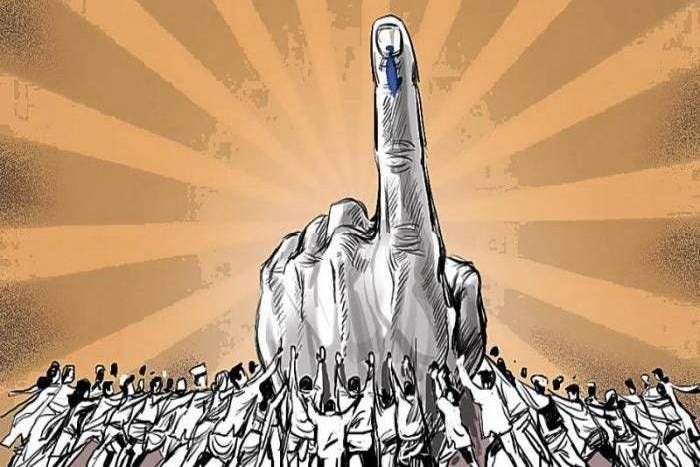
Speaking about innovative solutions, the photosensitive indelible ink was developed to mark the fingers of those who cast their vote, to prevent electoral fraud like double voting. To this day, the special formula to create this ink has not been made public. Research into indelible ink was commenced by the Council of Scientific and Industrial Research (CSIR). In the 1950s, M. L. Goel worked on this research at the Chemical Division of the National Physical Laboratory of India. The ink used contains silver nitrate, which makes it photo-sensitive.

Chaudhary Charan Singh was the only PM of India who did not face the parliament.

Morarji Desai was the oldest PM of India at the time of taking oath (84 years) and he was the first PM to resign. He ws also the first non-Congress PM of India.

BR Ambedkar was defeated in the 1951 LS Election.

Bhairon Singh Shekhawat was the first Vice-President to resign. Jagdeep Dhankhar was the second.

VP Singh was the first PM to step down after facing no confidence motion.

The only person who worked twice as the Acting Prime Minister for 13 days each – Gulzarilal Nanda.

The original name of Lal Bahadur Shastri was Lal Bahadur Varma. He got the surname Shastri (Scholar) after passing out from Kashi Vidyapeeth in Varanasi.

Indira Gandhi was the first person who belonged to Rajya Sabha during nomination as Prime Minister.

Rajiv Gandhi was Pilot by profession. He was the youngest ever Prime Minister of India. He was sworn in as Prime Minister the same day when Indira Gandhi was assassinated.

P V Narsimha Rao was the first Prime Minister from non-Hindi belt (South India).

P V Narsimha Rao was the only PM who was multilinguist and knew and speak 14 languages – Marathi, Hindi, Oriya, Bengali, Gujrati, Tamil, Urdu, English, French, Arabic, Spanish, German and Parsian apart from mother tongue Telugu.

First visually impaired person to become member of parliament – Sadhan Gupta. He belonged to CPI(M) from West Bengal.

The Delimitation Commission, set up under the Delimitation Act, 2002, was entrusted with the task of readjusting all parliamentary and assembly constituencies in the country in all the states of India, except the state of Jammu and Kashmir, based on population ascertained in 2001 Census.

Atal Bihari Vajpayee was the first parliamentarian to give a speech in Hindi to the United Nations General Assembly.

Between 1952 and 2020, two seats were reserved in the Lok Sabha for members of the Anglo-Indian community. They were nominated by the President of India on the advice of the Government of India. In 2020, it was abolished under the 104th Constitutional Amendment Act, 2019.

Lok Sabha constituency in India in terms of number of electors.

Largest: Malkajgiri

State/UT: Telangana

Smallest: Lakshadweep

State/UT: Lakshadweep

Lok Sabha constituency in India in terms of area.

Largest: Ladakh

Smallest: Chandni Chowk

Parliament Library is the second largest library in India after National Library of Belvedere Estate, Kolkata. Parliament library was founded in year 1921.

The old Parliament building was designed by Edwin Lutyens and Herbert Baker and was inaugurated by Lord Irvin, the then Governor General of India in 1927.

Narendra Modi was born in the year India became a Republic, 1950.

in 1980, Dr Prannoy Roy and Ashok Lahiri conducted the first exit poll for India Today magazine, which they repeated during the 1984 election. In 1996, an exit poll was conducted by Doordarshan, by journalist Nalini Singh, with the fieldwork and data gathering carried out by Centre for the Study of Developing Societies (CSDS).

The first IAS officer to become a Member of Parliament (MP) was Yashwant Sinha. He served as an IAS officer before resigning to enter politics and later became an MP. He served as the Minister of Finance from 1990 to 1991 and again from 1998 to 2002, and also as the Minister of External Affairs from 2002 to 2004.

In November 2013, NOTA was introduced in five state elections. Even if the number of electors opting for the NOTA option is more than the number of votes polled by any of the candidates, the candidate who secures the largest number of votes has to be declared elected.

Postal voting in India is done only through the “Electronically Transmitted Postal Ballot Papers (ETPB)” system of the Election Commission of India, where ballot papers are distributed to the registered eligible voters, and they return the votes by post. When the counting of votes commences, these postal votes are counted before those from the Electronic Voting Machines.

During the first election, India’s population was 36 Crore out of which 17.3 crore had the right to vote and the voter turnout was 45.7%

There were 489 seats in the first LS Election. The number of constituencies was increased to 543 in 1977.

The Indian Constitution’s 61st Amendment lowered the age of majority from 21 to 18 for voting in the Lok Sabha and Legislative Assemblies. The Constitution (61st Amendment) Act, 1988, amended Article 326 of the Indian Constitution.

n the 2014 general election, VVPAT was operational in 8 constituencies (Lucknow, Gandhinagar, Bangalore South, Chennai Central, Jadavpur, Raipur, Patna Sahib and Mizoram) as a pilot project.

 The last election in India cost around Rs 1 Lakh crore in comparison to a meagre Rs 38 Crore in the first election in 1951.

2024 Lok Sabha Election- Fact Sheet

More than 968 million voters had registered ahead of India’s 2024 general election, for which voting was held in seven phases between April 19 and June 1 to constitute the 18th Lok Sabha.

At the end of the tabulation on June 4 and June 5, the ruling Bharatiya Janata Party (BJP), with 240 seats, fell short of the majority mark of 272 seats needed to win a clear majority even though the National Democratic Alliance (NDA), the BJP-led alliance, won enough votes to form the government at the centre. The 293 seats won by the NDA was shy of the 400 seats targeted by Prime Minister Narendra Modi by a wide margin, but it paved the way for Modi to come to power as the prime minister of India for a third consecutive term. BJP alone had won 303 seats in 2019 elections.

The INDIA coalition outperformed expectations, securing 234 seats, 99 of which were won by the Congress, garnering the party the official opposition status for the first time in 10 years.

 Seven independents and ten candidates from non-aligned parties also won seats in the Lok Sabha

According to the Election Commission of India (ECI), India has the largest electorate in the world. The ECI used about 15 million government employees and security personnel—who were turned into election officials temporarily—to conduct the 2024 election.

In Arunachal Pradesh, a polling station would be set up for the only registered voter in the village of Malogam, as electoral laws stipulate that voting booths need to be within two kilometres (1.2 mi) of any settlement.

A polling station was also set up inside the Gir Forest in Gujarat to cater for a single voter, a priest at a Hindu temple. Polling stations were also set up inside a wildlife sanctuary in Kerala, in a shipping container in Gujarat, and 320 relief camps hosting nearly 59,000 people displaced during violence in Manipur.

No voter should have to travel more than 1.24 miles (2 km) to vote. This mandate, along with the difficult terrain in some places, posed a challenge for election officials. Polling officers trekked for 24 miles (39 km) in difficult terrain to reach a single voter in Malogam, a remote village in Arunachal Pradesh near the China border, in the first phase of the 2024 elections. ECI also facilitated home voting for voters over 85 years and for persons with disabilities in the 2024 elections.

Average voter turnout was 66.63%. which was higher than 65.79% recorded in 2019.

Six parties recognized as national parties contested the 2024 Indian general elections: the BJP, the INC, Communist Party of India (Marxist) (CPI(M)), Bahujan Samaj Party (BSP), National People’s Party (NPP) and Aam Aadmi Party (AAP) with all except the BSP being a part of one of the two alliances.

642 million people voted in the election including 312 million women voters, making it the highest ever participation in a single election.

BJP won at least one Lok Sabha seat in every state of India except Tamil Nadu.

NOTA received 63,71,839 votes (0.99%) in 2024, and transgender voter turnout stood at 27.09%.

In the 2024 Lok Sabha elections, there were 47,63,11,240 female electors (48.62% of total electors), up from 43,85,37,911 (48.09%) in 2019.

Dhubri (Assam) recorded the highest turnout at 92.3%, while Srinagar (J&K) had the lowest at 38.7%, (up from 14.4% in 2019).

India elected 74 women MPs to Lok Sabha in the 2024 general election four less than in 2019 and 52 more than in India’s first elections in 1952.

These 74 women make just 13.63% of the elected strength of the Lower House compared to 46% of MPs in South Africa, 35% in the UK, and 29% in the US.

14% candidates declared serious criminal cases including charges related to rape, murder, attempt to murder, kidnapping, etc.

744 parties fielded candidates in this election.  Of these, six have been recognised by the ECI as national parties.  16% of candidates were fielded by national parties, 6% by state parties, and 47% of candidates are independents. 

BSP fielded the highest number of candidates (488).  Among state parties, the Samajwadi Party (71) and the Trinamool Congress (48) have fielded the highest number of candidates.  Of the six national parties, the National People’s Party has fielded the fewest candidates (three), followed by the AAP (22).    

The average age of candidates contesting this election was 48 years.  The average age of candidates also varies significantly across states.  The average age of candidates in Telangana was 44 years, whereas that in Kerala was 55 years.

69% of candidates from major parties have at least an undergraduate degree.  4% of candidates have a doctoral degree. 

Six individuals of the third gender contested elections.  Of these, four candidates were independents, and two contested as candidates of unrecognised parties.  There were six third gender candidates in the 2014 and 2019 elections as well.

Electoral Bonds

On 15 February 2024, the Supreme Court of India ruled that the Electoral Bond system of campaign financing that was introduced by the Modi government in 2017 which allowed individuals and companies to donate money to political parties anonymously and without limits was unconstitutional, saying that the process allowed donors to assert “influence over policymaking”.

 On 18 March, the court ordered the State Bank of India (SBI) to provide all records regarding the electoral bonds to the Election Commission of India by 21 March in order to match electoral donors with their recipients and rejected a plea by the Confederation of Indian Industry, the Federation of Indian Chambers of Commerce and Industry, and the Associated Chambers of Commerce and Industry of India from divulging the identities of donors. Initial reports suggest that among the leading donors to political parties were some of India’s largest firms such as Vedanta Limited, Bharti Airtel, RPSG Group and Essel Mining. It also found that the BJP was the recipient of nearly half of all recorded donations.

In total, the top five political parties in terms of electoral bonds received are the BJP, which received Rs 6,060.5 crore, the All India Trinamool Congress (TMC), which received Rs 1,609.5 crore, the Congress Party, with Rs 1,421.8 crore, the Bharat Rashtra Samithi (BRS), which received Rs 1,214.7 crore, and the Biju Janata Dal (BJD), which received Rs 775.5 crore.

The Mid-Day Meal (MDM) scheme

The Mid-Day Meal (MDM) scheme, rooted in India’s pre-independence era, aims to combat classroom hunger and promote universal education by providing nutritious meals to school children. The scheme’s twin objectives are to improve nutritional status and enhance school attendance among economically disadvantaged students.

It was launched in the year 1995. It is the largest school feeding programme of its kind in the world, covering students enrolled in government schools from Classes 1 to 8.

It supplies free lunches on working days for children in primary and upper primary classes in:

  • Government, government aided, local body schools
  • Education Guarantee Scheme, and alternate innovative education centres
  • Madarsa and Maqtabs supported under Sarva Shiksha Abhiyan
  • National Child Labour Project schools run by the ministry of labour

The Scheme has a legal backing under the National Food Security Act, 2013.

In 1925, a Mid Day Meal Programme was introduced for disadvantaged children in Madras Municipal Corporation.

By the mid-1980s three States viz. Gujarat, Kerala and Tamil Nadu and the UT of Pondicherry had universalized a same scheme with their own resources for children studying at the primary stage.

In 2001, the Supreme Court asked all state governments to begin this programme in their schools within 6 months.

By 2007, it was made mandatory to provide MDM up to class VIII.

Objectives of Mid-Day Meal Scheme

To increase the enrolment in the schools of the children who belong to disadvantaged sections of the society.

To increase the attendance of the children in government and government-aided schools.

To retain the children studying in class I to VIII.

To give nutritional support to the children studying in the elementary stage, especially in the drought-affected areas.

·   To address hunger and malnutrition and improve socialisation among castes.

Features

Every school should have a hygienic cooking infrastructure for hygienically cooked mid-day meals.

The mid-day meals are to be served only on the school premises on all working days of the school.

The headmaster or headmistress is entitled to utilise the school funds on account of mid-day meal fund exhaustion.

Quality items with AGMARK are procured for cooking the mid-day meals in the schools.

Two or three adult members taste the cooked meals from the school management committee.

Food allowance is provided to the children when the cooked meals cannot be provided due to non-availability of food grains, cooking cost, fuel or absence of cook-cum-helper or any other reason, the State Government shall pay Food Security Allowance by 15th of the succeeding month.

 Each State/UT has to set up State Steering-cum Monitoring Committees (SSMCs) at the State, District and Block level to oversee the implementation of this scheme, including establishing a mechanism to maintain the quality and nutritional standards of the meals.

This is a Centrally Sponsored Scheme. Hence, the cost is shared between the Centre (60%) and States (40%).

Nodal Ministry – Ministry of Education.

The scheme covers 11.80 crore children across Classes 1 to 8 (age group 6 to 14).

In September 2021, Mid-Day Meal Scheme was renamed as Pradhan Mantri POSHAN Scheme by incorporating changes like mandatory social audit, more community participation, inclusion of locally grown vegetables, increasing field visits etc.

In the Global Hunger Index (GHI) 2024, India’s rank is 105th out of 127 countries, placing it in the “serious” category, according to the report. India’s ranking places it below many neighbouring countries, including China, Nepal, Myanmar, Sri Lanka, and Bangladesh. Effective implementation of the scheme will not only help to reduce increasing drop out rates but also will help in improving India’s global position.

Establishing robust monitoring mechanisms is vital for maintaining the scheme’s integrity. Regular inspections, feedback loops involving parents and communities, and the use of technology can enhance transparency and accountability. When stakeholders actively participate in monitoring, it becomes easier to identify and rectify issues promptly. Continuous evaluation, adaptive strategies, and a collaborative effort among governments, communities, and non-governmental organizations are vital to sustaining and enhancing the scheme’s impact. Besides, incorporating other schemes as done in West Bengal in case of Kanyashree is another way to ensure better implementation of the scheme.

Those willing to be a part of my biggest academic project ‘Eklavya Descriptive Bengali English Course’ 2025-26 are requested to send a WhatsApp to 6295350330, the official number of Adhyayan Academy. Before they send their WhatsApp, they are also requested to go through the article below

Cryptocurrency

Cryptocurrency is a form of digital currency that uses cryptography to secure transactions and control the creation of new units. Bitcoin, launched in 2009, was the first widely adopted cryptocurrency. Unlike regular currencies which are issued by central banks, cryptocurrencies operate independently of any central authority. The transactions are recorded on a decentralised public ledger called the blockchain.

Types of Cryptocurrencies

Cryptocurrencies can be categorized based on their purpose and functionality. The main types include:

Bitcoin (BTC)

The first and most well-known cryptocurrency. Primarily used as a digital store of value and a medium of exchange. Often referred to as “digital gold.”

Altcoins (Alternative Coins)

Cryptocurrencies other than Bitcoin, often developed to improve or offer different features. Examples include:

Ethereum (ETH): Focused on smart contracts and decentralized applications (dApps).

Litecoin (LTC): Known for faster transaction speeds than Bitcoin.

Ripple (XRP): Designed for fast, low-cost international payments.

Stablecoins

Cryptocurrencies pegged to stable assets like fiat currency or commodities (e.g., USD or gold) to reduce price volatility.

Examples: Tether (USDT), USD Coin (USDC), DAI.

Utility Tokens

Used within specific platforms to access services, pay fees, or participate in network governance.

Examples: Binance Coin (BNB), Chainlink (LINK).

Security Tokens

Represent ownership of an asset, such as real estate or stocks, and are subject to securities regulations.

Examples: Tokens issued during security token offerings (STOs).

Privacy Coins

Focus on anonymous transactions by concealing user identities and transaction details.

Examples: Monero (XMR), Zcash (ZEC).

Meme Coins

Cryptocurrencies inspired by internet memes or jokes, often speculative and community-driven.

Examples: Dogecoin (DOGE), Shiba Inu (SHIB).

Governance Tokens

Allow holders to vote on decisions regarding the development and management of a blockchain or decentralized application.

Examples: Uniswap (UNI), Aave (AAVE).

Central Bank Digital Currencies (CBDCs)

Digital currencies issued by central banks, representing fiat currencies in a digital format.

Examples: Digital Yuan (China), e-Krona (Sweden).

Impact

Bringing the next level of globalisation as the cryptocurrency is digital currency and easily available across the international borders.

Emergence of one currency for the countries of the world which are decentralised and not related to any country. This may make fiat money redundant in the future.

It has made it easier for entrepreneurs to reach international markets rather than strictly sticking to the national markets.

Fast and Cheap Transactions: Cryptocurrencies are way cheaper to use to execute international transactions making transactions faster and accurate, there are less chances of fraud.

However, it takes away the sovereign power of issuing currency. Thus, making economic policy of the government ineffective. It also makes capital more volatile posing risk to macroeconomic stability.

New Investment Destination: There is a limited supply of cryptocurrency – partially like gold. Moreover, the last few years have seen the price of cryptocurrencies rising faster than other financial instruments.

Due to this, cryptocurrencies can become a preferred investment destination. People are investing more here than keeping in banks.

Use of cryptocurrency by terrorist organization, drug cartels etc negatively impacts the global society and the anonymity of its use has potential to increase crime.

Blockchain Technology: The transactions are recorded in encrypted ‘blocks’ that are chained together chronologically and distributed across the network.

This creates an immutable, transparent ledger of all transactions validated by consensus algorithms.

Cryptocurrency Limitations

Cryptocurrencies, while offering numerous benefits, also come with certain limitations, including high volatility, susceptibility to criminal activities, and potential threats to energy security.

High volatility: Cryptocurrencies, due to the lack of a central regulatory agency, are subject to high fluctuations.

For instance, the Reserve Bank of India has warned against cryptocurrency transactions, citing potential risks to financial stability.

Financial instability: The widespread adoption of cryptocurrencies and large volume of anonymous transactions could undermine monetary policy effectiveness, exacerbate fiscal risks, and threaten global financial stability.

The IMF, for example, has warned El Salvador, which has adopted Bitcoin as legal tender, about the risks associated with unregulated assets.

Cyber threats: Cryptocurrency platforms are vulnerable to hackers and malicious use, leading to potential issues such as system trading manipulation and other fraudulent activities.

For instance, private keys stored by wallet service providers are often prone to malware or hacking.

Criminal activities: The anonymous nature of transactions raises concerns about potential misuse for activities like terror financing and money laundering.

A global framework has been suggested for dealing with crypto assets, which includes licensing crypto service providers and implementing anti-money laundering and counter-terrorist financing standards.

The legal status of cryptocurrencies in India

It has been a topic of considerable debate and regulatory scrutiny. Cryptocurrencies are not illegal in India, meaning individuals can buy, hold, and trade cryptocurrencies. However, the Indian government and regulatory bodies have expressed concerns over the risks associated with cryptocurrencies and have been working towards establishing a regulatory framework.

Regulatory Developments:

1. Supreme Court Ruling (2020): The Supreme Court of India lifted the Reserve Bank of India’s (RBI) ban on cryptocurrency transactions. The RBI had initially imposed restrictions that prevented banks and financial institutions from providing services related to cryptocurrencies. The Supreme Court’s decision was seen as a significant victory for the Indian crypto industry.

2. Taxation: In the 2022 budget, the Indian government announced a 30% tax on income from cryptocurrency transactions, along with a 1% tax deducted at source (TDS) on such transactions. This move was interpreted as a step towards recognizing and regulating the crypto market, even though cryptocurrencies have not been given legal tender status.

3. Regulatory Proposals: The Indian government has been considering the introduction of a specific legislative framework for cryptocurrencies. There have been discussions about a bill that aims to regulate digital currencies, which might include provisions for the creation of an official digital currency issued by the RBI, and for the regulation or banning of certain private cryptocurrencies.

4. RBI’s Stance: The Reserve Bank of India has maintained a cautious stance towards cryptocurrencies, citing concerns over financial stability, investor protection, and the potential for misuse for illicit activities. The RBI has also been exploring the possibility of launching an official digital currency (Central Bank Digital Currency – CBDC).

At present, El Salvador and the Central African Republic (CAR) are the only two countries in the world where Bitcoin functions as a legal currency.

Cryptocurrency represents a revolutionary shift in finance, offering decentralized, secure, and transparent transactions. While challenges like volatility and regulation persist, its potential to enhance financial inclusion and foster innovation is undeniable. As adoption grows, cryptocurrencies may reshape economies, enabling a more accessible, efficient, and borderless digital financial ecosystem.

Those willing to be a part of my biggest academic project ‘Eklavya Descriptive Bengali English Course’ 2025-26 are requested to send a WhatsApp to 6295350330, the official number of Adhyayan Academy. Before they send their WhatsApp, they are also requested to go through the article below

Trump Tariff and India

During his second presidency, United States president Donald Trump enacted a series of steep tariffs affecting nearly all goods imported into the United States. From January to April 2025, the average applied US tariff rate rose from 2.5% to an estimated 27 percent the highest level in over a century. After changes and negotiations, the rate was estimated as 18.4% as of July 2025. By July 2025, tariffs represented 5 percent of federal revenue compared to 2% historically.

A tariff or import tax is a duty imposed by a national government, customs territory, or supranational union on imports of goods and is paid by the importer.

Some logics in support of imposing tariff

  1. Protection of domestic industries
  2. Protection of environment against dumping of goods. For example- cheap plastic goods from China are indiscriminately dumped in a country like India
  3. Protection against domestic unemployment issue.
  4. According to the proponents of imposing tariff, tariffs can help reduce trade deficits, but according to the economists, tariffs do not determine the size of trade deficits and trade balances are driven by consumption. Rather, it is that a strong economy creates rich consumers who in turn create the demand for imports.

On April 24, 2025, U.S. President Donald Trump announced reciprocal tariffs, causing notable economic repercussions globally.

Economic Impact

Commodity and Market Reactions:

Crude oil prices have decreased by nearly 14%, driven by fears of a slowdown in global trade.

Stock markets are experiencing volatility and downturns.

Economic Uncertainty:

The announcement heightens concerns about a full-scale global trade war.

New trade tensions could result in higher inflation and slower economic growth.

Challenges for Policy Making:

Lower-income economies face challenges adapting to the new global order while managing domestic issues.

Tariff on India

Trump announced a 25% tariff on Indian imports, citing India’s tariff and non-tariff barriers and its energy and defence dealings with Russia as key reasons.  While details of the additional penalty remain unclear, Trump has previously threatened a 10% extra tariff on BRICS nations, which could raise India’s effective tariff rate to 35%.  Additionally, pending U.S. legislation proposes a 500% tariff on India, China, and Brazil for their continued engagements with Russia, adding further uncertainty to India-U.S. trade relations.

The Trump administration has outlined multiple justifications for imposing tariffs on India:

Trade Deficit: The U.S. goods trade deficit with India was $45.7 billion in 2024, representing a 5.4% increase from 2023. This growing imbalance has been a concern for the Trump administration, which views such deficits as evidence of unfair trading relationships.

India’s alleged Non-monetary Trade Barriers: The US considers India’s agricultural subsidies and sanitary and phytosanitary (SPS) measures for food safety as constraints for US exports. These measures, while defended by India as necessary for domestic food security and safety standards, are viewed by Washington as protectionist barriers that limit American agricultural access to Indian markets.

India’s BRICS Membership: The bloc is viewed by the USA as anti-dollar and a challenge to American economic hegemony. India’s participation in BRICS initiatives, including discussions on alternative payment systems and trade mechanisms, has raised concerns in Washington about the long-term implications for dollar dominance in global trade.

India-Russia Relations: An unspecified penalty is to be imposed due to India’s Defence and Energy imports from Russia. The USA in its proposed Russian Sanctions Act, 2025 aims to impose 500% duties on countries that buy oil or other petroleum products from Russia, indicating the severity of measures being considered.

Present Status

The United States stands as India’s largest trading partner, with bilateral trade reaching $131.84 billion in 2024-25. Both countries seek to more than double bilateral trade to $500 billion by 2030 and negotiate a multi-sector BTA (Bilateral Trade Agreement). India’s exports to the US totalled $87 billion, spanning sectors from electronics and pharmaceuticals to textiles and gems. However, this relationship has been characterized by a US goods trade deficit of $45.7 billion in 2024.

Impact on India

While U.S. importers will bear the direct cost of the new tariffs, Indian goods will become less competitive and more expensive in the U.S. market.  On a macroeconomic level, the tariffs are expected to reduce India’s GDP growth by 0.2%, lowering forecasts from 6.6% to 6.4%, according to recent research. 

However, the real impact will be sector-specific, hitting industries like garments, precious stones, auto parts, leather goods, and possibly electronics. These sectors may face pricing disadvantages compared to competitors from Vietnam, South Korea, and Indonesia, who benefit from lower tariffs.

Way Forward

Navigating this complexity will require diplomacy, strategic flexibility, and a vision from both nations to ensure their relationship remains beneficial despite challenges.

As negotiations continue, the resolution will depend on both countries’ willingness to find common ground between economic interests and geopolitical objectives in a global landscape.

As critics often say, Trump’s megalomania is something not experience by the world leaders since the days of Hitler. Inconsistency has been a hallmark of his maladministration. Often, his policies fail the basic standards of economics. India, in such tumultuous times must maintain composure in every dealing with America. Any knee-jerk reaction may be perilous for future relations with America. Dialogue based on logics and rationality must be the guiding force in dealing with such drastic measures by an egoist like Donald Trump.

Those willing to be a part of my biggest academic project ‘Eklavya Descriptive Bengali English Course’ 2025-26 are requested to send a WhatsApp to 6295350330, the official number of Adhyayan Academy. Before they send their WhatsApp, they are also requested to go through the article below

10 Years of AMRUT

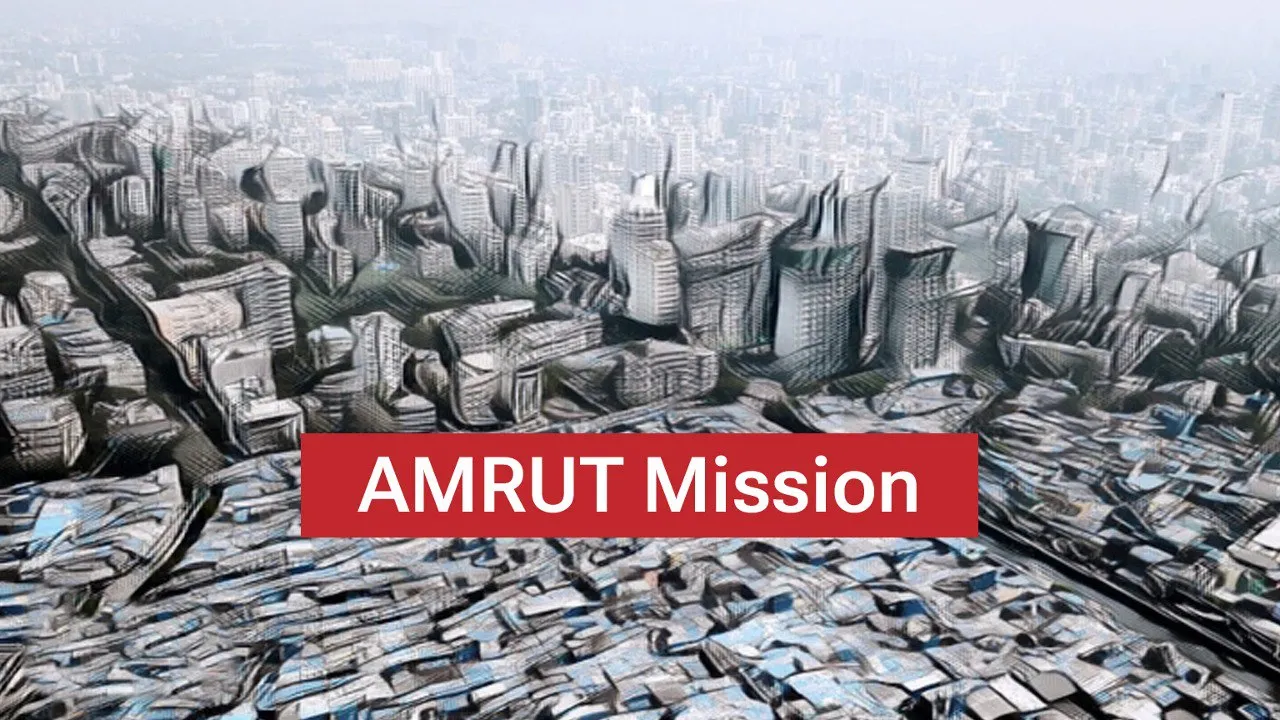
India marks a significant milestone as the Atal Mission for Rejuvenation and Urban Transformation (AMRUT) completes 10 years since its launch on June 25, 2015. Introduced as a transformative initiative to improve the quality of life in urban areas, AMRUT has focused on delivering basic infrastructure and services—especially water supply, sewerage, urban mobility, and green spaces—to citizens across 500 cities and towns and almost 60% of the total urban population of India.

Rajasthan was the first state in the country to submit State Annual Action Plan under (AMRUT). The scheme is dependent with public–private partnership (PPP) model. If required, various other schemes like Swachh Bharat Mission, Housing for All 2022, along with the local state schemes like that related to water supply and sewerage and other infrastructure related schemes can be linked to AMRUT.

Nodal Ministry: Ministry of Housing and Urban Affairs

Scheme Type: Centrally sponsored scheme, funds shared among States and UTs based on urban population and number of towns.

Mission

The purpose of Atal Mission for Rejuvenation and Urban Transformation (AMRUT) is to

  • ensure that every household has access to a tap with assured supply of water and a sewerage connection
  •  (ii) increase the amenity value of cities by developing greenery and well-maintained open spaces (e.g. parks)
  • (iii) reduce pollution by switching to public transport or constructing facilities for non-motorized transport (e.g. Walking and cycling).

Implementation

SAAP (State Annual Action Plans) is a consolidated plan of all the city level SLIPs (Service Level Improvement Plan) of all proposed AMRUT cities in the respective states. A formulation on City level SLIP is done based on diligent estimation of ambiguities in the availability of infrastructure like water supply, sewerage network, draining system, transportation facilities, available digital and internet facilities, industrial facilities etc. 135litres per capita per day is another factor in the process including water supply and sewerage connections to all urban households

AMRUT 2.0 was launched on 1 October 2021 for a period of 05 years. Its objectives are universal coverage of water supply from 500 cities to about 4,900 statutory towns in the country and coverage of sewerage/septage management in 500 cities covered in the first phase of the AMRUT scheme.

AMRUT 2.0 aims to promote the circular economy of water through the development of a City Water Balance Plan (CWBP) by recycling/reuse of treated sewage, rejuvenation of water bodies and water conservation.

Important Initiatives so far:

‘AMRUT Mitra’ involved 10,000+ women Self-Help Group (SHG) members.1,762 projects worth ₹147 crore approved. It involves women Self Help Groups (SHGs) in water demand management, water quality testing, water infrastructure operations, and other water sectoral projects. So far, 1762 projects worth ₹140 crore have been approved under this initiative

Drink from Tap (DFT) through 381 projects worth ₹23,490 crore sanctioned, likely to benefit 8 lakh households.3,630 contractors/officials trained.

3,032 water bodies approved for rejuvenation, covering 1.09 lakh acre area.

Capacities of States augmented by training over 90,000 contractors, plant operators, plumbers, women, youth, officials etc.

Challenges:

A NITI Aayog report indicates that around 21 major cities will deplete their groundwater, leaving 40% of India’s population without access to drinking water by 2030.

Nearly 31% of urban Indian households lack piped water while 67.3% are not connected to a piped sewerage system.

Pollution of water bodies: For example, large water bodies like Bellandur Lake (Bengaluru) have become heavily polluted due to industrial effluents and untreated sewage flowing into them.

Unplanned concretization prevents water from percolating into the soil and recharging the water table.

In Bengaluru, the number of lakes has decreased from 262 in 1961 to about 81 currently.

Conclusion

As AMRUT completes a decade, it marks a significant shift in India’s urban development approach, focused on inclusive planning, efficient service delivery, and sustainable growth. By strengthening local bodies and improving core services like water, sanitation, and green spaces, the Mission has laid a strong foundation for future-ready, liveable cities across the country.

Those willing to be a part of my biggest academic project ‘Eklavya Descriptive Bengali English Course’ 2025-26 are requested to send a WhatsApp to 6295350330, the official number of Adhyayan Academy. Before they send their WhatsApp, they are also requested to go through the article below

Aparajita Bill

In the wake of the infamous RG Kar Rape and murder incident that shook the entire world, the West Bengal government introduced a new bill in the West Bengal Legislative Assembly on 3 September 2024 named the Aparajita Woman and Child Bill (West Bengal Criminal Laws and Amendment), 2024. West Bengal became the first state in India to make an amendment in central laws for crimes of a sexual nature against women and children. The bill was passed unanimously in the assembly and was sent to the Governor C. V. Ananda Bose and to President Droupadi Murmu for assent. The bill will amend the application of the recently updated Indian penal code in West Bengal. It entailed death penalty for convicts of rape and other unnatural sexual offences if it resulted in death of the victim or left the victim in a vegetative state. It also provides for a life sentence without parole for those convicted in other cases. In addition, a special task force led by a female officer will be created to help accelerate investigations into rape cases, dedicated courts will be created to fast-track these types of cases, penalties will be introduced for unreasonable delays in investigations, and a time limit of 21 days (with a possible 15-day extension) to issue a decision will be instituted.

The proposed bill aims to amend several legal provisions, including those in the Bharatiya Nyaya Sanhita (BNS) 2023, the Bhartiya Nagrik Suraksha Sanhita (BNSS) 2023, and the Protection of Children from Sexual Offences Act 2012 (POCSO). It is intended to apply to survivors and victims across all age groups.

The Bill proposes capital punishment for individuals convicted of rape if the act results in the victim’s death or leaves her in a vegetative state.

Under BNS Laws, the penalties for rape are as follows: a fine and a minimum of 10 years imprisonment for rape; a minimum of 20 years imprisonment for gang rape, which may extend to life imprisonment; and a minimum of 20 years of rigorous imprisonment for rape resulting in the victim’s death or a vegetative state, with the possibility of life imprisonment or the death penalty.

Time-Bound Investigations and Trials: Investigations into rape cases are mandated to be completed within 21 days of the initial report and trial to be completed within 30 days. Extensions are permissible only with written justification from a senior police officer.

Under BNSS laws, the time limit for investigation and trial is 2 months from the date of FIR.

It also mandates the creation of 52 special courts dedicated to expediting the handling of sexual violence cases.

Aparajita Task Force: The Bill calls for the establishment of a specialized task force at the district level, led by a deputy superintendent of police dedicated to investigation of rape and other atrocities against women and children.

Before West Bengal, the Andhra Pradesh (Disha Bill) and Maharashtra (Shakti Bill) Assemblies had passed laws prescribing the death penalty for rape by amending the criminal laws in force at the time.

The Disha Bill 2019 introduced the death penalty as punishment for the crimes of rape, including against a minor below 16 years of age, gang rape and for repeat offenders.

The Shakti Bill 2020 too introduced the death penalty in rape cases and provided shortened timelines for concluding the investigation and trial.

Neither of the Bills has received the mandatory assent of the President yet.

There have been many instances in which state amendments to central laws have been contested in Courts. For instance:

State of West Bengal v. Union of India (1964): In this the Supreme Court invalidated the West Bengal Land Reforms Act, 1955, for conflicting with the central Land Acquisition Act, 1894, affirming Parliament’s supremacy.

The Aparajita Bill is a vital step toward addressing sexual violence in West Bengal, reflecting a legislative response to public outrage. However, effective implementation requires a balanced approach that combines punitive measures with rehabilitation, public awareness, and infrastructural support. A coordinated effort between the state and centre will ensure lasting protection for women and children, fostering long-term societal change and enhanced safety.

Latest News: Raising concerns over the death penalty provisions in The Aparajita Women and Child (West Bengal Criminal Laws Amendment) Bill, 2024, West Bengal Governor C.V. Ananda Bose returned the legislation to the State government for further consideration on 25th July, 2025.

Those willing to be a part of my biggest academic project ‘Eklavya Descriptive Bengali English Course’ 2025-26 are requested to send a whatsapp to 6295350330 , the official number of Adhyayan Academy. Before they send their whatsapp, they are also requested to go through the article below