COP31 (Antalya, Türkiye, 9–22 November 2026) was the 31st Conference of the Parties to the UN Framework Convention on Climate Change (UNFCCC). It ended without consensus on an overarching cover decision (the proposed “Antalya Pact”), the first such failure since Copenhagen in 2009, after becoming the longest COP in history due to two days of overtime.
Background and Organisation
COP31 was hosted by Türkiye at the Antalya Expo Center. It featured a shared presidency arrangement agreed at COP30 in Belém: Türkiye held the formal COP Presidency (Murat Kurum, Minister of Environment, Urbanisation and Climate Change), while Australia led the negotiations (Chris Bowen, Minister for Climate Change and Energy, as President of Negotiations). This resolved a bidding deadlock between the two countries within the Western Europe and Others regional group.
The conference brought together representatives from nearly 200 Parties, along with observers from business, civil society, science, and Indigenous communities. A World Leaders’ Summit took place on 11–12 November. Türkiye’s hosting marked the country’s first time organising a COP; it has ratified the Paris Agreement and set a 2053 net-zero target.
Main Negotiating Issues
Core disputes centred on:
Fossil fuels: Climate-vulnerable countries, the EU, UK, and others demanded explicit language on transitioning away from or phasing out fossil fuels, building on the COP28 Dubai agreement. Oil-producing countries (including Saudi Arabia and other OPEC members) blocked any such mention, favouring technology solutions such as carbon capture and storage (CCS) and arguing for national circumstances.
Climate finance: Developing countries pressed for clearer scaling of adaptation finance (including references to tripling it toward targets such as $120 billion by 2035) and delivery on existing commitments. Developed countries resisted binding new figures or burden-sharing formulas.
Related issues included the 1.5°C overshoot, loss and damage, just transition, trade measures, and the pace of emissions cuts.
Multiple draft texts circulated by the co-presidents were rejected. The final proposed Antalya Pact was described by objecting parties as the “lowest common denominator” for omitting fossil fuels and insufficient finance language.
Outcomes
Failure on the cover decision: On 22 November, Parties failed to adopt the Presidency-led Antalya Pact after formal objections from the EU, UK, Pacific island states (including the Marshall Islands), and others. UN Secretary-General António Guterres called the result “deeply disappointing,” stating: “There may be no consensus in the negotiating room. There is no ambiguity in the science.” He noted that global temperatures continue to break records, emissions remain high, and the world is on course to overshoot the 1.5°C limit.
Areas of progress (adopted decisions and Action Agenda advances):
Just transition: The UAE Just Transition Work Programme was continued for an additional three years. Parties agreed to operationalise a just transition mechanism in a phased manner (detailed decisions deferred to COP32), focusing on international cooperation, technical assistance, capacity building, and equitable transitions. References to critical minerals were included; explicit fossil-fuel transition language was not.
Electrification: A major presidency priority was the “35×35” goal of 35% global electrification of final energy use by 2035. Countries representing roughly half the global economy (around 80 nations) backed it or committed to faster progress. Supporting analysis from the IEA indicated this could raise the electrification rate substantially. Related delivery packages involved grids, investment, and green corridors.
Climate finance: The Climate Finance Work Programme advanced with renewed focus on scaling adaptation finance, transitioning the Adaptation Fund to serve the Paris Agreement exclusively, and improving access and efficiency.
Adaptation: Progress on operationalising Belém Adaptation Indicators (via a task force), reinforcing the Baku Adaptation Road Map, and work under the Warsaw International Mechanism and Santiago Network on loss and damage technical assistance.
Second Global Stocktake (GST2): Launched as a core Paris Agreement process (information collection, technical assessment, and consideration of outputs), to conclude at COP33 in 2028.
Other decisions covered technology, transparency (including Biennial Transparency Reports), carbon markets (Article 6), gender, and various procedural items. Turkish President Recep Tayyip Erdoğan stated that 46 decisions were adopted. The Global Climate Action Agenda recorded concrete real-economy results across electrification, forests (including Tropical Forest Forever Facility pledges), oceans, health, and resilience.
UNFCCC Executive Secretary Simon Stiell acknowledged disappointment over the cover decision but highlighted the dual tracks of formal negotiations and the Action Agenda, noting real-world progress on electrification and other implementation items.
Reactions and Analysis
The outcome exposed deep divisions between countries prioritising rapid fossil-fuel phase-out and climate finance for vulnerable nations, and those protecting fossil-fuel interests or seeking more flexible, technology-neutral language. Activists staged protests with signs reading “Shame” and “Step Up.” Some commentators labelled it the “worst COP ever”; others noted that existing COP28 language on transitioning away from fossil fuels remains intact and that voluntary coalitions (including fossil-fuel transition roadmaps) continued outside the formal text.
Guterres and Stiell both stressed that the lack of a pact does not alter the scientific reality or the urgency of action, and that multilateral cooperation has already shifted the world off the worst possible warming pathways—though far more is required.
Looking Ahead
COP32 will be hosted by Ethiopia in Addis Ababa from 8–19 November 2027. Ethiopia’s Foreign Minister Gedion Timothewos is President-Designate. Stated priorities include restoring hope, rebuilding trust in the process, and mobilising collective action, with an expected emphasis on African and Global South priorities such as adaptation, finance, and implementation. Unresolved issues from Antalya—especially fossil fuels, finance scale-up, and mitigation ambition—will carry forward.
COP31 demonstrated both the continuing difficulties of consensus under the UNFCCC when fossil fuels and finance are on the table, and the persistence of incremental progress on specific work programmes and real-economy initiatives.
Summary- Gist of COP31 (Antalya, Türkiye, 9–22 November 2026)
COP31 was the longest UN climate summit ever. It ended without agreement on the overarching “Antalya Pact” — the first time since Copenhagen 2009 that a COP failed to adopt a cover decision.
The breakdown was driven by fossil fuels: vulnerable countries, the EU, and others demanded clear language on transitioning away from them, while oil producers blocked any mention. Climate finance was another major sticking point.
Some progress was still made:
Just transition work programme extended and a new mechanism agreed in principle
Strong push for 35% global electrification by 2035 (backed by ~80 countries)
Advances on adaptation indicators, climate finance processes, and the launch of the second Global Stocktake
UN Secretary-General Guterres called the outcome “deeply disappointing” but stressed that the science remains clear.
Next: COP32 in Addis Ababa, Ethiopia (8–19 November 2027).
Democrats achieved a historic “blue wave” in the 2026 midterm elections, seizing control of both the U.S. House of Representatives and the Senate. This marks a sweeping repudiation of President Donald Trump and the Republican Party midway through Trump’s second term. It is the first time since 2006 that both chambers flipped in a midterm.
Senate Results
Democrats secured at least 54 seats to Republicans’ 44, with a net gain of +7. Two races (Alaska and Mississippi) remained too close to call as of November 5, potentially allowing further Democratic gains (up to 56–44).
Democrats needed a net gain of four seats for a majority (accounting for the vice-presidential tie-breaker). They exceeded this by flipping Republican-held or open seats in deep-red or Republican-leaning states:
Texas: James Talarico defeated Ken Paxton (first Democratic senator from Texas since 1993/1988).
Kansas: Adam Hamilton (first Democrat since 1932).
South Carolina: Annie Andrews defeated Darline Graham (sister of the late Lindsey Graham).
Ohio: Sherrod Brown defeated Jon Husted.
Iowa: Josh Turek defeated Ashley Hinson.
Maine: Troy Jackson defeated longtime incumbent Susan Collins.
North Carolina: Roy Cooper won an open seat.
Democrats also held competitive seats (e.g., Jon Ossoff in Georgia, Abdul El-Sayed in Michigan).
House Results
Democrats won control of the House with strong margins. As of early November 5 (Economist data), Democrats held 235 seats to Republicans’ 146 (381 of 435 called), a gain of roughly +30. Other outlets reported Democrats at 228–240+ with dozens of races still counting; some projections pointed to a final Democratic range of 251–268.
This represents the largest popular-vote margin for the House since 1976 in some reporting. Democrats flipped numerous districts, including those Trump carried by double digits (even 15–20+ points) in 2024, and performed strongly in suburban and rural areas. Republicans lost ground in ~99% of counties with substantial vote counts.
Governors and State Races
Democrats made major gains among governorships (36 states held races). Notable flips included:
Texas: Gina Hinojosa defeated three-term Republican Greg Abbott (first Latina governor and first Democratic governor since 1994).
Gains or holds in Iowa, Ohio, Georgia (Keisha Lance Bottoms — first Black woman elected governor of a U.S. state), and others.
Democrats also flipped multiple state legislative chambers (estimates of up to a dozen), ending long Republican majorities in places like Texas (House), Wisconsin, and North Carolina. Republicans failed to flip any Democratic-held congressional seats, governorships, or major state legislative chambers in early tallies.
Voter Turnout and Historic Firsts
Turnout was high for a midterm: roughly 122.7 million ballots counted (~48.8% of eligible voters), the second-highest midterm turnout in over a century (behind 2018). Early voting was substantial.
Notable firsts:
Abdul El-Sayed (Michigan) — first Muslim elected to the U.S. Senate.
Chris Pappas (New Hampshire) — first openly gay man elected to the Senate.
Keisha Lance Bottoms (Georgia) — first Black woman elected governor.
Gina Hinojosa (Texas) — first Latina governor of Texas.
Potential for Hakeem Jeffries to become the first Black Speaker of the House.
Key Drivers of the Democratic Wave
Voters delivered a clear rebuke of the Trump administration, driven primarily by economic discontent:
Cost of living and inflation: High prices (especially fuel/diesel, up sharply) and broader affordability concerns were decisive for a large majority of voters. Exit polls showed ~88% citing the cost of living as important or decisive, and three-quarters viewing the economy negatively.
U.S.-Iran war: The conflict (ongoing since roughly February 2026) disrupted energy supplies, raised gas/diesel prices (diesel reportedly up ~65% in some periods), increased household costs (hundreds of dollars per household in affected areas), and contributed to inflation and higher mortgage rates. Polls showed majority opposition to the war’s costs; it was widely linked to voter anger. Trump and some Republicans later acknowledged its role in the losses.
Other factors included general dissatisfaction with the direction of the country, Trump’s approval ratings, and rejection of some Trump-backed candidates in red states.
The wave reached deep into traditionally Republican territory across the South and Midwest.
Implications
For the remainder of Trump’s presidency: Democrats control both chambers of Congress. This enables investigations, oversight, and resistance to the administration’s agenda (including potential challenges to the Iran policy, spending, and nominations). Significant gridlock is likely; Trump has indicated he will veto Democratic priorities.
Political landscape: Strengthens Democrats heading into 2028. Sets up Hakeem Jeffries as a likely Speaker and elevates new Democratic figures (e.g., Talarico, El-Sayed).
Broader effects: Possible pressure on foreign policy (Iran, energy markets, Ukraine aid, tariffs). Some international observers noted reduced likelihood of escalation in the Iran conflict due to domestic constraints.
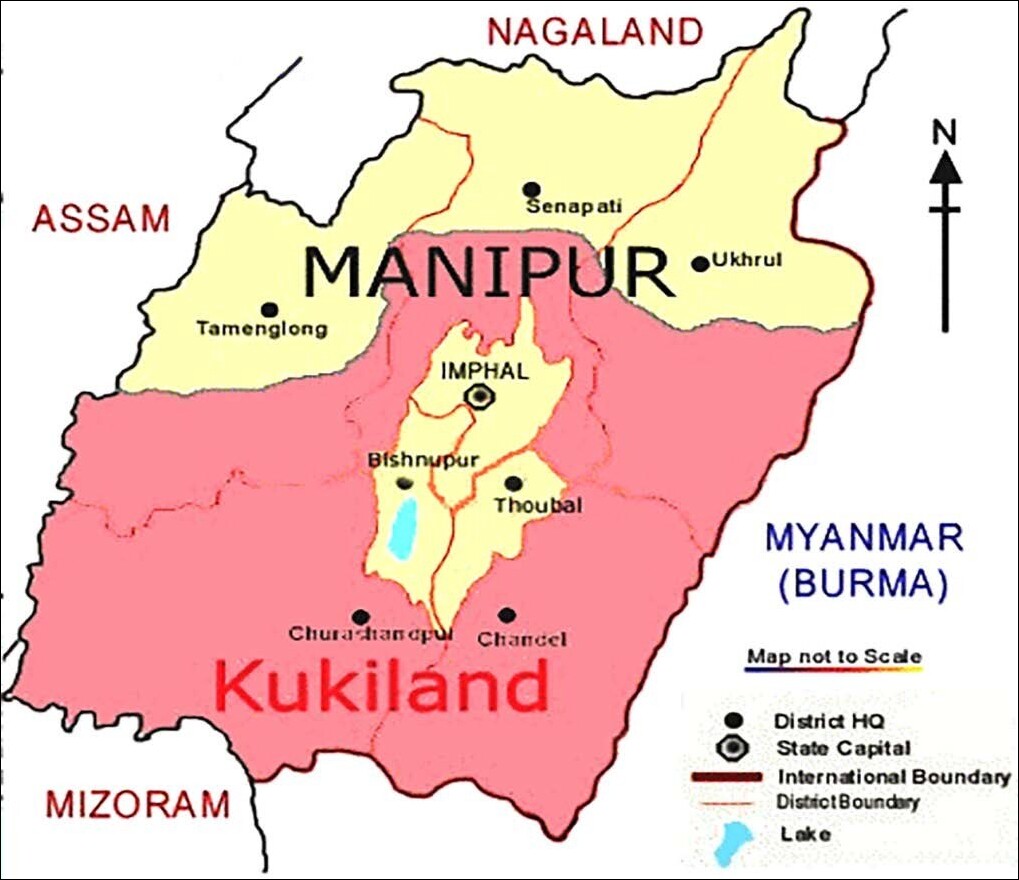
Demography– Manipur is a state in northeast India, bordering Myanmar to its east and south. The Imphal Valley constitutes about 10% of the geographical area of the state with 57% of the population predominantly Meitei, who are majority Hindus, with minorities of Muslims and native Sanamahism followers. The surrounding hills constitute 90% of the geographical area of the state with 43% of the population belonging to 34 tribal groups broadly categorised as Nagas and Kukis (25% and 15% roughly), who follow Christianity.
The Nagas dominate the northern districts while the Kukis are predominant in the south. The tribal people have the Scheduled Tribe (ST) status, whereas the Meitei have been accorded Other Backward Class (OBC) status, with some classified as Scheduled Castes (SC) in certain areas.
Historical Perspective– Historical ethnic conflicts and tensions between Kukis (Hill tribe) and Meiteis in Manipur have contributed to the unrest, as both communities compete for political representation, resources, and cultural recognition.
Most of the Meiteis live in the Imphal valley while the tribals live in the hill districts. The Meiteis are more educated and also better represented in business and politics of the state than Kukis and Nagas.
Meitei dominate the political establishment in Manipur with 40 out of the 60 Assembly constituencies.
People from the hill areas claim that despite hill districts of Manipur comprising 89% of the geographical area, there were only 20 MLAs from these areas in the Manipur Assembly.
Meiteis are limited to only around 10% of the land in the state, as the rest of the state is classified as tribal areas.
They live in the small patch of plain area in the state, the Imphal Valley, while the Kuki(tribals) reside in the protected Hill Areas, exclusively reserved for them.
Being classified as non-tribals, Meitei people can’t buy land in over 90% of the state.
While the tribals can buy land in Imphal Valley, thereby further reducing the land availability.
The Hill Areas in Manipur comprising 90% of the total land in Manipur are declared by the government under the provisions of Article 371C of the Constitution.
The Beginning– In 2020, as the Centre began the first delimitation process in the state since 1973, the Meitei community alleged that the Census figures used in the exercise did not accurately reflect the population break-up. Meitei leaders have alleged that there has been a sudden mushrooming of villages in Churachandpur district.
The then Chief Minister N Biren Singh repeatedly echoed and fed these fears — pointing to the presence of Myanmarese in Churachandpur, and linking them to the cultivation of poppy, and repeatedly making references to “foreigners” and “outsiders” and “Drug traffickers”.
Since 2012, there has been a constant demand led by the Scheduled Tribes Demand Committee of Manipur (STDCM) for granting the Scheduled Tribe (ST) status to the Meitei community.
The Meitei Tribe Union had filed a petition before the Manipur High Court and had argued that the Meitei community was once recognised as a “tribe” before the merger of the princely state of Manipur with the Union of India in 1949 and that it lost its identity as a tribe after the merger.
On 20 April 2023, a judge of the Manipur High Court directed the state government to “consider the request of the Meitei community to be included in the Scheduled Tribes (ST) list”.
The Kukis feared that the ST status would allow the Meiteis purchase land in the prohibited hilly areas.
The Eruption– The tribal groups called for a total shutdown on 28 April 2023 in protest of the state government actions.
Violence erupted on May 3, 2023, after tribal communities protested a Manipur High Court order granting the Meitei community certain benefits, including land ownership in protected areas and quotas in government jobs.
Incidents of sexual violence have garnered both national and international attention, bringing to light the harrowing reality faced by women in Manipur.
Meitei mobs have repeatedly targeted women as a means of control of the rival faction, including burning homes and subjecting them to assaults, and even forcing women to strip under threats of violence or shooting them in the face, causing disfigurement.
The Meitei groups have also attacked people from their own community who have spoken out against them.
In a shocking charge, the CBI has alleged that personnel from the Manipur Police allegedly drove the two women to a mob of around 1,000 people, which stripped and paraded them before they were gang-raped, in an incident that shook the nation.
The 26-second clip showed two Kuki tribal women paraded naked by a mob of men who were groping their genitals and assaulting them.
In August 2023, India’s Supreme Court expressed concerns over what it termed the “absolute breakdown of law and order” in Manipur.
The authorities have also failed to protect members of the Meitei community. In November 2024, about 35 armed Kuki militants attacked the camp of the Central Reserve Police Force, paramilitary police, and the adjacent police station in Jiribam district, allegedly looking for “Meitei people.” They abducted and killed three women and three children including an 8-month-old infant from the Meitei community, and burned to death two older Meitei men.
As of December 2024, the 42 special investigation teams created by the Supreme Court had filed charges in only 6 percent of the 3,023 registered cases, including murders, 9 cases of sexual crimes against women, and 2,888 cases of looting, arson, and other property crimes.
Regional Implications and Challenges
In the absence of any hint of immediate peace, the prolonged conflict, nearing a civil war, is causing a significant and irreversible shift in how the people of Manipur perceive each other and New Delhi. Decades of effort to build trust between the different groups since the ethnic clashes of the 1990s, and confidence-building measures with New Delhi after the rise of insurgent groups in the 1950s, were shattered overnight on May 3, 2023.
Tragically, in the post-May 3, 2023 period the harmony between the Meiteis and Kukis has been disturbed by an ever-increasing divide owing to the persistent violence. No one feels safe in areas dominated by the rival ethnic community, resulting in large-scale migration to safer areas, including Assam and Mizoram. Schools and educational institutions remained closed, and with the internet shutdown, online classes were unavailable. Under such circumstances, youths are being compelled to take up arms. The tourism industry has also suffered, with patients from Myanmar stopping medical visits. Retail inflation at 9.7 percent in September 2023 has led to economic insecurity, and unprovoked attacks on farmers and road blockages have caused food security concerns.
Additionally, the conflict has affected mental health, with rising post-traumatic stress disorder (PTSD) cases since the violence began. The government’s inability to address the violence and daily insecurities has fostered a sense of alienation and distrust towards New Delhi. Insurgent groups are gaining popularity as protectors, with dormant groups reactivating and many returning from their bases in unstable Myanmar. If unchecked, these developments can accelerate the radicalization of youth, which is detrimental to India’s national security.
Geopolitically, Manipur holds strategic importance as it shares a border with Myanmar and serves as a gateway to Southeast Asia for India. Also, Manipur is crucial for India’s Act East Policy (AEP), which aims to develop cultural links, trade, tourism, and connectivity with Southeast Asia. The trilateral highway project linking India, Myanmar, and Thailand starts from Moreh in Manipur and ends at Mae Sot in Thailand. Therefore, stability of the region is crucial for India’s foreign policy. With China’s growing power and influence in the conflict-ridden Myanmar, instability in Manipur can benefit China. Additionally, the conflict has also tarnished India’s global image, with organizations and states like Human Rights Watch, the European Union, the United Nations, Genocide Watch, and the United States expressing serious concerns.
Unrest persists– Two years after ethnic violence erupted between Meitei and Kukis and the resignation of the CM Singh and President’s Rule being imposed, violent clashes are still common in the state. So far, more than 260 people have lost their lives in the clashes, around 2000 people have been injured and over 70,000 people have been displaced.
Steps needed to restore peace– It is important to identify the victims and rehabilitate them and those in rehabilitation camps, with the help of the Govt and the civil society.
The government should foster the participation of the civil society of the region in the decision-making process to instil a sense of ownership and belonging. A huge quantity of weapons and ammunition are still being held by the warring communities in the conflict-driven state of Manipur.
The entire civil society needs to be disarmed on priority.
The Mizoram Accord of 1986 between the Government of India and the Mizo National Front (MNF) serves as an example of successful engagement with all stakeholders.
The repeal of AFSPA, Armed Forces Special Powers Act 1958, is necessary to improve the human rights situation in the region.
The government should ensure that the legal system is fair and transparent to prevent the misuse of power by security forces.
The authorities should ensure that people have the right to return when conditions are in place for a safe and voluntary process carried out in accordance with the United Nations Guiding Principles on Internal Displacement, with full and meaningful participation of all affected communities, including the equal participation of women.
To get Saptarshi Sir’s guidance for PSC Miscellaneous Mains/ Clerkship Main/ English/Economy or for overall WBCS or other exam preparation, call or WhatsApp us @6295350330. Classes for PSC Miscellaneous Main and Clerkship Main have already started. WBCS New batch is also going on. You can also download our app for online guidance using the link
Please note that this is one of the most important topics for any examination like UPSC CSE, WBCS, PSC Clerkship, SSC CGL, Miscellaneous or others. Read and memorize every date very carefully.
Date Day
1st January Global Peace Day
6th January World War Orphans Day
9th January Pravasi Bharatiya Divas NRI Day
10th January- World Hindi Day
12th January National Youth Day (Birth Day of Swami Vivekanand)
15th January Army Day of India ((Field Marshall K.M. Cariappa took over the
command of Army on this day in 1949 from the British)
24th January National Girl Child Day of India
25th January India Tourism Day, National Voters Day
28th January Data protection day
30th January Martyr’s Day, World Leprosy Eradication Day
2nd February World Wetlands Day
4th February World Cancer Day
20th February World Day of Social Justice
21st February International Mother Language Day
27 February World Sustainable Energy Day
28 February National Science Day
3rd March World Wildlife Day
8 March International Women’s Day
15 March World Consumer Rights Day
21 March World Forestry Day
22 March World Water Day
23rd March World Meteorological Day
24 March World Tuberculosis (TB) Day
27 March World Theatre Day
2 April World Autism Awareness Day
7 April World Health Day
21 April National Civil Service Day
22 April World Earth Day
24 April National Panchayati Day
1st May International Labour Day
3rd May Press Freedom Day
8th May World Red Cross Day
21st May Anti-terrorism day
24th May Commonwealth Day
31st May Anti-Tobacco Day
5th June World Environment Day
12th June World Day Against Child Labour
14th June World Blood Donor Day
20th June World Refugee Day
21st June International Yoga Day, World Music Day
27th June World Diabetes Day
1st July National Doctor’s Day
11th July World Population Day
26th July Kargil Vijay Diwas
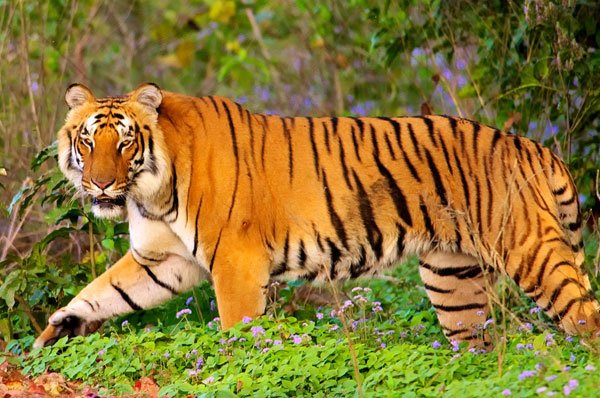
29th July International Tiger Day
6th August Hiroshima Day
9th August Quit India Day and Nagasaki Day
12th August International Youth Day
29th August National Sports Day
5th September Teachers’ Day (Dr. Radhakrishnan’s birthday)
8th September World Literacy Day
15th September Engineer’s Day in India
16th September World Ozone Day
27th September World Tourism Day
2nd October Mahatma Gandhi’s birthday, International Day of Non-violence
5th October World Teacher’s Day
11th October International Girl Child Day
16th October World Food Day
24th October UN Day
31st October Rastriya Ekta Diwas (in memory of Sardar Patel), National Integration Day (In memory of Indira Gandhi)
5th November World Radiography Day
29th November International Day of Solidarity with Palestinian People
1st December World Aids Day
2nd December World Computer literacy day, International Day of Abolition of slavery
3rd December International Day of People with disabilities
10th December Human Right Day
23rd December Kisan Divas (Farmer’s Day)
29th December International Bio-diversity day
For getting my personal guidance for PSC Miscellaneous Mains/ WBCS , pls call or whatsapp now- 6295350330
United Nations Conference on the Human Environment (Stockholm, 1972)
1992 Earth Summit in Rio de Janeiro
Ramsar Convention 1971 on wetland conservation and sustainable use
The Montreal Protocol, finalized in 1987, is a global agreement to protect the stratospheric ozone layer by phasing out the production and consumption of ozone-depleting substances (ODS). ODS are substances that were commonly used in products such as refrigerators, air conditioners, fire extinguishers, and aerosols
India currently has 91 Ramsar sites, making it the country with the highest number of Ramsar-designated wetlands in Asia and third highest globally.
In 1972, India enacted the Wildlife Protection Act
Project Tiger was launched in Jim Corbett National Park of Uttarakhand in 1973, and various tiger reserves were created in the country based on a ‘core-buffer’ strategy.
Project Elephant is a centrally sponsored scheme initiated by the Government of India in 1992 to safeguard the Indian elephant population and their habitats.
Under Project Cheetah, the Prime Minister of India released wild cheetahs in Kuno National Park in Madhya Pradesh. Cheetah became extinct from India in 1952
পশ্চিমবঙ্গের ভৌগোলিক এলাকার ১৪% বনভূমি , যা জাতীয় গড়ের ৩৩% এর চেয়ে কম।
জাতীয়উদ্যানএবংবন্যপ্রাণীঅভয়ারণ্য (WB)
বল্লভপুর বন্যপ্রাণী অভয়ারণ্য
বেথুয়াদহরি বন্যপ্রাণী অভয়ারণ্য
বিভূতিভূষণ বন্যপ্রাণী অভয়ারণ্য
বক্সা টাইগার রিজার্ভ
চাপরামারী বন্যপ্রাণী অভয়ারণ্য
চিলাপাতা বন
চিন্তামণি কর পাখি অভয়ারণ্য
গোরুমারা জাতীয় উদ্যান
হ্যালিডে দ্বীপ বন্যপ্রাণী অভয়ারণ্য
জলদাপাড়া জাতীয় উদ্যান
জোরে পোখরি বন্যপ্রাণী অভয়ারণ্য
লোথিয়ান দ্বীপ বন্যপ্রাণী অভয়ারণ্য
মহানন্দা বন্যপ্রাণী অভয়ারণ্য
নেওরা ভ্যালি জাতীয় উদ্যান
নরেন্দ্রপুর বন্যপ্রাণী অভয়ারণ্য
পাখি বিতান বন্যপ্রাণী অভয়ারণ্য
রায়গঞ্জ বন্যপ্রাণী অভয়ারণ্য
রামনবাগান বন্যপ্রাণী অভয়ারণ্য
রসিকবিল পাখি অভয়ারণ্য
সজনেখালি বন্যপ্রাণী অভয়ারণ্য
সেঞ্চল বন্যপ্রাণী অভয়ারণ্য
সিঙ্গালিলা জাতীয় উদ্যান
সুন্দরবন জাতীয় উদ্যান
ময়ূরঝর্ণা হাতি সংরক্ষণাগার
National Parks- Important facts
National Parks in India- 107
Oldest National Park- Jim Corbett NP (Uttarakhand)
Largest National Park- Hemis, Ladakh
Maximum NPs in India- Madhya Pradesh (11)
First NP in West Bengal- Sundarban (1984)
Latest National Park in WB- Jaldapara (1986)
Keibul Lamjao National Park, located in Manipur, is the only floating national park in the world, situated on Loktak Lake.
South Button Island National Park in the Andaman and Nicobar Islands is the smallest, with an area of just 5 square kilometers.
Satpura National Park in Madhya Pradesh is known for allowing walking safaris and camping within the park.
As of May 2024, India’s National Parks covers a total area of 44,378 sq km and account for about 1.35% of India’s total surface area.
The Sangai deer’ is found in Keibul Lamjao National Park (Manipur).
India’s first Golden Tiger was spotted in Kaziranga National Park.
Dachigam National Park (jammu and Kashmir) has been established for the conservation of the hangul or Kashmiri deer.
Punjab is the only Indian state which has no national park.
“National parks in West Bengal” (6)
Buxa Tiger Reserve
Gorumara
Jaldapara
Sundarban
Sigalila
Neora Valley
Difference Between Wildlife Sanctuary and National Park
Wildlife Sanctuary National Park
Human activities are allowed. No human activities are allowed.
Protects particular flora or fauna Wide range of flora and fauna
There are no fixed boundaries. Boundaries are fixed and defined.
It is open to the general public Not usually open to the public.
A sanctuary can be upgraded to a national park Cannot be downgraded to a sanctuary.
There are 18 biosphere reserves in India. They protect larger areas of natural habitat than a typical national park or animal sanctuary, and often include one or more national parks or reserves, along with buffer zones that are open to some economic uses. Protection is granted not only to the flora and fauna of the protected region, but also to the human communities who inhabit these regions, and their ways of life.
Sundarbans Biosphere Reserve-West Bengal
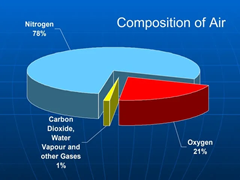
Air, the gaseous envelope surrounding Earth, is primarily composed of nitrogen and oxygen, with smaller amounts of other gases like argon, carbon dioxide, and trace amounts of other gases like helium and neon. Water vapor and dust particles are also present in varying amounts.
Here’s a breakdown of the major components:
Nitrogen (N₂): Approximately 78.09% of dry air.
Oxygen (O₂): Around 20.95% of dry air.
Argon (Ar): About 0.93% of dry air.
Carbon Dioxide (CO₂): A small but significant amount, around 0.04%.
Other Gases: Trace amounts of gases like helium, neon, krypton, and methane.
Water Vapor: The amount of water vapor in the air varies depending on location and weather conditions.
Dust Particles: Also present in varying amounts.
The five most abundant greenhouse gases in Earth’s atmosphere, listed in decreasing order of average global mole fraction, are water vapor, carbon dioxide, methane, nitrous oxide, ozone. Other greenhouse gases of concern include chlorofluorocarbons (CFCs and HCFCs), hydrofluorocarbons (HFCs), perfluorocarbons, SF6, and NF3. Water vapor causes about half of the greenhouse effect.
The Earth’s atmosphere is composed of five primary layers: the troposphere, stratosphere, mesosphere, thermosphere, and exosphere. These layers are defined by their temperature profiles and altitude ranges.
Here’s a breakdown of each layer:
1. Troposphere:
This is the lowest layer, extending from the Earth’s surface up to about 7 to 20 kilometers (4 to 12 miles) depending on the latitude. It’s where we live and where most weather occurs.
2. Stratosphere:
Located above the troposphere, the stratosphere extends from about 12 to 50 kilometers (7 to 31 miles). The ozone layer, which absorbs harmful UV radiation, is found within this layer. Unlike the troposphere, temperature increases with altitude in the stratosphere. The ozonosphere resides within the stratosphere, the second layer of Earth’s atmosphere, above the troposphere (where we live).
3. Mesosphere:
Situated above the stratosphere, the mesosphere extends from 50 to 85 kilometers (31 to 53 miles). It’s the coldest layer, with temperatures reaching as low as -90°C (-130°F) near the top. Most meteors burn up in the mesosphere.
4. Thermosphere:
This layer is above the mesosphere and extends from about 85 to 600 kilometers (53 to 372 miles). Temperatures in the thermosphere can be very high, but the air is so thin that it would feel cold to us. The aurora borealis and aurora australis occur in this layer.
5. Exosphere:
The outermost layer, the exosphere, extends from the top of the thermosphere to about 10,000 kilometers (6,200 miles). It gradually fades into interplanetary space. The air is extremely thin here, and particles can escape into space.
Major Environmental Movements in India
Bishnoi Movement
Year: 1700s
Place: Khejarli, Marwar region, Rajasthan state.
Leaders: Amrita Devi along with Bishnoi villagers in Khejarli and surrounding villages.
Aim: Save sacred trees from being cut down by the king’s soldiers for a new palace.
Chipko Movement
Year: 1973
Place: In Chamoli district and later in Tehri-Garhwal district of Uttarakhand.
Aim: The main objective was to protect the trees on the Himalayan slopes from the axes of contractors of the forest.
Silent Valley Movement
Year: 1978
Place: Silent Valley, an evergreen tropical forest in the Palakkad district of Kerala, India.
Leaders: The Kerala Sastra Sahitya Parishad (KSSP) an NGO, and the poet-activist Sughathakumari played an important role in the Silent Valley protests.
Aim: To protect the Silent Valley, the moist evergreen forest from being destroyed by a hydroelectric project.
Narmada Bachao Andholan (NBA)
Year: 1985
Place: Narmada River, which flows through the states of Gujarat, Madhya Pradesh and Maharashtra.
Leaders: Medha Patker, Baba Amte, Adivasis, farmers, environmentalists and human rights activists.
Aim: A social movement against several large dams being built across the Narmada River.
Tehri Dam Conflict
Year: 1990’s
Place: Bhagirathi River near Tehri in Uttarakhand.
Leaders: Sundarlal Bahuguna
Aim: The protest was against the displacement of town inhabitants and the environmental consequence of the weak ecosystem.
Here’s a list of common abbreviations related to environmental concepts, laws, and organizations:
EIA: Environmental Impact Assessment
EMP: Environmental Management Plan
EMS: Environmental Management System
BOD: Biochemical Oxygen Demand
COD: Chemical Oxygen Demand
DO: Dissolved Oxygen
GHG: Greenhouse Gas
EPA: Environment (Protection) Act, 1986
WPA: Wildlife Protection Act, 1972
FCA: Forest Conservation Act, 1980
WPA: Water (Prevention and Control of Pollution) Act, 1974
APA: Air (Prevention and Control of Pollution) Act, 1981
BD Act: Biological Diversity Act, 2002
CPCB: Central Pollution Control Board
SPCB: State Pollution Control Board
NGT: National Green Tribunal
UNEP: United Nations Environment Programme
WWF: World Wildlife Fund
IUCN: International Union for Conservation of Nature
IPCC: Intergovernmental Panel on Climate Change
SDG: Sustainable Development Goals
COP: Conference of the Parties (under the UNFCCC)
UNFCCC: United Nations Framework Convention on Climate Change
CSR: Corporate Social Responsibility
ODS: Ozone-Depleting Substances
HWM: Hazardous Waste Management
EPR: Extended Producer Responsibility
MSW: Municipal Solid Waste
RE: Renewable Energy
NRE: Non-Renewable Energy
EE: Energy Efficiency
CEA: Central Electricity Authority
1. মন্ট্রিয়ল প্রোটোকলের সঙ্গে জড়িত
[A] পারমাণবিক অস্ত্র
[B] ওজোন স্তরের ক্ষয়
[C] সমুদ্রের তলদেশ
[D] ল্যান্ডমাইন
Ans- b
2. মিনামাটা রোগের কারন হল –
[A] আর্সেনিক দূষণ
[B] পারদ দূষণ
[C] ক্যাডিয়াম দূষণ
[D] প্লাস্টিক দূষণ
Ans- B
3. জেনেটিক কোড আবিস্কারের জন্য কোন বিজ্ঞানী নোবেল পুরস্কার পেয়েছেন?
[A] প্রফুল্লচন্দ্র রায়
[B] হরগোবিন্দ খোরানা
[C] ডারউইন
[D] লফ্রেলোবেন
Ans- b
4. সালোকসংশ্লেষে অর্থাৎ খাদ্য তৈরিতে সক্ষম এমন প্রাণী হল –
[A] রাইবোজোম
[B] হাইড্রিলা
[C] ইউপ্লিনা
[D] অ্যাজোটোব্যাকটর
Ans-c
5. জলে ভাসমান আণুবীক্ষণিক উদ্ভিদগোষ্ঠীকে কী বলে?
[A] ফাইটোপ্লাংকটন
[B] বেনথস
[C] প্ল্যাংকটন
[D] জুপ্ল্যাংটন
Ans- A
6. লাল তথ্য পুস্তিকা বা ‘রেড ডাটা বুক’-এর তথ্যগুলি –
[A] লোহিত সাগরের প্রাণী সংক্রান্ত
[B] বিপন্ন প্রাণী সংক্রান্ত
[C] অপরাধজগৎ সংক্রান্ত
[D] বিপ্লবী তথ্য সংক্রান্ত
Ans- B
7. সিগারেটের ধোঁয়ায় অবস্থিত ক্যান্সার সৃষ্টিকারী উপাদানটি হল-
[A] কার্বন মনোক্সাইড
[B] বেঞ্জয়িক অ্যাসিড
[C] ক্লোরোবেঞ্জিন
[D] ডাই অক্সিজেন
Ans- C
8. পাখির দ্বারা বিস্তার লাভ করে সেই রোগের নাম-
[A] ভাইরাল
[B] মাইকোসিস
[C] অরনিথোসিস
[D] জুনটিক
Ans- C
9. ভারতের বৃহত্তম সরকারি তাপবিদ্যুৎ সংস্থা কোনটি?
[A] SAARC
[B] NTPC
[C] OPEC
[D] ONGC
Ans- B
10. 84. তামাক পাতায় উপস্থিত ক্ষতিকারক ধাতুর নাম –
[A] আয়রন
[B] মার্কারি
[C] ক্যাডমিয়াম
[D] আর্সেনিক
Ans- C
Important National Parks of India
Name State
Corbett National Park Uttarakhand
Kanha National Park Madhya Pradesh
Tadoba National Park Maharashtra
Madhav National Park Madhya Pradesh
Bandhavgarh National Park Madhya Pradesh
Kaziranga National Park Assam
Bandipur National Park Karnataka
Bannerghatta National Park Karnataka
Gir National Park Gujarat
Gugamal National Park Maharashtra
Pench National Park Madhya Pradesh
Blackbuck National Park Gujarat
Guindy National Park Tamil Nadu
Keibul-Lamjao National Park Manipur
Khangchendzonga National Park Sikkim
Dudhwa National Park Uttar Pradesh
Eravikulam National Park Kerala
Vansda National Park Gujarat
Van Vihar National Park Madhya Pradesh
Simlipal National Park Odisha
Ranthambore National Park Rajasthan
Gulf of Mannar Marine National Park Tamil Nadu
Dachigam National Park Jammu & Kashmir
Hemis National Park Jammu & Kashmir
Kishtwar National Park Jammu & Kashmir
Panna National Park Madhya Pradesh
Sanjay National Park Madhya Pradesh
Satpura National Park Madhya Pradesh
Keoladeo Ghana National Park Rajasthan
Indravati National Park Chhattisgarh
Kanger Valley National Park Chhattisgarh
Marine National Park Gujarat
Periyar National Park Kerala
Nanda Devi National Park Uttarakhand
Valley of Flowers National Park Uttarakhand
Mahatma Gandhi Marine National Park Andaman & Nicobar Islands
Namdapha National Park Arunachal Pradesh
Fossil National Park Madhya Pradesh
Sanjay Gandhi National Park Maharashtra
Rajaji National Park Uttarakhand
Silent Valley National Park Kerala
Sunderban National Park West Bengal
Balpakram National Park Meghalaya
Mouling National Park Arunachal Pradesh
Betla National Park Jharkhand
Nokrek Ridge National Park Meghalaya
Neora Valley National Park West Bengal
Singalila National Park West Bengal
Middle Button Island National Park Andaman & Nicobar Islands
Mount Harriet National Park Andaman & Nicobar Islands
North Button Island National Park Andaman & Nicobar Islands
Saddle Peak National Park Andaman & Nicobar Islands
South Button Island National Park Andaman & Nicobar Islands
Pin Valley National Park Himachal Pradesh
Kudremukh National Park Karnataka
Nagarahole (Rajiv Gandhi) National Park Karnataka
Bhitarkanika National Park Odisha
Sri Venkateswara National Park Andhra Pradesh
Valmiki National Park Bihar
Sultan National Park Haryana
Indira Gandhi (Annamalai) National Park Tamil Nadu
Gangotri National Park Uttarakhand
Manas National Park Assam
Mudumalai National Park Tamil Nadu
Govind National Park Uttarakhand
Murlen National Park Mizoram
Campbell Bay National Park Andaman & Nicobar Islands
Mollem National Park Goa
City Forest (Salim Ali) National Park Jammu & Kashmir
Phawngpui Blue Mountain National Park Mizoram
Desert National Park Rajasthan
Sariska National Park Rajasthan
Buxa National Park West Bengal
Gorumara National Park West Bengal
Intanki National Park Nagaland
Mahaveer Harina Vanasthali National Park Telangana
Rani Jhansi Marine National Park Andaman & Nicobar Islands
Nameri National Park Assam
Dibru-Saikhowa National Park Assam
Rajiv Gandhi Orang National Park Assam
Kalesar National Park Haryana
Anamudi Shola National Park Kerala
Chandoli National Park Maharashtra
Clouded Leopard National Park Tripura
Bison National Park Tripura
Jaldapara National Park West Bengal
For getting our guidance for PSC Miscellaneous Mains/ WBCS , pls call or whatsapp now- 6295350330
West Bengal has an adolescent (10-19 years) population of 1.73 Crores, out of which 48.11% are girls. At this period of adolescence, child marriage and trafficking are issues of major social concern which adversely affect the education, health, nutritional status, growth and development of girls. In this context Kanyashree Prakalpa is an innovative scheme of the Government of West Bengal with the power of creating an enabling environment to elevate the education, health and nutrition status of women and children throughout the State.
14 August is celebrated as Kanyashree Day to promote the scheme throughout the state. On August 14, 2013 state wide events were held to publicize the scheme.
The Scheme has two conditional cash benefit components.
The first is K1, an annual scholarship of Rs. 1000/- to be paid annually to the girls from 13 to 18 years of age group for every year that they remain in education, provided they are unmarried at the time. (Note: During the years 2013–14 and 2014-1 the annual scholarship was Rs. 500/-).
The second benefit is K2, a one-time grant of 25,000/-, to be paid when girls turn 18, provided that they are engaged in an academic or occupations pursuit and are unmarried at the time.
The term ‘education’ encompasses secondary and higher secondary education, as well as the various vocational, technical and sports courses available for this age group. To ensure an equity focus, the scheme is open only to girls from families whose annual income is R. 1,20,000/- or less. For girls with special needs, girls who have lost both parents, as well as for girls currently residing in Juvenile Justice homes, this criterion is waived. Although the annual scholarship is payable only when girls reach Class VIII, this criterion is waived for girls with special needs whose disability is 40% or more.
Kanyashree Prakalpa seeks to improve the status and well-being of girls, specifically those from socio-economically disadvantaged families through Conditional Cash Transfers by:
Incentivizing them to continue in education for a longer period, and complete secondary or higher secondary education, or equivalent in technical or vocational steams, thereby giving them a better footing in both the economic and social spheres.
Disincentivizing marriage till at least the age of 18, the legal age of marriage, thereby reducing the risks of early pregnancies, associated risks of maternal and child mortality, and other debilitating health conditions, including that malnutrition.
It was also decided that the Scheme should confer more than just monetary support; it should be a means of financial inclusion and a tool of empowerment for adolescent girls. The scheme’s benefits are therefore paid directly to bank accounts in the girls’ names, leaving the decision of utilizing the money in their hands.
To reinforce the positive impact of increased education and delayed marriages, the scheme also works to enhance the social power and self-esteem of girls through a targeted behaviour change communication strategy. The communication strategy not only builds awareness of the scheme, but includes adolescent-friendly approaches like events, competitions, and Kanyashree clubs, and the endorsement of strong women figures as role models to promote social and psychological empowerment.
As more and more girls remain in school, it is envisaged that they will use the opportunity to gain skills and knowledge to help them become economically independent. Even if girls do get married soon after they turn 18, it is expected that their education and enhanced social and emotional development will give them a better foundation for their adult lives. And over time, as entire generations of women enter marriages only after they have some degree of economic independence, it is expected that the practice of child marriage will be completely eradicated. Women will attain their right to health, education, and socio-economic equality.
The main objective of the scheme is to prevent child marriage and promote education among girls. It also aims to improve the health and nutrition of girls and empower them by building their skills and capacities.
The scheme is implemented through a network of school teachers, community workers, and government officials. The scheme has been recognized as a best practice in girl-child empowerment by the United Nations. Kanyashree was ranked the best among 552 such social sector schemes from across 62 countries that were nominated for the coveted award.
For getting our guidance for PSC Miscellaneous Mains, pls call or whatsapp now- 6295350330
The United Nations is an international organization founded in 1945 after the Second World War by 51 countries committed to maintaining international peace and security, developing friendly relations among nations and promoting social progress, better living standards and human rights.
Despite the problems encountered by the League of Nations in arbitrating conflict and ensuring international peace and security prior to World War II, the major Allied powers agreed during the war to establish a new global organization to help manage international affairs. This agreement was first articulated when U.S. President Franklin D. Roosevelt and British Prime Minister Winston Churchill signed the Atlantic Charter in August 1941. The name United Nations was originally used to denote the countries allied against Germany, Italy, and Japan. On January 1, 1942, 26 countries signed the Declaration by United Nations, which set forth the war aims of the Allied powers.
As the Second World War raged, the leaders of the United Kingdom, China, the United States and the Soviet Union, under intense pressure from the press and public, discussed the details of a post-war organization. In 1944 representatives meeting at Dumbarton Oaks in Washington, DC, prepared a blueprint for an international organization. Towards the end of the war representatives of 50 countries gathered in San Francisco between April and June 1945 to hammer out the final text that would lay the foundations of international cooperation. This was the Charter of the United Nations, signed on 26 June by 50 countries. Poland, the 51st country, was not able to send a representative to the San Francisco conference but is considered an original member.
Purposes of the United Nations
Due to its unique international character, and the powers vested in its founding Charter, the Organization can take action on a wide range of issues, and provide a forum for its Member States to express their views.
The UN has 4 main purposes
To keep peace throughout the world;
To develop friendly relations among nations;
To help nations work together to improve the lives of poor people, to conquer hunger, disease and illiteracy, and to encourage respect for each other’s rights and freedoms;
To be a centre for harmonizing the actions of nations to achieve these goals.
Structure and Organization of the United Nations The Charter established six principal organs of the United Nations: the General Assembly, the Security Council, the Economic and Social Council, the Trusteeship Council, the International Court of Justice, and the Secretariat. The United Nations family, however, is much larger, encompassing 15 agencies and several programmes and bodies
General Assembly
The General Assembly is the main deliberative organ of the UN and is composed of representatives of all Member States. The work of the United Nations year-round derives largely from the mandates given by the General Assembly. Comprising all Member States of the United Nations, it provides a unique forum for multilateral discussion of the full spectrum of international issues covered by the Charter. The General Assembly is the main deliberative, policymaking and representative organ of the UN. All 193 Member States of the UN are represented in the General Assembly, making it the only UN body with universal representation. Each year, in September, the full UN membership meets in the General Assembly Hall in New York for the annual General Assembly session, and general debate, which many heads of state attend and address. Decisions on important questions, such as those on peace and security, admission of new members and budgetary matters, require a two-thirds majority of the General Assembly. Decisions on other questions are by simple majority. The General Assembly, each year, elects a GA President to serve a one-year term of office.
Security Council
The Security Council has primary responsibility, under the UN Charter, for the maintenance of international peace and security. The Council is composed of five permanent members – China, France, Russian Federation, the United Kingdom and the United States – and ten non-permanent members. The non-permanent members are elected by the General Assembly for two-year terms. Each Council member has one vote. Decisions on procedural matters are made by an affirmative vote of at least nine of the 15 members. Decisions on substantive matters require nine votes, including the concurring votes of all five permanent members. This rule is often referred to as the “veto” power. A reform of the Security Council, including its membership, is under consideration.
Since its first meeting, the Security Council has taken permanent residence at the United Nations Headquarters in New York City.
Economic and Social Council
The Economic and Social Council (ECOSOC) is the principal organ to coordinate the economic, social and related work of the United Nations and the specialized agencies and institutions. Voting in the Council is by simple majority; each member has one vote. The United Nations Economic and Social Council (ECOSOC) is headquartered in New York City
International Court of Justice
The International Court of Justice, located at the Hague in the Netherlands, is the principal judicial organ of the United Nations. It settles legal disputes between States and gives advisory opinions to the UN and its specialized agencies. Its Statute is an integral part of the United Nations Charter.
Trusteeship Council
The Trusteeship Council was established in 1945 by the UN Charter to provide international supervision for 11 Trust Territories placed under the administration of 7 Member States, and ensure that adequate steps were taken to prepare the Territories for self-government and independence. By 1994, all Trust Territories had attained self-government or independence. Its work completed, the Council has amended its rules of procedure to meet as and where occasion may require.
Secretariat
The Secretariat – an international staff working in duty stations around the world – carries out the diverse day-to-day work of the Organization. It services the other principal organs of the United Nations and administers the programmes and policies laid down by them.
At its head is the Secretary-General, who is appointed by the General Assembly on the recommendation of the Security Council for a five-year, renewable term. The Secretary-General is a symbol of United Nations ideals and a spokesman for the interests of the world’s peoples, in particular the poor and vulnerable among them.
The duties carried out by the Secretariat are as varied as the problems dealt with by the United Nations. These range from administering peacekeeping operations to mediating international disputes, from surveying economic and social trends and problems to preparing studies on human rights and sustainable development. Secretariat staff also inform the world’s communications media about the work of the United Nations; organize international conferences on issues of worldwide concern; and interpret speeches and translate documents into the Organization’s official languages.
As international civil servants, staff members and the Secretary-General answer to the United Nations alone for their activities, and take an oath not to seek or receive instructions from any Government or outside authority. Under the Charter, each Member State undertakes to respect the exclusively international character of the responsibilities of the Secretary-General and the staff and to refrain from seeking to influence them improperly in the discharge of their duties.
The United Nations, while headquartered in New York, maintains a significant presence in Addis Ababa, Bangkok, Beirut, Geneva, Nairobi, Santiago and Vienna, and has offices all over the world. Currently, the United Nations has 193 Member States.
How does a country become a Member of the United Nations?
Membership in the United Nations, in accordance with the Charter, “is open to all peace-loving States that accept the obligations contained in the United Nations Charter and, in the judgment of the Organization, are able to carry out these obligations”. The recognition of a new State or Government is an act that only other States and Governments may grant or withhold. It generally implies readiness to assume diplomatic relations. The United Nations is neither a State nor a Government, and therefore does not possess any authority to recognize either a State or a Government. As an organization of independent States, it may admit a new State to its membership or accept the credentials of the representatives of a new Government.
States are admitted to membership in the United Nations by decision of the General Assembly upon the recommendation of the Security Council. The procedure is briefly as follows:
The State submits an application to the Secretary-General and a letter formally stating that it accepts the obligations under the Charter.
The Security Council considers the application. Any recommendation for admission must receive the affirmative votes of 9 of the 15 members of the Council, provided that none of its five permanent members have voted against the application.
If the Council recommends admission, the recommendation is presented to the General Assembly for consideration. A two-thirds majority vote is necessary in the Assembly for admission of a new State.
Membership becomes effective the date the resolution for admission is adopted.
Funding
The UN budget for 2024 was $3.59 billion, not including additional resources donated by members, such as peacekeeping forces. Including specialized agencies of the UN, the UN System Chief Executives Board for Coordination reports total expenses of $67.4 billion in 2022 for 43 United Nations entities.
The UN is financed from assessed and voluntary contributions from its member states. The General Assembly approves the regular budget and determines the assessment for each member. This is broadly based on the relative capacity of each nation to pay, as measured by its gross national income (or GNI), with adjustments for external debt and low per capita income.
The Assembly has established the principle that the UN should not be unduly dependent on any one member to finance its operations. Thus, there is a “ceiling” rate, setting the maximum amount that any member can be assessed for the regular budget. In December 2000, the Assembly revised the scale of assessments in response to pressure from the United States. As part of that revision, the regular budget ceiling was reduced from 25% to 22%. For the least developed countries (or LDCs), a ceiling rate of 0.01% is applied. In addition to the ceiling rates, the minimum amount assessed to any member nation (or “floor” rate) is set at 0.001% of the UN budget ($31,000 for the two-year budget 2021–2022).
A large share of the UN’s expenditure addresses its core mission of peace and security, and this budget is assessed separately from the main organizational budget. The peacekeeping budget for the 2021–2022 fiscal year is $6.38 billion, supporting 66,839 personnel deployed in 12 missions worldwide. UN peace operations are funded by assessments, using a formula derived from the regular funding scale that includes a weighted surcharge for the five permanent Security Council members, who must approve all peacekeeping operations. This surcharge serves to offset discounted peacekeeping assessment rates for less developed countries. The largest contributors to the UN peacekeeping budget for 2023–2024 are: the United States (26.94%), China (18.68%), Japan (8.03%), Germany (6.11%), the United Kingdom (5.35%), France (5.28%), Italy (3.18%), Canada (2.62%), South Korea (2.57%) and Russia (2.28%).
Special UN programmes not included in the regular budget, such as UNICEF and the World Food Programme, are financed by voluntary contributions from member governments, corporations, and private individuals.
Awards
A number of agencies and individuals associated with the UN have won the Nobel Peace Prize in recognition of their works. Two secretaries-general, Dag Hammarskjöld and Kofi Annan, were each awarded the prize; as were Ralph Bunche, a UN negotiator, René Cassin, a contributor to the Universal Declaration of Human Rights, and the American Secretary of State Cordell Hull for his role in the organization’s founding. Lester B. Pearson, the Canadian Secretary of State for External Affairs, was awarded the prize in 1957 for his role in organizing the UN’s first peacekeeping force to resolve the Suez Crisis.
UNICEF won the prize in 1965, the International Labour Organization in 1969, the UN Peacekeeping Forces in 1988, the International Atomic Energy Agency (which reports to the UN) in 2005, and the UN-supported Organisation for the Prohibition of Chemical Weapons in 2013. The UN High Commissioner for Refugees was awarded the prize in 1954 and 1981, becoming one of only two recipients to win the prize twice. The UN as a whole was awarded the prize in 2001, sharing it with Annan. In 2007, the IPCC received the prize “for their efforts to build up and disseminate greater knowledge about man-made climate change, and to lay the foundations for the measures that are needed to counteract such change.
UN Programs
UNDP
Headquarters: New York City, USA
The United Nations Development Programme (UNDP) works in nearly 170 countries and territories, helping to eradicate poverty, reduce inequalities and build resilience so countries can sustain progress. As the UN’s development agency, UNDP plays a critical role in helping countries achieve the Sustainable Development Goals.
UNEP
Headquarters: Nairobi, Kenya
The United Nations Environment Programme (UNEP) established in 1972, is the voice for the environment within the United Nations system. UNEP acts as a catalyst, advocate, educator and facilitator to promote the wise use and sustainable development of the global environment.
UNFPA
Headquarters: New York City, USA
The United Nations Population Fund (UNFPA) is the lead UN agency for delivering a world where every pregnancy is wanted, every birth is safe, and every young person’s potential is fulfilled.
UN-HABITAT
Headquarters: Nairobi, Kenya
The mission of the United Nations Human Settlements Programme (UN-HABITAT) is to promote socially and environmentally sustainable human settlements development and the achievement of adequate shelter for all.
UNICEF
Headquarters: New York City, USA
The United Nations Children’s Fund (UNICEF) works in 190 countries and territories to save children’s lives, to defend their rights, and to help them fulfil their potential, from early childhood through adolescence.
WFP
Headquarters: Rome, Italy
The World Food Programme aims to eradicate hunger and malnutrition. The world’s largest humanitarian agency, WFP helps almost 100 million people in approximately 88 countries with assistance every year through food or cash distributions and more. The World Food Programme was awarded the Nobel Peace Prize in 2020.
UN Specialized Agencies
The UN specialized agencies are autonomous international organizations working with the United Nations. All were brought into relationship with the UN through negotiated agreements. Some existed before the First World War. Some were associated with the League of Nations. Others were created almost simultaneously with the UN or later.
FAO
Headquarters: Rome, Italy
The Food and Agriculture Organization leads international efforts to fight hunger. It is both a forum for negotiating agreements between developing and developed countries and a source of technical knowledge and information to aid development.
ICAO
Headquarters: Montreal, Canada
The International Civil Aviation Organization develops standards for global air transport and assists its 192 Member States in sharing the world’s skies to their socio-economic benefit.
IFAD
Headquarters: Rome, Italy
The International Fund for Agricultural Development, since it was created in 1977, has focused exclusively on rural poverty reduction, working with poor rural populations in developing countries to eliminate poverty, hunger and malnutrition; raise their productivity and incomes; and improve the quality of their lives.
ILO
Headquarters: Geneva, Switzerland
The International Labour Organization promotes international labour rights by formulating international standards on the freedom to associate, collective bargaining, the abolition of forced labour, and equality of opportunity and treatment.
IMF
Headquarters: Washington, DC, USA
The International Monetary Fund fosters economic growth and employment by providing temporary financial assistance to countries to help ease balance of payments adjustment and technical assistance. The IMF currently has $28 billion in outstanding loans to 74 nations.
IMO
Headquarters: London, United Kingdom
The International Maritime Organization has created a comprehensive shipping regulatory framework, addressing safety and environmental concerns, legal matters, technical cooperation, security, and efficiency.
ITU
Headquarters: Geneva, Switzerland
The International Telecommunication Union is the United Nations specialized agency for information and communication technologies. It is committed to connecting all the world’s people – wherever they live and whatever their means. Through our work, we protect and support everyone’s fundamental right to communication.
UNESCO
Headquarters: Paris, France
The United Nations Educational, Scientific and Cultural Organization focuses on everything from teacher training to helping improve education worldwide to protecting important historical and cultural sites around the world.
UNIDO
Headquarters: Vienna, Austria
The United Nations Industrial Development Organization is the specialized agency of the United Nations that promotes industrial development for poverty reduction, inclusive globalization and environmental sustainability.
UN Tourism
Headquarters: Madrid, Spain
The World Tourism Organization is the United Nations agency responsible for the promotion of responsible, sustainable and universally accessible tourism.
UPU
Headquarters: Bern, Switzerland
The Universal Postal Union is the primary forum for cooperation between postal sector players. It helps to ensure a truly universal network of up-to-date products and services.
WHO
Headquarters: Geneva, Switzerland
The World Health Organization is the directing and coordinating authority on international health within the United Nations system. The objective of WHO is the attainment by all peoples of the highest possible level of health. Health, as defined in the WHO Constitution, is a state of complete physical, mental and social well-being and not merely the absence of disease or infirmity.
WIPO
Headquarters: Geneva, Switzerland
The World Intellectual Property Organization protects intellectual property throughout the world through 23 international treaties.
WMO
Headquarters: Geneva, Switzerland
The World Meteorological Organization facilitates the free international exchange of meteorological data and information and the furtherance of its use in aviation, shipping, security, and agriculture, among other things.
World Bank
Headquarters: Washington, DC, USA
The World Bank focuses on poverty reduction and the improvement of living standards worldwide by providing low-interest loans, interest-free credit, and grants to developing countries for education, health, infrastructure, and communications, among other things. The World Bank works in over 100 countries.
International Bank for Reconstruction and Development (IBRD)
International Centre for Settlement of Investment Disputes (ICSID)*
International Development Association (IDA)
International Finance Corporation (IFC)
Multilateral Investment Guarantee Agency (MIGA)*
* International Centre for Settlement of Investment Disputes (ICSID) and Multilateral Investment Guarantee Agency (MIGA) are not specialized agencies in accordance with Articles 57 and 63 of the Charter, but are part of the World Bank Group.
Other Entities and Bodies
UNAIDS
Headquarters: Geneva, Switzerland
The Joint United Nations Programme on HIV/AIDS (UNAIDS) leads and inspires the world to achieve its shared vision of zero new HIV infections, zero discrimination and zero AIDS-related deaths. UNAIDS unites the efforts of 11 UN organizations—UNHCR, UNICEF, WFP, UNDP, UNFPA, UNODC, UN Women, ILO, UNESCO, WHO and the World Bank—and works closely with global and national partners towards ending the AIDS epidemic by 2030 as part of the Sustainable Development Goals.
UNHCR
Headquarters: Geneva, Switzerland
The United Nations High Commissioner for Refugees – UNHCR protects refugees worldwide and facilitates their return home or resettlement.
UNIDIR
Headquarters: Geneva, Switzerland
The United Nations Institute for Disarmament Research is a voluntarily funded autonomous institute within the United Nations. An impartial actor, the Institute generates ideas and promotes action on disarmament and security. UNIDIR brings together states, international organizations, civil society, the private sector and academia to work together—internationally, regionally and locally—to build and implement creative solutions that will benefit all states and peoples.
UNITAR
Headquarters: Geneva, Switzerland
An autonomous UN body established in 1963, the United Nations Institute for Training and Research is a training arm of the United Nations System, and has the mandate to enhance the effectiveness of the UN through diplomatic training, and to increase the impact of national actions through public awareness-raising, education and training of public policy officials.
UNOPS
Headquarters: Copenhagen, Denmark
The mission of the United Nations Office for Project Services is to help people build better lives and help countries achieve peace and sustainable development. UNOPS helps the UN, governments and other partners to manage projects, and deliver sustainable infrastructure and procurement in an efficient way.
CTBTO
Headquarters: Vienna, Austria
The Preparatory Commission for the Comprehensive Nuclear-Test-Ban Treaty Organization promotes the Comprehensive Nuclear-Test-Ban Treaty (which is not yet in force) and the build-up of the verification regime so that it is operational when the Treaty enters into force.
IAEA
Headquarters: Vienna, Austria
The International Atomic Energy Agency, is the world’s centre for cooperation in the nuclear field. The Agency works with its Member States and multiple partners worldwide to promote the safe, secure and peaceful use of nuclear technologies.
ICC
Headquarters: The Hague, Netherlands
The International Criminal Court investigates and, where warranted, tries individuals charged with the gravest crimes of concern to the international community: genocide, war crimes, crimes against humanity and the crime of aggression. As a court of last resort, it seeks to complement, not replace, national courts.
IOM
Headquarters: Geneva, Switzerland
The International Organization for Migration works to help ensure the orderly and humane management of migration, to promote international cooperation on migration issues, to assist in the search for practical solutions to migration problems and to provide humanitarian assistance to migrants in need, including refugees and internally displaced people.
OPCW
Headquarters: The Hague, Netherlands
The Organisation for the Prohibition of Chemical Weapons is the implementing body of the Chemical Weapons Convention (CWC), which entered into force in 1997. OPCW Member States work together to achieve a world free of chemical weapons.
UNFCCC
Headquarters: Bonn, Germany
The UNFCCC Secretariat (UN Climate Change) was established in 1992 when countries adopted the United Nations Framework Convention on Climate Change (UNFCCC). With the subsequent adoption of the Kyoto Protocol in 1997 and the Paris Agreement in 2015, Parties to these three agreements have progressively reaffirmed the Secretariat’s role as the United Nations entity tasked with supporting the global response to the threat of climate change.
WTO
Headquarters: Geneva, Switzerland
The World Trade Organization is a forum for governments to negotiate trade agreements, and a place where member governments try to sort out the trade problems, they face with each other.
ITC
Headquarters: Geneva, Switzerland
The International Trade Centre (ITC) is the only development agency that is fully dedicated to supporting the internationalization of small and medium-sized enterprises (SMEs). Established in 1964, the ITC is the joint agency of the World Trade Organization and the United Nations.
The work of the United Nations today
The work of the United Nations reaches every corner of the globe. Although best known for peacekeeping, peacebuilding, conflict prevention and humanitarian assistance, there are many other ways the United Nations and its System (specialized agencies, funds and programmes) affect our lives and make the world a better place. The Organization works on a broad range of fundamental issues, from sustainable development, environment and refugees protection, disaster relief, counter terrorism, disarmament and non-proliferation, to promoting democracy, human rights, gender equality and the advancement of women, governance, economic and social development and international health, clearing landmines, expanding food production, and more, in order to achieve its goals and coordinate efforts for a safer world for this and future generations.
Present Heads
António Guterres (Chair of CEB) Secretary-General of the United Nations
Qu Dongyu, Director-General, FAO
Gilbert F. Houngbo, Director-General, ILO
Audrey Azoulay, Director-General, UNESCO
Juan Carlos Salazar, Secretary-General, ICAO
Ajay Banga, President, World Bank Group
Kristalina Georgieva, Managing Director, IMF
Adhanom Ghebreyesus, Director-General, WHO
Celeste Saulo, Secretary-General, WMO
Arsenio Dominguez, Secretary-General, IMO
Daren Tang, Director-General, WIPO
Gerd Müller, Director-General, UNIDO
Rafael Mariano Grossi, Director-General, IAEA
Ngozi Okonjo-Iweala, Director-General, WTO
Rebeca Grynspan, Secretary-General, UNCTAD
Achim Steiner, Administrator, UNDP
Inger Andersen, Executive Director, UNEP
Filippo Grandi, High Commissioner, UNHCR
Catherine M. Russell, Executive Director, UNICEF
Challenges before the UN today.
The challenges are multifaceted. Climate change has reached an unforeseen peak. Polar ice meltdown, catastrophic storms, inundations, earthquakes have made millions of people homeless. Terrorism has shaken the very root of the whole world. The first year of the new millennium witnessed the horrifying incident of 9/11 attack on America. Even after 25 years, terrorism remains one of the principal concerns of the UN as evident in the statement of the UNSC after the heinous attacks on the civilians on the soil of J&K in India. The UNSC has “condemned in the strongest terms” the terrorist attack in Jammu and Kashmir, stressing that those responsible should be held accountable and the organisers and sponsors of this “reprehensible act of terrorism” should be brought to justice.
Preventing the spread of nuclear weapons and promoting disarmament are critical goals for the UN. The proliferation of nuclear technology and tensions between nuclear-armed states, such as the United States, Russia, and North Korea, present ongoing challenges to international security. Human Rights and Humanitarian Crises
The UN is tasked with promoting and protecting human rights worldwide. Humanitarian crises, such as those in Syria, Myanmar, and Venezuela, pose significant challenges to upholding human rights. Balancing the principles of sovereignty and the responsibility to protect is an ongoing debate within the UN system.
The 21st century has seen a significant increase in forced migration and refugee crises. Large-scale population-forced migration is a global calamity that calls for coordinated action from the international community under the direction of world leaders. A record-breaking number of migrants and refugees are crossing international boundaries to escape war, persecution, poverty, and other severe situations. Large-scale population relocation affects the social, economic, and political landscape in ways that go beyond casualties. The UN High Commissioner for Refugees (UNHCR) works to provide protection and assistance to displaced persons, but issues related to immigration policies, border control, and xenophobia have complicated efforts to address this challenge.
Political Divisions among Member States of the United Nations also remains a major concern for the UN. We have seen how the ongoing war between Russia and Ukraine has caused unimaginable sufferings to millions.
Global health concern is another area the UN has to battle with. We have seen how helpless the world felt during the Covid pandemic.
The need for UN reform is imperative to adapt to the evolving global landscape and to fulfil its mission of promoting international peace, security, and development effectively. This reform should be pursued to enhance the UN’s capacity to address current and future challenges while upholding the principles of equality, justice, and cooperation among nations. The world today is vastly different from what it was in 1945 when the UN was established. New global powers have emerged, and the geopolitical landscape has shifted dramatically. Reforming the UN’s decision-making structures, particularly the Security Council, is essential to reflect these changes and ensure equitable representation among nations. Ensuring that UN resources are allocated efficiently and transparently is essential. Reform should focus on optimising budgetary practices and eliminating waste to ensure that funds are directed toward programs that have a real impact on global development.
To get Saptarshi Sir’s guidance for English/Economy or for overall WBCS/ PSC Miscellaneous Main or other exam preparation, call or WhatsApp us @6295350330. Classes for PSC Miscellaneous Main have already started. WBCS New batch is also going on. You can also download our app for online guidance using the link
Write a report on a blood donation camp recently held at your locality
Blood Donation Camp held, 150 Units Collected
Place M, July 18: The members of X, a youth club in association with Y, a reputed NGO organized a blood donation camp at the club premises at ward Number 1 of ABC municipality yesterday. Widespread prevalence of vector borne diseases in the municipality has resulted in the blood banks drying up necessitating the organization of such a camp. The officials from the district hospital and the local blood bank including two doctors were present to facilitate and oversee the camp. The Sub Divisional Officer graced the camp as the Chief Guest whilst the Chairperson of the Municipality was a special guest. The guests inaugurated the camp by voluntarily donating blood amidst much cheer and jubilations from the crowd present. In his speech, the Chief Guest appreciated the endeavour of the club and also urged the younger generation in the locality to come forth for more such noble causes. The Chairperson of the municipality also lauded the initiative and declared that each blood donor will be presented with a beautiful memento as a token of appreciation. Besides, every blood donor was given a certificate, a packet of light meal and a blood coupon. The organizers informed this correspondent that a total of 150 units of blood was collected. The residents of the locality were extremely happy to see such efforts from the local youth.“ Seeing our younger generation taking such steps to help those in need is such a delight!”, expressed visibly happy Mr. Z, an octogenarian resident of the locality.
Note- 1) Place ‘M’ signifies any place like Howrah, Kolkata, Jalpaiguri.
2) Do not write direct names or places. Instead, use A,B,C,X,Y,Z.
3) Do not forget to add a heading
4) Add a dateline as done in the above report.
5) Avoid using flowery language and bombastic words.
6) Help the examiner to visualize what actually happened.
7) DO NOT USE UNNECESSARY WORDS OR SENTENCES.
8) Keep it simple.
To get Saptarshi Sir’s guidance for English/Economy or for overall WBCS/ PSC Miscellaneous Main or other exam preparation, call or WhatsApp us @6295350330. Classes for PSC Miscellaneous Main have already started. WBCS New batch is also going on. You can also download our app for online guidance using the link
This list is cuarted for any competitive examinations from UPSC, State Civil Services examinations, PSC Miscellaneous and various other relevant examinations.
AAI- Airport Authority of India
ADB: Asian Development Bank
ADR: American Depositary Receipt
AVC: Army Veterinary Corps
ASSOCHAM- The Associated Chambers of Commerce and Industry of India
ASTO -Association of Sea Training Organizations
APEC: Asia-Pacific Economic Cooperation
APL: Above Poverty Line
ASEAN: Association of South-East Asian Nations
ATM: Automated teller machine
AC Alternating Current
AG- Accountant General
AIEEE- All India Engineering Entrance Examination
AICC: All India Congress Committee
AIR- All India Radio
ALH- Advanced Light Helicopter
AM: Antemeridian
AMFI- Association of Mutual Funds in India
ABM: Anti Ballistic Missiles
APY- Atal Prnsion Yojana
AC: Alternating Current; Ashoka Chakra
ADF: Asian Development Fund
ADIDAS: All Day I Dream about sports
AIDS: Acquired Immune Deficiency Syndrome
AllMS: All India Institute of Medical Sciences
am: ante meridiem; before noon
APK- Android Package
AT&T: American telegraphic and Telephone Co. Ltd.
ASCII: American Standard Code for Information
ATC: Air Traffic Controller
ATP- Association of Tennis Professionals
ATR: Action Taken Report
AUDI : Auto Union Deutschland Ingolstadt
AWACS: Airborne Warning and Control System
ASCI: Advanced Strategic Computing Initiative
BBC: British Broadcasting Corporation
BBL- Big Bash League
BC: Before Christ
BCG: Bacillus Calmette Guerin
BEd: Bachelor of Education
BEL- Bharat Electronics Limited
BHEL- Bharat Heavy Electricals Limited
BSF: Border Security Force
BARC: Bhabha Atomic Research Centre
BCCI- Board of Control for Cricket in India
BSF: Border Security Force
BSNL: Bharat Sanchar Nigam Ltd
BCBS: Basel committee for Banking Supervision
BIFR: Board of Industrial and Financial Reconstruction
BIMSTEC-Bay of Bengal Initiative for Multi-Sectoral Technical and Economic Cooperation
BIS: Bank for International Settlements, Bureau of Indian Standards
BOP: Balance of Payments
BOT: Build, Operate and Transfer
BPL: Below Poverty Line
BPO: Business Process Outsourcing
BRICS- Brazil, Russsia, India, China, South Africa
BSCS: Basel Committee on Banking Supervision
BSE: Bombay Stock Exchange
BTIS- Bio-Technology Information System
C & AG: Comptroller & Auditor General
CABE: Central Advisory Board of Education
CACP: Commission of Agriculture Cost and Price
CAD: Capital Account Deficit
CAPART: Council for People’s Action and Advancement of Rural Technology
CAR: Capital adequacy ratio
CARE: Credit Analysis & Research Ltd.
CBS: Core banking solution
CBDT-Central Board of of Direct Taxes
CPI Consumer Price Index
CPI (AL) Consumer Price Index for Agricultural Labors
CPI (IW) Consumer Price Index for Industrial Workers
CPI (RL) Consumer Price Index for Rural Labors
CBRI- Central Building Research Institute
CITES- Convention on International Trade in Endangered Species
CDRI- Central Drug Research Institute
CDS- Chief of Defence Staff
CISF- Central Industrial Security Force
CERN- Conseil européen pour la Recherche Nucléaire
(European Organisation for Nuclear Research)
CC: Cash Credit
CII- Confederation of Indian Industry
COD: Cash on Delivery
CPC Central Pay Commission
CPSE Central Public Sector Enterprises
CMD Chairman-cum-Managing Director
CEO Chief Executive Officer
CFO Chief Finance Officer
COO Chief Operating Officer
CCA City Compensatory Allowance
CRS Compulsory Retirement Scheme
CTC Cost to the Company
CAMELS C – Capital adequacy, A – Asset quality, M – Management quality, E – Earnings, L – Liquidity, S – Sensitivity to Market Risk
CPCB: Central Pollution Control Board
CPU: Central Processing Unit
CRAC: Cyber Regulation Advisory Council
CRISIL: Credit Rating Information Services of India Limited
CRM: Customer Relationship Management
CRPF: Central Reserve Police Force
CRR: Cash Reserve Ratio
CSIR: Council of Scientific and Industrial Research
CTBT: Comprehensive Test Ban Treaty
CTT: Commodities Transaction Tax
DA: Dearness Allowance; Daily Allowance
DAP: Development Action Plan
DBOD: Department of Banking Operations and Development
DBS Bank Ltd: The Development Bank of Singapore Limited.
DCA: Department of Company Affairs
DCM: Department of Currency Management
DD: Demand Draft
DAP- Diammonium Phosphate (Urea)
DDS: Data Dissemination Standards
DICGC: Deposit Insurance and Credit Guarantee Corporation of India
DMA: Departmentalized Ministries Account
DMIC: Delhi-Mumbai Industrial Corridor
DPEP: District Primary Education Program
DC: Direct Current
DDT: Dichloro Diphenyl Trichloro-Ethane
DLO: Dead Letter Office
DAVP: Directorate of Advertising and Visual Publicity
DNA: Deoxy-ribo Nucleic Acid
DO: Demi-official (letter)
DOD: Department of Ocean Development
DRDO: Defence Research and Development Organisation
DSIR- Department of Scientific & Industrial Research