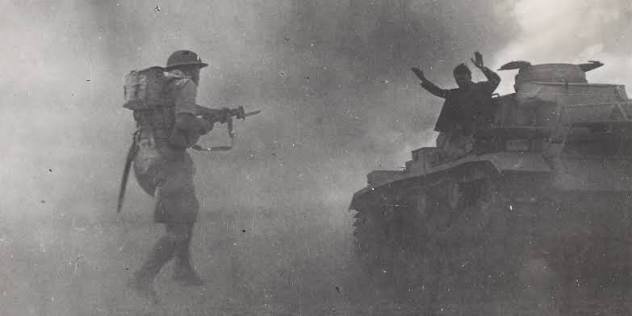
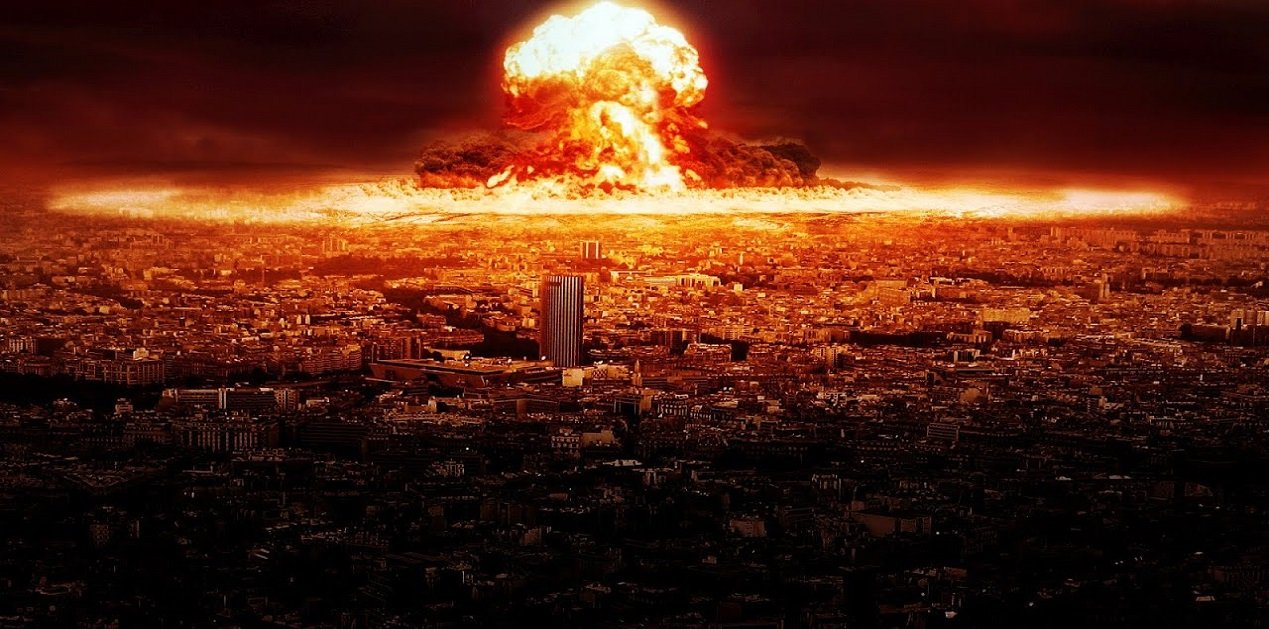
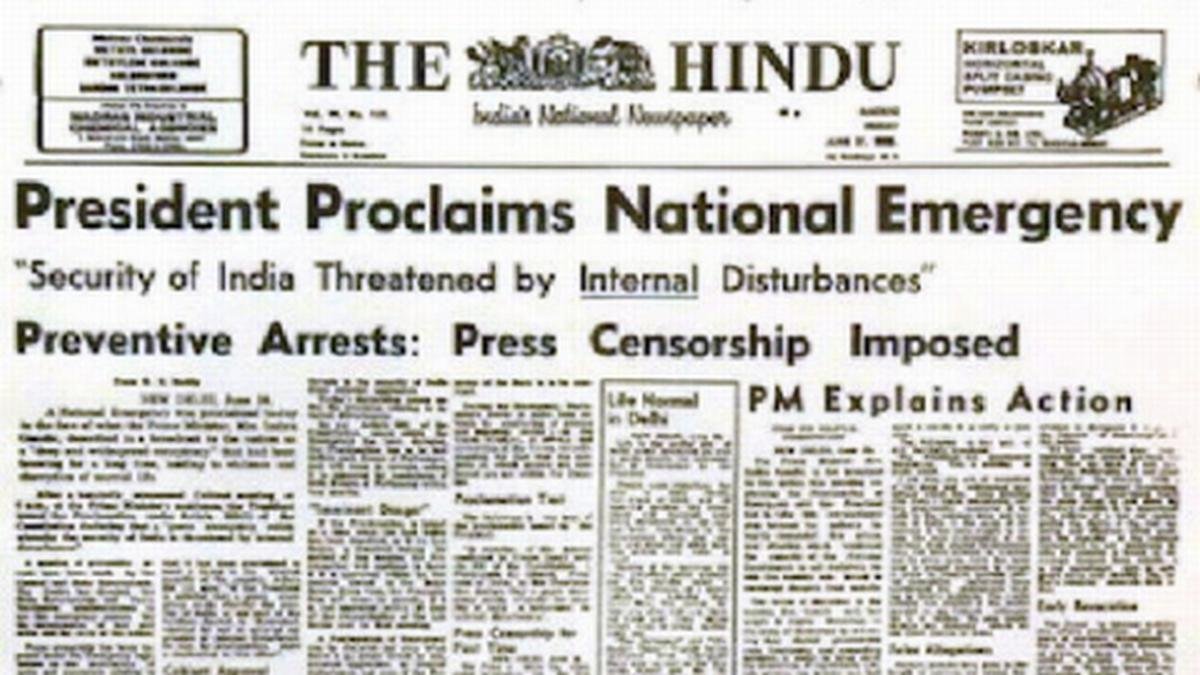
Here is a comprehensive timeline of the most important events of World War II, broken down year by year from its prelude to its conclusion.
Pre-War Prelude & Outbreak (1939)
March 15, 1939: Germany violates the Munich Agreement by occupying Czechoslovakia.
September 1, 1939: Germany invades Poland, marking the official outbreak of World War II in Europe.
September 3, 1939: Great Britain and France declare war on Germany in fulfillment of their alliance with Poland.
September 17, 1939: The Soviet Union invades Poland from the east, per the secret Molotov-Ribbentrop Pact.
The Phoney War & Western European Campaign (1940)
April 9 – June 9, 1940: Germany launches Operation Weserübung, successfully invading and occupying Denmark and Norway.
May 10, 1940: Germany invades France, Belgium, the Netherlands, and Luxembourg using Blitzkrieg (lightning war) tactics. Winston Churchill becomes British Prime Minister.
May 26 – June 4, 1940: The historic Allied evacuation of over 330,000 troops takes place from the beaches of Dunkirk.
June 22, 1940: France officially signs an armistice with Germany, leading to the division of the country into an occupied zone and the Vichy puppet regime.
July 10 – October 31, 1940:The Battle of Britain: The Royal Air Force successfully defends the UK against the German Luftwaffe air assaults.
September 27, 1940: Germany, Italy, and Japan sign the Tripartite Pact, formally establishing the Axis powers.
Global Expansion & The Eastern Front (1941)
April 6 – 30, 1941: Axis forces invade and quickly conquer Yugoslavia and Greece.
June 22, 1941:Operation Barbarossa: Germany launches a massive surprise invasion of the Soviet Union, shattering the non-aggression pact.
August 9–14, 1941: U.S. President Franklin D. Roosevelt and British Prime Minister Winston Churchill issue the Atlantic Ground Rules/Charter.
December 7, 1941:Attack on Pearl Harbor: Japan launches a surprise carrier-based air strike on the U.S. Pacific Fleet in Hawaii.
December 8, 1941: The United States, Great Britain, and their allies declare war on Japan, officially entering WWII.
Turning Tides in the Pacific & Europe (1942)
January 20, 1942: Nazi officials hold the Wannsee Conference, formalizing the “Final Solution” for the systematic genocide of European Jews (the Holocaust).
June 4–7, 1942:Battle of Midway: The U.S. Navy decisively defeats the Imperial Japanese Navy, turning the tide of the Pacific War.
August 23, 1942 – February 2, 1943:Battle of Stalingrad: The Red Army traps and defeats the German 6th Army. This marks the catastrophic turning point on the Eastern Front.
November 8–16, 1942:Operation Torch: Allied forces successfully invade French North Africa, driving Axis troops out of the region.
The Siege Narrows on the Axis (1943)
July 5 – August 23, 1943:Battle of Kursk: The largest tank battle in history ends in a definitive Soviet victory, breaking German offensive power in the East.
July 9 – August 17, 1943:Allied Invasion of Italy (Operation Husky): Allied troops invade Sicily, leading to the collapse of Benito Mussolini’s fascist regime in Italy.
September 3, 1943: Italy secretly signs an armistice with the Allies and drops out of the Axis alliance.
November 28 – December 1, 1943:Tehran Conference: Roosevelt, Churchill, and Joseph Stalin meet to coordinate strategy and plan the cross-channel invasion of Europe.
The Liberation of Europe & The Pacific Push (1944)
June 6, 1944:D-Day (Operation Overlord): Allied forces land on the heavily fortified beaches of Normandy, France, opening the long-awaited Western Front.
August 25, 1944: Paris is officially liberated from Nazi occupation by French and Allied forces.
October 23–26, 1944:Battle of Leyte Gulf: The largest naval battle of World War II virtually destroys the remaining offensive capabilities of the Japanese surface fleet.
December 16, 1944 – January 25, 1945:Battle of the Bulge: Germany launches its final desperate counter-offensive on the Western Front, ultimately failing against determined Allied resistance.
Final Collapse & The Dawn of the Atomic Age (1945)
January 27, 1945: Soviet forces liberate Auschwitz-Birkenau, revealing the full horror of the Nazi concentration camps.
February 4–11, 1945:Yalta Conference: Allied leaders meet to plan the post-war reorganization of Europe and Germany’s unconditional surrender.
February 19 – March 26, 1945:Battle of Iwo Jima: U.S. Marines capture the strategic island, immortalized by the iconic flag-raising photograph.
April 12, 1945: U.S. President Franklin D. Roosevelt passes away; Vice President Harry S. Truman assumes the presidency.
April 30, 1945: Adolf Hitler commits suicide in his Berlin bunker as Soviet troops close in.
May 8, 1945:V-E Day (Victory in Europe Day): Germany officially signs its unconditional surrender, ending the war in Europe.
July 16, 1945: The United States successfully detonates the first atomic bomb during the Trinity test in New Mexico.
August 6 & 9, 1945: The U.S. drops atomic bombs on the Japanese cities of Hiroshima (Aug 6) and Nagasaki (Aug 9).
September 2, 1945:V-J Day (Victory over Japan Day): Japan formally signs surrender documents aboard the USS Missouri in Tokyo Bay, officially bringing World War II to a close.
1905- Albert Einstein’s formulation of special relativity
1907- Bakelite, the world’s first fully synthetic plastic, invented in New York by Leo Baekeland, who coins the term “plastics”.
1911- Roald Amundsen first reaches the South Pole
1912- The African National Congress is founded. End of the Chinese Empire. Republic of China established. First Balkan war.
1913- Second Balkan war
1914- Panama Canal opens. In the Banana Wars, the United States occupation of Haiti begins. World War I started.
1917- Russian Revolution. The first Pulitzer Prizes announced. October Revolution in the Russian Republic.
Spanish Flu- 1918-1920
1918- The Armistice of 11 November 1918 ends World War I.
1919- Paris Peace Conference writes Treaty of Versailles that punishes Germany. Communist International established in the Kremlin to coordinate Communist parties worldwide. The International Labour Organization is established.
1920- January 10: League of Nations founded. Prohibition in the United States begins.
1921- The Italian National Fascist Party is established by Benito Mussolini.
1922- British Broadcasting Corporation (BBC) established. Irish Free State is established, while the province of Northern Ireland is created within The United Kingdom. Fascism first appeared in Italy with the rise to power of Benito Mussolini in 1922
1923- Time Magazine is first published. Mustafa Kemal Atatürk becomes the first President of the newly established Republic of Turkey.
1924- Vladimir Lenin died. The first edition of the Winter Olympic Games is hosted in Chamonix, France. The Caliphate is abolished by Kemal Atatürk. Ramsay MacDonald becomes Prime Minister of the United Kingdom; first Labour Party prime minister.
1927- The United Kingdom of Great Britain and Ireland officially becomes the United Kingdom of Great Britain and Northern Ireland. The Jazz Singer, the first “talkie”, is released. World population reaches two billion. Soviet general secretary Joseph Stalin becomes dictator of the Soviet Union.
1929- The first Academy Awards are presented. Wall Street Crash of 1929 and the beginning of the Great Depression.
1931- Statute of Westminster creates the British Commonwealth of Nations. Christ the Redeemer, one of the seven wonders of the world completed.
1932- The neutron is discovered by James Chadwick. The Nazi party becomes the largest single party in the German parliament.
1933- January 30: Adolf Hitler becomes Chancellor of Germany. Prohibition in the United States is abolished. Germany announces its withdrawal from the League of Nations and the World Disarmament Conference, after the U.S., the U.K. and France deny its request to increase its defence armaments under the Versailles Treaty. Japan announces it will leave the League of Nations.
1934- With the death of Paul von Hindenburg, Hitler declares himself Führer of Germany. Mao Zedong begins the Long March.
1935- Reza Shah of Iran asks the international community to formally adopt the name “Iran” to refer to the country, instead of the name “Persia”.
1936- Beginning of the Spanish Civil War.
1937- Snow White and the Seven Dwarfs is the first feature-length animated movie released.
1939- End of Spanish Civil War; Francisco Franco becomes dictator of Spain. Nazi invasion of Poland triggers World War II in Europe. Soviet invasion of Poland begins 16 days later. Britain and France declare war on Germany; World War II begins. World War II officially began on 1 September 1939, when Hitler unleashed his Blitzkrieg, or lightning war, against Poland
1940- Battle of Britain, the first entirely aerial military campaign, becomes the first significant defeat for the Axis powers. Leon Trotsky is assassinated in Mexico.
1941- December 7: The Japanese Attack on Pearl Harbor leads to the USA joining World War II.
1943- A famine in Bengal kills up to 3 million people.
1944- June 6: D-Day landings in Normandy. Adolf Hitler survives the 20 July plot to assassinate him led by Claus von Stauffenberg. First operational electronic computer, Colossus, comes online.
1945- In early February 1945, the three Allied leaders, Franklin Roosevelt, Winston Churchill, and Joseph Stalin, met at newly liberated Yalta in the Crimea in the Soviet Union in the Yalta Conference. Hitler committed suicide on 30 April 1945. Execution of Mussolini. End of World War II in Europe. The Holocaust ends after ~12 million deaths, including 6 million Jews. The Allied team produced two nuclear weapons for use in the war, one powered by uranium-235 and the other by plutonium as fissionable material, named “Little Boy” and “Fat Man”. These were dropped on the Japanese cities of Hiroshima and Nagasaki on 6 and 9 August 1945 each. Following the end of the war, the Allies famously prosecuted numerous German officials for war crimes and other offenses in the Nuremberg Trials
June 26: United Nations founded (UN Charter).
1946- First images of the Earth taken from space. In March 1946, Winston Churchill gave a now famous speech while visiting Westminster College in the US which is usually credited as the first use of the term Iron Curtain to refer to the separation of Soviet and Western areas of influence in Europe
1947- Harry Truman establishes the Truman Doctrine of containment of Communism.
1948- The World Health Organization (WHO) founded. The Organisation for Economic Co-operation and Development (OECD) founded. The Soviet Sever-2 expedition becomes the first party to indisputably set foot on the North Pole. The Marshall Plan, an American initiative for foreign aid of $13 billion to 16 Western European countries, comes into effect. The Arab–Israeli War begins. December 10: The Universal Declaration of Human Rights adopted by the United Nations General Assembly.
Beginning of apartheid in South Africa.
1949- The First Indo-Pakistani War ends. COMECON founded by USSR and the Eastern Bloc. The Creation of NATO. Creation of NATO-backed Federal Republic of Germany (West Germany). Albert II became the first mammal launched into space. October 1: Chinese Communist Revolution: Establishment of the People’s Republic of China under CCP Chairman Mao Zedong; The Republic of China relocates to Taiwan. Creation of the socialist German Democratic Republic (East Germany).
1950- North Korean invasion of South Korea begins the Korean War. UN forces reclaim Seoul and invade North Korea. Alan Turing publishes the Turing test, one of the most influential yet controversial concepts in artificial intelligence research.
1952- Queen Elizabeth II becomes Monarch of the Commonwealth realms. Egyptian Revolution under Gamal Abdel Nasser overthrows King Farouk and ends British occupation.
1953- Death of Stalin. Coronation of Elizabeth II. The first colour television is produced.
1955- Death of Albert Einstein. The first large-scale Asian–African or Afro–Asian Conference also known as the Bandung Conference, was a meeting of Asian and African states, most of which were newly independent, which took place on 18–24 April 1955 in Bandung, West Java, Indonesia. Signing of the Warsaw Pact.
1956- Nasser’s nationalisation of the Suez Canal triggers the Suez crisis.
1957- Launch of Sputnik 1 and the beginning of the Space Age. Treaty of Rome, which would eventually lead to the European Union. Laika becomes the first animal launched into Earth orbit. Beginning of the Asian flu in China, leading to a worldwide pandemic that lasts until the following year.
1959- Beginning of the Vietnam War, which lasts until 1975. First documented AIDS cases.
1960- First crewed descent to the deepest point on Earth, the Mariana Trench. Sirimavo Bandaranaike becomes Prime Minister of Ceylon and the first female Prime Minister in the world. The Beatles form in Liverpool. Year of Africa: Independence of 17 African nations.
1961- Construction of the Berlin Wall. UN Secretary General Dag Hammarskjöld dies in a plane crash.
1962- The Cuban Missile Crisis nearly causes nuclear war.
1963- Martin Luther King Jr. delivers “I Have a Dream” speech at the March on Washington for Jobs and Freedom. Assassination of John F. Kennedy. Vice President Lyndon B. Johnson assumes office as President of the United States.
1967- The Six-Day War, a conflict between Israel and Arab states that resulted in Israel occupying the Gaza Strip, the Sinal Peninsula, the West Bank and the Golan Heights. Association of Southeast Asian Nations (ASEAN) founded.
1968- Assassination of Martin Luther King Jr.
1969- June 20- Apollo 11 Moon landing, in which Neil Armstrong and Buzz Aldrin become the first two humans on the Moon.
1971- Idi Amin seizes power in Uganda.
1972- September 5–6: The Munich massacre, perpetrated by the Black September terrorist organization and aimed at the Israeli Olympic team, results in 17 total deaths.
1973- The first space station, Skylab, is launched. The Yom Kippur War also known as the 1973 Arab–Israeli War, the fourth Arab–Israeli War, the October War or the Ramadan War was fought from 6 to 25 October 1973 between Israel and a coalition of Arab states led by Egypt and Syria.
1974- Watergate scandal: Resignation of Richard Nixon; Vice President Gerald Ford assumes office as President of the United States, the first person not elected as either President or Vice President to take the role.
1975- Microsoft founded in Albuquerque, New Mexico, by Bill Gates and Paul Allen. The Fall of Saigon ends the Vietnam War.
1976- 1976 Argentine coup d’état leads to a military dictatorship in Argentina. Steve Wozniak invents the Apple I and Steve Jobs then convinces Wozniak to sell the system, giving birth to Apple Computer. Operation Entebbe, a successful counter-terrorist hostage-rescue mission carried out by commandos of the Israel Defense Forces (IDF) at Entebbe Airport in Uganda.
1978- The War in Afghanistan begins with the Saur Revolution. Discovery of Pluto’s moon Charon. The Camp David Accords are signed between Israel and Egypt. Louise Brown is the first child successfully born after her mother received in vitro fertilisation treatment. Invention of artificial insulin.
1979- The Iranian Revolution ends. Shah Reza Pahlavi is overthrown and forced into exile. Margaret Thatcher becomes the first female Prime Minister of the United Kingdom. The Uganda–Tanzania War ends with defeat for Uganda and the exile of Idi Amin. The Iran hostage crisis begins. The Soviet–Afghan War begins with the Soviet invasion of Afghanistan. Implementation of China’s one-child policy.
1980- WHO announces the eradication of smallpox. Launch of Cable News Network (CNN). Beginning of the Iran–Iraq War.
1981- Iran releases the 52 U.S. hostages held in Tehran after 444 days. The AIDS epidemic officially begins in the United States, having originated in Africa; making this to be an ongoing pandemic.
1982- The Hama massacre in Syria, a conflict between Syria and the Muslim Brotherhood, results in a decisive Syrian victory and about 10,000 deaths. Falklands War between UK and Argentina. The Falklands War) was a ten-week undeclared war between Argentina and the United Kingdom in 1982 over two British dependent territories in the South Atlantic: the Falkland Islands and its territorial dependency, South Georgia and the South Sandwich Islands. The conflict began on 2 April 1982, when Argentina invaded and occupied the Falkland Islands, followed by the invasion of South Georgia the next day.
First Israeli invasion of Lebanon begins. Michael Jackson releases his landmark album Thriller, the best-selling album of all time.
1983- The Bombing of U.S. Embassy in Beirut results in 63 deaths. Sri Lankan Civil War begins. End of dictatorship in Argentina.
1984- The human immunodeficiency virus (HIV) is recognized as the cause of HIV/AIDS, and research on zidovudine and other treatments gets underway.
1985- 73 years after its infamous disaster, the wreck of the Titanic is found off the coast of Newfoundland by a joint French–American expedition led by Jean-Louis Michel of IFREMER and Robert Ballard of the Woods Hole Oceanographic Institution. Windows 1.0, the first Microsoft Windows operating system, released. First use of DNA fingerprinting.
1986- The Space Shuttle Challenger breaks apart 73 seconds into its flight, killing all seven crew members aboard. Return of Halley’s Comet. The Chernobyl disaster in Ukraine.
1987- The Intermediate-Range Nuclear Forces Treaty is signed in Washington, D.C., by U.S. President Ronald Reagan and Soviet leader Mikhail Gorbachev.
1988- Beginning of the perestroika (“restructuring”), a political movement for reformation within the Communist Party of the Soviet Union during the 1980s associated with Gorbachev and his glasnost (“openness”) policy reform. Morris worm, first computer virus distributed through the Internet. Israeli–Palestinian conflict; beginning with the independent State of Palestine being proclaimed from Algiers.
1989- Revolutions of 1989 bring down Communist and authoritarian regimes around the world. Tiananmen Square Massacre, in which troops armed with assault rifles and accompanied by tanks fired at student-led demonstrations held in Tiananmen Square, Beijing, resulting in an undisclosed number of deaths (estimated in hundreds to thousands). An unknown Chinese protester, “Tank Man”, stands in front of a column of military tanks on Chang’an Avenue in Beijing, temporarily halting them, an incident which achieves iconic status internationally through images taken by Western photographers. November 9: Fall of the Berlin Wall; the Revolutions of 1989 and the collapse of the Soviet Bloc begin in Europe, which leads to the end of the Cold War. The Communist government of Czechoslovakia falls during the Velvet Revolution.
1990- Nelson Mandela is released from Victor Verster Prison, Robben Island outside Cape Town, South Africa after 27 years as a political prisoner. End of the dictatorship of Augusto Pinochet in Chile. Gulf War begins. German reunification. Tim Berners-Lee publishes the first web site, which described the World Wide Web project. Myanmar Armed Forces place Aung San Suu Kyi under house arrest.
1991- The Gulf War ends in US withdrawal and a failed uprising. Elizabeth II becomes the first British monarch to address the U.S. Congress during a 13-day royal visit in Washington, D.C. Boris Yeltsin becomes the first President of Russia. Michael Schumacher, regarded as one of the greatest Formula One drivers in history, makes his Formula One debut at the Belgian Grand Prix.
1992- The Maastricht Treaty is signed, creating the European Union. The Bosnian War begins.
1993- Velvet Divorce between Czech Republic and Slovakia. Oslo accords end First Intifada between Israel and Palestine. Battle of Mogadishu (Black Hawk Down) leaves over 3,000-4,000 people dead. Colombian drug lord Pablo Escobar is gunned down by police.
1994- Establishment of North American Free Trade Agreement (NAFTA). End of apartheid in South Africa and election of Nelson Mandela. The First Chechen War begins. Construction of the Three Gorges Dam begins in Hubei, China.
1995- Establishment of the World Trade Organization. NATO bombing raids in Bosnia end the Bosnian War. Release date of Windows 95.
1996- A sudden storm engulfs Mount Everest with several climbing teams high on the mountain, leaving eight people dead. By the end of the month, at least four other climbers die in the worst season of fatalities on the mountain to date. Dolly the sheep becomes the first successful cloned mammal. The Taliban government takes control of Afghanistan, creating the Islamic Emirate of Afghanistan.
1997- Diana, Princess of Wales is killed in a car accident in Paris. Handover of Hong Kong from the United Kingdom to China.
1998- Nicholas II of Russia and his family are buried in St. Catherine Chapel, 80 years after he and his family were killed by the Bolsheviks in 1918. Google is founded by Larry Page and Sergey Brin. The impeachment of Bill Clinton begins as a result of the Clinton–Lewinsky scandal.
1999- Hugo Chavez becomes President of Venezuela. Euro introduced to the international markets. Coins and banknotes enter circulation in participating countries in 2002. The Second Chechen War begins. Vladimir Putin becomes the President of Russia. The U.S. turns over complete administration of the Panama Canal to the Panamanian Government, as stipulated in the Torrijos–Carter Treaties of 1977
2000- Dot-com bubble bursts, causing stock markets worldwide to crash. Pope John Paul II apologizes for the wrongdoings by members of the Roman Catholic Church throughout the ages. Vladimir Putin is elected President of Russia. Israeli withdrawal from Lebanon. The 2000 Camp David Summit, aimed at reaching a “final status” agreement between the Palestinians and the Israelis, was held between United States president Bill Clinton, Israeli prime minister Ehud Barak and Palestinian Authority chairman Yasser Arafat.
The Battle of the Atlantic took place from 1942 to 1944 and was described as “longest, largest, and most complex naval battle in history”
Johannes Erwin Eugen Rommel popularly known as The Desert Fox was a German field marshal during World War II
Two wars and a near-war in the 1950s became the focus for capitalist versus communist struggle. The first war was the Korean War, fought between People’s Republic of China-backed North Korea and mainly United States-backed South Korea. The Korean Peninsula was a Japanese colony between 1910 and 1945, when Soviet and American troops invaded and divided it along the 38th parallel. A communist government controlled the territory north of the border and a capitalist one controlled the South, with both authorities considering the other one illegitimate and claiming sovereignty over the entire peninsula. North Korea’s invasion of South Korea on 25 June 1950 led to United Nations intervention. General Douglas MacArthur led troops from the United States, Canada, Australia, Great Britain, and other countries in repulsing the Northern invasion. However, the war reached a stalemate after Chinese intervention pushed U.N. forces back, and an Armistice ended hostilities in July 1953, leaving the two Koreas divided and tense for the rest of the century.
After the second war, the Vietnam War, was perhaps the third most visible war of the 20th century. After the French withdrawal from its former colony, on 21 July 1954, Vietnam became partitioned into two halves, much like Korea, along the 17th parallel. Fighting between North and South eventually escalated into a regional war. The United States provided aid to South Vietnam and contributed to propaganda efforts against the North, but was not directly involved until the Gulf of Tonkin Resolution, passed in reaction to a supposed North Vietnamese attack upon American destroyers, brought the U.S. into the war as a belligerent. The war was initially viewed as a fight to contain communism, but, as more Americans were drafted and news of events such as the Tet Offensive and My Lai massacre leaked out, American sentiment turned against the war. U.S. President Richard Nixon was elected partially on a promise to end the war. This Nixon Doctrine involved a gradual pullout of American forces; South Vietnamese units were supposed to replace them, backed up by American air power. The plan went awry, with Nixon deliberately sabotaging peace talks for political gain, and the war spilled into neighboring Cambodia while South Vietnamese forces were pushed further back. Eventually, the U.S. and North Vietnam signed the Paris Peace Accords, ending U.S. involvement in the war. With the threat of U.S. retaliation gone, the North proceeded to violate the ceasefire and invaded the South with full military force. Saigon was captured on 30 April 1975, and Vietnam was unified under Communist rule a year later, effectively bringing an end to one of the most unpopular wars of all time
The Cuban Missile Crisis illustrates just how close to the brink of nuclear war the world came during the Cold War. Cuba, under Fidel Castro’s socialist government, had formed close ties with the Soviet Union. This was obviously disquieting to the United States, given Cuba’s proximity. When Lockheed U-2 spy plane flights over the island revealed that Soviet missile launchers were being installed, U.S. President John F. Kennedy instituted a naval blockade and publicly confronted the Soviet Union. After a tense week, the Soviet Union backed down and ordered the launchers removed, not wanting to risk igniting a new world war
With Cold War tensions running high, the Soviet Union and United States took their rivalry to the stars in 1957 with the Soviet launch of Sputnik. The USSR reached several important milestones, such as the first craft on the Moon (Luna 2) the first human in space (Yuri Gagarin) and the first spacewalk (Alexey Leonov on Voskhod 2). The U.S. pulled ahead eventually with its Mercury, Gemini, and Apollo programs, which culminated in Apollo 11 astronauts landing on the Moon on 20 July 1969
On 26 December 1991, the Soviet Union was officially disbanded into its constituent republics, thus putting a final line under the already exhausted Cold War
1960: Gujarat State and Maharashtra State are formed from the State of Bombay as laid down by the States Reorganisation Act.
1 May is declared as ‘Maharashtra Divas’, i.e., Maharashtra Day
Yashwantrao Chavan took oath as the 1st Chief Minister of Maharashtra
Bombay High Court overturns Jury trial verdict on Nanavati case and declares him guilty. The movie Rustom was based on this case.
Film and Television Institute of India (FTII) established in Pune
Border Roads Organisation was formed.
Bajaj Auto became a publicly traded company.
India participated in the 1960 Summer Olympics football tournament in Rome, marking their last appearance in the Olympics for football. The team, coached by Syed Abdul Rahim and captained by P.K. Banerjee, was placed in a group with Hungary, France, and Peru. Despite a draw against France and a goal from Tulsidas Balaram against Peru, India did not advance beyond the group stage.
India won silver in hockey in 1960 Olympics
Subroto Cup International Football Tournament started
1961: The first Aircraft carrier of Indian Navy, INS Vikrant was commissioned.
Indian Foreign Service Officer K. Sankara Pillai assassinated at Indian High Commission, Ottawa by a youth of Yugoslavian origins. This is the first martyr-ship of an Indian Diplomat
Jawaharlal Nehru commissions the first Electric locomotive that is made in India at Chittaranjan Locomotive Works
The Hungry generation movement is launched in Calcutta.
Goa is officially ceded to India after 400 years of Portuguese rule
Anti-dowry Act
The 10th Amendment to the Indian Constitution, enacted in 1961, incorporated Dadra and Nagar Haveli as the seventh Union Territory of India
Queen Elizabeth II visited India
1962 Indian National Committee for Space Research set up with Vikram Sarabhai from Physical Research Laboratory leading it.
A locust swarm threatens New Delhi.
Chinese troops invade Kashmir and illegally captured Aksai Chin thereby starting the Sino-Indian War.
Emergency enforced in India for the first time following the Sino-Indian War.
War over disputed territory of Kashmir with China.
The Indo-Tibetan Border Police (ITBP) is a central armed police force in India under the Ministry of Home Affairs. It is responsible for guarding India’s border with Tibet. It was formed in the aftermath of the Sino-Indian War of 1962.
India seizes Diu, Daman and Goa from Portuguese India.
14th Amendment- Incorporation of Pondicherry into the Union of India and creation of Legislative Assemblies for Himachal Pradesh, Tripura, Manipur and Goa.
Bidhan Chandra Roy, the second CM of West Bengal died.
Kalinga Cup started by Biju Patnaik in Orissa.
1963: India’s first ever rocket launch was carried out at Thumba Equatorial Rocket Launching Station Thiruvananthapuram. The launch was successful and it sent NASA-made Nike-Apache rocket to space marking the beginning of India’s space programme.
Supreme Court of India mandates that reservation should not exceed 50% for any institution
The Kamraj Plan, aimed at revitalizing the Indian National Congress by encouraging prominent leaders to resign from ministerial posts, was also approved.
On December 1, 1963, Nagaland was established as the 16th state of India.
1964 Thirty-two Council members walk out of Communist Party of India National Council resulting in the 1964 split in the Communist Party of India.
27 May Death of Prime Minister Jawaharlal Nehru.
Lal Bahadur Shastri became the PM of India
IDBI Bank was established through an Act of Parliament.
The far-right Hindu outfit, Vishva Hindu Parishad was founded.
National Film Archive of India established in Pune.
Indian Hungry generation poets arrested on charges of conspiracy against the State and Obscenity in literature.
In December, a powerful cyclone, also known as the Dhanushkodi cyclone, struck Rameswaram, causing significant damage.
India won gold in hockey in Olympics
Death of Guru Dutt
1965 Food Corporation of India was founded.
Second war with Pakistan over Kashmir.
Kashmir is declared an “Integral Part of India” and is not a “disputed territory”, later responded by the Pakistani troops entering the Indian sector of Kashmir.
A full-scale Indo-Pakistani war is fought over Kashmir, which ends after a UN Security Council calls for a ceasefire on 20 September.
Anti-Hindi agitations break out in India because of which Hindi does not get “National Language” status and remains one of the 2 Official Languages of India.
English is adopted as an associate language in dealings between the Central government and the non-Hindi speaking states.
1965 Dhanbad coal mine disaster – A mining accident in Dhanbad, India kills 274.
The Border Security Force is formed as a special force to guard the borders.
1966 The Tashkent Declaration, ending the 1965 Indo-Pakistani war, was signed on January 10
Prime Minister Lal Bahadur Shastri’s mysterious death in Tashkent.
Nehru’s daughter Indira Gandhi becomes prime minister.
Lumding Train Bombing occurs on the North-East Frontier Railway.
Air India Flight 101 crashed into Mont Blanc killing the 117 passengers including Homi J. Bhabha who was in the flight. There was a similar aviation accident in the same spot in 1950.
Shiv Sena founded by Bal Thackeray.
First Indira Gandhi ministry devalues Indian rupee by 57%
Reita Faria became the first Indian to win the Miss World title.
VD Savarkar died
1967 India and Myanmar enters into a border agreement which demarcates India–Myanmar border
Zakir Husain becomes the first Muslim to become president of India.
In 1967, Charu Majumdar, along with other communist leaders, spearheaded a peasant uprising in Naxalbari, West Bengal, known as the Naxalbari movement.
Kerala State Lotteries becomes the first state to start Lottery under public sector
Unlawful Activities (Prevention) Act
Indian and Chinese troops begin to exchange fire at Nathu La in Sikkim. This event is known as the Nathu La and Cho La clashes
1968 The Beatles visit the ashram of Maharishi Mahesh Yogi in Rishikesh, India to study transcendental meditation.
West Bengal was put under President’s rule under Article 356 of the Constitution of India, after the collapse of its coalition government and the resignation of Chief Minister P. C. Ghosh.
Indira Gandhi announced in Rae Bareilly that India will not sign the Treaty on the Non-Proliferation of nuclear weapons. This was her first of many protests against USA.
Public Provident Fund introduced through an act by the Parliament of India.
National Textile Corporation incorporated.
Tata Consultancy Services established as Tata Computer Systems.
Three-language formula introduced through National Policy on Education
Kilvenmani massacre, 44 Dalits burnt to death in Kizhavenmani village, Tamil Nadu.
Auroville established in Pondicherry with presence of 124 countries
India won bronze medal in hockey in the Olympics
1969 19 July Nationalisation of 14 major private Banks
Madras State gets renamed to Tamil Nadu through parliamentary law
Morarji Desai resigned from the post of Deputy Prime Minister of India
The first Rajdhani Express commenced its journey between Delhi and Howrah.
Indian Space Research Organisation (ISRO) was set up on 15th August
Central Industrial Security Force (CISF) came into existence (10 March 1969)
Registration of Births and Death Act (RBD Act)
India’s first nuclear power plant at Tarapur began operations.
India launched its first rocket.
The third President of India, Dr. Zakir Husain, passed away in May.
Actor Amitabh Bachchan made his debut in the film “Saat Hindustani”.
1971 3–16 December Third war with Pakistan, culminating in the creation of Bangladesh
Himachal Pradesh becomes the 18th Indian state
A cyclone in the Bay of Bengal, in Orissa State in India, kills 10,000.
16 December – Victory Day of Bangladesh: The Pakistan Army surrenders to the Joint Force i.e. Mukti Bahini (Freedom Force) and the Indian Armed Forces, officially ending the Bangladesh Liberation War and creating the new nation state of Bangladesh.
24th Constitutional amendment act:
Affirmed the power of Parliament to amend any part of the constitution including Fundamental Rights.
India defeated West Indies in Port of Spain Trinidad for the first time ever to clinch the rubber 1-0. Sunil Gavaskar creates world record for scoring 774 runs in four tests. Ajit Wadekar was the captain.
India defeated England in the third and the final Test at the Oval. This happens to be India’s first victory ever on the English soil.
Contempt of Courts Act, 1971
North-Eastern Council Act, 1971
North-Eastern Areas (Reorganisation) Act, 1971
Twenty-year treaty of friendship signed with Soviet Union.
1972 Manipur, Tripura and Meghalaya get statehood.
Japan Air Lines Flight 471 crashed at Palam, Delhi killing 82 of the 87 on board.
India and Bangladesh sign a friendship treaty, after the withdrawal of the Indian troops.
Following Pakistan’s surrender to India in the Indo-Pakistani War of 1971, both nations sign the historic bilateral Simla Agreement, agreeing to settle their disputes peacefully.
Expulsion of Indians from Uganda under Idi Amin regime
M. G. Ramachandran, forms the All-India Anna Dravida Munnetra Kazhagam by splitting from Dravida Munnetra Kazhagam starting a new phase in Dravidian movement
Jharkhand Mukti Morcha was formed for independent statehood of Jharkhand from Bihar on birthday of Birsa Munda
Armed Forces (Assam and Manipur) Special Powers (Amendment) Act amended to include new states and union territories of Northeast India.
Supreme Court of India began hearing of Kesavananda Bharati v. State of Kerala case
Wild Life (Protection) Act, 1972 enacted.
Postal Index Number (PIN Code) introduced in India.
India won Bronze in Hockey in Olympics. India’s only medal in that edition.
1973 P. V. Narasimha Rao resigns as Chief minister of Andhra Pradesh following the resignation of ministers from Coastal Andhra post the 1972 Jai Andhra movement.
Verdict of Kesavananda Bharati v. State of Kerala pronounced. Supreme Court of India upholds basic structure doctrine
Project Tiger launched
Finance Minister Yashwantrao B. Chavan presented a budget with a large deficit, leading to it being called the “Black Budget”.
State of Mysore is renamed Karnataka State.
Chipko movement in Garhwal division
Indira Gandhi inaugurates world’s first Women Police Station in the world at Kozhikode
Bharatiya Jana Sangh leader Atal Bihari Vajpayee and two other leaders drove a Bullock cart to the Parliament of India on the first day of winter session to protest against fuel price hike in India following the oil crisis.
Foreign Exchange Regulation Act was passed.
Code of Criminal Procedure (CrPC) was enacted
1974 18 May the Smiling Buddha is the first nuclear device in underground test.
Bihar Movement started as a movement by students in Bihar led by the veteran Gandhian socialist Jayaprakash Narayan, against misrule and corruption in the Government of Bihar.
smallpox epidemic in East India
A railway strike started by 1.7 million workers of Indian Railways. The strike lasted for 20 days till 27 May 1974 and was the largest recorded industrial action in the world.
Sirima–Gandhi Pact signed to solve the statelessness of Sri Lankan Tamils
India played the first ever ODI. Opposition- England. Played in England.
Coal Mines (Nationalisation) Act, 1973
Thirty-fourth Amendment:
This amendment primarily focused on land reforms and included revised ceiling laws in the Ninth Schedule of the Constitution.
Thirty-fifth Amendment:
This amendment related to the status of Sikkim, granting it the status of an “Associate State” of India.
1975 15 May Sikkim becomes part of Indian Union after a referendum in the Sikkim Assembly.
Satyajit Ray’s documentary Sikkim banned.
Indira Gandhi became the first Prime Minister of India to testify in a court. She appeared before Allahabad High Court in State of Uttar Pradesh v. Raj Narain case
The first Indian satellite, Aryabhata, goes into Earth’s orbit.
Farakka Barrage across Ganges commissioned in West Bengal.
Justice Jagmohanlal Sinha declared PM Indira Gandhi’s election to parliament from Rae Bareli (Lok Sabha constituency) in 1971 Indian general election null and void.
A state of emergency is declared by Prime Minister Indira Gandhi during which the press is censored and 100,000 are jailed.
Kerala Legislative Assembly passed the Kerala Scheduled Tribes (Restriction on Transfer of Lands and Restoration of Alienated Lands) Act, 1975, for restoring land rights to tribals
India’s pathetic performance in 1975 World Cup Cricket. Only victory against East Africa.
Sarvepalli Radhakrishnan, philosopher and statesman, first Vice President of India and second President of India died.
1976 The Rajan case, an infamous case of Police brutality during the Emergency Period. The victim, P. Rajan, a final year Engineering student at Regional Engineering College, Calicut was arrested by police, taken to Kakkayam and allegedly tortured severely which led to his death. It is believed that his body was thrown into the Kakkayam Dam.
A family planning initiative involves the vasectomy of thousands of men and tubal ligation of women, either for payment or under coercive conditions. (The minimum age for marriage is also raised to 21 years for men and 18 years for women.) The son of then-Prime Minister Indira Gandhi, Sanjay Gandhi, is largely blamed for what turned out to be a failed program.
The 42nd amendment Act, 1976, was enacted during the Emergency by the Indian National Congress government headed by Indira Gandhi, changing “Sovereign Democratic Republic” to “Sovereign Socialist Secular Democratic Republic” and modifying “unity of the Nation” to “unity and integrity of the Nation”.
The Regional Rural Banks Act, 1976:
This act established Regional Rural Banks to provide credit and other facilities to small and marginal farmers, agricultural laborers, and artisans in rural areas
India competed at the 1976 Summer Olympics in Montreal, Quebec, Canada and won no medal. This was the first Olympics since 1928 in which the Indian Men’s hockey team did not win an Olympic Medal.
Death of singer Mukesh.
The Indian cricket team defeated the West Indies in a test match at Port of Spain, successfully chasing a then-record target of 403 runs.
Mother Teresa was nominated for the Nobel Peace Prize.
An Indian Airlines Boeing 737 was hijacked to Lahore.
1977 Prime Minister Indira Gandhi, via a radio broadcast, announced that the Lok Sabha would be dissolved and fresh elections would be held in March.
Indira Gandhi’s Congress Party loses general elections. Janata Party comes to power. The Communist Party of India (Marxist) comes into power in West Bengal.
The first non-Congress government sweeps to power following Indira Gandhi’s defeat at the general elections. Morarji Desai becomes prime minister.
M. G. Ramachandran sworn in as Chief Minister of Tamil Nadu. He became the first film actor to be the Chief Minister of an Indian state.
More than 10,000 people die when the 1977 Andhra Pradesh cyclone hits India’s southeast coast. The storm disrupts life for 5.4 million people in 830 villages, and damages 14,000 km2 of cropland.
Emergency was withdrawn in March.
1978 Air India Flight 855, a Boeing 747 passenger jet, crashes into the Arabian Sea after taking off shortly near Bombay, killing all 213 on board.
Morarji Desai led government demonetizes high denomination banknotes
Indira Gandhi is re-elected to the Indian parliament
Indira Gandhi is arrested and jailed for a week for breach of privilege and contempt of parliament.
Operation Barga was a land reform initiative launched in West Bengal, India, in 1978.
The 44th Amendment of the Indian Constitution, enacted in 1978, primarily aimed to address the excesses of the Emergency period (1975-1977) and restore some of the fundamental rights that had been curtailed. It made significant changes to the constitution, including removing ‘Right to Property’ from the list of fundamental rights and making it a legal right. It also introduced safeguards regarding the declaration of national emergencies and strengthened the powers of the judiciary.
India won 15 medals at the Commonwealth Games.
Air Chief Marshal Idris Hassan Latif: He became the first Muslim Chief of Air Staff of the Indian Air Force.
The Janata Party’s internal strife created an opening for Indira Gandhi’s political comeback.
Launch of District Industrial Centre by Minister of Industries George Fernandes
1979 President of India makes official the decision to set up the Mandal Commission
The police under direction of Jyoti Basu, Chief Minister of Communist Party of India (Marxist) -led government of West Bengal, surrounds and opens fire on unarmed refugee settlement of Morichjhapi island in Sunderbans, West Bengal. (Marichjhapi massacre)
The Janata Party splits. Chaudhary Charan Singh becomes Prime Minister.
Charan Singh of Bharatiya Lok Dal, coalition partner of Janata Party became Prime Minister of India with outside support of Congress (I).
C. H. Mohammed Koya sworn in as Chief minister of Kerala. He is the first Muslim League leader to become Chief Minister of an Indian state.
Morvi dam burst, the worst flood disaster in independent India, happens in Gujarat, killing 15000 people
Mother Teresa was awarded Nobel Peace Prize at Oslo
1990 Muslim separatist groups begin campaign of violence against Hindus in Kashmir resulting in Exodus of Kashmiri Hindus.
Indian Airlines Flight 605 crashes near the HAL Airport in Bangalore.
Leander Paes He won the 1990 Wimbledon junior title and was briefly ranked the number one junior player in the world.
The last Indian troops are withdrawn from Sri Lanka
The government devalued the rupee and initiated economic reforms.
Operation Floodlight (a literacy drive in Ernakulam)
V P Singh announces implementation of Mandal commission report.
Rajiv Goswami, a commerce student in Deshbandhu College attempted Self-immolation as part of Mandal Commission protests of 1990.
V.P. Singh resigns as prime minister and is succeeded by Janata Dal dissident Chandra Shekhar.
TN Sheshan- 10th Chief Election Commissioner of India
1991 Rajiv Gandhi is assassinated by a suicide bomber sympathetic to Sri Lanka’s Tamil Tigers.
Indian National Congress leader P.V. Narasimha Rao becomes Prime Minister.
The Government of India constitutes the Company Law Board as an independent quasi-judicial body thus giving up direct control on matters of company law.
An economic reform programme or Economic liberalisation in India is begun by Prime Minister P. V. Narasimha Rao.
The government of India announces its New Industrial Policy, marking the start of India’s economic reforms.
J. Jayalalithaa is sworn in as chief minister of Tamil Nadu for the first time.
Shiv Sena workers led by Shishir Shinde vandalised Wankhede Stadium Cricket pitch to stop a cricket match between India and Pakistan.
Rapid Action Force established by Union Home Ministry.
Union Territory of Delhi was given the special status of ‘National Capital Territory of Delhi.’ 69th Amendment.
1992 Scam of Harshad Mehta was exposed by journalist Sucheta Dalal, which consisted of SBI 500 Crore Scam and illegal usage of loophole in banking system. December
The demolition of the Babri Masjid, triggering the Bombay riots.
Over 200 people die in Cuttack in Odisha, after drinking illegally brewed liquor in the 1992 Odisha liquor deaths incident.
Konkani language, Nepali language and Meitei language (officially known as Manipuri language) included in the constitutional scheduled languages’ list and made one of the official languages of the Indian Republic through 71st amendment of Constitution of India.
Zee Television, a Hindi language satellite and cable television station, a first officially regular broadcasting service to start in Mumbai.
Indian Rupee exchange rate collapsed. It was 20 Rs to 1 dollar in January 1992 and it became 30 Rs to 1 dollar in December 1992. A huge 50% depreciation in value
Government of India establishes SEBI, stock exchange regulator.
73rd and 74th Amendment Act, 1992
Panchayati Raj institutions and Urban local bodies were given constitutional status.
India bags no medal at the Olympics
1993 A series of bomb blasts, thought to be planted by underworld figures, rock the country’s commercial capital of Bombay, killing some 260 people
Latur earthquake shakes Maharashtra
The All Parties Hurriyat Conference is formed in Kashmir.
supreme court recognised a fundamental right to primary education in the right to life under article 21
The Indian Voter ID card, also known as the Electors Photo Identity Card (EPIC), was introduced nationwide in 1993
1994 Kupwara massacre in J&K
S. R. Bommai v. Union of India verdict by Supreme Court of India.
Plague breakout in India from Surat
National Telecommunications policy (NTP) in 1994 which brought changes in the ownership, service and regulation of the national telecommunications infrastructure.
Aishwarya Rai was crowned Miss World 1994 in Sun City, South Africa
Pre-Conception and Pre-Natal Diagnostic Techniques Act, 1994
Sushmita Sen became the first Indian woman to win the Miss Universe title
Airports Authority of India Act 1994
1995 West Bengal Chief Minister Jyoti Basu made the first call from Kolkata to inaugurate the cellular services in India.
India joins the World Trade Organization (WTO) which has replaced GATT.
Purulia arms drop case
India’s first internet service started by VSNL
Delhi Metro Rail Corporation Limited founded.
1996 Congress suffers its worst electoral defeat ever as BJP emerges as the largest single party.
The Amarnath Yatra tragedy in which at least 194 pilgrims are reported to have frozen to death in northern Kashmir after being stranded by violent rain and snow storms.
TN Sheshan received the Ramon Magsaysay Award for government service
In general elections the ruling Congress Party is defeated and Bharatiya Janata Party becomes the largest single party in parliament. Phoolan Devi, former bandit queen is elected to Parliament from the Samajwadi Party.
Atal Bihari Vajpayee, leader of the Bharatiya Janata Party, is elected the new prime minister of India, replacing P. V. Narasimha Rao of the Indian National Congress. However, the party does not receive an overall majority and Vajpayee resigns thirteen days later rather than face a no confidence vote, and is replaced by the United Front, led by Deve Gowda. 13 days Government by Vapayee.
Deve Gowda is sworn in as the head of the United Front, a coalition of 13 parties which Congress supported but did not join. Gowda’s new cabinet brings in powerful regional figures, mixing low-caste and Muslim leaders with veterans of the socialist movement.
At least 194 pilgrims are reported to have frozen to death in northern Kashmir after being stranded by violent rain and snow storms in the Amarnath Yatra tragedy.
Michael Jackson arrived in Mumbai as a part of his History World Tour
Chinese President Jiang Zemin begins his three-day visit, the first visit by a Chinese head of state to India.
Leander Paes won a bronze medal for India in men’s singles at the 1996 Atlanta Olympic Games making him the first Asian in Olympic history to win a tennis medal and the only Indian to date. It was India’s sole medal in 1996 Olympics.
World Cup Cricket in India. India loses in Semi Final against Sri Lanka in Kolkata.
1997 India’s Missionaries of Charity chooses Sister Nirmala to succeed Mother Teresa as its leader.
Inder Kumar Gujral, a new leader acceptable to Congress, is sworn in as prime minister.
Jagmohan Dalmiya elected as the president of International Cricket Council
K.R. Narayanan is elected president, defeating T.N. Seshan. First Dalit President.
Mother Teresa dies of heart failure in Kolkata.
Elizabeth II pays a state visit to India.
Arundhati Roy wins Booker Prize for her debut novel The God of Small Things.
In 1997, an autonomous body was established in the name of Prasar Bharti to take care of the public service broadcasting under the Prasar Bharti Act. All India Radio and Doordarshan, which earlier were working as media units under the Ministry of I&B became constituents of the body.
TRAI (telecom regulator) is established.
1998 BJP forms coalition government under Prime Minister Atal Bihari Vajpayee.
India and Pakistan carry out nuclear tests, leading to widespread international condemnation.
EVM machines were used on an experimental basis across 25 state assembly constituencies during the assembly elections in Rajasthan, Madhya Pradesh and Delhi.
The National Highway Development Project is launched.
Netaji Subhas Open University started functioning in Kolkata
Gulzarilal Nanda, Interim Prime Minister of India died.
1999 Vajpayee makes a historic bus trip to Pakistan to meet Premier Nawaz Sharif and to sign bilateral Lahore peace declaration.
India’s 13-month-old BJP-led Second Vajpayee government falls after losing a no confidence motion in the Lok Sabha by just one vote
Australian Christian missionary Graham Staines and his two sons were burned to death by Bajrang Dal activists in Kendujhar district, Odisha
Indian Army launches operations to evict Pakistani forces occupying Indian positions on the icy heights in Kargil district, known as the Kargil War.
The Odissa Cyclone devastates eastern state of Odisha, leaving at least 10,000 dead.
Leander Paes and Mahesh Bhupathi became the first Indian pair to win doubles title in Wimbledon Championship.
Two crowded trains collide head-on at a railway station in Gaisal, West Bengal killing 286 people.
Parliamentary elections are held, in which the National Democratic Alliance led by Prime Minister Vajpayee’s BJP wins 298 seats, the Congress-led Alliance 134, and others 105.
Heavily armed hijackers take over an Indian Airlines Airbus carrying 189 people from Kathmandu (Nepal) to New Delhi. After a detour to the United Arab Emirates, it lands at Kandahar, Afghanistan, on 25 December. On 28 December the hijackers make three demands, including the release of 35 terrorists and a sum of $200 million. On 31 December the hijackers, who stabbed a man on the plane to death, free their hostages after reaching agreement with India for the release of three terrorists in Kashmir.
Shankar Dayal Sharma, former president of India and Chief Minister of MP died.
The Khajuraho temples are a group of Hindu and Jain temples in Madhya Pradesh, India, built between 950 and 1050 AD by the Chandela dynasty. These temples showcase the Nagara style of architecture,
Bodh Gaya is located almost 96 kilometrese away from Patna, Bihar and is one of the UNESCO World Heritage sites in India. It’s an important religious centre for the Buddhists as this was the place where Mahatma Buddha attained enlightenment. The holy Bodhi Tree is the site where Siddhartha gained Enlightenment and became Gautam Buddha. The famous Mahabodhi Temple was established in the reign of Ashoka the Great in about approximately 250 BCE.
The Statue of Liberty was designed and built in France. It was a gift from the people of France to the United States to commemorate the centennial of American independence. The statue was designed by French sculptor Frédéric Auguste Bartholdi and its metal framework was built by French engineer Gustave Eiffel, who also designed the Eiffel Tower in Paris. The statue was then disassembled and shipped to the United States, where it was reassembled on Liberty Island in New York Harbor and dedicated on October 28, 1886.
The Buddhist Monuments located at Sanchi in Madhya Pradesh are a World Heritage Site in India and they are the oldest stone structures in India. Originally commissioned by emperor Ashoka in 3rd century BCE, the Sanchi Stupa is located 46 kilometer north-east of Bhopal.
The Jantar Mantar is an astronomical observatory built in 18th century Rajasthan. It is an astronomical observatory which was built by the Rajput King Sawai Jai Singh of Rajasthan in 1738 CE
The Burj Khalifa, the tallest building in the world, is located in Dubai, United Arab Emirates (UAE).
Hampi is a UNESCO World Heritage site located in the Northern part of Karnataka. It lies within the ruins of the ancient, prosperous kingdom of Vijayanagar
The nickname of the clock tower in London is “Big Ben.”
The Elephanta caves are located on an island in the Arabian City, not very far from the city of Mumbai.
The Ellora Caves are an important UNESCO World Heritage site and an archaeological site, ranging 29 kilometers Northwest of the city of Aurangabad, Maharashtra. The Ellora Caves are well known for their Indian-rock cut architecture. The presence of Hindu, Buddhist and Jain temples and sculptures portray the tolerance which was extended towards different faiths and beliefs in Ancient Indian History.
Rumtek Monastery is located in which Indian state?
Ans- Sikkim
Hemis monastery in Leh, Ladakh.
Tawang monastery- Arunachal Pradesh
Angkor Wat, the largest religious monument in the world, was built in the early 12th century by King Suryavarman II as a Hindu temple dedicated to Vishnu. It’s located in present-day Cambodia, within the city of Angkor, which served as the capital of the Khmer Empire from the 9th to the 15th centuries. Initially a Hindu temple, it was later transformed into a Buddhist temple.
Bahai temple is in New Delhi
Dilwara temple in Mount Abu, Rajasthan- Jain temple.
In which place Shringeri Math is situated, which established by Shankaracharya?
Ans- Rameshwaram.
In which state’s Sabarimala pilgrimage, the pilgrims have taken the oath of cleanliness?
(a) Karnataka
(b) Kerala
(c) Telangana
(d) Tamil Nadu
Ans: (b) Kerala
The residence of the Prime Minister of which country is called ‘Temple Trees’?
(a) Nepal
(b) Myanmar
(c) Sri Lanka
(d) Bangladesh
Ans: (c) Sri Lanka
The Char Dham Highway project connects the four holy places of Yamunotri, Gangotri, Kedarnath, and Badrinath. In which Indian state are all these religious places located?
(a) Uttarakhand
(b) Himachal Pradesh
(c) Arunachal Pradesh
(d) Sikkim
Ans: (a) Uttarakhand
The largest temple complex in India is the Sri Ranganathaswamy Temple located in Srirangam, Tamil Nadu
Tawang monastery is the largest monastery in India. is also known as Galden Namgyal Lhatse.
The world’s largest mosque is Masjid al-Haram, located in Mecca, Saudi Arabia. It is also known as the Great Mosque of Mecca and encloses the Kaaba.
The largest mosque in India is the Taj-ul-Masajid, located in Bhopal, Madhya Pradesh. It has a capacity for around 175,000 worshippers.
The Seven Wonders of the World are a group of places around the globe that are considered to be of great importance. These are: The Colosseum in Italy, Petra in Jordan, Chichén Itzá in Mexico, Christ the Redeemer in Brazil, Machu Picchu in Peru, Taj Mahal in India and The Great Wall of China.
The tallest statue in the world is the Statue of Unity, located in Gujarat, India. It depicts Sardar Vallabhbhai Patel, a prominent figure in India’s independence movement, and stands at a height of 182 meters (597 feet).
The highest monastery in the world is generally accepted to be Rongbuk Monastery, located in Tibet.
The highest temple in India is Tungnath Temple, located in Uttarakhand, at an altitude of 12,073 feet (3,680 meters)
The five temples that make up the Panch Kedar are: Kedarnath, Tungnath, Rudranath, Madhyamaheshwar, and Kalpeshwar. These temples are dedicated to Lord Shiva and are located in the Garhwal region of Uttarakhand, India. Shiva temples.
Adi Shankaracharya established four mathas to propagate his teachings and maintain the continuity of Sanatana Dharma. These are:
Sringeri Sharada Peetham: Located in Sringeri, Karnataka.
Jyotir Math: Located in Joshimath, Uttarakhand.
Dwarka Sharada Peetham: Located in Dwarka, Gujarat.
Govardhan Math: Located in Puri, Odisha.
World Architecture Day- 6 Oct
Tulsi Manas Mandir is located at Varanasi, UP.
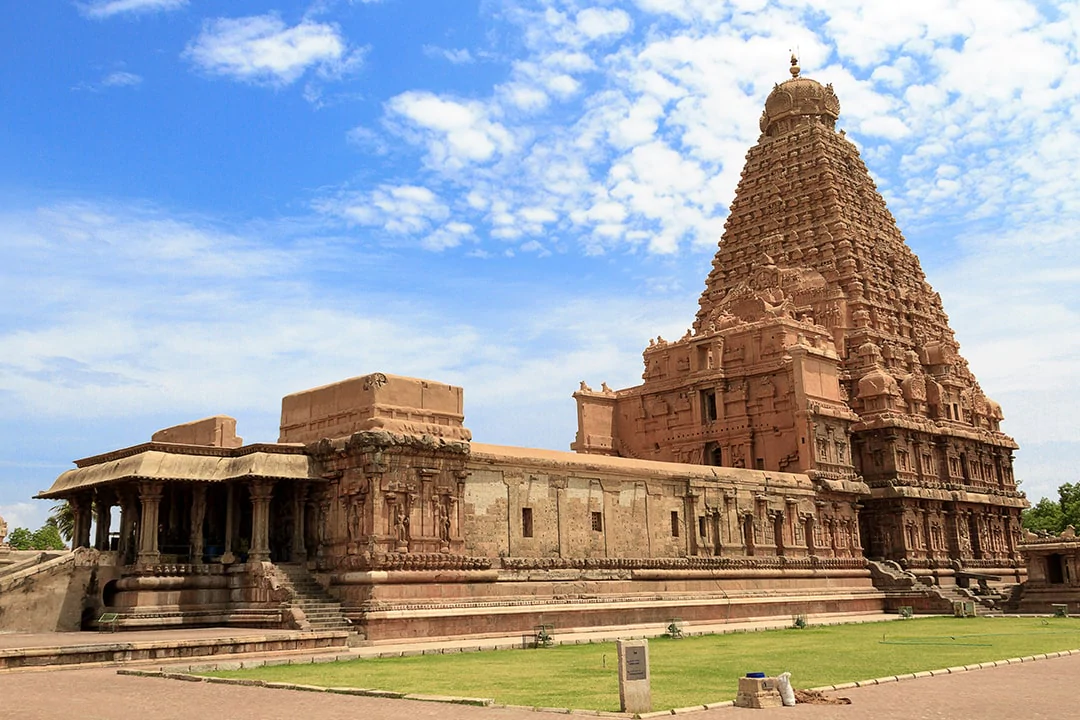
Brihadeshwara temple or Raja Rajeswara temple is located at Thanjavur, Tamil Nadu. It was built by Raj Raja Chola I.
Sun Temple at Konark, Odissa is also known as Black Pagoda. Built by Narasimhadeva 1.
Ellora temple was built during the Rashtrakuta dynasty.
The Charminar at Hyderabad was built by Mohd. Kuli Qutub Shah in 1591 to commemorate the end of plague in the city.
Kailash temple is located at Ellora, Maharashtra.
Moti Masjid was built by Aurangzeb.
Le Corbusier designed the planned city of Chandigarh.
Bimal Patel is the architect of India’s new Parliament building.
Golconda fort is in Hyderabad, Telengana. It was bult by Sultan Quli Qutub ul Mulk.
The Vesara style of temple architecture mainly evolved, practised, and developed by the influence of the Chalukyas of Kalyani.
Jagannath Temple (Puri) is believed to be constructed in the 12th century by King Anatavarman Chodaganga Deva of the Eastern Ganga Dynasty.
Known as the “Architect of the Poor”, Laurie Baker was responsible for the revolutionised mass housing concept in Kerala.
G Wittet designed the Gateway of India in Mumbai, borrowing several elements of Mughal style
The Victoria terminus station in Mumbai is an example of Victorian Gothic revival architecture in India, deriving themes from Indian traditional architecture. It was designed by FW Stevens.
There are 44 World Heritage Sites in India, 6th most in the world. Out of these, 36 are cultural, seven are natural, and one, Khangchendzonga National Park, is of mixed type, listed for both cultural and natural properties. India has the sixth-most sites worldwide. The first sites to be listed were the Ajanta Caves, Ellora Caves, Agra Fort, and Taj Mahal, all of which were inscribed in the 1983 session of the World Heritage Committee. The most recent site listed is the Maratha Military Landscapes of India, in 2025.
Italy has the most UNESCO World Heritage Sites with a total of 60. It is followed by China with 59 sites, and then Germany with 54
Uttar Pradesh is the Indian state with the most international airports. As of 2025, it has five international airports: Chaudhary Charan Singh International Airport in Lucknow, Lal Bahadur Shastri International Airport in Varanasi, Kushinagar International Airport, Maharishi Valmiki International Airport in Ayodhya, and Noida International Airport in Jewar.
Maharashtra is the Indian state with the highest number of UNESCO World Heritage Sites, boasting a total of 5 sites. These include the Ajanta Caves, Ellora Caves, Elephanta Caves, Chhatrapati Shivaji Maharaj Terminus, and the Western Ghats (a natural site).
Tamil Nadu is the Indian state with the most temples. It’s often referred to as the “land of temples” due to the sheer number of Hindu temples found there, estimated to be over 400,000.
The oldest church in India is believed to be the St. Thomas Syro-Malabar Church in Palayur, Kerala, which is said to have been established in 52 AD by St. Thomas the Apostle.
To get Saptarshi Sir’s guidance for PSC Miscellaneous Mains/ Clerkship Main/ English/Economy or for overall WBCS or other exam preparation, call or WhatsApp us @6295350330. Classes for PSC Miscellaneous Main and Clerkship Main have already started. WBCS New batch is also going on. You can also download our app for online guidance using the link
The UNSC is – theoretically – the most powerful political UN body, with a mandate to maintain international peace and security. It has 15 members: five permanent and 10 elected. The five permanent members are China, France, Russia, the United Kingdom and the United States. The non-permanent members are elected for a term of two years. The Security Council can establish peacekeeping operations, impose sanctions or arms embargoes, instruct human rights investigations, authorize the use of force, create international criminal tribunals and refer cases to the International Criminal Court.
The US made a proposal to India in August 1950 through the Indian Ambassador in the U.S. It expressed the American desire to remove China from permanent membership of the UNSC and possibly replace it with India. Nehru allegedly refused to take this suggestion seriously and thus abdicated India’s opportunity to become a permanent member of the UNSC. However, the complexity of the international situation might justify Nehru’s stance then.
The above events took place in August 1950 when the Cold War was in its early stages. The two superpowers were in eyeball-to-eyeball confrontation that threatened nuclear catastrophe. The People’s Republic of China had just emerged from a bloody civil war and was seen at the time as the Soviets’ closest ally. It was prevented from taking its permanent seat in the UNSC because of American opposition based on Cold War logic. Furthermore, war was intense in the Korean peninsula. The U.S. and allied troops were locked in fierce combat with North Korean forces supported by China and the Soviet Union.
Nehru, at that time, was trying to carve a policy that ensured India’s security, strategic autonomy and state-led industrialisation. He anticipated that pushing China out, as the U.S. wished to do, would result in a perpetual conflict that could engulf all of Asia. To him, the Korean War appeared a forerunner to more such conflicts in Asia that could even turn nuclear. The U.S. had dropped nuclear bombs on Japan only 5 years ago and it would possibly not hesitate to do so again in an Asian conflict. This is especially since nuclear deterrence had not become a recognised reality then. So given these, Nehru did not want India to get embroiled in hazardous Cold War conflicts as it would risk India’s own security. He understood that peace could not be assured in Asia without accommodating a potential great power like China.
To be precise, America’s proposal was not an offer but merely a vague sensor to explore Indian reactions to such a contingency. The U.S. intended the offer to be a bait to attract India into an alliance with the West against the Sino-Soviet bloc. The US aimed at pulling India into the “defence” organisations that it was setting up in Asia to contain the presumed “Communist expansionism”. Nehru was well aware of this and the fact that Washington was only interested in using India for its own ends. Had India accepted the American bait, it would have meant enduring enmity with China without the achievement of a permanent seat in the UNSC. Moreover, even if accepted, the Soviet Union, then China’s closest ally, would have vetoed such move. As, it would have required amendment of the UN Charter that is subject to the veto of the permanent members. It would have also strained the relations between India and the Soviet Union, affecting the possibility of a close political and military relationship with Moscow later. The ties, in fact, became necessary once the U.S. entered into an alliance relationship with Pakistan. Moreover, the Indo-Soviet relationship paid immense dividends to India during the Bangladesh war of 1971.
Over the years since then there has been much talk of late about the possibility of India joining the UN Security Council (UNSC) as a permanent member, while most of the current permanent members have expressed public support for expansion of the UNSC.
India has been falling far short of its domestic and international human rights obligations, and its desire to expand its role in the UN presents an opportunity to assess its record of engagement as a member of other UN political bodies, including the UN Human Rights Council (UNHRC).
It’s important to review India’s pattern of engagement with the human rights architecture as a whole, including with the Office of the High Commissioner for Human Rights (OHCHR) and UN human rights treaty bodies.
Indian politicians have argued for decades that the nation deserves to be a member of the United Nations Security Council (UNSC). An aspirational superpower, India believes that it has been unfairly denied a seat at the high table.
Several visiting foreign political dignitaries and international coalitions that have pushed for UNSC reforms have also voiced support for India’s candidacy for permanent membership of the Security Council. However, despite persistent lobbying by India, experts are not hopeful of change in the near future.
There are four key challenges India must overcome before it secures veto power in the United Nations.
China’s Opposition
Among the five permanent security council members all except China – the United States, the United Kingdom, France, and Russia – have categorically supported India’s candidature in the past. As a close competitor of India in regional and international politics, China is unwilling to endorse New Delhi’s position.
China is the only Asian country with a permanent Security Council seat. This adds to its power and international prestige, and China is unlikely to want to share this space with India. What’s more, particularly amid an ongoing border dispute with India, China will resist any attempt by any of the four members to change the composition of the UNSC.
China is also uncomfortable with Japan, a close U.S. ally that, like India, is a strong contender for a permanent seat. Comprising Brazil, Germany, India, and Japan, the G-4 countries support each other’s bids for permanent seats on the Security Council.
China has unofficially dropped hints that it may back India, provided New Delhi doesn’t endorse Japan’s bid. China knows that New Delhi will not break the unity of the G-4 and thus, considers it is a safe bet to pit India against Japan.
Disagreement on Membership Without Veto Power
Some parties have raised the prospect of India gaining UNSC membership without veto power.
Groups including Uniting for Consensus (UfC) – a powerful coalition led by Italy, with other members including Canada, Mexico, Spain, Pakistan, South Korea, and Turkey – have advocated reinforcing the working of the General Assembly and increasing the number of non-permanent members.
Its argument is that the addition of non-permanent members will make the U.N. more accountable and representative by accommodating relevant regional voices in the decision-making process. In doing so, the group argues, this solution would mean there are more than a few select chief custodians of the international system.
But there are questions about what happens if India gets a high seat without veto power. Could this be considered a piecemeal approach toward achieving the larger objective?
Despite some parties saying they prefer this kind of arrangement, New Delhi is not comfortable with this proposition. India’s position is that all new permanent members to the Security Council must possess a veto. Thus, it is unlikely this outcome will unfold.
Western Concerns that India May Not Align with U.S. Priorities
The United States has, in principle, endorsed India gaining a permanent seat on the Security Council. But not everyone believes U.S. policymakers will actually support such a reform in practice.
Indeed, in the past, P-5 countries have displayed “a habit of being non-commital” when it comes to actual decision-making on veto powers. As former U.S. Under Secretary of State for Political Affairs Nicholas Burns said in 2008: “We want to preserve the veto, and we do not want to extend a veto to new permanent members.”
Prominent U.S.-based South Asian expert Ashley Tellis recently penned a piece in Foreign Affairs magazine arguing that the United States cannot be sure of India’s support on significant strategic matters. Ashley later defended this position in an interview, saying “the current war in Ukraine is a good example … India defines its interest in ways that are not always identical to our own.”
It is true that India has not always voted with the West in the United Nations and has maintained an independent position on several critical subjects (e.g., India abstaining on the Russian invasion of Ukraine). Due to this, many think India is a fence-sitter and see it as an unreliable partner. Despite developing closer strategic ties with the West, India remained uncommitted on supporting sanctions on Russia. While China’s response was anticipated, for the West, foot dragging by New Delhi in criticizing Russia was no less than a shock.
In these changed circumstances, it is difficult to imagine that the West, particularly the U.S., will go ahead with a reformed Security Council where India has veto power.
The Regional Conundrum
India also faces formidable challenges to its leadership emanating from its own region. India influences the region, but not in absolute terms. Indeed, as instability in the region has increased, so too have New Delhi’s troubles.
South Asia has, for example, become a battleground of India-China competition. And while the India-Pakistan rivalry captures most attention, there are major India-related issues that agitate people in Nepal, Bangladesh, Sri Lanka, the Maldives, and even in Bhutan.
With its recent change of government, Bangladesh is no longer on the same page. Queries over India’s regional leadership raises questions over its claims to be a global power.
What is Next for India?
There are convincing arguments that the U.N. is in desperate need of reform, particularly the Security Council. Expanding the Security Council’s membership to include developing countries like India would benefit the U.N. and the international community. However, New Delhi must make more concerted efforts to address criticisms to further legitimize its demand for permanent membership.
India’s geographical, political, and social influence in South Asia cannot be ignored. Recent criticism around its increasing political intolerance – which is directly linked to the state of democracy in India – must be addressed and resolved.
India’s failure to improve its ranking in the Human Development Index, the issue of economic inequality, and its lack of world-class infrastructure all contribute to the nation’s global image.
Therefore, there are structural and more prominent geopolitical factors that overshadow India’s chances to acquire Security Council permanent membership.
India needs better engagement with the region and much more internal work to strengthen its claim further.
For getting our guidance for PSC Miscellaneous Mains, pls call or whatsapp now- 6295350330
The United Nations is an international organization founded in 1945 after the Second World War by 51 countries committed to maintaining international peace and security, developing friendly relations among nations and promoting social progress, better living standards and human rights.
Despite the problems encountered by the League of Nations in arbitrating conflict and ensuring international peace and security prior to World War II, the major Allied powers agreed during the war to establish a new global organization to help manage international affairs. This agreement was first articulated when U.S. President Franklin D. Roosevelt and British Prime Minister Winston Churchill signed the Atlantic Charter in August 1941. The name United Nations was originally used to denote the countries allied against Germany, Italy, and Japan. On January 1, 1942, 26 countries signed the Declaration by United Nations, which set forth the war aims of the Allied powers.
As the Second World War raged, the leaders of the United Kingdom, China, the United States and the Soviet Union, under intense pressure from the press and public, discussed the details of a post-war organization. In 1944 representatives meeting at Dumbarton Oaks in Washington, DC, prepared a blueprint for an international organization. Towards the end of the war representatives of 50 countries gathered in San Francisco between April and June 1945 to hammer out the final text that would lay the foundations of international cooperation. This was the Charter of the United Nations, signed on 26 June by 50 countries. Poland, the 51st country, was not able to send a representative to the San Francisco conference but is considered an original member.
Purposes of the United Nations
Due to its unique international character, and the powers vested in its founding Charter, the Organization can take action on a wide range of issues, and provide a forum for its Member States to express their views.
The UN has 4 main purposes
To keep peace throughout the world;
To develop friendly relations among nations;
To help nations work together to improve the lives of poor people, to conquer hunger, disease and illiteracy, and to encourage respect for each other’s rights and freedoms;
To be a centre for harmonizing the actions of nations to achieve these goals.
Structure and Organization of the United Nations The Charter established six principal organs of the United Nations: the General Assembly, the Security Council, the Economic and Social Council, the Trusteeship Council, the International Court of Justice, and the Secretariat. The United Nations family, however, is much larger, encompassing 15 agencies and several programmes and bodies
General Assembly
The General Assembly is the main deliberative organ of the UN and is composed of representatives of all Member States. The work of the United Nations year-round derives largely from the mandates given by the General Assembly. Comprising all Member States of the United Nations, it provides a unique forum for multilateral discussion of the full spectrum of international issues covered by the Charter. The General Assembly is the main deliberative, policymaking and representative organ of the UN. All 193 Member States of the UN are represented in the General Assembly, making it the only UN body with universal representation. Each year, in September, the full UN membership meets in the General Assembly Hall in New York for the annual General Assembly session, and general debate, which many heads of state attend and address. Decisions on important questions, such as those on peace and security, admission of new members and budgetary matters, require a two-thirds majority of the General Assembly. Decisions on other questions are by simple majority. The General Assembly, each year, elects a GA President to serve a one-year term of office.
Security Council
The Security Council has primary responsibility, under the UN Charter, for the maintenance of international peace and security. The Council is composed of five permanent members – China, France, Russian Federation, the United Kingdom and the United States – and ten non-permanent members. The non-permanent members are elected by the General Assembly for two-year terms. Each Council member has one vote. Decisions on procedural matters are made by an affirmative vote of at least nine of the 15 members. Decisions on substantive matters require nine votes, including the concurring votes of all five permanent members. This rule is often referred to as the “veto” power. A reform of the Security Council, including its membership, is under consideration.
Since its first meeting, the Security Council has taken permanent residence at the United Nations Headquarters in New York City.
Economic and Social Council
The Economic and Social Council (ECOSOC) is the principal organ to coordinate the economic, social and related work of the United Nations and the specialized agencies and institutions. Voting in the Council is by simple majority; each member has one vote. The United Nations Economic and Social Council (ECOSOC) is headquartered in New York City
International Court of Justice
The International Court of Justice, located at the Hague in the Netherlands, is the principal judicial organ of the United Nations. It settles legal disputes between States and gives advisory opinions to the UN and its specialized agencies. Its Statute is an integral part of the United Nations Charter.
Trusteeship Council
The Trusteeship Council was established in 1945 by the UN Charter to provide international supervision for 11 Trust Territories placed under the administration of 7 Member States, and ensure that adequate steps were taken to prepare the Territories for self-government and independence. By 1994, all Trust Territories had attained self-government or independence. Its work completed, the Council has amended its rules of procedure to meet as and where occasion may require.
Secretariat
The Secretariat – an international staff working in duty stations around the world – carries out the diverse day-to-day work of the Organization. It services the other principal organs of the United Nations and administers the programmes and policies laid down by them.
At its head is the Secretary-General, who is appointed by the General Assembly on the recommendation of the Security Council for a five-year, renewable term. The Secretary-General is a symbol of United Nations ideals and a spokesman for the interests of the world’s peoples, in particular the poor and vulnerable among them.
The duties carried out by the Secretariat are as varied as the problems dealt with by the United Nations. These range from administering peacekeeping operations to mediating international disputes, from surveying economic and social trends and problems to preparing studies on human rights and sustainable development. Secretariat staff also inform the world’s communications media about the work of the United Nations; organize international conferences on issues of worldwide concern; and interpret speeches and translate documents into the Organization’s official languages.
As international civil servants, staff members and the Secretary-General answer to the United Nations alone for their activities, and take an oath not to seek or receive instructions from any Government or outside authority. Under the Charter, each Member State undertakes to respect the exclusively international character of the responsibilities of the Secretary-General and the staff and to refrain from seeking to influence them improperly in the discharge of their duties.
The United Nations, while headquartered in New York, maintains a significant presence in Addis Ababa, Bangkok, Beirut, Geneva, Nairobi, Santiago and Vienna, and has offices all over the world. Currently, the United Nations has 193 Member States.
How does a country become a Member of the United Nations?
Membership in the United Nations, in accordance with the Charter, “is open to all peace-loving States that accept the obligations contained in the United Nations Charter and, in the judgment of the Organization, are able to carry out these obligations”. The recognition of a new State or Government is an act that only other States and Governments may grant or withhold. It generally implies readiness to assume diplomatic relations. The United Nations is neither a State nor a Government, and therefore does not possess any authority to recognize either a State or a Government. As an organization of independent States, it may admit a new State to its membership or accept the credentials of the representatives of a new Government.
States are admitted to membership in the United Nations by decision of the General Assembly upon the recommendation of the Security Council. The procedure is briefly as follows:
The State submits an application to the Secretary-General and a letter formally stating that it accepts the obligations under the Charter.
The Security Council considers the application. Any recommendation for admission must receive the affirmative votes of 9 of the 15 members of the Council, provided that none of its five permanent members have voted against the application.
If the Council recommends admission, the recommendation is presented to the General Assembly for consideration. A two-thirds majority vote is necessary in the Assembly for admission of a new State.
Membership becomes effective the date the resolution for admission is adopted.
Funding
The UN budget for 2024 was $3.59 billion, not including additional resources donated by members, such as peacekeeping forces. Including specialized agencies of the UN, the UN System Chief Executives Board for Coordination reports total expenses of $67.4 billion in 2022 for 43 United Nations entities.
The UN is financed from assessed and voluntary contributions from its member states. The General Assembly approves the regular budget and determines the assessment for each member. This is broadly based on the relative capacity of each nation to pay, as measured by its gross national income (or GNI), with adjustments for external debt and low per capita income.
The Assembly has established the principle that the UN should not be unduly dependent on any one member to finance its operations. Thus, there is a “ceiling” rate, setting the maximum amount that any member can be assessed for the regular budget. In December 2000, the Assembly revised the scale of assessments in response to pressure from the United States. As part of that revision, the regular budget ceiling was reduced from 25% to 22%. For the least developed countries (or LDCs), a ceiling rate of 0.01% is applied. In addition to the ceiling rates, the minimum amount assessed to any member nation (or “floor” rate) is set at 0.001% of the UN budget ($31,000 for the two-year budget 2021–2022).
A large share of the UN’s expenditure addresses its core mission of peace and security, and this budget is assessed separately from the main organizational budget. The peacekeeping budget for the 2021–2022 fiscal year is $6.38 billion, supporting 66,839 personnel deployed in 12 missions worldwide. UN peace operations are funded by assessments, using a formula derived from the regular funding scale that includes a weighted surcharge for the five permanent Security Council members, who must approve all peacekeeping operations. This surcharge serves to offset discounted peacekeeping assessment rates for less developed countries. The largest contributors to the UN peacekeeping budget for 2023–2024 are: the United States (26.94%), China (18.68%), Japan (8.03%), Germany (6.11%), the United Kingdom (5.35%), France (5.28%), Italy (3.18%), Canada (2.62%), South Korea (2.57%) and Russia (2.28%).
Special UN programmes not included in the regular budget, such as UNICEF and the World Food Programme, are financed by voluntary contributions from member governments, corporations, and private individuals.
Awards
A number of agencies and individuals associated with the UN have won the Nobel Peace Prize in recognition of their works. Two secretaries-general, Dag Hammarskjöld and Kofi Annan, were each awarded the prize; as were Ralph Bunche, a UN negotiator, René Cassin, a contributor to the Universal Declaration of Human Rights, and the American Secretary of State Cordell Hull for his role in the organization’s founding. Lester B. Pearson, the Canadian Secretary of State for External Affairs, was awarded the prize in 1957 for his role in organizing the UN’s first peacekeeping force to resolve the Suez Crisis.
UNICEF won the prize in 1965, the International Labour Organization in 1969, the UN Peacekeeping Forces in 1988, the International Atomic Energy Agency (which reports to the UN) in 2005, and the UN-supported Organisation for the Prohibition of Chemical Weapons in 2013. The UN High Commissioner for Refugees was awarded the prize in 1954 and 1981, becoming one of only two recipients to win the prize twice. The UN as a whole was awarded the prize in 2001, sharing it with Annan. In 2007, the IPCC received the prize “for their efforts to build up and disseminate greater knowledge about man-made climate change, and to lay the foundations for the measures that are needed to counteract such change.
UN Programs
UNDP
Headquarters: New York City, USA
The United Nations Development Programme (UNDP) works in nearly 170 countries and territories, helping to eradicate poverty, reduce inequalities and build resilience so countries can sustain progress. As the UN’s development agency, UNDP plays a critical role in helping countries achieve the Sustainable Development Goals.
UNEP
Headquarters: Nairobi, Kenya
The United Nations Environment Programme (UNEP) established in 1972, is the voice for the environment within the United Nations system. UNEP acts as a catalyst, advocate, educator and facilitator to promote the wise use and sustainable development of the global environment.
UNFPA
Headquarters: New York City, USA
The United Nations Population Fund (UNFPA) is the lead UN agency for delivering a world where every pregnancy is wanted, every birth is safe, and every young person’s potential is fulfilled.
UN-HABITAT
Headquarters: Nairobi, Kenya
The mission of the United Nations Human Settlements Programme (UN-HABITAT) is to promote socially and environmentally sustainable human settlements development and the achievement of adequate shelter for all.
UNICEF
Headquarters: New York City, USA
The United Nations Children’s Fund (UNICEF) works in 190 countries and territories to save children’s lives, to defend their rights, and to help them fulfil their potential, from early childhood through adolescence.
WFP
Headquarters: Rome, Italy
The World Food Programme aims to eradicate hunger and malnutrition. The world’s largest humanitarian agency, WFP helps almost 100 million people in approximately 88 countries with assistance every year through food or cash distributions and more. The World Food Programme was awarded the Nobel Peace Prize in 2020.
UN Specialized Agencies
The UN specialized agencies are autonomous international organizations working with the United Nations. All were brought into relationship with the UN through negotiated agreements. Some existed before the First World War. Some were associated with the League of Nations. Others were created almost simultaneously with the UN or later.
FAO
Headquarters: Rome, Italy
The Food and Agriculture Organization leads international efforts to fight hunger. It is both a forum for negotiating agreements between developing and developed countries and a source of technical knowledge and information to aid development.
ICAO
Headquarters: Montreal, Canada
The International Civil Aviation Organization develops standards for global air transport and assists its 192 Member States in sharing the world’s skies to their socio-economic benefit.
IFAD
Headquarters: Rome, Italy
The International Fund for Agricultural Development, since it was created in 1977, has focused exclusively on rural poverty reduction, working with poor rural populations in developing countries to eliminate poverty, hunger and malnutrition; raise their productivity and incomes; and improve the quality of their lives.
ILO
Headquarters: Geneva, Switzerland
The International Labour Organization promotes international labour rights by formulating international standards on the freedom to associate, collective bargaining, the abolition of forced labour, and equality of opportunity and treatment.
IMF
Headquarters: Washington, DC, USA
The International Monetary Fund fosters economic growth and employment by providing temporary financial assistance to countries to help ease balance of payments adjustment and technical assistance. The IMF currently has $28 billion in outstanding loans to 74 nations.
IMO
Headquarters: London, United Kingdom
The International Maritime Organization has created a comprehensive shipping regulatory framework, addressing safety and environmental concerns, legal matters, technical cooperation, security, and efficiency.
ITU
Headquarters: Geneva, Switzerland
The International Telecommunication Union is the United Nations specialized agency for information and communication technologies. It is committed to connecting all the world’s people – wherever they live and whatever their means. Through our work, we protect and support everyone’s fundamental right to communication.
UNESCO
Headquarters: Paris, France
The United Nations Educational, Scientific and Cultural Organization focuses on everything from teacher training to helping improve education worldwide to protecting important historical and cultural sites around the world.
UNIDO
Headquarters: Vienna, Austria
The United Nations Industrial Development Organization is the specialized agency of the United Nations that promotes industrial development for poverty reduction, inclusive globalization and environmental sustainability.
UN Tourism
Headquarters: Madrid, Spain
The World Tourism Organization is the United Nations agency responsible for the promotion of responsible, sustainable and universally accessible tourism.
UPU
Headquarters: Bern, Switzerland
The Universal Postal Union is the primary forum for cooperation between postal sector players. It helps to ensure a truly universal network of up-to-date products and services.
WHO
Headquarters: Geneva, Switzerland
The World Health Organization is the directing and coordinating authority on international health within the United Nations system. The objective of WHO is the attainment by all peoples of the highest possible level of health. Health, as defined in the WHO Constitution, is a state of complete physical, mental and social well-being and not merely the absence of disease or infirmity.
WIPO
Headquarters: Geneva, Switzerland
The World Intellectual Property Organization protects intellectual property throughout the world through 23 international treaties.
WMO
Headquarters: Geneva, Switzerland
The World Meteorological Organization facilitates the free international exchange of meteorological data and information and the furtherance of its use in aviation, shipping, security, and agriculture, among other things.
World Bank
Headquarters: Washington, DC, USA
The World Bank focuses on poverty reduction and the improvement of living standards worldwide by providing low-interest loans, interest-free credit, and grants to developing countries for education, health, infrastructure, and communications, among other things. The World Bank works in over 100 countries.
International Bank for Reconstruction and Development (IBRD)
International Centre for Settlement of Investment Disputes (ICSID)*
International Development Association (IDA)
International Finance Corporation (IFC)
Multilateral Investment Guarantee Agency (MIGA)*
* International Centre for Settlement of Investment Disputes (ICSID) and Multilateral Investment Guarantee Agency (MIGA) are not specialized agencies in accordance with Articles 57 and 63 of the Charter, but are part of the World Bank Group.
Other Entities and Bodies
UNAIDS
Headquarters: Geneva, Switzerland
The Joint United Nations Programme on HIV/AIDS (UNAIDS) leads and inspires the world to achieve its shared vision of zero new HIV infections, zero discrimination and zero AIDS-related deaths. UNAIDS unites the efforts of 11 UN organizations—UNHCR, UNICEF, WFP, UNDP, UNFPA, UNODC, UN Women, ILO, UNESCO, WHO and the World Bank—and works closely with global and national partners towards ending the AIDS epidemic by 2030 as part of the Sustainable Development Goals.
UNHCR
Headquarters: Geneva, Switzerland
The United Nations High Commissioner for Refugees – UNHCR protects refugees worldwide and facilitates their return home or resettlement.
UNIDIR
Headquarters: Geneva, Switzerland
The United Nations Institute for Disarmament Research is a voluntarily funded autonomous institute within the United Nations. An impartial actor, the Institute generates ideas and promotes action on disarmament and security. UNIDIR brings together states, international organizations, civil society, the private sector and academia to work together—internationally, regionally and locally—to build and implement creative solutions that will benefit all states and peoples.
UNITAR
Headquarters: Geneva, Switzerland
An autonomous UN body established in 1963, the United Nations Institute for Training and Research is a training arm of the United Nations System, and has the mandate to enhance the effectiveness of the UN through diplomatic training, and to increase the impact of national actions through public awareness-raising, education and training of public policy officials.
UNOPS
Headquarters: Copenhagen, Denmark
The mission of the United Nations Office for Project Services is to help people build better lives and help countries achieve peace and sustainable development. UNOPS helps the UN, governments and other partners to manage projects, and deliver sustainable infrastructure and procurement in an efficient way.
CTBTO
Headquarters: Vienna, Austria
The Preparatory Commission for the Comprehensive Nuclear-Test-Ban Treaty Organization promotes the Comprehensive Nuclear-Test-Ban Treaty (which is not yet in force) and the build-up of the verification regime so that it is operational when the Treaty enters into force.
IAEA
Headquarters: Vienna, Austria
The International Atomic Energy Agency, is the world’s centre for cooperation in the nuclear field. The Agency works with its Member States and multiple partners worldwide to promote the safe, secure and peaceful use of nuclear technologies.
ICC
Headquarters: The Hague, Netherlands
The International Criminal Court investigates and, where warranted, tries individuals charged with the gravest crimes of concern to the international community: genocide, war crimes, crimes against humanity and the crime of aggression. As a court of last resort, it seeks to complement, not replace, national courts.
IOM
Headquarters: Geneva, Switzerland
The International Organization for Migration works to help ensure the orderly and humane management of migration, to promote international cooperation on migration issues, to assist in the search for practical solutions to migration problems and to provide humanitarian assistance to migrants in need, including refugees and internally displaced people.
OPCW
Headquarters: The Hague, Netherlands
The Organisation for the Prohibition of Chemical Weapons is the implementing body of the Chemical Weapons Convention (CWC), which entered into force in 1997. OPCW Member States work together to achieve a world free of chemical weapons.
UNFCCC
Headquarters: Bonn, Germany
The UNFCCC Secretariat (UN Climate Change) was established in 1992 when countries adopted the United Nations Framework Convention on Climate Change (UNFCCC). With the subsequent adoption of the Kyoto Protocol in 1997 and the Paris Agreement in 2015, Parties to these three agreements have progressively reaffirmed the Secretariat’s role as the United Nations entity tasked with supporting the global response to the threat of climate change.
WTO
Headquarters: Geneva, Switzerland
The World Trade Organization is a forum for governments to negotiate trade agreements, and a place where member governments try to sort out the trade problems, they face with each other.
ITC
Headquarters: Geneva, Switzerland
The International Trade Centre (ITC) is the only development agency that is fully dedicated to supporting the internationalization of small and medium-sized enterprises (SMEs). Established in 1964, the ITC is the joint agency of the World Trade Organization and the United Nations.
The work of the United Nations today
The work of the United Nations reaches every corner of the globe. Although best known for peacekeeping, peacebuilding, conflict prevention and humanitarian assistance, there are many other ways the United Nations and its System (specialized agencies, funds and programmes) affect our lives and make the world a better place. The Organization works on a broad range of fundamental issues, from sustainable development, environment and refugees protection, disaster relief, counter terrorism, disarmament and non-proliferation, to promoting democracy, human rights, gender equality and the advancement of women, governance, economic and social development and international health, clearing landmines, expanding food production, and more, in order to achieve its goals and coordinate efforts for a safer world for this and future generations.
Present Heads
António Guterres (Chair of CEB) Secretary-General of the United Nations
Qu Dongyu, Director-General, FAO
Gilbert F. Houngbo, Director-General, ILO
Audrey Azoulay, Director-General, UNESCO
Juan Carlos Salazar, Secretary-General, ICAO
Ajay Banga, President, World Bank Group
Kristalina Georgieva, Managing Director, IMF
Adhanom Ghebreyesus, Director-General, WHO
Celeste Saulo, Secretary-General, WMO
Arsenio Dominguez, Secretary-General, IMO
Daren Tang, Director-General, WIPO
Gerd Müller, Director-General, UNIDO
Rafael Mariano Grossi, Director-General, IAEA
Ngozi Okonjo-Iweala, Director-General, WTO
Rebeca Grynspan, Secretary-General, UNCTAD
Achim Steiner, Administrator, UNDP
Inger Andersen, Executive Director, UNEP
Filippo Grandi, High Commissioner, UNHCR
Catherine M. Russell, Executive Director, UNICEF
Challenges before the UN today.
The challenges are multifaceted. Climate change has reached an unforeseen peak. Polar ice meltdown, catastrophic storms, inundations, earthquakes have made millions of people homeless. Terrorism has shaken the very root of the whole world. The first year of the new millennium witnessed the horrifying incident of 9/11 attack on America. Even after 25 years, terrorism remains one of the principal concerns of the UN as evident in the statement of the UNSC after the heinous attacks on the civilians on the soil of J&K in India. The UNSC has “condemned in the strongest terms” the terrorist attack in Jammu and Kashmir, stressing that those responsible should be held accountable and the organisers and sponsors of this “reprehensible act of terrorism” should be brought to justice.
Preventing the spread of nuclear weapons and promoting disarmament are critical goals for the UN. The proliferation of nuclear technology and tensions between nuclear-armed states, such as the United States, Russia, and North Korea, present ongoing challenges to international security. Human Rights and Humanitarian Crises
The UN is tasked with promoting and protecting human rights worldwide. Humanitarian crises, such as those in Syria, Myanmar, and Venezuela, pose significant challenges to upholding human rights. Balancing the principles of sovereignty and the responsibility to protect is an ongoing debate within the UN system.
The 21st century has seen a significant increase in forced migration and refugee crises. Large-scale population-forced migration is a global calamity that calls for coordinated action from the international community under the direction of world leaders. A record-breaking number of migrants and refugees are crossing international boundaries to escape war, persecution, poverty, and other severe situations. Large-scale population relocation affects the social, economic, and political landscape in ways that go beyond casualties. The UN High Commissioner for Refugees (UNHCR) works to provide protection and assistance to displaced persons, but issues related to immigration policies, border control, and xenophobia have complicated efforts to address this challenge.
Political Divisions among Member States of the United Nations also remains a major concern for the UN. We have seen how the ongoing war between Russia and Ukraine has caused unimaginable sufferings to millions.
Global health concern is another area the UN has to battle with. We have seen how helpless the world felt during the Covid pandemic.
The need for UN reform is imperative to adapt to the evolving global landscape and to fulfil its mission of promoting international peace, security, and development effectively. This reform should be pursued to enhance the UN’s capacity to address current and future challenges while upholding the principles of equality, justice, and cooperation among nations. The world today is vastly different from what it was in 1945 when the UN was established. New global powers have emerged, and the geopolitical landscape has shifted dramatically. Reforming the UN’s decision-making structures, particularly the Security Council, is essential to reflect these changes and ensure equitable representation among nations. Ensuring that UN resources are allocated efficiently and transparently is essential. Reform should focus on optimising budgetary practices and eliminating waste to ensure that funds are directed toward programs that have a real impact on global development.
To get Saptarshi Sir’s guidance for English/Economy or for overall WBCS/ PSC Miscellaneous Main or other exam preparation, call or WhatsApp us @6295350330. Classes for PSC Miscellaneous Main have already started. WBCS New batch is also going on. You can also download our app for online guidance using the link
This movie has already wasted precious two and half hours of my life. So, if you plan to watch the movie, please be warned. I am honest in leaving my verdict at the beginning so that those who do not have the patience to read the whole review may skip reading and skip buying tickets for this so called ‘blockbuster’ called ‘Chhaava’.
Seeing where this nation is heading to and how Bollywood is minting money by fooling the people or by distorting history to this extent, I feel sad for the future generations. Our knowledge has come to such nadir that Sambhaji who was known for his hedonistic behaviour, debauchery and who was even arrested by his illustrious father Shivaji Maharaj or who even defected to the Mughals for personal gains, has been portrayed as a saintly warrior and none raises any objection to such a distortion of facts. We have seen the quality of biopics being made in India. We have also seen how Pakistan bashing has become our only agenda while making movies. But distorting history to this level ! Are we not unswerable to our kids ?
The movie from the very beginning loses its grip over the plot in an attempt for glorification of the central character. The opening fight scene is ludicrous and in an era when combat movies have been taken to altogether new level in international cinema by the likes of ‘John Wick 4’, ‘Raid Redemption’ or even the latest ‘Covenant’, such poorly shot action scenes made me laugh loudly in the cinema hall. In every scene, there is a distinct effort to please a section of the society. The character building is pathetic and the efforts to arouse emotion at every scene when the protagonist meets his near and dear ones lands miserably. Such a movie needs strong music or background scores to remain etched in viewer’s hearts even with all its flaws. This movie fails there and even AR Rahman the great is just a shadow of his glorious past. The opulence and grandeur needed to take such period movie to a new height is missing and its evident that the makers did not want to invest more in designing the sets. Their agenda was altogether different.
Only saving grace? The acting of Vicky Kaushal. He makes even such a thinly built character alive with his brilliant acting skills. This man with his range of acting never fails to amaze me. He made me awestruck in Sam Bahadur. And he does not fail to deliver here as well. Akshay Khanna as Aurangzeb is okayish but he pronounces every word so artificially that mostly you do not understand what he is saying. Rashmika Mandanna is just a cheap ornament as she always has been in all the movies she has featured so far. I wonder how on earth with so little acting skills, she is bagging all such roles.
By the way, in those last 35 minutes when Sambhaji was being tortured by Aurangzeb, the director leaves no stones unturned to torture the audience. You will understand what I mean if you can bear with the pain till then. No pun intended. If someone has harmed you, take a sweet revenge by gifting him or her a ticket of this show of buffoonery.
Do yourself a favour. Instead of watching this piece of Sh*t, you watch movies like ‘Glory’, ‘Saving Private Ryan’, ‘Downfall’, ‘Hidden Figures’ or ‘Platoon’ to understand how movies on history should be made.
My rating- 2 out of 10 ( One star for Vicky Kausal and the other is for those numberous crew members trying so hard in the battle scenes.)
#Chhava #Sambhaji #VickyKaushal
My latest book ’28 Days of Thinking Differently’ is available on kindle. You may read the book here
Brought to you by Adhyayan Academy, Bengal’s most trusted and loved online training institution for WBCS and other competitive examinations. We offer offline training only in Siliguri.
Days
1st April is celebrated as Odisha Foundation Day or Utkala Dibasa commemorating the date in 1936 when Odisha became a separate state after being carved out from the Bengal Presidency.
John Hubbak was the first Governor of Odisha.
Odisha:
Governor – Raghubar Das
ChiefMinister – Naveen Patnaik of Biju Janta Dal (BJD).
Capital– Bhubaneshwar.
Prevention of Blindness Week campaign is going to be organised by the Government of India from 1st to 7th April for increasing the awareness towards the blind people.
1st April 2024 marked 90 years of the Reserve Bank of India. The Finance Ministry has issued a special commemorative coin of ₹90 denomination to mark the occasion.
RBI Governor – Shaktikanta Das.
2nd April was designated by the United Nations General Assembly as World Autism Awareness Day in 2007.
Theme 2024: “Moving from Surviving to Thriving: Autistic individuals share regional perspectives”.
Easter was celebrated on 31st March this year on the first Sunday following the full moon after the vernal equinox. Easter is a ChristianFestival that celebrated the triumph of life over death. It is celebrated as a Resurrection Sunday to mark the resurrection of Jesus Christ three days after his crucifixion on Good Friday.
30th March is celebrated as the International Day of Zero Waste since 2023 by the UNEP and the UN-Habitat.
30th March 2024 also marks the 100th Year of Vaiom Satyagraha – the nonviolent social agitation against untouchability in Kerala. In those days, the people belonging to various backward classes were neither allowed temple entry nor were they allowed to walk past the roads of the Vaikom Mahadeva Temple at the Travancore State. Prominent leaders of the time including Mahatma Gandhi championed the cause of untouchability in that movement.
The Food and Agricultural Organisation (FAO) has organised the closing ceremony of the International Year of Millets 2023 on 29th March at the FAO headquarter Rome, Italy.
Appointments
Shephali Sharan has taken the charge as Principal Director General of the Press Information Bureau after the superannuation of Manish Desai.
Joyshri Das Verma becomes the New President of FICCI Ladies Organisation (FLO) – a division of the Federation of Indian Chambers of Commerce and Industry, the apex industrial and commercial body of India.
FLO is the oldest women led women centric business chamber of South East Asia.
Santosh Kumar Jha has been named as the new CMD of the Konkan Railways.
Reports and Indices
Institute for Human Development (IHD) and International Labour Organisation (ILO) has released the India Employment Report 2024:
The ‘Employment Condition Index’ of the states have improved b/w 2004-05 and 2021-22.
Bihar, Odisha, Jharkhand and UP have remained at the bottom position in this index.
Delhi, Himachal Pradesh, Telangana, Uttarakhand and Gujarat has stayed at the top of the list.
Almost 82% of the Work Force is engaged in the informal sector and 90% is informally employed.
Wages and earnings are stagnant or declining.
Youth employments of poorer quality than that of adults.
Self Employment and unpaid family work has increased among women.
The Labour Force Participation Rate (LFPR):
It was 55.2% in 2022 for adults over15 years of age, which was lower than the world average of 59.8%.
The unemployment rate had increased from 2012 to 2019 due to shrinking of employment opportunities and the trend reversed from 2019 t0 2022 due to significant growth in work force and employment opportunities.
Female LFPR declined sharply by 14.4% between 2000 to 2019 and the trend reversed b/w 2019 – 2022 with a greater increase in the LFPR by 8.3%.
There is stark gender gap in the Indian Labour Market with women’s LFPR being 2.3 times lower than the rate of men.
The dominant category of employment in India remains ‘Self-employment’.
The share of Casual employment has declined significantly from 33.3% in 2000 to 22.7% in 2022.
The unemployment rate increased among the youths with high level of education and was the highest among youths with a graduate degree or higher in 2022.
National News:
Tamil Nadu Governor R.N. Ravi has inaugurated the Param Vir Chakra Garden in Tambaram, where the statues of 21 Param Vir Chakra awardees are present along with their history.
Newly conferred GI Tags and the states:
Products
states
Products
states
Asharikandi Terracotta Craft
Assam
Bodo Dokhona (Traditional attire of Bodo women)
Assam
Pani Meteka Craft
Assam
Pachra Rignai
Tripura
Mising Handloom Products
Assam
Matabari Peda
Tripura
Sarthebari Metal Craft
Assam
Lynrai Pottery
Meghalaya
Bodo Eri Silk (Fabric of Peace)
Assam
Chubitchi
Meghalaya
Jaapi (Bamboo head gear of rural Assam)
Assam
Banaras Thandai
Uttar Pradesh
Bihu Dhol
Assam
Banaras Tabla
Uttar Pradesh
Bodo Thorkha (a musical instrument)
Assam
Banaras Shehnai
Uttar Pradesh
Bodo Sifung (a long flute)
Assam
Banaras Lal Bharwamirch
Uttar Pradesh
Bodo Jwmgra (a traditional scarf)
Assam
Banaras Lal Peda
Uttar Pradesh
Bodo Gamsa (traditional dress of Bodo men)
Assam
Obituaries
The only and esteemed Grade ‘A’ Mizo artist of All India Radio Vanhlupuii has breathed her last.
Sports
Miami Open 2024:
After Winning the Miami Open Men’s Doubles title along with his Australian partner Matthew Ebden, Rohan Bopanna became the oldest man to win a Masters 1000 title on the ATP circuit at the age of 44.
Women’s Singles: Winner – Danielle Collins, Runner Up- Elena Rybakina.
Sharfuddoula Ibne Shahid of Bangladesh becomes the first Umpire from the country to be inducted into the ICC Elite Panel of Umpires.
Indian Umpire Nitin Menon has found his place in the elite panel for 5th straight time.
The Elite Umpire’s Panel is responsible for umpiring most men’s Tests and One-Day International matches.
Spain Masters 2024 Badminton Tournament:
Winners: Men’s – Kean Yew Loh of Singapore, Women’s – Ratchanok Intanon of Thailand.
Hockey India Awards 2023:
Salima Tete (Women’s) and Hardik Singh (Men’s) have received the Hockey India Balbir Singh Senior Award for Player of the Year 2023.
Business and Finance:
Indian Oil Corporation Limited (IOCL) and Panasonic Energy has signed a pact to form a joint venture to manufacture lithium-ion cells in India.
Current Affairs 3rd April, 2024
Days
61st “National Maritime Week” or “Merchant Navy Week” is being observed from 30th March to 5th April 2024.
Theme – ‘Sustainable Shipping: Opportunities and Challenges’.
61st National Maritime Day will be celebrated on 5th April commemorating the maiden voyage of the first Indian vessel“S.S. LOYLTY” from Mumbai to London.
Obituaries
World War II veteran Subedar Thanesia of Indian Army’s Assam Regiment who participated in the Battle of Kohima and hailed from Mizorm, has died at the age of 102.
Former Asian Games Star Deanna Syme Tewarihas passed away. She represented India at the 1962 Asian Games in Jakarta and was a torch bearer in the 1982 New Delhi Asian Games.
Legendary cricketer and former Kerala Captain Ravi Achan passess away at the age of 96.
He was the first Kerala cricketer to have both 1000 runs and 100 wickets accomplished in his name.
Awards
REC (formerly known as Rural Electrification Corporation Ltd) – a ‘Maharatna’ CPSE of the Ministry of Power wins SKOCK ESG Award 2024 in Renewable Energy Financing category.
The SKOCH ESG Awards are a citation of organisations demonstrating outstanding performance in environmental, social and governance practices.
Vineet Jain, the MD of The TIMES Group has been conferred with the Lifetime Achievement award 2023 from the Exchange4media News Broadcasting Awards (ENBA) in recognition of his immeasurable contributions to the Indian television news landscape.
National
Paradip Port of Odisha becomes the highest cargo handling port of India in the FY 23-24 leaving behind Deendayal Upadhyay, Kandla Port after achieving an incredible 145.38 MMT cargo throughput.
Science
A team of scientist led by R. Ramachandran of Physical Research Laboratory, Ahmedabad has discovered strong evidence indicating the presence of Ozone on Jupiter’s moon Callisto.
Callisto is the third largest moon in the Solar System after Ganymede and Titan.
Defence
The Indian Air Force begins its biggest War Exercise “Gagan Shakti’ involving all air force station in Pokhran, Jaisalmer, Rajasthan.
This exercise is held in every five years. It will go on from April 1 to April 10.
The Indian Army is providing logistics support for this mega exercise.
IAF Chief – VR Chaudhary.
Motto of the IAF – Touch the Sky with Glory.
Sports
MS Dhoni becomes the first wicket keeper to complete 300 dismissals in T20 cricket and also become the first indian wicket keeper to score 7000 runs in T20 Cricket.
Mirabai Chanu becomes the only weightlifter of India to qualify for Paris Olympics 2024.
After beating English David Causier, Pankaj Advani retains his CCI Billiards Classic Title.
Sumit Nagal reahes his career-high ATP ranking of 95 in the Chart. He recently won the Chennai Open ATP Challenger Series.
International
Judith Suminwa Tuluka has been appointed as the first female Prime Minister of the Democratic Republic of Congo.
DRC :
Capital: Kinshasa
Currency: Congolese Franc
President: Felix Tshisekedi
Current Affairs 4th April & 5th April
Day
4th April is celebrated as the International Day of Mine Awareness and Assistance in Mine Action.
Theme: ‘Protecting Lives, Building Peace’.
5th April is celebrated as National Maritime Day in commemoration of the maiden voyage of the first Indian vessel ‘S.S. LOYLTY’ from Mumbai to London on Aril 5, 1919.
Obituaries
Juan Vincente Perez Mora, the oldest man in the world from Venezuela has breathed his last at the age of 114.
Appointments
Sanjay Singh has become the new President of ASSOCHAM (Associated Chambers of Commerce and Industry of India), the oldest apex conduit b/w the industry and the government.
Reports and Indices
Forbes’ 2024 list of the World’s Billionaires:
Total Billionaire world wide – 2781.
Indians – 200 (169 last year)
Combined wealth of the Indian Billionaires- $954 Billions (41% up from last year).
Mukesh Ambani is the 9th Richest Man of the World and top richest person of India and Asia.
World Toppers:
Bernard Arnault (Louis Vuitton) – 1st
Elon Musk – 2nd
Jeff Bezos – 3rd
US has the most number of Billionaires in the world.
World’s richest woman- Bettencourt Meyers (Granddaughter of the founder of L’Oreal).
The Carbon Majors report 2024:
Released by – Influence Map, a non-profit organization.
Findings:
From 2016 to 2022, 80% of the total CO2 emissions can be traced to a group of just 57 fossil fuels and cement producing companies.
The Top 3 CO2 emitting companies:
Saudi Arabian state powered, Saudi Aramco -1st
Russia’s state owned energy giant Gazprom – 2nd
India’s Coal India- 3rd
The report also found that most companies had expanded their fossil fuel production since 2015 after the signing of the U.N. Paris Agreement.
According to the International Energy Agency, Global energy-related CO2 emissions had hit a record high last year.
National
Bharat Aluminium Company Ltd (BALCO) of the Vedanta Group has become the first Indian company to be certified with the Aluminium Stewardship Initiative (ASI) Performance standard V3 – a citation that recognizes BALCO’s adherence to across all the three sustainability pillars – Environment, Social and Governance – for the manufacture and supply of a wide range of primary aluminium products at its Korba facility.
Former Prime Minister Manmohan Singh who served as PM of India from 2004 to 2014, has put an end to his 33 years long parliamentary stint after his membership in the Rajya Sabha ended on 3rd April.
The Election Commission of India has introduced the ‘Myth Vs Reality Register’ to combat the spread of misinformation and uphold the integrity of the election process before the upcoming General Elections 2024.
April 1 onwards the National Highways Authority of India (NHAI) has enforced the ‘One Vehicle, One FASTag’ norm that prohibits the use of a single FASTag across multiple vehicles or the association of several FASTags with one vehicle.
Election Commission has brought in Ayushman Khurrana to ‘Urge Youths to Vote’.
Science & Tech
The Kodaikanal Solar Observatory (KSO) has completed its 125 years of foundation. On 1909 the Evershed Effect, which is the phenomenon of radial motion of gases in sun spots was discovered at KSO.
President Draupadi Murmu has launched India’s first home-grown anti-cancer CAR-T cell therapy NexCAR19 at the IIT Bombay in collaboration with doctors at the TATA Memorial Centre Mumbai.
It is reportedly the most affordable CAR-T cell therapy of the world.
C-CAMP (Centre for Cellular and Molecular Platforms) , Bengaluru has developed a novel microfluidic chip-based platform named ‘OptiDrop’ to study single cells.
Hume, a New-York based research lab and technology company has introduced Empathic Voice Interface (EVI), the first conversational AI with emotional intelligence. It is powered by a empathic large language model.
Defence
Strategic Forces Command (SFC) and DRDO has successfully flight-tested the Agni-Prime medium-range nuclear capable ballistic missile with a range of 1000 to 2000 km.
Sports
Maharashtra has won the 56th National Kho-Kho Championship at the Indira Gandhi Indoor Stadium.
Arjun Erigaisi has surpassed Vishwanathan Anand to become the top rated chess player of India on the FIDE List.
International
‘Iseult’ the world’s most powerful MRI machine (11.7 Tesla) has scanned the human brain is the most detailed form ever.
The White House has directed NASA to create a ‘Coordinated Lunar Time’ or ‘Lunar Standard Time’ for the moon by the end of 2026.
The World Bank has projected India’s growth of economy at 7.5% in 2024.
South Korea’s Artificial Sun – ‘Korean Superconducting Tokamach Advanced Research (KSTAR)’ – has set a world record after sustaining and ion temperature of 100 million degree Celsius for 48 seconds.
Zimbabwe President Mnangagwa has declared national disaster over the country over drought after 80% of the country had received below normal rainfall.
A massive 7.4 magnitude earthquake has hit Taiwan. Taiwan lies very close to the ‘Ring of Fire’ – where 90% of the world’s earthquake takes place.
Current Affairs 6th,7th & 8th April, 2024
Day
6th April is observed as ‘International Day for Sport for Development’ world wide.
Theme 2024: “Sport for the Promotion of Peaceful and Inclusive Societies”
National Sports Day in India is observed on 29th August every year commemorating the birth anniversary of the Hockey Legend Major Dhyan Chand, ‘The Wizard’.
7th April is celebrated as ‘World Health Day’ commemorating the foundation of the World Health Organization in 1948.
Theme: ‘My Health, My Right’.
Obituaries
First Telugu news anchor on DoordarshanShanti Swaroop has breathed his last.
Appointments
Meenesh Shah has been elected as the Chairman of National Cooperative Dairy Federation of India Ltd. (NCDFI), the apex dairy cooperative of the country.
Wipro has appointed Srini Pallia as its new CEO & MD.
HQ of Wipro: Bengaluru.
Delhi HC has appointed its former judge Najmi Waziri, “The Green Judge” as the head of the internal departmental committee tasked with the protection of forest in the national capital.
He is referred to as ‘the Green Judge’ because of his myriad orders that resulted into plantation of over 3 lakh saplings.
National
Former canoeist from Jammu and Kashmir, Bilquis Mir becomes the first Indian woman who is going to serve as a jury member at Paris Summer Olympics 2024 starting from July 26.
She also served as a jury member at the Asian Games 2023, Hangzhou, China.
Sitar and Tanpuras from Miraj town of Sangli district gets GI tag from Maharashtra. The famous craft dates back to more than 300 years in the place of its origin.
Defence Research and Development Organization (DRDO) is going to build a small test center for various weapons in the Junput Village of West Bengal.
The new facility is also situated by the Bay of Bengal like Odisha’s Chandipur Integrated Test Range (ITR).
Sri Sri Sugunendra Theertha Swamiji of Sri Puthige Matha, Udupi, Karnataka, has started the ‘Koti Gita Lekhana Yajna’ initiative at Udupi Matha where over 1 crore people from across the globe are expected to write the entire Bhagavad Gita by hand in the language of their choice, over the next two years and offer it at the feet of Lord Sri Krishna at Udupi.
The initiative has garnered praise of the PM.
SJVN Ltd., a Miniratna CPSE under the Ministry of Power, has been awarded the 15th CIDC Vishwakarma Awards 2024 in the honor of its Corporate Social Responsibility Contribution (CSIR) for the 3rd consecutive year.
Archaeologists have unearthed a lead coin hoard from the Ikshvaku period in Phanigiri of Suryapet, Telangana – containing 3730 lead coins with elephant symbol on one side and Ujjain symbol on the other side. The coins date back b/w 3rd to 4th CE.
Defence
The Ministry of Defence organized a tri-service conference ‘Parivartan Chintan’ for the purpose of achieving enhanced unity and integration among the army, navy and the air force on 8th April in New Delhi. It was chaired by CDS Anil Chauhan.
INS Sharda has been awarded ‘On the Spot Unit Citation’ by the Indian Navy for recently conducting successful anti-piracy operations that involved safe release of 19 crew members from the Iranian Vessel Omari in the East Coast of Somalia from Sea pirates of Somalia.
Finance
RBI on its recent Monetary Policy Committee meeting, has kept the Repo rate unchanged at 6.5% for 7th consecutive time in a row.
The RBI has allowed foreign investors registered in IFSC (International Financial Services Centre) to invest in Sovereign Green Bonds. Currently, only the FPI investors registered in the SEBI are allowed to invest in SGrBs under different routes.
Sports
Bindyarani Devi has won the Bronze Medal in Women’s 55kg category in the IWF World Cup 2024 held in Phuket, Thailand.
International
Philippines is going to hold joint Naval Drills with U.S., Japan and Australia in the South China Sea to counter China’s expanding influence in the Asia-Pacific region.
China claims 90% of the South China Sea based on its U-shaped nine-dash line that was etched on map in the 1940s by a Chinese geographer.
Current Affairs 9th-10th April, 2024
Day
10th April gets observed as ‘World Homeopathy Day’ in commemoration of the birth anniversary of Dr. Samuel Hahnemann, the father of modern homeopathy.
Theme 2024: “Homeoparivar: One Health, One Family”.
On 9th April 2024, Hindu New Year – Vikram Sambat 2081 – fell on the Pratipada of Shukla Paksha in the Chaitra month. This occasion of New Year is observed throughout the whole country in different names around the same time of the year:
‘Ugadi’ in Andhra Pradesh, Telangana and Karnataka.
‘GudiPadwa’ in Maharashtra.
‘Navreh’ in Jammu & Kashmir.
‘SajibuCheiraoba’ in Manipur.
‘ChetiChand’ by the Sindhi Community.
‘Vaishakhi’ in the Punjab-Haryana.
‘PohelaBoisakh’ by the Bengali Community in West Bengal.
‘RongaliBihu’/ ‘BohagBihu’ in Assam.
‘Vishu’ in Kerala.
‘Puthandu’ in Tamil Nadu.
On 7th April, on the occasion of UN International Day of Reflection on the 1994 Genocide against the Tutsi in Rwanda, the Qutub Minar was lit up in the color of Rwanda’s National Flag in remembrance of the Rwanda Genocide of 1994.
The Rwandan Genocide , known as Kwibuka 30 – one of the deadliest bloodshed mayhem of the 20th Century – happened due to the ethnic clash between the 8.4% Tutsi population of Rwanda (who happened to elicit more favors under the Belgian Colonialism due to their ethnic proximity) and the 85% Hutus population who were socio-culturally backward in the country.2
In the 1959, with the rising tide of African revolutions against the Colonial forces, the Hutus revolted against the Belgian colonialists. But after the Hutus gaining independence in 1962, the Tutsi refugees threatened them a coup.
Amid this prolonged conflict and insurgence of a Uganda based Rwandan Patriotic Front (RPF) , in 1990 a civil war had broken out in Rwanda b/w the RPF and the Rwandan Government that resulted in the deadly genocide.
Rwanda:
Capital – Kigali.
Currency – Rwandan Franc (RWF).
Appointments
The Government of India has appointed Manoj Panda as the new full time members of the 16th Finance Commission after Niranjan Rajyadhyaksha expressed his inability to join the commission.
The Sixteenth Finance Commission consists of various members and a chairman that is appointed by the President of India. It also consists of one secretary post. The list is as follows:
Chairman – Arvind Panagariya, former vice-Chairman of NITI Aayog
Member – Ajay Narayan Jha, former member, 15th Finance Commission and former secretary, Expenditure
Member – Annie George Mathew, former special secretary, Expenditure
Member – Soumya Kanti Ghosh, Group Chief Economic Advisor, State Bank of India.
Secretary – Ritvik Ranjanam Pandey, IAS.
Air India has appointed Jayaraj Shanmugam as the new head of its Global Airport Operations.
Obituaries
Telangana Senior IPS Officer Rajjiv Ratan who was serving as the DG of Telangana Vigilance and Enforcement has passed away due to cardiac arrest.
Books and Authors
Father of Indian Telecom revolution and the Father of Yellow Revolution, Sam Pitroda has launched his new book ‘The Idea of Democracy’.
National News
Before the onset of the General Elections, the Election Commission of India has launched the ‘Suvidha Portal’ for the sake of developing a single window to process all the election permissions for applications to organize rallies, opening temporary party offices, door-to-door canvassing, obtaining vehicle permits etc.
GAIL (India) Ltd has won the prestigious CIDC- Vishwakarma award for Barauni-Guwahati Pipeline in the ‘Achievement Award for Best Construction Projects’ category. This 718 km Pipeline of Bihar-West Bengal – Assam has connected the North East India with the National Gas Grid for the first time.
On a recent verdict, the Allahabad High Court upheld that ‘Kanyadaan’ is not a mandatory ritual in Hindu Marriage. But the ‘Saptapadi’ or ‘Saat Pheras’ is regarded as the marriage’s fundamental ritual as per section 7 of the Hindu Marriage Act, 1955.
The conditions of the Hindu Marrriage Act, 1955 which encompasses the Hindu, Sikh, Buddhist and the Jain community under its ambit due to such provisions under Article 25(2) of the Indian Constitution, lays down following conditions:
“Section 5. A marriage may be solemnized between any two Hindus, if the following conditions are fulfilled, namely-
neither party has a spouse living at the time of the marriage
at the time of the marriage, neither party
is incapable of giving a valid consent to it in consequence of unsoundness of mind; or
though capable of giving a valid consent, has been suffering from mental disorder of such a kind or to such an extent as to be unfit for marriage and the procreation of children;
the bridegroom has completed the age of twenty-one years at the time of the marriage;
the parties are not within the degrees of prohibited relationship unless the custom or usage governing each of them permits of a marriage between the two;
the parties are not sapindas of each other, unless the custom or usage governing each of them permits of a marriage between the two.”
The Sangeet Natak Academy is going to organize ‘Shakt- a festival of Music and Dance’ at seven different Shaktipeets, starting from the Kamakhya Temple, Guwahati and ending at Maa Harsidhi Temple, Ujjain.
After the Ministry of External Affairs has approved the India Ports Global’s (IPGL’s) proposal to take over the entire operations of the Sittwe Port situated on the Kaladan River of Myanmar, Sittwe port becomes the 2nd Global port of India.
1ST Global Port of India- the Shahid Beheshti Port, Chabahar of Iran.
State news
Punjab
The ‘Booth Raabta‘ website has been launched in Punjab to provide election related information to the people.
Defence
Coastal security ‘Exercise Sagar Kavach 2024’ – begins in the Lakshadweep islands among the Navy, Coast Guards, Marine Police and Fisheries and other security stakeholders of the sea.
The Indian Army has received 24 Igla-S Man Portable Air Defense System (MANPADS) from Russia along with 100 missiles to deploy at the Line of Actual Control as an enhancement to the army’s Very Short Range Air Defense (VSHORAD) capabilities in the high mountains.
Environment, Science & Technology
A recent scientific expedition that came across 532 dead Adelie penguins have suggested the possibility of the outbreak of Bird Flu – H5N1 Virus – in Antarctica.
H5N1 is a Type A Influenza which is called ‘bird flu’ when it affects the Avian creatures and is called ‘Swine Flu’ when affects the Pigs. It is highly infectious.
The Tata Advanced Systems Ltd (TASL) has launched India’s first private earth observation satellite – TSAT-1A – in collaboration with the USA based company “Satellogic” from the Kennedy Space center, Florida.
Sports
After beating Italy’s Matteo Arnaldi in the first round, Sumit Nagal becomes the first Indian in four decades to win a Monte Carlo Masters Singles main draw.
Only Vijay Amritraj and Ramesh Krishnan were the other Indians to feature in Monte Carlo before him.
Max Verstappen of Red Bull has won the Japanese F1 Grand Prix.
Indian origin American golfer Akshay Bhatia has won the Valero Texas Open.
Russ Cook of Britain becomes the first person on Earth to run the entire
International News
Peter Pellegrini has been elected as the new President of Slovakia.
Slovakia: Capital – Bratislava , Currency – Euro.
John Alfred Tinniswood of England becomes the oldest living person on earth with an age of 111 years, following the expiry of 114 year old Juan Vincente Perez of Venezuela.