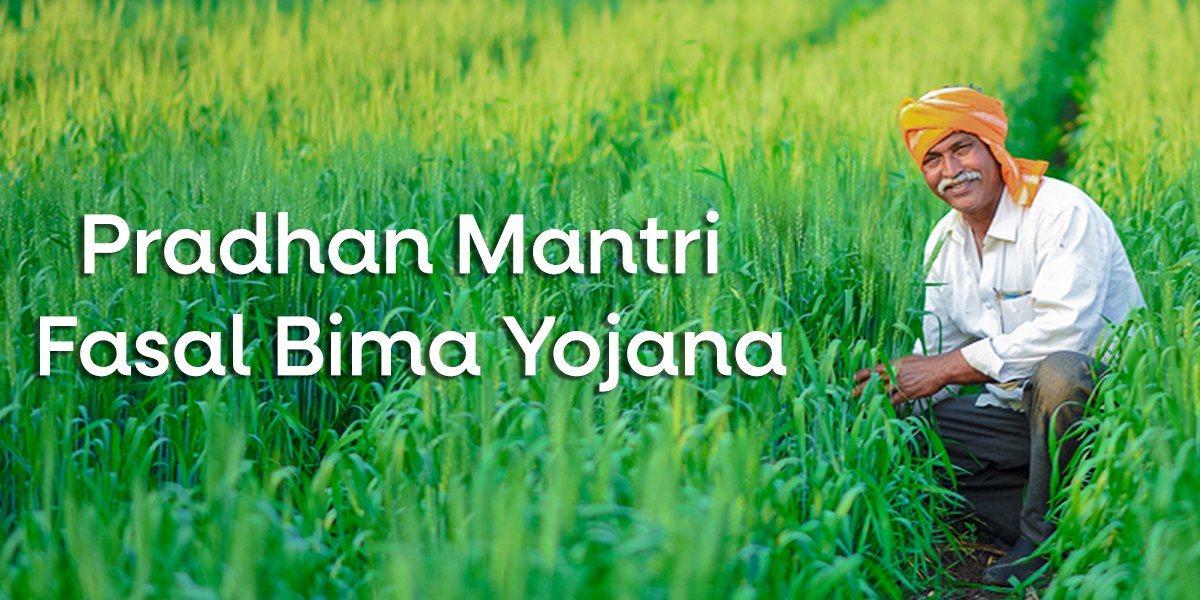
Launched on 18th February 2016, PMFBY is a crop insurance scheme by the Department of Agriculture, Cooperation, and Farmers’ Welfare, Ministry of Agriculture. PMFBY aims to provide financial protection to farmers against crop loss due to natural disasters (hail, drought, famine), pests, and diseases. PMFBY provides crop insurance at a cost-effective premium to all Indian farmers. It is implemented through a network of insurance companies and banks. Department of Agriculture, Cooperation & Farmers Welfare (DAC&FW), Ministry of Agriculture & Farmers Welfare (MoA&FW) and the concerned State are the implementing agencies.
Risk Coverage:
Natural Disasters: Includes floods, droughts, cyclones, hailstorms, landslides, and unseasonal rainfall.
Pest & Disease Coverage: Protects against pest attacks and crop diseases.
Post-Harvest Losses (Individual Farm Basis): Compensation for damage within 14 days of harvest, especially for crops kept in “cut and spread” condition.
Localised Calamities: The government provides compensation for localised calamities on an individual farm basis.
Prevented Sowing (on Notified Area Basis): If most insured farmers in a notified area are unable to sow due to adverse weather despite intent and incurred costs, they can claim up to 25% of the sum insured as indemnity.
Key Initiatives under PMFBY
DigiClaim: Under it all the claims are worked out through National Crop Insurance Portal (NCIP).
CROPIC (Collection of Real Time Observations and Photo of Crops).
Weather Information Network Data Systems (WINDS) portal.
Yield Estimation System, based on Technology (YES-TECH) Manual.
Door enrolment app AIDE/Sahayak.
Forecasting Agricultural output using Space, Agro- meteorology and Land based observations (FASAL) project.
National Agricultural Drought Assessment and Monitoring System (NADAMS).
ISRO’s Geo-platform, Bhuvan, provides data on plantation, pest surveillance and weather.
The Parliamentary Standing Committee on Agriculture had given several recommendations on reforming the Scheme. These include: (a) Using technology and the coordination of all institutional mechanisms to ensure faster claim settlement; (b) Implementing timeline for settlement of claims by insurance companies; (c) Uploading the contact details of official insurance companies on the insurance portal so that they are accessible to farmers; (d) Penalising defaulting insurance companies in a time-bound manner; (e) Ensure the formulation of GRCs in all States. Nominate local public representatives (including Members of Parliament) in the
Challenges
First, Fiscal Burden on States: The Scheme limits farmer’s share of actuarial premium to 1.5-5%. The rest was to be shared equally by the Union and State Governments. However, in 2020 the Government capped its share to 25%-30% (irrigated and unirrigated areas respectively). This has increased the fiscal burden of States. Consequently, many States have opted out.
Second, Delayed Pay-outs and Denial of Claims: There are frequent disputes related to compensation. Farmers complain the compensation paid by insurance companies is less than the losses. There are long delays in payments, sometimes up to 18 months. Yield-related disputes, delayed transmission of yield data and delay in release of their share in premium subsidy by State Governments are the major reasons for delays in settlement of claims.
Farmers claim that the private insurers are not following the assessment by the government officials based on Crop Cutting Experiments (CCEs) and rejecting many claims on the basis of their own assessment.
Third, Implementation Issues: Farmers face hurdles in uploading the documents and claiming damages as network connectivity is poor in rural areas.
Under the scheme, both Public and Private insurance companies bid their premium rates for a district in a State. The lowest bidder is awarded the contract to provide insurance under the scheme for one agricultural season only. This discouraged the companies from investing in that district in terms of awareness activities, assigning personnel or setting up offices. This led to farmer grievances.
In 2020, the Government has increased the contract duration to 3 years in one district (6 agriculture seasons). It is hoped that companies would set up help centres and employ more personnel to gather yield data and faster claim settlement.
Fourth, Absence of Grievance Redressal Committees (GRCs): Only 15 States and UTs have notified GRCs at both the State and District level, as mandated under the PMFBY scheme. Farmers are left with no resort in case of under-payment or delay in claim settlement.
Fifth, Opposition from States: Several states have demanded amendments in the scheme.
Sixth, Opposition from Farm Leaders: Farm leaders claim insurance companies have made windfall gains at the behest of the public exchequer and farmers. Data from Maharashtra show that Insurance companies often earn more in premiums than paid in claims. However, for some years the trend is opposite.
Way forward
Ensure timely release of premium subsidy: To maintain strict financial discipline, subsidy payment should be streamlined through an escrow account jointly administered by the State government and the Centre.
Also, all financial transactions (subsidy or claims) shall be routed through the National Crop Insurance Portal (NCIP).
Presence of insurance companies in every tehsil of the district: It will be crucial for farmers in order to mitigate the problems faced in availing the scheme benefits.
Penalties for companies: Effectively penalising defaulters in a time-bound manner.
Adoption of smart sampling techniques: By all states using technological interventions such as satellite data or the use of drones.
Corporate Social Responsibility (CSR): Insurance companies can plan to spend a share of their profits towards CSR in the districts from where profits are earned. Farm insurance is critical to provide income security to the farmers. The Union and State Governments must take appropriate steps to remove all the bottlenecks in the proper implementation of the scheme
The first HMPV Virus case in India is detected in Bengaluru.
Nine miners are killed in the flooding of a coal mine in Dima Hasao district, Assam.
The Andhra Pradesh government launched the “Mana Mitra” initiative. This programme aims to enhance governance through WhatsApp.
The Sonamarg Tunnel in Jammu and Kashmir is inaugurated in a ceremony attended by Prime Minister Narendra Modi
The Nagoba Jatara is an important tribal festival celebrated by the Mesram clan of Adivasi Gonds in Keslapur village, Telangana. This eight-day event started on January 28
Elephant Spotted in Namdapha National Park, Arunachal Pradesh after 12 Years.
The India-Middle East-Europe Economic Corridor (IMEEC) is gaining momentum with recent initiatives by RITES. This project aims to enhance trade and connectivity between India and the Middle East.
Gujarat Biodiversity Board announced the designation of the ‘Inland Mangrove Guneri’ in Kutch as the state’s first Biodiversity Heritage Site (BHS).
Actor Saif Ali Khan is stabbed by an unknown man during an alleged robbery at his Mumbai residence.
Indore and Udaipur became the first cities from the country to be accredited as Wetland Cities under the Ramsar Convention.
Kanuma Panduga is a vibrant festival celebrated in Andhra Pradesh, India, coinciding with the Makar Sankranti harvest celebrations.
Tamil Nadu unveiled India’s First Glass Sea Bridge.
The chief guest for the 2025 parade was Prabowo Subianto, the President of Indonesia, marking his first visit to India as President after assuming office in October 2024
The Pravasi Bharatiya Samman Award has been awarded to Christine Carla Kangaloo, the President of Trinidad and Tobago.
CRED became the first fintech company to launch a beta version of its e-rupee wallet, enabling transactions using India’s central bank digital currency (CBDC).
Punjab National Bank (PNB) made headlines by becoming the first Indian bank to implement Clari5’s National Cybercrime Reporting Portal (NCRP) Integration Solution.
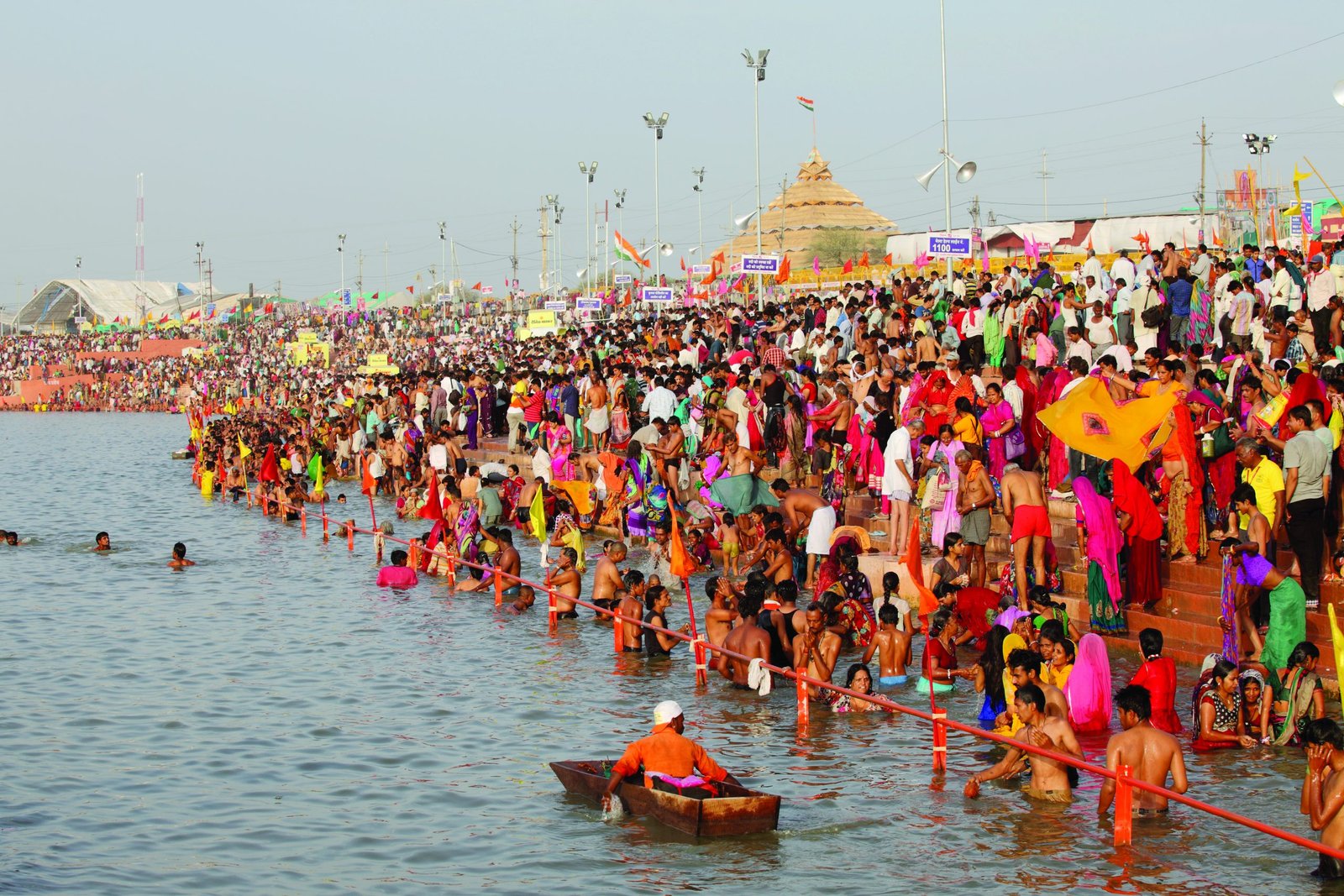
13 January–26 February: 2025 Prayag Maha Kumbh Mela
Uttar Pradesh’s Chief Minister Yogi Adityanath inaugurated ‘Maa Ki Rasoi’ on January 10, 2025. This community kitchen initiative aims to provide affordable meals for the economically weaker sections. This initiative is alleged to be a copy of West Bengal’s Maa canteen scheme.
The Unified Pension Scheme (UPS) was officially notified on January 24, 2025. This scheme offers government employees a new choice for retirement benefits
Tamil Nadu has witnessed a concerning rise in the number of dead olive ridley turtles washing ashore, particularly in Chennai.
The Bima Sakhi Yojana was recently launched in Goa, aiming to provide insurance access to all citizens.
Madhya Pradesh has recently taken step towards prohibition by banning liquor sales in 17 religious towns.
The National Tribal Health Conclave 2025 took place on 20th January 2025 at Bharat Mandapam, New Delhi.
On January 7, 2025, the Government of India announced the appointment of V Narayanan as the new Chairman of the Indian Space Research Organisation (ISRO)
Mission Mausam was inaugurated by Prime Minister Narendra Modi on January 14, 2025. This initiative marks the 150th anniversary of the India Meteorological Department (IMD)
Larsen & Toubro (L&T) successfully launched the second multi-purpose vessel (MPV) for the Indian Navy, named INS Utkarsh.
Assam Chief Minister Himanta Biswa Sarma announced that Dibrugarh would be upgraded to a full-fledged city and serve as the second capital of Assam.
India Meteorological Department (IMD) reported that 2024 was the hottest year in India since records began in 1901.
The Government of India launched a revamped e-auction portal named ‘Baanknet’.
IIT Madras partnered with the Ministry of Agriculture and Farmer Welfare to launch Project VISTAAR. This initiative aims to enhance the agricultural extension system through digitalisation.
10 Years of UJALA Scheme the UJALA scheme, launched on 5th January 2015, has transformed India’s approach to energy efficiency. This initiative was initially known as the Domestic Efficient Lighting Programme
India’s first tactical quasi-ballistic missile, Pralay was showcased at the Republic Day parade
India’s First Green Hydrogen Hub Launched in Pudimadaka, Anakapalli district, Andhra Pradesh.
The Lokpal of India has designated January 16 as “Lokpal Day”.
Nimisha Priya, an Indian nurse from Kerala, is on death row in Yemen for the 2017 killing of a Yemeni national.
India’s Ministry of Defence declared 2025 as the “Year of Reforms.”
Thirteen people are killed and 15 others are injured after a passenger train collides with a group of people that disembarked from another train following a false fire alarm near Pachora, Maharashtra2025 Delhi Legislative Assembly election: The Bharatiya Janata Party wins a two-thirds majority in the Delhi Legislative Assembly. Rekha Gupta became the CM of Delhi
India won the 2025 ICC Champions Trophy for a record third time, in Dubai
N. Biren Singh resigned as the Chief Minister of Manipur amid ongoing ethnic violence in the state
The Union Government imposed President’s rule in Manipur amid ongoing ethnic violence in the state
The Government announced the successful Operation Black Forest against Naxal insurgents
Eight members of the same family were killed in an explosion caused by a gas cylinder at a house that doubled as an illegal firecracker factory in Patharpratima, West Bengal
Haryana-based travel YouTuber influencer and Jyoti Malhotra was arrested on suspicion of spying for Pakistan following a history of travel to the country
Shubhanshu Shukla becomes the second Indian, after Rakesh Sharma in 1984, to go to outer space, as group captain of the Axiom Mission 4 which takes off from the Kennedy Space Center in the United States
Karnataka-based writer Banu Mushtaq won the 2025 International Booker Prize for her short story anthology Heart Lamp, which is also the first Kannada language work to win the award
The Sachet mobile application, launched by the National Disaster Management Authority (NDMA), aims to improve disaster preparedness in India
AI Kiran is a national movement launched to promote women’s leadership in Artificial Intelligence (AI) in India. As the nation’s AI market is projected to reach $17 billion by 2027, the initiative aims to address the gender disparity in this rapidly evolving field. It is co-led by the Office of the Principal Scientific Adviser (PSA) to the Government of India, Verix (Blockchain-powered credentialing platform) and INK Women
In development for environmental conservation, Similipal has been designated as a national park by the Odisha government. This formal notification marks the culmination of decades of efforts to protect this vital ecological area. Spanning 845.70 square kilometres, Similipal is now the largest national park in Odisha and the 107th in India
The Government of India has initiated the National Manufacturing Mission to enhance the Make in India initiative. Announced during the Union Budget of 2025, this mission aims to increase manufacturing’s contribution to India’s GDP. Currently, manufacturing accounts for 16-17% of GDP, and the government seeks to elevate this share
The NITI Aayog has recently released a report titled ‘Enhancing MSMEs Competitiveness in India’. It was developed in collaboration with the Institute for Competitiveness, outlines strategies to unlock the potential of Micro, Small and Medium Enterprises (MSMEs) in India. The report identifies systemic reforms necessary in financing, skilling, innovation, and market access to boost MSME competitiveness
In a landmark event, Uttar Pradesh has become the first state in India to enable night landings for fighter jets on an expressway. This achievement was marked by the Indian Air Force (IAF) conducting trials on a newly constructed 3.5-kilometre airstrip along the Ganga Expressway in Shahjahanpur
The Odisha government has launched Sahajog, a groundbreaking initiative aimed at enhancing access to government welfare schemes for the urban poor. Officially inaugurated on May 1, 2025, it seeks to bridge the gap between urban poverty and available state assistance
Recently, the India Meteorological Department (IMD) reported that 2024 was the warmest year in India’s recorded history
Recently, the Supreme Court of India recognised digital access as a fundamental right under Article 21 of the Constitution. This landmark judgement mandates that the state must provide an inclusive digital ecosystem
The Ramman festival is an important cultural event in Uttarakhand. Celebrated annually in the villages of Saloor-Dungra, it showcases the region’s rich traditions.
Recently, the Government of Andhra Pradesh made strides towards establishing India’s first Quantum Computing Village in Amaravati. This initiative aims to create a pioneering ecosystem for quantum computing research and collaboration. The project is backed by the Real-Time Governance Society (RTGS) and is set to occupy 50 acres of land. The facility will serve as a hub for institutions and companies to access advanced quantum computing resources
The Pink E-Rickshaw initiative launched in Maharashtra aims to empower women by providing them with eco-friendly transportation options
On April 16, 2025, India’s Railway Minister Ashwini Vaishnaw announced the successful breakthrough of the country’s longest rail tunnel at Janasu in Uttarakhand. This milestone is part of the Rishikesh-Karnaprayag Broad Gauge Rail Link Project. A tunnel breakthrough happens when two tunnel ends being dug meet, marking a key phase in tunnel construction. The breakthrough coincided with the 172nd anniversary of India’s first railway service
India is on the brink of advancement in its nuclear energy sector with the commissioning of its first Prototype Fast Breeder Reactor (PFBR) in Kalpakkam, Tamil Nadu. This marks the second stage of India’s three-stage nuclear programme aimed at recycling spent fuel and minimising radioactive waste. The PFBR is expected to be operational by 2025-26, following approval from the Atomic Energy Regulatory Board
Amaravati, the upcoming capital of Andhra Pradesh, is set to make history as the first city globally to operate entirely on renewable energy. This ambitious project aims to harness 2,700 megawatts of green energy through solar, wind, and hydropower. The initiative aligns with India’s commitment to clean energy and climate action
Garia Puja has its origins in the tribal traditions of Tripura. Initially observed by specific communities, it has evolved into a broader celebration. The festival marks the beginning of the Tripuri calendar month of Boishakh.
The Central Government is considering extending Mission Anveshan. This initiative incentivises seismic surveys to map oil and gas deposits. Launched in fiscal year 2025, the programme aims to boost energy security by identifying new reserves.
The Maharashtra government has recently mandated the teaching of Hindi as a third language in schools. This decision aligns with the National Education Policy (NEP) 2020. It affects both Marathi and English medium schools for students in classes 1 to 5. The change aims to enhance language skills and promote inclusivity
The “Mahila Samvad” campaign was launched by Bihar Chief Minister Nitish Kumar to enhance women’s empowerment. This initiative aims to connect women with state welfare measures
Madhya Pradesh Forest Department has successfully bred and prepared six vultures for release into the wild. This initiative aims to boost the endangered vulture population and enhance ecological balance
apan is set to enhance India’s high-speed rail capabilities by providing two shinkansen trains for free. These trains, models E5 and E3, will serve as test vehicles for the Mumbai-Ahmedabad bullet train project. This initiative marks step in India’s ambition to develop its first high-speed rail network
The PM Vidyalaxmi scheme was launched to support meritorious students in India. This initiative aims to provide financial assistance for higher education through collateral-free loans. Despite its noble intentions, the scheme has faced challenges in its implementation. Public sector banks have reported technical issues and a slow uptake of applications
The rise in notified paediatric tuberculosis (TB) cases in India has become public health concern. Recent data indicates a 38 per cent increase in cases among children aged up to 14 years from 2020 to 2024. This surge is attributed to various factors, including malnutrition and the lingering effects of the Covid-19 pandemic
In a landmark ruling, the Supreme Court of India has established that the President must provide clear reasons when withholding assent to a bill. This ruling comes after the court’s interpretation of Article 143 of the Constitution of India, which allows the President to seek the Supreme Court’s opinion on legal questions.
Recently, Maharashtra signed an MoU with Russia’s state-owned company ROSATOM for the development a Small Modular Reactor (SMR). This initiative is notable as it is the first time a state government has ventured into nuclear energy development, traditionally under the purview of the Department of Atomic Energy (DAE)
India’s Defence Research and Development Organisation (DRDO) recently completed successful release trials of the Long-Range Glide Bomb (LRGB) named ‘Gaurav’. Conducted from April 8 to 10, 2025, these trials took place using the Sukhoi-30MKI fighter aircraft
West Bengal has recently received Geographical Indication (GI) tags for seven traditional products. This recognition includes popular items like ‘Nolen Gurer Sandesh’ Nolen Gurer Sandesh – A winter delicacy made from chhena and date palm jaggery, cherished for its unique flavour.
Kamarpukur’s White Bonde – A traditional sweet known for its rich taste.
Murshidabad’s Chhanabora – A well-known sweetmeat made from chhena.
Bishnupur’s Motichur Laddoo – Famous for its delightful taste.
Radhunipagal Rice – Valued for its unique flavour and quality.
Malda’s Nistari Silk Yarn – Renowned for its smooth texture and sheen
India is set to enhance its naval capabilities with the commissioning of INS Varsha, a strategic naval base for nuclear submarines in coastal Andhra Pradesh. This initiative aims to counter China’s expanding naval presence in the Indian Ocean Region. The base, located near Rambilli, is designed to provide a secure and advanced facility for India’s nuclear submarines, ensuring operational readiness and stealth
The Digital Threat Report 2024 marks step in enhancing cybersecurity within the Banking, Financial Services, and Insurance (BFSI) sector in India. Launched by the Ministry of Electronics and Information Technology, this report aims to address the escalating cyber threats faced by financial institutions. It marks the urgency for a unified cybersecurity framework to protect the financial backbone of the country
The Sri Lanka Mitra Vibhushana is the highest civilian honour awarded by Sri Lanka. It recognises foreign leaders who have encourageed strong ties with the nation. Recently, Prime Minister of India Narendra Modi received this award during his state visit to Sri Lanka
The issue of cryptocurrency regulation in India has gained attention due to recent legal challenges faced by investors and exchanges. The National Consumer Disputes Redressal Commission (NCDRC) recently dismissed a plea from investors claiming losses from a major hack at WazirX, a prominent crypto exchange. This dismissal marks the ongoing ambiguity surrounding cryptocurrency’s legal status in India
Recently, Assam launched the ‘Lakhpati Baideo’ programme. This initiative aims to empower women entrepreneurs through financial support and training. Chief Minister Himanta Biswa Sarma announced the scheme, which targets 40 lakh women self-help group (SHG) members. The programme is designed to enhance women’s financial independence and promote rural entrepreneurship
Recently, West Bengal launched a groundbreaking initiative aimed at eradicating mother-to-child transmission of HIV, syphilis, and Hepatitis B by 2026. This project, known as the ‘Triple Elimination’ initiative, is a collaborative effort involving the West Bengal government, the William J Clinton Foundation, and the World Health Organization
India’s external debt reached approximately $718 billion. This marked an increase of 10.7 per cent from the previous year. The surge in debt is attributed mainly to non-financial corporations seeking funds for infrastructure projects. The data shows rise in both short-term and long-term debts
India’s position in the World Economic Forum’s Global Gender Gap Index has declined . Recently, India ranked 131st out of 148 countries. This fall is attributed to a worsening situation in political empowerment. While economic participation, educational attainment, and health have shown improvements, political representation remains a pressing issue
Bihar is set to become one of the first states in India to establish a nuclear power plant. This initiative is part of the country’s new Nuclear Energy Mission. This decision is as it comes ahead of the assembly elections in Bihar
The Government of India has announced a detailed caste Census in Himachal Pradesh, set to begin in 2026. This initiative aims to gather comprehensive data on the caste composition of the state, which has a diverse demographic landscape
India achieved milestone by securing a position among the top 100 countries in the United Nations Sustainable Development Goals (SDGs) Index. This ranking is part of the Sustainable Development Report, which evaluates the progress of nations in achieving the 17 SDGs established in 2015. India ranks 99th out of 193 countries, scoring 67 points
In 2026, the Ministry of Statistics and Programme Implementation (MoSPI) will conduct India’s first comprehensive Household Income Survey. This initiative aims to provide a clearer picture of household incomes across the nation
India’s naval capabilities are set to receive boost with the commissioning of INS Tamal on July 1, 2025, in Kaliningrad, Russia. This frigate is the last of the Krivak class to be built outside India, marking a very important moment in the Indian Navy’s transition towards self-reliance under the ‘Atmanirbhar Bharat’ initiative
In 2024, Foreign Direct Investment (FDI) into India remained stable at $28 billion. This figure was consistent with 2023 levels despite a global decline in FDI flows by 11%. The United Nations Conference on Trade and Development (UNCTAD) brought into light India’s resilience in attracting investment, moving up to the 15th position in global FDI rankings
The Sugamya Bharat App (SBA) is a vital initiative by the Government of India aimed at improving accessibility for persons with disabilities and elderly citizens. Launched in 2021 by the Department of Empowerment of Persons with Disabilities, this app has undergone revamp to enhance user experience and effectiveness
The Election Commission of India initiated a special intensive revision of electoral rolls in Bihar. This decision comes ahead of the state assembly elections. The revision aims to ensure the accuracy and integrity of the electoral rolls. Existing electors not on the rolls since 2003 must provide documentation to establish their eligibility
The Government of India initiated Operation Sindhu to evacuate Indian nationals from Iran amid escalating tensions in the region. The conflict between Israel and Iran had intensified, prompting urgent measures to ensure the safety of Indian citizens
The introduction of water metro services in Patna is poised to revolutionise the city’s transport landscape
India’s position in the Global Gender Gap Report 2025 has deteriorated, ranking 131 out of 148 countries. This marks a decline from 129 in 2024. The report, released on June 12, 2025, marks India’s gender parity score of 64.1%
Kerala has approached the Union government with a proposal to amend the Wildlife Protection Act of 1972. The aim is to allow the state to cull wild animals that threaten human life and property. The urgency arises from rise in human-wildlife conflicts in the region
The Government of India launched the Ayush Nivesh Saarthi portal. This initiative aims to position India as a global leader in traditional medicine and wellness. The launch took place during the Ayush Stakeholder/Industry Interaction Meet in New Delhi. The event was attended by key government officials and industry leaders. This portal marks step in transforming India’s wellness systems into a robust economic sector
Tamil Nadu government has established a Greater Flamingo Sanctuary at Dhanushkodi, coinciding with World Environment Day. This sanctuary aims to protect migratory bird habitats and enhance biodiversity in the region
India is set to conduct its next population census by March 1, 2027. This census will be unique as it will be the first digital census in the nation’s history. It will also include a caste enumeration, development since caste data has not been collected in previous censuses. The last census took place in 2011, and the planned census for 2021 was delayed due to the COVID-19 pandemic
The Government of India is taking steps to combat substance abuse by establishing District De-Addiction Centres (DDACs) in 291 identified gap districts. These districts lack adequate infrastructure for treating and rehabilitating individuals struggling with substance dependence. This initiative is part of the National Action Plan for Drug Demand Reduction, spearheaded by the Ministry of Social Justice and Empowerment
The NAKSHA programme, initiated by the Government of India, aims to reform urban land surveys using advanced geospatial technologies. As urban populations surge, the need for accurate land records becomes critical
India launched Bharat Gen, a groundbreaking Artificial Intelligence (AI) initiative. This multimodal Large Language Model (LLM) is designed to cater to the diverse linguistic and cultural landscape of India. The initiative was revealed at the BharatGen Summit, the largest event focused on Generative AI in the country. Bharat Gen is a product of the National Mission on Interdisciplinary Cyber-Physical Systems (NM-ICPS) and is supported by the Department of Science and Technology (DST). It aims to revolutionise AI applications across various sectors
The DHRUVA initiative is a groundbreaking digital policy introduced by the Department of Posts in India. Launched in 2025, it aims to reshape how address information is structured and utilised across the nation. DHRUVA stands for Digital Hub for Reference and Unique Virtual Address. This initiative builds on the earlier Digital Postal Index Number (DIGIPIN) system, enhancing the effectiveness of address data as a critical component of Digital Public Infrastructure (DPI)
The India–UK Free Trade Agreement marks a new era in economic diplomacy for both nations. With substantial tariff eliminations, mobility agreements, and safeguards for sensitive sectors, the FTA balances ambition with pragmatism. It strengthens the Comprehensive Strategic Partnership between nations
Congress party in Telangana introduced a Bill aimed at increasing reservations for Backward Classes from 25% to 42%
Shaktikanta Das, the former Governor of the Reserve Bank of India (RBI), has been appointed as Principal Secretary to the Prime Minister of India
Prime Minister Narendra Modi recently attended the AI Action Summit in Paris, where he engaged in cultural diplomacy. During his meetings with French President Emmanuel Macron and US Vice President J.D. Vance
The Haryana government has recently approved new Wildlife (Protection) Rules permitting the shooting of male Nilgais, also known as blue bulls. This decision has ignited protests from environmentalists and local communities, particularly the Bishnoi community
West Bengal government has introduced the “Nodi Bandhan” scheme as part of its 2025-26 budget. The scheme will help combat natural disasters while creating job opportunities
The Securities and Exchange Board of India (SEBI) has introduced a new digital platform named Mutual Fund Investment Tracing and Retrieval Assistant (MITRA). This initiative aims to assist investors in tracking inactive or unclaimed mutual fund folios. The platform responds to concerns where investors lose track of their investments due to outdated contact information or lack of awareness regarding investments made in their name
In 2024, India ranked 96 out of 180 countries in the Corruption Perceptions Index (CPI). This was a decline from its previous rank of 93 in 2023. The CPI measures perceived levels of public sector corruption based on expert assessments and business opinions
The Pradhan Mantri Anusuchit Jaati Abhyuday Yojana (PM-AJAY) is initiative aimed at uplifting Scheduled Caste (SC) communities across India. Launched to combat poverty and enhance socio-economic conditions, the scheme focuses on generating employment and improving education. Recently, the central advisory committee convened to review its progress and strategize future actions
The BIMSTEC Youth Summit was held from 7th to 11th February 2025 in Gandhinagar, Gujarat. Organised by the Department of Youth Affairs, Government of India
Recently, Bhopal’s district collector implemented a ban on begging across all public spaces. This decision came shortly after Indore introduced similar measures
The Zika virus emerged as public health concern in Pune district, Maharashtra. In 2024, Pune accounted for 125 out of 151 confirmed cases of Zika reported across India
Recently, Myanmar experienced a catastrophic earthquake that resulted in loss of life and widespread destruction. In response, India launched ‘Operation Brahma’ to provide urgent humanitarian assistance. This operation marks India’s commitment to its ‘Neighbourhood First ‘policy and the principle of ‘Vasudhaiva Kutumbakam’, meaning the world is one family
India celebrated advancement in its naval capabilities with the launch of the stealth frigate ‘Tavasya’ on March 22, 2025. This event, held at Goa Shipyard Limited, marks a very important moment in India’s indigenous shipbuilding journey. The launch was officiated by Raksha Rajya Mantri Shri Sanjay Seth, denoting India’s commitment to self-reliance in defence
Chandrayaan-4 is India’s fourth lunar mission, set to launch in October 2027
Darjeeling’s Padmaja Naidu Himalayan Zoological Park has launched India’s first frozen zoo. This innovative facility aims to preserve the genetic material of endangered Himalayan species. In collaboration with the Centre for Cellular and Molecular Biology in Hyderabad, the zoo will store DNA samples in liquid nitrogen at minus 196 degrees Celsius
The Rajasthan Coaching Centres (Control and Regulation) Bill in 2025 aims to regulate coaching centres across the state. The government seeks to create a safer environment for students. The Bill addresses the alarming rise in student suicides linked to high-pressure coaching environments
Recently, India’s merchandise trade deficit fell to $14.05 billion. This marked the lowest level in over three years. The decline was primarily driven by contraction in both exports and imports. Factors such as decreasing global petroleum prices and economic uncertainty due to US trade practices played important role. The trade deficit for February 2024 was notably higher at $19.52 billion
Recently, the Department of Telecommunications (DoT) in India partnered with WhatsApp to combat online scams and spam through the `Scam Se Bacho` campaign. This initiative aims to educate citizens about identifying and reporting fraudulent communications. The collaboration is part of India’s broader digital safety strategy as the nation continues its digital transformation
Recently, the Reserve Bank of India (RBI) received the Digital Transformation Award from Central Banking in London. The award specifically acknowledges RBI’s initiatives, Sarthi and Pravaah, which have modernised its operations
Prime Minister Narendra Modi was awarded the Grand Commander of the Order of the Star and Key of the Indian Ocean by Mauritius. This prestigious accolade is the highest civilian honour in Mauritius. Modi is the first Indian to receive this honour
Jayshree Vencatesan, co-founder of Care Earth Trust, recently made history as the first Indian to receive the Ramsar Award for ‘Wetland Wise Use’. This prestigious global accolade recognises exceptional contributions to sustainable wetland management. The announcement coincided with International Women’s Day, denoting the role of women in environmental conservation. Vencatesan was one of twelve women honoured for their impactful work in wetland preservation
On International Women’s Day 2025, the newly elected BJP government in Delhi launched the Mahila Samriddhi Yojana. This scheme aims to provide financial support to women from economically weaker sections. Each eligible woman will receive ₹2,500 monthly
According to the World Air Quality Report 2024, India ranks as the fifth most polluted country, a slight improvement from third place in 2023
The Sharavathi pumped storage hydroelectric project (PSHP) in Karnataka has sparked controversy. The project aims to generate 2,000 MW of electricity while also supplying drinking water to Bengaluru. However, it faces fierce opposition from environmentalists and local communities concerned about ecological damage to the Western Ghats
Recently, the Madhav National Park in Madhya Pradesh was officially declared India’s 58th tiger reserve
Punjab launched ‘Project Hifazat’, a transformative initiative aimed at boosting support for women and children facing violence. The project was unveiled on the eve of International Women’s Day
The Indian government launched the Project Lion to protect and expand the population of Asiatic lions. The project was approved with a substantial budget of Rs 2,927.71 crore
February 2025 marked climatic event in India, being the hottest February recorded in the last 125 years. According to the India Meteorological Department (IMD)
India’s first dedicated space-based solar mission, Aditya-L1, has achieved milestone. On February 22, 2025, the Solar Ultraviolet Imaging Telescope (SUIT) onboard Aditya-L1 captured the first-ever image of a solar flare ‘kernel’ in the lower solar atmosphere. This observation is crucial for understanding solar activity and its effects on Earth
1971 3–16 December Third war with Pakistan, culminating in the creation of Bangladesh
Himachal Pradesh becomes the 18th Indian state
A cyclone in the Bay of Bengal, in Orissa State in India, kills 10,000.
16 December – Victory Day of Bangladesh: The Pakistan Army surrenders to the Joint Force i.e. Mukti Bahini (Freedom Force) and the Indian Armed Forces, officially ending the Bangladesh Liberation War and creating the new nation state of Bangladesh.
24th Constitutional amendment act:
Affirmed the power of Parliament to amend any part of the constitution including Fundamental Rights.
India defeated West Indies in Port of Spain Trinidad for the first time ever to clinch the rubber 1-0. Sunil Gavaskar creates world record for scoring 774 runs in four tests. Ajit Wadekar was the captain.
India defeated England in the third and the final Test at the Oval. This happens to be India’s first victory ever on the English soil.
Contempt of Courts Act, 1971
North-Eastern Council Act, 1971
North-Eastern Areas (Reorganisation) Act, 1971
Twenty-year treaty of friendship signed with Soviet Union.
1972 Manipur, Tripura and Meghalaya get statehood.
Japan Air Lines Flight 471 crashed at Palam, Delhi killing 82 of the 87 on board.
India and Bangladesh sign a friendship treaty, after the withdrawal of the Indian troops.
Following Pakistan’s surrender to India in the Indo-Pakistani War of 1971, both nations sign the historic bilateral Simla Agreement, agreeing to settle their disputes peacefully.
Expulsion of Indians from Uganda under Idi Amin regime
M. G. Ramachandran, forms the All-India Anna Dravida Munnetra Kazhagam by splitting from Dravida Munnetra Kazhagam starting a new phase in Dravidian movement
Jharkhand Mukti Morcha was formed for independent statehood of Jharkhand from Bihar on birthday of Birsa Munda
Armed Forces (Assam and Manipur) Special Powers (Amendment) Act amended to include new states and union territories of Northeast India.
Supreme Court of India began hearing of Kesavananda Bharati v. State of Kerala case
Wild Life (Protection) Act, 1972 enacted.
Postal Index Number (PIN Code) introduced in India.
India won Bronze in Hockey in Olympics. India’s only medal in that edition.
1973 P. V. Narasimha Rao resigns as Chief minister of Andhra Pradesh following the resignation of ministers from Coastal Andhra post the 1972 Jai Andhra movement.
Verdict of Kesavananda Bharati v. State of Kerala pronounced. Supreme Court of India upholds basic structure doctrine
Project Tiger launched
Finance Minister Yashwantrao B. Chavan presented a budget with a large deficit, leading to it being called the “Black Budget”.
State of Mysore is renamed Karnataka State.
Chipko movement in Garhwal division
Indira Gandhi inaugurates world’s first Women Police Station in the world at Kozhikode
Bharatiya Jana Sangh leader Atal Bihari Vajpayee and two other leaders drove a Bullock cart to the Parliament of India on the first day of winter session to protest against fuel price hike in India following the oil crisis.
Foreign Exchange Regulation Act was passed.
Code of Criminal Procedure (CrPC) was enacted
1974 18 May the Smiling Buddha is the first nuclear device in underground test.
Bihar Movement started as a movement by students in Bihar led by the veteran Gandhian socialist Jayaprakash Narayan, against misrule and corruption in the Government of Bihar.
smallpox epidemic in East India
A railway strike started by 1.7 million workers of Indian Railways. The strike lasted for 20 days till 27 May 1974 and was the largest recorded industrial action in the world.
Sirima–Gandhi Pact signed to solve the statelessness of Sri Lankan Tamils
India played the first ever ODI. Opposition- England. Played in England.
Coal Mines (Nationalisation) Act, 1973
Thirty-fourth Amendment:
This amendment primarily focused on land reforms and included revised ceiling laws in the Ninth Schedule of the Constitution.
Thirty-fifth Amendment:
This amendment related to the status of Sikkim, granting it the status of an “Associate State” of India.
1975 15 May Sikkim becomes part of Indian Union after a referendum in the Sikkim Assembly.
Satyajit Ray’s documentary Sikkim banned.
Indira Gandhi became the first Prime Minister of India to testify in a court. She appeared before Allahabad High Court in State of Uttar Pradesh v. Raj Narain case
The first Indian satellite, Aryabhata, goes into Earth’s orbit.
Farakka Barrage across Ganges commissioned in West Bengal.
Justice Jagmohanlal Sinha declared PM Indira Gandhi’s election to parliament from Rae Bareli (Lok Sabha constituency) in 1971 Indian general election null and void.
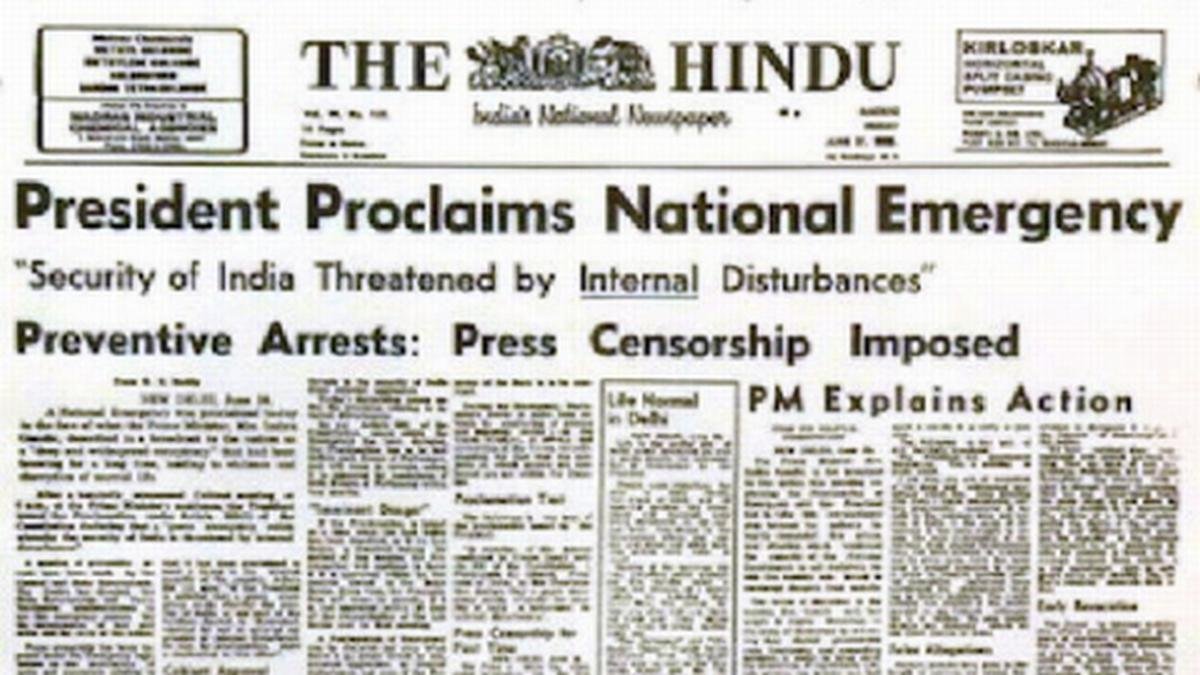
A state of emergency is declared by Prime Minister Indira Gandhi during which the press is censored and 100,000 are jailed.
Kerala Legislative Assembly passed the Kerala Scheduled Tribes (Restriction on Transfer of Lands and Restoration of Alienated Lands) Act, 1975, for restoring land rights to tribals
India’s pathetic performance in 1975 World Cup Cricket. Only victory against East Africa.
Sarvepalli Radhakrishnan, philosopher and statesman, first Vice President of India and second President of India died.
1976 The Rajan case, an infamous case of Police brutality during the Emergency Period. The victim, P. Rajan, a final year Engineering student at Regional Engineering College, Calicut was arrested by police, taken to Kakkayam and allegedly tortured severely which led to his death. It is believed that his body was thrown into the Kakkayam Dam.
A family planning initiative involves the vasectomy of thousands of men and tubal ligation of women, either for payment or under coercive conditions. (The minimum age for marriage is also raised to 21 years for men and 18 years for women.) The son of then-Prime Minister Indira Gandhi, Sanjay Gandhi, is largely blamed for what turned out to be a failed program.
The 42nd amendment Act, 1976, was enacted during the Emergency by the Indian National Congress government headed by Indira Gandhi, changing “Sovereign Democratic Republic” to “Sovereign Socialist Secular Democratic Republic” and modifying “unity of the Nation” to “unity and integrity of the Nation”.
The Regional Rural Banks Act, 1976:
This act established Regional Rural Banks to provide credit and other facilities to small and marginal farmers, agricultural laborers, and artisans in rural areas
India competed at the 1976 Summer Olympics in Montreal, Quebec, Canada and won no medal. This was the first Olympics since 1928 in which the Indian Men’s hockey team did not win an Olympic Medal.
Death of singer Mukesh.
The Indian cricket team defeated the West Indies in a test match at Port of Spain, successfully chasing a then-record target of 403 runs.
Mother Teresa was nominated for the Nobel Peace Prize.
An Indian Airlines Boeing 737 was hijacked to Lahore.
1977 Prime Minister Indira Gandhi, via a radio broadcast, announced that the Lok Sabha would be dissolved and fresh elections would be held in March.
Indira Gandhi’s Congress Party loses general elections. Janata Party comes to power. The Communist Party of India (Marxist) comes into power in West Bengal.
The first non-Congress government sweeps to power following Indira Gandhi’s defeat at the general elections. Morarji Desai becomes prime minister.
M. G. Ramachandran sworn in as Chief Minister of Tamil Nadu. He became the first film actor to be the Chief Minister of an Indian state.
More than 10,000 people die when the 1977 Andhra Pradesh cyclone hits India’s southeast coast. The storm disrupts life for 5.4 million people in 830 villages, and damages 14,000 km2 of cropland.
Emergency was withdrawn in March.
1978 Air India Flight 855, a Boeing 747 passenger jet, crashes into the Arabian Sea after taking off shortly near Bombay, killing all 213 on board.
Morarji Desai led government demonetizes high denomination banknotes
Indira Gandhi is re-elected to the Indian parliament
Indira Gandhi is arrested and jailed for a week for breach of privilege and contempt of parliament.
Operation Barga was a land reform initiative launched in West Bengal, India, in 1978.
The 44th Amendment of the Indian Constitution, enacted in 1978, primarily aimed to address the excesses of the Emergency period (1975-1977) and restore some of the fundamental rights that had been curtailed. It made significant changes to the constitution, including removing ‘Right to Property’ from the list of fundamental rights and making it a legal right. It also introduced safeguards regarding the declaration of national emergencies and strengthened the powers of the judiciary.
India won 15 medals at the Commonwealth Games.
Air Chief Marshal Idris Hassan Latif: He became the first Muslim Chief of Air Staff of the Indian Air Force.
The Janata Party’s internal strife created an opening for Indira Gandhi’s political comeback.
Launch of District Industrial Centre by Minister of Industries George Fernandes
1979 President of India makes official the decision to set up the Mandal Commission
The police under direction of Jyoti Basu, Chief Minister of Communist Party of India (Marxist) -led government of West Bengal, surrounds and opens fire on unarmed refugee settlement of Morichjhapi island in Sunderbans, West Bengal. (Marichjhapi massacre)
The Janata Party splits. Chaudhary Charan Singh becomes Prime Minister.
Charan Singh of Bharatiya Lok Dal, coalition partner of Janata Party became Prime Minister of India with outside support of Congress (I).
C. H. Mohammed Koya sworn in as Chief minister of Kerala. He is the first Muslim League leader to become Chief Minister of an Indian state.
Morvi dam burst, the worst flood disaster in independent India, happens in Gujarat, killing 15000 people
Mother Teresa was awarded Nobel Peace Prize at Oslo
The EVM was designed by a team led by A.G. Rao and Ravi Poovaiah, professors at IIT Bombay. The system was developed for the Election Commission of India by state-owned Electronics Corporation of India (ECIL) and Bharat Electronics Ltd (BEL). Starting in the late 1990s, they were introduced in Indian elections in a phased manner.
The EVMs were first trialled in May 1982 in the by-election to Paravur assembly constituency in Kerala in a limited number of polling stations.
In 1998, the machines were used on an experimental basis across 25 state assembly constituencies during the assembly elections in Rajasthan, Madhya Pradesh and Delhi.
In May 2001, EVMs were used in all constituencies for the state assembly elections in Tamil Nadu, Kerala, Puducherry and West Bengal. In 2004, in the General Election, the EVMs were used in all 543 Parliamentary Constituencies for the first time. Since the time, all state assembly and parliamentary elections are held using the EVMs.
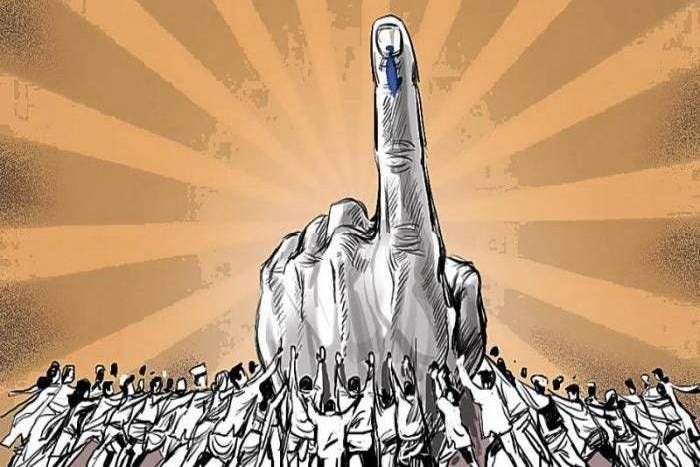
Speaking about innovative solutions, the photosensitive indelible ink was developed to mark the fingers of those who cast their vote, to prevent electoral fraud like double voting. To this day, the special formula to create this ink has not been made public. Research into indelible ink was commenced by the Council of Scientific and Industrial Research (CSIR). In the 1950s, M. L. Goel worked on this research at the Chemical Division of the National Physical Laboratory of India. The ink used contains silver nitrate, which makes it photo-sensitive.
Chaudhary Charan Singh was the only PM of India who did not face the parliament.
Morarji Desai was the oldest PM of India at the time of taking oath (84 years) and he was the first PM to resign. He ws also the first non-Congress PM of India.
BR Ambedkar was defeated in the 1951 LS Election.
Bhairon Singh Shekhawat was the first Vice-President to resign. Jagdeep Dhankhar was the second.
VP Singh was the first PM to step down after facing no confidence motion.
The only person who worked twice as the Acting Prime Minister for 13 days each – Gulzarilal Nanda.
The original name of Lal Bahadur Shastri was Lal Bahadur Varma. He got the surname Shastri (Scholar) after passing out from Kashi Vidyapeeth in Varanasi.
Indira Gandhi was the first person who belonged to Rajya Sabha during nomination as Prime Minister.
Rajiv Gandhi was Pilot by profession. He was the youngest ever Prime Minister of India. He was sworn in as Prime Minister the same day when Indira Gandhi was assassinated.
P V Narsimha Rao was the first Prime Minister from non-Hindi belt (South India).
P V Narsimha Rao was the only PM who was multilinguist and knew and speak 14 languages – Marathi, Hindi, Oriya, Bengali, Gujrati, Tamil, Urdu, English, French, Arabic, Spanish, German and Parsian apart from mother tongue Telugu.
First visually impaired person to become member of parliament – Sadhan Gupta. He belonged to CPI(M) from West Bengal.
The Delimitation Commission, set up under the Delimitation Act, 2002, was entrusted with the task of readjusting all parliamentary and assembly constituencies in the country in all the states of India, except the state of Jammu and Kashmir, based on population ascertained in 2001 Census.
Atal Bihari Vajpayee was the first parliamentarian to give a speech in Hindi to the United Nations General Assembly.
Between 1952 and 2020, two seats were reserved in the Lok Sabha for members of the Anglo-Indian community. They were nominated by the President of India on the advice of the Government of India. In 2020, it was abolished under the 104th Constitutional Amendment Act, 2019.
Lok Sabha constituency in India in terms of number of electors.
Largest: Malkajgiri
State/UT: Telangana
Smallest: Lakshadweep
State/UT: Lakshadweep
Lok Sabha constituency in India in terms of area.
Largest: Ladakh
Smallest: Chandni Chowk
Parliament Library is the second largest library in India after National Library of Belvedere Estate, Kolkata. Parliament library was founded in year 1921.
The old Parliament building was designed by Edwin Lutyens and Herbert Baker and was inaugurated by Lord Irvin, the then Governor General of India in 1927.
Narendra Modi was born in the year India became a Republic, 1950.
in 1980, Dr Prannoy Roy and Ashok Lahiri conducted the first exit poll for India Today magazine, which they repeated during the 1984 election. In 1996, an exit poll was conducted by Doordarshan, by journalist Nalini Singh, with the fieldwork and data gathering carried out by Centre for the Study of Developing Societies (CSDS).
The first IAS officer to become a Member of Parliament (MP) was Yashwant Sinha. He served as an IAS officer before resigning to enter politics and later became an MP. He served as the Minister of Finance from 1990 to 1991 and again from 1998 to 2002, and also as the Minister of External Affairs from 2002 to 2004.
In November 2013, NOTA was introduced in five state elections. Even if the number of electors opting for the NOTA option is more than the number of votes polled by any of the candidates, the candidate who secures the largest number of votes has to be declared elected.
Postal voting in India is done only through the “Electronically Transmitted Postal Ballot Papers (ETPB)” system of the Election Commission of India, where ballot papers are distributed to the registered eligible voters, and they return the votes by post. When the counting of votes commences, these postal votes are counted before those from the Electronic Voting Machines.
During the first election, India’s population was 36 Crore out of which 17.3 crore had the right to vote and the voter turnout was 45.7%
There were 489 seats in the first LS Election. The number of constituencies was increased to 543 in 1977.
The Indian Constitution’s 61st Amendment lowered the age of majority from 21 to 18 for voting in the Lok Sabha and Legislative Assemblies. The Constitution (61st Amendment) Act, 1988, amended Article 326 of the Indian Constitution.
n the 2014 general election, VVPAT was operational in 8 constituencies (Lucknow, Gandhinagar, Bangalore South, Chennai Central, Jadavpur, Raipur, Patna Sahib and Mizoram) as a pilot project.
The last election in India cost around Rs 1 Lakh crore in comparison to a meagre Rs 38 Crore in the first election in 1951.
1990 Muslim separatist groups begin campaign of violence against Hindus in Kashmir resulting in Exodus of Kashmiri Hindus.
Indian Airlines Flight 605 crashes near the HAL Airport in Bangalore.
Leander Paes He won the 1990 Wimbledon junior title and was briefly ranked the number one junior player in the world.
The last Indian troops are withdrawn from Sri Lanka
The government devalued the rupee and initiated economic reforms.
Operation Floodlight (a literacy drive in Ernakulam)
V P Singh announces implementation of Mandal commission report.
Rajiv Goswami, a commerce student in Deshbandhu College attempted Self-immolation as part of Mandal Commission protests of 1990.
V.P. Singh resigns as prime minister and is succeeded by Janata Dal dissident Chandra Shekhar.
TN Sheshan- 10th Chief Election Commissioner of India
1991 Rajiv Gandhi is assassinated by a suicide bomber sympathetic to Sri Lanka’s Tamil Tigers.
Indian National Congress leader P.V. Narasimha Rao becomes Prime Minister.
The Government of India constitutes the Company Law Board as an independent quasi-judicial body thus giving up direct control on matters of company law.
An economic reform programme or Economic liberalisation in India is begun by Prime Minister P. V. Narasimha Rao.
The government of India announces its New Industrial Policy, marking the start of India’s economic reforms.
J. Jayalalithaa is sworn in as chief minister of Tamil Nadu for the first time.
Shiv Sena workers led by Shishir Shinde vandalised Wankhede Stadium Cricket pitch to stop a cricket match between India and Pakistan.
Rapid Action Force established by Union Home Ministry.
Union Territory of Delhi was given the special status of ‘National Capital Territory of Delhi.’ 69th Amendment.
1992 Scam of Harshad Mehta was exposed by journalist Sucheta Dalal, which consisted of SBI 500 Crore Scam and illegal usage of loophole in banking system. December
The demolition of the Babri Masjid, triggering the Bombay riots.
Over 200 people die in Cuttack in Odisha, after drinking illegally brewed liquor in the 1992 Odisha liquor deaths incident.
Konkani language, Nepali language and Meitei language (officially known as Manipuri language) included in the constitutional scheduled languages’ list and made one of the official languages of the Indian Republic through 71st amendment of Constitution of India.
Zee Television, a Hindi language satellite and cable television station, a first officially regular broadcasting service to start in Mumbai.
Indian Rupee exchange rate collapsed. It was 20 Rs to 1 dollar in January 1992 and it became 30 Rs to 1 dollar in December 1992. A huge 50% depreciation in value
Government of India establishes SEBI, stock exchange regulator.
73rd and 74th Amendment Act, 1992
Panchayati Raj institutions and Urban local bodies were given constitutional status.
India bags no medal at the Olympics
1993 A series of bomb blasts, thought to be planted by underworld figures, rock the country’s commercial capital of Bombay, killing some 260 people
Latur earthquake shakes Maharashtra
The All Parties Hurriyat Conference is formed in Kashmir.
supreme court recognised a fundamental right to primary education in the right to life under article 21
The Indian Voter ID card, also known as the Electors Photo Identity Card (EPIC), was introduced nationwide in 1993
1994 Kupwara massacre in J&K
S. R. Bommai v. Union of India verdict by Supreme Court of India.
Plague breakout in India from Surat
National Telecommunications policy (NTP) in 1994 which brought changes in the ownership, service and regulation of the national telecommunications infrastructure.
Aishwarya Rai was crowned Miss World 1994 in Sun City, South Africa
Pre-Conception and Pre-Natal Diagnostic Techniques Act, 1994
Sushmita Sen became the first Indian woman to win the Miss Universe title
Airports Authority of India Act 1994
1995 West Bengal Chief Minister Jyoti Basu made the first call from Kolkata to inaugurate the cellular services in India.
India joins the World Trade Organization (WTO) which has replaced GATT.
Purulia arms drop case
India’s first internet service started by VSNL
Delhi Metro Rail Corporation Limited founded.
1996 Congress suffers its worst electoral defeat ever as BJP emerges as the largest single party.
The Amarnath Yatra tragedy in which at least 194 pilgrims are reported to have frozen to death in northern Kashmir after being stranded by violent rain and snow storms.
TN Sheshan received the Ramon Magsaysay Award for government service
In general elections the ruling Congress Party is defeated and Bharatiya Janata Party becomes the largest single party in parliament. Phoolan Devi, former bandit queen is elected to Parliament from the Samajwadi Party.
Atal Bihari Vajpayee, leader of the Bharatiya Janata Party, is elected the new prime minister of India, replacing P. V. Narasimha Rao of the Indian National Congress. However, the party does not receive an overall majority and Vajpayee resigns thirteen days later rather than face a no confidence vote, and is replaced by the United Front, led by Deve Gowda. 13 days Government by Vapayee.
Deve Gowda is sworn in as the head of the United Front, a coalition of 13 parties which Congress supported but did not join. Gowda’s new cabinet brings in powerful regional figures, mixing low-caste and Muslim leaders with veterans of the socialist movement.
At least 194 pilgrims are reported to have frozen to death in northern Kashmir after being stranded by violent rain and snow storms in the Amarnath Yatra tragedy.
Michael Jackson arrived in Mumbai as a part of his History World Tour
Chinese President Jiang Zemin begins his three-day visit, the first visit by a Chinese head of state to India.
Leander Paes won a bronze medal for India in men’s singles at the 1996 Atlanta Olympic Games making him the first Asian in Olympic history to win a tennis medal and the only Indian to date. It was India’s sole medal in 1996 Olympics.
World Cup Cricket in India. India loses in Semi Final against Sri Lanka in Kolkata.
1997 India’s Missionaries of Charity chooses Sister Nirmala to succeed Mother Teresa as its leader.
Inder Kumar Gujral, a new leader acceptable to Congress, is sworn in as prime minister.
Jagmohan Dalmiya elected as the president of International Cricket Council
K.R. Narayanan is elected president, defeating T.N. Seshan. First Dalit President.
Mother Teresa dies of heart failure in Kolkata.
Elizabeth II pays a state visit to India.
Arundhati Roy wins Booker Prize for her debut novel The God of Small Things.
In 1997, an autonomous body was established in the name of Prasar Bharti to take care of the public service broadcasting under the Prasar Bharti Act. All India Radio and Doordarshan, which earlier were working as media units under the Ministry of I&B became constituents of the body.
TRAI (telecom regulator) is established.
1998 BJP forms coalition government under Prime Minister Atal Bihari Vajpayee.
India and Pakistan carry out nuclear tests, leading to widespread international condemnation.
EVM machines were used on an experimental basis across 25 state assembly constituencies during the assembly elections in Rajasthan, Madhya Pradesh and Delhi.
The National Highway Development Project is launched.
Netaji Subhas Open University started functioning in Kolkata
Gulzarilal Nanda, Interim Prime Minister of India died.
1999 Vajpayee makes a historic bus trip to Pakistan to meet Premier Nawaz Sharif and to sign bilateral Lahore peace declaration.
India’s 13-month-old BJP-led Second Vajpayee government falls after losing a no confidence motion in the Lok Sabha by just one vote
Australian Christian missionary Graham Staines and his two sons were burned to death by Bajrang Dal activists in Kendujhar district, Odisha
Indian Army launches operations to evict Pakistani forces occupying Indian positions on the icy heights in Kargil district, known as the Kargil War.
The Odissa Cyclone devastates eastern state of Odisha, leaving at least 10,000 dead.
Leander Paes and Mahesh Bhupathi became the first Indian pair to win doubles title in Wimbledon Championship.
Two crowded trains collide head-on at a railway station in Gaisal, West Bengal killing 286 people.
Parliamentary elections are held, in which the National Democratic Alliance led by Prime Minister Vajpayee’s BJP wins 298 seats, the Congress-led Alliance 134, and others 105.
Heavily armed hijackers take over an Indian Airlines Airbus carrying 189 people from Kathmandu (Nepal) to New Delhi. After a detour to the United Arab Emirates, it lands at Kandahar, Afghanistan, on 25 December. On 28 December the hijackers make three demands, including the release of 35 terrorists and a sum of $200 million. On 31 December the hijackers, who stabbed a man on the plane to death, free their hostages after reaching agreement with India for the release of three terrorists in Kashmir.
Shankar Dayal Sharma, former president of India and Chief Minister of MP died.
1980 Indira Gandhi returns to power heading the Congress party splinter group, Congress (Indira).
Sanjay Gandhi is killed in a plane crash near Safdarjung Airport.
BJP formed
The Indian Hockey team won the Gold in the Olympics, the last till date.
B. P. Mandal, chairman of the Backward Classes Commission, submitted his report to the government.
The infamous Bhagalpur blinding case which was later depicted in the Bollywood movie ‘Gangajal’
The Forest (Conservation) Act, 1980
1981 Subhas Mukhopadhyay, Physician created World’s second IVF died
Infosys is founded in Pune.
Nargis Dutta died
Census in India
Around 45 people got killed due to a stampede at Qutb Minar resulting in closure of Minaret for tourists
1982 INSAT-1A launched; deactivated in September.
NABARD established through act of Parliament following B. Sivaraman Committee recommendation.
9th Asian Games held in Delhi. Doordarshan begins testing of Colour television broadcast in India
Acharya Vinoba Bhave died
Bijon Setu massacre seventeen Ananda Margis were set ablaze at Bijon Setu in Dhakuria in south Kolkata. No one has been convicted of the murders
EVMs introduced in India
Future Prime Minister of India Manmohan Singh becomes Governor of the Reserve Bank of India
1983 N. T. Rama Rao NTR’s nine-month-old Telugu Desam assumes power in AP becoming a challenger post Loknayak Jayprakash Narayan against Indira Gandhi.
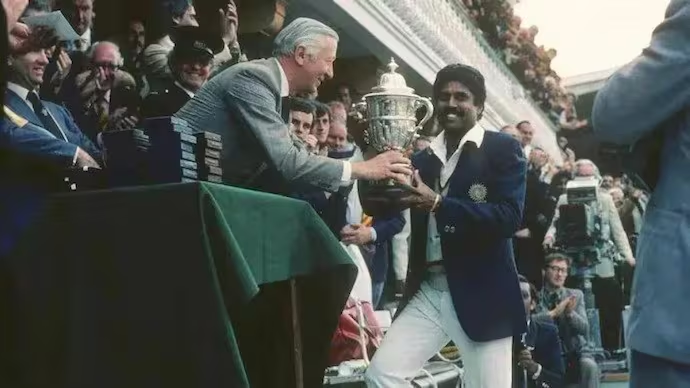
India won World Cup for the first time, in one day international Cricket led by Kapil Dev.
Bandit queen Phoolan Devi surrenders.
Subrahmanyan Chandrasekhar received the Nobel Prize in Physics
Nellie massacre: over 2,000 people, mostly Bangladeshi Muslims, were massacred during the Assam agitation
1984 Squadron Leader Rakesh Sharma is launched into space, aboard the Soyuz T-11.
Troops storm Golden Temple, the Sikhs’ most holy shrine, after Jarnail Singh Bhindranwale seeks refuge inside. There are a movement to flush out Sikh separatism and calls for secularism, called Operation Blue Star. “Anti-Sikh Riots 1984”.
Indira Gandhi is assassinated by her bodyguards; her son, Rajiv, takes over.
Many Sikhs were killed due to the assassination of Indira Gandhi. see 1984 anti-Sikh riots.
Bachendri Pal becomes first Indian women to reach the summit of Mount Everest
India’s first metro Kolkata metro started
India bags no medal at the Olympics
Bhopal disaster: A methyl isocyanate leak from a Union Carbide pesticide plant in Bhopal, Madhya Pradesh, kills more than 2,000 people outright and injures anywhere from 15,000 to 22,000 others
The first 3D film in India My Dear Kuttichathan was released
1985 Karamchedu massacre of Dalits in Andhra Pradesh.
Narmada Bachao Andolan started by Medha Patkar
Bombing on Air India Flight 182- Kanishka
Terrorist and Disruptive Activities (Prevention) Act TADA came into effect after presidential assent.
India wins B&H World Champion Cricket Trophy. Ravi Shastri Player of the Series.
Indira Gandhi National Open University is established by an Act of Indian Parliament.
The Narcotic Drugs and Psychotropic Substances Act is passed by Parliament came into force.
The Administrative tribunals in Delhi, Mumbai, Calcutta and Allahabad were established by Administrative Tribunals Act, 1985.
Chakravarty Committee was set up by the RBI to review the working of monetary system. Its recommendations had far reached consequences eventually removing India from the 500-year-old silver standard
The 52nd Amendment of the Indian Constitution, enacted in 1985, is also known as the Anti-Defection Law
1986 Contract signed between the Government of India and Swedish arms company Bofors for supply of 410 155 mm Howitzer field guns. (Bofors deal)
Operation Black Thunder conducted to flush out remaining Sikh extremists from the Golden Temple
a new National Policy on Education announced by the Government
Inland Waterways Authority of India came into existence.
Supreme Court of India delivered landmark judgement which upholds Freedom of speech and expression in Bijoe Emmanuel Vs State of Kerala case. In this case court said that no law mandates singing National Anthem of India compulsory
Environment Protection Act that was passed in month of May in consequence to Bhopal disaster, came into force.
Consumer Protection Act
Australia-India test cricket match ends in a tie at the M. A. Chidambaram Stadium, Chepauk, Chennai, becoming only the second tied test in the history.
1987 India deploys troops for peacekeeping operation in Sri Lanka’s ethnic
conflict.
Board for Industrial and Financial Reconstruction set up and became operational with effect from May reflecting concerns related to Industrial Sickness and republic day
Sunil Gavaskar becomes the first man to score 10,000 runs in Test cricket
The Union territory was split, and Goa was elevated as India’s twenty-fifth state, with Daman and Diu remaining Union Territories
Operation Poomalai by India in Jaffna.
Roop Kanwar case – last known incident of Sati in India, occurred at Sikar district
The South Asian Games are held in Calcutta
World Cup Cricket in India for the first time
Mizoram became the 23rd state of India on February 20, 1987
Arunachal Pradesh became a state on February 20, 1987
1988 SEBI was established by The Government of India on 12 April 1988 and given statutory powers in 1992 with SEBI Act 1992 being passed by the Indian Parliament.
Viswanathan Anand became first Grandmaster (chess) from India
Janata Dal formed under the leadership of V. P. Singh.
The National Housing Bank established as an apex body of housing finance and to promote activities in housing development.
Rajya Sabha passes the Sixty-first Amendment of the Constitution of India which brings down voting age from 21 to 18
First Cabinet meeting outside New Delhi held at Sariska, Rajastham
The infamous Rupan Deol Bajaj case involving KPS Gill.
India bags no medal at the Olympics
Maximum lending rate abolished. Banks free to charge customers according to their credit record.
Death of Raj Kapoor
1989 Falling public support leads to a Congress defeat in general election.
The National Front (India), headed by V. P. Singh and led by Janata Dal, is formed and storms into power with outside support from BJP and CPI(M).
16-year-old Sachin Tendulkar makes his test debut against Pakistan
The first Darjeeling Gorkha Hill Council elections took place and Gorkha National Liberation Front under leadership of Subhash Ghisingh.
India’s first Intermediate-range ballistic missile, Agni was successfully launched from Chandipur, Odisha. It elevated India into a prestige league of only five nations in world with IRBM strategic capability. This was a landmark moment under Integrated Guided Missile Development Programme
Please note that this additions may be made to this content. So, keep checking.
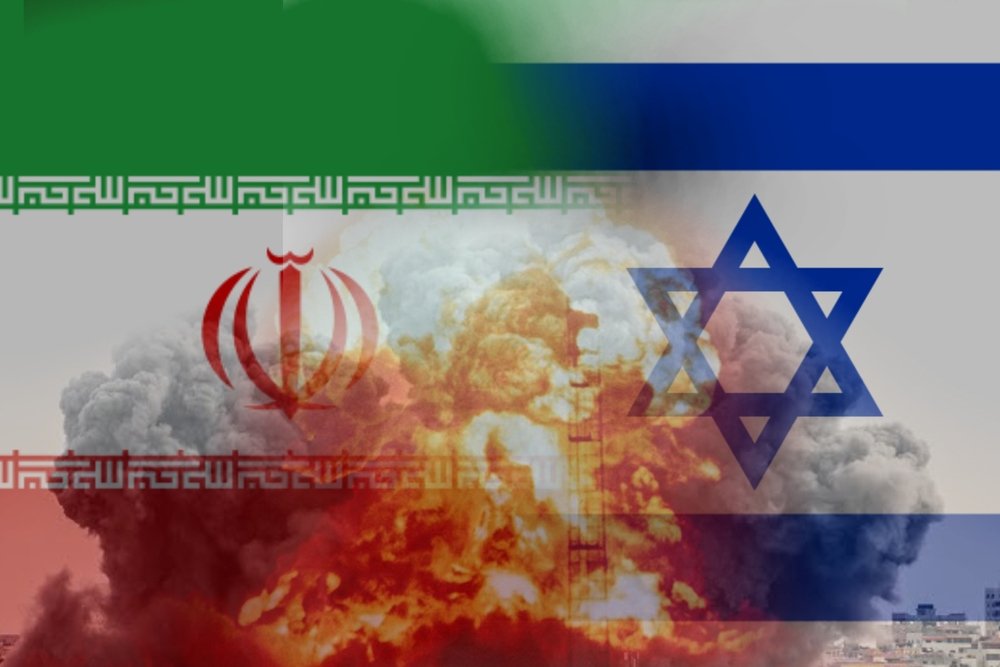
By mid-2025, Iran and Israel were locked in a war of attrition. Israel conducted targeted airstrikes on Iran’s nuclear, military, and civilian infrastructure. Iran launched multiple missile and drone attacks against Israeli cities, infrastructure, and military sites. The damage was significant on both sides, but casualties were asymmetrical: Iran reported over 220 deaths from Israeli strikes, while Israel reported about two dozen fatalities.
Iran’s missile capabilities were degraded by Israeli strikes early in the campaign, and Iran appeared to be holding back much of its arsenal. It was seen as focusing more on messaging and deterrence than trying to decisively defeat Israel. Israel, meanwhile, began to strike not only military sites but also civilian targets like refineries, power grids, and media centres—an attempt to pressure the Iranian regime internally.
The United States formally entered the Israel-Iran conflict with precision airstrikes targeting three of Iran’s key nuclear sites—Fordow, Natanz, and Isfahan. Conducted using B-2 stealth bombers equipped with bunker-busting bombs, the attack included a successful hit on the heavily fortified Fordow Uranium Enrichment Plant, a facility previously beyond Israel’s operational reach.
History- In 1948, the opposition of Arab states to Israel led to the first Arab-Israeli war. Iran was not a part of that conflict, and after Israel won, it established ties with the Jewish state. It was the second Muslim-majority country to do so after Turkey. Israel tried to counter the hostility of Arab states at the time with the “periphery doctrine” under its first Prime Minister David Ben Gurion.
The Pahlavi dynasty, under the Shah Mohammad Reza Pahlavi, ruled Iran then. It had US support, as did Israel, and the two countries maintained ties with each other, with Iran also selling oil to Israel amid its economic boycott by Arab states.
Iran was one of the first countries in the region to recognise Israel after its formation in 1948. It was only after 1979 that their diplomatic ties ended.
The 1979 Revolution: In this phase, a religious state was established in Iran after the Shah was overthrown in the 1979 Islamic Revolution. The regime’s view of Israel changed, and it was seen as an occupier of Palestinian land. Iranian Supreme Leader Ayatollah Khomeini termed Israel “Little Satan” and the United States the “Great Satan”, seeing the two as parties interfering in the region. Iran also sought to grow its presence in the region, challenging the two major powers Saudi Arabia and Israel – both of whom were US allies.
Shadow War after 1979: After 1979, the ties between the countries worsened. While Israel and Iran have never engaged in direct military confrontation, both attempted to inflict damage on the other through proxies and limited strategic attacks. Israel has attacked Iranian nuclear facilities from time to time.
In the early 2010s, it targeted several facilities and nuclear scientists in a bid to prevent it from developing nuclear weapons. In 2010, the US and Israel are believed to have developed Stuxnet, a malicious computer virus was used to attack a uranium enrichment facility at Iran’s Natanz nuclear site, it was the “first publicly known cyberattack on industrial machinery”, according to Reuters.
The two countries have been engaged in multiple proxy conflicts, and actually came face to face during the 2006 Lebanon War.
Begin doctrine
The Begin doctrine effectively dictates that even the potential of an enemy having WMD or weapons of mass destruction (nuclear weapons) can justify preventive strikes from Israel.
Over the years, the ties devolved with little trust on either side. Iran’s support for Hamas and other Iran-backed regional actors, such as Hezbollah, especially after October 7, 2023, has drawn Israel’s ire. Last year, the Israel-Iran relations worsened more when for the first time Iran launched a direct attack aimed at targets within Israel.
Iran-Israel bilateral ties hit new lows when, on June 13 this year, Israel launched “Operation Rising Lion” against Iran.
Several factors have contributed to the recent escalation in the Israel-Iran conflict. Let’s take a closer look.
Ideology and Legitimacy: Iran views Israel as illegitimate and calls for its elimination. Conversely, Israel sees Iran’s ideology as a direct threat to its existence. This mutual existential fear perpetuates hostility.
Nuclear Ambitions: Israel’s primary concern is Iran’s nuclear program. Although Iran claims it is peaceful, Israel and others suspect clandestine weapons work. Israel has long declared it will not allow hostile states to acquire nuclear arms and has used pre-emptive force in the past.
Security and Regional Power: Iran seeks to expand its influence through its military and proxies. Israel, surrounded by unfriendly states, feels strategically encircled. This drives each side to challenge the other militarily, diplomatically, and through intelligence operations.
Geopolitical Alliances: Iran is aligned with powers like Syria, Russia, and China, and supports non-state actors. Israel is backed by the U.S. and increasingly by Gulf Arab states. Each country sees the other’s alliances as threats to its own position in the region.
Prime Minister of Israel, Benjamin Netanyahu framed the biggest attack on Iran in decades as an attempt to remove the “nuclear threat” to Israel. Addressing the people of Iran in a video message, he said the time had come for them to stand up for their freedom from an “evil and oppressive regime”, which has “never been weaker”.
Further explaining Israel’s “pre-emptive strikes”, Netanyahu said Iran had “taken steps that it has never taken before… to weaponize enriched uranium,” and “if not stopped, Iran could produce a nuclear weapon in a very short time,” perhaps even “within a few months.”
Notably, the great strategic concern in Israel is Iran possessing nuclear weapons, and to that end, it has previously launched attacks on scientists (although more targeted and tactical ones). Iran says it is not looking to develop weapons, and has simply invested in nuclear power over the decades.
Natanz nuclear facility
It is Iran’s main uranium enrichment facility, where the country produces most of its nuclear fuel. Located in the central province of Isfahan, the Natanz facility is “the beating heart of the Iranian nuclear programme,” analysts say.
IAEA’s Board of Governors censured Iran: Israel’s attacks came one day after the International Atomic Energy Agency’s (IAEA) Board of Governors censured Iran for the first time in 20 years for not working with its inspectors. On June 12 IAEA passed a resolution declaring Iran as being non-compliant with its non-proliferation obligations. The resolution came on the back of a recent IAEA investigation that found Iran was conducting “secret nuclear activities” at three locations.
Possible Consequences
1. Fears of surging oil prices: Just as global shipping lines and traders had started to breathe a sigh of relief from elevated freight rates, with vessels returning to the crucial Red Sea route from the longer Cape of Good Hope passage, a conflict between two major West Asian powers — Iran and Israel — has reignited fears of surging oil prices and more trade disruptions.
Since the war began on June 13, global Brent crude prices have risen by around 11 per cent — from levels of $67.34 per barrel on June 12 to around $74.6 per barrel on Tuesday. This is a significant spike — and several global financial firms are projecting that oil could cross $100 per barrel in case the crisis continues and worsens.
According to the US Energy Information Administration (EIA), at the end of 2023, Iran accounted for 12 per cent of global oil reserves, with the world’s third largest proven reserves after Venezuela and Saudi Arabia. Iran also has the second largest reserves of natural gas after Russia. However, Western sanctions have ensured that only around 4 per cent of global oil supplies comes from Iran. The primary customer of Iranian oil is China.
2. Risk of wider energy disruption: Experts warn that Iran may respond by closing the strategic Strait of Hormuz — a key passage through which 20–25 per cent of global oil supply transits, as well as a critical corridor for LNG shipments from Qatar and the UAE. Qatar, notably, is among the top LNG suppliers to India.
Strait of Hormuz
Strait of Hormuz is a critical narrow waterway between Iran and Oman, and connects the Persian Gulf with the Gulf of Oman and the Arabian Sea
Red Sea shipping route
The nearly 2,000-km Red Sea connects the Mediterranean Sea with the Indian Ocean via the narrow Suez Canal. Before the Suez Canal’s construction, ships had to go around the Cape of Good Hope in South Africa to travel between Europe and Asia.
3. Rising freight rates: With the escalation in Iran-Israel conflict, there is possibility that freight rates will increase. There is also a possibility that global governance would also be impacted by continuing instability in the Middle East.
4. Nuclear Proliferation Risks: Iran’s possible withdrawal from the Nuclear Non-Proliferation Treaty (NPT) could trigger a regional arms race, undermining global non-proliferation norms.
Impact of the Iran-Israel conflict on India?
The Israel-Iran conflict triggered serious concern among major stakeholders in the region, including India. Indian Ministry of External Affairs urged both Israel and Iran “to avoid any escalatory steps,” saying India has “close and friendly” relations with the two nations.
Operation Sindhu
India announced launching ‘Operation Sindhu’ to evacuate Indian nationals from Iran as fears of an all-out Israeli-American military strikes on Iran increased.
Nonetheless, escalated Israel-Iran conflict puts India’s regional connectivity strategy like the International North South Transport Corridor, and the Chabahar port at risk. India’s key connectivity projects like the Chabahar port in Iran, which links it to Afghanistan and Central Asia, could be affected by regional turmoil. The India-Middle East-Europe Economic Corridor (IMEC) faces risks from the conflict, threatening its progress and impacting bilateral trade and regional economic dynamics.
Notably, The International North South Transport Corridor (INSTC), which was initiated by Russia, India, and Iran, is a multi-modal transportation project linking the Indian Ocean and Persian Gulf to the Caspian Sea via Iran, and onward to northern Europe via St Petersburg in Russia. This corridor aims to reduce transit times to about 25 days — 20 days fewer than the Suez Canal route — and cut freight costs by 30 per cent.
With nearly 8 million Indian nationals residing in West Asia, their safety becomes a critical concern, especially if evacuation becomes necessary.
Chabahar is a deep-water port in Iran’s Sistan-Baluchistan province. It is the Iranian port that is the closest to India, and is located in the open sea, providing easy and secure access for large cargo ships. The port is also part of the proposed INSTC. Chabahar is of strategic importance for India. It offers New Delhi an alternative route that bypasses Pakistan, which does not allow India land access for trade with Afghanistan and Central Asia.
India must tread carefully, preserving its strategic partnerships with both Israel and Iran, while navigating a complex landscape of rising sanctions and geopolitical alignments.
One Nation, One Election (ONOE) is a proposal under consideration by the Government of India to synchronise all elections in the country either on a single day or within a specific time frame, with an objective of cutting election cost. One of its most notable proposals is to simultaneously conduct elections to the Lok Sabha & state legislative assemblies of all 28 states & 8 union territories. For the purpose of ONOE, MoS Law & Justice Arjun Ram Meghwal introduced The Constitution (129th Amendment) Bill, 2024 in Lok Sabha that the bill further to amend the Constitution of India on 17 December 2024, the purposed bill was referred to Joint Parliamentary Committee on 19 December 2024 after being passed in the Lok Sabha with 269 votes being in favour of the bill and 198 votes against passing the motion.
History
The years 1951-52, 1962 and 1967 witnessed simultaneous elections dating back the concept of one nation one election to the early years of Indian Independence. This process was only discontinued after the 1967 elections due to the premature dissolution of a few state assemblies and Lok Sabha in 1970. Since then, the elections are being conducted separately which is only leading to increased costs.
Recommendations Earlier
Law Commission of India (170th Report, 1999): Advocated simultaneous elections, emphasizing the reduction of election-related disruptions and costs.
Parliamentary Standing Committee (2015): Highlighted the benefits of ONOE, including curbing electoral expenses and ensuring uninterrupted governance.
NITI Aayog Report (2017): Proposed a roadmap to reintroduce ONOE.
Advantages
Cost Reduction: It could save money by eliminating the need for separate election cycles. For example, the 2024 Loksabha elections cost a total of around Rs 1 lakh Cr in comparison to Rs 10 Cr of the first LS Election.
Focus on Long-Term Governance: It encourages politicians to prioritize long-term governance over short-term gains.
Increased Voter Turnout: Voters are less fatigued, as they only participate once every few years, potentially boosting voter turnout.
Level Playing Field: Smaller parties can compete more effectively with larger ones due to reduced overall election expenses.
Efficient Use of Security Forces: It allows security forces to be deployed more efficiently for other purposes.
Challenges and complexities of simultaneous elections
Overshadowing regional issues: Conducting elections simultaneously to the Lok Sabha and all State assemblies would result in national issues overshadowing regional and State specific issues.
Force Deployment: Arrangement of police or para military forces to maintain law and order situation during such simultaneous elections will be a mammoth task.
Impact on the Regional parties: Simultaneous elections may create a system where National political parties would have a significant advantage over regional parties.
Political accountability: Frequent elections hold lawmakers accountable, while fixed terms may provide unwarranted stability without performance scrutiny challenging democratic principles.
Concerns Regarding Federalism: Constitutional Amendments concerning the term of the state legislative assemblies under Article 172 can be carried out without ratification by states. Thus, opinion and say of States is reduced.
Logistical Issues: Organizing ONOE would require significant resources, including a vast supply of electronic voting machines and trained personnel to oversee the process.
Amendments Needed
The implementation of the One Nation, One Election policy is not feasible within the current constitutional framework. To enable this policy, certain essential amendments to the Constitution are necessary, including:
Article 83: Concerning the duration of the Houses of Parliament, amendments are required to fix the tenure and timing for the dissolution of the Lok Sabha.
Article 85: Pertaining to sessions, prorogation, and dissolution of Parliament, clear guidelines must be established to prevent arbitrary or ambiguous dissolution of sessions.
Article 172: Governing the duration of State Legislatures, amendments are needed to synchronize their tenure with that of the Lok Sabha.
Article 174: Similar to Article 85, this article deals with sessions, prorogation, and dissolution of State Legislatures. Amendments are required to standardize procedures and timelines.
The Lok Sabha election in India is already the biggest even of democracy all over the world. To add the state legislature elections to it is not just a matter of regular debate. It is a gigantic step and for that nationwide consensus is needed. Discussions among the political parties with special attention to the regional parties is the need of the hour. Upholding the governing principles of national integrity, popular plurality and cooperative federalism must be the sole purpose of such a mammoth shift in the course of our democracy.