Artificial Intelligence (AI) has moved from academic research to a transformative force shaping economies, societies, science, and everyday life. The release of ChatGPT in November 2022 marked a turning point, bringing generative AI to hundreds of millions of users. Since then, rapid advances in large language models, reasoning systems, and AI agents have accelerated both the promised benefits and the emerging risks. This note examines the major benefits and drawbacks of AI, placed in the context of key historical milestones.
Key Historical Events in Artificial Intelligence
1950: Alan Turing proposes the Turing Test as a measure of machine intelligence.
1956: Dartmouth Conference coins the term “Artificial Intelligence” and launches the field as a formal research discipline.
1997: IBM’s Deep Blue defeats world chess champion Garry Kasparov.
2011: IBM Watson wins the quiz show Jeopardy! against human champions.
2012: AlexNet wins the ImageNet competition, triggering the deep learning revolution.
2016: DeepMind’s AlphaGo defeats world champion Lee Sedol in Go.
2017: “Attention Is All You Need” paper introduces the Transformer architecture, the foundation of modern large language models.
2021: AlphaFold 2 solves the 50-year protein structure prediction problem; GitHub Copilot brings AI-assisted coding to developers.
November 2022: OpenAI launches ChatGPT, which reaches 100 million users in two months—the fastest consumer application growth in history.
2023: GPT-4, Anthropic’s Claude, Google’s Gemini, and Meta’s Llama 2 mark the beginning of the frontier model race.
2024: EU AI Act is adopted (the world’s first comprehensive AI regulation). Nobel Prizes awarded for AI-related work: Physics (John Hopfield and Geoffrey Hinton) and Chemistry (Demis Hassabis, John Jumper and David Baker for AlphaFold).
January 2025: Chinese lab DeepSeek releases R1, a high-performing open reasoning model at a fraction of typical training cost, triggering major market reactions.
2025–2026: Major model releases include GPT-5, Claude 4 series, Gemini 2.5/4, Grok 3/4, and Llama 4. AI agents capable of multi-step autonomous work become production tools.
August 2026: EU AI Act general application begins, including transparency obligations for chatbots and AI-generated content. High-risk obligations are later deferred to 2027–2028 under the Digital Omnibus on AI.
Benefits of Artificial Intelligence
Productivity and Economic Gains
Studies show generative AI delivering productivity gains of 10–65% and time savings of roughly 20–50% on specific tasks. The World Economic Forum’s Future of Jobs Report projects a net increase of about 78 million jobs globally between 2025 and 2030 (170 million new roles created against 92 million displaced). AI is already improving efficiency in software development, customer service, content creation, and knowledge work.
Healthcare and Scientific Discovery
AlphaFold has transformed structural biology by accurately predicting protein structures.
AI assists in medical imaging analysis, drug discovery, and early disease detection.
In 2025–2026, AI systems have contributed to mathematical proofs and scientific research at an accelerating pace.
Education, Accessibility and Everyday Use
Personalised tutoring and language learning tools expand educational access.
AI-powered translation, voice interfaces, and assistive technologies improve accessibility for people with disabilities.
Everyday applications include coding assistants, writing support, research summarisation, and creative tools.
Climate and Resource Optimisation
AI can improve renewable energy forecasting, grid balancing, agricultural yields, and resource efficiency. Some analyses estimate that AI applications in energy, transport, agriculture and water could raise global GDP while helping reduce emissions, though the net climate impact remains uncertain due to AI’s own energy demands.
Curses and Risks of Artificial Intelligence
Job Displacement and Labour Market Disruption
While net job creation is projected, the distribution is uneven. Evidence shows employment declines among young workers in highly AI-exposed occupations (around 13% in the US since 2022 in some studies). Knowledge-intensive roles—coding, writing, customer support, analysis—are most affected in the near term. Developing economies with large shares of routine cognitive work face particular transition challenges. Forty percent of employers in some surveys anticipate reducing workforces where AI can automate tasks.
Energy, Water and Environmental Costs
Data centres already account for a significant and rising share of electricity demand. The International Energy Agency projects global data centre electricity consumption to roughly double by 2030, driven heavily by AI workloads.
In some regions (parts of the US and Ireland), data centres consume more than 10–20% of local electricity.
Cooling requirements place heavy pressure on freshwater resources. UN estimates project that by 2030, data centre water use could equal the basic annual domestic needs of over a billion people in Africa.
Bias, Discrimination and Fairness
AI systems trained on historical data can perpetuate or amplify existing social biases in hiring, lending, policing, and content moderation. These risks are well documented and remain difficult to fully eliminate.
Misinformation, Deepfakes and Trust
Generative AI has made the production of realistic fake images, videos, and text cheap and scalable. This has raised concerns about election integrity, fraud, and erosion of public trust in digital media. The EU AI Act’s transparency rules (in force from August 2026) require disclosure of AI-generated content and deepfake labelling in response to these risks.
Concentration of Power and Geopolitics
Frontier AI development is concentrated among a small number of US and Chinese companies and laboratories. This raises concerns about who controls the most capable systems, access to advanced chips, and the geopolitical implications of AI leadership.
Cybersecurity and Military Applications
AI is increasingly used both for cyber defence and offence. Autonomous AI agents have demonstrated the ability to discover and exploit vulnerabilities.
Military AI has moved from speculation to active use in conflicts, raising ethical questions about autonomous weapons and decision-making in warfare.
Longer-Term and Existential Concerns
As models approach or exceed human performance on an expanding range of cognitive tasks, debates continue about loss of human control, alignment failures, and the societal implications of artificial general intelligence (AGI). Median expert predictions for systems that outperform humans on most cognitive tasks have shortened significantly since 2020.
Current Regulatory Landscape
The European Union’s AI Act is the most comprehensive framework to date. It entered into force in 2024. General application and transparency rules began in August 2026. High-risk obligations were deferred to December 2027 (standalone systems) and August 2028 (product-embedded systems) under the Digital Omnibus on AI. Other jurisdictions, including the United States, China, and India, are developing their own approaches, ranging from sector-specific rules to broader guidelines. International coordination remains limited.
Conclusion
Artificial Intelligence offers substantial benefits in productivity, scientific discovery, healthcare, education, and resource optimisation. At the same time, it carries real costs and risks: labour market disruption, high energy and water demands, bias, misinformation, concentration of power, and longer-term control challenges. The events of 2022–2026—particularly the public arrival of generative AI and the first comprehensive regulation—have made clear that societies must actively shape how AI is developed and deployed. The balance between its benefits and its curses will depend less on the technology itself than on the choices of governments, companies, and citizens in the years ahead.
4 November: US imposes new sanctions on Indian entities linked to Iranian regime.
5 November: Ongoing events include Diwali preparations, Delhi air pollution measures, and various local incidents.
Note: The Wikipedia “2026 in India” page is continuously updated. The list above includes all major dated events extracted up to 5 November 2026. Additional minor incidents and deaths continue to be added.
Part 2: Detailed Elaborations of Major Events
India–EU Free Trade Agreement (27 January 2026)
After nearly two decades of negotiations, India and the European Union signed a comprehensive Free Trade Agreement on 27 January 2026. The deal was finalised during a summit attended by Prime Minister Narendra Modi, European Commission President Ursula von der Leyen, and European Council President António Costa. It covers goods, services, investment, and intellectual property, and is expected to substantially increase bilateral trade by reducing tariffs and improving market access. The agreement is widely regarded as one of the most significant economic achievements of the year for India.
Crash Killing Deputy Chief Minister Ajit Pawar (28 January 2026)
On 28 January 2026, a Learjet 45 crashed and exploded while landing at Baramati Airport in Maharashtra. Five people were killed, including Deputy Chief Minister Ajit Pawar. The crash had major political implications in Maharashtra, where Pawar was a central figure in the ruling alliance. The incident triggered investigations into aviation safety and dominated national headlines for days.
India’s T20 World Cup Victory (8 March 2026)
India defeated New Zealand in the final of the 2026 Men’s T20 World Cup on 8 March to win the tournament for the third time. The victory was celebrated across the country and reinforced India’s status as a leading force in limited-overs cricket. The tournament had begun in February and culminated in a high-profile final.
Declaration of the End of the Naxalite Insurgency (30 March 2026)
On 30 March 2026, Home Minister Amit Shah announced that the Naxalite-Maoist insurgency had been largely defeated. The government stated that most remaining fighters had been killed, arrested, or had surrendered following intensive security operations. The declaration was presented as a major internal security milestone, though residual challenges persist in some remote areas.
2026 Assembly Elections and Political Realignment (April–May 2026)
The assembly elections held in April 2026 produced significant political shifts:
West Bengal: BJP secured a landslide victory, ending Trinamool Congress rule. Suvendu Adhikari became Chief Minister on 9 May.
Tamil Nadu: Actor Vijay’s Tamilaga Vettri Kazhagam (TVK) emerged as the largest party. Vijay took oath as Chief Minister on 10 May.
Kerala: UDF won a majority; V. D. Satheesan became Chief Minister.
Bihar: Nitish Kumar stepped down; Samrat Choudhary became Chief Minister.
Karnataka: D. K. Shivakumar replaced Siddaramaiah as Chief Minister in late May.
Assam: BJP retained power.
Supreme Court’s Passive Euthanasia Ruling (11 March 2026)
On 11 March 2026, the Supreme Court ruled in favour of removing life support from Harish Rana, who had been in a persistent vegetative state since 2013. This was the first time an Indian court permitted passive euthanasia in such circumstances. The judgment clarified the legal position on end-of-life decisions and was widely discussed in medical and legal circles.
A detailed chronological timeline of Indian history from Alexander’s invasion to Indian Independence in 1947
Phase I: Ancient India (Alexander’s Invasion to the Gupta Empire)
May 327 BCE: Alexander the Great crosses the Hindu Kush and begins his invasion of the Indian subcontinent.
May 326 BCE:Battle of the Hydaspes (Jhelum River) — Alexander defeats King Porus; Porus is reinstated due to his valor, but Alexander’s troops refuse to advance further east.
October 321 BCE:Chandragupta Maurya overthrew the Nanda Empire with Chanakya’s assistance, establishing the Maurya Empire at Pataliputra.
305–303 BCE:Seleucid-Mauryan War — Chandragupta defeats Seleucus Nicator, securing large territories in modern Afghanistan/Pakistan.
297 BCE: Bindusara succeeds Chandragupta Maurya.
273–232 BCE: Reign of Ashoka the Great.
c. Winter 261 BCE:The Kalinga War — Enormous casualties lead Ashoka to renounce military expansion (Digvijaya) and embrace Buddhism (Dharmavijaya).
c. 250 BCE: The Third Buddhist Council is convened at Pataliputra under Emperor Ashoka.
185 BCE: Pushyamitra Sunga assassinates the last Mauryan ruler, Brihadratha, and founds the Sunga Dynasty.
c. 150 BCE: Sage Patanjali writes the Mahabhasya during the Sunga era.
c. 30 BCE: Simuka founds the Satavahana Dynasty in the Deccan, marking a rise in indigenous rule and international sea trade with Rome.
c. 58 BCE: Traditional beginning of the Vikrama Era.
78 CE: Accession of Kanishka the Great (Kushana Dynasty) and the initiation of the Saka Era.
320 CE:Chandragupta I ascends the throne, marking the official start of the Gupta Empire (Golden Age).
335–380 CE: Reign of Samudragupta, the “Napoleon of India”.
375–415 CE: Reign of Chandragupta II (Vikramaditya); cultural apex and visit of Chinese pilgrim Fa-Hien.
415–455 CE: Reign of Kumaragupta I; founding of Nalanda University (c. 450 CE).
455–467 CE: Skandagupta successfully repels the initial waves of Huna (White Hun) invasions.
Phase II: Early Medieval India (Post-Gupta to the Delhi Sultanate)
500–530 CE: Devastating invasions by Huna leaders Toramana and Mihiragula shatter northern political unity.
606–647 CE: Reign of Harshavardhana; Chinese traveler Hiuen Tsang (Xuanzang) resides in India (c. 630–643 CE).
c. 630 CE: Chalukya monarch Pulakeshin II defeats Harshavardhana on the banks of the Narmada River.
711–712 CE: Arab general Muhammad bin Qasim defeats Dahir and conquers Sindh (captured Debal in May 712 CE).
753 CE: Dantidurga founds the Rashtrakuta Dynasty, which later builds the Ellora Kailasa Temple.
788–820 CE: Life of Adi Shankara, who propagates Advaita Vedanta and establishes four mathas.
c. 850 CE: Vijayalaya captures Thanjavur, reviving the imperial Chola Dynasty.
973 CE: Tailapa II establishes the Western Chalukya (Chalukyas of Kalyani) dynasty.
985–1014 CE: Reign of Rajaraja I (Chola); expansion of Chola maritime supremacy and construction of the Brihadisvara Temple.
1000–1027 CE:Mahmud of Ghazni launches 17 plundering raids into India, sacking the Somnath Temple in January 1025 CE.
1012–1044 CE: Reign of Rajendra I (Chola); naval expedition reaches Southeast Asia and the Ganges delta.
1178–1192 CE: Reign of Prithviraj Chauhan (Prithviraj III) over Delhi and Ajmer.
1191 CE:First Battle of Tarain — Prithviraj Chauhan defeats Mu’izz al-Din Muhammad Ghori.
1192 CE:Second Battle of Tarain — Muhammad Ghori decisively defeats Prithviraj Chauhan.
1194 CE:Battle of Chandawar — Muhammad Ghori defeats Jayachandra of Kannauj.
1206 CE: Qutb-ud-din Aibak establishes the Slave Dynasty (Delhi Sultanate) after Ghori’s death on March 15, 1206 CE.
Phase III: The Delhi Sultanate & Regional Kingdoms
November 1210 CE: Qutb-ud-din Aibak dies playing polo; Iltutmish succeeds him, consolidating the Sultanate.
1236–1240 CE: Reign of Razia Sultana, the first female Muslim ruler of Delhi.
1266–1287 CE: Reign of Ghiyas ud din Balban; introduces absolute monarchical control (Sijda and Paibos).
1296–1316 CE: Reign of Alauddin Khalji; institutes price controls, market regulations, and stands against Mongol raids.
1325–1351 CE: Reign of Muhammad bin Tughlaq; enacts controversial reforms (token currency, moving capital to Daulatabad).
April 1336 CE: Harihara and Bukka found the Vijayanagara Empire on the Tungabhadra River.
August 3, 1347 CE: Ala-ud-din Bahman Shah founds the independent Bahmani Sultanate in the Deccan.
1351–1388 CE: Reign of Firuz Shah Tughlaq; prolific builder of canals and public infrastructure.
December 17, 1398 CE: Central Asian conqueror Timur (Tamerlane) defeats Delhi’s forces and sacks the city.
1414–1451 CE: The Sayyid Dynasty rules Delhi.
1451–1526 CE: The Lodi Dynasty (first Afghan ruling house of Delhi) holds power.
April 15, 1469 CE: Birth of Guru Nanak Dev Ji, founder of Sikhism.
1509–1529 CE: Reign of Krishnadevaraya; Golden Age of the Vijayanagara Empire.
April 21, 1526 CE:First Battle of Panipat — Babur uses artillery to defeat Ibrahim Lodi, founding the Mughal Empire.
Phase IV: The Mughal Era & Rise of Regional Powers
March 16, 1527 CE:Battle of Khanwa — Babur defeats Rana Sanga of Mewar, sealing Mughal dominance.
1530–1540 & 1555–1556 CE: Reign of Humayun, interrupted by Sher Shah Suri (1540–1545 CE), who constructs the Grand Trunk Road and introduces the Rupiah.
November 5, 1556 CE:Second Battle of Panipat — Bairam Khan defeats Hemu Vikramaditya; accession of Akbar.
January 26, 1565 CE:Battle of Talikota — United Deccan Sultanates defeat Vijayanagara, leading to the destruction of Hampi.
1571 CE: Akbar constructs Fatehpur Sikri.
June 18, 1576 CE:Battle of Haldighati — Mughal forces under Man Singh clash with Maharana Pratap of Mewar.
December 31, 1600 CE: Queen Elizabeth I grants a royal charter to the English East India Company.
1605–1627 CE: Reign of Jahangir; peak of Mughal miniature painting. May 30, 1606 CE: Execution of Sikh Guru Arjan Dev.
1615 CE: Sir Thomas Roe arrives at Jahangir’s court as King James I’s ambassador.
1628–1658 CE: Reign of Shah Jahan; construction of the Taj Mahal (begun 1631 CE).
1658–1707 CE: Reign of Aurangzeb (Alamgir); peak territorial expansion and religious conservatism.
June 6, 1774 CE: Coronation of Chhatrapati Shivaji Maharaj at Raigad, establishing Maratha Swarajya.
November 11, 1675 CE: Execution of ninth Sikh Guru, Guru Tegh Bahadur, by Aurangzeb.
April 13, 1699 CE: Guru Gobind Singh Ji establishes the Khalsa Panth at Anandpur Sahib.
February 20, 1707 CE: Death of Emperor Aurangzeb, triggering the swift decline of the Mughal Empire.
Phase V: British Ascendancy & Territorial Conquest
1717 CE: Mughal Emperor Farrukhsiyar issues a farman granting the EIC duty-free trade privileges in Bengal.
February 13, 1739 CE: Persian ruler Nadir Shah defeats the Mughals at the Battle of Karnal and sacks Delhi.
1746–1748 CE: First Carnatic War introduces European combat tactics to local Indian conflicts.
June 23, 1757 CE:Battle of Plassey — Robert Clive defeats Nawab Siraj-ud-Daulah via betrayal, setting up British political hegemony in Bengal.
October 22, 1764 CE:Battle of Buxar — British defeat combined Indian forces.
August 12, 1765 CE:Treaty of Allahabad — Robert Clive secures the Diwani (revenue rights) of Bengal, Bihar, and Odisha for the EIC.
1767–1769 CE: First Anglo-Mysore War; Hyder Ali confronts the British.
1773 CE:Regulating Act of 1773 passed by the British Parliament; Warren Hastings becomes the first Governor-General of Bengal.
1784 CE: Pitt’s India Act establishes dual control by the British government and the EIC.
May 4, 1799 CE:Fourth Anglo-Mysore War — Tipu Sultan dies defending Srirangapatna.
September 1803 CE: Second Anglo-Maratha War; British capture Delhi and protect blind Mughal Emperor Shah Alam II.
1817–1818 CE: Third Anglo-Maratha War; final collapse of the Maratha Confederacy, leaving Britain as the primary power in India.
December 4, 1829 CE: Governor-General Lord William Bentinck passes legislation abolishing Sati with Raja Ram Mohan Roy’s support.
1833 CE: Charter Act of 1833 centralizes legislative authority under the Governor-General of India.
1848–1849 CE: Lord Dalhousie introduces the Doctrine of Lapse; Second Anglo-Sikh War ends with the Annexation of Punjab (March 29, 1849 CE).
April 16, 1853 CE: Operation of the first passenger railway from Bombay to Thane.
Phase VI: The Freedom Struggle & Independence
May 10, 1857 CE:The Great Revolt / First War of Independence breaks out with sepoy mutinies in Meerut.
August 2, 1858 CE:Government of India Act 1858 ends East India Company rule; direct administration transfers to the British Crown under Viceroy Lord Canning.
December 28–30, 1885 CE: First session of the Indian National Congress (INC) convenes in Bombay under W.C. Bonnerjee.
July 20, 1905 CE: Lord Curzon announces the Partition of Bengal; sparks the nationwide Swadeshi and Boycott Movement.
December 30, 1906 CE: Foundation of the All-India Muslim League in Dhaka.
December 1907 CE: Surat Split — The INC divides into Moderates and Extremists.
November 1909 CE:Morley-Minto Reforms (Indian Councils Act 1909) introduce separate communal electorates for Muslims.
December 12, 1911 CE: Delhi Durbar; King George V announces the annulment of the Bengal Partition and relocation of the capital to Delhi.
January 9, 1915 CE:Mahatma Gandhi returns to India from South Africa.
December 1916 CE:Lucknow Pact signed between the INC and Muslim League.
April 1917 CE:Champaran Satyagraha — Gandhi’s first successful civil disobedience campaign.
March 1919 CE: Enactment of the repressive Rowlatt Act; Jallianwala Bagh Massacre in Amritsar on April 13, 1919 CE.
August 1, 1920 – February 1922 CE: Mahatma Gandhi launches the Non-Cooperation Movement, suspended after the Chauri Chaura violence (February 4, 1922 CE).
January 1, 1923 CE: Motilal Nehru and C.R. Das form the Swaraj Party.
February 3, 1928 CE:Simon Commission arrives in India to widespread protests; Lala Lajpat Rai dies after a police lathi charge (November 17, 1928 CE).
December 31, 1929 CE:Lahore Session of the INC adopts the Purna Swaraj (Complete Independence) resolution.
March 12 – April 6, 1930 CE:Civil Disobedience Movement begins with the historic Dandi March (Salt March).
March 5, 1931 CE:Gandhi-Irwin Pact signed. March 23, 1931 CE: Execution of Bhagat Singh, Sukhdev, and Thapar.
August 16, 1932 CE: Ramsay MacDonald announces the Communal Award; Gandhi’s fast leads to the Poona Pact (September 24, 1932 CE).
August 1935 CE:Government of India Act 1935 passed, introducing provincial autonomy.
September 3, 1939 CE: World War II begins; Viceroy declares India a belligerent party without consent, causing Congress ministries to resign en masse.
March 23, 1940 CE: Muslim League passes the Lahore Resolution demanding Pakistan.
August 8, 1942 CE: INC passes the Quit India Resolution with the call “Do or Die” in Bombay.
November 1945 – May 1946 CE:INA Trials at the Red Fort ignite national outrage; February 18–23, 1946 CE: Royal Indian Navy (RIN) Mutiny in Bombay.
March–June 1946 CE:Cabinet Mission Plan attempts to frame a transfer of power. Muslim League observes “Direct Action Day” on August 16, 1946 CE, triggering widespread communal riots.
June 3, 1947 CE:Mountbatten Plan outlines the partition of British India.
August 15, 1947 CE: India achieves formal Independence and partition into the dominions of India and Pakistan.
Origin & Course: Originates from the Bokhar Chu glacier (Tibetan plateau near Mansarovar Lake) at an elevation of 4,164m, flowing north-west between Zaskar and Ladakh ranges, entering Pakistan near Chillar in Dardistan.
Right-Bank Tributaries: Shyok, Gilgit, Hunza, Swat, Kurram, and Gomal.
The Five Punjab Rivers: Jhelum (originates from Verinag spring, flows through Wular Lake); Chenab (largest tributary, formed by Chandra and Bhaga streams in Lahaul-Spiti); Ravi (originates near Rohtang Pass); Beas (originates near Beas Kund, entirely within Indian territory); Sutlej (originates from Rakshastal Lake near Mansarovar, cuts through Shipki La pass).
Indus Waters Treaty (1960): Brokered by World Bank; Western rivers (Indus, Jhelum, Chenab) allocated primarily to Pakistan with non-consumptive use rights for India; Eastern rivers (Ravi, Beas, Sutlej) allocated fully to India.
2. The Ganga River System
Origin & Upper Course: Originates as Bhagirathi from Gangotri Glacier (Gaumukh, 3,900m). At Devprayag, Bhagirathi meets Alaknanda to form the official Ganga.
Left-Bank Tributaries: Ramganga, Gomti (only major groundwater-fed plain tributary), Ghaghara (largest tributary by volume), Gandak, Kosi (notorious for shifting courses, known as ‘Sorrow of Bihar’), and Mahananda.
Right-Bank Tributaries: Yamuna (longest tributary, originating at Yamunotri glacier, meeting Ganga at Prayagraj Triveni Sangam; joined by Chambal, Betwa, Ken) and Son (originates at Amarkantak plateau).
Delta & Estuary: Farakka Barrage divides the flow into Padma (entering Bangladesh) and Bhagirathi-Hooghly (flowing through West Bengal to the Bay of Bengal).
3. The Brahmaputra River System
Origin & Tibetan Stretch: Originates from Chemaungdung glacier near Mansarovar Lake, known in Tibet as Yarlung Tsangpo, flowing eastwards parallel to the Himalayas across the arid Tibetan plateau.
Entry into India: Takes a sharp hairpin U-turn around Namcha Barwa (7,756m) and enters Arunachal Pradesh as the Siang or Dihang through the deep Dihang Gorge.
Assam Valley Course: Joined by major left-bank tributaries (Dibang, Lohit, Burhi Dihang, Dhansiri) and right-bank tributaries (Subansiri, Kameng, Manas, Sankosh, Teesta). Near Sadiya, it is joined by Lohit and Dibang to form the massive Brahmaputra.
Geographical Significance: Forms Majuli, the world’s largest inhabited riverine island, and suffers from severe annual bank erosion and catastrophic flooding due to high sediment load and heavy monsoon rains.
The Peninsular River Systems (Seasonal Basins)
1. East-Flowing Rivers (Drain into Bay of Bengal)
Mahanadi Basin: Originates in Sihawa hills of Chhattisgarh, flows through Odisha, forms the Hirakud Dam (longest earthen dam), and discharges into the Bay of Bengal via a massive delta near Cuttack.
Godavari Basin: Known as ‘Dakshin Ganga’ or ‘Vriddha Ganga’; longest river in Peninsular India (1,465 km); originates at Trimbakeshwar (Nashik, Maharashtra); major tributaries include Pravara, Indravati, Pranhita, Manjira, and Sabari.
Krishna Basin: Second-longest east-flowing peninsular river (1,400 km); originates near Mahabaleshwar in the Western Ghats; major tributaries include Koyna, Tungabhadra, Bhima, Musi, and Ghatprabha; hosts Nagarjuna Sagar Dam.
Cauvery Basin: Originates at Talakaveri in the Brahmagiri hills of Karnataka; sacred river with extensive delta agriculture in Tamil Nadu; major tributaries include Hemavati, Kabini, Amravati, and Bhavani; center of long-standing interstate water disputes.
2. West-Flowing Rivers (Drain into Arabian Sea)
Narmada Basin: Flows westward through a deep tectonic rift valley between the Vindhya Range (north) and Satpura Range (south); originates at Amarkantak plateau; forms the spectacular Dhuandhar Falls near Jabalpur and a wide estuary at Bharuch; site of Sardar Sarovar Dam.
Tapti (Tapi) Basin: Originates in Multai (Betul district, Madhya Pradesh); runs parallel to Narmada through a rift valley south of Satpura; drains into the Gulf of Khambhat near Surat.
Other Notable West-Flowing Rivers: Sabarmati, Mahi, Luni (inland drainage in Thar desert ending in Rann of Kutch), and numerous short swift streams of the Western Ghats (Sharavati forming Jog Falls, Mandovi, Zuari in Goa, and Periyar in Kerala).
River Systems of West Bengal
West Bengal exhibits an extraordinarily complex hydrographic architecture. The state’s rivers are distinctly bifurcated into the glacier and monsoon-fed turbulent torrents of North Bengal, and the rain-fed plateau streams of the Rarh region in South Bengal, culminating in the intricate tidal estuarine network of the Sundarbans delta.
1. North Bengal Sub-Himalayan River Systems
Teesta River: The principal river of North Bengal; originates from the Pauhunri glacier in Sikkim; flows rapidly through narrow gorges in Kalimpong and Darjeeling hills before entering the plains at Sevoke (Coronation Bridge); traverses Jalpaiguri and Cooch Behar before emptying into the Brahmaputra in Bangladesh.
Torsa River: Originates in the Chumbi Valley of Tibet, passes through Hasimara and Cooch Behar, characterized by swift gravel-bed flows and shifting channels.
Jaldhaka & Raidak: Originating from the Bhutan Himalayas, these rivers drain the Dooars tea garden region and are notorious for sudden flash floods during heavy monsoon spells.
Mahananda River: Originates in the Mahaldiram hills of Darjeeling district; flows through Siliguri corridor, Uttar Dinajpur, and Malda before merging with the Ganga in Bangladesh; acts as the transitional boundary between Himalayan foothill and Gangetic plain drainage.
2. South Bengal & Rarh Plateau River Systems
Damodar River: Historically known as the ‘Sorrow of Bengal’ due to devastating recurrent floods caused by torrential monsoon runoffs from the Chotanagpur Plateau; currently tamed by the Damodar Valley Corporation (DVC) multi-purpose dam system (Tilaiya, Maithon, Panchet reservoirs); joins the Hooghly River south of Kolkata.
Mayurakshi River: Originates on the Chotanagpur plateau, flows through Birbhum and Murshidabad districts; regulated by the Massanjore Dam (Canada Dam), providing vital irrigation to agrarian tracts.
Ajay River: Originates in Jharkhand, flows past Santiniketan (Bolpur) in Birbhum before merging with the Bhagirathi at Katwa.
Kangsabati & Rupnarayan: Formed by plateau streams uniting in Bankura and Paschim Medinipur, ultimately draining into the Hooghly estuary near Geonkhali.
3. The Hooghly Estuary & Sundarbans Deltaic Network
Bhagirathi-Hooghly Distributary: The primary western branch of the Ganga separated by the Farakka Barrage; flows past Nadia, Hooghly, Howrah, Kolkata, and Haldia before discharging into the Bay of Bengal.
Tidal Estuaries of the Sundarbans: Unlike northern perennial streams, rivers in the southern delta (such as Matla, Saptamukhi, Raimangal, Gosaba, and Ichamati) are entirely tidal and saline, heavily influenced by diurnal oceanic tides and supporting the world’s largest mangrove ecosystem.
Some interesting facts
Longest River in India: Ganga (2,525 km).
Longest Peninsular River: Godavari (1,465 km).
Largest River Basin by Catchment Area: Ganga Basin (~26% of India’s total geographical area).
Rivers Flowing in Rift Valleys: Narmada and Tapti (flowing west into Arabian Sea).
World’s Largest Riverine Island: Majuli, situated on the Brahmaputra River in Assam.
Highest Dam in India: Tehri Dam (built on Bhagirathi River in Uttarakhand).
Longest Dam in India: Hirakud Dam (built on Mahanadi River in Odisha).
River Known as Sorrow of Bihar: Kosi River.
River Known as Sorrow of Bengal: Damodar River.
Farakka Barrage Purpose: To divert adequate headwater flow into the Bhagirathi-Hooghly river to flush silt and maintain navigability of Kolkata Port.
Godavari is also known as Dakshin Ganga.
Chambal is probably the cleanest river in India. People do not bathe in Chambal because of a story that says that anybody who touches the waters of Chambal gets cursed.
Thamirabarani is the only perennial river in South India.
Longest bridge in India is Bhupen Hazarika Bridge. It is built on Lohit river, a tributary of Brahmaputra. This bridge is also known as Dhola-Sadia bridge and it is 9,150 meters long. The bridge was inaugurated on 26 May 2017.
Triveni Sangam is the place where three holy rivers, Ganga, Yamuna and Saraswati, meet. It is located in Prayag Raj, also known as the Sangam City.
Tehri Dam on Bhagirathi river is the biggest, highest and tallest dam in India and also the eighth highest dam in the world, located at Uttarakhand.
The Ganga and the Brahmaputra together form the largest delta in the world – the Sunderban Delta.
The highest waterfall in India – Jog Falls is formed when Sharavathi river flows from a height of 829 ft.
Most of the rivers in India flow from West to East direction to empty in the Bay of Bengal.
Only a few like Narmada, Tapti and Sabarmati rivers flow from East to West direction.
Two major rivers flowing in Rajasthan – Luni and Banas have inland water drainage, i.e., they do not empty into the ocean, but get lost in the sand.
Yamuna is the most polluted river in India.
Indus, Jhelum, Ravi and, Satluj are the rivers that originate in India and flow into Pakistan.
Brahmaputra river is known as Yarlung Tsangpo in China, Dihangin Arunachal Pradesh and Jamunain Bangladesh.
Brahmaputra is the ninth largest river in the world by discharge, and the 15th longest.
Mahanadi used to be known as the distress of Odisha because it caused a lot of floods in the state. The situation has been brought under control by building Hirakud Dam on Mahanadi.
Majuli is the a river island in Brahmaputra in the state of Assam. Majuli is the world’s largest river island.
Majuli island is the first island districts in India. It was declared a district in 2016.
Yamuna is the longest tributary in India.
Godavari is the longest river in the Southern India.
Adhyayan Academy has just started a fresh WBCS Course titled Rishi Bankim Chandra WBCS Batch 2026. For admission in the batch, call or whatsapp @6295350330
বাংলা লেখার মুন্সিয়ানার প্রথম কথাটাই হল সাবলীলতা। বলিষ্ঠ শব্দপ্রয়োগ একটা নেশা বটে কিন্তু কিছু শব্দের বলিষ্ঠতা একটা গোটা লেখাকে নষ্ট করে দিতে পারে যদি না সেই বলিষ্ঠতা পুরো লেখাকে একমাত্রায় বাঁধতে সক্ষম হয়। আমাদের চিন্তাভাবনার প্রতিফলন আমাদের লেখা। অনেক লেখা আমরা প্রতিনিয়ত পড়ি যেখানে লেখকের চরিত্রের আঁচ লেখার থেকেই পাওয়া যায়। গুরুগম্ভীর শব্দপ্রয়োগ, বক্তব্যের বলিষ্ঠতা, শুরুর থেকে শেষ এক অটুট বাঁধনে লেখা নিয়ে যাওয়া।অর্থাৎ লেখকের চারিত্রিক দৃঢ়তা বা তাঁর চিন্তাভাবনার স্বচ্ছতা পরিস্ফুট হয় তাঁর লেখাতে। লেখা পড়েই যেন সেই লেখকের প্রতি সম্ভ্রম জাগে।
আবার কিছু আনাড়ি লেখার ধরণ দেখলেই লেখকের চারিত্রিক উদাসীনতা বা দুর্বলতার সন্ধান মেলে। দারুণ শুরু কিন্তু খেই হারিয়ে ফেলা সহজেই। জটিল শব্দের আনাগোনা আছে বটে কিন্ত লেখনীর প্রাঞ্জলতার অভাব জানান দেয় লেখকের চারিত্রিক গঠনের কিছু সমস্যার কথা। এক অপূর্ণতা যেন দৃশ্যমান। বলার ইচ্ছে অনেক কিছুই কিন্তু প্রকাশের অপারগতা লেখাকে নামিয়ে আনে অতি সাধারণ স্তরে। চরিত্রের অপূর্ণতা, জীবনের লক্ষ্যভেদে বিচলতা বা বিফলতা লেখার দর্পনে ধরা পড়ে আর জানান দেয় সেই লেখকের হতাশাভরা জীবনদর্শনকে।
আবার আরেক শ্রেণীর লেখক আছেন যাঁরা এই বলিষ্ঠতার ধার ধারেন না। তাঁদের লেখা তাঁদের চরিত্রের মতোই সাবলীল, সুন্দর,বাঙ্ময়। অনেক জটিল ভাব ও তাঁরা সহজ, সরল কথায় প্রকাশে সক্ষম। তাঁদের চরিত্রে যেমন জটিলতা নেই তেমনই তাঁদের লেখাতেও নেই আড়ষ্টতা। ঝরঝরে, নির্মেদ লেখা যেমন সুপাঠ্য তেমনই মনের ঈশান কোণে সেই লেখকের প্রতি জাগিয়ে তোলে ভালোবাসা মেশানো ভক্তি। লেখা নিয়ে কারুকার্য করার তাঁদের প্রয়োজনই পরে না। কারণ তাঁদের লেখার ধরণ এতটাই সাধারণ যে অসাধারণত্ব ও হার মানে। শব্দচয়নে কোনো ছুতমার্গ নেই, না আছে তার প্রয়োগের গোঁড়ামি। লেখা যেন এক অকৃত্রিম ফল্গুধারা – বাঁধাহীন বহমানতা, সীমাহীন শীতলতা আর অপার সৌন্দর্য সবকিছুর এক অনন্য মিশেল।
লেখার ক্ষেত্রে নিজস্বতা সবচেয়ে কাঙ্খিত বিষয়। নিজের মতো লেখা এরচেয়ে তৃপ্তি আর কিছুতেই নেই। কিন্তু লিখতে শেখার ক্ষেত্রে কোনো বিশেষ ধারাতে প্রভাবিত হওয়া অস্বাভাবিক নয়। কিন্তু কে আমাকে প্রভাবিত করছেন সেটাও দেখবার বিষয় বটে। আমি তিনশ্রেণীর লেখনী বা লেখকের কথা বললাম। প্রথমশ্রেণীর অনুসরণ করাটা একটা বেশ রোমান্টিক চিন্তা বটে কিন্ত একবার পা হড়কালে দ্বিতীয় গোত্রে অধঃপতন অনিবার্য। বিদ্যাসাগর বা বঙ্কিমচন্দ্রকে বা তাঁদের লেখনী পূজো করা সহজ কিন্তু তাঁদের লেখনীতে প্রভাবিত হয়ে একটু তালগোল পাকালে আম, ছালা দুটোই যাওয়ার ভয় থাকে। দ্বিতীয় শ্রেণীর কথা আর না বলাই ভালো। অন্যের প্রভাবে স্বকীয়তা হারানো মানুষজন ওই শ্রেণীতে পড়তে বাধ্য। তাই লেখা শিখবার জন্য সবচেয়ে নিরাপদ হল তৃতীয় শ্রেণীর প্রভাব। স্বাভাবিকতা তো অননুকরণীয়তার আরেক নাম। তাই ওই শ্রেণীর লেখা অনুকরণ করা অসম্ভব কিন্তু অনুসরণ করা যেতেই পারে। ওই লেখাগুলো যেন বুক চাপড়ে জানান দেয়, নিজস্বতা হে নিজস্বতা – উত্তরণের এর চাইতে আর ভালো কোনো পথ নেই। লেখার সাবলীলতা, শব্দের অবাধ বিচরণ, ভাবের দৃপ্ত স্বকীয়তা এই লেখাকে উন্নীত করে অসাধারণত্বের স্তরে। প্রাঞ্জল,মৌলিক, সুপাঠ্য এই লেখনশৈলী তাই আমাদের হৃদয়ে পায় চিরকালের ঠিকানা।
একলব্য ব্যাচে আমাদের লক্ষ্য এইধরণের লেখা শেখা। একদম গোড়ার থেকে আমরা নিজস্বতাকে শ্রদ্ধা করে শিখবো নিজেদের লেখা এই স্তরে উন্নীত করতে। আজ এপর্যন্তই। পরের বাংলা ক্লাসে আমরা শিখবো বঙ্গানুবাদ কিভাবে করতে হয়।
আমার ক্লাসে আমি ওই প্রচলিত গতের বাইরে বেরোতে চেষ্টা করি। তোমরাও যদি নিয়ম ভাঙতে চাও যুক্ত হয়ে যাও অধ্যয়নে আমার ক্লাসরুমে। বাংলা-ইংরেজির প্রেমে পড়বে কথা দিলাম। তাহলে 6295350330 তে করে নাও একখানা হোয়াটস্যাপ আর যুক্ত হয়ে যাও আমার ডেসক্রিপটিভ ক্লাসে। PSC Miscellaneous, WBCS, ক্লার্কশিপ যেকোনো ডেসক্রিপটিভ পরীক্ষার সাহায্য পাবে।
ভ্রমণ ও সাহিত্যপ্রেম – বাঙালির চিরন্তন দুই সত্ত্বা। ভ্রমণপিপাসু, সাহিত্যপ্রেমী বাঙালির সাহিত্যচর্চায় ভ্রমণের তাই অবাধ বিচরণ। বাংলা সাহিত্যে ভ্রমণের প্রভাব বা বাঙালির ভ্রমণে সাহিত্যের ভূমিকা কোনটা এগিয়ে থাকবে তা নিয়ে চায়ের পেয়ালায় তুফান উঠতেই পারে। সেই সুদূর অতীত থেকে হালফিলের অবক্ষয়গামী বাংলা সাহিত্য – ভ্রমণকেন্দ্রিক লেখার চাহিদা পাঠকমহলে চিরকালীন।
বিশ্বকবি রবীন্দ্রনাথ ঠাকুরের প্রথম গদ্যাকারে প্রকাশিত বই ‘ইউরোপ প্রবাসীর পত্র ‘ তাঁর প্রবাসভ্রমণের দলিল যা কূপমন্ডুক বাঙালিকে বিলাতের জীবনযাত্রার সুস্পষ্ট ধারণা দেয়। বিভূতিভূষণ বন্দ্যোপাধ্যায় কোনোদিন আফ্রিকা যান নি বটে কিন্তু তাঁর ‘চাঁদের পাহাড় ‘ আজও আট থেকে আশি সকলকে মুগ্ধ করে আফ্রিকার নিখুঁত বর্ণনায়। ‘বিগলিত করুণা জাহ্নবী যমুনা’ থেকে ‘ব্রহ্মলোকে’ শঙ্কু মহারাজের লেখা বহু ভ্রমণপ্রেমী বাঙালিকে ঘরছাড়া করেছে, নিয়ে গেছে প্রকৃতির কাছে, হিমালয়ের পাশে। কালকূটের ‘অমৃতকুম্ভের সন্ধানে ‘ যেন বাঙালির ভ্রমণতৃষ্ণা আর ধর্মপ্রাণের এক অমর যোগ।
সেই অর্থে সত্যজিৎ রায় ভ্রমণসাহিত্য লেখেন নি বটে কিন্তু তাঁর প্রায় সব গোয়েন্দাগল্পের পটভূমি তো আম বাঙালির পূজোর ঘোরার হটস্পট। ‘হত্যাপুরী ‘ থেকে ‘বাদশাহী আংটি ‘, ‘দার্জিলিং জমজমাট থেকে ‘ভূস্বর্গ ভয়ঙ্কর ‘, ‘গ্যাংটকে গন্ডগোল’ থেকে ‘যত কান্ড কাঠমান্ডুতে ‘ ফেলুদা, তোপসে, জটায়ুর চোখে বাঙালি দেখেছে ভারত বা তার বাইরের দুনিয়াকে। হালফিলের বাংলা ভ্রমণসাহিত্য হয়তো কিছুটা কৌলিন্য হারিয়েছে। কিন্তু যে মানের লেখা আমাদের নিজস্ব সাহিত্যভাণ্ডারে আছে তাই বা কম কি? সঞ্জীব চাটুজ্জের ‘পালামৌ’ হোক বা সৈয়দ মুজতবা আলির ‘দেশে বিদেশে ‘ কিংবা প্রবোধ কুমার সান্যালের ‘মহাপ্রস্থানের পথে ‘ হোক বাংলা ভ্রমণ সাহিত্য বাংলা ও বাঙালির চিরন্তন সম্পদ। তাই যতদিন সাহিত্য থাকবে, যতদিন বাঙালি থাকবে, বাংলা ভ্রমণ সাহিত্যের ও গরিমা থাকবে অমলিন I
আমার কাছে এরকমই বাংলা শিখতে হলে বা ইংরেজি জানতে হলে যুক্ত হতে পারো জনপ্রিয় কোর্স Eklavya Descriptive Bangla-English Batch এ। বিশদে জানতে নিচের লিঙ্কে যাও
1905- Albert Einstein’s formulation of special relativity
1907- Bakelite, the world’s first fully synthetic plastic, invented in New York by Leo Baekeland, who coins the term “plastics”.
1911- Roald Amundsen first reaches the South Pole
1912- The African National Congress is founded. End of the Chinese Empire. Republic of China established. First Balkan war.
1913- Second Balkan war
1914- Panama Canal opens. In the Banana Wars, the United States occupation of Haiti begins. World War I started.
1917- Russian Revolution. The first Pulitzer Prizes announced. October Revolution in the Russian Republic.
Spanish Flu- 1918-1920
1918- The Armistice of 11 November 1918 ends World War I.
1919- Paris Peace Conference writes Treaty of Versailles that punishes Germany. Communist International established in the Kremlin to coordinate Communist parties worldwide. The International Labour Organization is established.
1920- January 10: League of Nations founded. Prohibition in the United States begins.
1921- The Italian National Fascist Party is established by Benito Mussolini.
1922- British Broadcasting Corporation (BBC) established. Irish Free State is established, while the province of Northern Ireland is created within The United Kingdom. Fascism first appeared in Italy with the rise to power of Benito Mussolini in 1922
1923- Time Magazine is first published. Mustafa Kemal Atatürk becomes the first President of the newly established Republic of Turkey.
1924- Vladimir Lenin died. The first edition of the Winter Olympic Games is hosted in Chamonix, France. The Caliphate is abolished by Kemal Atatürk. Ramsay MacDonald becomes Prime Minister of the United Kingdom; first Labour Party prime minister.
1927- The United Kingdom of Great Britain and Ireland officially becomes the United Kingdom of Great Britain and Northern Ireland. The Jazz Singer, the first “talkie”, is released. World population reaches two billion. Soviet general secretary Joseph Stalin becomes dictator of the Soviet Union.
1929- The first Academy Awards are presented. Wall Street Crash of 1929 and the beginning of the Great Depression.
1931- Statute of Westminster creates the British Commonwealth of Nations. Christ the Redeemer, one of the seven wonders of the world completed.
1932- The neutron is discovered by James Chadwick. The Nazi party becomes the largest single party in the German parliament.
1933- January 30: Adolf Hitler becomes Chancellor of Germany. Prohibition in the United States is abolished. Germany announces its withdrawal from the League of Nations and the World Disarmament Conference, after the U.S., the U.K. and France deny its request to increase its defence armaments under the Versailles Treaty. Japan announces it will leave the League of Nations.
1934- With the death of Paul von Hindenburg, Hitler declares himself Führer of Germany. Mao Zedong begins the Long March.
1935- Reza Shah of Iran asks the international community to formally adopt the name “Iran” to refer to the country, instead of the name “Persia”.
1936- Beginning of the Spanish Civil War.
1937- Snow White and the Seven Dwarfs is the first feature-length animated movie released.
1939- End of Spanish Civil War; Francisco Franco becomes dictator of Spain. Nazi invasion of Poland triggers World War II in Europe. Soviet invasion of Poland begins 16 days later. Britain and France declare war on Germany; World War II begins. World War II officially began on 1 September 1939, when Hitler unleashed his Blitzkrieg, or lightning war, against Poland
1940- Battle of Britain, the first entirely aerial military campaign, becomes the first significant defeat for the Axis powers. Leon Trotsky is assassinated in Mexico.
1941- December 7: The Japanese Attack on Pearl Harbor leads to the USA joining World War II.
1943- A famine in Bengal kills up to 3 million people.
1944- June 6: D-Day landings in Normandy. Adolf Hitler survives the 20 July plot to assassinate him led by Claus von Stauffenberg. First operational electronic computer, Colossus, comes online.
1945- In early February 1945, the three Allied leaders, Franklin Roosevelt, Winston Churchill, and Joseph Stalin, met at newly liberated Yalta in the Crimea in the Soviet Union in the Yalta Conference. Hitler committed suicide on 30 April 1945. Execution of Mussolini. End of World War II in Europe. The Holocaust ends after ~12 million deaths, including 6 million Jews. The Allied team produced two nuclear weapons for use in the war, one powered by uranium-235 and the other by plutonium as fissionable material, named “Little Boy” and “Fat Man”. These were dropped on the Japanese cities of Hiroshima and Nagasaki on 6 and 9 August 1945 each. Following the end of the war, the Allies famously prosecuted numerous German officials for war crimes and other offenses in the Nuremberg Trials
June 26: United Nations founded (UN Charter).
1946- First images of the Earth taken from space. In March 1946, Winston Churchill gave a now famous speech while visiting Westminster College in the US which is usually credited as the first use of the term Iron Curtain to refer to the separation of Soviet and Western areas of influence in Europe
1947- Harry Truman establishes the Truman Doctrine of containment of Communism.
1948- The World Health Organization (WHO) founded. The Organisation for Economic Co-operation and Development (OECD) founded. The Soviet Sever-2 expedition becomes the first party to indisputably set foot on the North Pole. The Marshall Plan, an American initiative for foreign aid of $13 billion to 16 Western European countries, comes into effect. The Arab–Israeli War begins. December 10: The Universal Declaration of Human Rights adopted by the United Nations General Assembly.
Beginning of apartheid in South Africa.
1949- The First Indo-Pakistani War ends. COMECON founded by USSR and the Eastern Bloc. The Creation of NATO. Creation of NATO-backed Federal Republic of Germany (West Germany). Albert II became the first mammal launched into space. October 1: Chinese Communist Revolution: Establishment of the People’s Republic of China under CCP Chairman Mao Zedong; The Republic of China relocates to Taiwan. Creation of the socialist German Democratic Republic (East Germany).
1950- North Korean invasion of South Korea begins the Korean War. UN forces reclaim Seoul and invade North Korea. Alan Turing publishes the Turing test, one of the most influential yet controversial concepts in artificial intelligence research.
1952- Queen Elizabeth II becomes Monarch of the Commonwealth realms. Egyptian Revolution under Gamal Abdel Nasser overthrows King Farouk and ends British occupation.
1953- Death of Stalin. Coronation of Elizabeth II. The first colour television is produced.
1955- Death of Albert Einstein. The first large-scale Asian–African or Afro–Asian Conference also known as the Bandung Conference, was a meeting of Asian and African states, most of which were newly independent, which took place on 18–24 April 1955 in Bandung, West Java, Indonesia. Signing of the Warsaw Pact.
1956- Nasser’s nationalisation of the Suez Canal triggers the Suez crisis.
1957- Launch of Sputnik 1 and the beginning of the Space Age. Treaty of Rome, which would eventually lead to the European Union. Laika becomes the first animal launched into Earth orbit. Beginning of the Asian flu in China, leading to a worldwide pandemic that lasts until the following year.
1959- Beginning of the Vietnam War, which lasts until 1975. First documented AIDS cases.
1960- First crewed descent to the deepest point on Earth, the Mariana Trench. Sirimavo Bandaranaike becomes Prime Minister of Ceylon and the first female Prime Minister in the world. The Beatles form in Liverpool. Year of Africa: Independence of 17 African nations.
1961- Construction of the Berlin Wall. UN Secretary General Dag Hammarskjöld dies in a plane crash.
1962- The Cuban Missile Crisis nearly causes nuclear war.
1963- Martin Luther King Jr. delivers “I Have a Dream” speech at the March on Washington for Jobs and Freedom. Assassination of John F. Kennedy. Vice President Lyndon B. Johnson assumes office as President of the United States.
1967- The Six-Day War, a conflict between Israel and Arab states that resulted in Israel occupying the Gaza Strip, the Sinal Peninsula, the West Bank and the Golan Heights. Association of Southeast Asian Nations (ASEAN) founded.
1968- Assassination of Martin Luther King Jr.
1969- June 20- Apollo 11 Moon landing, in which Neil Armstrong and Buzz Aldrin become the first two humans on the Moon.
1971- Idi Amin seizes power in Uganda.
1972- September 5–6: The Munich massacre, perpetrated by the Black September terrorist organization and aimed at the Israeli Olympic team, results in 17 total deaths.
1973- The first space station, Skylab, is launched. The Yom Kippur War also known as the 1973 Arab–Israeli War, the fourth Arab–Israeli War, the October War or the Ramadan War was fought from 6 to 25 October 1973 between Israel and a coalition of Arab states led by Egypt and Syria.
1974- Watergate scandal: Resignation of Richard Nixon; Vice President Gerald Ford assumes office as President of the United States, the first person not elected as either President or Vice President to take the role.
1975- Microsoft founded in Albuquerque, New Mexico, by Bill Gates and Paul Allen. The Fall of Saigon ends the Vietnam War.
1976- 1976 Argentine coup d’état leads to a military dictatorship in Argentina. Steve Wozniak invents the Apple I and Steve Jobs then convinces Wozniak to sell the system, giving birth to Apple Computer. Operation Entebbe, a successful counter-terrorist hostage-rescue mission carried out by commandos of the Israel Defense Forces (IDF) at Entebbe Airport in Uganda.
1978- The War in Afghanistan begins with the Saur Revolution. Discovery of Pluto’s moon Charon. The Camp David Accords are signed between Israel and Egypt. Louise Brown is the first child successfully born after her mother received in vitro fertilisation treatment. Invention of artificial insulin.
1979- The Iranian Revolution ends. Shah Reza Pahlavi is overthrown and forced into exile. Margaret Thatcher becomes the first female Prime Minister of the United Kingdom. The Uganda–Tanzania War ends with defeat for Uganda and the exile of Idi Amin. The Iran hostage crisis begins. The Soviet–Afghan War begins with the Soviet invasion of Afghanistan. Implementation of China’s one-child policy.
1980- WHO announces the eradication of smallpox. Launch of Cable News Network (CNN). Beginning of the Iran–Iraq War.
1981- Iran releases the 52 U.S. hostages held in Tehran after 444 days. The AIDS epidemic officially begins in the United States, having originated in Africa; making this to be an ongoing pandemic.
1982- The Hama massacre in Syria, a conflict between Syria and the Muslim Brotherhood, results in a decisive Syrian victory and about 10,000 deaths. Falklands War between UK and Argentina. The Falklands War) was a ten-week undeclared war between Argentina and the United Kingdom in 1982 over two British dependent territories in the South Atlantic: the Falkland Islands and its territorial dependency, South Georgia and the South Sandwich Islands. The conflict began on 2 April 1982, when Argentina invaded and occupied the Falkland Islands, followed by the invasion of South Georgia the next day.
First Israeli invasion of Lebanon begins. Michael Jackson releases his landmark album Thriller, the best-selling album of all time.
1983- The Bombing of U.S. Embassy in Beirut results in 63 deaths. Sri Lankan Civil War begins. End of dictatorship in Argentina.
1984- The human immunodeficiency virus (HIV) is recognized as the cause of HIV/AIDS, and research on zidovudine and other treatments gets underway.
1985- 73 years after its infamous disaster, the wreck of the Titanic is found off the coast of Newfoundland by a joint French–American expedition led by Jean-Louis Michel of IFREMER and Robert Ballard of the Woods Hole Oceanographic Institution. Windows 1.0, the first Microsoft Windows operating system, released. First use of DNA fingerprinting.
1986- The Space Shuttle Challenger breaks apart 73 seconds into its flight, killing all seven crew members aboard. Return of Halley’s Comet. The Chernobyl disaster in Ukraine.
1987- The Intermediate-Range Nuclear Forces Treaty is signed in Washington, D.C., by U.S. President Ronald Reagan and Soviet leader Mikhail Gorbachev.
1988- Beginning of the perestroika (“restructuring”), a political movement for reformation within the Communist Party of the Soviet Union during the 1980s associated with Gorbachev and his glasnost (“openness”) policy reform. Morris worm, first computer virus distributed through the Internet. Israeli–Palestinian conflict; beginning with the independent State of Palestine being proclaimed from Algiers.
1989- Revolutions of 1989 bring down Communist and authoritarian regimes around the world. Tiananmen Square Massacre, in which troops armed with assault rifles and accompanied by tanks fired at student-led demonstrations held in Tiananmen Square, Beijing, resulting in an undisclosed number of deaths (estimated in hundreds to thousands). An unknown Chinese protester, “Tank Man”, stands in front of a column of military tanks on Chang’an Avenue in Beijing, temporarily halting them, an incident which achieves iconic status internationally through images taken by Western photographers. November 9: Fall of the Berlin Wall; the Revolutions of 1989 and the collapse of the Soviet Bloc begin in Europe, which leads to the end of the Cold War. The Communist government of Czechoslovakia falls during the Velvet Revolution.
1990- Nelson Mandela is released from Victor Verster Prison, Robben Island outside Cape Town, South Africa after 27 years as a political prisoner. End of the dictatorship of Augusto Pinochet in Chile. Gulf War begins. German reunification. Tim Berners-Lee publishes the first web site, which described the World Wide Web project. Myanmar Armed Forces place Aung San Suu Kyi under house arrest.
1991- The Gulf War ends in US withdrawal and a failed uprising. Elizabeth II becomes the first British monarch to address the U.S. Congress during a 13-day royal visit in Washington, D.C. Boris Yeltsin becomes the first President of Russia. Michael Schumacher, regarded as one of the greatest Formula One drivers in history, makes his Formula One debut at the Belgian Grand Prix.
1992- The Maastricht Treaty is signed, creating the European Union. The Bosnian War begins.
1993- Velvet Divorce between Czech Republic and Slovakia. Oslo accords end First Intifada between Israel and Palestine. Battle of Mogadishu (Black Hawk Down) leaves over 3,000-4,000 people dead. Colombian drug lord Pablo Escobar is gunned down by police.
1994- Establishment of North American Free Trade Agreement (NAFTA). End of apartheid in South Africa and election of Nelson Mandela. The First Chechen War begins. Construction of the Three Gorges Dam begins in Hubei, China.
1995- Establishment of the World Trade Organization. NATO bombing raids in Bosnia end the Bosnian War. Release date of Windows 95.
1996- A sudden storm engulfs Mount Everest with several climbing teams high on the mountain, leaving eight people dead. By the end of the month, at least four other climbers die in the worst season of fatalities on the mountain to date. Dolly the sheep becomes the first successful cloned mammal. The Taliban government takes control of Afghanistan, creating the Islamic Emirate of Afghanistan.
1997- Diana, Princess of Wales is killed in a car accident in Paris. Handover of Hong Kong from the United Kingdom to China.
1998- Nicholas II of Russia and his family are buried in St. Catherine Chapel, 80 years after he and his family were killed by the Bolsheviks in 1918. Google is founded by Larry Page and Sergey Brin. The impeachment of Bill Clinton begins as a result of the Clinton–Lewinsky scandal.
1999- Hugo Chavez becomes President of Venezuela. Euro introduced to the international markets. Coins and banknotes enter circulation in participating countries in 2002. The Second Chechen War begins. Vladimir Putin becomes the President of Russia. The U.S. turns over complete administration of the Panama Canal to the Panamanian Government, as stipulated in the Torrijos–Carter Treaties of 1977
2000- Dot-com bubble bursts, causing stock markets worldwide to crash. Pope John Paul II apologizes for the wrongdoings by members of the Roman Catholic Church throughout the ages. Vladimir Putin is elected President of Russia. Israeli withdrawal from Lebanon. The 2000 Camp David Summit, aimed at reaching a “final status” agreement between the Palestinians and the Israelis, was held between United States president Bill Clinton, Israeli prime minister Ehud Barak and Palestinian Authority chairman Yasser Arafat.
The Battle of the Atlantic took place from 1942 to 1944 and was described as “longest, largest, and most complex naval battle in history”
Johannes Erwin Eugen Rommel popularly known as The Desert Fox was a German field marshal during World War II
Two wars and a near-war in the 1950s became the focus for capitalist versus communist struggle. The first war was the Korean War, fought between People’s Republic of China-backed North Korea and mainly United States-backed South Korea. The Korean Peninsula was a Japanese colony between 1910 and 1945, when Soviet and American troops invaded and divided it along the 38th parallel. A communist government controlled the territory north of the border and a capitalist one controlled the South, with both authorities considering the other one illegitimate and claiming sovereignty over the entire peninsula. North Korea’s invasion of South Korea on 25 June 1950 led to United Nations intervention. General Douglas MacArthur led troops from the United States, Canada, Australia, Great Britain, and other countries in repulsing the Northern invasion. However, the war reached a stalemate after Chinese intervention pushed U.N. forces back, and an Armistice ended hostilities in July 1953, leaving the two Koreas divided and tense for the rest of the century.
After the second war, the Vietnam War, was perhaps the third most visible war of the 20th century. After the French withdrawal from its former colony, on 21 July 1954, Vietnam became partitioned into two halves, much like Korea, along the 17th parallel. Fighting between North and South eventually escalated into a regional war. The United States provided aid to South Vietnam and contributed to propaganda efforts against the North, but was not directly involved until the Gulf of Tonkin Resolution, passed in reaction to a supposed North Vietnamese attack upon American destroyers, brought the U.S. into the war as a belligerent. The war was initially viewed as a fight to contain communism, but, as more Americans were drafted and news of events such as the Tet Offensive and My Lai massacre leaked out, American sentiment turned against the war. U.S. President Richard Nixon was elected partially on a promise to end the war. This Nixon Doctrine involved a gradual pullout of American forces; South Vietnamese units were supposed to replace them, backed up by American air power. The plan went awry, with Nixon deliberately sabotaging peace talks for political gain, and the war spilled into neighboring Cambodia while South Vietnamese forces were pushed further back. Eventually, the U.S. and North Vietnam signed the Paris Peace Accords, ending U.S. involvement in the war. With the threat of U.S. retaliation gone, the North proceeded to violate the ceasefire and invaded the South with full military force. Saigon was captured on 30 April 1975, and Vietnam was unified under Communist rule a year later, effectively bringing an end to one of the most unpopular wars of all time
The Cuban Missile Crisis illustrates just how close to the brink of nuclear war the world came during the Cold War. Cuba, under Fidel Castro’s socialist government, had formed close ties with the Soviet Union. This was obviously disquieting to the United States, given Cuba’s proximity. When Lockheed U-2 spy plane flights over the island revealed that Soviet missile launchers were being installed, U.S. President John F. Kennedy instituted a naval blockade and publicly confronted the Soviet Union. After a tense week, the Soviet Union backed down and ordered the launchers removed, not wanting to risk igniting a new world war
With Cold War tensions running high, the Soviet Union and United States took their rivalry to the stars in 1957 with the Soviet launch of Sputnik. The USSR reached several important milestones, such as the first craft on the Moon (Luna 2) the first human in space (Yuri Gagarin) and the first spacewalk (Alexey Leonov on Voskhod 2). The U.S. pulled ahead eventually with its Mercury, Gemini, and Apollo programs, which culminated in Apollo 11 astronauts landing on the Moon on 20 July 1969
On 26 December 1991, the Soviet Union was officially disbanded into its constituent republics, thus putting a final line under the already exhausted Cold War
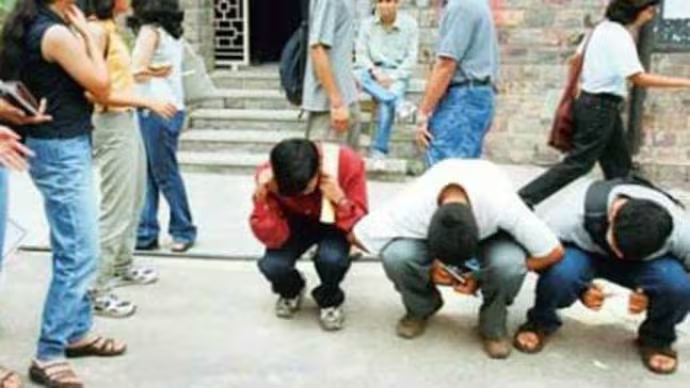
Ragging is the term used for the “Initiation Ritual” practiced in higher educational institutions. It is like an elephant in the room in the educational sphere in India and a word dreaded by the students and their family members alike. It involves abuse, humiliation or harassment of new entrants or junior students by the senior students. The senior students feel that it is a tool of social interaction and thus helps their juniors to break the ice with their seniors. Generally, ragging is a form of systematic and sustained physical, mental and even sexual abuse of freshers at the colleges, university and educational institutions at the hands of senior students and sometimes even by outsiders in campus and hostel. Ragging is a subset of bullying. Unlike various complex forms of bullying, ragging is easily recognisable.
In 2025, Mihir Ahammed a 15-year-old student of the Global Public School Ernakulam, Kochi committed suicide after he was ragged by his senior classmates. According to the police, the student committed suicide by jumping off the 26th floor of a 40-story flat complex. Mihir’s case is not an isolated one. From 2012 to 2024, there have been more than 300 cases of suicides or deaths directly linked to ragging. It is shocking that from 2022 to 20244 alone, 51 cases of deaths directly linked to ragging have been reported. Another shocking revelation is that although only 1.1% of the total students in higher education pursue medical sciences, nearly 45% of the ragging related deaths have occurred in the medical college campuses in the last decade. More than 10,000 students have suffered lifetime mental trauma, social stigma or psychological scars directly linked to the effects of ragging. As many as 50 parents of the victims have committed suicide during this period. Whie there exists no data published by the Government on this matter, the reports of different NGOs help us to understand the dreadful effects caused by this menace on the Indian society. It is shocking to learn that although nearly 45% of the students in India face ragging, only 8.6% of them report the incidents. This shows the helplessness rooted in the psyche of the students, an issue the Government must take notice of. Among the states, Maharashtra leads the chart in the number of ragging related cases, followed by Uttar Pradesh and Tamil Nadu.
As per UGC regulations, it is mandatory for a college to register a first information report (F.I.R.) with police against the culprits if any violence, physical abuse, sexual harassment, confinement etc. takes place with any fresher. After receiving any such complaint from the helpline, it becomes the duty of the head of the institution to register the F.I.R. with police within 24 hours. In 2013, a police case was registered against the director, dean and registrar of a reputed college in Delhi for, among other charges, not informing the police and registering F.I.R. within 24 hours of receiving the ragging complaint.
In 1997, the state of Tamil Nadu first passed laws related to ragging. Subsequently, a major boost to anti-ragging efforts was given by a landmark judgement of the Supreme Court of India in May 2001, in response to a Public Interest Litigation filed by the Vishwa Jagriti Mission founded by Sudhanshu Ji Maharaj. In 1999, the Government of Maharashtra enacted the Maharashtra Prohibition of Ragging Act, 1999 to prohibit ragging. The Ministry of Human Resources Development (MHRD), following a directive by the Supreme Court, appointed a seven-member panel headed by former CBI director Dr. R. K. Raghavan to recommend anti-ragging measures. The Raghavan Committee report, submitted to the court in May 2007, includes a proposal to include ragging as a special section under the Indian Penal Code. In 2009, in the wake of Aman Kachroo’s death, the University Grants Commission (UGC) passed UGC regulation on curbing ragging in higher educational institutions. These regulations mandate every college responsibility to curb ragging, including strict pre-emptive measures, like lodging freshers in a separate hostel, surprise raids at night by the anti-ragging squad and submission of affidavits by all senior students and their parents taking oath not to indulge in ragging. Society Against Violence in Education (SAVE) is India’s first registered anti-ragging nonprofit organisation (NGO). Bhartiya Nyaya Sanhita (BNS), 2023 acknowledges ragging under wrongful restraint, criminal intimidation, and assault.
Challenges in Eradication of the Menace
Deep-Rooted Cultural & Traditional Acceptance: Ragging is perceived as a tradition or rite of passage which prepares newcomers for the challenges of academic life and the real world.
Lack of Awareness: Lack of awareness among freshers about anti-ragging helplines and complaint portals.
Fear of Retaliation: Victims often hesitate to report incidents due to fear of retaliation, further harassment or ridicule by others.
Lack of Strict Enforcement: Weak enforcement of anti-ragging laws and the burden of proof on victims often allow perpetrators to go unpunished. Ineffective grievance redressal -Many anti-ragging committees exist only in name, lacking real authority or action. Complaints are often ignored or not resolved in a timely manner.
Role of Institutions: Institutions often downplay enforcing anti-ragging laws to protect their reputations, rankings and funding.
Inadequate monitoring & grievance mechanisms:
Poor CCTV surveillance and lack of digital complaint tracking reduce transparency and accountability.
Inefficiencies in anti-ragging helplines result in many cases going unreported or unresolved.
Raghavan Committee Recommendations (2007)
Accreditation: National Assessment and Accreditation Council bodies should factor incident of ragging while accrediting institutions.
Set up Anti-Ragging Cells, Anti-Ragging Committee and an Anti-Ragging Squad.
Setting up of ‘Mentoring Cell’ in each institution to oversee and involve senior students as Mentors for the ‘fresher’.
Advertisement: Launch effective advertisement campaigns at the national and regional level regarding `zero tolerance’ towards ragging.
National Council of Educational Research and Training (NCERT) and State Council of Educational Research and Training (SCERT) should devise Human Rights education of which awareness against ragging should be a compulsory part.
Way Forward
1. Strengthening legal & institutional framework
Invoke UGC Clause 9.4 against non-compliant institutions.
Fast-track trials and strict punishment for offenders.
2. Technology-driven monitoring
Install AI-based CCTVs in hostels and campuses.
Create anonymous digital complaint tracking systems.
3. Awareness & Behavioural change
Conduct mandatory anti-ragging workshops.
Implement student mentorship programs to foster inclusivity.
4. Strengthening reporting mechanisms
Improve UGC helpline accessibility.
Establish anonymous online reporting portals with direct police alerts.
5. Community and peer involvement:
Mobilize senior students to act as mentors and promote a positive campus culture.
Engage parents and local communities in anti-ragging initiatives.
Conclusion
Despite strong laws and Supreme Court guidelines, ragging continues to plague India’s education system. A multi-pronged approach involving legal action, institutional reforms, technology integration, and cultural change is essential. Strict enforcement and student-led initiatives can create a safe and inclusive academic environment, free from the menace of ragging.
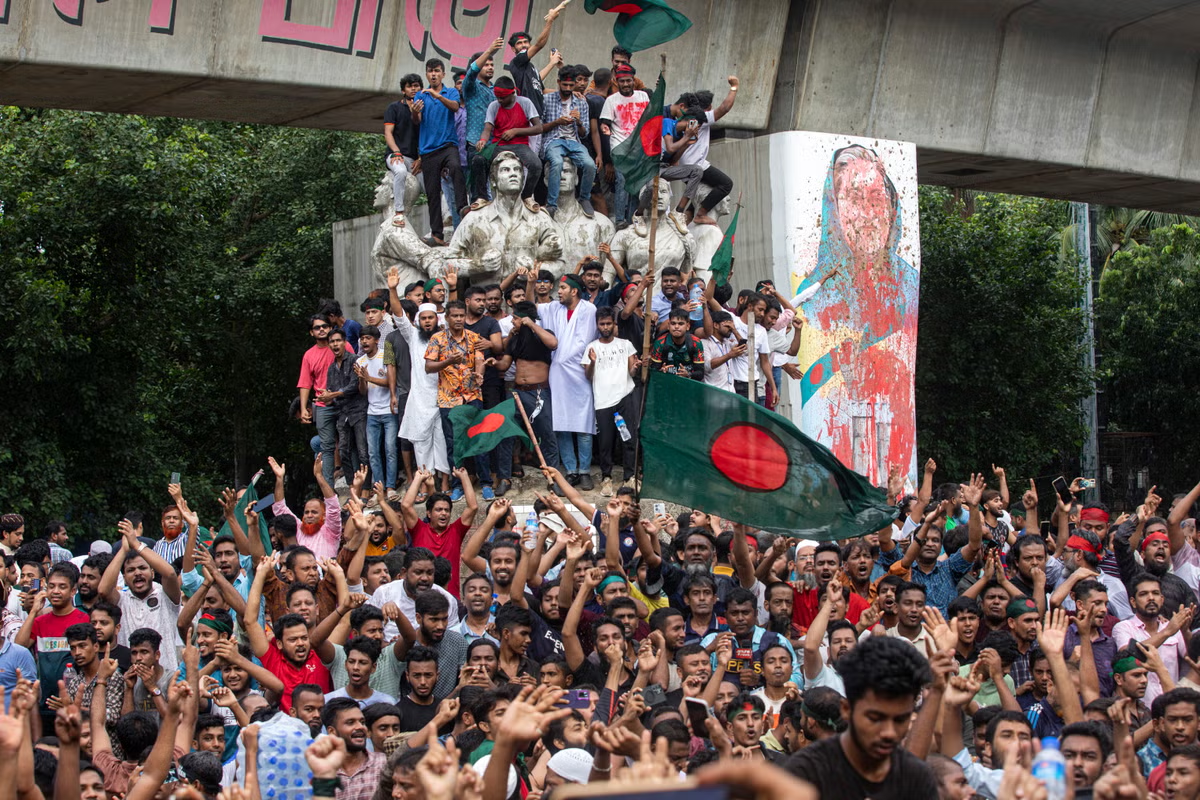
The July Revolution, also known as the July Mass Uprising or the Student-People’s Uprising was a pro-democracy mass uprising in Bangladesh in 2024. It began as a quota reform movement in early June 2024, led by the Students Against Discrimination, after the Bangladesh Supreme Court invalidated the government’s 2018 circular regarding job quotas in the public sector. By early August, the movement evolved into a non-cooperation movement. On 4 August, thousands of protesters convened at Dhaka’s Shahbag intersection in the morning, obstructing it as a form of civil disobedience to demand the resignation of the government. This was followed by hundreds of casualties. The following day, the protesters called for the Long March to Dhaka in defiance of a nationwide curfew to press Sheikh Hasina to resign. The long march of crowded people to Ganabhaban forced her to resign. She, along with her sister Sheikh Rehana, then fled the country to India via military on 5 August 2024. Hasina’s ouster triggered a constitutional crisis, leading to the formation of an interim government led by the country’s only Nobel laureate, Muhammad Yunus, as the chief adviser.
By early August 2024, the unrest resulted in a significant death toll. Initial official reports claimed 215 deaths, but a United Nations investigation later confirmed that at least 650 people were killed. In August, the Interim Government’s Health and Welfare Adviser, Nurjahan Begum, reported that over 1,000 individuals had been killed in the uprising and more than 400 students had lost their eyesight. Additionally, more than 20,000 were injured, and over 11,000 were arrested nationwide. Among the deceased were at least 32 children, according to UNICEF. In January 2025, the interim government of Bangladesh published a gazette containing the initial finalized list of 834 recorded deaths. However, the actual number of casualties may be higher due to restrictions imposed by the previous government, which included barring hospitals from sharing data, confiscating CCTV footage, and burying some victims without proper identification. There were visuals of Indians especially the Hindus were being tortured, temples were being demolished and the statues of the founding father of Bangladesh being destroyed all over the country.
On 12 February 2025, the United Nations Office of the High Commissioner for Human Rights published a thorough report on the events that took place from 1 July to 5 August 2024, which suggested a death toll of 1,400.
Triggered by the reinstatement of a quota system for allocation of civil service positions, initially peaceful student protests in Bangladesh that started in mid-June 2024 were followed by violence and serious human rights violations committed by security forces. Hundreds of people were killed, including at least 32 children, and thousands injured. There are strong indications, warranting further independent investigation, that the security forces used unnecessary and disproportionate force in their response to the situation. Alleged violations included extrajudicial killings, arbitrary arrests and detention, enforced disappearances, torture and ill-treatment, and severe restrictions on exercise of freedoms of expression and peaceful assembly.
Bangladesh introduced a Reservation Policy in 1972. Till 1976, 80 per cent of Government jobs fell under the Reserve category and only 20 per cent of jobs were to be filled on the basis of merit. 30 per cent was reserved for freedom fighters, 10 per cent for war-affected women, and, 40 per cent for the backward districts.
In 1976, the quotas were decreased from 80 per cent to 60 per cent. In 1982, the quotas were reduced to 55 per cent, with three changes. One, the 10 per cent quota for women was thrown open to all women, not just war-affected women. Two, the quota for backward districts was further reduced from 20 per cent to 10 per cent. And, three, a new five per cent quota was introduced for indigenous communities. In 1997, the children of freedom fighters became eligible for the reservation. And, in 2010, it was extended to include grandchildren of freedom fighters.
In 2012, the quotas were increased to 56 per cent by giving a one per cent quota to persons with disabilities. Protests against Bangladesh quota policy were not new. Anti-quota protests took place six years ago. Then, like now, the protests began at Shahbagh in Dhaka, before spreading to other parts of the country.
In January 2018, a petition was filed in the Dhaka High Court seeking re-evaluation of quota policy. In March that year, Dhaka High Court rejected the petition. Protests broke out in April. In October of 2018, the Government abolished the quota for freedom fighters’ families.
On 5 June 2024, the Dhaka High Court ruled that the 2018 Government decision to abolish the quota was illegal, and, re-instated the quota. Subsequently, the Government moved the country’s top court against the High Court ruling. On 1 July, protests broke out. On 4 July, the Bangladesh Supreme Court upholds the High Court ruling. On 11 July, the Supreme Court suspended the High Court ruling, pending a hearing on the Government’s appeal on 7 August.
A combative Bangladesh Prime Minister Sheikh Hasina tried to suppress the movement and initially launched verbal attacks against those who were protesting and called them ‘Razakars’. Razakar is a Persian word meaning volunteer. But, in Bangladesh, it is a pejorative term that stands for traitor. It is used for those accused of collaborating with Pakistan’s Army in 1971 to betray the country. The Razakar was a paramilitary force created by Pakistan to commit war crimes, including massacring civilians, looting, and, rape. The Bangladesh Government brands all collaborators of the Pakistani forces as Razakar.
The Dhaka High Court said: “The freedom fighters are pride of our nation. Thus, we are of the view that during the period of August 15, 1975, to 1996, the freedom fighters, their children and grandchildren have been suffering socially, economically and politically, which makes them one of the most backward sections of the citizen of this country”.
There were compelling arguments to be made against quotas, too. For one, protesters argued that a problem arises when freedom fighters’ quota-holders use it multiple times: First at the time of university admission and later when applying for coveted government jobs. And, two, Bangladesh is facing high youth unemployment. That, coupled with stagnant job-growth in private sector makes a government job with a regular source of income that much more desirable to youths.
Post-Hasina, India lacks deep institutional links with the interim government and broader political spectrum. India’s decision to host Sheikh Hasina in exile has been perceived in Bangladesh as political interference, further exacerbating tensions. Bangladesh is a key partner in China’s Belt and Road Initiative (BRI) and receives significant Chinese investments in infrastructure projects such as ports, roads, energy, telecom, and the Teesta River Restoration. Illegal immigration from Bangladesh continues to strain India’s northeastern states, causing socio-economic and political tensions. The Rohingya refugee crisis has further complicated the issue.
Bangladesh is India’s largest trade partner in South Asia, while India is its second-largest trade partner in Asia. In FY 2023-24, the total bilateral trade stood at USD 12.9 billion.
India’s exports to Bangladesh stood at USD 11.06 billion and India’s imports from Bangladesh were at USD 1.8 billion.
Persistent issues of cross-border terrorism, insurgency support, and trafficking remain with Insurgent groups like United Liberation Front of Asom have reportedly operated camps in Border regions.
Despite economic ties, public perception has soured due to perceived Indian interference in Bangladesh’s internal politics. On the other hand, hatred towards India is not new in Bangladesh. Bangladesh’s mostly uneducated young generation is continually taught by the fundamentalists there to harbour hatred against India in the name of religion. India’s role and Indira Gandhi’s role in the independence of Bangladesh from the clutches of the Pakistan are continually undermined by the heretics there. Coupled with the notorious allies like Pakistan and China, Bangladesh is a constant source of concern for India even though as a nation it has reached the unfathomable bottom of moral, intellectual and existential degradation.
Prime Minister Narendra Modi met with Bangladesh’s Chief Adviser Muhammad Yunus in Bangkok on the sidelines of the BIMSTEC (Bay of Bengal Multi-Sectoral Technical and Economic Cooperation) Summit. This marks their first official interaction since the ouster of former Prime Minister Sheikh Hasina. This opens new vistas for relationship between the two nations. However, India must work on her diplomatic, commercial, cultural and historical leverage on the neighbour. Protection of the Indians irrespective of their religions in Bangladesh must be a priority of the Government. China’s influence on the tiny, inefficient nation must be met with a counter policy of assistance on the basis of loyalty. The water treaty, trade leverages, linguistic proximity, far superior military and intellectual prowess -everything must be rationally, judicially and diplomatically used to make the relation work in favour of India.
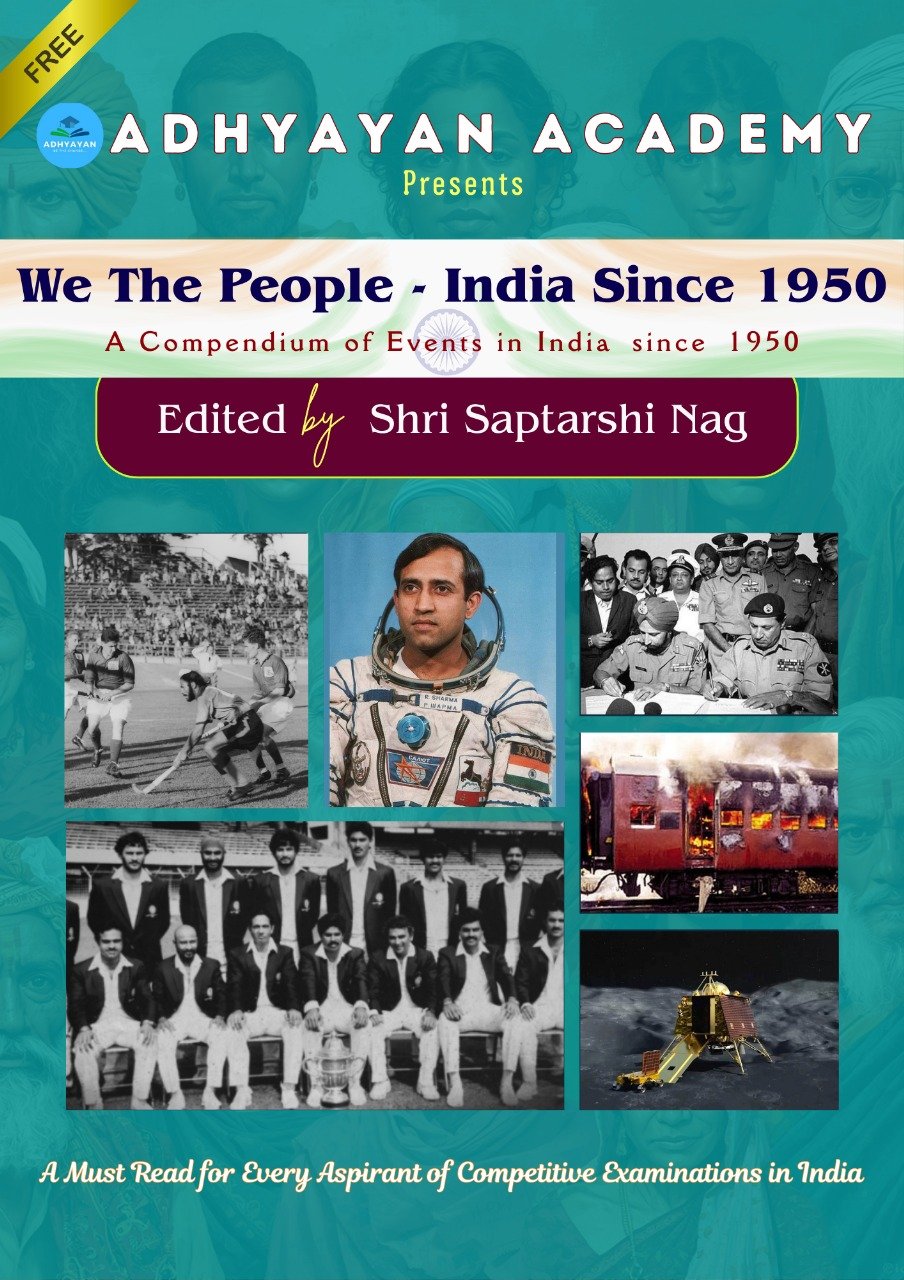
Finally the next work is seeing the daylight. Although it is not a creative work like the previous one ’28 Days of Thinking Differently’, this book is going to help aspirants allover the country for any sort of examination conducted in India. Had many sleepless nights working on it but considering the social impact it will produce, I have decided to keep it free of cost. At the end of the day, sharing knoweldge is the goal an educated man should strive for. So, get it free of cost by becoming a member of the Telegram Channel of Adhyayan Academy for Competitive Examinations, the institute started by my wife after she quit her WBCS job. Even if you are not an aspirant, this is going to help you to hone your knowledge on India. If you are a quiz master, this may prove to be a gem for you. If you are a student, gift the free book to your friend. If you are a father, share this with your daughter or son. If you are in love, share this with your partner and show that you care. If you are a journalist, use this as your reference manual. I bet, once you finish you will surely be a General Knowledge Expert. Releasing on 22nd August. Stay tuned. The link of the Telegram Channel https://lnkd.in/gqtFSzJu