List of Abbreviations Part 2- ‘I’ to ‘Q’

I

IADF: International Agricultural Development Fund

IAEA: International Atomic Energy Agency

IBRD: International Bank for Reconstruction and Development

ICAI: Institute of Chartered Accountants of India

ICAR: Indian Council of Agricultural Research

IDBI: Industrial Development Bank of India

IDR: Indian Depository Receipts

IFAD: International Fund for Agricultural Development

IFC: International Finance Corporation

IFRS: International Financial Reporting Standard

IFSC: Indian Financial System Code

IFTU: International Federation of Trade Unions

ISKCON: International Society for Krishna Consciousness

ISO: International Standardisation Organisation

ISP: Internet Service Provider

ISRO: Indian Space Research Organisation

ISS: International Space Station

IST: Indian Standard Time

ICICI: Industrial Credit and Investment Corporation of India

ICMR     Indian Council of Medical Research          

ICOR      Incremental capital output ratio

ICRA      Investment information and Credit Rating Agency

IEX          Indian Energy Exchange

IMRB     Indian Market Research Bureau

INMARSAT:         International Maritime Satellite Organization

IPCC       Intergovernmental Panel on Climate Change

IPEC       International Program on Elimination of Child Labor

IPR         Intellectual Property Right

IRDA      Insurance Regulatory and Development Authority

ITDC       Indian Tourism Development Corporation

ITES        Information Technology Enabled Services

ICBM: Inter Continental Ballistic Missile

ICFTU:   International Confederation of Free Trade Unions

IELTS-     International English Language Testing System

IADS –    Integrated Air Defence System

IAQ –     Indoor air quality

IRBM – Intermediate Range Ballistic Missile

ITER –   International Thermonuclear Experimental Reactor

IBPS       Inter Bank Mobile Payment Service

IAAI       International Airport Authority of India

IAC         Indian Airlines Corporation

IAEA      international atomic Energy Agency

IAF         Indian Air Force

IARI        Indian Agriculture Research Institute

IAS         Indian Administrative Services

IAY          Indira Awas Yojana

IBA         Indian Bankers Association

IBRD      International Bank of Reconstruction and development (World Bank)

ICAR      Indian Council of Agriculture Research

ICBM     Inter Continental ballistic Missile

ICC         International Cricket council

ICFTU    International Confederation of Free Trade Unions

ICICI       Industrial Credit and Investment Corporation of India Limited

ICHR      Indian Council of Historical Research

ICJ          International Court of Justice

ICMR     Indian council of Medical Research

ICSI        Indian Company Secretaries Institute

ICWA     Indian Council of World Affairs

IDA         International Development Agency

IDBI        Industrial Development Bank of India

IDO        International Defence Organization

IDPL       Indian Drugs and Pharmaceuticals Limited

IET          Institute of Engineering and Technology

IFA          Indian Football Association

IFCI        Industrial Finance corporation of India

IFFI         International Film Festival of India

IFFCO    Indian Farmers Fertilizers Cooperative

IFTU       International Federation of Trade Unions

IGNOU  Indira Gandhi National Open University

IIPA        Indian Institute of Public Administration

IIS           Indian Institute of Sciences

IISCO     Indian Iron and Steel Company

IIT           Indian Institute of Technology

IMA       Indian Military Academy

IMF        International Monetary Fund

INS         Indian Naval ship

INSAT    Indian National Satellite

INTELSAT             International Telecommunication Satellite

INTERPOL            International Police Organisation

IOC         Indian Oil Corporation

IPC         Indian Penal Code

IPKF       Indian Peace keeping Force

IPS          Indian Police Services

IQ           Intelligence Quotient

IRC         International Red Cross

IRDA      International Regulatory Development Authority

IRDP      Integrated Rural Development program

ISB          Indian Standard Bureau

ISD         International Standard Dialling

ISI           Inter Service Intelligence

ISM        Indian School of Mines

ISO         International Organisation for Standardisation

ISRO      Indian Space Organisation

ITBT       Indo-Tibet Border Force

ITPO      Indian Trade promotion organisation

ITO         International Trade Organisation

J

JNNURM: Jawaharlal Nehru National Urban Renewal Mission

 JPC: Joint Parliamentary Committee

 JPEG: Joint Photographic Experts Group

 JWG: Joint Working Group

JSY: Janani Suraksha Yojana

JKLF: Jammu and Kashmir Liberation Front

K

KG: Kindergarten

 KPO: Knowledge Process Outsourcing

KVIC: Khadi & Village Industries Corporation

 KYC: Know your customer

KBE – Knight Commander of the Order of the British Empire

L

LBW:      Leg Before Wicket

 LMG:    Light Machine Gun

 LMP:     Licentiate in the practice of Medicine

 LAC:      Line of Actual Control

 LASER: Light Amplification by Stimulated Emission of Radiation

 LCA:      Light Combat Aircraft

LSD         Lysergic acid diethylamide

 LHC:      Large Hadron Collider

 LAF:      Liquid Adjustment Facility

 LIC:        Life Insurance Corporation (of India)

 LLP:       Limited Liability Partnership

 LTA:       Light Transport Aircraft

 LTTE:     Liberation Tigers of Tamil Eelam

 LAMPS: Large-sized Adivasi Multipurpose Societies

 LTCM:   Long Term Capital Management

LED –     Light-Emitting Diode

LCD:       Liquid Crystal Display

LNG –    Liquefied Natural Gas

                                M

 MA: Moving Average

 MAT: Minimum Alternative Tax

 MCA: Ministry of Company Affairs

 MDG: Millennium development goals

 MEP: Minimum Export Price

 MFA: Multi-Fiber Agreement

MODVAT:  Modified Value Added Tax

 MFI: Microfinance institution

 MFN: Most Favoured Nation

 MGNREGA: Mahatma Gandhi National Rural Employment Guarantee Act

 MPEG: Motion Picture Experts Groups

 MRF: Madras Rubber Factory

 MRI: Magnetic Resonance Imaging

 MRTPC: Monopolies and Restrictive Trade Practises Commission

 MRTS: Mass Rapid Transit System

MTS    Multi-Tasking Staff

MAPS    Madras Atomic Power Station

MAT       Minimum Alternate Tax

MASER Microwave Amplification by Stimulated Emission of Radiation

 MSA: Maritime Safety Agency

 MSCF: Maritime Security Cooperation Framework

 Mss: Manuscript

 MTCR: Missile Technology Control Regime

 MTO: Multilateral Trade Organisation

 MVC: Maha Vir Chakra

MTNL Mahanagar Telephone Nigam Ltd

MOU Memorandum of Understanding

MSTC Metals & Scrap Trading Corporation

MMTC Minerals & Metal Trading Corporation

                                N

NABARD: National Bank for Agriculture and Rural Development

 NAEP: National Adult Education Program

 NAFED: National Agricultural Cooperative Marketing Federation of India Ltd

 NAFTA: North American Free Trade Agreement

 NAM: Non-Aligned Movement

 NAMA: Non-Agriculture Market Access

 NASDAQ: National Association of Securities Dealers Automated Quotation

 NASSCOM: National Association of Software and Services Companies

 NATO: North Atlantic Treaty Organisation

 NAV: Net Asset Value

NASA    National Aeronautics  and space Administration

 NBFC: Non-Banking Finance Companies

 NCERT: National Council of Education Research and Training

 NCPCR: National Commission for Protection of Child Rights

 NDC: National Development Council

NOIDA: New Okhla Industrial Development Association

 NEFT: National Electronic Fund Transfer

 NEGP: National E-Governance Plan

 NEP: National Education Policy

NPP       National Population Policy

NPT        Nuclear Non-Proliferation Treaty

NREP     National Rural Employment Programme

NRI         Non Resident Indian

NSC        National Security Council

NSS        National Saving Scheme

 NFO: New Fund Offers

 NGO:    Non-Governmental Organisation

 NHAI:   National Highways Authority of India

 NHDP: National Highways Development Project

 NHRC: National Human Rights Commission

 NIC:      National Industrial Classification

 NIFT:     National Institute of Fashion Technology

 NRI:      Non-Resident Indian

 NSC:     National Statistical Commission

 NSDL:   National Securities Depository Limited

 NSE:      National Stock Exchange

NBCCL: National Buildings Construction Corporation Limited

NMDC:  National Mineral Development Corporation

 NSSO:   National Sample Survey Organisation

 NTPC:   National Thermal Power Corporation

 NCC:     National Cadet Corps

NALCO- National Aluminium Company Limited

NTFS:    New Technology File System

NHPC:   National Hydroelectric Power Corporation

NEFT:     National Electronic Funds Transfer

NDMA- National Disaster Management Authority

NITI:      National Institution for Transforming India

NPS- National Pension System

NEFA: North East Frontier Agency

 NSS: National Service Scheme

 NAA: National Airport Authority

 NRSA: National Remote Sensing Agency

 NSA: National Security Act

 NSC: National Service Corps; National Security Council

 NSDL: National Securities Depository Limited

 NSE: National Stock Exchange

 NSR: National Skills Registry

 NWDA: National Water Development Agency

 NWRC: National Water Resources Council

                                O

ONOS: One Nation One Subscription

OIC: Organisation of Islamic Countries

 OIL: Oil India Limited

 OLTAS: On-Line Tax Accounting System

 OMCS: Oil Marketing Companies

 ONGC: Oil And Natural Gas Commission

 OPEC: Organisation Of Petroleum Exporting Countries

 OSCE: Organisation For Security and Cooperation in Europe

OBC: Other Backward Classes

 OBU: Offshore Banking Unit

 ODA: Official Development Assistance

 ODF: Open Document Format

 ODS: Ozone Depletion Substances

 OECD: Organisation of Economic Co-operation and Development

 OGL: Open General Licence

 OIGS: On India Government Service

 ONGC: Oil and Natural Gas Commission

 OXML: Open Extended Marking Language

P

 PAC: Public Accounts Committee

 PACS: Primary Agriculture Credit Societies

 PAN: Permanent Account Number (Of Income-Tax)

 PATA: Pacific-Asia Travel Association

 PCI: Per capita income

 PD: Primary Deficit

 PDO: Public Debt Office

 PDS: Public Distribution System

PLO: Palestine Liberation Organization

PMJJBY: Pradhan Mantri Jeevan Jyoti Bima Yojana

PMJDY: Pradhan Mantri Jan Dhan Yojana

PMSBY: Pradhan Mantri Suraksha Bima Yojana

PMSAGY: Pradhan Mantri Sansad Adarsh Gram Yojana

PMSSY: Pradhan Mantri Sukanya Samriddhi Yojana

PMFBY: Pradhan Mantri Fasal Bima Yojana

 PIL: Public Interest Litigation

PPO: Pension Payment Order

POCSO: Protection of Children from Sexual Offences Act

PPLO: Pleuro Pneumonia Like Organisms

 PIO: Persons Of Indian Origin

 PN: Participatory Note

 PNB: Punjab National Bank

PCS:       Provisional Civil Services

 PO: Principal Office

POW: Prisoner of War

 PP: Public Prosecutor; Particular Person

 PRO: Public Relations Officer

 PS: Post Scriptum; PostScript; written after

 PSC: Public Service Commission

 PSE: Public Sector Enterprises

 PSLV: Polar Satellite Launch Vehicle

 PTA: Preferential Trade Area

 PTI: Press Trust of India

 PTO: Please Turn Over; Privilege Ticket Order

 PUFA: Polyunsaturated Fatty Acids

 PVC: Param Vir Chakra

 PVSM: Param Vishisht Seva Medal

 PWD: Public Works Department

PMMY: Pradhan Mantri Mudra Yojana

Q

 QIB:  Qualified Institutional Buyer

 QIP: Qualified Institutional Placement

 QR: Quantitative Restriction

 QMG: Quarter Master General

 QR: Quantitative Restriction

To get my guidance for English/Bengali/ Economics or overall Guidance for WBCS or any other exams,please call or whatsapp @ 6295350330. This is the official number of Adhyayan Academy. My much awaited descriptive English /Bengali Course for 1 year is starting from 1st September. Admission is going on for my Clerkship Main/ WBSSC Group C Course. Mock Test Course for PSC Miscellaneous Main has also started.

For regular updates, follow us @ FB, YouTube or Telegram with following links

FB- https://www.facebook.com/Adhyayanacademyslg/

YouTube- https://www.youtube.com/@theadhyayanacademy

Telegram- https://t.me/theadhyayanacademy

Sports GK Part 2

Lala Amarnath was the first Indian to score a test century in 1933 vs England.

India’s first test match against England in 1932. India had to wait for 20 more years for their first test victory. It was in 1952 against England.

First Indian test captain- CK.Nayudu was the first Indian test captain

Ajit Wadekar was the first Indian ODI Captain

Virender Shehwag was the first Indian t20I captain

Most test wickets M. Muralitharan -800

Most test wickets by an Indian- Anil Kumble- 619

Sachin Tendulkar played for Pakistan as a substitute fielder before his debut for India. 1987

The first ever international cricket match was indeed played between the USA and Canada. It took place in 1844, at St. George’s Cricket Club Ground in New York. The match was scheduled for two days but was extended to three due to rain. Canada won the match by 23 runs.

Shoaib Akhtar is known for his bowling skills and recorded history by delivering the fastest ball in the history of cricket, 161.3 km/hr.

Sachin Tendulkar was the first man to be declared out by a third umpire.

Misbah Ul huq, Pakistan was the only cricketer to score more than 5000 ODI runs without a century.

The first World Cup in the history of cricket was played by women and not men, which took place two years before men arrived on the field. In 1973, the inaugural Women’s World Cup was held and hosted by England. Later, in the year 1975, the Men’s Cricket World Cup was followed in England and was won by the West Indies. This highlights the role of women’s cricket in establishing the World Cup tradition.

A source of pride for our country is that India is the only country in the entire world to hold world cups in different formats, such as 60, 50, and 20 overs.

Only Brazil is the team to play all world cups till now. ( 22 total)

Lionel Messi has played maximum world cup matches so far ( 26)

Mirosal Klose with 16 goals is still the highest scorer in World Cup football in terms of total goals scored.

Just Fontaine, France scored 13 goals in just one World Cup tournament. 1958

Oleg Salenko of Russia scored highest goals in a match ( 5) vs Cameroon in 1994.

Teams to win World Cup football

Brazil 5 times

Italy and Germany- 4 times each

Argentina- Thrice

France and Uruguay- Twice each

England and Spain – Once

Sheffield Football Club, founded in 1857, is recognised by both the English FA and FIFA as the oldest football club in the world that still plays association football.

The biggest victory in an international football match happened in 2001 when Australia defeated American Samoa 31-0 during a FIFA World Cup qualifier.

Originally called cuju, the first version of football originated in the Han dynasty more than 2000 years ago.

To get Saptarshi Sir’s guidance for PSC Miscellaneous Mains/ Clerkship Main/ English/Economy or for overall WBCS or other exam preparation, call or WhatsApp us @6295350330. Classes for PSC Miscellaneous Main and Clerkship Main have already started. WBCS New batch is also going on. You can also download our app for online guidance using the link

https://play.google.com/store/apps/details?id=co.penny.oecgd&pcampaignid=web_share

For free notes, daily quizzes, word games and many other surprises, please join our Telegram Group using the link below

https://t.me/theadhyayanacademy

Facts Related to Environment- India

Important Summits related to Environment

United Nations Conference on the Human Environment (Stockholm, 1972)

1992 Earth Summit in Rio de Janeiro

Ramsar Convention 1971 on wetland conservation and sustainable use

The Montreal Protocol, finalized in 1987, is a global agreement to protect the stratospheric ozone layer by phasing out the production and consumption of ozone-depleting substances (ODS). ODS are substances that were commonly used in products such as refrigerators, air conditioners, fire extinguishers, and aerosols

India currently has 91 Ramsar sites, making it the country with the highest number of Ramsar-designated wetlands in Asia and third highest globally.

In 1972, India enacted the Wildlife Protection Act

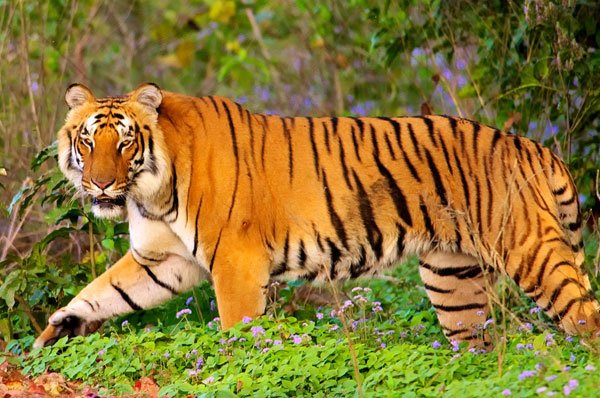
Project Tiger was launched in Jim Corbett National Park of Uttarakhand in 1973, and various tiger reserves were created in the country based on a ‘core-buffer’ strategy.

Project Elephant is a centrally sponsored scheme initiated by the Government of India in 1992 to safeguard the Indian elephant population and their habitats.

Under Project Cheetah, the Prime Minister of India released wild cheetahs in Kuno National Park in Madhya Pradesh. Cheetah became extinct from India in 1952

পশ্চিমবঙ্গের ভৌগোলিক এলাকার ১৪% বনভূমি , যা জাতীয় গড়ের ৩৩% এর চেয়ে কম।

জাতীয় উদ্যান এবং বন্যপ্রাণী অভয়ারণ্য (WB)

বল্লভপুর বন্যপ্রাণী অভয়ারণ্য

বেথুয়াদহরি বন্যপ্রাণী অভয়ারণ্য

বিভূতিভূষণ বন্যপ্রাণী অভয়ারণ্য

বক্সা টাইগার রিজার্ভ

চাপরামারী বন্যপ্রাণী অভয়ারণ্য

চিলাপাতা বন

চিন্তামণি কর পাখি অভয়ারণ্য

গোরুমারা জাতীয় উদ্যান

হ্যালিডে দ্বীপ বন্যপ্রাণী অভয়ারণ্য

জলদাপাড়া জাতীয় উদ্যান

জোরে পোখরি বন্যপ্রাণী অভয়ারণ্য

লোথিয়ান দ্বীপ বন্যপ্রাণী অভয়ারণ্য

মহানন্দা বন্যপ্রাণী অভয়ারণ্য

নেওরা ভ্যালি জাতীয় উদ্যান

নরেন্দ্রপুর বন্যপ্রাণী অভয়ারণ্য

পাখি বিতান বন্যপ্রাণী অভয়ারণ্য

রায়গঞ্জ বন্যপ্রাণী অভয়ারণ্য

রামনবাগান বন্যপ্রাণী অভয়ারণ্য

রসিকবিল পাখি অভয়ারণ্য

সজনেখালি বন্যপ্রাণী অভয়ারণ্য

সেঞ্চল বন্যপ্রাণী অভয়ারণ্য

সিঙ্গালিলা জাতীয় উদ্যান

সুন্দরবন জাতীয় উদ্যান

ময়ূরঝর্ণা হাতি সংরক্ষণাগার

National Parks- Important facts

National Parks in India- 107

Oldest National Park- Jim Corbett NP (Uttarakhand)

Largest National Park- Hemis, Ladakh

Maximum NPs in India- Madhya Pradesh (11)

First NP in West Bengal- Sundarban (1984)

Latest National Park in WB- Jaldapara (1986)

Keibul Lamjao National Park, located in Manipur, is the only floating national park in the world, situated on Loktak Lake.

South Button Island National Park in the Andaman and Nicobar Islands is the smallest, with an area of just 5 square kilometers.

Satpura National Park in Madhya Pradesh is known for allowing walking safaris and camping within the park.

As of May 2024, India’s National Parks covers a total area of 44,378 sq km and account for about 1.35% of India’s total surface area.

The Sangai deer’ is found in Keibul Lamjao National Park (Manipur).

India’s first Golden Tiger was spotted in Kaziranga National Park.

Dachigam National Park (jammu and Kashmir) has been established for the conservation of the hangul or Kashmiri deer.

Punjab is the only Indian state which has no national park.

“National parks in West Bengal” (6)

Buxa Tiger Reserve

Gorumara

Jaldapara

Sundarban

Sigalila

Neora Valley

Difference Between Wildlife Sanctuary and National Park

Wildlife Sanctuary                                                                                     National Park

Human activities are allowed.                                                      No human activities are allowed.

Protects particular flora or fauna                                             Wide range of flora and fauna  

There are no fixed boundaries.                                                    Boundaries are fixed and defined.

 It is open to the general public                                                   Not usually open to the public.

A sanctuary can be upgraded to a national park             Cannot be downgraded to a sanctuary.

There are 18 biosphere reserves in India. They protect larger areas of natural habitat than a typical national park or animal sanctuary, and often include one or more national parks or reserves, along with buffer zones that are open to some economic uses. Protection is granted not only to the flora and fauna of the protected region, but also to the human communities who inhabit these regions, and their ways of life.

Sundarbans Biosphere Reserve-West Bengal

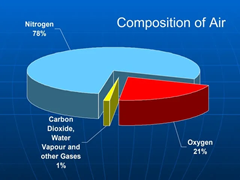
Air, the gaseous envelope surrounding Earth, is primarily composed of nitrogen and oxygen, with smaller amounts of other gases like argon, carbon dioxide, and trace amounts of other gases like helium and neon. Water vapor and dust particles are also present in varying amounts.

Here’s a breakdown of the major components:

Nitrogen (N₂): Approximately 78.09% of dry air.

Oxygen (O₂): Around 20.95% of dry air.

Argon (Ar): About 0.93% of dry air.

Carbon Dioxide (CO₂): A small but significant amount, around 0.04%.

Other Gases: Trace amounts of gases like helium, neon, krypton, and methane.

Water Vapor: The amount of water vapor in the air varies depending on location and weather conditions.

Dust Particles: Also present in varying amounts.

The five most abundant greenhouse gases in Earth’s atmosphere, listed in decreasing order of average global mole fraction, are water vapor, carbon dioxide, methane, nitrous oxide, ozone. Other greenhouse gases of concern include chlorofluorocarbons (CFCs and HCFCs), hydrofluorocarbons (HFCs), perfluorocarbons, SF6, and NF3. Water vapor causes about half of the greenhouse effect.

The Earth’s atmosphere is composed of five primary layers: the troposphere, stratosphere, mesosphere, thermosphere, and exosphere. These layers are defined by their temperature profiles and altitude ranges.

Here’s a breakdown of each layer:

1. Troposphere:

This is the lowest layer, extending from the Earth’s surface up to about 7 to 20 kilometers (4 to 12 miles) depending on the latitude. It’s where we live and where most weather occurs.

2. Stratosphere:

Located above the troposphere, the stratosphere extends from about 12 to 50 kilometers (7 to 31 miles). The ozone layer, which absorbs harmful UV radiation, is found within this layer. Unlike the troposphere, temperature increases with altitude in the stratosphere. The ozonosphere resides within the stratosphere, the second layer of Earth’s atmosphere, above the troposphere (where we live).

3. Mesosphere:

Situated above the stratosphere, the mesosphere extends from 50 to 85 kilometers (31 to 53 miles). It’s the coldest layer, with temperatures reaching as low as -90°C (-130°F) near the top. Most meteors burn up in the mesosphere.

4. Thermosphere:

This layer is above the mesosphere and extends from about 85 to 600 kilometers (53 to 372 miles). Temperatures in the thermosphere can be very high, but the air is so thin that it would feel cold to us. The aurora borealis and aurora australis occur in this layer.

5. Exosphere:

The outermost layer, the exosphere, extends from the top of the thermosphere to about 10,000 kilometers (6,200 miles). It gradually fades into interplanetary space. The air is extremely thin here, and particles can escape into space.

Major Environmental Movements in India

Bishnoi Movement

Year: 1700s

Place: Khejarli, Marwar region, Rajasthan state.

Leaders: Amrita Devi along with Bishnoi villagers in Khejarli and surrounding villages.

Aim: Save sacred trees from being cut down by the king’s soldiers for a new palace.

Chipko Movement

Year: 1973

Place: In Chamoli district and later in Tehri-Garhwal district of Uttarakhand.

Leaders: Sundarlal Bahuguna, Gaura Devi, Sudesha Devi, Bachni Devi, Chandi Prasad Bhatt, Govind Singh Rawat, Dhoom Singh Negi, Shamsher Singh Bisht and Ghanasyam Raturi.

Aim: The main objective was to protect the trees on the Himalayan slopes from the axes of contractors of the forest.

Silent Valley Movement

Year: 1978

Place: Silent Valley, an evergreen tropical forest in the Palakkad district of Kerala, India.

Leaders: The Kerala Sastra Sahitya Parishad (KSSP) an NGO, and the poet-activist Sughathakumari played an important role in the Silent Valley protests.

Aim: To protect the Silent Valley, the moist evergreen forest from being destroyed by a hydroelectric project.

Narmada Bachao Andholan (NBA)

Year: 1985

Place: Narmada River, which flows through the states of Gujarat, Madhya Pradesh and Maharashtra.

Leaders: Medha Patker, Baba Amte, Adivasis, farmers, environmentalists and human rights activists.

Aim: A social movement against several large dams being built across the Narmada River.

Tehri Dam Conflict

Year: 1990’s

Place: Bhagirathi River near Tehri in Uttarakhand.

Leaders: Sundarlal Bahuguna

Aim: The protest was against the displacement of town inhabitants and the environmental consequence of the weak ecosystem.

Here’s a list of common abbreviations related to environmental concepts, laws, and organizations:

EIA: Environmental Impact Assessment

EMP: Environmental Management Plan

EMS: Environmental Management System

BOD: Biochemical Oxygen Demand

COD: Chemical Oxygen Demand

DO: Dissolved Oxygen

GHG: Greenhouse Gas

EPA: Environment (Protection) Act, 1986

WPA: Wildlife Protection Act, 1972

FCA: Forest Conservation Act, 1980

WPA: Water (Prevention and Control of Pollution) Act, 1974

APA: Air (Prevention and Control of Pollution) Act, 1981

BD Act: Biological Diversity Act, 2002

CPCB: Central Pollution Control Board

SPCB: State Pollution Control Board

NGT: National Green Tribunal

UNEP: United Nations Environment Programme

WWF: World Wildlife Fund

IUCN: International Union for Conservation of Nature

IPCC: Intergovernmental Panel on Climate Change

SDG: Sustainable Development Goals

COP: Conference of the Parties (under the UNFCCC)

UNFCCC: United Nations Framework Convention on Climate Change

CSR: Corporate Social Responsibility

ODS: Ozone-Depleting Substances

HWM: Hazardous Waste Management

EPR: Extended Producer Responsibility

MSW: Municipal Solid Waste

RE: Renewable Energy

NRE: Non-Renewable Energy

EE: Energy Efficiency

CEA: Central Electricity Authority

1. মন্ট্রিয়ল প্রোটোকলের সঙ্গে জড়িত

[A] পারমাণবিক অস্ত্র

[B] ওজোন স্তরের ক্ষয়

[C] সমুদ্রের তলদেশ

[D] ল্যান্ডমাইন

Ans- b

2. মিনামাটা রোগের কারন হল –

[A] আর্সেনিক দূষণ

[B] পারদ দূষণ

[C] ক্যাডিয়াম দূষণ

[D] প্লাস্টিক দূষণ

Ans- B

3. জেনেটিক কোড আবিস্কারের জন্য কোন বিজ্ঞানী নোবেল পুরস্কার পেয়েছেন?

[A] প্রফুল্লচন্দ্র রায়

[B] হরগোবিন্দ খোরানা

[C] ডারউইন

[D] লফ্রেলোবেন

Ans- b

4.  সালোকসংশ্লেষে অর্থাৎ খাদ্য তৈরিতে সক্ষম এমন প্রাণী হল –

[A] রাইবোজোম

[B] হাইড্রিলা

[C] ইউপ্লিনা

[D] অ্যাজোটোব্যাকটর

                Ans-c

             5.  জলে ভাসমান আণুবীক্ষণিক উদ্ভিদগোষ্ঠীকে কী বলে?

[A] ফাইটোপ্লাংকটন

[B] বেনথস

[C] প্ল্যাংকটন

[D] জুপ্ল্যাংটন

Ans- A

   6.  লাল তথ্য পুস্তিকা বা ‘রেড ডাটা বুক’-এর তথ্যগুলি –

[A] লোহিত সাগরের প্রাণী সংক্রান্ত

[B] বিপন্ন প্রাণী সংক্রান্ত

[C] অপরাধজগৎ সংক্রান্ত

[D] বিপ্লবী তথ্য সংক্রান্ত

Ans- B

7. সিগারেটের ধোঁয়ায় অবস্থিত ক্যান্সার সৃষ্টিকারী উপাদানটি হল-

[A] কার্বন মনোক্সাইড

[B] বেঞ্জয়িক অ্যাসিড

[C] ক্লোরোবেঞ্জিন

[D] ডাই অক্সিজেন

Ans- C

8. পাখির দ্বারা বিস্তার লাভ করে সেই রোগের নাম-

[A] ভাইরাল

[B] মাইকোসিস

[C] অরনিথোসিস

[D] জুনটিক

Ans- C

9. ভারতের বৃহত্তম সরকারি তাপবিদ্যুৎ সংস্থা কোনটি?

[A] SAARC

[B] NTPC

[C] OPEC

[D] ONGC

Ans- B

10. 84. তামাক পাতায় উপস্থিত ক্ষতিকারক ধাতুর নাম –

[A] আয়রন

[B] মার্কারি

[C] ক্যাডমিয়াম

[D] আর্সেনিক

Ans- C

    Important National Parks of India

Name                    State

                Corbett National Park      Uttarakhand

                Kanha National Park        Madhya Pradesh

                Tadoba National Park      Maharashtra

                Madhav National Park    Madhya Pradesh

                Bandhavgarh National Park           Madhya Pradesh

                Kaziranga National Park  Assam

                Bandipur National Park   Karnataka

                Bannerghatta National Park          Karnataka

                Gir National Park               Gujarat

                Gugamal National Park   Maharashtra

                Pench National Park         Madhya Pradesh

                Blackbuck National Park Gujarat

                Guindy National Park       Tamil Nadu

                Keibul-Lamjao National Park         Manipur

                Khangchendzonga National Park Sikkim

                Dudhwa National Park    Uttar Pradesh

                Eravikulam National Park               Kerala

                Vansda National Park       Gujarat

                Van Vihar National Park  Madhya Pradesh

                Simlipal National Park     Odisha

                Ranthambore National Park         Rajasthan

                Gulf of Mannar Marine National Park       Tamil Nadu

                Dachigam National Park Jammu & Kashmir

                Hemis National Park        Jammu & Kashmir

                Kishtwar National Park    Jammu & Kashmir

                Panna National Park        Madhya Pradesh

                Sanjay National Park      Madhya Pradesh

                Satpura National Park     Madhya Pradesh

                Keoladeo Ghana National Park    Rajasthan

                Indravati National Park   Chhattisgarh

                Kanger Valley National Park          Chhattisgarh

                Marine National Park      Gujarat

                Periyar National Park       Kerala

                Nanda Devi National Park              Uttarakhand

                Valley of Flowers National Park    Uttarakhand

                Mahatma Gandhi Marine National Park   Andaman & Nicobar Islands

                Namdapha National Park               Arunachal Pradesh

                Fossil National Park          Madhya Pradesh

                Sanjay Gandhi National Park         Maharashtra

                Rajaji National Park          Uttarakhand

Silent Valley National Park             Kerala

                Sunderban National Park               West Bengal

                Balpakram National Park                Meghalaya

                Mouling National Park    Arunachal Pradesh

                Betla National Park           Jharkhand

                Nokrek Ridge National Park           Meghalaya

                Neora Valley National Park            West Bengal

                Singalila National Park     West Bengal

                Middle Button Island National Park            Andaman & Nicobar Islands

                Mount Harriet National Park        Andaman & Nicobar Islands

                North Button Island National Park              Andaman & Nicobar Islands

                Saddle Peak National Park             Andaman & Nicobar Islands

                South Button Island National Park              Andaman & Nicobar Islands

                Pin Valley National Park  Himachal Pradesh

Kudremukh National Park              Karnataka

Nagarahole (Rajiv Gandhi) National Park  Karnataka

Bhitarkanika National Park            Odisha

                Sri Venkateswara National Park   Andhra Pradesh

                Valmiki National Park       Bihar

                Sultan National Park        Haryana

                Indira Gandhi (Annamalai) National Park Tamil Nadu

                Gangotri National Park   Uttarakhand

                Manas National Park       Assam

                Mudumalai National Park              Tamil Nadu

                Govind National Park       Uttarakhand

                Murlen National Park      Mizoram

                Campbell Bay National Park          Andaman & Nicobar Islands

                Mollem National Park     Goa

                City Forest (Salim Ali) National Park           Jammu & Kashmir

                Phawngpui Blue Mountain National Park Mizoram

Desert National Park        Rajasthan

                Sariska National Park       Rajasthan

                Buxa National Park           West Bengal

                Gorumara National Park West Bengal

                Intanki National Park       Nagaland

                Mahaveer Harina Vanasthali National Park             Telangana

                Rani Jhansi Marine National Park                Andaman & Nicobar Islands

                Nameri National Park      Assam

                Dibru-Saikhowa National Park     Assam

                Rajiv Gandhi Orang National Park               Assam

                Kalesar National Park      Haryana

                Anamudi Shola National Park       Kerala

                Chandoli National Park   Maharashtra

                Clouded Leopard National Park   Tripura

                Bison National Park          Tripura

                Jaldapara National Park  West Bengal

For getting our guidance for PSC Miscellaneous Mains/ WBCS , pls call or whatsapp now- 6295350330

For WBCS online course, download our app now

https://play.google.com/store/apps/details?id=co.penny.oecgd&pcampaignid=web_share

‘Operation Barga’ in West Bengal

Operation Barga was a land reform movement, throughout rural West Bengal for recording the names of sharecroppers (bargadars) while avoiding the time-consuming method of recording through the settlement machinery. It bestowed on the bargadars, the legal protection against eviction by the landlords (jotedars), and entitled them to the due share of the produce. Operation Barga was launched in 1978 and concluded by the mid-1980s. Introduced in 1978, and given legal backing in 1979 and 1980, Operation Barga became a popular but controversial measure for land reforms. The ultimate aim of these land reforms was to facilitate the conversion of the state’s bargadars into landowners, in line with the Directive Principles of State Policy of the Indian Constitution. To date, Op Barga has recorded the names of approximately 1.5 million bargadars. The initiative has been studied and admired as a model for land reform in other regions, emphasizing the importance of recognizing and protecting the rights of marginalized farmers. 

The operation was divided into the following five distinct steps:

Identification of the priority pockets with large concentration of bargadars.

Camping by the Government Officials at the priority pockets.

Meeting between the bargadars and the government officials.

The collective participation of the villagers in the reconnaissance and field verification to establish the claims of sharecroppers.

Issue of temporary certificates called ‘parchas’ to confirm sharecroppers as evidence of their rights enabling them to obtain bank credit.

To begin with, group meetings between Officials and Bargadars were organized during “settlement camps” (also called “Reorientation camps”), where the bargadars could discuss their grievances. The first such camp was held at Halusai in Polba taluk in Hooghly district from 18 to 20 May 1978. An empirical analysis of the impact of Operation Barga on agricultural production, productivity, employment, income including its distribution and on the qualitative improvement in the utilization of barga land was conducted during the period 1986–88 in the three districts of Birbhum, Burdwan and Jalpaiguri in West Bengal.

Operation Barga was successful in enumerating the Bargadars. Over the period 1977–90, the fraction of registered sharecroppers rose from 23 to 65%. During the same period of time in West Bengal, there was expansion in public and private irrigation and there was technological change as well. These reforms, along with the guaranteed crop share and bargadar’s increased stake in the land led to an increase in agricultural output. By the end of 1982 about 1.2 million sharecroppers were recorded, out of the total estimated number of about 2.0-3.5 million.

By the end of June 1994 around 1460,000 bargadars had been recorded over an area of over 451,800 hectares. The most remarkable achievement of the programme, as reported in the 1986-88 study, was that it enhanced social status of the bargadars and security of tenancy.

West Bengal enjoyed a subsequent dramatic increase in farm output per unit of land, as well as farming incomes. By comparing the output of farms before and after the implementation of Operation Barga, economists concluded that both improved work motivation and investment occurred. One study suggested that Operation Barga was responsible for around 28% of the regional growth in agricultural productivity from 1979 to 1993. The empowerment of the bargadars also had positive spillover effects, as local governments became more responsive to the needs of poor farmers.

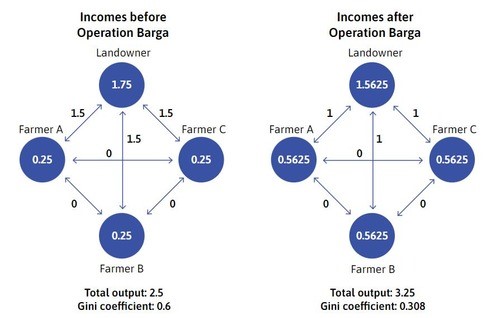
The above image shows how Operation Barga reduced Gini coefficient in WB

Operation Barga (and West Bengal’s land reforms in general) have been criticized for their small scope and inability to solve all the major problems. This criticism has been mainly due to policies not accounting for the high population-to-landmass ratio in Bengal (the highest in the country), the small and highly segregated land holding patterns and failure of the Government to develop agri-industrial markets for farm produce. These failures, critics contend, have distributed poverty rather than creating prosperity.