COP31

COP31 (Antalya, Türkiye, 9–22 November 2026) was the 31st Conference of the Parties to the UN Framework Convention on Climate Change (UNFCCC). It ended without consensus on an overarching cover decision (the proposed “Antalya Pact”), the first such failure since Copenhagen in 2009, after becoming the longest COP in history due to two days of overtime.

Background and Organisation

COP31 was hosted by Türkiye at the Antalya Expo Center. It featured a shared presidency arrangement agreed at COP30 in Belém: Türkiye held the formal COP Presidency (Murat Kurum, Minister of Environment, Urbanisation and Climate Change), while Australia led the negotiations (Chris Bowen, Minister for Climate Change and Energy, as President of Negotiations). This resolved a bidding deadlock between the two countries within the Western Europe and Others regional group.

The conference brought together representatives from nearly 200 Parties, along with observers from business, civil society, science, and Indigenous communities. A World Leaders’ Summit took place on 11–12 November. Türkiye’s hosting marked the country’s first time organising a COP; it has ratified the Paris Agreement and set a 2053 net-zero target.

Main Negotiating Issues

Core disputes centred on:

  • Fossil fuels: Climate-vulnerable countries, the EU, UK, and others demanded explicit language on transitioning away from or phasing out fossil fuels, building on the COP28 Dubai agreement. Oil-producing countries (including Saudi Arabia and other OPEC members) blocked any such mention, favouring technology solutions such as carbon capture and storage (CCS) and arguing for national circumstances.
  • Climate finance: Developing countries pressed for clearer scaling of adaptation finance (including references to tripling it toward targets such as $120 billion by 2035) and delivery on existing commitments. Developed countries resisted binding new figures or burden-sharing formulas.
  • Related issues included the 1.5°C overshoot, loss and damage, just transition, trade measures, and the pace of emissions cuts.

Multiple draft texts circulated by the co-presidents were rejected. The final proposed Antalya Pact was described by objecting parties as the “lowest common denominator” for omitting fossil fuels and insufficient finance language.

Outcomes

Failure on the cover decision: On 22 November, Parties failed to adopt the Presidency-led Antalya Pact after formal objections from the EU, UK, Pacific island states (including the Marshall Islands), and others. UN Secretary-General António Guterres called the result “deeply disappointing,” stating: “There may be no consensus in the negotiating room. There is no ambiguity in the science.” He noted that global temperatures continue to break records, emissions remain high, and the world is on course to overshoot the 1.5°C limit.

Areas of progress (adopted decisions and Action Agenda advances):

  • Just transition: The UAE Just Transition Work Programme was continued for an additional three years. Parties agreed to operationalise a just transition mechanism in a phased manner (detailed decisions deferred to COP32), focusing on international cooperation, technical assistance, capacity building, and equitable transitions. References to critical minerals were included; explicit fossil-fuel transition language was not.
  • Electrification: A major presidency priority was the “35×35” goal of 35% global electrification of final energy use by 2035. Countries representing roughly half the global economy (around 80 nations) backed it or committed to faster progress. Supporting analysis from the IEA indicated this could raise the electrification rate substantially. Related delivery packages involved grids, investment, and green corridors.
  • Climate finance: The Climate Finance Work Programme advanced with renewed focus on scaling adaptation finance, transitioning the Adaptation Fund to serve the Paris Agreement exclusively, and improving access and efficiency.
  • Adaptation: Progress on operationalising Belém Adaptation Indicators (via a task force), reinforcing the Baku Adaptation Road Map, and work under the Warsaw International Mechanism and Santiago Network on loss and damage technical assistance.
  • Second Global Stocktake (GST2): Launched as a core Paris Agreement process (information collection, technical assessment, and consideration of outputs), to conclude at COP33 in 2028.
  • Other decisions covered technology, transparency (including Biennial Transparency Reports), carbon markets (Article 6), gender, and various procedural items. Turkish President Recep Tayyip Erdoğan stated that 46 decisions were adopted. The Global Climate Action Agenda recorded concrete real-economy results across electrification, forests (including Tropical Forest Forever Facility pledges), oceans, health, and resilience.

UNFCCC Executive Secretary Simon Stiell acknowledged disappointment over the cover decision but highlighted the dual tracks of formal negotiations and the Action Agenda, noting real-world progress on electrification and other implementation items.

Reactions and Analysis

The outcome exposed deep divisions between countries prioritising rapid fossil-fuel phase-out and climate finance for vulnerable nations, and those protecting fossil-fuel interests or seeking more flexible, technology-neutral language. Activists staged protests with signs reading “Shame” and “Step Up.” Some commentators labelled it the “worst COP ever”; others noted that existing COP28 language on transitioning away from fossil fuels remains intact and that voluntary coalitions (including fossil-fuel transition roadmaps) continued outside the formal text.

Guterres and Stiell both stressed that the lack of a pact does not alter the scientific reality or the urgency of action, and that multilateral cooperation has already shifted the world off the worst possible warming pathways—though far more is required.

Looking Ahead

COP32 will be hosted by Ethiopia in Addis Ababa from 8–19 November 2027. Ethiopia’s Foreign Minister Gedion Timothewos is President-Designate. Stated priorities include restoring hope, rebuilding trust in the process, and mobilising collective action, with an expected emphasis on African and Global South priorities such as adaptation, finance, and implementation. Unresolved issues from Antalya—especially fossil fuels, finance scale-up, and mitigation ambition—will carry forward.

COP31 demonstrated both the continuing difficulties of consensus under the UNFCCC when fossil fuels and finance are on the table, and the persistence of incremental progress on specific work programmes and real-economy initiatives.

Summary- Gist of COP31 (Antalya, Türkiye, 9–22 November 2026)

COP31 was the longest UN climate summit ever. It ended without agreement on the overarching “Antalya Pact” — the first time since Copenhagen 2009 that a COP failed to adopt a cover decision.

The breakdown was driven by fossil fuels: vulnerable countries, the EU, and others demanded clear language on transitioning away from them, while oil producers blocked any mention. Climate finance was another major sticking point.

Some progress was still made:

  • Just transition work programme extended and a new mechanism agreed in principle
  • Strong push for 35% global electrification by 2035 (backed by ~80 countries)
  • Advances on adaptation indicators, climate finance processes, and the launch of the second Global Stocktake

UN Secretary-General Guterres called the outcome “deeply disappointing” but stressed that the science remains clear.

Next: COP32 in Addis Ababa, Ethiopia (8–19 November 2027).
India’s River Systems

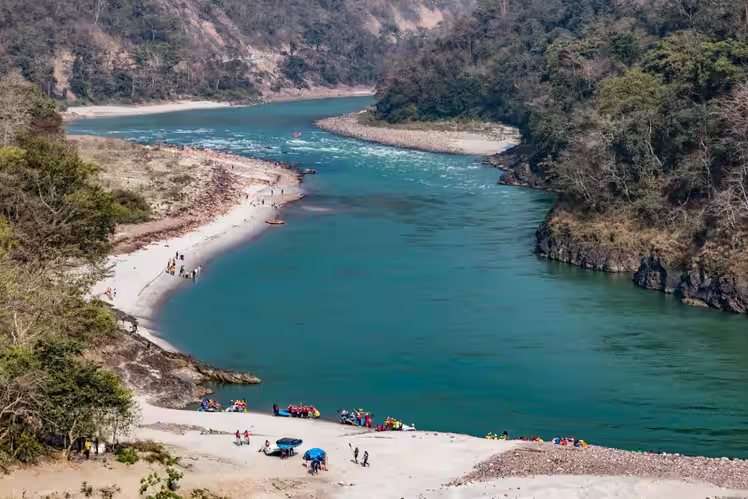
The Himalayan River Systems (Perennial Basins)

1. The Indus River System

  • Origin & Course: Originates from the Bokhar Chu glacier (Tibetan plateau near Mansarovar Lake) at an elevation of 4,164m, flowing north-west between Zaskar and Ladakh ranges, entering Pakistan near Chillar in Dardistan.
  • Left-Bank Tributaries: Zaskar, Suru, Kishanganga, Jhelum, Chenab, Ravi, Beas, Sutlej, and Panjnad.
  • Right-Bank Tributaries: Shyok, Gilgit, Hunza, Swat, Kurram, and Gomal.
  • The Five Punjab Rivers: Jhelum (originates from Verinag spring, flows through Wular Lake); Chenab (largest tributary, formed by Chandra and Bhaga streams in Lahaul-Spiti); Ravi (originates near Rohtang Pass); Beas (originates near Beas Kund, entirely within Indian territory); Sutlej (originates from Rakshastal Lake near Mansarovar, cuts through Shipki La pass).
  • Indus Waters Treaty (1960): Brokered by World Bank; Western rivers (Indus, Jhelum, Chenab) allocated primarily to Pakistan with non-consumptive use rights for India; Eastern rivers (Ravi, Beas, Sutlej) allocated fully to India.

2. The Ganga River System

  • Origin & Upper Course: Originates as Bhagirathi from Gangotri Glacier (Gaumukh, 3,900m). At Devprayag, Bhagirathi meets Alaknanda to form the official Ganga.
  • Panch Prayag Sequence: Vishnuprayag (Dhauliganga + Alaknanda), Nandaprayag (Nandakini + Alaknanda), Karnaprayag (Pindar + Alaknanda), Rudraprayag (Mandakini + Alaknanda), and Devprayag (Bhagirathi + Alaknanda).
  • Left-Bank Tributaries: Ramganga, Gomti (only major groundwater-fed plain tributary), Ghaghara (largest tributary by volume), Gandak, Kosi (notorious for shifting courses, known as ‘Sorrow of Bihar’), and Mahananda.
  • Right-Bank Tributaries: Yamuna (longest tributary, originating at Yamunotri glacier, meeting Ganga at Prayagraj Triveni Sangam; joined by Chambal, Betwa, Ken) and Son (originates at Amarkantak plateau).
  • Delta & Estuary: Farakka Barrage divides the flow into Padma (entering Bangladesh) and Bhagirathi-Hooghly (flowing through West Bengal to the Bay of Bengal).

3. The Brahmaputra River System

  • Origin & Tibetan Stretch: Originates from Chemaungdung glacier near Mansarovar Lake, known in Tibet as Yarlung Tsangpo, flowing eastwards parallel to the Himalayas across the arid Tibetan plateau.
  • Entry into India: Takes a sharp hairpin U-turn around Namcha Barwa (7,756m) and enters Arunachal Pradesh as the Siang or Dihang through the deep Dihang Gorge.
  • Assam Valley Course: Joined by major left-bank tributaries (Dibang, Lohit, Burhi Dihang, Dhansiri) and right-bank tributaries (Subansiri, Kameng, Manas, Sankosh, Teesta). Near Sadiya, it is joined by Lohit and Dibang to form the massive Brahmaputra.
  • Geographical Significance: Forms Majuli, the world’s largest inhabited riverine island, and suffers from severe annual bank erosion and catastrophic flooding due to high sediment load and heavy monsoon rains.

The Peninsular River Systems (Seasonal Basins)

1. East-Flowing Rivers (Drain into Bay of Bengal)

  • Mahanadi Basin: Originates in Sihawa hills of Chhattisgarh, flows through Odisha, forms the Hirakud Dam (longest earthen dam), and discharges into the Bay of Bengal via a massive delta near Cuttack.
  • Godavari Basin: Known as ‘Dakshin Ganga’ or ‘Vriddha Ganga’; longest river in Peninsular India (1,465 km); originates at Trimbakeshwar (Nashik, Maharashtra); major tributaries include Pravara, Indravati, Pranhita, Manjira, and Sabari.
  • Krishna Basin: Second-longest east-flowing peninsular river (1,400 km); originates near Mahabaleshwar in the Western Ghats; major tributaries include Koyna, Tungabhadra, Bhima, Musi, and Ghatprabha; hosts Nagarjuna Sagar Dam.
  • Cauvery Basin: Originates at Talakaveri in the Brahmagiri hills of Karnataka; sacred river with extensive delta agriculture in Tamil Nadu; major tributaries include Hemavati, Kabini, Amravati, and Bhavani; center of long-standing interstate water disputes.

2. West-Flowing Rivers (Drain into Arabian Sea)

  • Narmada Basin: Flows westward through a deep tectonic rift valley between the Vindhya Range (north) and Satpura Range (south); originates at Amarkantak plateau; forms the spectacular Dhuandhar Falls near Jabalpur and a wide estuary at Bharuch; site of Sardar Sarovar Dam.
  • Tapti (Tapi) Basin: Originates in Multai (Betul district, Madhya Pradesh); runs parallel to Narmada through a rift valley south of Satpura; drains into the Gulf of Khambhat near Surat.
  • Other Notable West-Flowing Rivers: Sabarmati, Mahi, Luni (inland drainage in Thar desert ending in Rann of Kutch), and numerous short swift streams of the Western Ghats (Sharavati forming Jog Falls, Mandovi, Zuari in Goa, and Periyar in Kerala).

River Systems of West Bengal

West Bengal exhibits an extraordinarily complex hydrographic architecture. The state’s rivers are distinctly bifurcated into the glacier and monsoon-fed turbulent torrents of North Bengal, and the rain-fed plateau streams of the Rarh region in South Bengal, culminating in the intricate tidal estuarine network of the Sundarbans delta.

1. North Bengal Sub-Himalayan River Systems

  • Teesta River: The principal river of North Bengal; originates from the Pauhunri glacier in Sikkim; flows rapidly through narrow gorges in Kalimpong and Darjeeling hills before entering the plains at Sevoke (Coronation Bridge); traverses Jalpaiguri and Cooch Behar before emptying into the Brahmaputra in Bangladesh.
  • Torsa River: Originates in the Chumbi Valley of Tibet, passes through Hasimara and Cooch Behar, characterized by swift gravel-bed flows and shifting channels.
  • Jaldhaka & Raidak: Originating from the Bhutan Himalayas, these rivers drain the Dooars tea garden region and are notorious for sudden flash floods during heavy monsoon spells.
  • Mahananda River: Originates in the Mahaldiram hills of Darjeeling district; flows through Siliguri corridor, Uttar Dinajpur, and Malda before merging with the Ganga in Bangladesh; acts as the transitional boundary between Himalayan foothill and Gangetic plain drainage.

2. South Bengal & Rarh Plateau River Systems

  • Damodar River: Historically known as the ‘Sorrow of Bengal’ due to devastating recurrent floods caused by torrential monsoon runoffs from the Chotanagpur Plateau; currently tamed by the Damodar Valley Corporation (DVC) multi-purpose dam system (Tilaiya, Maithon, Panchet reservoirs); joins the Hooghly River south of Kolkata.
  • Mayurakshi River: Originates on the Chotanagpur plateau, flows through Birbhum and Murshidabad districts; regulated by the Massanjore Dam (Canada Dam), providing vital irrigation to agrarian tracts.
  • Ajay River: Originates in Jharkhand, flows past Santiniketan (Bolpur) in Birbhum before merging with the Bhagirathi at Katwa.
  • Kangsabati & Rupnarayan: Formed by plateau streams uniting in Bankura and Paschim Medinipur, ultimately draining into the Hooghly estuary near Geonkhali.

3. The Hooghly Estuary & Sundarbans Deltaic Network

  • Bhagirathi-Hooghly Distributary: The primary western branch of the Ganga separated by the Farakka Barrage; flows past Nadia, Hooghly, Howrah, Kolkata, and Haldia before discharging into the Bay of Bengal.
  • Tidal Estuaries of the Sundarbans: Unlike northern perennial streams, rivers in the southern delta (such as Matla, Saptamukhi, Raimangal, Gosaba, and Ichamati) are entirely tidal and saline, heavily influenced by diurnal oceanic tides and supporting the world’s largest mangrove ecosystem.

Some interesting facts

  • Longest River in India: Ganga (2,525 km).
  • Longest Peninsular River: Godavari (1,465 km).
  • Largest River Basin by Catchment Area: Ganga Basin (~26% of India’s total geographical area).
  • Rivers Flowing in Rift Valleys: Narmada and Tapti (flowing west into Arabian Sea).
  • World’s Largest Riverine Island: Majuli, situated on the Brahmaputra River in Assam.
  • Highest Dam in India: Tehri Dam (built on Bhagirathi River in Uttarakhand).
  • Longest Dam in India: Hirakud Dam (built on Mahanadi River in Odisha).
  • River Known as Sorrow of Bihar: Kosi River.
  • River Known as Sorrow of Bengal: Damodar River.
  • Farakka Barrage Purpose: To divert adequate headwater flow into the Bhagirathi-Hooghly river to flush silt and maintain navigability of Kolkata Port.
  • Godavari is also known as Dakshin Ganga.
  • Chambal is probably the cleanest river in India. People do not bathe in Chambal because of a story that says that anybody who touches the waters of Chambal gets cursed.
  • Thamirabarani is the only perennial river in South India.
  • Longest bridge in India is Bhupen Hazarika Bridge. It is built on Lohit river, a tributary of Brahmaputra. This bridge is also known as Dhola-Sadia bridge and it is 9,150 meters long. The bridge was inaugurated on 26 May 2017.
  • Triveni Sangam is the place where three holy rivers, Ganga, Yamuna and Saraswati, meet. It is located in Prayag Raj, also known as the Sangam City.
  • Tehri Dam on Bhagirathi river is the biggest, highest and tallest dam in India and also the eighth highest dam in the world, located at Uttarakhand.
  • The Ganga and the Brahmaputra together form the largest delta in the world – the Sunderban Delta.
  • The highest waterfall in India – Jog Falls is formed when Sharavathi river flows from a height of 829 ft.
  • Most of the rivers in India flow from West to East direction to empty in the Bay of Bengal.
  • Only a few like Narmada, Tapti and Sabarmati rivers flow from East to West direction.
  • Two major rivers flowing in Rajasthan – Luni and Banas have inland water drainage, i.e., they do not empty into the ocean, but get lost in the sand.
  • Yamuna is the most polluted river in India.
  • Indus, Jhelum, Ravi and, Satluj are the rivers that originate in India and flow into Pakistan.
  • Brahmaputra river is known as Yarlung Tsangpo in China, Dihangin Arunachal Pradesh and Jamunain Bangladesh.
  • Brahmaputra is the ninth largest river in the world by discharge, and the 15th longest.
  • Mahanadi used to be known as the distress of Odisha because it caused a lot of floods in the state. The situation has been brought under control by building Hirakud Dam on Mahanadi.
  • Majuli is the a river island in Brahmaputra in the state of Assam. Majuli is the world’s largest river island.
  • Majuli island is the first island districts in India. It was declared a district in 2016.
  • Yamuna is the longest tributary in India.
  • Godavari is the longest river in the Southern India.

Adhyayan Academy has just started a fresh WBCS Course titled Rishi Bankim Chandra WBCS Batch 2026. For admission in the batch, call or whatsapp @6295350330

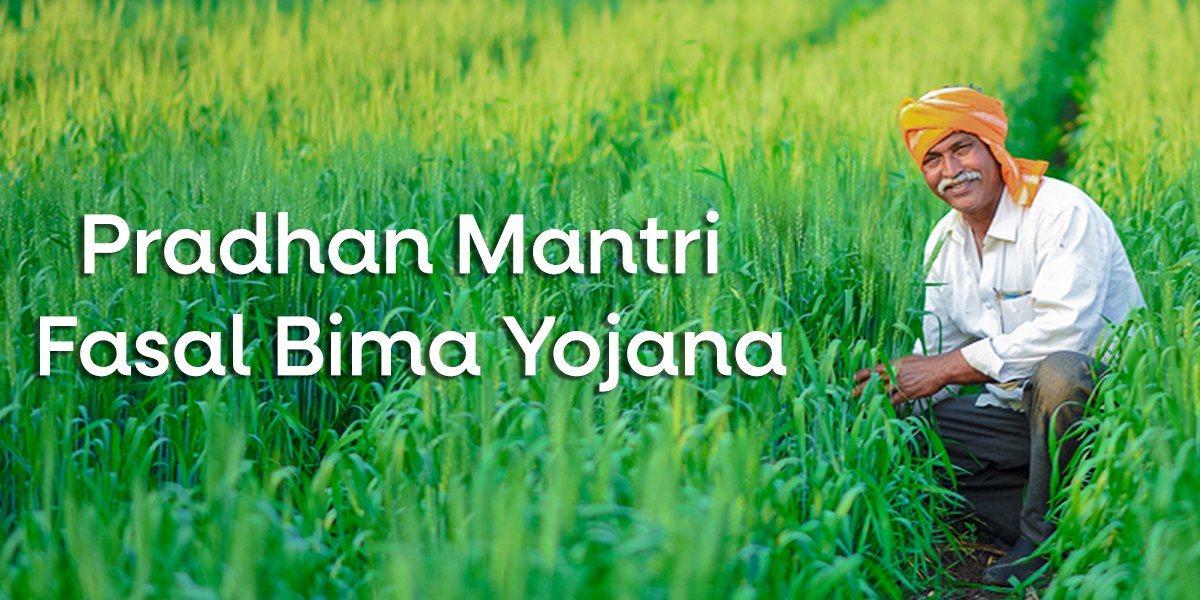
Pradhan Mantri Fasal Bima Yojana (PMFBY)

Launched on 18th February 2016, PMFBY is a crop insurance scheme by the Department of Agriculture, Cooperation, and Farmers’ Welfare, Ministry of Agriculture. PMFBY aims to provide financial protection to farmers against crop loss due to natural disasters (hail, drought, famine), pests, and diseases. PMFBY provides crop insurance at a cost-effective premium to all Indian farmers.  It is implemented through a network of insurance companies and banks. Department of Agriculture, Cooperation & Farmers Welfare (DAC&FW), Ministry of Agriculture & Farmers Welfare (MoA&FW) and the concerned State are the implementing agencies.

Risk Coverage:

Natural Disasters: Includes floods, droughts, cyclones, hailstorms, landslides, and unseasonal rainfall.

Pest & Disease Coverage: Protects against pest attacks and crop diseases.

Post-Harvest Losses (Individual Farm Basis): Compensation for damage within 14 days of harvest, especially for crops kept in “cut and spread” condition.

Localised Calamities: The government provides compensation for localised calamities on an individual farm basis.

Prevented Sowing (on Notified Area Basis): If most insured farmers in a notified area are unable to sow due to adverse weather despite intent and incurred costs, they can claim up to 25% of the sum insured as indemnity.

Key Initiatives under PMFBY

DigiClaim: Under it all the claims are worked out through National Crop Insurance Portal (NCIP).

CROPIC (Collection of Real Time Observations and Photo of Crops).

Weather Information Network Data Systems (WINDS) portal.

Yield Estimation System, based on Technology (YES-TECH) Manual.

Door enrolment app AIDE/Sahayak.

Forecasting Agricultural output using Space, Agro- meteorology and Land based observations (FASAL) project.

National Agricultural Drought Assessment and Monitoring System (NADAMS).

ISRO’s Geo-platform, Bhuvan, provides data on plantation, pest surveillance and weather.

The Parliamentary Standing Committee on Agriculture had given several recommendations on reforming the Scheme. These include: (a) Using technology and the coordination of all institutional mechanisms to ensure faster claim settlement; (b) Implementing timeline for settlement of claims by insurance companies; (c) Uploading the contact details of official insurance companies on the insurance portal so that they are accessible to farmers; (d) Penalising defaulting insurance companies in a time-bound manner; (e) Ensure the formulation of GRCs in all States. Nominate local public representatives (including Members of Parliament) in the

Challenges

First, Fiscal Burden on States: The Scheme limits farmer’s share of actuarial premium to 1.5-5%. The rest was to be shared equally by the Union and State Governments. However, in 2020 the Government capped its share to 25%-30% (irrigated and unirrigated areas respectively). This has increased the fiscal burden of States. Consequently, many States have opted out.

Second, Delayed Pay-outs and Denial of Claims: There are frequent disputes related to compensation. Farmers complain the compensation paid by insurance companies is less than the losses. There are long delays in payments, sometimes up to 18 months. Yield-related disputes, delayed transmission of yield data and delay in release of their share in premium subsidy by State Governments are the major reasons for delays in settlement of claims.

Farmers claim that the private insurers are not following the assessment by the government officials based on Crop Cutting Experiments (CCEs) and rejecting many claims on the basis of their own assessment.

Third, Implementation Issues: Farmers face hurdles in uploading the documents and claiming damages as network connectivity is poor in rural areas.

Under the scheme, both Public and Private insurance companies bid their premium rates for a district in a State. The lowest bidder is awarded the contract to provide insurance under the scheme for one agricultural season only. This discouraged the companies from investing in that district in terms of awareness activities, assigning personnel or setting up offices. This led to farmer grievances.

In 2020, the Government has increased the contract duration to 3 years in one district (6 agriculture seasons). It is hoped that companies would set up help centres and employ more personnel to gather yield data and faster claim settlement.

Fourth, Absence of Grievance Redressal Committees (GRCs): Only 15 States and UTs have notified GRCs at both the State and District level, as mandated under the PMFBY scheme. Farmers are left with no resort in case of under-payment or delay in claim settlement.

Fifth, Opposition from States: Several states have demanded amendments in the scheme.

Sixth, Opposition from Farm Leaders: Farm leaders claim insurance companies have made windfall gains at the behest of the public exchequer and farmers. Data from Maharashtra show that Insurance companies often earn more in premiums than paid in claims. However, for some years the trend is opposite.

Way forward

Ensure timely release of premium subsidy: To maintain strict financial discipline, subsidy payment should be streamlined through an escrow account jointly administered by the State government and the Centre.

Also, all financial transactions (subsidy or claims) shall be routed through the National Crop Insurance Portal (NCIP).

Presence of insurance companies in every tehsil of the district: It will be crucial for farmers in order to mitigate the problems faced in availing the scheme benefits.

Penalties for companies: Effectively penalising defaulters in a time-bound manner.

Adoption of smart sampling techniques: By all states using technological interventions such as satellite data or the use of drones.

Corporate Social Responsibility (CSR): Insurance companies can plan to spend a share of their profits towards CSR in the districts from where profits are earned. Farm insurance is critical to provide income security to the farmers.  The Union and State Governments must take appropriate steps to remove all the bottlenecks in the proper implementation of the scheme

10 Years of AMRUT

India marks a significant milestone as the Atal Mission for Rejuvenation and Urban Transformation (AMRUT) completes 10 years since its launch on June 25, 2015. Introduced as a transformative initiative to improve the quality of life in urban areas, AMRUT has focused on delivering basic infrastructure and services—especially water supply, sewerage, urban mobility, and green spaces—to citizens across 500 cities and towns and almost 60% of the total urban population of India.

Rajasthan was the first state in the country to submit State Annual Action Plan under (AMRUT). The scheme is dependent with public–private partnership (PPP) model. If required, various other schemes like Swachh Bharat Mission, Housing for All 2022, along with the local state schemes like that related to water supply and sewerage and other infrastructure related schemes can be linked to AMRUT.

Nodal Ministry: Ministry of Housing and Urban Affairs

Scheme Type: Centrally sponsored scheme, funds shared among States and UTs based on urban population and number of towns.

Mission

The purpose of Atal Mission for Rejuvenation and Urban Transformation (AMRUT) is to

  • ensure that every household has access to a tap with assured supply of water and a sewerage connection
  •  (ii) increase the amenity value of cities by developing greenery and well-maintained open spaces (e.g. parks)
  • (iii) reduce pollution by switching to public transport or constructing facilities for non-motorized transport (e.g. Walking and cycling).

Implementation

SAAP (State Annual Action Plans) is a consolidated plan of all the city level SLIPs (Service Level Improvement Plan) of all proposed AMRUT cities in the respective states. A formulation on City level SLIP is done based on diligent estimation of ambiguities in the availability of infrastructure like water supply, sewerage network, draining system, transportation facilities, available digital and internet facilities, industrial facilities etc. 135litres per capita per day is another factor in the process including water supply and sewerage connections to all urban households

AMRUT 2.0 was launched on 1 October 2021 for a period of 05 years. Its objectives are universal coverage of water supply from 500 cities to about 4,900 statutory towns in the country and coverage of sewerage/septage management in 500 cities covered in the first phase of the AMRUT scheme.

AMRUT 2.0 aims to promote the circular economy of water through the development of a City Water Balance Plan (CWBP) by recycling/reuse of treated sewage, rejuvenation of water bodies and water conservation.

Important Initiatives so far:

‘AMRUT Mitra’ involved 10,000+ women Self-Help Group (SHG) members.1,762 projects worth ₹147 crore approved. It involves women Self Help Groups (SHGs) in water demand management, water quality testing, water infrastructure operations, and other water sectoral projects. So far, 1762 projects worth ₹140 crore have been approved under this initiative

Drink from Tap (DFT) through 381 projects worth ₹23,490 crore sanctioned, likely to benefit 8 lakh households.3,630 contractors/officials trained.

3,032 water bodies approved for rejuvenation, covering 1.09 lakh acre area.

Capacities of States augmented by training over 90,000 contractors, plant operators, plumbers, women, youth, officials etc.

Challenges:

A NITI Aayog report indicates that around 21 major cities will deplete their groundwater, leaving 40% of India’s population without access to drinking water by 2030.

Nearly 31% of urban Indian households lack piped water while 67.3% are not connected to a piped sewerage system.

Pollution of water bodies: For example, large water bodies like Bellandur Lake (Bengaluru) have become heavily polluted due to industrial effluents and untreated sewage flowing into them.

Unplanned concretization prevents water from percolating into the soil and recharging the water table.

In Bengaluru, the number of lakes has decreased from 262 in 1961 to about 81 currently.

Conclusion

As AMRUT completes a decade, it marks a significant shift in India’s urban development approach, focused on inclusive planning, efficient service delivery, and sustainable growth. By strengthening local bodies and improving core services like water, sanitation, and green spaces, the Mission has laid a strong foundation for future-ready, liveable cities across the country.

Those willing to be a part of my biggest academic project ‘Eklavya Descriptive Bengali English Course’ 2025-26 are requested to send a WhatsApp to 6295350330, the official number of Adhyayan Academy. Before they send their WhatsApp, they are also requested to go through the article below

Lakes in India and the World

  1. Which state is home to the largest freshwater lake in India?

Ans- Wular lake in J&K

2. Largest freshwater lake in the world?

Ans- Lake Baikal, Russia

3. Which lake is the largest by surface area in the world?

a) Lake Superior

b) Caspian Sea

c) Lake Victoria

d) Lake Michigan

         Ans. (b)

        4. Deepest lake – Lake Baikal

        5. Which lake was formed by a meteorite impact?

         Ans-  Lonar (Maharashtra) Crater Lake

        6. Which lake is known as the “Queen of Lakes” in Kerala?

        Ans- Sasthamkotta Lake

        7. Where is Lake Titicaca, the highest navigable lake globally, situated?

       Ans- Bolivia and Peru

       8. Which lake in Manipur, India, is distinguished by its floating islands of vegetation?

        Ans- The most unique thing about Loktak Lake is the floating phumdi. Phumdis are the organic masses composed of vegetation, soil, and decaying matter. Some of these floating islands are big enough to support houses and shops. Keibul Lamjao National Park is the only floating national park in the world.

   10. Important lakes and their states

     Name                                              State/UT

    Pangong                                          Ladakh

    Gurdongmar                                 Sikkim (Highest Lake of India)

     Vembanad                                     Kerala

     Chilka                                              Odissa

    Pulicat                                              Andhra Pradesh

Jor Pokhri/ Sukhia Pokhri               Darjeeling, WB

Nagarjun Sagar                                  Telengana

Shivaji Sagar Lake                              Maharashtra

Kolleru                                                  Andhra Pradesh

Chandra Taal                                       Himachal Pradesh

Umiyam                                               Meghalaya

Hussain Sagar                                    Andhra Pradesh

Dal Lake                                                Srinagar (J &K)

Bhimtaal                                              Uttarakhand

Nainitaal                                              Uttarakhand

Kanwar( Largest ox bow lake)      Bihar

Dhankar                                               Himachal Pradesh

Chamera                                              Himachal Pradesh

11. Chilika Lake in Odisha is the largest saline water lake in India.

12. The Caspian Sea, often referred to as a sea, is technically classified as a lake because it has no outlet to the ocean. 

13. Rajasthan has the largest number of salt lakes in India. Rajasthan is the arid state of India with average yearly rainfall appx 58-60 cm. There are large number lakes mostly artificial as well as Natural Lakes.

14. Gobind Sagar lake is the largest man-made lake situated in Bilaspur district of Himachal Pradesh. After Gobind Sagar Dhebar lake in Rajasthan is largest artificial lake.

16. Pong dam also known as Maharana Pratap Sagar is the highest earth fill dam constructed across the river Beas. It is located in Kangra district of Himachal Pradesh.

17. The ‘Chilka lake region’ lies in between the deltas of Mahanadi and Godavari. Chilika Lake is a brackish water lagoon.

19. Rasik Bill is in Cooch Behar district.

20. The ‘Chilka lake region’ lies in between the deltas of Mahanadi and Godavari. Chilika Lake is a brackish water lagoon

21. Lake Tanganyika is an African Great Lake. It is the world’s second-largest freshwater lake by volume and the second deepest, in both cases after Lake Baikal in Siberia. It is the world’s longest freshwater lake.

22. Nokdara lake is in Kalimpong district.

23. The world’s highest lake, if size is not a criterion, may be the crater lake of Ojos del Salado, at 6,390 metres. It is in Andes.

24. Lake Vostok is in Antarctica.

25.  Sukna lake in Chandigarh.

26. Tso Moriri lake is in Ladakh.

27. Ashtamudi lake is in Kerala.

28. Tsongmu lake in Sikkim.

29. Located on the border of the United States and Canada are the Great Lakes of North America. They include 5 lakes: Michigan, Huran, Erie, Ontario, and Superior which together contain around 21% of the world’s freshwater supply.

30. Finland has the nickname “Land of the Thousand Lakes” as there are over 187,000 lakes in the country.

31. The study of inland water bodies and ecosystems is called Limnology.

32. The lowest lake in the world is the Dead Sea, on the edge of Israel and Jordan. The surface level is 418 m below sea level.

33. In 1981, Chilika Lake became the first Indian wetland of international importance.

34. Udaipur is known as India’s “City of Lakes.

35. Deepest lake in India Loktak Lake

36. Highest lake in India- Tsho Lamu lake, Sikkim

37. The longest lake in India is Vembanad Lake. It is also the largest lake in the state of Kerala. Vembanad Lake stretches for approximately 96.5 kilometers (60 miles) and has a maximum width of 14 kilometers.

38. Khechipedi lake in Sikkim

39. Nakki lake is at Mount Abu, Rajasthan

40. Kanwar lake is Asia’s largest oxbow lake, located in Begusarai district, Bihar.

41. Roop Kund lake at Uttarakhand is also known as Skeleton Lake/Mystery Lake because of numerous skeletons found at its bottom.

42. Black Sea is not a lake since Bosporus and Dardanelles Straits connect it to the Mediterranean Sea. Many big rivers fall into the Black Sea, making the salinity of its surface water half that of the ocean: 17‰.

43. Caspian Sea and Dead Sea are lakes. The surface and shores of the Dead Sea are 423 metres below sea level, making it Earth’s lowest elevation on land.

44. The Largest Lakes (surface area) by Continent

Australia – Lake Eyre (Salt Lake)

Africa – Lake Victoria, also the third-largest freshwater lake on Earth. It is one of the Great Lakes of Africa.

Antarctica – Lake Vostok (subglacial)

Asia – Lake Baikal (if the Caspian Sea is considered a lake, it is the largest in Eurasia, but is divided between the two geographic continents)

Europe – Lake Ladoga, followed by Lake Onega, both located in northwestern Russia.

North America – Lake Superior.

South America – Lake Titicaca, which is also the highest navigable body of water on Earth at 3,812 metres above sea level. The much larger Lake Maracaibo is a contiguous body of water with the sea, so it is ignored. ,

To get Saptarshi Sir’s guidance for PSC Miscellaneous Mains/ Clerkship Main/ English/Economy or for overall WBCS or other exam preparation, call or WhatsApp us @6295350330. Classes for PSC Miscellaneous Main and Clerkship Main have already started. WBCS New batch is also going on. You can also download our app for online guidance using the link

https://play.google.com/store/apps/details?id=co.penny.oecgd&pcampaignid=web_share

For free notes, daily quizzes, word games and many other surprises, please join our Telegram Group using the link below

https://t.me/theadhyayanacademy

Sample Report Writing For Competitive Examinations – Note 2

Question- Write a report on a symposium recently held in your college on environment awareness in about 200 words.

Answer

‘A Day for Nature’- A Symposium with Purpose

Place DEF, July 22: Amidst much funfair the XYZ college at DEF recently organized a symposium titled ‘A Day for Nature’ to raise awareness about the ecosystem we live in. The list of eminent guests included Mr. X, the chairperson of the local municipality, Ms. Y, a renowned environment activist, Mr Z whose NGO recently came in news for novel initiatives to protect the environment.

The symposium was started off by lighting the sacred lamp by the principal of the college along with the dignitaries present. This was followed by a welcome speech by the President of the Governing body of the college. Following that the keynote speakers delivered their valuable speeches on a plethora of subjects like global warming, climate change, afforestation, water crisis, green house gases etc. Student representatives also participated in group discussions, debates and a quiz on environment.

It was resolved that a plantation programme will be carried out at the locality and its vicinity by the college along with the civil society. A team of Green Volunteers will be formed to address any emergency issue concerning nature or to mitigate any damage caused thereby. An awareness rally was also planned. Finally, the eventful symposium concluded with vote of thanks by the General Secretary of the Students’ Union.

Notes for the students

1) Place ‘M’ signifies any place like Howrah, Kolkata, Jalpaiguri.

2) Do not write direct names or places. Instead, use A,B,C,X,Y,Z.

3) Do not forget to add a heading

4) Add a dateline as done in the above report.

5) Avoid using flowery language and bombastic words.

6) Help the examiner to visualize what actually happened.

7) DO NOT USE UNNECESSARY WORDS OR SENTENCES.

8) Keep it simple.

To get Saptarshi Sir’s guidance for English/Economy or for overall WBCS/ PSC Miscellaneous Main or other exam preparation, call or WhatsApp us @6295350330. Classes for PSC Miscellaneous Main have already started. WBCS New batch is also going on. You can also download our app for online guidance using the link

https://play.google.com/store/apps/details?id=co.penny.oecgd&pcampaignid=web_share

Facts Related to Environment- India

Important Summits related to Environment

United Nations Conference on the Human Environment (Stockholm, 1972)

1992 Earth Summit in Rio de Janeiro

Ramsar Convention 1971 on wetland conservation and sustainable use

The Montreal Protocol, finalized in 1987, is a global agreement to protect the stratospheric ozone layer by phasing out the production and consumption of ozone-depleting substances (ODS). ODS are substances that were commonly used in products such as refrigerators, air conditioners, fire extinguishers, and aerosols

India currently has 91 Ramsar sites, making it the country with the highest number of Ramsar-designated wetlands in Asia and third highest globally.

In 1972, India enacted the Wildlife Protection Act

Project Tiger was launched in Jim Corbett National Park of Uttarakhand in 1973, and various tiger reserves were created in the country based on a ‘core-buffer’ strategy.

Project Elephant is a centrally sponsored scheme initiated by the Government of India in 1992 to safeguard the Indian elephant population and their habitats.

Under Project Cheetah, the Prime Minister of India released wild cheetahs in Kuno National Park in Madhya Pradesh. Cheetah became extinct from India in 1952

পশ্চিমবঙ্গের ভৌগোলিক এলাকার ১৪% বনভূমি , যা জাতীয় গড়ের ৩৩% এর চেয়ে কম।

জাতীয় উদ্যান এবং বন্যপ্রাণী অভয়ারণ্য (WB)

বল্লভপুর বন্যপ্রাণী অভয়ারণ্য

বেথুয়াদহরি বন্যপ্রাণী অভয়ারণ্য

বিভূতিভূষণ বন্যপ্রাণী অভয়ারণ্য

বক্সা টাইগার রিজার্ভ

চাপরামারী বন্যপ্রাণী অভয়ারণ্য

চিলাপাতা বন

চিন্তামণি কর পাখি অভয়ারণ্য

গোরুমারা জাতীয় উদ্যান

হ্যালিডে দ্বীপ বন্যপ্রাণী অভয়ারণ্য

জলদাপাড়া জাতীয় উদ্যান

জোরে পোখরি বন্যপ্রাণী অভয়ারণ্য

লোথিয়ান দ্বীপ বন্যপ্রাণী অভয়ারণ্য

মহানন্দা বন্যপ্রাণী অভয়ারণ্য

নেওরা ভ্যালি জাতীয় উদ্যান

নরেন্দ্রপুর বন্যপ্রাণী অভয়ারণ্য

পাখি বিতান বন্যপ্রাণী অভয়ারণ্য

রায়গঞ্জ বন্যপ্রাণী অভয়ারণ্য

রামনবাগান বন্যপ্রাণী অভয়ারণ্য

রসিকবিল পাখি অভয়ারণ্য

সজনেখালি বন্যপ্রাণী অভয়ারণ্য

সেঞ্চল বন্যপ্রাণী অভয়ারণ্য

সিঙ্গালিলা জাতীয় উদ্যান

সুন্দরবন জাতীয় উদ্যান

ময়ূরঝর্ণা হাতি সংরক্ষণাগার

National Parks- Important facts

National Parks in India- 107

Oldest National Park- Jim Corbett NP (Uttarakhand)

Largest National Park- Hemis, Ladakh

Maximum NPs in India- Madhya Pradesh (11)

First NP in West Bengal- Sundarban (1984)

Latest National Park in WB- Jaldapara (1986)

Keibul Lamjao National Park, located in Manipur, is the only floating national park in the world, situated on Loktak Lake.

South Button Island National Park in the Andaman and Nicobar Islands is the smallest, with an area of just 5 square kilometers.

Satpura National Park in Madhya Pradesh is known for allowing walking safaris and camping within the park.

As of May 2024, India’s National Parks covers a total area of 44,378 sq km and account for about 1.35% of India’s total surface area.

The Sangai deer’ is found in Keibul Lamjao National Park (Manipur).

India’s first Golden Tiger was spotted in Kaziranga National Park.

Dachigam National Park (jammu and Kashmir) has been established for the conservation of the hangul or Kashmiri deer.

Punjab is the only Indian state which has no national park.

“National parks in West Bengal” (6)

Buxa Tiger Reserve

Gorumara

Jaldapara

Sundarban

Sigalila

Neora Valley

Difference Between Wildlife Sanctuary and National Park

Wildlife Sanctuary                                                                                     National Park

Human activities are allowed.                                                      No human activities are allowed.

Protects particular flora or fauna                                             Wide range of flora and fauna  

There are no fixed boundaries.                                                    Boundaries are fixed and defined.

 It is open to the general public                                                   Not usually open to the public.

A sanctuary can be upgraded to a national park             Cannot be downgraded to a sanctuary.

There are 18 biosphere reserves in India. They protect larger areas of natural habitat than a typical national park or animal sanctuary, and often include one or more national parks or reserves, along with buffer zones that are open to some economic uses. Protection is granted not only to the flora and fauna of the protected region, but also to the human communities who inhabit these regions, and their ways of life.

Sundarbans Biosphere Reserve-West Bengal

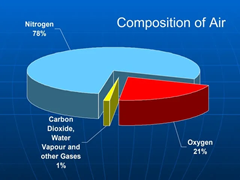
Air, the gaseous envelope surrounding Earth, is primarily composed of nitrogen and oxygen, with smaller amounts of other gases like argon, carbon dioxide, and trace amounts of other gases like helium and neon. Water vapor and dust particles are also present in varying amounts.

Here’s a breakdown of the major components:

Nitrogen (N₂): Approximately 78.09% of dry air.

Oxygen (O₂): Around 20.95% of dry air.

Argon (Ar): About 0.93% of dry air.

Carbon Dioxide (CO₂): A small but significant amount, around 0.04%.

Other Gases: Trace amounts of gases like helium, neon, krypton, and methane.

Water Vapor: The amount of water vapor in the air varies depending on location and weather conditions.

Dust Particles: Also present in varying amounts.

The five most abundant greenhouse gases in Earth’s atmosphere, listed in decreasing order of average global mole fraction, are water vapor, carbon dioxide, methane, nitrous oxide, ozone. Other greenhouse gases of concern include chlorofluorocarbons (CFCs and HCFCs), hydrofluorocarbons (HFCs), perfluorocarbons, SF6, and NF3. Water vapor causes about half of the greenhouse effect.

The Earth’s atmosphere is composed of five primary layers: the troposphere, stratosphere, mesosphere, thermosphere, and exosphere. These layers are defined by their temperature profiles and altitude ranges.

Here’s a breakdown of each layer:

1. Troposphere:

This is the lowest layer, extending from the Earth’s surface up to about 7 to 20 kilometers (4 to 12 miles) depending on the latitude. It’s where we live and where most weather occurs.

2. Stratosphere:

Located above the troposphere, the stratosphere extends from about 12 to 50 kilometers (7 to 31 miles). The ozone layer, which absorbs harmful UV radiation, is found within this layer. Unlike the troposphere, temperature increases with altitude in the stratosphere. The ozonosphere resides within the stratosphere, the second layer of Earth’s atmosphere, above the troposphere (where we live).

3. Mesosphere:

Situated above the stratosphere, the mesosphere extends from 50 to 85 kilometers (31 to 53 miles). It’s the coldest layer, with temperatures reaching as low as -90°C (-130°F) near the top. Most meteors burn up in the mesosphere.

4. Thermosphere:

This layer is above the mesosphere and extends from about 85 to 600 kilometers (53 to 372 miles). Temperatures in the thermosphere can be very high, but the air is so thin that it would feel cold to us. The aurora borealis and aurora australis occur in this layer.

5. Exosphere:

The outermost layer, the exosphere, extends from the top of the thermosphere to about 10,000 kilometers (6,200 miles). It gradually fades into interplanetary space. The air is extremely thin here, and particles can escape into space.

Major Environmental Movements in India

Bishnoi Movement

Year: 1700s

Place: Khejarli, Marwar region, Rajasthan state.

Leaders: Amrita Devi along with Bishnoi villagers in Khejarli and surrounding villages.

Aim: Save sacred trees from being cut down by the king’s soldiers for a new palace.

Chipko Movement

Year: 1973

Place: In Chamoli district and later in Tehri-Garhwal district of Uttarakhand.

Leaders: Sundarlal Bahuguna, Gaura Devi, Sudesha Devi, Bachni Devi, Chandi Prasad Bhatt, Govind Singh Rawat, Dhoom Singh Negi, Shamsher Singh Bisht and Ghanasyam Raturi.

Aim: The main objective was to protect the trees on the Himalayan slopes from the axes of contractors of the forest.

Silent Valley Movement

Year: 1978

Place: Silent Valley, an evergreen tropical forest in the Palakkad district of Kerala, India.

Leaders: The Kerala Sastra Sahitya Parishad (KSSP) an NGO, and the poet-activist Sughathakumari played an important role in the Silent Valley protests.

Aim: To protect the Silent Valley, the moist evergreen forest from being destroyed by a hydroelectric project.

Narmada Bachao Andholan (NBA)

Year: 1985

Place: Narmada River, which flows through the states of Gujarat, Madhya Pradesh and Maharashtra.

Leaders: Medha Patker, Baba Amte, Adivasis, farmers, environmentalists and human rights activists.

Aim: A social movement against several large dams being built across the Narmada River.

Tehri Dam Conflict

Year: 1990’s

Place: Bhagirathi River near Tehri in Uttarakhand.

Leaders: Sundarlal Bahuguna

Aim: The protest was against the displacement of town inhabitants and the environmental consequence of the weak ecosystem.

Here’s a list of common abbreviations related to environmental concepts, laws, and organizations:

EIA: Environmental Impact Assessment

EMP: Environmental Management Plan

EMS: Environmental Management System

BOD: Biochemical Oxygen Demand

COD: Chemical Oxygen Demand

DO: Dissolved Oxygen

GHG: Greenhouse Gas

EPA: Environment (Protection) Act, 1986

WPA: Wildlife Protection Act, 1972

FCA: Forest Conservation Act, 1980

WPA: Water (Prevention and Control of Pollution) Act, 1974

APA: Air (Prevention and Control of Pollution) Act, 1981

BD Act: Biological Diversity Act, 2002

CPCB: Central Pollution Control Board

SPCB: State Pollution Control Board

NGT: National Green Tribunal

UNEP: United Nations Environment Programme

WWF: World Wildlife Fund

IUCN: International Union for Conservation of Nature

IPCC: Intergovernmental Panel on Climate Change

SDG: Sustainable Development Goals

COP: Conference of the Parties (under the UNFCCC)

UNFCCC: United Nations Framework Convention on Climate Change

CSR: Corporate Social Responsibility

ODS: Ozone-Depleting Substances

HWM: Hazardous Waste Management

EPR: Extended Producer Responsibility

MSW: Municipal Solid Waste

RE: Renewable Energy

NRE: Non-Renewable Energy

EE: Energy Efficiency

CEA: Central Electricity Authority

1. মন্ট্রিয়ল প্রোটোকলের সঙ্গে জড়িত

[A] পারমাণবিক অস্ত্র

[B] ওজোন স্তরের ক্ষয়

[C] সমুদ্রের তলদেশ

[D] ল্যান্ডমাইন

Ans- b

2. মিনামাটা রোগের কারন হল –

[A] আর্সেনিক দূষণ

[B] পারদ দূষণ

[C] ক্যাডিয়াম দূষণ

[D] প্লাস্টিক দূষণ

Ans- B

3. জেনেটিক কোড আবিস্কারের জন্য কোন বিজ্ঞানী নোবেল পুরস্কার পেয়েছেন?

[A] প্রফুল্লচন্দ্র রায়

[B] হরগোবিন্দ খোরানা

[C] ডারউইন

[D] লফ্রেলোবেন

Ans- b

4.  সালোকসংশ্লেষে অর্থাৎ খাদ্য তৈরিতে সক্ষম এমন প্রাণী হল –

[A] রাইবোজোম

[B] হাইড্রিলা

[C] ইউপ্লিনা

[D] অ্যাজোটোব্যাকটর

                Ans-c

             5.  জলে ভাসমান আণুবীক্ষণিক উদ্ভিদগোষ্ঠীকে কী বলে?

[A] ফাইটোপ্লাংকটন

[B] বেনথস

[C] প্ল্যাংকটন

[D] জুপ্ল্যাংটন

Ans- A

   6.  লাল তথ্য পুস্তিকা বা ‘রেড ডাটা বুক’-এর তথ্যগুলি –

[A] লোহিত সাগরের প্রাণী সংক্রান্ত

[B] বিপন্ন প্রাণী সংক্রান্ত

[C] অপরাধজগৎ সংক্রান্ত

[D] বিপ্লবী তথ্য সংক্রান্ত

Ans- B

7. সিগারেটের ধোঁয়ায় অবস্থিত ক্যান্সার সৃষ্টিকারী উপাদানটি হল-

[A] কার্বন মনোক্সাইড

[B] বেঞ্জয়িক অ্যাসিড

[C] ক্লোরোবেঞ্জিন

[D] ডাই অক্সিজেন

Ans- C

8. পাখির দ্বারা বিস্তার লাভ করে সেই রোগের নাম-

[A] ভাইরাল

[B] মাইকোসিস

[C] অরনিথোসিস

[D] জুনটিক

Ans- C

9. ভারতের বৃহত্তম সরকারি তাপবিদ্যুৎ সংস্থা কোনটি?

[A] SAARC

[B] NTPC

[C] OPEC

[D] ONGC

Ans- B

10. 84. তামাক পাতায় উপস্থিত ক্ষতিকারক ধাতুর নাম –

[A] আয়রন

[B] মার্কারি

[C] ক্যাডমিয়াম

[D] আর্সেনিক

Ans- C

    Important National Parks of India

Name                    State

                Corbett National Park      Uttarakhand

                Kanha National Park        Madhya Pradesh

                Tadoba National Park      Maharashtra

                Madhav National Park    Madhya Pradesh

                Bandhavgarh National Park           Madhya Pradesh

                Kaziranga National Park  Assam

                Bandipur National Park   Karnataka

                Bannerghatta National Park          Karnataka

                Gir National Park               Gujarat

                Gugamal National Park   Maharashtra

                Pench National Park         Madhya Pradesh

                Blackbuck National Park Gujarat

                Guindy National Park       Tamil Nadu

                Keibul-Lamjao National Park         Manipur

                Khangchendzonga National Park Sikkim

                Dudhwa National Park    Uttar Pradesh

                Eravikulam National Park               Kerala

                Vansda National Park       Gujarat

                Van Vihar National Park  Madhya Pradesh

                Simlipal National Park     Odisha

                Ranthambore National Park         Rajasthan

                Gulf of Mannar Marine National Park       Tamil Nadu

                Dachigam National Park Jammu & Kashmir

                Hemis National Park        Jammu & Kashmir

                Kishtwar National Park    Jammu & Kashmir

                Panna National Park        Madhya Pradesh

                Sanjay National Park      Madhya Pradesh

                Satpura National Park     Madhya Pradesh

                Keoladeo Ghana National Park    Rajasthan

                Indravati National Park   Chhattisgarh

                Kanger Valley National Park          Chhattisgarh

                Marine National Park      Gujarat

                Periyar National Park       Kerala

                Nanda Devi National Park              Uttarakhand

                Valley of Flowers National Park    Uttarakhand

                Mahatma Gandhi Marine National Park   Andaman & Nicobar Islands

                Namdapha National Park               Arunachal Pradesh

                Fossil National Park          Madhya Pradesh

                Sanjay Gandhi National Park         Maharashtra

                Rajaji National Park          Uttarakhand

Silent Valley National Park             Kerala

                Sunderban National Park               West Bengal

                Balpakram National Park                Meghalaya

                Mouling National Park    Arunachal Pradesh

                Betla National Park           Jharkhand

                Nokrek Ridge National Park           Meghalaya

                Neora Valley National Park            West Bengal

                Singalila National Park     West Bengal

                Middle Button Island National Park            Andaman & Nicobar Islands

                Mount Harriet National Park        Andaman & Nicobar Islands

                North Button Island National Park              Andaman & Nicobar Islands

                Saddle Peak National Park             Andaman & Nicobar Islands

                South Button Island National Park              Andaman & Nicobar Islands

                Pin Valley National Park  Himachal Pradesh

Kudremukh National Park              Karnataka

Nagarahole (Rajiv Gandhi) National Park  Karnataka

Bhitarkanika National Park            Odisha

                Sri Venkateswara National Park   Andhra Pradesh

                Valmiki National Park       Bihar

                Sultan National Park        Haryana

                Indira Gandhi (Annamalai) National Park Tamil Nadu

                Gangotri National Park   Uttarakhand

                Manas National Park       Assam

                Mudumalai National Park              Tamil Nadu

                Govind National Park       Uttarakhand

                Murlen National Park      Mizoram

                Campbell Bay National Park          Andaman & Nicobar Islands

                Mollem National Park     Goa

                City Forest (Salim Ali) National Park           Jammu & Kashmir

                Phawngpui Blue Mountain National Park Mizoram

Desert National Park        Rajasthan

                Sariska National Park       Rajasthan

                Buxa National Park           West Bengal

                Gorumara National Park West Bengal

                Intanki National Park       Nagaland

                Mahaveer Harina Vanasthali National Park             Telangana

                Rani Jhansi Marine National Park                Andaman & Nicobar Islands

                Nameri National Park      Assam

                Dibru-Saikhowa National Park     Assam

                Rajiv Gandhi Orang National Park               Assam

                Kalesar National Park      Haryana

                Anamudi Shola National Park       Kerala

                Chandoli National Park   Maharashtra

                Clouded Leopard National Park   Tripura

                Bison National Park          Tripura

                Jaldapara National Park  West Bengal

For getting our guidance for PSC Miscellaneous Mains/ WBCS , pls call or whatsapp now- 6295350330

For WBCS online course, download our app now

https://play.google.com/store/apps/details?id=co.penny.oecgd&pcampaignid=web_share

Websites Useful for the Civil Services ( UPSC CSE, WBCS, State PSC) Aspirants- Part 1

Saptarshi Nag

1 ) Current Affairs/ GK/ Informative Articles- https://saptarshinag.in/

2) All NCERT textbooks from class 1 to 12 – https://ncert.nic.in/textbook.php ( Official NCERT website)

3) All IGNOU notes and videos- https://www.egyankosh.ac.in/

4)Government of India Updates- https://newindiasamachar.pib.gov.in/

5) All India related current affairs (Press Information Bureau)- https://pib.gov.in/indexd.aspx?reg=3&lang=1

6) Daily All India Radio News Channel- https://www.youtube.com/channel/UCYOv0QZr2B70Rkx_ZqIA84w

7)All bills and acts of India- https://prsindia.org/

Hang on, if you have read my book ’28 Days of Thinking Differently’, I am expecting a review in the comment section. Here is the link of the life changing book

https://amzn.to/4jO1lY1

Let’s go ahaead…

8) All the Schemes of Govt. of West Bengal ( CMO Site)- https://cm.wb.gov.in/ncmo/Public/Scheme_Master.aspx

9)All the news about Indian economy- https://www.rbi.org.in/

10) All the schemes of Government of India- https://www.india.gov.in/my-government/schemes-0

11) Indian governance- https://en.vikaspedia.in/

12) Governance in Bengal- https://wb.gov.in/

13) Current Affairs (Indian Express)- https://indianexpress.com/section/upsc-current-affairs/

14) The World affairs- https://theconversation.com/global

15) The Best International CA website- https://www.aljazeera.com/

In the next parts I’ll give you subject wise websites to follow.

That is it for now. See you soon. Phir milenge.

And in the meanwhile if you have not read my e-book ’28 Days of Thinking Differently’, perhaps you are missing something in life. Here is the link. Do read it. And share your thoughts.

https://amzn.to/4jO1lY1

Bye, folks.

#UPSC #CurrentAffairs #WBCS #PSC

WBCS Main English 2023 Sample Answer 3 By Neha Ma’am

National Education Policy 2020: A Paradigm Shift in India’s Educational Landscape

By Neha Das, Faculty, Adhyayan Academy

The National Education Policy (NEP) 2020, the first education policy of the 21st century, heralds a transformative era in India’s educational trajectory, proclaiming a seismic shift from a rigid, rote-learning paradigm to a more flexible, experiential, holistic, integrated, inquiry-driven, discovery-oriented, learner-centred, discussion-based, and, of course, enjoyable framework. The policy aligning with the (SDG4) of the 2030 Agenda for Sustainable Development, adopted by India in 2015 aims at producing engaged, productive, and contributing citizens for building an equitable, inclusive, and plural society as envisaged by our Constitution in Fundamental Duties under Article 51A.

To cater to the rapid changes in the knowledge landscape with various dramatic scientific-technological advances and the persisting issue of affordability, quality, access, equity and accountability of Indian Education system, NEP 2020 introduces a novel 5+3+3+4 structural paradigm, supplanting the antiquated 10+2 framework. The policy’s emphasis on Early Childhood Care and Education (ECCE): as based on “Catch them Young” philosophy and vocational training from Class 6 onwards prepares students for an increasingly volatile and dynamic job market. Furthermore, the policy’s advocacy for mother tongue as the medium of instruction and promotion of multilingualism acknowledges the significance of linguistic diversity and cultural heritage, thereby promoting a more inclusive and culturally sensitive pedagogical approach. Apart from this, the policy also aims to uplift teacher training, restructuring the existing exam system and increasing public investment in education at large.

The implementation of NEP 2020 necessitates a multifaceted and nuanced approach. Short-term objectives focus on developing novel curriculum frameworks, establishing a National Assessment Centre, and launching a National Mission on ECCE. Mid-term goals encompass implementing the new structure, introducing vocational education, and establishing a National Education Technology Forum. Long-term aspirations aim to achieve 100% Gross Enrolment Ratio in higher education, thereby establishing India as a global hub for education and skill development. Some proposals were implemented immediately; for example, transformation of the Ministry of Education into the Ministry of Human Resource Development, the commencement of four-year undergraduate degrees in the 20 IoEs (Institute of Excellence), discontinuation of the M.Phil. program, an academic credit Bank system, etc.

As the nation embarks on this transformative journey, it is essential to address challenges, seize opportunities, and work collectively towards a brighter future for all.

Some Important Topics For Bengali/English Descriptive WBCS Mains 2023

First of all, this is not a suggestion as I personally do not believe in suggestive studies. I am just sharing a few topics which I feel may help you in honing your writing skills and may enrich your knowledge in the eco-socio-political sphere. Please prepare these for both English and Bengali papers.

  1. Urbanisation – boon or bane
  2. Problems of the Migrant Labourers in India
  3. Farmers’ Suicide
  4. Women empowerment including Womens Reservation Bill
  5. Unemployment
  6. Inflation
  7. Education system in India- changes you propose
  8. Child labour
  9. Internet – boon or bane
  10. Social media- boon or bane
  11. India’s advancements in space research
  12. Evolvement of missile technology in India
  13. Artificial intelligence
  14. Cybersecurity
  15. OTT platforms
  16. YouTube
  17. Robotics
  18. ChatGpt
  19. Crypto Currency Social
  20. Menace of smartphone
  21. Ragging
  22. Freedom of expression
  23. Increase of Flood
  24. Water Crisis Current affairs
  25. Birth centenary and Death centenary of prominent personalities ( If any)
  26. Freedom of expression
  27. Uniform civil code
  28. India in 2047
  29. Sexual Harrasment in office
  30. Gender bias/ male chauvinism
  31. Environment and its challenges
  32. Water crisis in India and World
  33. Plasic- it’s impacts and remedies
  34. Pollution
  35. Conservation of forests
  36. Renewable energy resources/Future fuel
  37. Climate change
  38. Problems of the Youth
  39. India in sports
  40. Problems of the Senior citizens