10 Years of AMRUT

India marks a significant milestone as the Atal Mission for Rejuvenation and Urban Transformation (AMRUT) completes 10 years since its launch on June 25, 2015. Introduced as a transformative initiative to improve the quality of life in urban areas, AMRUT has focused on delivering basic infrastructure and services—especially water supply, sewerage, urban mobility, and green spaces—to citizens across 500 cities and towns and almost 60% of the total urban population of India.

Rajasthan was the first state in the country to submit State Annual Action Plan under (AMRUT). The scheme is dependent with public–private partnership (PPP) model. If required, various other schemes like Swachh Bharat Mission, Housing for All 2022, along with the local state schemes like that related to water supply and sewerage and other infrastructure related schemes can be linked to AMRUT.

Nodal Ministry: Ministry of Housing and Urban Affairs

Scheme Type: Centrally sponsored scheme, funds shared among States and UTs based on urban population and number of towns.

Mission

The purpose of Atal Mission for Rejuvenation and Urban Transformation (AMRUT) is to

  • ensure that every household has access to a tap with assured supply of water and a sewerage connection
  •  (ii) increase the amenity value of cities by developing greenery and well-maintained open spaces (e.g. parks)
  • (iii) reduce pollution by switching to public transport or constructing facilities for non-motorized transport (e.g. Walking and cycling).

Implementation

SAAP (State Annual Action Plans) is a consolidated plan of all the city level SLIPs (Service Level Improvement Plan) of all proposed AMRUT cities in the respective states. A formulation on City level SLIP is done based on diligent estimation of ambiguities in the availability of infrastructure like water supply, sewerage network, draining system, transportation facilities, available digital and internet facilities, industrial facilities etc. 135litres per capita per day is another factor in the process including water supply and sewerage connections to all urban households

AMRUT 2.0 was launched on 1 October 2021 for a period of 05 years. Its objectives are universal coverage of water supply from 500 cities to about 4,900 statutory towns in the country and coverage of sewerage/septage management in 500 cities covered in the first phase of the AMRUT scheme.

AMRUT 2.0 aims to promote the circular economy of water through the development of a City Water Balance Plan (CWBP) by recycling/reuse of treated sewage, rejuvenation of water bodies and water conservation.

Important Initiatives so far:

‘AMRUT Mitra’ involved 10,000+ women Self-Help Group (SHG) members.1,762 projects worth ₹147 crore approved. It involves women Self Help Groups (SHGs) in water demand management, water quality testing, water infrastructure operations, and other water sectoral projects. So far, 1762 projects worth ₹140 crore have been approved under this initiative

Drink from Tap (DFT) through 381 projects worth ₹23,490 crore sanctioned, likely to benefit 8 lakh households.3,630 contractors/officials trained.

3,032 water bodies approved for rejuvenation, covering 1.09 lakh acre area.

Capacities of States augmented by training over 90,000 contractors, plant operators, plumbers, women, youth, officials etc.

Challenges:

A NITI Aayog report indicates that around 21 major cities will deplete their groundwater, leaving 40% of India’s population without access to drinking water by 2030.

Nearly 31% of urban Indian households lack piped water while 67.3% are not connected to a piped sewerage system.

Pollution of water bodies: For example, large water bodies like Bellandur Lake (Bengaluru) have become heavily polluted due to industrial effluents and untreated sewage flowing into them.

Unplanned concretization prevents water from percolating into the soil and recharging the water table.

In Bengaluru, the number of lakes has decreased from 262 in 1961 to about 81 currently.

Conclusion

As AMRUT completes a decade, it marks a significant shift in India’s urban development approach, focused on inclusive planning, efficient service delivery, and sustainable growth. By strengthening local bodies and improving core services like water, sanitation, and green spaces, the Mission has laid a strong foundation for future-ready, liveable cities across the country.

Those willing to be a part of my biggest academic project ‘Eklavya Descriptive Bengali English Course’ 2025-26 are requested to send a WhatsApp to 6295350330, the official number of Adhyayan Academy. Before they send their WhatsApp, they are also requested to go through the article below

Aparajita Bill

In the wake of the infamous RG Kar Rape and murder incident that shook the entire world, the West Bengal government introduced a new bill in the West Bengal Legislative Assembly on 3 September 2024 named the Aparajita Woman and Child Bill (West Bengal Criminal Laws and Amendment), 2024. West Bengal became the first state in India to make an amendment in central laws for crimes of a sexual nature against women and children. The bill was passed unanimously in the assembly and was sent to the Governor C. V. Ananda Bose and to President Droupadi Murmu for assent. The bill will amend the application of the recently updated Indian penal code in West Bengal. It entailed death penalty for convicts of rape and other unnatural sexual offences if it resulted in death of the victim or left the victim in a vegetative state. It also provides for a life sentence without parole for those convicted in other cases. In addition, a special task force led by a female officer will be created to help accelerate investigations into rape cases, dedicated courts will be created to fast-track these types of cases, penalties will be introduced for unreasonable delays in investigations, and a time limit of 21 days (with a possible 15-day extension) to issue a decision will be instituted.

The proposed bill aims to amend several legal provisions, including those in the Bharatiya Nyaya Sanhita (BNS) 2023, the Bhartiya Nagrik Suraksha Sanhita (BNSS) 2023, and the Protection of Children from Sexual Offences Act 2012 (POCSO). It is intended to apply to survivors and victims across all age groups.

The Bill proposes capital punishment for individuals convicted of rape if the act results in the victim’s death or leaves her in a vegetative state.

Under BNS Laws, the penalties for rape are as follows: a fine and a minimum of 10 years imprisonment for rape; a minimum of 20 years imprisonment for gang rape, which may extend to life imprisonment; and a minimum of 20 years of rigorous imprisonment for rape resulting in the victim’s death or a vegetative state, with the possibility of life imprisonment or the death penalty.

Time-Bound Investigations and Trials: Investigations into rape cases are mandated to be completed within 21 days of the initial report and trial to be completed within 30 days. Extensions are permissible only with written justification from a senior police officer.

Under BNSS laws, the time limit for investigation and trial is 2 months from the date of FIR.

It also mandates the creation of 52 special courts dedicated to expediting the handling of sexual violence cases.

Aparajita Task Force: The Bill calls for the establishment of a specialized task force at the district level, led by a deputy superintendent of police dedicated to investigation of rape and other atrocities against women and children.

Before West Bengal, the Andhra Pradesh (Disha Bill) and Maharashtra (Shakti Bill) Assemblies had passed laws prescribing the death penalty for rape by amending the criminal laws in force at the time.

The Disha Bill 2019 introduced the death penalty as punishment for the crimes of rape, including against a minor below 16 years of age, gang rape and for repeat offenders.

The Shakti Bill 2020 too introduced the death penalty in rape cases and provided shortened timelines for concluding the investigation and trial.

Neither of the Bills has received the mandatory assent of the President yet.

There have been many instances in which state amendments to central laws have been contested in Courts. For instance:

State of West Bengal v. Union of India (1964): In this the Supreme Court invalidated the West Bengal Land Reforms Act, 1955, for conflicting with the central Land Acquisition Act, 1894, affirming Parliament’s supremacy.

The Aparajita Bill is a vital step toward addressing sexual violence in West Bengal, reflecting a legislative response to public outrage. However, effective implementation requires a balanced approach that combines punitive measures with rehabilitation, public awareness, and infrastructural support. A coordinated effort between the state and centre will ensure lasting protection for women and children, fostering long-term societal change and enhanced safety.

Latest News: Raising concerns over the death penalty provisions in The Aparajita Women and Child (West Bengal Criminal Laws Amendment) Bill, 2024, West Bengal Governor C.V. Ananda Bose returned the legislation to the State government for further consideration on 25th July, 2025.

Those willing to be a part of my biggest academic project ‘Eklavya Descriptive Bengali English Course’ 2025-26 are requested to send a whatsapp to 6295350330 , the official number of Adhyayan Academy. Before they send their whatsapp, they are also requested to go through the article below

Bengali to English Translation

Translate the following passage into English.

পৃথিবীতে যাহার দিকে তাকাও দেখিবে- সে নিজের অবস্থায় অসন্তুষ্ট। দরিদ্র কিসে ধনী হইবে সেই চিন্তায় উদ্বিগ্ন; ধনী চোর-ডাকাতের ভয়ে ত্রস্ত, রাজা শত্রুর ভয়ে ভীত। এককথায় পৃথিবীতে এমন কেউ নাই যে পূর্ণ সুখে সুখী। অথচ কৌতুকের বিষয় এই- পৃথিবী ছাড়িয়া যাইতেও কেহ প্রস্তুত নহে। মৃত্যুর নাম শুনিলেই দেখি মানুষের মন শুকাইয়া যায় । মানুষ যতই দরিদ্র হউক, সপ্তাহের পর সপ্তাহ, যদি অনাহারে কাটাতেই হয়, পৃথিবী কোনো আরামও যদি ভাগ্যে না থাকে, তথাপি সে মৃত্যুকে চাহে না। সে যদি কঠিন পীড়ায় পীড়িত হয়, যদি শয্যা হইতে উঠিবার শক্তিও না থাকে, তথাপি সে মৃত্যুর প্রার্থী হইবে না। কে না জানে যে শত বৎসরের পরমায়ু থাকলেও একদিন না একদিন মরিতে হইবে

Answer:

Contentment eludes every individual on this earth. The wish to become rich always haunts a poor fellow. Yet the rich is scared of being looted. Even the king is concerned of his enemies. Simply speaking, none on this earth is fully content. But the irony is, none is ever ready to leave the world beneath. The mere thought of death scares an individual. It does not matter however poor he is or how long he has been starving or even if an iota of comfort evades him, he is still not willing to die. Even if he is suffering from any severe illness or he is bedridden and crippled by any ailment, he is not willing to accept death. Even for someone with a lifespan of a century, death is inevitable.

Those willing to be a part of my biggest academic project ‘Eklavya Descriptive Bengali English Course’ 2025-26 are requested to send a whatsapp to 6295350330 , the official number of Adhyayan Academy. Before they send their whatsapp, they are also requested to go through the article below

বাংলা প্রতিবেদন লেখনী – সপ্তর্ষি নাগ

প্রশ্ন:                 বাংলা চলচ্চিত্রের অবক্ষয় নিয়ে একটি সংবাদপত্রের প্রতিবেদন লেখো।

উত্তর:                

বাংলা চলচ্চিত্রের সেকাল আর একাল

নিজস্ব সংবাদদাতা

ক খ গ, জুলাই ৩১: বিশ্ববন্দিত চলচ্চিত্র পরিচালক মার্টিন স্করসেসে সত্যজিৎ রায়ের অপু ট্রিলজিকে তাঁর শিল্পীসত্ত্বার অন্যতম অনুঘটক তথা অনুপ্রেরণা বলেছিলেন। রায়কর্তার সৃষ্টিসুখে মজেছিলেন সেকালের কুরোসোয়া বা একালের নোলান। কপোলা থেকে স্পিলবার্গ কে নেই তাঁর অনুরাগীর তালিকায়? তাঁর হাত ধরে বাংলাছবি এসেছিল বিশ্বচলচ্চিত্র দরবারের পাদপ্রদীপের আলোয়। অস্কারের গৌরব সত্যজিৎ তথা বাংলা ছবিকে নিয়ে যায় এক অনন্য উচ্চতায়। তবে বাংলাছবির স্বর্ণযুগে ঋত্বিক ঘটক, মৃনাল সেন, তপন সিনহা কারই বা অবদান কম? একদিকে উত্তম -সুচিত্রা বা সৌমিত্র যেমন বাঙালিকে হলমুখো করেছেন তেমনি ভুবন সোম, অযান্ত্রিক বা অগ্নিশ্বর বিদগ্ধ বাঙালিকে দিয়েছে চিন্তার খোরাক। ঋষিকেশ মুখুজ্যের ছবিতে বাঙালি যেমন ফেলেছে তৃপ্তির শ্বাস আর অন্যদিকে ‘কোরাস’ ছবিতে সামাজিক বৈষম্য বাঙালিকে ফের বিদ্রোহী করেছে। সত্যজিৎ-মৃনালোত্তর বাংলা ছবি দিয়েছে গৌতম ঘোষ বা ঋতুপর্ণ নামক শিল্পীকে যারা ‘পার’, ‘অন্তর্জলি যাত্রা’ বা ‘উনিশে এপ্রিল’ দিয়ে চালু রেখেছিলেন স্বর্ণ যুগের মূর্ছনা।

কিন্তু তারপর? শুধুই শূন্যতা। চটুল নাচ-গান, মুম্বাই বা দক্ষিণী ছবির অন্ধ অনুকরণ স্বর্ণযুগের ইতিই শুধু টানেনি, গোটা বাঙালি জাতির সৃষ্টিশীলতাকেই বড় প্রশ্নচিহ্নের সামনে দাঁড় করিয়েছে I একসময়কার হলপাগল বাঙালি মুখ ফিরিয়েছে সিনেমাঘর থেকেই। অশ্লীল গালিগালাজ, যৌনতার সুড়সুড়ি, অহেতুক মারদাঙ্গা কেবল পরিচালক বা চিত্রনাট্যর দুর্বলতাকেই নগ্ন করেনি, প্রকট করেছে রুচিশীলতা, মৌলিকতার অভাবকেও। আজ তপন সিনহা নেই। বাংলা ছবির বাঞ্ছারামের বাগান আজ তাই সৃষ্টির দৈন্যতায় নরক গুলজার। আজ মৃনাল সেন ও নেই। নীল আকাশের নিচে তাই রাজনীতির নগ্ন উদ্দামতা আর ফেলে আসা দিনের জন্য হা-হুতাশ। বাঙালি তাই আজ ওটিটি দেখে, বিশ্বচলচ্চিত্রের উর্দ্ধমুখিতা দেখে দীর্ঘশ্বাস ফেলে।

চিন্তার মৌলিকতা আর গতে বাঁধা ফর্মুলার বাইরে বেরিয়ে নতুন কিছুর প্রয়াস ছাড়া বাংলাছবির এই কলির দশা শেষ হওয়ার নয়। হয়তো বা কেউ আসবেন। নতুন কিছু ভাববেন। আবার বাঙালি ফিরে পাবে সেই কাশফুল আর ট্রেনের মতোই সিনেমার সংজ্ঞা আমূল বদলে দেওয়া কোনো ছবি। আশা করতে ক্ষতি কি?

এরকমই লেখা হাতে ধরে শেখাতে আনছি আমার সবচেয়ে প্ৰিয় Academic Project – Eklavya Descriptive Bangla-English Batch. The batch is starting from the 5th September. Read the article below to know the details.

List of the first woman in various fields in India

The first lady to become Miss World: Rita Faria, 1966

The first woman judge in Supreme Court: Mrs. Meera Sahib Fatima Bibi

The first woman Ambassador: Miss C.B. Muthamma

 First woman to receive Jnanpith Award: Ashapoorna Devi (1976) for Prothom Protisruti

First High Court’s woman Chief Justice: Leila Seth (1991), Himachal Pradesh

First woman Governor of an Indian state: Sarojini Naidu (1947, Uttar Pradesh)

First woman President of India: Pratibha Patil (2007)

First woman Prime Minister of India: Indira Gandhi (1966)

First woman Speaker of the Lok Sabha: Meira Kumar (2009-14)

First woman to get Magsaysay award: Mother Teresa 1962, Kamaladevi Chattopadhyaya (1966)

First woman to win the Dadasaheb Phalke Award: Devika Rani (1969)

First Indian woman to win an Olympic medal: Karnam Malleswari (2000, weightlifting)

First woman in India to receive the ‘Order of Merit: Kamaladevi Chattopadhyay (1990)

First Indian woman to win a gold medal at Commonwealth Games: Karnam Malleswari (1998, weightlifting)

First Indian woman to win an Asiad gold medal: Kamaljit Sandhu. Kamaljeet Sandhu who won a gold medal at the 1970 Bangkok Asian Games in the 400-meter race.

First Indian woman to win a Grandmaster title: Koneru Humpy (2002, at the age of 15)

India’s first woman to climb Mount Everest: Bachendri Pal (1984)

First Indian woman cosmonaut: Kalpana Chawla (1997, aboard Space Shuttle Columbia as a mission specialist and primary robotic arm operator)

First Indian woman to win Miss Universe title: Sushmita Sen (1994)

First Indian woman to swim across the English Channel: Arati Saha, 1959

First women IPS officer: Kiran Bedi (1972)

First women IAS officer: Anna Rajam Malhotra 1951

First woman to win an Oscar: Bhanu Athaiya (1982, Best Costume Design for Gandhi)

First Indian woman to receive the Nobel Prize: Mother Teresa (1979, for her work with the poor in India)

First Indian woman to win a Grammy Award: Anoushka Shankar (2003, Best World Music Album for In Concert) Tanvi Shah (2009)

First Indian woman to get the Padma Shri award:  Nargis Dutta

First women fighter pilot of India: Sarla Thakral. In 1936, at the age of 21

The first woman judge in Supreme Court: Mrs. Meera Sahib Fatima Bibi

The first woman Governor of a state in free India: Mrs Sarojini Naidu

The first woman Speaker of a State Assembly: Shanno Devi, Haryana

The first woman Prime Minister: Mrs Indira Gandhi

The first woman Minister in a Government: Rajkumari Amrit Kaur

The first woman President of Indian National Congress: Mrs Annie Besant

The first woman pilot in Indian Air Force: Harita Kaur Dayal

The first woman Graduates: Kadambini Ganguly and Chandramukhi Basu, 1883

The first woman Airline Pilot: Durba Banerjee

The first woman Honours Graduate: Kamini Roy, 1886

The first woman Lawyer: Cornelia Sorabjee

The first woman President of United Nations General Assembly: Mrs Vijaya Laxmi Pandit

The first woman Chief Minister of an Indian State: Mrs Sucheta Kripalani

The first woman Judge: Anna Chandy (She became judge in a district court in 1937)

The first woman Chief Justice of High Court : Mrs Leela Seth (Himachal Pradesh High Court)

The first woman Lieutenant General : Lieutenant General Punita Arora

The first woman to receive Ashoka Chakra : Nirja Bhanot

The first woman to receive Nobel Prize : Mother Teresa

The first woman to receive Bharat Ratna : Mrs Indira Gandhi

India- Pakistan Relation

By Adhyayan Academy Faculy

Two years after World War II, the United Kingdom formally dissolved British India, dividing it into two new nations: the Union of India and Pakistan. Initially by Indian Independence Act 1947, both got independence in August 1947, but remained under the dominion of Britain. In 1950 (26th January 1950), India emerged as a Sovereign secular republic with a Hindu-majority population and a large Muslim minority. Shortly afterwards, in 1956 (23 March 1956, Pakistan emerged as Sovereign Islamic republic with a Muslim-majority population and a relatively less Hindu minority.

This partition resulted in the displacement of up to 15 million people, with the death toll estimated to have reached between several hundred thousand and one million people as Hindus and Muslims migrated in opposite directions across the Radcliffe Line to reach India and Pakistan, respectively.

The India-Pakistan conflict of 1947:

The India-Pakistan conflict of 1947, often called the First Indo-Pak War or First Kashmir War, erupted shortly after the partition of British India into two independent nations, India and Pakistan, in August 1947. The conflict centred on the princely state of Jammu and Kashmir, leading to the first major military confrontation between the two newly formed countries.

Background of Kashmir Conflict:

When British rule ended in 1947, the princely states — like Jammu and Kashmir — were given three options (As per the Mountbatten Plan or 3rd June Plan):

Join India,

Join Pakistan, or

Remain independent.

Maharaja Hari Singh, the ruler of Jammu and Kashmir, did not want to join either India or Pakistan immediately. He preferred to stay independent.

To maintain peace and manage daily affairs (like trade, communication, and travel) while staying independent, he signed a Standstill Agreement with Pakistan. This agreement meant that things would continue as they were between Jammu and Kashmir and Pakistan.

Even though Maharaja Hari Singh wanted to stay independent, trouble soon started.

In October 1947, tribal militias (Pashtun and Hazara) from Pakistan’s North-West Frontier Province, supported by elements of the Pakistani military, invaded Kashmir with the aim of annexing it to Pakistan. They moved quickly, capturing areas and causing panic. The Maharaja’s forces were not strong enough to stop them.

Fearing that he would lose control over his kingdom, Maharaja Hari Singh asked India for help.

But India made it clear: before sending troops, Jammu and Kashmir would need to officially become a part of India. This was important because India could only send its army to defend its own territory — not an independent state.

So, on 26 October 1947, Maharaja Hari Singh signed the Instrument of Accession, officially agreeing to join India. Right after this on 27th October 1947, Indian troops were airlifted to Kashmir, marking the official start of the Indo-Pakistani War of 1947–1948. They fought back the invaders and pushed them away from important areas like Srinagar.

Escalation and Ceasefire:

By May 1948, regular Pakistani Army units joined the conflict, intensifying the fighting.

The frontlines gradually solidified into what later became known as the Line of Control (LoC).

The United Nations intervened, and UN Security Council Resolution 47 called for a ceasefire and a plebiscite to determine Kashmir’s future, though the plebiscite was never held.

Karachi Agreement (Cease-Fire Line in Jammu & Kashmir)

Signed on: 27 July 1949

Parties: Military representatives of India and Pakistan, under the supervision of the United Nations Commission for India and Pakistan (UNCIP)

Purpose: To formally establish and demarcate a cease-fire line (CFL) in the state of Jammu and Kashmir following the end of hostilities from the 1947–48 war.

Key Provisions:

The agreement defined an 830 km cease-fire line, which separated the territories controlled by India and Pakistan in Jammu and Kashmir.

The line was mapped and verified by both sides, with provisions for UN observers to monitor compliance.

Both sides agreed to maintain their respective positions behind the line and not to strengthen their defenses or move troops closer to the line, except as mutually agreed.

The agreement was strictly military and technical, not addressing political issues or the final status of Kashmir.

Significance: The cease-fire line established by this agreement became the basis for what is now known as the Line of Control (LoC), monitored by the United Nations Military Observer Group in India and Pakistan (UNMOGIP)

A formal ceasefire came into effect on 1 January 1949, leaving India in control of about two-thirds of the territory (including the Kashmir Valley, Jammu, and Ladakh), while Pakistan held roughly one-third (Azad Kashmir and Gilgit-Baltistan)

Liaquat Nehru Pact (1950) for the protection of minorities and rehabilitation of refugees.

  • Both governments agreed to ensure complete protection and security for minorities within their territories.
  • It was decided that minorities would have the right to migrate freely, return to their home countries, reclaim their property, and live without fear.
  • Measures were outlined for the rehabilitation of refugees, ensuring that they could return to their homes if they wished, or be settled properly if they chose to stay in their new countries.
  • Both countries committed to protecting the religious, cultural, and social rights of minorities, ensuring non-discrimination in access to jobs, educational opportunities, and other civil rights.
  • It was agreed to establish minority commissions in both countries to hear and address complaints from minorities and to ensure the implementation of the pact’s provisions.

In the early years as an independent state while India chooses to remain non-aligned, Pakistan US led military alliances like the SEATO (1954) and Baghdad Pact or CENTO (1955).

Indus Water Treaty (IWT):

The Indus Waters Treaty of 1960 is a landmark water-sharing agreement between India and Pakistan.

Mediated by:  World Bank

Signed on September 19, 1960, in Karachi by Indian Prime Minister Jawaharlal Nehru and Pakistani President Ayub Khan.

Key Provisions

River Allocation:

Western Rivers: Pakistan was allocated the Indus, Jhelum, and Chenab, which constitute about 80% of the Indus system’s water volume.

Eastern Rivers: India was given control over the Ravi, Sutlej, and Beas, with unrestricted use for irrigation, hydropower, and other purposes.

Limited Use by India: India was allowed limited use of the western rivers for domestic purposes, non-consumptive uses (e.g., hydropower), and restricted irrigation (e.g., 700,000 acres in Jammu and Kashmir).

Permanent Indus Commission: A bilateral body was established to monitor implementation, share data, and resolve disputes. It mandates regular meetings and inspections.

Dispute Resolution: The treaty outlines a tiered mechanism: issues are first addressed by the Indus Commission, then a neutral expert, and, if unresolved, an international Court of Arbitration.

Disputes: Pakistan has raised concerns over India’s hydropower projects on western rivers (e.g., Baglihar, Kishanganga dams), alleging violations of design or flow restrictions. These have been addressed via neutral experts or arbitration (e.g., Baglihar in 2007, Kishanganga in 2013)

Suspension of the Indus Waters Treaty

On 23 April 2025, following a targeted terrorist attack in Baisaran Valley of Pahalgam, Jammu and Kashmir, the Government of India in a meeting of the Cabinet Committee on Security declared the suspension of the Indus Waters Treaty with Pakistan citing national security concerns.

India-Pakistan war in 1965:

After the first war in 1947–48, tensions between India and Pakistan over Kashmir did not go away. Both countries still claimed the whole region.

In 1965, Pakistan launched a new plan called “Operation Gibraltar”. The idea was to secretly send Pakistani soldiers disguised as locals into Indian-administered Kashmir to create unrest and encourage people to rebel against Indian rule.

But the plan didn’t work. Local people didn’t support the infiltrators, and Indian forces quickly responded. This led to a full military conflict between the two countries.

Operation Grand Slam: On 1 September 1965, Pakistan launched a major offensive targeting Akhnoor in Jammu, aiming to cut off Indian supply lines. The attack initially made gains, but India countered by opening new fronts in Punjab and calling in its air force, forcing Pakistan to divert its troops and ultimately halting the offensive.

Ceasefire and Aftermath:

The United Nations intervened, and on 22 September 1965, both countries agreed to a ceasefire following UN Security Council Resolution 211.

By the end of the war, India had occupied 740 square miles of Pakistani territory, while Pakistan had made marginal gains of 210 square miles of Indian territory.

Both nations claimed victory, but the war ended in a military and political stalemate, with neither side achieving its primary objectives.

Tashkent Declaration:

To formalize peace, the Tashkent Declaration was signed on 10 January 1966 in Tashkent (now in Uzbekistan), mediated by Soviet Premier Alexei Kosygin.

Key provisions included:

  • Withdrawal of armed forces to pre-war positions as of 5 August 1965.
  • Restoration of diplomatic and economic relations.
  • Commitment to non-interference and peaceful resolution of disputes.
  • Prime Minister Lal Bahadur Shastri of India and President Ayub Khan of Pakistan signed the agreement, with Shastri passing away the next day in Tashkent.

India-Pakistan War of 1971: The Liberation of Bangladesh:

The 1971 India-Pakistan War, also known as the Third Indo-Pakistani War, was a pivotal conflict that resulted in the independence of Bangladesh. Unlike previous wars centered on Kashmir, this conflict stemmed from political and humanitarian crises in East Pakistan (now Bangladesh).

Causes and Background

Political Marginalization: East Pakistan, despite its larger population, faced systemic neglect and discrimination from West Pakistan’s ruling elite. The Awami League, led by Sheikh Mujibur Rahman, won a majority in the 1970 elections but was denied power by West Pakistan’s military junta under General Yahya Khan.

Operation Searchlight: On 26 March 1971, Pakistan launched a brutal military crackdown in East Pakistan to suppress Bengali demands for autonomy. The operation included mass killings, rape, and arson, leading to genocide and a refugee exodus of 10 million Bengalis to India.

Humanitarian Crisis: India faced immense economic strain and social disruption due to the refugee influx, prompting Prime Minister Indira Gandhi to intervene.

Key Events

Mukti Bahini Formation: Bengali military defectors, students, and civilians formed the Mukti Bahini (Liberation Army), which waged guerrilla warfare against Pakistani forces. India provided training, arms, and logistical support.

Indian Intervention: By late 1971, India openly supported Bangladesh’s independence. The Indian Army’s Eastern Command began preparing for operations as early as April 1971.

War Declaration: On 3 December 1971, Pakistan launched preemptive air strikes on Indian airbases (Operation Chengiz Khan), triggering full-scale war. India retaliated with coordinated air, land, and naval attacks.

Military Operations

Eastern Front: Indian forces, alongside Mukti Bahini, executed a three-pronged advance into East Pakistan from West Bengal, Assam, and Tripura. Key battles included the capture of Dhaka, aided by superior strategy and local support.

Western Front: Pakistan attacked India’s western borders but failed to gain significant ground. India captured 15,010 sq km of Pakistani territory but later returned it post-war.

Naval Blockade: The Indian Navy enforced a blockade, crippling Pakistani supply lines and sinking vessels, including the submarine PNS Ghazi

Surrender and Aftermath

Instrument of Surrender: On 16 December 1971, Pakistan’s Lt. Gen. A.A.K. Niazi surrendered to India’s Lt. Gen. Jagjit Singh Aurora in Dhaka. 93,000 Pakistani troops were taken prisoner-the largest surrender since World War II.

Birth of Bangladesh: The war established Bangladesh as an independent nation, with Sheikh Mujibur Rahman as its first leader.

Simla Agreement (1972):

  • Signed between Prime Minister Indira Gandhi and Zulfikar Ali Bhutto from Pakistan
  • The Shimla Agreement designated the ceasefire line of December 17, 1971, as being the new “Line-of-Control (LoC)” between the two countries, which neither side is to seek to alter unilaterally, and which “shall be respected by both sides without prejudice to the recognised position of either side”.
  • It also contains a, mutual commitment to the peaceful resolution of all issues through direct bilateral approaches

Operation Meghdoot in 1984 brought the Siachen Glacier under India’s control.

In 1998 under Operation Shakti, India conducted a series of five nuclear tests on May 11 and 13. These tests marked India’s declaration as a nuclear weapons state, demonstrating its capability to develop nuclear arms. Pakistan responds by detonating six nuclear devices of its own in the Chaghai Hills. The tests result in international sanctions being placed on both countries. In the same year, both countries carry out tests of long-range missiles.

In 1999 – Indian Prime Minister Atal Bihari Vajpayee undertook a bus journey to Lahore and met with Nawaz Sharif, his Pakistani counterpart. Both countries reaffirmed their commitment to the Simla Agreement, and agree to undertake a number of ‘Confidence Building Measures’ (CBMs). The two signed the Lahore Declaration:

Signed on February 21, 1999, during Indian Prime Minister Atal Bihari Vajpayee’s visit to Lahore, Pakistan in the backdrop of the two countries’ nuclear tests in 1998, which had heightened regional tensions.

It included commitment to:

  • peace, security, and mutual respect for sovereignty.
  • Agreement on measures to reduce the risk of accidental or unauthorized use of nuclear weapons,
  • Confidence-Building Measures (CBMs): Steps to enhance mutual trust and confidence in various fields, including economic cooperation and people-to-people contacts.

Kargil War: Breach of the Declaration

Operation Badr: By May 1999, Pakistani forces (including regular troops) infiltrated Indian-administered Kargil, occupying strategic posts vacated during winter.

Operation Vijay: In response India Launched operation Vijaya recapturing territories through ground assaults and air strikes.

Outcome: Pakistan withdrew by July 26 after international pressure, with India retaining control of previously held positions

Post Kargil War:

In October 1999, General Pervez Musharraf, the Pakistani chief of army staff, led a military coup, deposing Nawaz Sharif, the then prime minister, and installing himself as the head of the government.

Hijacking of Indian Airlines Flight-IC 814 in Indian airspace by members of Harkat-ul-Mujahideen, a Pakistan-based extremist group, highlighted Pakistan’s role in the supporting terrorism against India.

In 2001 – While tensions along the Line of Control remained high, 38 people were killed in an attack on the Kashmiri assembly in Srinagar. In July, Indian Prime Minister Atal Bihari Vajpayee and Pakistani President Pervez Musharraf meet for a two-day summit at Agra. That summit collapsed after two days, with both sides unable to reach agreement on the issue of Kashmir. On December 13, an armed attack on the Indian parliament in New Delhi left 14 people dead. India blamed Pakistan backed Lashkar-e-Taiba and Jaish-e-Muhammad for the attacks. The attacks lead to a mobilization of India’s (referred to as Operation Parakram) and Pakistan’s militaries along the LoC. This situation was also referred to as the Twin Peaks Crisis in the western writings. The crisis ended in October 2002, after behind the scenes international efforts (involving mainly the US).

Mumbai Attacks 2008:

On 26 November 2008, armed Pakistani gunmen open fire on civilians at several sites in Mumbai, India. The attacks prompt an almost three-day siege of the Taj Hotel, where gunmen remain holed up until all but one of them were killed in an Indian security forces operation. More than 160 people are killed in the attacks. Ajmal Kasab, the only attacker captured alive, said that the attackers were members of Lashkar-e-Taiba. In the wake of the attacks, India breaks off talks with Pakistan.

Pathankot, Uri, Pulwama and Surgical Strike:

In January 2016 Six gunmen attack an Indian air force base in Pathankot, killing seven soldiers in a battle that lasted nearly four days.

On September 2016 Suspected terrorists attack an Indian army base in Kashmir’s Uri and kill 18 soldiers. Four attackers are also killed. 11 days later, Indian Army announced that it has carried out “surgical strikes” to destroy terror launch pads across the Line of Control in Pakistan.

On14 February 2019, a terror attack was carried out in Pulwama in Jammu and Kashmir by a suicide bomber from Jai sh-e- Mohammad(JeM) resulting in the death of 40 CRPF personnel.

As a response:

  • India revoked Pakistan’s most favoured nation status
  • The customs duty on all Pakistani goods imported to India were raised to 200%
  • The government of India urged the Financial Action Task Force on Money Laundering (FATF) to put Pakistan on the blacklist.
  • On 26 February, twelve Mirage 2000 jets of the Indian Air Force crossed the Line of Control and dropped bombs into Balakot, Pakistan.

Post Pulwama Indo Pak Relation:

Kashmir: Political and Social Developments

Revocation of Article 370: In August 2019, India revoked Jammu and Kashmir’s special constitutional status, further straining relations. The move was condemned by Pakistan, which viewed it as a grave injustice and a violation of international agreements.

Lockdown and Crackdown: The region experienced prolonged lockdowns, communication blackouts, and mass detentions. India also redrew the electoral map and cracked down on independent media.

Military and Security Dynamics

Ceasefire Violations: Frequent exchanges of fire across the Line of Control (LOC) became the norm, with daily incidents reported in the years following Pulwama.

Indian Policy Shift: India adopted a more assertive posture, signalling willingness to conduct cross-border strikes and increase unpredictability in its responses to terrorism.

Pakistan’s Response: Pakistan maintained its policy of supporting the Kashmiri right to self-determination, rejected Indian accusations of state-sponsored terrorism, and threatened strong retaliation against any Indian military action.

Current Status (as of 2025)

Continued Tensions: Relations remain at their lowest point since 2019, with no signs of normalization. Recent attacks, such as the 2025 Pahalgam incident, have further escalated tensions, with both sides taking additional diplomatic and military measures.

 The 2025 Pahalgam attack was a terrorist attack on tourists by five armed terrorists near Pahalgam in Indian-administered Jammu and Kashmir in which 26 civilians were killed on 22 April 2025. The militants mainly targeted Hindu tourists, though a Christian tourist and a local Muslim were also killed. This incident is considered the deadliest attack on civilians in India since the 2008 Mumbai attacks.

The Resistance Front (TRF), an affiliate of Lashkar-e-Taiba, claimed responsibility for the incident. In its statement, TRF opposed the issuance of 85,000 domicile certificates to non-locals, viewing it as a step toward demographic alteration in the region. However, security agencies are yet to verify the authenticity of this claim.

The attack drew condemnations and statements of condolences from several countries including Iran, Israel, Italy, Saudi Arabia, the United Arab Emirates, the United Kingdom, the United States, and India’s neighbours including Afghanistan, Bangladesh, Bhutan, China, Pakistan, and Sri Lanka. The United Nations, the UN Security Council, and the European Union also issued similar statements

The Pahalgam Terror Attack had serious implications of India-Pakistan relations including: 

Security Setback:

The incident undermines the prevailing narrative of peace and stability post-Article 370 and exposes critical gaps in current counterterrorism frameworks.

Economic Blow to Tourism:

Pahalgam, a key tourist destination, may experience a significant drop in footfall during the peak summer season. This will adversely impact the local economy, particularly businesses and services dependent on tourism.

Diplomatic Ramifications:

The attack coincided with the visit of international dignitaries, casting a shadow over India’s internal security image and potentially aiding adversarial narratives, especially from Pakistan.

Communal Polarisation Risk:

The targeted nature of the killings, reportedly based on religious identity, suggests an intent to inflame communal tensions. Such acts threaten to disrupt societal harmony and align with the broader terrorist agenda of destabilisation through fear and division.

The Eklavya Descriptive Batch by Saptarshi Sir

Many of my existing students as well as my followers on social media platforms are eagerly waiting for my upcoming mega academic project- the Descriptive Batch styled as “Eklavya Descriptive Batch 2025”. Comprising of just two subjects- Bengali and English, it is perhaps the most iconic academic initiative from Adhyayan Academy so far with the sole objective of consolidation of the fundamentals of the students in these two subjects which have so much to do with almost every examination they appear, at least the Mains part of the examination and of course, day-to-day life. Let’s have a look at different FAQs regarding the batch.

When will the batch start?

The batch will start from 5th September, 2025 to celebrate the auspicious occasion of Teachers Day and to commemorate the Third Anniversary of the foundation of Adhyayan Academy.

How long will the batch last?

 Duration of the batch will be one year. If needed, the duration may be extended depending on how many modules are remaining after the end of that period. Under no circumstances, the duration will be less than one full year.

What are the study modules?

The course comprises of ten study modules for each subject. These include

  1. Introduction to composition.
  2. Vocabulary enrichment.
  3. Translation prowess.
  4. Reporting Ability
  5. Dialogue Making
  6. Editorial writing.
  7. Understanding and mastering precis.
  8. Strengthening Grammar
  9. Letter Writing skills.
  10. Essay writing.

Spoken English will be an extra and bonus module for English language.

Will there be any test?

Yes, of course. Monthly one test in each subject.

Who will be benefited?

Anyone eager to improve linguistic skills will get benefits from the course. This is specially designed for those who are willing to improve their score in the examinations where descriptive English/Bengali writing is an integral part. Many parents who are willing to understand the intricacies of these subjects in order to groom their children in a better way can get benefits as well.

How many classes?

 At least 2 classes in a week on an average with one English and one Bengali class.

What is the objective of the course?

 As already mentioned, consolidation of the fundamentals in these subjects, which in turn will hone their expression ability, stock of words, writing skills and will make them battle ready for different competitive examinations.

What is the course price?

The Course fee is Rs. 5555 but for the existing students who are there in our WBCS batch,it is Rs. 4444.

What will be the Mode of teaching?

We’ll use Google Meet platform for conducting the classes.  A separate WhatsApp group will be created where the learners will be accommodated. The notes in pdf format will be shared in the WhatsApp group. The classes will be live but recordings of the live classes will be available and the links of such recordings will be shared in the group. Anyone found to be resorting to any activity that has anything to do with harassment of others, vulgarity or anything that is unlikely of a learner in the WhatsApp group or in the course as a whole will be removed from the class and the fee paid will be forfeited instantaneously. Any disruptive activity during the classes will invite punitive measures as well and in case of such offences, the learner shall be banned from the classes for a minimum duration of one month including removal from the WhatsApp group.

Will the homework be checked?

Yes, homework will be checked.

Can anyone leave the course anytime?

Yes, of course, the less the better. One can leave the course anytime on own volition. However, not a single penny shall be refunded in that case. Please note that under no circumstances the fee will be refunded once one has completed the admission process.

Any Coupon or discount available?

No. The most beautiful things in life come with some mandatory reservations, restrictions. On the very day the course was conceptualized, it was decided that the course will impose some restrictions so that the access to such priceless course bears with itself certain responsibilities. The biggest discount is that the first 50 slots are available only at Rupees 3333! Only those extremely keen to be associated with such an ambitious, uplifting and rigorous academic endeavour will be able to reap the benefits of such low price by reserving the early slots. As already explained, the price of the course will gradually shoot up in the days to come to impose restrictions on frivolous enthusiasm which easily dissipates over the course of time. Moreover, it has been the experience at Adhyayan Academy that students who buy courses at discounted prices are often irregular and insincere as their stakes are lower than those who pay regular price of the course. This is why we have attached ‘No Discount Policy’ on this course even for our existing students, so that the enthusiasm is uniform and unfettered throughout. You are therefore requested not to embarrass us by asking for discounts. What you can do to earn a discount is – get the QR code from our official number in WhatsApp, pay the price of the course immediately and be one of the early birds to get the initial lower price package.

How to get enrolled in the course?

Simple, just send a WhatsApp to 6295350330 with the following message.

Name-

Address-

Sex-

Age-

Graduate- Yes/No

Subjects learnt in Graduation-

Interested in- Eklavya Descriptive Batch

Once we receive your message, we’ll send you a QR code. Upon successful payment of the fee (Remember the fee slabs already mentioned) and sharing of the payment screenshot, we’ll include you in our WhatsApp group. After that, just relax and wait for the classes to begin.

Things to remember

Please note that it is your privilege to be a student of this course, not a right and we do not encourage unnecessary and frivolous questions which have already been answered in this brochure. So, once you make up your mind for admission, do not waste further time by asking questions.

All the best, learners…

NISAR, A Gamechanger in Space Technology

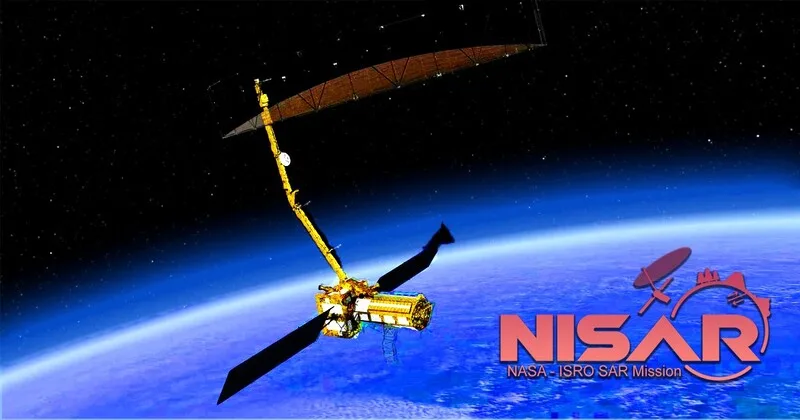
Designed to provide a detailed view of the Earth to observe and measure some of the planet’s most complex processes, including ecosystem disturbances, ice-sheet collapse, natural hazards, sea level rise, and groundwater issues, NISAR is a pioneer in space technology. Its radar, the first of its kind in space, will systematically map Earth, measuring changes of our planet’s surface as small as a centimetre.

India crossed a milestone in its space and climate ambitions on Wednesday with the successful launch of the NASA-ISRO Synthetic Aperture Radar (Nisar) satellite from the Satish Dhawan Space Centre in Sriharikota. The Rs. 12,000-crore mission has been over a decade in the making and is being considered as one of the world’s most advanced Earth observation missions. The 2393-kilogram satellite lifted off at 5:40 pm IST, July 30 aboard ISRO’s Geosynchronous Satellite Launch Vehicle (GSLV) into the vacuum of space.

The Nisar mission, a $1.5 billion joint venture between the Indian Space Research Organisation (ISRO) and the United States’ National Aeronautics and Space Administration (NASA), is now set to revolutionise climate monitoring and disaster response, not just for India, but worldwide.

First Dual-Band Radar Satellite for Earth Observation

Why it is so special?

NISAR is the world’s first Earth-observing satellite with dual-frequency synthetic aperture radar (SAR).

L-band radar (1.257 GHz) from NASA can penetrate dense forests and soil layers to detect ground deformation and subsurface movement.

S-band radar (3.2 GHz) from ISRO is optimised for surface-level changes like crop growth, biomass estimates, and water levels.

This dual-frequency advantage allows for all-weather, day-and-night imaging, even through clouds, smoke, or vegetation cover.

This combination of NASA’s L-band radar and ISRO’s S-band radar enables Nisar to capture the faintest shifts on Earth’s surface — whether under forests, clouds, or even in darkness — detecting movements as small as a few millimetres.

The implications for India, often at the frontline of climate change impacts and natural disasters, are profound.

Nisar’s freely accessible, near-real-time data will empower Indian researchers, disaster managers, and policymakers to monitor glacier movements in the Himalayas, detect fault-line shifts before earthquakes, track agricultural cycles, and manage water resources more effectively.

With this tool, India is set to improve forecasting for floods, droughts, and landslides, enabling rapid response and informed policy decisions.

NISAR is designed to support research and operations across six broad themes:

Solid Earth Processes – Tracking earthquakes, landslides, and land deformation.

Ecosystems – Monitoring forests, woody biomass, and biodiversity.

Ice and Snow Dynamics – Measuring glacial movements and polar ice thickness.

Coastal and Ocean Monitoring – Tracking shoreline erosion, oil spills, and storm surges.

Disaster Response – Providing near-real-time damage maps after floods, quakes, or cyclones.

Agriculture and Infrastructure – Supporting food security and monitoring subsidence near dams, roads, and reservoirs.

During natural disasters, NISAR can provide damage proxy maps within five hours, crucial for emergency relief planning and response.

The mission exemplifies balanced international collaboration:

ISRO contributed the spacecraft bus, the entire S-band radar system, Ka-band telemetry systems, and launch support via GSLV Mk-II.

NASA provided the L-band radar, radar structure, antenna, onboard avionics, and high-capacity data systems.

The satellite was integrated and tested in Bengaluru, symbolising “Made-in-India” ownership of a global science instrument.

To get my guidance for English/Bengali/ Economics or overall Guidance for WBCS or any other exams,please call or whatsapp @ 6295350330. This is the official number of Adhyayan Academy. My much awaited descriptive English /Bengali Course for 1 year is starting from 1st September. Admission is going on for my Clerkship Main/ WBSSC Group C Course. Mock Test Course for PSC Miscellaneous Main has also started.

For regular updates, follow us @ FB, YouTube or Telegram with following links

FB- https://www.facebook.com/Adhyayanacademyslg/

YouTube- https://www.youtube.com/@theadhyayanacademy

Telegram- https://t.me/theadhyayanacademy

5 Years of National Education Policy

This year marks the completion of 5 years of National Education Policy (NEP) which was launched in 2020. The NEP 2020 is based on the recommendations of Kasturirangan and T.S.R. Subramanian committees. NEP 2020 is India’s 3rd education policy since independence. NEP 2020 lays emphasis on reforms in education at all levels from pre-primary to higher education. It aims to transform the Indian education system to meet the demands of the 21st century. The new policy replaces the previous National Policy on Education, 1986.

Major provisions

School education:

Universalization of education by 2030 through 100% GER (Gross Enrolment Ratio) from pre-primary to secondary.

Open schooling system (no admission requirements) for out-of-school children.

5+3+3+4 curriculum system replacing existing 10+2 system.

Foundational Stage: This is further subdivided into two parts: 3 years of preschool or anganwadi, followed by classes 1 and 2 in primary school. This will cover children of ages 3–7 years. The focus of studies will be in activity-based learning.

Preparatory Stage: Classes 3 to 5, which will cover the ages of 8–10 years. It will gradually introduce subjects like speaking, reading, writing, physical education, languages, art, science and mathematics.

Middle Stage: Classes 6 to 8, covering children between ages 11 and 13. It will introduce students to the more abstract concepts in subjects of mathematics, sciences, social sciences, arts and humanities.

Secondary Stage: Classes 9 to 12, covering the ages of 14–18 years. It is again subdivided into two parts: classes 9 and 10 covering the first phase while classes 11 and 12 covering the second phase. These 4 years of study are intended to inculcate multidisciplinary study, coupled with depth and critical thinking. Multiple options of subjects will be provided.

Instead of exams being held every academic year, school students will only attend three exams, in classes 2, 5 and 8

Teaching in mother tongue up to class 5 with no imposition of any language.

It recommends additional recruitment of teachers to ensure a pupil-teacher ratio (PTR) of under 30:1, with a preference for 25:1 in socio-economically disadvantaged areas.

The NEP envisages less high-stakes board exams. From 2026, CBSE plans to allow class 10 students to sit for board exams twice a year.

Early Childhood Care and Education (ECCE):

NEP aims to make ECCE universal by 2030. NCERT’s Jaadui Pitara Learning Kits are already in use & MoWCD has issued a National ECCE Curriculum.

Higher education:

National Higher Education Regulatory Council (NHERC): to regulate higher education, including teacher education, while excluding medical and legal education.

Holistic UG (Undergraduate) education with provisions of a flexible curriculum, integration of vocational education, multiple entries & exit points with respective degrees, and also undergraduate programs in regional languages.

Introduction of Four-Year Undergraduate Programs

Multiple Entry-Exit system with academic credits.

Academic Bank of Credits to enable transfers of credits between institutions

HECI (Higher Education Commission of India) as umbrella regulator except for legal and medical education.

Higher Education Grants Council (HEGC): to fund and finance universities and colleges, based on transparent criteria. This will replace the existing University Grants Commission.

Promotion of multilingualism in schools and colleges.

Engineering in regional languages: The government will also announce the launch of engineering degrees in regional languages in about 14 smaller institutions.

Common test for college entry: CUET, introduced in 2020, is now a key route to undergraduate admissions.

Establishment of Indian campus abroad & foreign universities campuses in India.

The National Testing Agency will be given the additional responsibility of conducting entrance examinations for admissions to universities across the country, in addition to the JEE Main and NEET

Teacher Education & Training:

Teacher Education: A 4-year integrated B.Ed. degree will be the minimum qualification for teaching by 2030.

Continuous Professional Development (CPD): Teachers will be required to participate in 50 hours of CPD every year.

Increased Public Investment: Aims to increase public investment in education to 6% of GDP

Gender Inclusion Fund: To build the country’s capacity to provide equitable quality education for all girls.

Special Education Zones (SEZs): To be declared for disadvantaged regions and groups.

Digital Education: National Educational Technology Forum (NETF) will be created as an autonomous body to provide a platform for the free exchange of ideas on the use of technology to improve learning, assessment, planning, and administration.

PARAKH (Performance Assessment, Review, and Analysis of Knowledge for Holistic Development): A new National Assessment Centre to set norms, standards, and guidelines for student assessment. Under PARAKH, Progress Cards are developed that go beyond marks & include peer & self-assessment.

Significance

In early August 2021, Karnataka became the first state to issue an order with regard to implementing NEP.

On 26 August 2021, Madhya Pradesh implemented NEP 2020.

Structural Overhaul: The traditional 10+2 system is replaced by the 5+3+3+4 model, aligning Indian education with global standards. This structure prioritizes foundational learning (ages 3–8), prepares students for critical thinking, and allows flexibility in subject choices at the secondary level.

Focus on Early Childhood Education: Universalization of Early Childhood Care and Education (ECCE) for children aged 3-6 is a cornerstone, ensuring all children enter primary school with a strong foundation.

Mother Tongue and Multilingualism: NEP 2020 recommends teaching in the mother tongue or regional language up to at least Grade 5 (preferably Grade 8), which studies show improves comprehension and retention.

Holistic and Multidisciplinary Education: NEP 2020 moves away from rote memorization, emphasizing critical thinking, creativity, and conceptual understanding. It supports a multidisciplinary approach at all levels, encouraging integration of arts, sciences, and vocational subjects for a broader learning experience.

Skill Development and Vocational Education: Vocational training and skill development are introduced from early grades, aiming to make students “future-ready” and better prepared for the job market.

Multilingualism in Education:

Anuvadini App & e-KUMBH Portal: AICTE’s Anuvadini App facilitates translation of engineering, medical, law, UG, PG, and skill books into Indian languages; these are accessible via the e-KUMBH portal.

Multilingual Content on SWAYAM: Study materials are made available in multiple Indian languages on the SWAYAM platform to support diverse learners.

CSTT Terminology Compilation: The Commission for Scientific and Technical Terminology (CSTT) has compiled over 30 lakh scientific and technical terms in 22 Indian languages, with 16 lakh terms digitized.

ASMITA Initiative: Aims to produce 22,000 books in 5 years across 22 languages, supporting academic translation and original writing.

Regional Language Education in Engineering: 41 engineering institutes across 10 states permitted to offer education in 12 regional languages, promoting technical education in mother tongues.

Multilingual National Exams: CUET, JEE (Mains), and NEET (UG) are conducted in 12 Indian languages, enhancing access and fairness in national-level entrance tests.

Promoting Equity and Inclusion: Initiatives like the Gender Inclusion Fund and Special Education Zones (SEZs) demonstrate a strong commitment to ensuring equitable access to quality education for all, especially girls, children with disabilities, and socio-economically disadvantaged groups.

Focus on foundational skills: NIPUN Bharat, launched in 2021, seeks to ensure every child can read & do basic math by the end of class 3.

The Pradhan Mantri Uchchatar Shiksha Abhiyan (PM-USHA) is the flagship centrally sponsored scheme for higher education reform. It supports the transformation of state universities and colleges by providing funding tied to performance-based outcomes. The scheme has been instrumental in:

Promoting digital infrastructure, internationalization, and academic autonomy

Advancing equity and inclusion through targeted interventions in underserved regions.

International Campuses of Indian Universities

As part of its global outreach, India has begun establishing international campuses of its premier higher education institutions. These initiatives aim to position India as a global knowledge hub and expand access to quality education worldwide9.

IIT Madras–Zanzibar: MoU signed on 5 July 2023; campus established in Zanzibar, Tanzania with classes commenced under partnership between MoE (India) and MoEVT (Zanzibar).

IIT Delhi–Abu Dhabi: MoU signed on 15 July 2023 with Abu Dhabi Department of Education and Knowledge (ADEK); campus is operational and marks IIT Delhi’s first international presence.

IIM Ahmedabad–Dubai: MoU signed on 8 April 2025 with UAE Government for establishing the IIMA Dubai Campus in Dubai International Academic City; will offer full-time MBA and executive education programmes.

Foreign Universities in India

Prestigious institutions like Deakin and Wollongong Universities (Australia) have launched campuses in GIFT City, Gujarat, and the University of Southampton (UK) has set up in Gurugram marking a new era of global academic presence in India. Six universities from UK, Australia, USA and Italy have been given LoA for setting up their campuses in India

Challenges

Funding Concerns: The policy reiterates the long-standing recommendation to increase public investment in education to 6% of GDP. However, achieving this target has been a persistent challenge for decades, and the NEP 2020 does not provide a concrete roadmap or immediate financial commitment to ensure this increase. Without adequate funding, many of the proposed reforms will remain on paper.

3-Language Formula: NEP proposes 3 languages in school, at least 2 of them Indian. But this provision has been politicized in several States for e.g. in TN, which follows a Tamil-English model, it has been seen as an attempt to impose Hindi language.

Teacher Education Overhaul has not happened: The National Curriculum Framework for Teacher Education, due in 2021, is yet to be released. The 4-year integrated B.Ed course has been announced under the Integrated Teacher Education Programme, but colleges offering existing programmes like Bachelor of Elementary Education are pushing back.

Access to Technology: While the NEP emphasizes technology integration and online learning, the existing digital divide in India (especially between urban and rural areas, and across socio-economic strata) remains a significant barrier. Many students and teachers lack access to reliable internet, devices, and digital literacy. The digital divide is also causing the education divide in India. Today, over 90 percent of students do not have devices that allow them to access online learning holistically.

Increased Privatization: Critics argue that the policy, while advocating for public investment, also opens doors for increased private sector participation, potentially leading to the commercialization of education and making quality education less accessible to the poor.

Over-centralization (Centre v/s State): While the idea of a single overarching regulator (HECI) aims for streamlining, some critics worry about potential over-centralization and reduced autonomy for institutions. The policy centralizes power in the central government, potentially reducing states’ autonomy and flexibility to address local educational needs and contexts. Several oppositions ruled States have pushed back against key NEP provisions for e.g. Kerala, TN, West Bengal have refused to sign MoUs with Centre to set up PM-SHRI Schools, citing clauses that require full adoption of NEP.

The way forward?

A national level consensus is much needed to reap the fruits of the policy. States must be given some sort of independence in modifying the policy to an extent on the basis of regional aspirations. Efforts must be undertaken to increase funding for education. Rural infrastructure needs to be overhauled. The digital divide must be breached. More transparency and regularity must be maintained in case of recruitment of teachers. The National Testing Agency has often found to be committing monumental blunders. The agency must be reformed. In sync with the Policy, a National Employment Policy must be frame worked.

Only then, the policy can bring drastic changes in the education system across the country.

To get my guidance for English/Bengali/ Economics or overall Guidance for WBCS or any other exams,please call or whatsapp @ 6295350330. This is the official number of Adhyayan Academy. My much awaited descriptive English /Bengali Course for 1 year is starting from 1st September. Admission is going on for my Clerkship Main/ WBSSC Group C Course. Mock Test Course for PSC Miscellaneous Main has also started.

For regular updates, follow us @ FB, YouTube or Telegram with following links

FB- https://www.facebook.com/Adhyayanacademyslg/

YouTube- https://www.youtube.com/@theadhyayanacademy

Telegram- https://t.me/theadhyayanacademy

List of Abbreviations Part 2- ‘I’ to ‘Q’

I

IADF: International Agricultural Development Fund

IAEA: International Atomic Energy Agency

IBRD: International Bank for Reconstruction and Development

ICAI: Institute of Chartered Accountants of India

ICAR: Indian Council of Agricultural Research

IDBI: Industrial Development Bank of India

IDR: Indian Depository Receipts

IFAD: International Fund for Agricultural Development

IFC: International Finance Corporation

IFRS: International Financial Reporting Standard

IFSC: Indian Financial System Code

IFTU: International Federation of Trade Unions

ISKCON: International Society for Krishna Consciousness

ISO: International Standardisation Organisation

ISP: Internet Service Provider

ISRO: Indian Space Research Organisation

ISS: International Space Station

IST: Indian Standard Time

ICICI: Industrial Credit and Investment Corporation of India

ICMR     Indian Council of Medical Research          

ICOR      Incremental capital output ratio

ICRA      Investment information and Credit Rating Agency

IEX          Indian Energy Exchange

IMRB     Indian Market Research Bureau

INMARSAT:         International Maritime Satellite Organization

IPCC       Intergovernmental Panel on Climate Change

IPEC       International Program on Elimination of Child Labor

IPR         Intellectual Property Right

IRDA      Insurance Regulatory and Development Authority

ITDC       Indian Tourism Development Corporation

ITES        Information Technology Enabled Services

ICBM: Inter Continental Ballistic Missile

ICFTU:   International Confederation of Free Trade Unions

IELTS-     International English Language Testing System

IADS –    Integrated Air Defence System

IAQ –     Indoor air quality

IRBM – Intermediate Range Ballistic Missile

ITER –   International Thermonuclear Experimental Reactor

IBPS       Inter Bank Mobile Payment Service

IAAI       International Airport Authority of India

IAC         Indian Airlines Corporation

IAEA      international atomic Energy Agency

IAF         Indian Air Force

IARI        Indian Agriculture Research Institute

IAS         Indian Administrative Services

IAY          Indira Awas Yojana

IBA         Indian Bankers Association

IBRD      International Bank of Reconstruction and development (World Bank)

ICAR      Indian Council of Agriculture Research

ICBM     Inter Continental ballistic Missile

ICC         International Cricket council

ICFTU    International Confederation of Free Trade Unions

ICICI       Industrial Credit and Investment Corporation of India Limited

ICHR      Indian Council of Historical Research

ICJ          International Court of Justice

ICMR     Indian council of Medical Research

ICSI        Indian Company Secretaries Institute

ICWA     Indian Council of World Affairs

IDA         International Development Agency

IDBI        Industrial Development Bank of India

IDO        International Defence Organization

IDPL       Indian Drugs and Pharmaceuticals Limited

IET          Institute of Engineering and Technology

IFA          Indian Football Association

IFCI        Industrial Finance corporation of India

IFFI         International Film Festival of India

IFFCO    Indian Farmers Fertilizers Cooperative

IFTU       International Federation of Trade Unions

IGNOU  Indira Gandhi National Open University

IIPA        Indian Institute of Public Administration

IIS           Indian Institute of Sciences

IISCO     Indian Iron and Steel Company

IIT           Indian Institute of Technology

IMA       Indian Military Academy

IMF        International Monetary Fund

INS         Indian Naval ship

INSAT    Indian National Satellite

INTELSAT             International Telecommunication Satellite

INTERPOL            International Police Organisation

IOC         Indian Oil Corporation

IPC         Indian Penal Code

IPKF       Indian Peace keeping Force

IPS          Indian Police Services

IQ           Intelligence Quotient

IRC         International Red Cross

IRDA      International Regulatory Development Authority

IRDP      Integrated Rural Development program

ISB          Indian Standard Bureau

ISD         International Standard Dialling

ISI           Inter Service Intelligence

ISM        Indian School of Mines

ISO         International Organisation for Standardisation

ISRO      Indian Space Organisation

ITBT       Indo-Tibet Border Force

ITPO      Indian Trade promotion organisation

ITO         International Trade Organisation

J

JNNURM: Jawaharlal Nehru National Urban Renewal Mission

 JPC: Joint Parliamentary Committee

 JPEG: Joint Photographic Experts Group

 JWG: Joint Working Group

JSY: Janani Suraksha Yojana

JKLF: Jammu and Kashmir Liberation Front

K

KG: Kindergarten

 KPO: Knowledge Process Outsourcing

KVIC: Khadi & Village Industries Corporation

 KYC: Know your customer

KBE – Knight Commander of the Order of the British Empire

L

LBW:      Leg Before Wicket

 LMG:    Light Machine Gun

 LMP:     Licentiate in the practice of Medicine

 LAC:      Line of Actual Control

 LASER: Light Amplification by Stimulated Emission of Radiation

 LCA:      Light Combat Aircraft

LSD         Lysergic acid diethylamide

 LHC:      Large Hadron Collider

 LAF:      Liquid Adjustment Facility

 LIC:        Life Insurance Corporation (of India)

 LLP:       Limited Liability Partnership

 LTA:       Light Transport Aircraft

 LTTE:     Liberation Tigers of Tamil Eelam

 LAMPS: Large-sized Adivasi Multipurpose Societies

 LTCM:   Long Term Capital Management

LED –     Light-Emitting Diode

LCD:       Liquid Crystal Display

LNG –    Liquefied Natural Gas

                                M

 MA: Moving Average

 MAT: Minimum Alternative Tax

 MCA: Ministry of Company Affairs

 MDG: Millennium development goals

 MEP: Minimum Export Price

 MFA: Multi-Fiber Agreement

MODVAT:  Modified Value Added Tax

 MFI: Microfinance institution

 MFN: Most Favoured Nation

 MGNREGA: Mahatma Gandhi National Rural Employment Guarantee Act

 MPEG: Motion Picture Experts Groups

 MRF: Madras Rubber Factory

 MRI: Magnetic Resonance Imaging

 MRTPC: Monopolies and Restrictive Trade Practises Commission

 MRTS: Mass Rapid Transit System

MTS    Multi-Tasking Staff

MAPS    Madras Atomic Power Station

MAT       Minimum Alternate Tax

MASER Microwave Amplification by Stimulated Emission of Radiation

 MSA: Maritime Safety Agency

 MSCF: Maritime Security Cooperation Framework

 Mss: Manuscript

 MTCR: Missile Technology Control Regime

 MTO: Multilateral Trade Organisation

 MVC: Maha Vir Chakra

MTNL Mahanagar Telephone Nigam Ltd

MOU Memorandum of Understanding

MSTC Metals & Scrap Trading Corporation

MMTC Minerals & Metal Trading Corporation

                                N

NABARD: National Bank for Agriculture and Rural Development

 NAEP: National Adult Education Program

 NAFED: National Agricultural Cooperative Marketing Federation of India Ltd

 NAFTA: North American Free Trade Agreement

 NAM: Non-Aligned Movement

 NAMA: Non-Agriculture Market Access

 NASDAQ: National Association of Securities Dealers Automated Quotation

 NASSCOM: National Association of Software and Services Companies

 NATO: North Atlantic Treaty Organisation

 NAV: Net Asset Value

NASA    National Aeronautics  and space Administration

 NBFC: Non-Banking Finance Companies

 NCERT: National Council of Education Research and Training

 NCPCR: National Commission for Protection of Child Rights

 NDC: National Development Council

NOIDA: New Okhla Industrial Development Association

 NEFT: National Electronic Fund Transfer

 NEGP: National E-Governance Plan

 NEP: National Education Policy

NPP       National Population Policy

NPT        Nuclear Non-Proliferation Treaty

NREP     National Rural Employment Programme

NRI         Non Resident Indian

NSC        National Security Council

NSS        National Saving Scheme

 NFO: New Fund Offers

 NGO:    Non-Governmental Organisation

 NHAI:   National Highways Authority of India

 NHDP: National Highways Development Project

 NHRC: National Human Rights Commission

 NIC:      National Industrial Classification

 NIFT:     National Institute of Fashion Technology

 NRI:      Non-Resident Indian

 NSC:     National Statistical Commission

 NSDL:   National Securities Depository Limited

 NSE:      National Stock Exchange

NBCCL: National Buildings Construction Corporation Limited

NMDC:  National Mineral Development Corporation

 NSSO:   National Sample Survey Organisation

 NTPC:   National Thermal Power Corporation

 NCC:     National Cadet Corps

NALCO- National Aluminium Company Limited

NTFS:    New Technology File System

NHPC:   National Hydroelectric Power Corporation

NEFT:     National Electronic Funds Transfer

NDMA- National Disaster Management Authority

NITI:      National Institution for Transforming India

NPS- National Pension System

NEFA: North East Frontier Agency

 NSS: National Service Scheme

 NAA: National Airport Authority

 NRSA: National Remote Sensing Agency

 NSA: National Security Act

 NSC: National Service Corps; National Security Council

 NSDL: National Securities Depository Limited

 NSE: National Stock Exchange

 NSR: National Skills Registry

 NWDA: National Water Development Agency

 NWRC: National Water Resources Council

                                O

ONOS: One Nation One Subscription

OIC: Organisation of Islamic Countries

 OIL: Oil India Limited

 OLTAS: On-Line Tax Accounting System

 OMCS: Oil Marketing Companies

 ONGC: Oil And Natural Gas Commission

 OPEC: Organisation Of Petroleum Exporting Countries

 OSCE: Organisation For Security and Cooperation in Europe

OBC: Other Backward Classes

 OBU: Offshore Banking Unit

 ODA: Official Development Assistance

 ODF: Open Document Format

 ODS: Ozone Depletion Substances

 OECD: Organisation of Economic Co-operation and Development

 OGL: Open General Licence

 OIGS: On India Government Service

 ONGC: Oil and Natural Gas Commission

 OXML: Open Extended Marking Language

P

 PAC: Public Accounts Committee

 PACS: Primary Agriculture Credit Societies

 PAN: Permanent Account Number (Of Income-Tax)

 PATA: Pacific-Asia Travel Association

 PCI: Per capita income

 PD: Primary Deficit

 PDO: Public Debt Office

 PDS: Public Distribution System

PLO: Palestine Liberation Organization

PMJJBY: Pradhan Mantri Jeevan Jyoti Bima Yojana

PMJDY: Pradhan Mantri Jan Dhan Yojana

PMSBY: Pradhan Mantri Suraksha Bima Yojana

PMSAGY: Pradhan Mantri Sansad Adarsh Gram Yojana

PMSSY: Pradhan Mantri Sukanya Samriddhi Yojana

PMFBY: Pradhan Mantri Fasal Bima Yojana

 PIL: Public Interest Litigation

PPO: Pension Payment Order

POCSO: Protection of Children from Sexual Offences Act

PPLO: Pleuro Pneumonia Like Organisms

 PIO: Persons Of Indian Origin

 PN: Participatory Note

 PNB: Punjab National Bank

PCS:       Provisional Civil Services

 PO: Principal Office

POW: Prisoner of War

 PP: Public Prosecutor; Particular Person

 PRO: Public Relations Officer

 PS: Post Scriptum; PostScript; written after

 PSC: Public Service Commission

 PSE: Public Sector Enterprises

 PSLV: Polar Satellite Launch Vehicle

 PTA: Preferential Trade Area

 PTI: Press Trust of India

 PTO: Please Turn Over; Privilege Ticket Order

 PUFA: Polyunsaturated Fatty Acids

 PVC: Param Vir Chakra

 PVSM: Param Vishisht Seva Medal

 PWD: Public Works Department

PMMY: Pradhan Mantri Mudra Yojana

Q

 QIB:  Qualified Institutional Buyer

 QIP: Qualified Institutional Placement

 QR: Quantitative Restriction

 QMG: Quarter Master General

 QR: Quantitative Restriction

To get my guidance for English/Bengali/ Economics or overall Guidance for WBCS or any other exams,please call or whatsapp @ 6295350330. This is the official number of Adhyayan Academy. My much awaited descriptive English /Bengali Course for 1 year is starting from 1st September. Admission is going on for my Clerkship Main/ WBSSC Group C Course. Mock Test Course for PSC Miscellaneous Main has also started.

For regular updates, follow us @ FB, YouTube or Telegram with following links

FB- https://www.facebook.com/Adhyayanacademyslg/

YouTube- https://www.youtube.com/@theadhyayanacademy

Telegram- https://t.me/theadhyayanacademy