English Report Writing- Saptarshi Sir’s Class

Q- Write a newspaper report on increasing bike menace in your locality

Ans-                                      The Menace of Rash Biking Haunts the Citizens

Staff Reporter                   

ABC, July28: The menace of rash bike driving continues to evade the baton of law even though stringent rules are in place. Recently, an innocent footpath dweller lost his life due to such unhindered speed of a two-wheeler in the wee hours of night. This takes the tally of such unfortunate deaths in this year within this locality alone to seven which includes one woman, two children and two bikers as well. Driving bikes without helmets is a common sight these days for the people of this town. Uncontrolled speed, unbearable popping sound from the silencer pipes, drunken driving- all these are adding to the woes of the citizens.

Despite several complaints to the local police, no formal action has yet been taken, letting the culprits roam Scot- free.

” I have lost my son due to this horror and I am still waiting for justice”, Namita Devi started weeping as she was telling us about that horrific accident that took away the life of her only son.

” We are leaving no stones unturned to combat this menace. Several measures are being taken already. Spot fines, installation of CCTV cameras at several places, surveillance by drones are to name a few”, claimed the Superintendent of Police of the district.

But who will be answerable for those deaths? The town still looks for a clue.

To learn how to write such reports or answers on any other topics or to get my guidance for English/Bengali/ Economics or overall Guidance for WBCS or any other exams,please call or whatsapp @ 6295350330. This is the official number of Adhyayan Academy. My much awaited descriptive English /Bengali Course for 1 year is starting from 1st September. Admission is going on for my Clerkship Main/ WBSSC Group C Course. Mock Test Course for PSC Miscellaneous Main has also started.

For regular updates, follow us @ FB, YouTube or Telegram with following links

FB- https://www.facebook.com/Adhyayanacademyslg/

YouTube- https://www.youtube.com/@theadhyayanacademy

Telegram- https://t.me/theadhyayanacademy

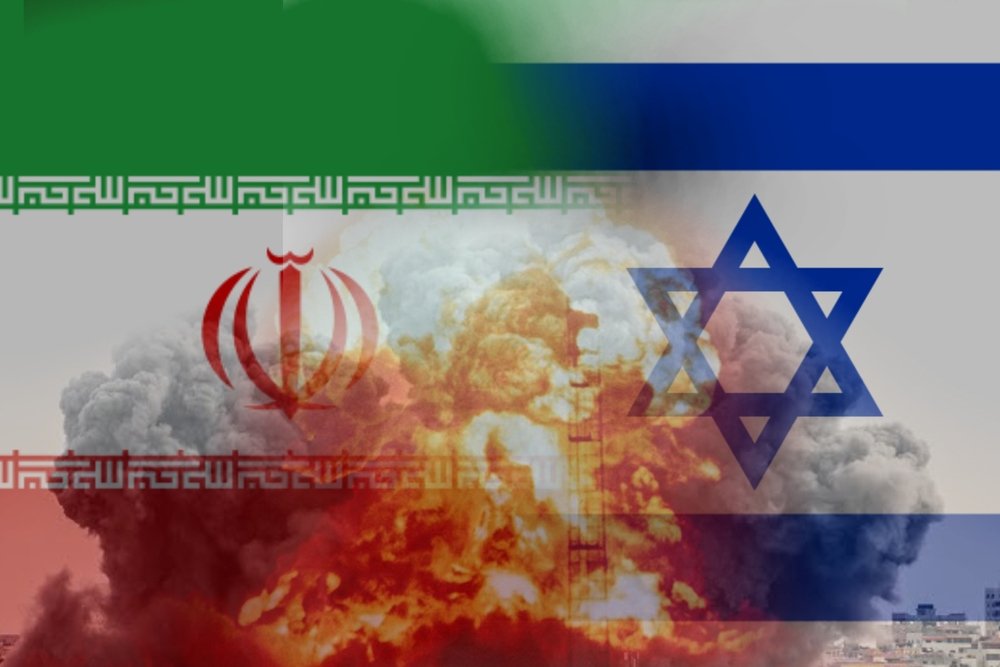
Iran- Israel Conflict

By mid-2025, Iran and Israel were locked in a war of attrition. Israel conducted targeted airstrikes on Iran’s nuclear, military, and civilian infrastructure. Iran launched multiple missile and drone attacks against Israeli cities, infrastructure, and military sites. The damage was significant on both sides, but casualties were asymmetrical: Iran reported over 220 deaths from Israeli strikes, while Israel reported about two dozen fatalities.

Iran’s missile capabilities were degraded by Israeli strikes early in the campaign, and Iran appeared to be holding back much of its arsenal. It was seen as focusing more on messaging and deterrence than trying to decisively defeat Israel. Israel, meanwhile, began to strike not only military sites but also civilian targets like refineries, power grids, and media centres—an attempt to pressure the Iranian regime internally.

The United States formally entered the Israel-Iran conflict with precision airstrikes targeting three of Iran’s key nuclear sites—Fordow, Natanz, and Isfahan. Conducted using B-2 stealth bombers equipped with bunker-busting bombs, the attack included a successful hit on the heavily fortified Fordow Uranium Enrichment Plant, a facility previously beyond Israel’s operational reach.

History- In 1948, the opposition of Arab states to Israel led to the first Arab-Israeli war. Iran was not a part of that conflict, and after Israel won, it established ties with the Jewish state. It was the second Muslim-majority country to do so after Turkey. Israel tried to counter the hostility of Arab states at the time with the “periphery doctrine” under its first Prime Minister David Ben Gurion.

The Pahlavi dynasty, under the Shah Mohammad Reza Pahlavi, ruled Iran then. It had US support, as did Israel, and the two countries maintained ties with each other, with Iran also selling oil to Israel amid its economic boycott by Arab states.

Iran was one of the first countries in the region to recognise Israel after its formation in 1948. It was only after 1979 that their diplomatic ties ended.

 The 1979 Revolution: In this phase, a religious state was established in Iran after the Shah was overthrown in the 1979 Islamic Revolution. The regime’s view of Israel changed, and it was seen as an occupier of Palestinian land. Iranian Supreme Leader Ayatollah Khomeini termed Israel “Little Satan” and the United States the “Great Satan”, seeing the two as parties interfering in the region. Iran also sought to grow its presence in the region, challenging the two major powers Saudi Arabia and Israel – both of whom were US allies.

Shadow War after 1979: After 1979, the ties between the countries worsened. While Israel and Iran have never engaged in direct military confrontation, both attempted to inflict damage on the other through proxies and limited strategic attacks. Israel has attacked Iranian nuclear facilities from time to time.

In the early 2010s, it targeted several facilities and nuclear scientists in a bid to prevent it from developing nuclear weapons. In 2010, the US and Israel are believed to have developed Stuxnet, a malicious computer virus was used to attack a uranium enrichment facility at Iran’s Natanz nuclear site, it was the “first publicly known cyberattack on industrial machinery”, according to Reuters.

The two countries have been engaged in multiple proxy conflicts, and actually came face to face during the 2006 Lebanon War.

Begin doctrine

The Begin doctrine effectively dictates that even the potential of an enemy having WMD or weapons of mass destruction (nuclear weapons) can justify preventive strikes from Israel.

Over the years, the ties devolved with little trust on either side. Iran’s support for Hamas and other Iran-backed regional actors, such as Hezbollah, especially after October 7, 2023, has drawn Israel’s ire. Last year, the Israel-Iran relations worsened more when for the first time Iran launched a direct attack aimed at targets within Israel.

Iran-Israel bilateral ties hit new lows when, on June 13 this year, Israel launched “Operation Rising Lion” against Iran.

Several factors have contributed to the recent escalation in the Israel-Iran conflict. Let’s take a closer look.

Ideology and Legitimacy: Iran views Israel as illegitimate and calls for its elimination. Conversely, Israel sees Iran’s ideology as a direct threat to its existence. This mutual existential fear perpetuates hostility.

Nuclear Ambitions: Israel’s primary concern is Iran’s nuclear program. Although Iran claims it is peaceful, Israel and others suspect clandestine weapons work. Israel has long declared it will not allow hostile states to acquire nuclear arms and has used pre-emptive force in the past.

Security and Regional Power: Iran seeks to expand its influence through its military and proxies. Israel, surrounded by unfriendly states, feels strategically encircled. This drives each side to challenge the other militarily, diplomatically, and through intelligence operations.

Geopolitical Alliances: Iran is aligned with powers like Syria, Russia, and China, and supports non-state actors. Israel is backed by the U.S. and increasingly by Gulf Arab states. Each country sees the other’s alliances as threats to its own position in the region.

Prime Minister of Israel, Benjamin Netanyahu framed the biggest attack on Iran in decades as an attempt to remove the “nuclear threat” to Israel. Addressing the people of Iran in a video message, he said the time had come for them to stand up for their freedom from an “evil and oppressive regime”, which has “never been weaker”.

Further explaining Israel’s “pre-emptive strikes”, Netanyahu said Iran had “taken steps that it has never taken before… to weaponize enriched uranium,” and “if not stopped, Iran could produce a nuclear weapon in a very short time,” perhaps even “within a few months.”

Notably, the great strategic concern in Israel is Iran possessing nuclear weapons, and to that end, it has previously launched attacks on scientists (although more targeted and tactical ones). Iran says it is not looking to develop weapons, and has simply invested in nuclear power over the decades.

Natanz nuclear facility

It is Iran’s main uranium enrichment facility, where the country produces most of its nuclear fuel. Located in the central province of Isfahan, the Natanz facility is “the beating heart of the Iranian nuclear programme,” analysts say.

 IAEA’s Board of Governors censured Iran: Israel’s attacks came one day after the International Atomic Energy Agency’s (IAEA) Board of Governors censured Iran for the first time in 20 years for not working with its inspectors. On June 12 IAEA passed a resolution declaring Iran as being non-compliant with its non-proliferation obligations. The resolution came on the back of a recent IAEA investigation that found Iran was conducting “secret nuclear activities” at three locations.

Possible Consequences

1. Fears of surging oil prices: Just as global shipping lines and traders had started to breathe a sigh of relief from elevated freight rates, with vessels returning to the crucial Red Sea route from the longer Cape of Good Hope passage, a conflict between two major West Asian powers — Iran and Israel — has reignited fears of surging oil prices and more trade disruptions.

Since the war began on June 13, global Brent crude prices have risen by around 11 per cent — from levels of $67.34 per barrel on June 12 to around $74.6 per barrel on Tuesday. This is a significant spike — and several global financial firms are projecting that oil could cross $100 per barrel in case the crisis continues and worsens.

According to the US Energy Information Administration (EIA), at the end of 2023, Iran accounted for 12 per cent of global oil reserves, with the world’s third largest proven reserves after Venezuela and Saudi Arabia. Iran also has the second largest reserves of natural gas after Russia. However, Western sanctions have ensured that only around 4 per cent of global oil supplies comes from Iran. The primary customer of Iranian oil is China.

2. Risk of wider energy disruption: Experts warn that Iran may respond by closing the strategic Strait of Hormuz — a key passage through which 20–25 per cent of global oil supply transits, as well as a critical corridor for LNG shipments from Qatar and the UAE. Qatar, notably, is among the top LNG suppliers to India.

Strait of Hormuz

Strait of Hormuz is a critical narrow waterway between Iran and Oman, and connects the Persian Gulf with the Gulf of Oman and the Arabian Sea

Red Sea shipping route

The nearly 2,000-km Red Sea connects the Mediterranean Sea with the Indian Ocean via the narrow Suez Canal. Before the Suez Canal’s construction, ships had to go around the Cape of Good Hope in South Africa to travel between Europe and Asia.

3. Rising freight rates: With the escalation in Iran-Israel conflict, there is possibility that freight rates will increase. There is also a possibility that global governance would also be impacted by continuing instability in the Middle East.

4. Nuclear Proliferation Risks: Iran’s possible withdrawal from the Nuclear Non-Proliferation Treaty (NPT) could trigger a regional arms race, undermining global non-proliferation norms.

Impact of the Iran-Israel conflict on India?

The Israel-Iran conflict triggered serious concern among major stakeholders in the region, including India. Indian Ministry of External Affairs urged both Israel and Iran “to avoid any escalatory steps,” saying India has “close and friendly” relations with the two nations.

Operation Sindhu

India announced launching ‘Operation Sindhu’ to evacuate Indian nationals from Iran as fears of an all-out Israeli-American military strikes on Iran increased.

Nonetheless, escalated Israel-Iran conflict puts India’s regional connectivity strategy like the International North South Transport Corridor, and the Chabahar port at risk.  India’s key connectivity projects like the Chabahar port in Iran, which links it to Afghanistan and Central Asia, could be affected by regional turmoil.  The India-Middle East-Europe Economic Corridor (IMEC) faces risks from the conflict, threatening its progress and impacting bilateral trade and regional economic dynamics.

Notably, The International North South Transport Corridor (INSTC), which was initiated by Russia, India, and Iran, is a multi-modal transportation project linking the Indian Ocean and Persian Gulf to the Caspian Sea via Iran, and onward to northern Europe via St Petersburg in Russia. This corridor aims to reduce transit times to about 25 days — 20 days fewer than the Suez Canal route — and cut freight costs by 30 per cent.

With nearly 8 million Indian nationals residing in West Asia, their safety becomes a critical concern, especially if evacuation becomes necessary.

Chabahar is a deep-water port in Iran’s Sistan-Baluchistan province. It is the Iranian port that is the closest to India, and is located in the open sea, providing easy and secure access for large cargo ships. The port is also part of the proposed INSTC. Chabahar is of strategic importance for India. It offers New Delhi an alternative route that bypasses Pakistan, which does not allow India land access for trade with Afghanistan and Central Asia.

India must tread carefully, preserving its strategic partnerships with both Israel and Iran, while navigating a complex landscape of rising sanctions and geopolitical alignments.

One Nation, One Election (ONOE)

One Nation, One Election (ONOE) is a proposal under consideration by the Government of India to synchronise all elections in the country either on a single day or within a specific time frame, with an objective of cutting election cost. One of its most notable proposals is to simultaneously conduct elections to the Lok Sabha & state legislative assemblies of all 28 states & 8 union territories. For the purpose of ONOE, MoS Law & Justice Arjun Ram Meghwal introduced The Constitution (129th Amendment) Bill, 2024 in Lok Sabha that the bill further to amend the Constitution of India on 17 December 2024, the purposed bill was referred to Joint Parliamentary Committee on 19 December 2024 after being passed in the Lok Sabha with 269 votes being in favour of the bill and 198 votes against passing the motion.

History

The years 1951-52, 1962 and 1967 witnessed simultaneous elections dating back the concept of one nation one election to the early years of Indian Independence. This process was only discontinued after the 1967 elections due to the premature dissolution of a few state assemblies and Lok Sabha in 1970. Since then, the elections are being conducted separately which is only leading to increased costs.

Recommendations Earlier

Law Commission of India (170th Report, 1999): Advocated simultaneous elections, emphasizing the reduction of election-related disruptions and costs.

Parliamentary Standing Committee (2015): Highlighted the benefits of ONOE, including curbing electoral expenses and ensuring uninterrupted governance.

NITI Aayog Report (2017): Proposed a roadmap to reintroduce ONOE.

Advantages

Cost Reduction: It could save money by eliminating the need for separate election cycles. For example, the 2024 Loksabha elections cost a total of around Rs 1 lakh Cr in comparison to Rs 10 Cr of the first LS Election.

Focus on Long-Term Governance: It encourages politicians to prioritize long-term governance over short-term gains.

Increased Voter Turnout: Voters are less fatigued, as they only participate once every few years, potentially boosting voter turnout.

Level Playing Field: Smaller parties can compete more effectively with larger ones due to reduced overall election expenses.

Efficient Use of Security Forces: It allows security forces to be deployed more efficiently for other purposes.

Challenges and complexities of simultaneous elections

Overshadowing regional issues: Conducting elections simultaneously to the Lok Sabha and all State assemblies would result in national issues overshadowing regional and State specific issues.

Force Deployment: Arrangement of police or para military forces to maintain law and order situation during such simultaneous elections will be a mammoth task.

Impact on the Regional parties: Simultaneous elections may create a system where National political parties would have a significant advantage over regional parties.

Political accountability: Frequent elections hold lawmakers accountable, while fixed terms may provide unwarranted stability without performance scrutiny challenging democratic principles.

Concerns Regarding Federalism: Constitutional Amendments concerning the term of the state legislative assemblies under Article 172 can be carried out without ratification by states. Thus, opinion and say of States is reduced.

Logistical Issues: Organizing ONOE would require significant resources, including a vast supply of electronic voting machines and trained personnel to oversee the process.

Amendments Needed

The implementation of the One Nation, One Election policy is not feasible within the current constitutional framework. To enable this policy, certain essential amendments to the Constitution are necessary, including:

Article 83: Concerning the duration of the Houses of Parliament, amendments are required to fix the tenure and timing for the dissolution of the Lok Sabha.

Article 85: Pertaining to sessions, prorogation, and dissolution of Parliament, clear guidelines must be established to prevent arbitrary or ambiguous dissolution of sessions.

Article 172: Governing the duration of State Legislatures, amendments are needed to synchronize their tenure with that of the Lok Sabha.

Article 174: Similar to Article 85, this article deals with sessions, prorogation, and dissolution of State Legislatures. Amendments are required to standardize procedures and timelines.

 The Lok Sabha election in India is already the biggest even of democracy all over the world. To add the state legislature elections to it is not just a matter of regular debate. It is a gigantic step and for that nationwide consensus is needed. Discussions among the political parties with special attention to the regional parties is the need of the hour. Upholding the governing principles of national integrity, popular plurality and cooperative federalism must be the sole purpose of such a mammoth shift in the course of our democracy.

Economy Encyclopaedia – Part 1

Adverse selection

A risk associated with insurance, and linked to asymmetric information. People who are worried about their health will be more inclined to pay for health insurance than those who are fighting fit. One way to avoid the problem is to make insurance compulsory for all, as happens with car ownership.

Alpha

That part of an investment return that is due to the skill of the fund manager. This can be very hard to measure.

Amortisation

The gradual reduction in the value of an asset (or a debt) over time. A debt (such as a mortgage) is amortised via regular repayments. Companies use amortisation to steadily reduce the value of intangible assets on their balance-sheets.

Antitrust

Term used to describe laws or regulations designed to stop firms from exploiting their monopoly positions in markets at the expense of consumers or rival businesses.

Asset stripping

The practice of buying a company and rapidly selling off the component parts with the aim of making a profit. This often leads to great disruption in the business and a loss of jobs.

Austerity

A term used to describe efforts to reduce the share of public spending in GDP, particularly in the 2010s. When the economy is already weak, Keynesian economists view austerity programmes as a mistake, because they reduce demand. But free-market economists worry that, without austerity, the government’s role in the economy inexorably expands over time.

Authoritarian capitalism

Usually applied especially to China and Russia and to certain extent in India these days, this describes economies in which big business co-exists with an authoritarian government. Businesses are allowed to make money but if they dare to criticise the government, or appear too independent, they may face criminal or financial sanctions.

Backwardation

A term used in the commodity market for when the price for delivering a product today (the spot price) is higher than for delivery in future. Normally, the future price is higher, a situation known as contango. Backwardation is normally the sign of a supply shortage, causing traders to compete to get the product immediately.

Bank run

In a crisis, bank depositors may start to doubt they will get their money back. So, they may demand to withdraw it. Since banks have lent out this money, it is impossible for them to repay all depositors instantly. The bank may fail. To avoid this, most countries have schemes of deposit insurance.

Basis point

One hundredth of a percentage point. The term is often used to describe interest rate changes. A quarter-percentage-point rise or fall in rates is described as 25 basis points. Example, when the Repo rate is changed 0.25%, it is said to have changed 25 basis points.

Beta

This ratio measures the sensitivity of an individual asset’s price to that of the overall market. A stock that tends to go up even more rapidly than the market when it is rising, and drop more precipitously when it is falling, is described as “high beta”; one that moves less violently than the market is “low beta”.

Bill of exchange

A short-term financial instrument, originally used to finance international trade. The buyer of goods would give the seller a signed bill, equal to the value of the purchase, which the seller could then cash with a banker. In modern finance, bills are a catch-all term for short-term debt such as Treasury bills and commercial bills.

Bretton Woods

Location in New Hampshire of a conference in 1944 which decided the post-war economic order. It led to the establishment of the International Monetary Fund and the World Bank. And it agreed on a currency system that linked all currencies at fixed exchange rates to the dollar, which was convertible into gold at $35 an ounce.

Business cluster

When companies in an industrial sector gather in a specific area, such as technology companies in Silicon Valley. When a cluster forms, companies will find it easier to attract high-skilled staff, workers have a wider choice of employers, innovations can circulate more quickly and start-up companies may find it easier to get finance.

Capital flight

What happens when investors try to avoid high taxes, or the prospect of currency devaluation, by sending their money abroad. Governments try to prevent such flight by imposing capital controls but they need to act quickly. Investors will anticipate the introduction of capital controls by indulging in capital flight.

Cartel

Agreement where a group of producers collaborate to fix the price, or restrict the supply, of a good or service. Perhaps the best-known example is the Organisation of the Petroleum Exporting Countries, or OPEC. Cartels among companies are often outlawed by government antitrust regulations because they restrict competition.

Coase theorem

A concept, developed by Ronald Coase that deals with externalities. Coase thinks of the problem in terms of conflicting property rights such as the right of a factory to operate noisy machinery and the right of its neighbours to enjoy peace and quiet. If property rights are clearly delineated then, in the absence of transaction costs, bargaining should lead to an efficient outcome, such as the factory compensating its neighbours for the noise. Coase’s work on externalities, along with that on the theory of the firm, won him a Nobel prize in 1991.

Collateral

An item pledged as security against a loan. An obvious example is a house or flat, which homeowners used as collateral when taking out a mortgage. In financial markets, safe securities such as Treasury bonds are often used as collateral by traders and investors.

Commodity cycle

A pattern of rising and falling commodity prices and production. Rising commodity prices cause consumers to cut back their use and producers to expand output. In the ensuing glut, prices fall and output falls until commodities are so cheap that their use rises again.

Comparative advantage

This idea has been called one of the most profound insights in economics. If country A can make cars more cheaply than country B, and B can produce shirts more cheaply than A, it clearly makes sense to trade. Each has an absolute advantage in one area. But what if A is more efficient at producing everything than B? It still makes sense for them to trade, with B producing the goods where it is more competitive; if for example it is 90% as efficient as A in making shirts, and only 60% in car manufacturing, then it should specialise in making shirts and trade them for cars. Both countries will gain.

Conglomerate

A large company that has diversified across a range of countries and business areas, normally through making acquisitions. Eg. Reliance

Consumer confidence

A measure, taken from a survey, of the public’s attitude towards the economic outlook. If people are worried about their jobs, or political unrest, or a pandemic, they will be less likely to spend money.

Contango

When the futures price of a commodity is higher than the spot price.

Crawling peg

An exchange-rate system in which a currency is tied to another, but can fluctuate within a range, or band, depending on certain conditions.

Creative destruction

A concept, developed by Joseph Schumpeter, to explain economic innovation. Old inefficient companies must go out of business to release capital and workers so they can be used in new, more innovative ways.

Credit default swap

A derivative contract between two parties in which one insures the other against the default of a bond or loan. One of the products at the heart of the 2007-09 financial crisis.

Crowding out

The notion that actions by the state might restrict the options of the private sector. It usually applies to credit. If the government borrows a lot, and pushes up interest rates, then investors may not have enough capital to supply the investment needs of businesses.

Dependency ratio

The proportion of the population that is not of working age, compared with that which could work, if it chose to. Conventionally, dependants are defined as those aged up to 14 or over 65. Sometimes the figures are separated into youth dependency and old-age dependency. The higher the ratio, the greater the tax burden that is likely to fall on the working population; this is a problem for many developed economies, given the numbers now surviving into old age.

Deposit insurance

A scheme whereby a government agrees to compensate depositors if a bank goes bust. This can help prevent bank runs, when depositors panic.

Deregulation

It is a staple of conservative thought that there are too many regulations which hold back economic growth. So, every few years, governments announce a policy of deregulation to cut back the red tape. It turns out, however, that public opinion often demands that governments act to ban things that are bad, or that are disliked. And so more regulations are introduced.

Disintermediation

Cutting out the middleman, or connecting customers directly with producers. In theory, this should reduce costs. In practice, middlemen emerge in a new form; high-street travel agents may have declined in importance but many people use online versions such as Expedia or makemytrip.com.

Dumping

Selling something for less than the cost of producing it. This practice may be adopted by a dominant supplier in an industry in the hope of driving competitors out of business. More commonly, countries argue that producers in other nations are “dumping” goods and gaining market share; this can be used as an excuse to adopt protectionist measures such as tariffs.

To be continued…

To get Saptarshi Sir’s guidance for PSC Miscellaneous Mains/ Clerkship Main/ English/Economy or for overall WBCS or other exam preparation, call or WhatsApp us @6295350330. Classes for PSC Miscellaneous Main and Clerkship Main have already started. WBCS New batch is also going on. You can also download our app for online guidance using the link

https://play.google.com/store/apps/details?id=co.penny.oecgd&pcampaignid=web_share

For free notes, daily quizzes, word games and many other surprises, please join our Telegram Group using the link below

https://t.me/theadhyayanacademy

Integrated Child Development Services (ICDS)

The ICDS is a government programme in India which provides food, preschool education, primary healthcare, immunization, health check-up and referral services to children under 6 years of age and their mothers. 

  • The scheme was launched in 1975, discontinued in 1978 by the government of Morarji Desai, and then relaunched by the Tenth Five Year Plan.
  • Tenth FYP also linked ICDS to Anganwadi centres established mainly in rural areas and staffed with frontline workers.
  • The ICDS provide for anganwadis or day-care centres which deliver a package of six services including:
  1. Immunization
  2. Supplementary nutrition
  3. Health checkup
  4. Referral services
  5. Pre-school education(Non-Formal)
  6. Nutrition and Health information
Implementation
  • For nutritional purposes ICDS provides 500 kilocalories (with 12-15 grams of protein) every day to every child below 6 years of age.
  • For adolescent girls it is up to 500 kilo calories with up to 25 grams of protein every day.
  •  The services of Immunisation, Health Check-up and Referral Services delivered through Public Health Infrastructure under the Ministry of Health and Family Welfare.
Revamp for Urban Areas
  • Health and ICDS models that work in rural areas may not work in urban areas because of higher population density, transportation challenges and migration.
  • Children in urban areas were overweight and obese as indicated by subscapular skinfold thickness (SSFT) for their age.
  • The first-ever pan-India survey on the nutrition status of children, highlighted that malnutrition among children in urban India.
  • It found a higher prevalence of obesity because of relative prosperity and lifestyle patterns, along with iron and Vitamin D deficiency.
  • According to government data, of the 14 lakh anganwadis across the country there are only 1.38 lakh anganwadis in urban areas.

Objectives

  • To improve the nutritional and health status of children in the age-group 0-6 years;
  • To lay the foundation for proper psychological, physical and social development of the child;
  • To reduce the incidence of mortality, morbidity, malnutrition and school dropout;
  • To achieve effective co-ordination of policy and implementation amongst the various departments to promote child development; and
  • To enhance the capability of the mother to look after the normal health and nutritional needs of the child through proper nutrition and health education.

Beneficiaries

  • Children in the age group of 0-6 years
  • Pregnant women and
  • Lactating mothers
  • Adolescent Girls (14-18 years) in Aspirational Districts and North Eastern States

This Scheme is open to all eligible beneficiaries on demand, irrespective of caste, religion and income criteria.

To get Saptarshi Sir’s guidance for PSC Miscellaneous Mains/ Clerkship Main/ English/Economy or for overall WBCS or other exam preparation, call or WhatsApp us @6295350330. Classes for PSC Miscellaneous Main and Clerkship Main have already started. WBCS New batch is also going on. You can also download our app for online guidance using the link

https://play.google.com/store/apps/details?id=co.penny.oecgd&pcampaignid=web_share

For free notes, daily quizzes, word games and many other surprises, please join our Telegram Group using the link below

https://t.me/theadhyayanacademy

 Temples/Mosques/Monasteries/Monuments/ Architecture

  1.  The Khajuraho temples are a group of Hindu and Jain temples in Madhya Pradesh, India, built between 950 and 1050 AD by the Chandela dynasty. These temples showcase the Nagara style of architecture,
  2. Bodh Gaya is located almost 96 kilometrese away from Patna, Bihar and is one of the UNESCO World Heritage sites in India. It’s an important religious centre for the Buddhists as this was the place where Mahatma Buddha attained enlightenment. The holy Bodhi Tree is the site where Siddhartha gained Enlightenment and became Gautam Buddha. The famous Mahabodhi Temple was established in the reign of Ashoka the Great in about approximately 250 BCE.
  3. The Statue of Liberty was designed and built in France. It was a gift from the people of France to the United States to commemorate the centennial of American independence. The statue was designed by French sculptor Frédéric Auguste Bartholdi and its metal framework was built by French engineer Gustave Eiffel, who also designed the Eiffel Tower in Paris. The statue was then disassembled and shipped to the United States, where it was reassembled on Liberty Island in New York Harbor and dedicated on October 28, 1886.
  4. The Buddhist Monuments located at Sanchi in Madhya Pradesh are a World Heritage Site in India and they are the oldest stone structures in India. Originally commissioned by emperor Ashoka in 3rd century BCE, the Sanchi Stupa is located 46 kilometer north-east of Bhopal.
  5. The Jantar Mantar is an astronomical observatory built in 18th century Rajasthan. It is an astronomical observatory which was built by the Rajput King Sawai Jai Singh of Rajasthan in 1738 CE
  6. The Burj Khalifa, the tallest building in the world, is located in Dubai, United Arab Emirates (UAE).
  7. Hampi is a UNESCO World Heritage site located in the Northern part of Karnataka. It lies within the ruins of the ancient, prosperous kingdom of Vijayanagar
  8. The nickname of the clock tower in London is “Big Ben.”
  9. The Elephanta caves are located on an island in the Arabian City, not very far from the city of Mumbai.
  10. The Ellora Caves are an important UNESCO World Heritage site and an archaeological site, ranging 29 kilometers Northwest of the city of Aurangabad, Maharashtra. The Ellora Caves are well known for their Indian-rock cut architecture. The presence of Hindu, Buddhist and Jain temples and sculptures portray the tolerance which was extended towards different faiths and beliefs in Ancient Indian History.
  11. Rumtek Monastery is located in which Indian state?

Ans- Sikkim

  1. Hemis monastery in Leh, Ladakh.
  2. Tawang monastery- Arunachal Pradesh
  3. Angkor Wat, the largest religious monument in the world, was built in the early 12th century by King Suryavarman II as a Hindu temple dedicated to Vishnu. It’s located in present-day Cambodia, within the city of Angkor, which served as the capital of the Khmer Empire from the 9th to the 15th centuries. Initially a Hindu temple, it was later transformed into a Buddhist temple.
  4. Bahai temple is in New Delhi
  5. Dilwara temple in Mount Abu, Rajasthan- Jain temple.
  6. In which place Shringeri Math is situated, which established by Shankaracharya?

Ans- Rameshwaram.

  1. In which state’s Sabarimala pilgrimage, the pilgrims have taken the oath of cleanliness?

(a) Karnataka

(b) Kerala

(c) Telangana

(d) Tamil Nadu

Ans: (b) Kerala

  1. The residence of the Prime Minister of which country is called ‘Temple Trees’?

(a) Nepal

(b) Myanmar

(c) Sri Lanka

(d) Bangladesh

Ans: (c) Sri Lanka

  • The Char Dham Highway project connects the four holy places of Yamunotri, Gangotri, Kedarnath, and Badrinath. In which Indian state are all these religious places located?

(a) Uttarakhand

(b) Himachal Pradesh

(c) Arunachal Pradesh

(d) Sikkim

Ans: (a) Uttarakhand

  • The largest temple complex in India is the Sri Ranganathaswamy Temple located in Srirangam, Tamil Nadu
  • Tawang monastery is the largest monastery in India. is also known as Galden Namgyal Lhatse.
  • The world’s largest mosque is Masjid al-Haram, located in Mecca, Saudi Arabia. It is also known as the Great Mosque of Mecca and encloses the Kaaba.
  • The largest mosque in India is the Taj-ul-Masajid, located in Bhopal, Madhya Pradesh. It has a capacity for around 175,000 worshippers.
  • The Seven Wonders of the World are a group of places around the globe that are considered to be of great importance. These are: The Colosseum in Italy, Petra in Jordan, Chichén Itzá in Mexico, Christ the Redeemer in Brazil, Machu Picchu in Peru, Taj Mahal in India and The Great Wall of China.
  • The tallest statue in the world is the Statue of Unity, located in Gujarat, India. It depicts Sardar Vallabhbhai Patel, a prominent figure in India’s independence movement, and stands at a height of 182 meters (597 feet).
  • The highest monastery in the world is generally accepted to be Rongbuk Monastery, located in Tibet.
  • The highest temple in India is Tungnath Temple, located in Uttarakhand, at an altitude of 12,073 feet (3,680 meters)
  • The five temples that make up the Panch Kedar are: Kedarnath, Tungnath, Rudranath, Madhyamaheshwar, and Kalpeshwar. These temples are dedicated to Lord Shiva and are located in the Garhwal region of Uttarakhand, India. Shiva temples.
  • Adi Shankaracharya established four mathas to propagate his teachings and maintain the continuity of Sanatana Dharma. These are:

Sringeri Sharada Peetham: Located in Sringeri, Karnataka.

Jyotir Math: Located in Joshimath, Uttarakhand.

Dwarka Sharada Peetham: Located in Dwarka, Gujarat.

Govardhan Math: Located in Puri, Odisha.

  • World Architecture Day- 6 Oct
  • Tulsi Manas Mandir is located at Varanasi, UP.
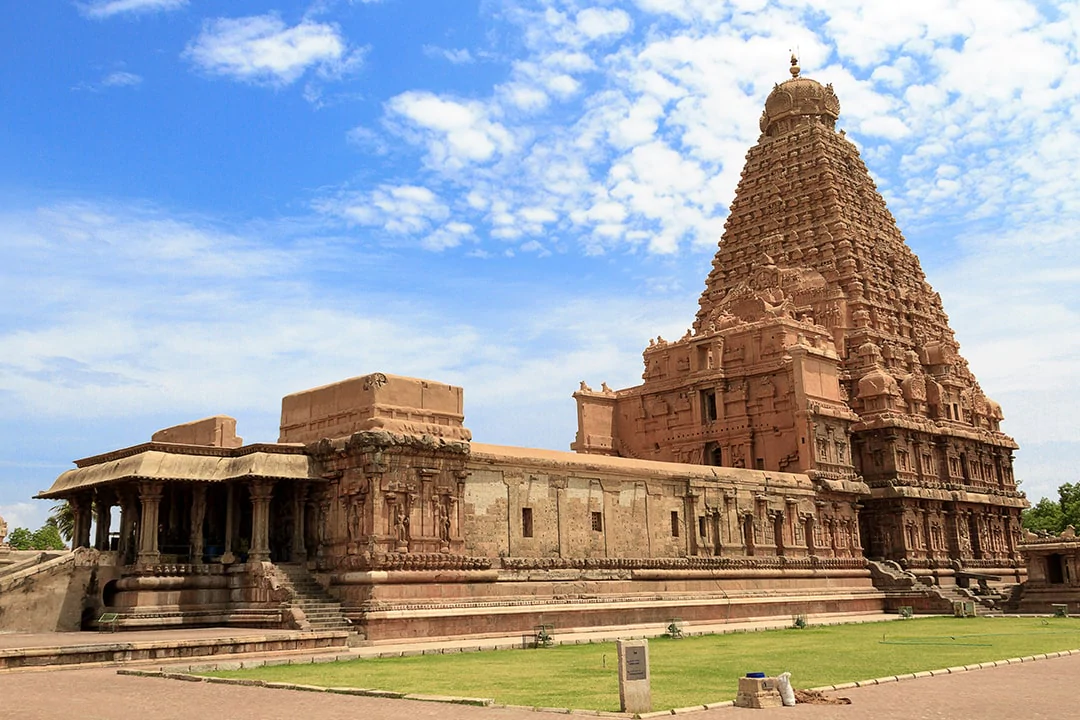
  • Brihadeshwara temple or Raja Rajeswara temple is located at Thanjavur, Tamil Nadu. It was built by Raj Raja Chola I.
  • Sun Temple at Konark, Odissa is also known as Black Pagoda. Built by Narasimhadeva 1.
  • Ellora temple was built during the Rashtrakuta dynasty.
  • The Charminar at Hyderabad was built by Mohd. Kuli Qutub Shah in 1591 to commemorate the end of plague in the city.
  • Kailash temple is located at Ellora, Maharashtra.
  • Moti Masjid was built by Aurangzeb.
  • Le Corbusier designed the planned city of Chandigarh.
  • Bimal Patel is the architect of India’s new Parliament building.
  • Golconda fort is in Hyderabad, Telengana. It was bult by Sultan Quli Qutub ul Mulk.
  • The Vesara style of temple architecture mainly evolved, practised, and developed by the influence of the Chalukyas of Kalyani.
  • Jagannath Temple (Puri) is believed to be constructed in the 12th century by King Anatavarman Chodaganga Deva of the Eastern Ganga Dynasty.
  • Known as the “Architect of the Poor”, Laurie Baker was responsible for the revolutionised mass housing concept in Kerala.
  • G Wittet designed the Gateway of India in Mumbai, borrowing several elements of Mughal style
  • The Victoria terminus station in Mumbai is an example of Victorian Gothic revival architecture in India, deriving themes from Indian traditional architecture. It was designed by FW Stevens.
  • There are 44 World Heritage Sites in India, 6th most in the world.  Out of these, 36 are cultural, seven are natural, and one, Khangchendzonga National Park, is of mixed type, listed for both cultural and natural properties. India has the sixth-most sites worldwide. The first sites to be listed were the Ajanta Caves, Ellora Caves, Agra Fort, and Taj Mahal, all of which were inscribed in the 1983 session of the World Heritage Committee. The most recent site listed is the Maratha Military Landscapes of India, in 2025.
  • Italy has the most UNESCO World Heritage Sites with a total of 60. It is followed by China with 59 sites, and then Germany with 54
  • Uttar Pradesh is the Indian state with the most international airports. As of 2025, it has five international airports: Chaudhary Charan Singh International Airport in Lucknow, Lal Bahadur Shastri International Airport in Varanasi, Kushinagar International Airport, Maharishi Valmiki International Airport in Ayodhya, and Noida International Airport in Jewar.
  • Maharashtra is the Indian state with the highest number of UNESCO World Heritage Sites, boasting a total of 5 sites. These include the Ajanta Caves, Ellora Caves, Elephanta Caves, Chhatrapati Shivaji Maharaj Terminus, and the Western Ghats (a natural site).
  • Tamil Nadu is the Indian state with the most temples. It’s often referred to as the “land of temples” due to the sheer number of Hindu temples found there, estimated to be over 400,000.
  • The oldest church in India is believed to be the St. Thomas Syro-Malabar Church in Palayur, Kerala, which is said to have been established in 52 AD by St. Thomas the Apostle.

To get Saptarshi Sir’s guidance for PSC Miscellaneous Mains/ Clerkship Main/ English/Economy or for overall WBCS or other exam preparation, call or WhatsApp us @6295350330. Classes for PSC Miscellaneous Main and Clerkship Main have already started. WBCS New batch is also going on. You can also download our app for online guidance using the link

https://play.google.com/store/apps/details?id=co.penny.oecgd&pcampaignid=web_share

For free notes, daily quizzes, word games and many other surprises, please join our Telegram Group using the link below

https://t.me/theadhyayanacademy

Lakes in India and the World

  1. Which state is home to the largest freshwater lake in India?

Ans- Wular lake in J&K

2. Largest freshwater lake in the world?

Ans- Lake Baikal, Russia

3. Which lake is the largest by surface area in the world?

a) Lake Superior

b) Caspian Sea

c) Lake Victoria

d) Lake Michigan

         Ans. (b)

        4. Deepest lake – Lake Baikal

        5. Which lake was formed by a meteorite impact?

         Ans-  Lonar (Maharashtra) Crater Lake

        6. Which lake is known as the “Queen of Lakes” in Kerala?

        Ans- Sasthamkotta Lake

        7. Where is Lake Titicaca, the highest navigable lake globally, situated?

       Ans- Bolivia and Peru

       8. Which lake in Manipur, India, is distinguished by its floating islands of vegetation?

        Ans- The most unique thing about Loktak Lake is the floating phumdi. Phumdis are the organic masses composed of vegetation, soil, and decaying matter. Some of these floating islands are big enough to support houses and shops. Keibul Lamjao National Park is the only floating national park in the world.

   10. Important lakes and their states

     Name                                              State/UT

    Pangong                                          Ladakh

    Gurdongmar                                 Sikkim (Highest Lake of India)

     Vembanad                                     Kerala

     Chilka                                              Odissa

    Pulicat                                              Andhra Pradesh

Jor Pokhri/ Sukhia Pokhri               Darjeeling, WB

Nagarjun Sagar                                  Telengana

Shivaji Sagar Lake                              Maharashtra

Kolleru                                                  Andhra Pradesh

Chandra Taal                                       Himachal Pradesh

Umiyam                                               Meghalaya

Hussain Sagar                                    Andhra Pradesh

Dal Lake                                                Srinagar (J &K)

Bhimtaal                                              Uttarakhand

Nainitaal                                              Uttarakhand

Kanwar( Largest ox bow lake)      Bihar

Dhankar                                               Himachal Pradesh

Chamera                                              Himachal Pradesh

11. Chilika Lake in Odisha is the largest saline water lake in India.

12. The Caspian Sea, often referred to as a sea, is technically classified as a lake because it has no outlet to the ocean. 

13. Rajasthan has the largest number of salt lakes in India. Rajasthan is the arid state of India with average yearly rainfall appx 58-60 cm. There are large number lakes mostly artificial as well as Natural Lakes.

14. Gobind Sagar lake is the largest man-made lake situated in Bilaspur district of Himachal Pradesh. After Gobind Sagar Dhebar lake in Rajasthan is largest artificial lake.

16. Pong dam also known as Maharana Pratap Sagar is the highest earth fill dam constructed across the river Beas. It is located in Kangra district of Himachal Pradesh.

17. The ‘Chilka lake region’ lies in between the deltas of Mahanadi and Godavari. Chilika Lake is a brackish water lagoon.

19. Rasik Bill is in Cooch Behar district.

20. The ‘Chilka lake region’ lies in between the deltas of Mahanadi and Godavari. Chilika Lake is a brackish water lagoon

21. Lake Tanganyika is an African Great Lake. It is the world’s second-largest freshwater lake by volume and the second deepest, in both cases after Lake Baikal in Siberia. It is the world’s longest freshwater lake.

22. Nokdara lake is in Kalimpong district.

23. The world’s highest lake, if size is not a criterion, may be the crater lake of Ojos del Salado, at 6,390 metres. It is in Andes.

24. Lake Vostok is in Antarctica.

25.  Sukna lake in Chandigarh.

26. Tso Moriri lake is in Ladakh.

27. Ashtamudi lake is in Kerala.

28. Tsongmu lake in Sikkim.

29. Located on the border of the United States and Canada are the Great Lakes of North America. They include 5 lakes: Michigan, Huran, Erie, Ontario, and Superior which together contain around 21% of the world’s freshwater supply.

30. Finland has the nickname “Land of the Thousand Lakes” as there are over 187,000 lakes in the country.

31. The study of inland water bodies and ecosystems is called Limnology.

32. The lowest lake in the world is the Dead Sea, on the edge of Israel and Jordan. The surface level is 418 m below sea level.

33. In 1981, Chilika Lake became the first Indian wetland of international importance.

34. Udaipur is known as India’s “City of Lakes.

35. Deepest lake in India Loktak Lake

36. Highest lake in India- Tsho Lamu lake, Sikkim

37. The longest lake in India is Vembanad Lake. It is also the largest lake in the state of Kerala. Vembanad Lake stretches for approximately 96.5 kilometers (60 miles) and has a maximum width of 14 kilometers.

38. Khechipedi lake in Sikkim

39. Nakki lake is at Mount Abu, Rajasthan

40. Kanwar lake is Asia’s largest oxbow lake, located in Begusarai district, Bihar.

41. Roop Kund lake at Uttarakhand is also known as Skeleton Lake/Mystery Lake because of numerous skeletons found at its bottom.

42. Black Sea is not a lake since Bosporus and Dardanelles Straits connect it to the Mediterranean Sea. Many big rivers fall into the Black Sea, making the salinity of its surface water half that of the ocean: 17‰.

43. Caspian Sea and Dead Sea are lakes. The surface and shores of the Dead Sea are 423 metres below sea level, making it Earth’s lowest elevation on land.

44. The Largest Lakes (surface area) by Continent

Australia – Lake Eyre (Salt Lake)

Africa – Lake Victoria, also the third-largest freshwater lake on Earth. It is one of the Great Lakes of Africa.

Antarctica – Lake Vostok (subglacial)

Asia – Lake Baikal (if the Caspian Sea is considered a lake, it is the largest in Eurasia, but is divided between the two geographic continents)

Europe – Lake Ladoga, followed by Lake Onega, both located in northwestern Russia.

North America – Lake Superior.

South America – Lake Titicaca, which is also the highest navigable body of water on Earth at 3,812 metres above sea level. The much larger Lake Maracaibo is a contiguous body of water with the sea, so it is ignored. ,

To get Saptarshi Sir’s guidance for PSC Miscellaneous Mains/ Clerkship Main/ English/Economy or for overall WBCS or other exam preparation, call or WhatsApp us @6295350330. Classes for PSC Miscellaneous Main and Clerkship Main have already started. WBCS New batch is also going on. You can also download our app for online guidance using the link

https://play.google.com/store/apps/details?id=co.penny.oecgd&pcampaignid=web_share

For free notes, daily quizzes, word games and many other surprises, please join our Telegram Group using the link below

https://t.me/theadhyayanacademy

Important Festivals/ Fairs of India

Andhra Pradesh –              Ugadi, Flamingo festival

Arunachal Pradesh          Boori Boot, Myoko, Dree, Pongtu, Murung, Solang, Mopin, Monpa festival

Assam                                  Ambubachi, Bhogali Bihu, Baishagu, Dehing Patkai, ‘Me-Dam-Me-Phi’

Bihar                                    Chhath Puja, Bihula, Sonepur fair

Chhattisgarh                      Maghi Purnima, Bastar Dussehra

Goa                                      Sunburn festival, Ladain, Mando

Gujarat                                 Navratri, Janmashtami, Kutch Utsav, Uttarayana

Himachal Pradesh            Rakhadumni, Gochi Festival, Doongri

Haryana                               Surajkund fair

Jammu and Kashmir        Har Navami, Chhari, Bahu Mela, Dosmoche,

Jharkhand                           Karam Utsav, Sarhul, Rohini, Tusu

Karnataka                            Mysore Dasara, Ugadi

Kerala                                   Onam, Vishu

Madhya Pradesh              Lok-rang Utsav, Tejaji, Khujaraho festival, Hari Jiroti

Meghalaya                           Nongkrem festival, Khasis festival, Wangla, Sajibu Cheiraoba

Maharashtra                       Ganesh Utsav, Gudi Padva

Manipur                               Yaoshang, Porag, Chavang Kut, Sangai

Mizoram                              Chapchar kut , Mim kut

Nagaland                             Hornbill festival, Moatsu Festival,Sekrenyi

Odisha                                  Nabakalebar festival

Punjab                                  Lohri, Baisakhi

Rajasthan                            Gangaur, Teej, Bundi, Puskar camel fair,

Sikkim                                 Losar

Tamil Nadu                         Pongal, Natyanjali Festival

Telangana                            Bonalu, Bathukamma

Tripura                                  Kharchi Puja

West Bengal                       Durga Puja

Uttaranchal                         Ganga Dussehra

Uttar Pradesh                    Ganga Mahotsav, , Khichdi, Kalanamak rice festival, Bateswar fair

To get Saptarshi Sir’s guidance for PSC Miscellaneous Mains/ Clerkship Main/ English/Economy or for overall WBCS or other exam preparation, call or WhatsApp us @6295350330. Classes for PSC Miscellaneous Main and Clerkship Main have already started. WBCS New batch is also going on. You can also download our app for online guidance using the link

https://play.google.com/store/apps/details?id=co.penny.oecgd&pcampaignid=web_share

For free notes, daily quizzes, word games and many other surprises, please join our Telegram Group using the link below

https://t.me/theadhyayanacademy

Sports GK- Part 3 List of Important   Cups/Trophies/Tournaments/Leagues

 Cricket                                                                                                     

Ashes Series

Asia Cup

Benson and Hedges

C. K. Naidu Trophy

Coach Behar Trophy

Deodhar Trophy

Border Gavaskar Trophy (BGT)

Duleep Trophy

ICC Champions Trophy

ICC World Cup

Irani Trophy

Ranji Trophy

Vijay Merchant Trophy

Vijay Hazare Trphy

Buchibabu Tournament

Syed Mushtaq Ali Trophy

Football

Dr. B. C. Roy Trophy

Durand Cup

F. A. Cup

UEFA Champions League

UEFA Europa League

F. A. Shield

FA Cup

Copa America

Federation Cup

FIFA World Cup

IFA Shield

Jules Rimet Trophy

Kalinga Cup

Merdeka Cup

Rovers Cup

Santosh Trophy (National Football)

Subroto Cup (National school football)

Copa Del Rey

Confederations Cup

Bundesliga (Germany)

Serie A (Italy)

La Liga (Spain)

Ligue 1 (France)

Premier League (England)

MLS (USA)

Hockey

Agha Khan Cup

Beighton Cup

Sultan Azlan Shah Cup

Dhyan Chand Trophy

Guru Nanak Championship

Indira Gold Cup

Lady Ratan Tata Trophy

Indira Gold Cup

Rangaswami Cup

Rangaswami Cup (National Hockey Championship)

Scindia Gold Cup

Badminton  

Thomas Cup

Uber Cup (Women)

All England Open

BWF World Championship

Tennis

Davis Cup

Wimbledon Trophy

French Open

Australian Open

US Open

Laver Cup

Billi Jean King Cup

Other Important Tournaments/ Cups/ Trophies

Holker Trophy- Bridge

Wellington Cup- Rowing

Ryder Cup- Golf

Prince of Wales Cup- Colf

Corbillion Cup- Table Tennis

Westchester Cup- Table Tennis

NBA Championship – Basketball

Stanley Cup- Ice Hockey

PGA Championship – Golf

Tour de France – Cycling

Larry O’Brien Trophy- Basketball

Webb Ellis Cup- Rugby

To get Saptarshi Sir’s guidance for PSC Miscellaneous Mains/ Clerkship Main/ English/Economy or for overall WBCS or other exam preparation, call or WhatsApp us @6295350330. Classes for PSC Miscellaneous Main and Clerkship Main have already started. WBCS New batch is also going on. You can also download our app for online guidance using the link

https://play.google.com/store/apps/details?id=co.penny.oecgd&pcampaignid=web_share

For free notes, daily quizzes, word games and many other surprises, please join our Telegram Group using the link below

https://t.me/theadhyayanacademy

Sports GK Part 2

Lala Amarnath was the first Indian to score a test century in 1933 vs England.

India’s first test match against England in 1932. India had to wait for 20 more years for their first test victory. It was in 1952 against England.

First Indian test captain- CK.Nayudu was the first Indian test captain

Ajit Wadekar was the first Indian ODI Captain

Virender Shehwag was the first Indian t20I captain

Most test wickets M. Muralitharan -800

Most test wickets by an Indian- Anil Kumble- 619

Sachin Tendulkar played for Pakistan as a substitute fielder before his debut for India. 1987

The first ever international cricket match was indeed played between the USA and Canada. It took place in 1844, at St. George’s Cricket Club Ground in New York. The match was scheduled for two days but was extended to three due to rain. Canada won the match by 23 runs.

Shoaib Akhtar is known for his bowling skills and recorded history by delivering the fastest ball in the history of cricket, 161.3 km/hr.

Sachin Tendulkar was the first man to be declared out by a third umpire.

Misbah Ul huq, Pakistan was the only cricketer to score more than 5000 ODI runs without a century.

The first World Cup in the history of cricket was played by women and not men, which took place two years before men arrived on the field. In 1973, the inaugural Women’s World Cup was held and hosted by England. Later, in the year 1975, the Men’s Cricket World Cup was followed in England and was won by the West Indies. This highlights the role of women’s cricket in establishing the World Cup tradition.

A source of pride for our country is that India is the only country in the entire world to hold world cups in different formats, such as 60, 50, and 20 overs.

Only Brazil is the team to play all world cups till now. ( 22 total)

Lionel Messi has played maximum world cup matches so far ( 26)

Mirosal Klose with 16 goals is still the highest scorer in World Cup football in terms of total goals scored.

Just Fontaine, France scored 13 goals in just one World Cup tournament. 1958

Oleg Salenko of Russia scored highest goals in a match ( 5) vs Cameroon in 1994.

Teams to win World Cup football

Brazil 5 times

Italy and Germany- 4 times each

Argentina- Thrice

France and Uruguay- Twice each

England and Spain – Once

Sheffield Football Club, founded in 1857, is recognised by both the English FA and FIFA as the oldest football club in the world that still plays association football.

The biggest victory in an international football match happened in 2001 when Australia defeated American Samoa 31-0 during a FIFA World Cup qualifier.

Originally called cuju, the first version of football originated in the Han dynasty more than 2000 years ago.

To get Saptarshi Sir’s guidance for PSC Miscellaneous Mains/ Clerkship Main/ English/Economy or for overall WBCS or other exam preparation, call or WhatsApp us @6295350330. Classes for PSC Miscellaneous Main and Clerkship Main have already started. WBCS New batch is also going on. You can also download our app for online guidance using the link

https://play.google.com/store/apps/details?id=co.penny.oecgd&pcampaignid=web_share

For free notes, daily quizzes, word games and many other surprises, please join our Telegram Group using the link below

https://t.me/theadhyayanacademy