আমি কম্পিটিটিভ পরীক্ষার ছাত্রছাত্রীদের বাংলা হোমওয়ার্ক চেক করার সময় যেসব গলতি বা বেশকিছু ক্ষেত্রে গাফিলতি দেখি সেগুলো একজায়গায় করে ওদের পরামর্শ দিলে অনেকেই টুকিটাকি ভুলগুলো শুধরে নিতে পারে। তাই এই সিরিজ শুরু করলাম।আজকের এই লেখায় কিছু ভুল উল্লেখ করছি বা সংশোধনের উপায় ও বলছি। সেইসঙ্গে বলছি ভালো লেখার কায়দাও।আজকের পর্বে আলোচনা করছি শুধুই বঙ্গানুবাদ নিয়ে। পরের পর্বে সারাংশ বা সারমর্ম।
প্রথমেই আসি বঙ্গানুবাদের কথায়। অনুবাদ শব্দকে ছেলেমেয়েরা বড্ড বেশি অনুবাদ করে নেয়। মানে ভাবের বালাই নেই অনুবাদ শুরু হয়ে যায়। আরে বাবা শুরুতে লেখাটা বারবার পড়ো। বোঝার চেষ্টা করো লেখক কি বলতে চাইছেন। বারবার পড়ার পরে তারপর লেখার কথা ভাবো। এমন অনেক বঙ্গানুবাদের প্রশ্ন আমি WBCS,ক্লার্কশিপ বা Miscellaneous পরীক্ষার প্রশ্নে দেখেছি যেগুলো আপাতদৃষ্টিতে একেবারে সহজ। কোনো জটিল শব্দ নেই বললেই চলে। ছেলেমেয়েরা শুরুতেই খোঁজে কোনো জটিল শব্দ আছে কিনা। যদি না থাকে ব্যস ! শুরু হয়ে যাবে কলম চালানো। প্রথমে শব্দ আর তারপরে বাক্যের অনুবাদ হবে। হয়তো বা সেই অনুচ্ছেদের প্রথম বাক্যের সঙ্গে এক্কেবারে চতুর্থ বাক্যে গিয়ে সম্পর্ক আছে। কিন্তু সেটা তো দেখার সময় নেই। জটিল শব্দ নেই মানে বঙ্গানুবাদ সোজা। অতএব চালাও কলম। ব্যস লেখার ছন্দপতন ওখানেই শুরু। সহজ শব্দের আড়ালে যে উপলব্ধি বা অনুভব লুকিয়ে আছে সেটা ধরতে না পারাতে লেখা যখন শেষ হচ্ছে যে বস্তুটি তৈরি হল তা বঙ্গানুবাদ কেন কোনো অনুবাদই না। ভালো নম্বর পাওয়ার আশা শেষ। পরে রেজাল্ট বেরোনোর সময় বুক উঁচিয়ে বলবে, আরে আমি তো দুর্দান্ত দিয়েছিলাম পরীক্ষা, নিশ্চয়ই কোনো কারচুপি আছে।
অনুবাদ দিলে সাধারণত যে লেখাগুলো দেওয়া হয় তা কিন্তু তোমার পাড়ার মোড়ের কেষ্টদা বা বিষ্টুদার লেখা না। সেগুলো সাধারণত সাহিত্যজগতে স্মরণীয় কোনো কাজ। যদিও মাঝে মাঝে ইদানিং উঠতি প্রতিভাবান লেখকদের লেখাও দেওয়া হয়। মোদ্দা কথা হল, সেই লেখার অনুবাদ করার সময় তোমরা বড্ড বেশি পরীক্ষা বা নম্বরকেন্দ্রিক চিন্তা রাখো। এরফলে না হয় অনুবাদ, না আসে নম্বর। যায় দুই কূলই। তাই ওই ধর তক্তা মার পেরেক পদ্ধতি না নিয়ে একটু ধীরে চলো। লেখার রূপ, রস, গন্ধ অনুভব করো। হৃদয়ে নাও সেই লেখার অদৃশ্য ছোঁয়া। অনুভব করো লেখকের কলমের অভিপ্রায়। প্রথম থেকে শেষ বাক্য পর্যন্ত চলছে যে স্রোতস্বিনী তার ফল্গুধারায় সিক্ত হয়ে তারপর ধরো কলম। অর্থাৎ লেখার ভাব যখন ধরে ফেললে তোমার কাজ আধা শেষ। এবার একখানা খসড়া লিখে ফেলো দিকি আর একবারও ওই লেখাটা না পড়ে। তারপর খসড়া মেলাও মূল লেখার সঙ্গে। হতেই পারে কোনো বিশেষ জায়গা বা ভাব বাদ পড়ে গেল। খসড়ায় সেটা ঢুকিয়ে দাও। ব্যস, ভাবের মাংস আর শব্দের অন্নে তৈরি অনুবাদের শাহী বিরিয়ানি।
মানলাম তুমি ভাষাপ্রয়োগে বিশাল পন্ডিত। তোমার হাত নিশপিশ করে কঠিন শব্দ প্রয়োগে। একটু রাশ টানো হে। তুমি কম্পিটিটিভ পরীক্ষার সামান্য একটা লেখা লিখছো, ইউনিভার্সিটির সাহিত্য প্রতিযোগিতার লেখা না। দুটো কঠিন শব্দ ব্যবহার করে তারপর আবার ফাঁকা চারণভূমিতে আছড়ে না পড়ে চেষ্টা করো না সহজ সরল ভাষায় লেখাটা লিখতে। ফ্লো যেমন থাকবে, লেখা হবে সুপাঠ্যও। দিনের শেষে লক্ষ্য তো একটাই- সুন্দর কিছু লিখে পরীক্ষকের মনটা ভালো করে দেওয়া, নিকুচি করেছে নম্বরের। ওটা এমনিতেই আসবে যদি না ওর পেছনে তুমি বেশি ছোটো। ভালো পরিচালক ছবি শেষ করে নিজে বারবার দেখেন। যতক্ষণ না তাঁর মন ভরছে ওই ছবি তিনি আনবেন না দর্শকমাঝে। আর কারো তৃপ্তি না আগে দরকার নিজের তৃপ্তি। তোমার লেখা পড়ে যখন মন থেকে অজান্তেই ‘আহাঃ’ বেরোবে, বুঝবে এবার ভালো নম্বর শুধুই সময়ের অপেক্ষা।
অনেকসময় ছেলেমেয়েরা বঙ্গানুবাদের ক্ষেত্রে অনুচ্ছেদে উল্লেখ নেই এমন শব্দের বাংলা ব্যবহারে ভয় পায় বা তারা যেভাবে শিখে এসেছে বা শেখানো হয়েছে তাদের, সেই চিন্তা করাও হয়তো পাপ। সম্পূর্ণ ভুল চিন্তা বা শিক্ষা। লেখকের ভাবে লুকিয়ে থাকে অনেক অনুচ্চারিত শব্দ। ভালো অনুবাদক দৃশ্যমান শব্দরাশির বাইরে গিয়ে সেই মনিমুক্তোর ভাণ্ডারকেও চিরুণিতল্লাশি করেন। অনুচ্চারিত কিন্তু অনুভূত শব্দপ্রয়োগ বঙ্গানুবাদকে দেয় এক নতুন মাত্রা।
বাক্যযোগের অপটুতা বা সমন্বয় করার অক্ষমতা আরেক দুর্বলতা সব ছেলেমেয়েদেরই। যেমন, Ram was so clever that he could comprehend Shyam’s tricks অপটু লেখক এর অনুবাদ করবেন, রাম এত বুদ্ধিমান ছিল যে সে শ্যামের চালাকি ধরতে পেরেছিলো। এই ‘যে’ আর ‘সে’ পুরো অনুবাদের দফারফা করেই ছাড়লো। একটু ভালো লেখক এটাকেই লিখবেন, শ্যামের চালাকি রামের তীক্ষ্ণবুদ্ধিতে ধরা পড়ে গেল। ‘যে’ ‘সে’ এসবের খপ্পরে না পড়ে আর ‘তীক্ষ্ণ’ শব্দ আমদানি করেও কিন্তু বিষয়টা পরিষ্কার হয়ে গেল।
আমার ক্লাসে আমি ওই প্রচলিত গতের বাইরে বেরোতে চেষ্টা করি। তোমরাও যদি নিয়ম ভাঙতে চাও যুক্ত হয়ে যাও অধ্যয়নে আমার ক্লাসরুমে। বাংলা-ইংরেজির প্রেমে পড়বে কথা দিলাম। তাহলে 6295350330 তে করে নাও একখানা হোয়াটস্যাপ আর যুক্ত হয়ে যাও আমার ডেসক্রিপটিভ ক্লাসে। PSC Miscellaneous, WBCS, ক্লার্কশিপ যেকোনো ডেসক্রিপটিভ পরীক্ষার সাহায্য পাবে। দেখা হচ্ছে পরের পর্বে।। ভালো থেকো সক্কলে। সপ্তর্ষি ❤
Johnny Weissmuller was an Olympic swimmer who went on to become a Hollywood hero and acted as Tarzan.
FINA (Fédération Internationale de Natation), the original name of World Aquatics, the international governing body for aquatic sports
First Commonwealth games were held in 1930 in Hamilton, Canada.
Merdeka Tournament is an international friendly football tournament held in Malaysia to commemorate the Independence Day.
In 1911, Mohun Bagan made history as the first Indian club to defeat a British team, winning the IFA Shield barefoot! Their 2-1 victory over East Yorkshire Regiment remains legendary.
The Holkar Trophy is associated with the sport of Bridge. It is a prestigious trophy in the world of contract bridge, a trick-taking card game played by four players.
The term “tee” is primarily associated with the sport of golf. A tee is a small peg or platform used to elevate the golf ball above the ground, typically on the teeing ground (the first area of each hole). This allows for a cleaner strike of the ball with the golf club.
Agha Khan Cup is associated with the game of Hockey whereas Agha Khan Gold Cup is associated with Football.
The Wellington Trophy is associated with the sport of rowing.
The national sport of Japan is Judo.
The national sport of Spain is bull fight.
The Green Park stadium is located at Kanpur.
Badminton is the national game of Indonesia.
IFA Shield started in 1893. The first winner of the IFA Shield was the Royal Irish Rifles, who won the inaugural tournament in 1893.
The first woman athlete to score a perfect 10 in gymnastics was Nadia Comăneci from Romania. She achieved this feat at the 1976 Montreal Olympics on the uneven bars.
The HQ of FIFA is in Zurich, Switzerland. The first FIFA meeting, where the organization was officially founded, took place in Paris, France on May 21, 1904.
The first World Cup football was won by Uruguay in 1930.
Nagendra Prasad Sarbadhikari is known as the “Father of Indian Football”.
Before the FIFA World Cup, the tournament was simply known as the World Cup or Coupe du Monde, and the trophy was called the Jules Rimet Trophy.
Cesare Maldini, father was the Coach and his son Paolo Maldini was the Captain of Italy national team in World Cup Football, 1998.
Ayrton Senna da Silva was a legendary Brazilian Formula One driver, widely regarded as one of the greatest of all time. He won three World Championships (1988, 1990, and 1991) with McLaren and is celebrated for his incredible speed, passion, and charisma. His career was tragically cut short at the age of 34 due to a fatal accident during the 1994 San Marino Grand Prix.
Edson Arantes do Nascimento was known as Pele.
My Life and the Beautiful Game: The Autobiography of Pele.
Cricket legend Viv Richards is the only man to play in cricket and football World Cups.
Komaleswaran Sankar, the FIFA Assistant Referee from Tamil Nadu was the first Indian to officiate in World Cup Football, Qatar, 2022.
Garincha, the football legend from Brazil was known as “The Little Bird”.
“The Good, the Bad and the Ugly” – Autobiography of Geoge Best.
Field hockey was first included in the modern Olympic Games at the 1908 London Olympics. While it was included again in 1920, it was absent from the 1912 and 1924 Games. However, it became a permanent fixture starting in the 1928 Amsterdam Olympics. England’s men claiming the gold while Scotland and Wales both secured bronze in 1908.
he Sultan Azlan Shah Cup is an annual invitational international men’s field hockey tournament held in Malaysia. It began in 1983 as a biennial contest. The tournament became an annual event from 1998, following its growth and popularity. Australia have won the tournament a record 10 times, followed by India and Pakistan winning five and three times, respectively.
A standard volleyball team consists of six players on the court at a time. Volleyball debuted as an official sport in the 1964 Summer Olympics in Tokyo. Originally called Mintonette, the origin of volleyball can be traced back to 1895 in Massachusetts, USA.
Handball, as we know it today, has its roots in Germany and Scandinavia in the late 19th century.
International table tennis association was founded in 1926.
Table tennis, originally known as “ping-pong”, originated in Victorian England in the late 19th century.
To get Saptarshi Sir’s guidance for PSC Miscellaneous Mains/ Clerkship Main/ English/Economy or for overall WBCS or other exam preparation, call or WhatsApp us @6295350330. Classes for PSC Miscellaneous Main and Clerkship Main have already started. WBCS New batch is also going on. You can also download our app for online guidance using the link
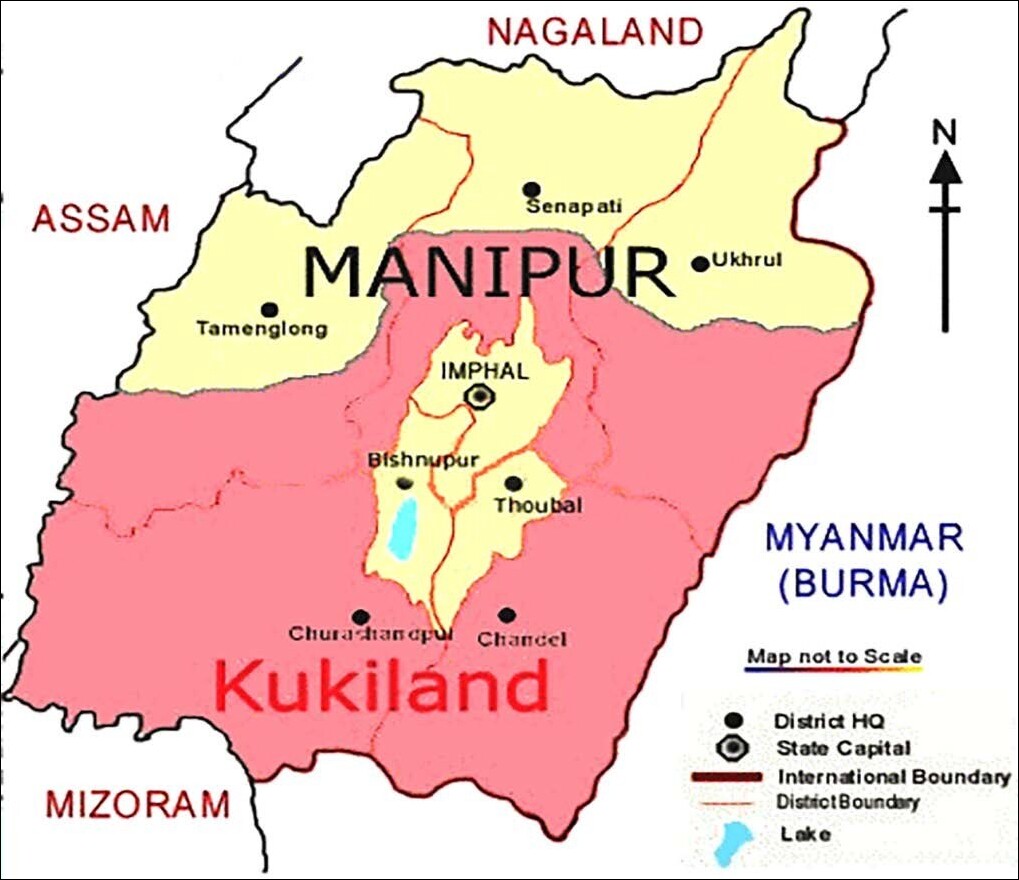
Demography– Manipur is a state in northeast India, bordering Myanmar to its east and south. The Imphal Valley constitutes about 10% of the geographical area of the state with 57% of the population predominantly Meitei, who are majority Hindus, with minorities of Muslims and native Sanamahism followers. The surrounding hills constitute 90% of the geographical area of the state with 43% of the population belonging to 34 tribal groups broadly categorised as Nagas and Kukis (25% and 15% roughly), who follow Christianity.
The Nagas dominate the northern districts while the Kukis are predominant in the south. The tribal people have the Scheduled Tribe (ST) status, whereas the Meitei have been accorded Other Backward Class (OBC) status, with some classified as Scheduled Castes (SC) in certain areas.
Historical Perspective– Historical ethnic conflicts and tensions between Kukis (Hill tribe) and Meiteis in Manipur have contributed to the unrest, as both communities compete for political representation, resources, and cultural recognition.
Most of the Meiteis live in the Imphal valley while the tribals live in the hill districts. The Meiteis are more educated and also better represented in business and politics of the state than Kukis and Nagas.
Meitei dominate the political establishment in Manipur with 40 out of the 60 Assembly constituencies.
People from the hill areas claim that despite hill districts of Manipur comprising 89% of the geographical area, there were only 20 MLAs from these areas in the Manipur Assembly.
Meiteis are limited to only around 10% of the land in the state, as the rest of the state is classified as tribal areas.
They live in the small patch of plain area in the state, the Imphal Valley, while the Kuki(tribals) reside in the protected Hill Areas, exclusively reserved for them.
Being classified as non-tribals, Meitei people can’t buy land in over 90% of the state.
While the tribals can buy land in Imphal Valley, thereby further reducing the land availability.
The Hill Areas in Manipur comprising 90% of the total land in Manipur are declared by the government under the provisions of Article 371C of the Constitution.
The Beginning– In 2020, as the Centre began the first delimitation process in the state since 1973, the Meitei community alleged that the Census figures used in the exercise did not accurately reflect the population break-up. Meitei leaders have alleged that there has been a sudden mushrooming of villages in Churachandpur district.
The then Chief Minister N Biren Singh repeatedly echoed and fed these fears — pointing to the presence of Myanmarese in Churachandpur, and linking them to the cultivation of poppy, and repeatedly making references to “foreigners” and “outsiders” and “Drug traffickers”.
Since 2012, there has been a constant demand led by the Scheduled Tribes Demand Committee of Manipur (STDCM) for granting the Scheduled Tribe (ST) status to the Meitei community.
The Meitei Tribe Union had filed a petition before the Manipur High Court and had argued that the Meitei community was once recognised as a “tribe” before the merger of the princely state of Manipur with the Union of India in 1949 and that it lost its identity as a tribe after the merger.
On 20 April 2023, a judge of the Manipur High Court directed the state government to “consider the request of the Meitei community to be included in the Scheduled Tribes (ST) list”.
The Kukis feared that the ST status would allow the Meiteis purchase land in the prohibited hilly areas.
The Eruption– The tribal groups called for a total shutdown on 28 April 2023 in protest of the state government actions.
Violence erupted on May 3, 2023, after tribal communities protested a Manipur High Court order granting the Meitei community certain benefits, including land ownership in protected areas and quotas in government jobs.
Incidents of sexual violence have garnered both national and international attention, bringing to light the harrowing reality faced by women in Manipur.
Meitei mobs have repeatedly targeted women as a means of control of the rival faction, including burning homes and subjecting them to assaults, and even forcing women to strip under threats of violence or shooting them in the face, causing disfigurement.
The Meitei groups have also attacked people from their own community who have spoken out against them.
In a shocking charge, the CBI has alleged that personnel from the Manipur Police allegedly drove the two women to a mob of around 1,000 people, which stripped and paraded them before they were gang-raped, in an incident that shook the nation.
The 26-second clip showed two Kuki tribal women paraded naked by a mob of men who were groping their genitals and assaulting them.
In August 2023, India’s Supreme Court expressed concerns over what it termed the “absolute breakdown of law and order” in Manipur.
The authorities have also failed to protect members of the Meitei community. In November 2024, about 35 armed Kuki militants attacked the camp of the Central Reserve Police Force, paramilitary police, and the adjacent police station in Jiribam district, allegedly looking for “Meitei people.” They abducted and killed three women and three children including an 8-month-old infant from the Meitei community, and burned to death two older Meitei men.
As of December 2024, the 42 special investigation teams created by the Supreme Court had filed charges in only 6 percent of the 3,023 registered cases, including murders, 9 cases of sexual crimes against women, and 2,888 cases of looting, arson, and other property crimes.
Regional Implications and Challenges
In the absence of any hint of immediate peace, the prolonged conflict, nearing a civil war, is causing a significant and irreversible shift in how the people of Manipur perceive each other and New Delhi. Decades of effort to build trust between the different groups since the ethnic clashes of the 1990s, and confidence-building measures with New Delhi after the rise of insurgent groups in the 1950s, were shattered overnight on May 3, 2023.
Tragically, in the post-May 3, 2023 period the harmony between the Meiteis and Kukis has been disturbed by an ever-increasing divide owing to the persistent violence. No one feels safe in areas dominated by the rival ethnic community, resulting in large-scale migration to safer areas, including Assam and Mizoram. Schools and educational institutions remained closed, and with the internet shutdown, online classes were unavailable. Under such circumstances, youths are being compelled to take up arms. The tourism industry has also suffered, with patients from Myanmar stopping medical visits. Retail inflation at 9.7 percent in September 2023 has led to economic insecurity, and unprovoked attacks on farmers and road blockages have caused food security concerns.
Additionally, the conflict has affected mental health, with rising post-traumatic stress disorder (PTSD) cases since the violence began. The government’s inability to address the violence and daily insecurities has fostered a sense of alienation and distrust towards New Delhi. Insurgent groups are gaining popularity as protectors, with dormant groups reactivating and many returning from their bases in unstable Myanmar. If unchecked, these developments can accelerate the radicalization of youth, which is detrimental to India’s national security.
Geopolitically, Manipur holds strategic importance as it shares a border with Myanmar and serves as a gateway to Southeast Asia for India. Also, Manipur is crucial for India’s Act East Policy (AEP), which aims to develop cultural links, trade, tourism, and connectivity with Southeast Asia. The trilateral highway project linking India, Myanmar, and Thailand starts from Moreh in Manipur and ends at Mae Sot in Thailand. Therefore, stability of the region is crucial for India’s foreign policy. With China’s growing power and influence in the conflict-ridden Myanmar, instability in Manipur can benefit China. Additionally, the conflict has also tarnished India’s global image, with organizations and states like Human Rights Watch, the European Union, the United Nations, Genocide Watch, and the United States expressing serious concerns.
Unrest persists– Two years after ethnic violence erupted between Meitei and Kukis and the resignation of the CM Singh and President’s Rule being imposed, violent clashes are still common in the state. So far, more than 260 people have lost their lives in the clashes, around 2000 people have been injured and over 70,000 people have been displaced.
Steps needed to restore peace– It is important to identify the victims and rehabilitate them and those in rehabilitation camps, with the help of the Govt and the civil society.
The government should foster the participation of the civil society of the region in the decision-making process to instil a sense of ownership and belonging. A huge quantity of weapons and ammunition are still being held by the warring communities in the conflict-driven state of Manipur.
The entire civil society needs to be disarmed on priority.
The Mizoram Accord of 1986 between the Government of India and the Mizo National Front (MNF) serves as an example of successful engagement with all stakeholders.
The repeal of AFSPA, Armed Forces Special Powers Act 1958, is necessary to improve the human rights situation in the region.
The government should ensure that the legal system is fair and transparent to prevent the misuse of power by security forces.
The authorities should ensure that people have the right to return when conditions are in place for a safe and voluntary process carried out in accordance with the United Nations Guiding Principles on Internal Displacement, with full and meaningful participation of all affected communities, including the equal participation of women.
To get Saptarshi Sir’s guidance for PSC Miscellaneous Mains/ Clerkship Main/ English/Economy or for overall WBCS or other exam preparation, call or WhatsApp us @6295350330. Classes for PSC Miscellaneous Main and Clerkship Main have already started. WBCS New batch is also going on. You can also download our app for online guidance using the link
This article consists of the following contents which are extremely important for any competitive examination for both objective and descriptive questions.
History of space research in India
Major milestones of India’s space technology
Indian Regional Navigation Satellite System
Rakesh Sharma
Gaganayan Mission
Chandrayaan Mission with special emphasis on Chandrayaan 3
Axiom 4 and Shubhanshu Shukla
The space research activities were initiated in India during the early 1960’s, when applications using satellites were in experimental stages even in the United States. With the live transmission of Tokyo Olympic Games across the Pacific by the American Satellite ‘Syncom-3’ demonstrating the power of communication satellites, Dr. Vikram Sarabhai, the founding father of Indian space programme, quickly recognized the benefits of space technologies for India.
As a first step, the Department of Atomic Energy formed the INCOSPAR (Indian National Committee for Space Research) under the leadership of Dr. Sarabhai and Dr. Ramanathan in 1962. The Indian Space Research Organisation (ISRO) was later formed on August 15, 1969. The prime objective of ISRO is to develop space technology and its application to various national needs. It is one of the six largest space agencies in the world. The Department of Space (DOS) and the Space Commission were set up in 1972 and ISRO was brought under DOS on June 1, 1972.
Since inception, the Indian space programme has been orchestrated well and had three distinct elements such as, satellites for communication and remote sensing, the space transportation system and application programmes. Two major operational systems have been established – the Indian National Satellite (INSAT) for telecommunication, television broadcasting, and meteorological services and the Indian Remote Sensing Satellite (IRS) for monitoring and management of natural resources and Disaster Management Support.
Major milestones in Indian Space Programme
Indian Space Programme began at Thumba Equatorial Rocket Launching Station (TERLS) located at Thumba near Thiruvanathapuram. Thumba was selected for being rocket launching station because geomagnetic equator of the earth passes over Thumba. The geomagnetic equator of the earth passes over Thumba.
On November 21, 1963, the first sounding rocket was launched from TERLS. The first rocket, a Nike-Apache was procured from the US. A sounding rocket is a rocket, which is intended for assessing the physical parameters of the upper atmosphere.
The Satellite Telecommunication Earth Station was set up at Ahmedabad on January 1, 1967.
India’s first indigenous sounding rocket, RH-75, was launched on November 20, 1967.
Aryabhata – First Indian Satellite was launched on April 19, 1975. It was launched from the former Soviet Union. It provided India with the basis of learning satellite technology and designing.
During 1975-76, ISRO along with NASA developed means of using space communications system for TV broadcasting. This resulted in the creation of the project Satellite Instructional Television Experiment (SITE). It was a one-year program covering Indian villages and districts. The main purpose of SITE was to experiment usage of satellite broadcasting to educate the masses. SITE, hailed as ‘the largest sociological experiment in the world’ benefited around 200,000 people, covering 2400 villages of six states and transmitted development-oriented programmes using the American Technology Satellite (ATS-6).
During January 1, 1977 — January 1, 1979, Satellite Telecommunication Experiments Project (STEP), a joint project of ISRO-and Post and Telegraphs Department (P&T) using the Franco-German Symphonie satellite was taken up. Conceived as a sequel to SITE which focused on Television, STEP was for telecommunication experiments.
Bhaskara-I – an experimental satellite for earth observations was launched on June 7, 1979.
First Experimental launch of SLV-3 with Rohini Technology Payload on board (August 10, 1979). Satellite could not be placed in orbit. Satellite Launch Vehicle-3 (SLV-3) is the first launch vehicle of India.
Ariane Passenger Payload Experiment (APPLE), an experimental geo-stationary communication satellite was successfully launched on June 19, 1981. It became the forerunner for future communication satellite system.
Indian National Satellite system (INSAT)-1A was launched on April 10, 1982. This system was for the communication, broadcasting and meteorology.
On April 2, 1984, the first Indo-Soviet manned space mission was launched. Wing Commander Rakesh Sharma (born 13 January 1949) became the first Indian citizen to go into space. He flew aboard in the Soviet rocket Soyuz T-11, as part of a three member Soviet-Indian crew as part of the Soviet Interkosmos programme.
Sharma retired as a wing commander and later joined Hindustan Aeronautics Limited (HAL) in 1987, serving as the chief test pilot in the HAL Nashik Division until 1992, before moving on to Bangalore to work as HAL’s chief test pilot. Sharma retired from flying in 2001
The first operational Indian Remote Sensing Satellite, IRS-1A was launched on March 17, 1988.
On March 24, 1987, the first developmental launch of Augmented Satellite Launch Vehicle (ASLV) that supported a larger payload than the SLV-3 and was meant to be low-cost happened.
Second developmental launch of Polar Satellite Launch Vehicle (PSLV) with IRS-P2, on board took place on October 15, 1994. Satellite successfully placed in Polar Sun synchronous Orbit. PSLV went on to become a favoured carrier for satellites of various countries due to its reliability and cost efficiency, promoting unprecedented international collaboration.
The first developmental launch of Geosynchronous Satellite Launch Vehicle (GSLV)-D1 with GSAT-1 on board took off from Sriharikota on April 18, 2001. It was developed keeping in mind the heavier and more demanding Geosynchronous communication satellites.
INSAT-4CR weighing 2130 kg and launched by GSLV-F04 on September 2, 2007 is the heaviest satellite launched from India.
PSLV-C11 successfully launches CHANDRAYAAN-1 from Sriharikota on October 22, 2008. Chandrayaan-1 is a scientific investigation – by spacecraft – of the Moon. The name Chandrayaan means “Chandra- Moon, Yaan-vehicle”, –in Indian languages (Sanskrit and Hindi) , – the lunar spacecraft. Chandrayaan-1 is the first Indian planetary science and exploration mission. Chandrayaan-1 was operational for 312 days till August 28, 2009.
November 5, 2013 – PSLV – C25 successfully launches Mars Orbiter Mission (Mangalyaan) Spacecraft from Sriharikota.
India’s communication satellite, GSAT-17 was inducted into the INSAT/GSAT system on June 29, 2017 from Kourou, French Guiana by Ariane-5 VA-238.
India’s Polar Satellite Launch Vehicle, in its forty-third flight (PSLV-C41) in XL configuration launched IRNSS-1I Satellite. The ‘XL’ configuration of PSLV is used for the twentieth time. The IRNSS-1I is the eighth satellite to join the NavIC navigation satellite constellation and was launched on April 12, 2018.
India’s next generation high throughput communication satellite, GSAT-11 was successfully launched on December 05, 2018 from Kourou launch base, French Guiana by Ariane-5 VA-246. Weighing about 5854 kg, GSAT-11 is the heaviest satellite built by ISRO.
Gaganyaan Programme – Two unmanned & one manned flight has been planned. Estimates for Phase-I expenditure- Rs 9023 Crores. Gaganyaan Programme will establish a broader framework for collaboration between ISRO, academia, industry, national agencies and other scientific organizations. The Gaganyaan Mission will be led by V. R. Lalithambika, the former Director of the Directorate of the Human Spaceflight Programme with ISRO Chairman S Somnath and S. Unnikrishnan Nair, Director of Vikram Sarabhai Space Centre. The Hindustan Aeronautics Limited (HAL)-manufactured crew module underwent its first uncrewed experimental flight on 18 December 2014. On 27 February 2024, Prime Minister Narendra Modi revealed the identities of the first four Indian astronauts (Gaganyatris): Gp Capt Prasanth Balakrishnan Nair, Gp Capt Ajit Krishnan, Gp Capt Angad Pratap and Gp Capt (then Wg Cdr) Shubhanshu Shukla. Axiom‑4 represents a milestone for the Indian Human Spaceflight Programme, integrating with ISRO’s Gaganyaan initiative. While Gaganyaan remains India’s independent crewed program, Ax‑4 provides the first opportunity for an Indian astronaut—Shubhanshu Shukla—to fly on a commercial mission to the ISS.
Geosynchronous Satellite Launch Vehicle, GSLV MkIII-M1 rocket, carrying Chandrayaan-2 spacecraft was launched from the Satish Dhawan Space Centre, Sriharikota in Andhra Pradesh on July 22, 2019. Chandrayaan-2 is India’s second mission to the moon. It comprises a fully indigenous Orbiter, Lander (Vikram) and Rover (Pragyan). The Rover Pragyan is housed inside Vikram lander. Chandrayaan-2 has several science payloads to facilitate a more detailed understanding of the origin and evolution of the Moon. To know more about Chandrayan 2, click here.
ISRO undertakes PSLV-C53/DS-EO mission on June 30, 2022. PSLV-C53 is the second dedicated commercial mission of New Space India Limited (NSIL).
Indian Regional Navigation Satellite System (IRNSS): NavIC
IRNSS is an independent regional navigation satellite system being developed by India. It is designed to provide accurate position information service to users in India as well as the region extending up to 1500 km from its boundary, which is its primary service area. An Extended Service Area lies between primary service area and area enclosed by the rectangle from Latitude 30 deg South to 50 deg North, Longitude 30 deg East to 130 deg East.
IRNSS will provide two types of services, namely, Standard Positioning Service (SPS) which is provided to all the users and Restricted Service (RS), which is an encrypted service provided only to the authorised users. The IRNSS System is expected to provide a position accuracy of better than 20 m in the primary service area.
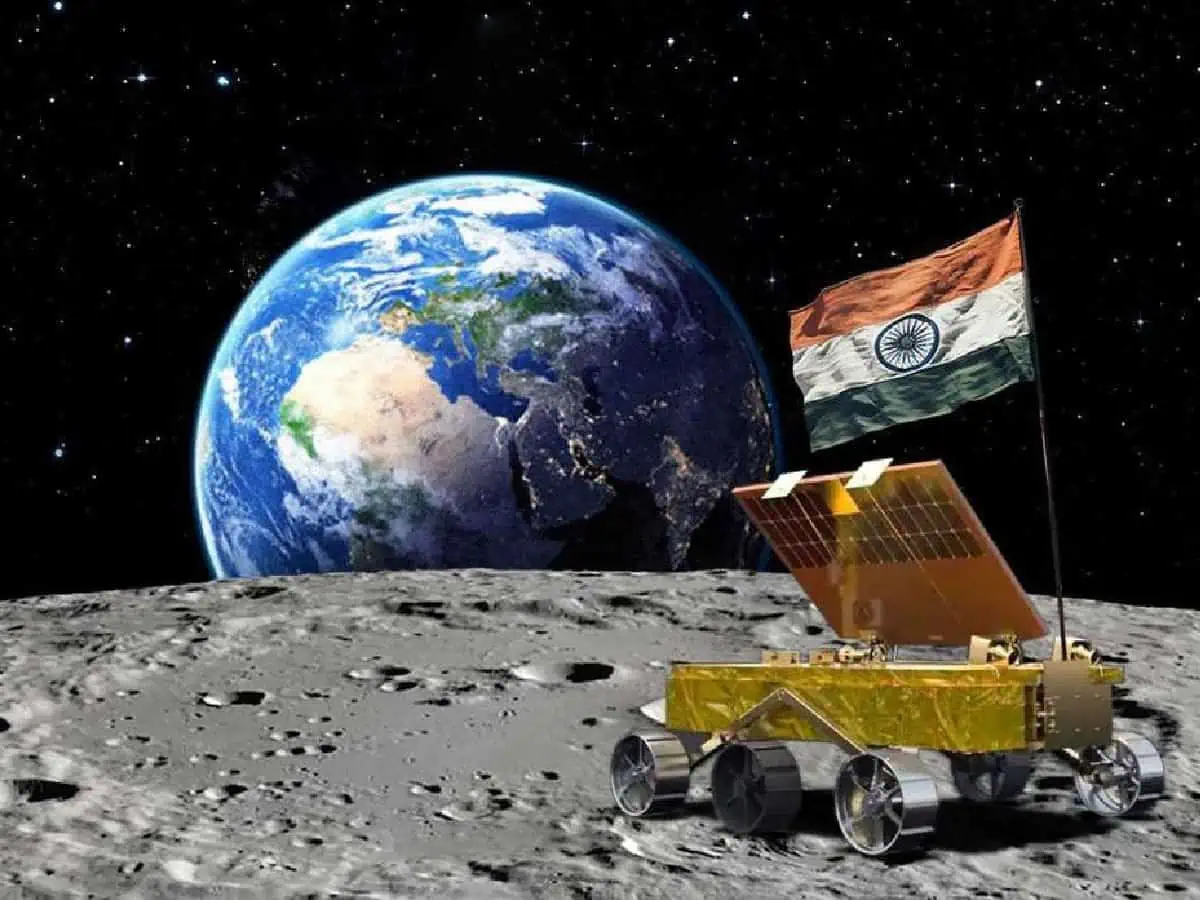
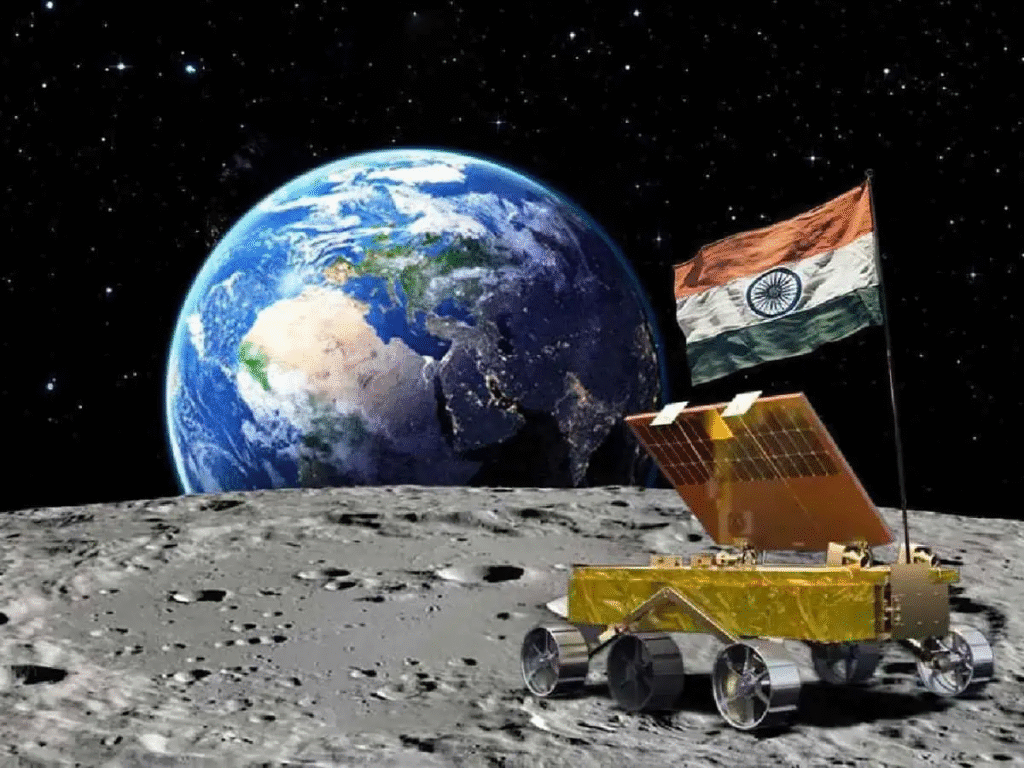
Chandrayaan-3 was a lunar mission by ISRO focused on demonstrating safe landing and roving capabilities on the Moon. It was a follow-up mission to Chandrayaan-2 to demonstrate end-to-end capability in safe landing and roving on the lunar surface. It consisted of a Lander (Vikram), a Rover (Pragyan), and a Propulsion module. The mission successfully landed on the lunar south pole on August 23, 2023, making India the first country to achieve this feat. On July 14, 2023, Chandrayaan- 3 took off from the Satish Dhawan Space Centre in Sriharikota. The spacecraft seamlessly entered lunar orbit on August 5, 2023. The historic moment unfolded when the lander made a successful touchdown near the Lunar south pole on Aug 23, 2023.The mission’s objectives included conducting in-situ scientific experiments on the lunar surface, such as analysing the elemental composition and thermal properties.
Major Findings:
Lunar Surface Temperature Surprise: Chandra’s Surface Thermophysical Experiment (ChaSTE) measured temperatures reaching 70 degrees Celsius, surprising scientists who expected temperatures between 20 to 30 degrees Celsius.
Lunar Surface Elements Confirmed: The Laser-Induced Breakdown Spectroscopy instrument onboard ‘Pragyan’ rover confirmed the presence of Sulphur on the lunar surface near the south pole. Elements such as Aluminium, Calcium, Iron, Chromium, Titanium, Manganese, Silicon, and Oxygen were also detected.
Leadership in Space Technology:
It joins the elite group of nations—Russia, the US, and China—with demonstrated lunar soft-landing capability
India’s indigenous cryogenic engines and efforts to declutter the orbit showcase its leadership in space technology.
Positioning India as a global hub in the New Space economy
Built on a shoestring budget of just Rs 715 Crore, it is a landmark in India’s quest for the space.
Increasing interest in space tourism may lead to private space parks.
Convergence with smart space robots can create in-orbit manufacturing hubs, fostering economic activities
Over 500 space-tech startups, MSMEs, and industries fuel the New Space movement in India.
Shubhanshu Shukla is a group captain and test pilot with the Indian Air Force (IAF) and gaganyatri (astronaut) with the Indian Space Research Organisation (ISRO). As of July 2025, he is serving as the mission pilot for Axiom Mission 4, a privately organised mission to the International Space Station (ISS). Shukla is the first ISRO astronaut to visit the ISS and the second Indian to travel to space, following Rakesh Sharma’s mission in 1984.
Axiom Mission 4 (Ax‑4) was a private crewed spaceflight to the International Space Station (ISS) operated by Axiom Space in partnership with SpaceX and NASA. The mission launched atop a SpaceX Falcon 9 Block 5 rocket, which placed the Crew Dragon Grace spacecraft into low Earth orbit. This was the maiden flight of Grace (C213), the fifth and final Crew Dragon capsule to be built. The four-person crew included commander Peggy Whitson, an Axiom Space employee and former NASA astronaut; pilot Shubhanshu Shukla of the Indian Space Research Organisation (ISRO); and mission specialists Sławosz Uznański-Wiśniewski, a European Space Agency (ESA) project astronaut from Poland, and Tibor Kapu, representing the Hungarian Space Office. The mission marked the first government-sponsored human spaceflight in over 40 years, and only the second overall, for India, Hungary, and Poland. Each of these countries previously flew one astronaut as part of the Soviet Union’s Interkosmos program. While those earlier missions docked with Salyut 6 or Salyut 7, Ax-4 was the first government-sponsored mission from any of the three nations to reach the ISS.
LUPEX: Lunar Polar Exploration Mission- a collaborative effort between ISRO and JAXA(Japan), is poised to explore the Moon’s polar regions.
Shukrayaan 1: It is a planned mission to send an orbiter to Venus, the second planet from the Sun. It is expected to study Venus’s geological and volcanic activity, emissions on the ground, wind speed, cloud cover, and other planetary characteristics.
To get Saptarshi Sir’s guidance for PSC Miscellaneous Mains/ Clerkship Main/ English/Economy or for overall WBCS or other exam preparation, call or WhatsApp us @6295350330. Classes for PSC Miscellaneous Main and Clerkship Main have already started. WBCS New batch is also going on. You can also download our app for online guidance using the link
Surface to Surface Missile- Agni, Prithvi, Brahmos
Short Range SAM (Surface to Air)- Trishul (Precision issues led to the import of Barak Missiles from Israel.)
Medium Range SAM-Akash (3 variants)
Long Range SAM- Barak 8
Medium Range Ballistic Missile- Agni I
Intermediate Range Ballistic Missile- Agni II to Agni V
ICBM or Inter Continental Ballistic Missile- Agni V
Short Range Ballistic Missile- Prithvi I and II, Dhanush
Medium Range Ballistic Missile- Shaurya, Prahaar
Supersonic Cruise Missile- Brahmos I
Hypersonic Cruise Missile- Brahmos II
Subsonic Cruise Missile- Nirbhay
Submarine Launched Ballistic Missile- Sagarika K5
Anti-Tank Guided Missile- Nag, Amogha, Helina
The Indian Armed Forces uses various types of ballistic and cruise missiles. In India, the Defence Research and Development Organisation is the major body that is involved in the research and development of missiles. Public sector units (Bharat Dynamics Ltd-BDL, Bharat Electronics Ltd-BEL) and some of the private organizations (Tata Advanced Systems, Larsen & Toubro, and Kalyani Rafael Advanced Systems ) are involved in the manufacture of the missiles, often in collaboration with foreign manufacturers. India is one of seven countries in the world with intercontinental ballistic missiles (ICBMs) and one of four countries with anti-ballistic missile systems. Since 2016, India has been a member of Missile Technology Control Regime (MTCR).
Ballistic Missile Defence System
Aimed at intercepting aerial threat from ballistic missiles that have ranges up to 5000km at altitudes both outside (exo) and inside (endo) the atmosphere
1st layer: Endo
The single stage solid rocket-propelled Advanced Air Defence (AAD) low-altitude interceptor missile. (Ashwin) The AAD interceptor missile is primarily designed to intercept enemy missiles in the endo-atmosphere at altitudes of 20-40 kilometres.
2nd layer: Exo
Prithvi Air Defence Vehicle known as Pradyumna Ballistic Missile Interceptor is designed to destroy missiles with ranges 300-2000 km at exo-atmosphere (about 80km altitude).
First successful interception in 2006
For higher altitudes up to 150 km, Agni-V-based ballistic interceptors would be used. (because of 5000km range)
Multi-Layered Air Defence System: S-400
Alternatives: THAAD and Patriot
India has signed a deal with Russia to acquire S-400 TRIUMF multi-layered air defence system.
S-400 is known as Russia’s most advanced long-range surface-to-air missile defence system.
S-400 layered defence system can intercept all types of aerial targets including aircraft, unmanned aerial vehicles (UAV), and ballistic and cruise missiles up to the range of 400km, at an altitude of up to 30km
Capable of firing three types of missiles to create a layered defence.
USA is offering THAAD and Patriot as alternative to S-400 to India.
Barak-8 Long and Medium Range SAM (Surface to Air Missile)
Medium-range surface-to-air missile system being developed jointly by India and Isreal.
It will have an interception range of 70-100 km.
Part of naval air defence system to be used aboard INS Vikrant (under construction)
Maximum speed of Mach 2.
Notable Deployment: In Ladakh against China
Akash Medium-Range Surface to Air Missile System
India has 2 regiments of the indigenous Akash systems which are capable of multi-target engagement.
It can strike targets up to a range of 25km and altitude of 18,000m.
The Akash has been developed by the Defence Research and Development Organisation (DRDO) and manufactured by Bharat Dynamics Limited (BDL) and Bharat Electronics Limited (BEL). It has become the backbone of India’s air defence system.
The Akash is a medium-range surface-to-air missile system designed to protect vital areas from aerial attacks. It can strike targets at distances of up to 45 kilometres and altitudes between 4 and 25 kilometres.
India is developing a multi-layered air defence system for its cities besides air defence system for tactical battle areas.
1st layer: 2-tier Ballistic Missile Defence System
2nd Layer: S-400 layered defence system
3rd Layer: Barak-8 long and medium range SAM
4th Layer: Akash medium-range surface to air missile system
5th Layer: NASAMS-2
NASAMS-2
India is acquiring NASAMS-2 from US.
NASAMS 2 will form the inner-most layer of Delhi Area Air Defence Plan that has been conceived of.
It will be deployed to protect vital assets and people in the National Capital region of Delhi including President’s house, Parliament etc.
It renders quick-reaction 3-dimensional protection at low altitudes of 5 km to various types of aerial threats ranging from drones to ballistic missiles.
Hypersonic Missiles
Travels at Mach 5 or higher (more than one mile per second)
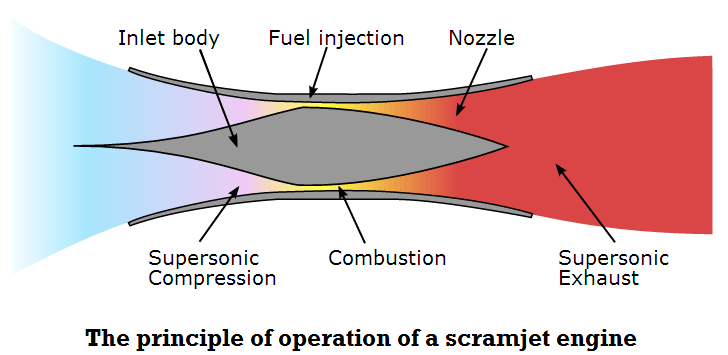
They typically consist of a Supersonic Combustion Ramjet or Scramjet propulsion system to enable such high speeds.
Scramjet engine collects oxygen from the atmosphere as it is travelling and mixes the oxygen with its hydrogen fuel, creating the combustion needed for hypersonic travel.
India is developing a Hypersonic Technology Demonstrator Vehicle (HSTDV)
It is an unmanned scramjet (allowing supersonic combustion) demonstration vehicle that can cruise to a speed of Mach 6 (or six times the speed of sound) and rise up to an altitude of 32 km in 20 seconds. It has been developed by DRDO.
There are 2 types of Hypersonic Weapon Delivery Systems
Hypersonic Cruise Missiles (HCM)
Hypersonic Glide Vehicle (HGV)
They are a mix of the speed of a ballistic missile and manoeuvring capabilities of a cruise missile
While cruise missiles achieve speeds of 550 mile per hour, the hypersonic missiles aircrafts can reach speeds more than 3500 miles per hour.
Capable of penetrating any antimissile defence system currently available that are designed to intercept cruise and ballistic missiles.
Specifically designed for increased survivability against modern ballistic missile defence systems.
Project Kusha is a major indigenous air defence initiative led by India’s Defence Research and Development Organisation (DRDO). Its primary goal is to develop a long-range, multi-layered surface-to-air missile (SAM) system capable of countering advanced aerial threats, including hypersonic weapons traveling at speeds up to Mach 7 (about 8,645 km/h).
Unmanned Aerial Vehicle
An Unmanned Aerial Vehicle, commonly known as a drone, is an aircraft without any human pilot, crew, or passengers on board.
Panchi
The wheeled variant of the Unmanned Aerial Vehicle (UAV) Nishant, can take off and land on tiny airstrips.
It has all of the surveillance capabilities of the UAV Nishant plus greater endurance because it does not need to carry the airbags and parachute system that the UAV Nishant does.
Nishant UAV
Inducted into the Army is a multi-mission UAV with Day/Night operational capability.
Intended for battlefield surveillance, tracking and localization of targets, and artillery firing correction.
Operated by an easy-to-use Ground Control Station + image processing system to examine UAV-sent images.
Anti-satellite weapons (ASAT)
India successfully tested its ASAT missile in March 2019.
A live satellite in low Earth orbit was destroyed by the ASAT missile (283-kilometer).
According to the DRDO, the missile can fire down objects traveling at a speed of 10 km per second from an altitude of 1200 km.
Pinaka Missile System
Pinaka is an indigenous multi-barrel rocket launch system developed for the Indian Army by the Defence Research and Development Organization (DRDO).
Its weapon system includes a cutting-edge guidance package, as well as an advanced navigation and control system.
The Pinaka Mark-II Rocket is converted into a missile by integrating with the navigation, control, and guidance system, which improves accuracy and range.
The Indian Regional Navigation Satellite System assists the missile’s navigation system (IRNSS).
It is an artillery missile system capable of striking enemy land with pinpoint accuracy up to a range of 75 kilometers.
The weapon system’s first version, known as Mark I, had a range of 40 kilometers.
The upgraded version of Pinaka Mark II has an extended range of 70 to 80 km.
Mission Shakti
Mission Shakti was launched to build highly effective anti-satellite weaponry (ASAT). It is a collaboration between the Defence Research and Development Organization (DRDO) and the Indian Space Research Organization (ISRO) (ISRO).
ASAT (anti-satellite) system is a missile-based system used to attack moving satellites.
The primary objective of Mission Shakti was to demonstrate India’s capability to safeguard its space assets by developing the technology to shoot down satellites in orbit. The successful test showcased India’s anti-satellite missile technology.
The successful test made India the fourth country in the world, after the United States, Russia, and China, to possess the capability to shoot down satellites in space.
The test raised discussions and concerns about the militarization of space and the need for international norms and agreements regarding space activities.
Fact File
India’s first indigenously developed missile was Prithvi, a short-range ballistic missile. It was developed under the Integrated Guided Missile Development Program (IGMDP) and first tested in 1988. Prithvi is a surface-to-surface missile with a range of 150 km
Dr. APJ Abdul Kalam spent four decades as a scientist and science administrator, mainly at the Defence Research and Development Organisation (DRDO) and Indian Space Research Organisation (ISRO) and was intimately involved in India’s civilian space programme and military missile development efforts. He was known as the “Missile Man of India” for his work on the development of ballistic missile and launch vehicle technology. He also played a pivotal organisational, technical, and political role in Pokhran-II nuclear tests in 1998, India’s second such test after the first test in 1974.
Operation Trident (India vs Pak 1971) saw the first use of anti-ship missiles in South east Asia region.
Nag anti-tank missile is the only missile in the world to have full fibre glass body.
The Brahmos are named after the rivers Brahmaputra and Moskva.
To get Saptarshi Sir’s guidance for PSC Miscellaneous Mains/ Clerkship Main/ English/Economy or for overall WBCS or other exam preparation, call or WhatsApp us @6295350330. Classes for PSC Miscellaneous Main and Clerkship Main have already started. WBCS New batch is also going on. You can also download our app for online guidance using the link
Bryan Johnson, the tech tycoon-turned-biohacker, has become the poster child of the modern immortality movement. With a staggering $2 million annual budget dedicated to turning back his biological clock, Johnson’s name has become synonymous with high-tech health hacks. Whether it’s transfusing his son’s youthful blood or undergoing a full plasma exchange, Johnson has spared no expense — or headline — in his journey to “live forever.”
But in his latest confession, the 46-year-old entrepreneur may have uncovered a chilling irony: in his zeal to slow aging, he may have accelerated it.
Inspired by a 2009 study showing rapamycin extended the lifespan of mice by up to 14%, and a 2023 human trial in which 65% of participants felt healthier while on the drug, Johnson began meticulously adjusting his dosage to balance potential benefits and risks. But instead of rejuvenation, the tech mogul started noticing troubling side effects.
Mouth ulcers. Slow-healing wounds. Cholesterol imbalances. Spikes in blood sugar. But what truly alarmed Johnson was an uptick in his resting heart rate — a metric he considers the holy grail of sleep and recovery data. The dissonance between expectation and reality forced a sobering revaluation.
Sirolimus, also known as rapamycin and sold under the brand name Rapamune among others, is a macrolide compound that is used to coat coronary stents, prevent organ transplant rejection, treat a rare lung disease called lymphangioleiomyomatosis, and treat perivascular epithelioid cell tumour (PEComa). This compound also has a use in cardiovascular drug-eluting stent technologies to inhibit restenosis. It is produced by the bacterium Streptomyces hygroscopicus and was isolated for the first time in 1972, from samples of Streptomyces hygroscopicus found on Easter Island. The compound was originally named rapamycin after the native name of the island, Rapa Nui. Sirolimus was initially developed as an antifungal agent. However, this use was abandoned when it was discovered to have potent immunosuppressive and antiproliferative properties due to its ability to inhibit mTOR. It was approved by the US Food and Drug Administration (FDA) in 1999.
Contrary to earlier findings, researchers discovered that the drug actually accelerated biological aging across 16 epigenetic markers. Instead of preserving youth, it might have been fast-forwarding time — at least for Johnson.
So, the next time you are thinking of undergoing some anti-ageing treatment, think twice. Remember the name Bryan Johnson and respect what God wishes to see in you.
নীচের গদ্যাংশটির মূল বক্তব্য নিজের ভাষায় সংক্ষেপে লিখুন : 40
এক বৃদ্ধ কৃষকের সম্বন্ধে একটি সুন্দর গল্প আছে। তাহার মৃত্যুকাল উপস্থিত দেখিয়া সে তাহার অলস পুত্রদের একটি গোপনীয় কথা বলিয়া যাইবার জন্য তাহার শয্যার পার্শ্বে ডাকিয়া বলিল- ‘পুত্রগণ। আমি যে শস্যক্ষেত্রটি তোমাদের জন্য রাখিয়া যাইতেছি, তাহাতে প্রচুর গুপ্তধন আছে।’- এই কথাগুলি বলা শেষ হইলে বৃদ্ধের প্রায় শ্বাসরোধ হইয়া আসিল। তাহার পুত্ররা সমস্বরে বলিয়া উঠিল- ‘শস্যক্ষেত্রের কোন স্থানে উহা আছে?” বৃদ্ধ বলিল – “খুড়িলেই সেই গুপ্তধন পাইবে।” এই কথা বলা শেষ হইবামাত্র শ্বাসরোধ হইয়া বৃদ্ধের মৃত্যু হইল। গুপ্তধন ক্ষেত্রের ঠিক কোনখানে আছে, তাহা আর তাহার পুত্ররা জানিতে পারিল না। পিতার মৃত্যুর পর পুত্ররা সমস্ত শস্যক্ষেত্রটি খুড়িয়া ফেলিল, কিন্তু কোথাও কোনো গুপ্তধন মিলিল না। তবে খোরাখুড়ির ফলে সেই বৎসর ঐ ক্ষেত্রটিতে প্রচুর ফসল ফলিল। ইহাই সেই পিতৃকথিত গুপ্তধন।
Ans- শ্রমই সম্পদ
মৃত্যুকালে বৃদ্ধ চাষী তাঁর অলস ছেলেদের শস্যক্ষেতে রেখে যাওয়া গুপ্তধনের কথা বলে এটাও আভাস দেন যে খোরাখুড়ি করলেই সেই গুপ্তধন পাওয়া যাবে। তাঁর মৃত্যুর পরে ছেলেরা সেই জমি পুরো খুড়ে গুপ্তধন না পেলেও কর্ষিত জমিতে সেবছর প্রচুর ফসল হল। অলস ছেলেদের পরিশ্রমের ফসলই ছিল বৃদ্ধ চাষীর সেই গুপ্তধন I
To get Saptarshi Sir’s guidance for English/Economy or for overall WBCS/ PSC Miscellaneous Main or other exam preparation, call or WhatsApp us @6295350330. Classes for PSC Miscellaneous Main have already started. WBCS New batch is also going on. You can also download our app for online guidance using the link
Alzheimer’s disease is a progressive form of dementia, resulting in severe loss of memory and cognitive ability and abnormalities in behavioral pattern. Three cardinal factors can be associated with the onset of Alzheimer’s- Age, Genetics and Family history. During the course of the disease, excessive amount of the chemical substance glutamate is released which in turn causes excessive brain cell damage and degeneration. There is no cure for the disease although the rate of damage can be slowed down by proper medication. Mostly people over 65 years of age are the victims of this incurable disease.
Dementia or memory loss is rather a symptom that can be due to a plethora of reasons and Alzheimer’s is one of those. It can also be due to Parkinson’s, traumatic injury etc. In every case, there is degeneration of the nerves resulting in incoordination of activities.
Key Characteristics of Alzheimer’s Disease:
Memory Loss: The most common early symptom is difficulty remembering recent events.
Cognitive Decline: Alzheimer’s affects thinking, reasoning, and judgment, impacting language, attention, and other cognitive functions.
Behavioral Changes: Individuals may experience changes in personality, mood, and behavior.
Progression: The disease progresses through stages, from mild cognitive impairment to moderate and severe dementia.
Researchers have primarily identified one gene Apolipoprotein E (APOE) for the onset of Alzheimer’s in older people. The disease is irreversible and leads to severe conditions like loss of speech and basic motor functions. However, in many cases, it is nonidentifiable at the early stages. Present-day city lifestyle often contributes to the onset of this nervous disorder. Therefore a healthy lifestyle is often suggested to avoid chances of Alzheimer’s.
There is no particular diagnostic technique to pinpoint this disease. Doctors mostly rely on the symptoms to diagnose the disease. However, CT scan (Computed tomography scan), PET scan (Positron emission tomography scan) or MRI (Magnetic resonance imaging) are often conducted to diagnose the condition of the brain resulting from the Alzheimer’s.
There is no proper medication to cure this disease. However, associated symptoms like depression, hallucination, agitation, aggression etc can be treated by antidepressants, antipsychotics, tranquilizers etc. Doctors often use drugs like donepezil or memantine to treat Alzheimer’s. Memantine is known to reduce the release of glutamate and thereby lessens brain degeneration.
Alzheimer’s has no cure, but two treatments — donanemab (Kisunla™) and lecanemab (Leqembi®) — demonstrate that removing beta-amyloid, one of the hallmarks of Alzheimer’s disease, from the brain reduces cognitive and functional decline in people living with early Alzheimer’s. Other treatments can temporarily slow the worsening of dementia symptoms and improve quality of life for those with living Alzheimer’s and their caregivers. Today, there is a worldwide effort underway to find better ways to treat the disease, delay its onset and prevent it from developing.
There are over 55 million people worldwide living with dementia, and Alzheimer’s disease is the most common form, accounting for 60-70% of those cases. Therefore, the number of Alzheimer’s patients globally is estimated to be between 33 million and 38.5 million. Alzheimer’s disease is a growing concern in India, with an estimated 5.3 million people currently living with dementia, the most common cause of which is Alzheimer’s. The prevalence of Alzheimer’s and other dementias in India is around 7.4% among adults aged 60 and older. This number is projected to significantly increase, potentially doubling by 2030 and tripling by 2050, posing a major challenge to the healthcare system.
Alzheimer’s patients are to be treated with utmost care, empathy and love. No medication but proper care, disciplined lifestyle, socialization, active participation in cognitive exercises can reduce the damages caused by this disease. Care and love are often seen to produce magical effects on patients. So next time you meet a person suffering from Alzheimer’s, don’t forget to give him a hug and show that you care.
1) Incorrect- She is married with a dentist Correct- She is married to a dentist 2) Incorrect- Although it was raining, but we went out. Correct – Although it was raining, we went out. Henceforth ‘I’ will represent Incorrect and ‘C’ will represent Correct. 3) I – I look forward to meet you. C- I look forward to meeting you 4) I- I live in Unites States C- I live in the United States. 5) I- When I will arrive, I will call you. C- When I arrive, I will call you. 6) I- He speaks English good. C- He speaks English well. 7) I – Me and Shyam live here. C- Shyam and I live here. 8) I- It was Ram’s and Laxman’s deer. C- It was Ram and Laxman’s deer 9) I- Each of the cars are fast C- Each of the cars is fast 10) I- Furnitures C- Furniture
11) I: He learned to play tennis, swim and sail. C: He learned to play tennis, to swim and to sail 12) I- I gave the exam this year. C- I took the exam this year. 13) I- I wish I was a bird/ If I was a bird. C- I wish I were a bird/ If I were a bird 14) Incorrect: I saw two deers in the woods. My foots hurt. Correct: I saw two deer in the woods. My feet hurt. 15) I- Last but not the least… C- Last but not least… 16) I- The spider spun it’s web. Its a very beautiful web. c- The spider spun its web. It’s a very beautiful web. 17) I- The list of items are on the desk. C- The list of items is on the desk 18) I- There are no breads in this shop. C- There is no bread in the shop. 19) I- He/she is my cousin brother/sister. C- He/she is my cousin. 20) I- He is a coward man. C- He is a coward/ He is a cowardly man.
21) Incorrect: The price of this mobile phone is higher than yours. Correct: The price of this mobile phone is higher than that of yours. 22) Incorrect: Our classroom is in the 2nd floor. Correct: Our classroom is on the 2nd floor. 23) Incorrect: His son-in-laws have come home. Correct: His sons-in-law have come home. 24) Incorrect: He has white hairs. Correct: He has grey hair. 25) Incorrect: I prefer coffee than tea. Correct: I prefer coffee to tea. 26) Incorrect: You need not to … Correct: You don’t need to… 27) Incorrect: Revert back Correct: Reply/ Revert 28) Incorrect: Discuss about Correct: Discuss 29) Incorrect: Dispose off Correct: Dispose of 30) Incorrect: I came to office by walk.
Correct: I came to office on foot. 31) Incorrect: I am having four brothers and three sisters. Correct: I have four brothers and three sisters. 32) Incorrect: I cannot cope up with this pressure. Correct: I cannot cope with this pressure. 33) Incorrect: What is the time in your watch? Correct: What is the time by your watch? 34) Incorrect: Dressing sense Correct: Dress sense 35) Incorrect- He is one of the student of the class Correct- He is one of the students of the class.
To get Saptarshi Sir’s guidance for PSC Miscellaneous Mains/ English/Economy or for overall WBCSor other exam preparation, call or WhatsApp us @6295350330. Classes for PSC Miscellaneous Main have already started. WBCS New batch is also going on. You can also download our app for online guidance using the link
Question- Write a report on a symposium recently held in your college on environment awareness in about 200 words.
Answer
‘A Day for Nature’- A Symposium with Purpose
Place DEF, July 22: Amidst much funfair the XYZ college at DEF recently organized a symposium titled ‘A Day for Nature’ to raise awareness about the ecosystem we live in. The list of eminent guests included Mr. X, the chairperson of the local municipality, Ms. Y, a renowned environment activist, Mr Z whose NGO recently came in news for novel initiatives to protect the environment.
The symposium was started off by lighting the sacred lamp by the principal of the college along with the dignitaries present. This was followed by a welcome speech by the President of the Governing body of the college. Following that the keynote speakers delivered their valuable speeches on a plethora of subjects like global warming, climate change, afforestation, water crisis, green house gases etc. Student representatives also participated in group discussions, debates and a quiz on environment.
It was resolved that a plantation programme will be carried out at the locality and its vicinity by the college along with the civil society. A team of Green Volunteers will be formed to address any emergency issue concerning nature or to mitigate any damage caused thereby. An awareness rally was also planned. Finally, the eventful symposium concluded with vote of thanks by the General Secretary of the Students’ Union.
Notes for the students
1) Place ‘M’ signifies any place like Howrah, Kolkata, Jalpaiguri.
2) Do not write direct names or places. Instead, use A,B,C,X,Y,Z.
3) Do not forget to add a heading
4) Add a dateline as done in the above report.
5) Avoid using flowery language and bombastic words.
6) Help the examiner to visualize what actually happened.
7) DO NOT USE UNNECESSARY WORDS OR SENTENCES.
8) Keep it simple.
To get Saptarshi Sir’s guidance for English/Economy or for overall WBCS/ PSC Miscellaneous Main or other exam preparation, call or WhatsApp us @6295350330. Classes for PSC Miscellaneous Main have already started. WBCS New batch is also going on. You can also download our app for online guidance using the link