1) Incorrect- She is married with a dentist Correct- She is married to a dentist 2) Incorrect- Although it was raining, but we went out. Correct – Although it was raining, we went out. Henceforth ‘I’ will represent Incorrect and ‘C’ will represent Correct. 3) I – I look forward to meet you. C- I look forward to meeting you 4) I- I live in Unites States C- I live in the United States. 5) I- When I will arrive, I will call you. C- When I arrive, I will call you. 6) I- He speaks English good. C- He speaks English well. 7) I – Me and Shyam live here. C- Shyam and I live here. 8) I- It was Ram’s and Laxman’s deer. C- It was Ram and Laxman’s deer 9) I- Each of the cars are fast C- Each of the cars is fast 10) I- Furnitures C- Furniture
11) I: He learned to play tennis, swim and sail. C: He learned to play tennis, to swim and to sail 12) I- I gave the exam this year. C- I took the exam this year. 13) I- I wish I was a bird/ If I was a bird. C- I wish I were a bird/ If I were a bird 14) Incorrect: I saw two deers in the woods. My foots hurt. Correct: I saw two deer in the woods. My feet hurt. 15) I- Last but not the least… C- Last but not least… 16) I- The spider spun it’s web. Its a very beautiful web. c- The spider spun its web. It’s a very beautiful web. 17) I- The list of items are on the desk. C- The list of items is on the desk 18) I- There are no breads in this shop. C- There is no bread in the shop. 19) I- He/she is my cousin brother/sister. C- He/she is my cousin. 20) I- He is a coward man. C- He is a coward/ He is a cowardly man.
21) Incorrect: The price of this mobile phone is higher than yours. Correct: The price of this mobile phone is higher than that of yours. 22) Incorrect: Our classroom is in the 2nd floor. Correct: Our classroom is on the 2nd floor. 23) Incorrect: His son-in-laws have come home. Correct: His sons-in-law have come home. 24) Incorrect: He has white hairs. Correct: He has grey hair. 25) Incorrect: I prefer coffee than tea. Correct: I prefer coffee to tea. 26) Incorrect: You need not to … Correct: You don’t need to… 27) Incorrect: Revert back Correct: Reply/ Revert 28) Incorrect: Discuss about Correct: Discuss 29) Incorrect: Dispose off Correct: Dispose of 30) Incorrect: I came to office by walk.
Correct: I came to office on foot. 31) Incorrect: I am having four brothers and three sisters. Correct: I have four brothers and three sisters. 32) Incorrect: I cannot cope up with this pressure. Correct: I cannot cope with this pressure. 33) Incorrect: What is the time in your watch? Correct: What is the time by your watch? 34) Incorrect: Dressing sense Correct: Dress sense 35) Incorrect- He is one of the student of the class Correct- He is one of the students of the class.
To get Saptarshi Sir’s guidance for PSC Miscellaneous Mains/ English/Economy or for overall WBCSor other exam preparation, call or WhatsApp us @6295350330. Classes for PSC Miscellaneous Main have already started. WBCS New batch is also going on. You can also download our app for online guidance using the link
Please note that this is one of the most important topics for any examination like UPSC CSE, WBCS, PSC Clerkship, SSC CGL, Miscellaneous or others. Read and memorize every date very carefully.
Date Day
1st January Global Peace Day
6th January World War Orphans Day
9th January Pravasi Bharatiya Divas NRI Day
10th January- World Hindi Day
12th January National Youth Day (Birth Day of Swami Vivekanand)
15th January Army Day of India ((Field Marshall K.M. Cariappa took over the
command of Army on this day in 1949 from the British)
24th January National Girl Child Day of India
25th January India Tourism Day, National Voters Day
28th January Data protection day
30th January Martyr’s Day, World Leprosy Eradication Day
2nd February World Wetlands Day
4th February World Cancer Day
20th February World Day of Social Justice
21st February International Mother Language Day
27 February World Sustainable Energy Day
28 February National Science Day
3rd March World Wildlife Day
8 March International Women’s Day
15 March World Consumer Rights Day
21 March World Forestry Day
22 March World Water Day
23rd March World Meteorological Day
24 March World Tuberculosis (TB) Day
27 March World Theatre Day
2 April World Autism Awareness Day
7 April World Health Day
21 April National Civil Service Day
22 April World Earth Day
24 April National Panchayati Day
1st May International Labour Day
3rd May Press Freedom Day
8th May World Red Cross Day
21st May Anti-terrorism day
24th May Commonwealth Day
31st May Anti-Tobacco Day
5th June World Environment Day
12th June World Day Against Child Labour
14th June World Blood Donor Day
20th June World Refugee Day
21st June International Yoga Day, World Music Day
27th June World Diabetes Day
1st July National Doctor’s Day
11th July World Population Day
26th July Kargil Vijay Diwas
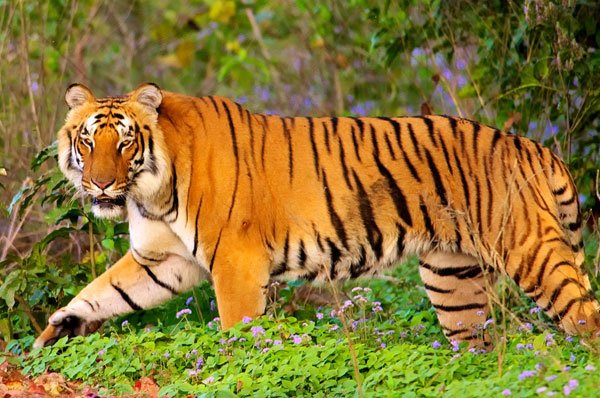
29th July International Tiger Day
6th August Hiroshima Day
9th August Quit India Day and Nagasaki Day
12th August International Youth Day
29th August National Sports Day
5th September Teachers’ Day (Dr. Radhakrishnan’s birthday)
8th September World Literacy Day
15th September Engineer’s Day in India
16th September World Ozone Day
27th September World Tourism Day
2nd October Mahatma Gandhi’s birthday, International Day of Non-violence
5th October World Teacher’s Day
11th October International Girl Child Day
16th October World Food Day
24th October UN Day
31st October Rastriya Ekta Diwas (in memory of Sardar Patel), National Integration Day (In memory of Indira Gandhi)
5th November World Radiography Day
29th November International Day of Solidarity with Palestinian People
1st December World Aids Day
2nd December World Computer literacy day, International Day of Abolition of slavery
3rd December International Day of People with disabilities
10th December Human Right Day
23rd December Kisan Divas (Farmer’s Day)
29th December International Bio-diversity day
For getting my personal guidance for PSC Miscellaneous Mains/ WBCS , pls call or whatsapp now- 6295350330
United Nations Conference on the Human Environment (Stockholm, 1972)
1992 Earth Summit in Rio de Janeiro
Ramsar Convention 1971 on wetland conservation and sustainable use
The Montreal Protocol, finalized in 1987, is a global agreement to protect the stratospheric ozone layer by phasing out the production and consumption of ozone-depleting substances (ODS). ODS are substances that were commonly used in products such as refrigerators, air conditioners, fire extinguishers, and aerosols
India currently has 91 Ramsar sites, making it the country with the highest number of Ramsar-designated wetlands in Asia and third highest globally.
In 1972, India enacted the Wildlife Protection Act
Project Tiger was launched in Jim Corbett National Park of Uttarakhand in 1973, and various tiger reserves were created in the country based on a ‘core-buffer’ strategy.
Project Elephant is a centrally sponsored scheme initiated by the Government of India in 1992 to safeguard the Indian elephant population and their habitats.
Under Project Cheetah, the Prime Minister of India released wild cheetahs in Kuno National Park in Madhya Pradesh. Cheetah became extinct from India in 1952
পশ্চিমবঙ্গের ভৌগোলিক এলাকার ১৪% বনভূমি , যা জাতীয় গড়ের ৩৩% এর চেয়ে কম।
জাতীয়উদ্যানএবংবন্যপ্রাণীঅভয়ারণ্য (WB)
বল্লভপুর বন্যপ্রাণী অভয়ারণ্য
বেথুয়াদহরি বন্যপ্রাণী অভয়ারণ্য
বিভূতিভূষণ বন্যপ্রাণী অভয়ারণ্য
বক্সা টাইগার রিজার্ভ
চাপরামারী বন্যপ্রাণী অভয়ারণ্য
চিলাপাতা বন
চিন্তামণি কর পাখি অভয়ারণ্য
গোরুমারা জাতীয় উদ্যান
হ্যালিডে দ্বীপ বন্যপ্রাণী অভয়ারণ্য
জলদাপাড়া জাতীয় উদ্যান
জোরে পোখরি বন্যপ্রাণী অভয়ারণ্য
লোথিয়ান দ্বীপ বন্যপ্রাণী অভয়ারণ্য
মহানন্দা বন্যপ্রাণী অভয়ারণ্য
নেওরা ভ্যালি জাতীয় উদ্যান
নরেন্দ্রপুর বন্যপ্রাণী অভয়ারণ্য
পাখি বিতান বন্যপ্রাণী অভয়ারণ্য
রায়গঞ্জ বন্যপ্রাণী অভয়ারণ্য
রামনবাগান বন্যপ্রাণী অভয়ারণ্য
রসিকবিল পাখি অভয়ারণ্য
সজনেখালি বন্যপ্রাণী অভয়ারণ্য
সেঞ্চল বন্যপ্রাণী অভয়ারণ্য
সিঙ্গালিলা জাতীয় উদ্যান
সুন্দরবন জাতীয় উদ্যান
ময়ূরঝর্ণা হাতি সংরক্ষণাগার
National Parks- Important facts
National Parks in India- 107
Oldest National Park- Jim Corbett NP (Uttarakhand)
Largest National Park- Hemis, Ladakh
Maximum NPs in India- Madhya Pradesh (11)
First NP in West Bengal- Sundarban (1984)
Latest National Park in WB- Jaldapara (1986)
Keibul Lamjao National Park, located in Manipur, is the only floating national park in the world, situated on Loktak Lake.
South Button Island National Park in the Andaman and Nicobar Islands is the smallest, with an area of just 5 square kilometers.
Satpura National Park in Madhya Pradesh is known for allowing walking safaris and camping within the park.
As of May 2024, India’s National Parks covers a total area of 44,378 sq km and account for about 1.35% of India’s total surface area.
The Sangai deer’ is found in Keibul Lamjao National Park (Manipur).
India’s first Golden Tiger was spotted in Kaziranga National Park.
Dachigam National Park (jammu and Kashmir) has been established for the conservation of the hangul or Kashmiri deer.
Punjab is the only Indian state which has no national park.
“National parks in West Bengal” (6)
Buxa Tiger Reserve
Gorumara
Jaldapara
Sundarban
Sigalila
Neora Valley
Difference Between Wildlife Sanctuary and National Park
Wildlife Sanctuary National Park
Human activities are allowed. No human activities are allowed.
Protects particular flora or fauna Wide range of flora and fauna
There are no fixed boundaries. Boundaries are fixed and defined.
It is open to the general public Not usually open to the public.
A sanctuary can be upgraded to a national park Cannot be downgraded to a sanctuary.
There are 18 biosphere reserves in India. They protect larger areas of natural habitat than a typical national park or animal sanctuary, and often include one or more national parks or reserves, along with buffer zones that are open to some economic uses. Protection is granted not only to the flora and fauna of the protected region, but also to the human communities who inhabit these regions, and their ways of life.
Sundarbans Biosphere Reserve-West Bengal
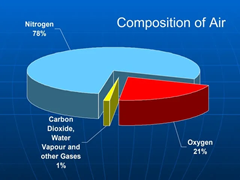
Air, the gaseous envelope surrounding Earth, is primarily composed of nitrogen and oxygen, with smaller amounts of other gases like argon, carbon dioxide, and trace amounts of other gases like helium and neon. Water vapor and dust particles are also present in varying amounts.
Here’s a breakdown of the major components:
Nitrogen (N₂): Approximately 78.09% of dry air.
Oxygen (O₂): Around 20.95% of dry air.
Argon (Ar): About 0.93% of dry air.
Carbon Dioxide (CO₂): A small but significant amount, around 0.04%.
Other Gases: Trace amounts of gases like helium, neon, krypton, and methane.
Water Vapor: The amount of water vapor in the air varies depending on location and weather conditions.
Dust Particles: Also present in varying amounts.
The five most abundant greenhouse gases in Earth’s atmosphere, listed in decreasing order of average global mole fraction, are water vapor, carbon dioxide, methane, nitrous oxide, ozone. Other greenhouse gases of concern include chlorofluorocarbons (CFCs and HCFCs), hydrofluorocarbons (HFCs), perfluorocarbons, SF6, and NF3. Water vapor causes about half of the greenhouse effect.
The Earth’s atmosphere is composed of five primary layers: the troposphere, stratosphere, mesosphere, thermosphere, and exosphere. These layers are defined by their temperature profiles and altitude ranges.
Here’s a breakdown of each layer:
1. Troposphere:
This is the lowest layer, extending from the Earth’s surface up to about 7 to 20 kilometers (4 to 12 miles) depending on the latitude. It’s where we live and where most weather occurs.
2. Stratosphere:
Located above the troposphere, the stratosphere extends from about 12 to 50 kilometers (7 to 31 miles). The ozone layer, which absorbs harmful UV radiation, is found within this layer. Unlike the troposphere, temperature increases with altitude in the stratosphere. The ozonosphere resides within the stratosphere, the second layer of Earth’s atmosphere, above the troposphere (where we live).
3. Mesosphere:
Situated above the stratosphere, the mesosphere extends from 50 to 85 kilometers (31 to 53 miles). It’s the coldest layer, with temperatures reaching as low as -90°C (-130°F) near the top. Most meteors burn up in the mesosphere.
4. Thermosphere:
This layer is above the mesosphere and extends from about 85 to 600 kilometers (53 to 372 miles). Temperatures in the thermosphere can be very high, but the air is so thin that it would feel cold to us. The aurora borealis and aurora australis occur in this layer.
5. Exosphere:
The outermost layer, the exosphere, extends from the top of the thermosphere to about 10,000 kilometers (6,200 miles). It gradually fades into interplanetary space. The air is extremely thin here, and particles can escape into space.
Major Environmental Movements in India
Bishnoi Movement
Year: 1700s
Place: Khejarli, Marwar region, Rajasthan state.
Leaders: Amrita Devi along with Bishnoi villagers in Khejarli and surrounding villages.
Aim: Save sacred trees from being cut down by the king’s soldiers for a new palace.
Chipko Movement
Year: 1973
Place: In Chamoli district and later in Tehri-Garhwal district of Uttarakhand.
Aim: The main objective was to protect the trees on the Himalayan slopes from the axes of contractors of the forest.
Silent Valley Movement
Year: 1978
Place: Silent Valley, an evergreen tropical forest in the Palakkad district of Kerala, India.
Leaders: The Kerala Sastra Sahitya Parishad (KSSP) an NGO, and the poet-activist Sughathakumari played an important role in the Silent Valley protests.
Aim: To protect the Silent Valley, the moist evergreen forest from being destroyed by a hydroelectric project.
Narmada Bachao Andholan (NBA)
Year: 1985
Place: Narmada River, which flows through the states of Gujarat, Madhya Pradesh and Maharashtra.
Leaders: Medha Patker, Baba Amte, Adivasis, farmers, environmentalists and human rights activists.
Aim: A social movement against several large dams being built across the Narmada River.
Tehri Dam Conflict
Year: 1990’s
Place: Bhagirathi River near Tehri in Uttarakhand.
Leaders: Sundarlal Bahuguna
Aim: The protest was against the displacement of town inhabitants and the environmental consequence of the weak ecosystem.
Here’s a list of common abbreviations related to environmental concepts, laws, and organizations:
EIA: Environmental Impact Assessment
EMP: Environmental Management Plan
EMS: Environmental Management System
BOD: Biochemical Oxygen Demand
COD: Chemical Oxygen Demand
DO: Dissolved Oxygen
GHG: Greenhouse Gas
EPA: Environment (Protection) Act, 1986
WPA: Wildlife Protection Act, 1972
FCA: Forest Conservation Act, 1980
WPA: Water (Prevention and Control of Pollution) Act, 1974
APA: Air (Prevention and Control of Pollution) Act, 1981
BD Act: Biological Diversity Act, 2002
CPCB: Central Pollution Control Board
SPCB: State Pollution Control Board
NGT: National Green Tribunal
UNEP: United Nations Environment Programme
WWF: World Wildlife Fund
IUCN: International Union for Conservation of Nature
IPCC: Intergovernmental Panel on Climate Change
SDG: Sustainable Development Goals
COP: Conference of the Parties (under the UNFCCC)
UNFCCC: United Nations Framework Convention on Climate Change
CSR: Corporate Social Responsibility
ODS: Ozone-Depleting Substances
HWM: Hazardous Waste Management
EPR: Extended Producer Responsibility
MSW: Municipal Solid Waste
RE: Renewable Energy
NRE: Non-Renewable Energy
EE: Energy Efficiency
CEA: Central Electricity Authority
1. মন্ট্রিয়ল প্রোটোকলের সঙ্গে জড়িত
[A] পারমাণবিক অস্ত্র
[B] ওজোন স্তরের ক্ষয়
[C] সমুদ্রের তলদেশ
[D] ল্যান্ডমাইন
Ans- b
2. মিনামাটা রোগের কারন হল –
[A] আর্সেনিক দূষণ
[B] পারদ দূষণ
[C] ক্যাডিয়াম দূষণ
[D] প্লাস্টিক দূষণ
Ans- B
3. জেনেটিক কোড আবিস্কারের জন্য কোন বিজ্ঞানী নোবেল পুরস্কার পেয়েছেন?
[A] প্রফুল্লচন্দ্র রায়
[B] হরগোবিন্দ খোরানা
[C] ডারউইন
[D] লফ্রেলোবেন
Ans- b
4. সালোকসংশ্লেষে অর্থাৎ খাদ্য তৈরিতে সক্ষম এমন প্রাণী হল –
[A] রাইবোজোম
[B] হাইড্রিলা
[C] ইউপ্লিনা
[D] অ্যাজোটোব্যাকটর
Ans-c
5. জলে ভাসমান আণুবীক্ষণিক উদ্ভিদগোষ্ঠীকে কী বলে?
[A] ফাইটোপ্লাংকটন
[B] বেনথস
[C] প্ল্যাংকটন
[D] জুপ্ল্যাংটন
Ans- A
6. লাল তথ্য পুস্তিকা বা ‘রেড ডাটা বুক’-এর তথ্যগুলি –
[A] লোহিত সাগরের প্রাণী সংক্রান্ত
[B] বিপন্ন প্রাণী সংক্রান্ত
[C] অপরাধজগৎ সংক্রান্ত
[D] বিপ্লবী তথ্য সংক্রান্ত
Ans- B
7. সিগারেটের ধোঁয়ায় অবস্থিত ক্যান্সার সৃষ্টিকারী উপাদানটি হল-
[A] কার্বন মনোক্সাইড
[B] বেঞ্জয়িক অ্যাসিড
[C] ক্লোরোবেঞ্জিন
[D] ডাই অক্সিজেন
Ans- C
8. পাখির দ্বারা বিস্তার লাভ করে সেই রোগের নাম-
[A] ভাইরাল
[B] মাইকোসিস
[C] অরনিথোসিস
[D] জুনটিক
Ans- C
9. ভারতের বৃহত্তম সরকারি তাপবিদ্যুৎ সংস্থা কোনটি?
[A] SAARC
[B] NTPC
[C] OPEC
[D] ONGC
Ans- B
10. 84. তামাক পাতায় উপস্থিত ক্ষতিকারক ধাতুর নাম –
[A] আয়রন
[B] মার্কারি
[C] ক্যাডমিয়াম
[D] আর্সেনিক
Ans- C
Important National Parks of India
Name State
Corbett National Park Uttarakhand
Kanha National Park Madhya Pradesh
Tadoba National Park Maharashtra
Madhav National Park Madhya Pradesh
Bandhavgarh National Park Madhya Pradesh
Kaziranga National Park Assam
Bandipur National Park Karnataka
Bannerghatta National Park Karnataka
Gir National Park Gujarat
Gugamal National Park Maharashtra
Pench National Park Madhya Pradesh
Blackbuck National Park Gujarat
Guindy National Park Tamil Nadu
Keibul-Lamjao National Park Manipur
Khangchendzonga National Park Sikkim
Dudhwa National Park Uttar Pradesh
Eravikulam National Park Kerala
Vansda National Park Gujarat
Van Vihar National Park Madhya Pradesh
Simlipal National Park Odisha
Ranthambore National Park Rajasthan
Gulf of Mannar Marine National Park Tamil Nadu
Dachigam National Park Jammu & Kashmir
Hemis National Park Jammu & Kashmir
Kishtwar National Park Jammu & Kashmir
Panna National Park Madhya Pradesh
Sanjay National Park Madhya Pradesh
Satpura National Park Madhya Pradesh
Keoladeo Ghana National Park Rajasthan
Indravati National Park Chhattisgarh
Kanger Valley National Park Chhattisgarh
Marine National Park Gujarat
Periyar National Park Kerala
Nanda Devi National Park Uttarakhand
Valley of Flowers National Park Uttarakhand
Mahatma Gandhi Marine National Park Andaman & Nicobar Islands
Namdapha National Park Arunachal Pradesh
Fossil National Park Madhya Pradesh
Sanjay Gandhi National Park Maharashtra
Rajaji National Park Uttarakhand
Silent Valley National Park Kerala
Sunderban National Park West Bengal
Balpakram National Park Meghalaya
Mouling National Park Arunachal Pradesh
Betla National Park Jharkhand
Nokrek Ridge National Park Meghalaya
Neora Valley National Park West Bengal
Singalila National Park West Bengal
Middle Button Island National Park Andaman & Nicobar Islands
Mount Harriet National Park Andaman & Nicobar Islands
North Button Island National Park Andaman & Nicobar Islands
Saddle Peak National Park Andaman & Nicobar Islands
South Button Island National Park Andaman & Nicobar Islands
Pin Valley National Park Himachal Pradesh
Kudremukh National Park Karnataka
Nagarahole (Rajiv Gandhi) National Park Karnataka
Bhitarkanika National Park Odisha
Sri Venkateswara National Park Andhra Pradesh
Valmiki National Park Bihar
Sultan National Park Haryana
Indira Gandhi (Annamalai) National Park Tamil Nadu
Gangotri National Park Uttarakhand
Manas National Park Assam
Mudumalai National Park Tamil Nadu
Govind National Park Uttarakhand
Murlen National Park Mizoram
Campbell Bay National Park Andaman & Nicobar Islands
Mollem National Park Goa
City Forest (Salim Ali) National Park Jammu & Kashmir
Phawngpui Blue Mountain National Park Mizoram
Desert National Park Rajasthan
Sariska National Park Rajasthan
Buxa National Park West Bengal
Gorumara National Park West Bengal
Intanki National Park Nagaland
Mahaveer Harina Vanasthali National Park Telangana
Rani Jhansi Marine National Park Andaman & Nicobar Islands
Nameri National Park Assam
Dibru-Saikhowa National Park Assam
Rajiv Gandhi Orang National Park Assam
Kalesar National Park Haryana
Anamudi Shola National Park Kerala
Chandoli National Park Maharashtra
Clouded Leopard National Park Tripura
Bison National Park Tripura
Jaldapara National Park West Bengal
For getting our guidance for PSC Miscellaneous Mains/ WBCS , pls call or whatsapp now- 6295350330
West Bengal has an adolescent (10-19 years) population of 1.73 Crores, out of which 48.11% are girls. At this period of adolescence, child marriage and trafficking are issues of major social concern which adversely affect the education, health, nutritional status, growth and development of girls. In this context Kanyashree Prakalpa is an innovative scheme of the Government of West Bengal with the power of creating an enabling environment to elevate the education, health and nutrition status of women and children throughout the State.
14 August is celebrated as Kanyashree Day to promote the scheme throughout the state. On August 14, 2013 state wide events were held to publicize the scheme.
The Scheme has two conditional cash benefit components.
The first is K1, an annual scholarship of Rs. 1000/- to be paid annually to the girls from 13 to 18 years of age group for every year that they remain in education, provided they are unmarried at the time. (Note: During the years 2013–14 and 2014-1 the annual scholarship was Rs. 500/-).
The second benefit is K2, a one-time grant of 25,000/-, to be paid when girls turn 18, provided that they are engaged in an academic or occupations pursuit and are unmarried at the time.
The term ‘education’ encompasses secondary and higher secondary education, as well as the various vocational, technical and sports courses available for this age group. To ensure an equity focus, the scheme is open only to girls from families whose annual income is R. 1,20,000/- or less. For girls with special needs, girls who have lost both parents, as well as for girls currently residing in Juvenile Justice homes, this criterion is waived. Although the annual scholarship is payable only when girls reach Class VIII, this criterion is waived for girls with special needs whose disability is 40% or more.
Kanyashree Prakalpa seeks to improve the status and well-being of girls, specifically those from socio-economically disadvantaged families through Conditional Cash Transfers by:
Incentivizing them to continue in education for a longer period, and complete secondary or higher secondary education, or equivalent in technical or vocational steams, thereby giving them a better footing in both the economic and social spheres.
Disincentivizing marriage till at least the age of 18, the legal age of marriage, thereby reducing the risks of early pregnancies, associated risks of maternal and child mortality, and other debilitating health conditions, including that malnutrition.
It was also decided that the Scheme should confer more than just monetary support; it should be a means of financial inclusion and a tool of empowerment for adolescent girls. The scheme’s benefits are therefore paid directly to bank accounts in the girls’ names, leaving the decision of utilizing the money in their hands.
To reinforce the positive impact of increased education and delayed marriages, the scheme also works to enhance the social power and self-esteem of girls through a targeted behaviour change communication strategy. The communication strategy not only builds awareness of the scheme, but includes adolescent-friendly approaches like events, competitions, and Kanyashree clubs, and the endorsement of strong women figures as role models to promote social and psychological empowerment.
As more and more girls remain in school, it is envisaged that they will use the opportunity to gain skills and knowledge to help them become economically independent. Even if girls do get married soon after they turn 18, it is expected that their education and enhanced social and emotional development will give them a better foundation for their adult lives. And over time, as entire generations of women enter marriages only after they have some degree of economic independence, it is expected that the practice of child marriage will be completely eradicated. Women will attain their right to health, education, and socio-economic equality.
The main objective of the scheme is to prevent child marriage and promote education among girls. It also aims to improve the health and nutrition of girls and empower them by building their skills and capacities.
The scheme is implemented through a network of school teachers, community workers, and government officials. The scheme has been recognized as a best practice in girl-child empowerment by the United Nations. Kanyashree was ranked the best among 552 such social sector schemes from across 62 countries that were nominated for the coveted award.
For getting our guidance for PSC Miscellaneous Mains, pls call or whatsapp now- 6295350330
The UNSC is – theoretically – the most powerful political UN body, with a mandate to maintain international peace and security. It has 15 members: five permanent and 10 elected. The five permanent members are China, France, Russia, the United Kingdom and the United States. The non-permanent members are elected for a term of two years. The Security Council can establish peacekeeping operations, impose sanctions or arms embargoes, instruct human rights investigations, authorize the use of force, create international criminal tribunals and refer cases to the International Criminal Court.
The US made a proposal to India in August 1950 through the Indian Ambassador in the U.S. It expressed the American desire to remove China from permanent membership of the UNSC and possibly replace it with India. Nehru allegedly refused to take this suggestion seriously and thus abdicated India’s opportunity to become a permanent member of the UNSC. However, the complexity of the international situation might justify Nehru’s stance then.
The above events took place in August 1950 when the Cold War was in its early stages. The two superpowers were in eyeball-to-eyeball confrontation that threatened nuclear catastrophe. The People’s Republic of China had just emerged from a bloody civil war and was seen at the time as the Soviets’ closest ally. It was prevented from taking its permanent seat in the UNSC because of American opposition based on Cold War logic. Furthermore, war was intense in the Korean peninsula. The U.S. and allied troops were locked in fierce combat with North Korean forces supported by China and the Soviet Union.
Nehru, at that time, was trying to carve a policy that ensured India’s security, strategic autonomy and state-led industrialisation. He anticipated that pushing China out, as the U.S. wished to do, would result in a perpetual conflict that could engulf all of Asia. To him, the Korean War appeared a forerunner to more such conflicts in Asia that could even turn nuclear. The U.S. had dropped nuclear bombs on Japan only 5 years ago and it would possibly not hesitate to do so again in an Asian conflict. This is especially since nuclear deterrence had not become a recognised reality then. So given these, Nehru did not want India to get embroiled in hazardous Cold War conflicts as it would risk India’s own security. He understood that peace could not be assured in Asia without accommodating a potential great power like China.
To be precise, America’s proposal was not an offer but merely a vague sensor to explore Indian reactions to such a contingency. The U.S. intended the offer to be a bait to attract India into an alliance with the West against the Sino-Soviet bloc. The US aimed at pulling India into the “defence” organisations that it was setting up in Asia to contain the presumed “Communist expansionism”. Nehru was well aware of this and the fact that Washington was only interested in using India for its own ends. Had India accepted the American bait, it would have meant enduring enmity with China without the achievement of a permanent seat in the UNSC. Moreover, even if accepted, the Soviet Union, then China’s closest ally, would have vetoed such move. As, it would have required amendment of the UN Charter that is subject to the veto of the permanent members. It would have also strained the relations between India and the Soviet Union, affecting the possibility of a close political and military relationship with Moscow later. The ties, in fact, became necessary once the U.S. entered into an alliance relationship with Pakistan. Moreover, the Indo-Soviet relationship paid immense dividends to India during the Bangladesh war of 1971.
Over the years since then there has been much talk of late about the possibility of India joining the UN Security Council (UNSC) as a permanent member, while most of the current permanent members have expressed public support for expansion of the UNSC.
India has been falling far short of its domestic and international human rights obligations, and its desire to expand its role in the UN presents an opportunity to assess its record of engagement as a member of other UN political bodies, including the UN Human Rights Council (UNHRC).
It’s important to review India’s pattern of engagement with the human rights architecture as a whole, including with the Office of the High Commissioner for Human Rights (OHCHR) and UN human rights treaty bodies.
Indian politicians have argued for decades that the nation deserves to be a member of the United Nations Security Council (UNSC). An aspirational superpower, India believes that it has been unfairly denied a seat at the high table.
Several visiting foreign political dignitaries and international coalitions that have pushed for UNSC reforms have also voiced support for India’s candidacy for permanent membership of the Security Council. However, despite persistent lobbying by India, experts are not hopeful of change in the near future.
There are four key challenges India must overcome before it secures veto power in the United Nations.
China’s Opposition
Among the five permanent security council members all except China – the United States, the United Kingdom, France, and Russia – have categorically supported India’s candidature in the past. As a close competitor of India in regional and international politics, China is unwilling to endorse New Delhi’s position.
China is the only Asian country with a permanent Security Council seat. This adds to its power and international prestige, and China is unlikely to want to share this space with India. What’s more, particularly amid an ongoing border dispute with India, China will resist any attempt by any of the four members to change the composition of the UNSC.
China is also uncomfortable with Japan, a close U.S. ally that, like India, is a strong contender for a permanent seat. Comprising Brazil, Germany, India, and Japan, the G-4 countries support each other’s bids for permanent seats on the Security Council.
China has unofficially dropped hints that it may back India, provided New Delhi doesn’t endorse Japan’s bid. China knows that New Delhi will not break the unity of the G-4 and thus, considers it is a safe bet to pit India against Japan.
Disagreement on Membership Without Veto Power
Some parties have raised the prospect of India gaining UNSC membership without veto power.
Groups including Uniting for Consensus (UfC) – a powerful coalition led by Italy, with other members including Canada, Mexico, Spain, Pakistan, South Korea, and Turkey – have advocated reinforcing the working of the General Assembly and increasing the number of non-permanent members.
Its argument is that the addition of non-permanent members will make the U.N. more accountable and representative by accommodating relevant regional voices in the decision-making process. In doing so, the group argues, this solution would mean there are more than a few select chief custodians of the international system.
But there are questions about what happens if India gets a high seat without veto power. Could this be considered a piecemeal approach toward achieving the larger objective?
Despite some parties saying they prefer this kind of arrangement, New Delhi is not comfortable with this proposition. India’s position is that all new permanent members to the Security Council must possess a veto. Thus, it is unlikely this outcome will unfold.
Western Concerns that India May Not Align with U.S. Priorities
The United States has, in principle, endorsed India gaining a permanent seat on the Security Council. But not everyone believes U.S. policymakers will actually support such a reform in practice.
Indeed, in the past, P-5 countries have displayed “a habit of being non-commital” when it comes to actual decision-making on veto powers. As former U.S. Under Secretary of State for Political Affairs Nicholas Burns said in 2008: “We want to preserve the veto, and we do not want to extend a veto to new permanent members.”
Prominent U.S.-based South Asian expert Ashley Tellis recently penned a piece in Foreign Affairs magazine arguing that the United States cannot be sure of India’s support on significant strategic matters. Ashley later defended this position in an interview, saying “the current war in Ukraine is a good example … India defines its interest in ways that are not always identical to our own.”
It is true that India has not always voted with the West in the United Nations and has maintained an independent position on several critical subjects (e.g., India abstaining on the Russian invasion of Ukraine). Due to this, many think India is a fence-sitter and see it as an unreliable partner. Despite developing closer strategic ties with the West, India remained uncommitted on supporting sanctions on Russia. While China’s response was anticipated, for the West, foot dragging by New Delhi in criticizing Russia was no less than a shock.
In these changed circumstances, it is difficult to imagine that the West, particularly the U.S., will go ahead with a reformed Security Council where India has veto power.
The Regional Conundrum
India also faces formidable challenges to its leadership emanating from its own region. India influences the region, but not in absolute terms. Indeed, as instability in the region has increased, so too have New Delhi’s troubles.
South Asia has, for example, become a battleground of India-China competition. And while the India-Pakistan rivalry captures most attention, there are major India-related issues that agitate people in Nepal, Bangladesh, Sri Lanka, the Maldives, and even in Bhutan.
With its recent change of government, Bangladesh is no longer on the same page. Queries over India’s regional leadership raises questions over its claims to be a global power.
What is Next for India?
There are convincing arguments that the U.N. is in desperate need of reform, particularly the Security Council. Expanding the Security Council’s membership to include developing countries like India would benefit the U.N. and the international community. However, New Delhi must make more concerted efforts to address criticisms to further legitimize its demand for permanent membership.
India’s geographical, political, and social influence in South Asia cannot be ignored. Recent criticism around its increasing political intolerance – which is directly linked to the state of democracy in India – must be addressed and resolved.
India’s failure to improve its ranking in the Human Development Index, the issue of economic inequality, and its lack of world-class infrastructure all contribute to the nation’s global image.
Therefore, there are structural and more prominent geopolitical factors that overshadow India’s chances to acquire Security Council permanent membership.
India needs better engagement with the region and much more internal work to strengthen its claim further.
For getting our guidance for PSC Miscellaneous Mains, pls call or whatsapp now- 6295350330
Operation Barga was a land reform movement, throughout rural West Bengal for recording the names of sharecroppers (bargadars) while avoiding the time-consuming method of recording through the settlement machinery. It bestowed on the bargadars, the legal protection against eviction by the landlords (jotedars), and entitled them to the due share of the produce. Operation Barga was launched in 1978 and concluded by the mid-1980s. Introduced in 1978, and given legal backing in 1979 and 1980, Operation Barga became a popular but controversial measure for land reforms. The ultimate aim of these land reforms was to facilitate the conversion of the state’s bargadars into landowners, in line with the Directive Principles of State Policy of the Indian Constitution. To date, Op Barga has recorded the names of approximately 1.5 million bargadars. The initiative has been studied and admired as a model for land reform in other regions, emphasizing the importance of recognizing and protecting the rights of marginalized farmers.
The operation was divided into the following five distinct steps:
Identification of the priority pockets with large concentration of bargadars.
Camping by the Government Officials at the priority pockets.
Meeting between the bargadars and the government officials.
The collective participation of the villagers in the reconnaissance and field verification to establish the claims of sharecroppers.
Issue of temporary certificates called ‘parchas’ to confirm sharecroppers as evidence of their rights enabling them to obtain bank credit.
To begin with, group meetings between Officials and Bargadars were organized during “settlement camps” (also called “Reorientation camps”), where the bargadars could discuss their grievances. The first such camp was held at Halusai in Polba taluk in Hooghly district from 18 to 20 May 1978. An empirical analysis of the impact of Operation Barga on agricultural production, productivity, employment, income including its distribution and on the qualitative improvement in the utilization of barga land was conducted during the period 1986–88 in the three districts of Birbhum, Burdwan and Jalpaiguri in West Bengal.
Operation Barga was successful in enumerating the Bargadars. Over the period 1977–90, the fraction of registered sharecroppers rose from 23 to 65%. During the same period of time in West Bengal, there was expansion in public and private irrigation and there was technological change as well. These reforms, along with the guaranteed crop share and bargadar’s increased stake in the land led to an increase in agricultural output. By the end of 1982 about 1.2 million sharecroppers were recorded, out of the total estimated number of about 2.0-3.5 million.
By the end of June 1994 around 1460,000 bargadars had been recorded over an area of over 451,800 hectares. The most remarkable achievement of the programme, as reported in the 1986-88 study, was that it enhanced social status of the bargadars and security of tenancy.
West Bengal enjoyed a subsequent dramatic increase in farm output per unit of land, as well as farming incomes. By comparing the output of farms before and after the implementation of Operation Barga, economists concluded that both improved work motivation and investment occurred. One study suggested that Operation Barga was responsible for around 28% of the regional growth in agricultural productivity from 1979 to 1993. The empowerment of the bargadars also had positive spillover effects, as local governments became more responsive to the needs of poor farmers.
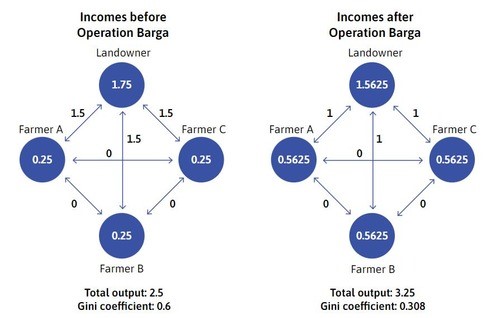
The above image shows how Operation Barga reduced Gini coefficient in WB
Operation Barga (and West Bengal’s land reforms in general) have been criticized for their small scope and inability to solve all the major problems. This criticism has been mainly due to policies not accounting for the high population-to-landmass ratio in Bengal (the highest in the country), the small and highly segregated land holding patterns and failure of the Government to develop agri-industrial markets for farm produce. These failures, critics contend, have distributed poverty rather than creating prosperity.
Write a report on a blood donation camp recently held at your locality
Blood Donation Camp held, 150 Units Collected
Place M, July 18: The members of X, a youth club in association with Y, a reputed NGO organized a blood donation camp at the club premises at ward Number 1 of ABC municipality yesterday. Widespread prevalence of vector borne diseases in the municipality has resulted in the blood banks drying up necessitating the organization of such a camp. The officials from the district hospital and the local blood bank including two doctors were present to facilitate and oversee the camp. The Sub Divisional Officer graced the camp as the Chief Guest whilst the Chairperson of the Municipality was a special guest. The guests inaugurated the camp by voluntarily donating blood amidst much cheer and jubilations from the crowd present. In his speech, the Chief Guest appreciated the endeavour of the club and also urged the younger generation in the locality to come forth for more such noble causes. The Chairperson of the municipality also lauded the initiative and declared that each blood donor will be presented with a beautiful memento as a token of appreciation. Besides, every blood donor was given a certificate, a packet of light meal and a blood coupon. The organizers informed this correspondent that a total of 150 units of blood was collected. The residents of the locality were extremely happy to see such efforts from the local youth.“ Seeing our younger generation taking such steps to help those in need is such a delight!”, expressed visibly happy Mr. Z, an octogenarian resident of the locality.
Note- 1) Place ‘M’ signifies any place like Howrah, Kolkata, Jalpaiguri.
2) Do not write direct names or places. Instead, use A,B,C,X,Y,Z.
3) Do not forget to add a heading
4) Add a dateline as done in the above report.
5) Avoid using flowery language and bombastic words.
6) Help the examiner to visualize what actually happened.
7) DO NOT USE UNNECESSARY WORDS OR SENTENCES.
8) Keep it simple.
To get Saptarshi Sir’s guidance for English/Economy or for overall WBCS/ PSC Miscellaneous Main or other exam preparation, call or WhatsApp us @6295350330. Classes for PSC Miscellaneous Main have already started. WBCS New batch is also going on. You can also download our app for online guidance using the link
Indian Foreign Policy has gone through various changes with the test of the time. The South Asian giant gained its independence from the British Empire in 1947 after long fought freedom struggle. The time also saw an unimaginable India- Pakistan hostility on the lines of religion as soon as they were divided. The bloody, tiny episodes wrapped in history gives us an understanding of why India has always had a protectionist policy. Pandit Jawaharlal Nehru and the then Indian Foreign Policy makers had already seen plenty of wars and its unsolicited destruction. Jawaharlal Nehru forged a policy that tried to keep India out of any bloc. Despite the two World Wars taking place in just a span of decades, the World was looking at yet another global conflict. This time, two partner countries that came out as victorious from the second World War decided to see each other eye to eye in lieu of ideological differences. US and the West were in one camp while USSR and certain communist countries from Eastern Europe and South America were in the opposite camp. It soon became a West vs East conflict. But the difference here was not many countries from the Global East were interested to pick sides. Similarly, India under the leadership of Jawaharlal Nehru had other visions for a new India that had to look inwards first to better provide to a massive population that had just gotten out from the brunt of colonialism. And playing around a conflict was certainly not that vision but completely opposite of what was to be achieved. India and other newly independent countries from different colonies wanted to have strategic autonomy in their internal and external affairs. They didn’t wish to get dictated regarding their domestic and foreign policies through ideological lenses. Gaining, independence was a crucial achievement for these countries and maintaining it away from external influence was another challenge. Non-Alignment Movement became an answer for these countries in such a critical moment.
Non-Alignment Movement began as a response to the two strategic military blocs (US, USSR) being formed amidst the Cold War in the early 1950’s. The specific term of Non-Alignment Movement was coined by V.K Menon in 1953. However, Non-Alignment Movement is also known to be the brain child of Jawaharlal Nehru. The founding members of the movement were the then Indian Prime Minister Jawaharlal Nehru, President of the Socialist Federal Republic of Yugoslavia Josip Broz Tito, President of Egypt Gamal Abdel Nasser, President of the Republic of Indonesia Sukarno and President of Ghana Kwame Nkrumah. The Bandung Asian-African Conference in 1955 laid the stones for a formal organization. However, the organization named Movement of Non-Aligned Countries was formed in 1960. Its first conference was held in 1961 in Belgrade where 25 countries attended it. The early days of the Indian Foreign Policy were driven by the principles of non-alignment.
Nehruvian Idealism was the driving force behind much of the policy frame work. India walked the path of moral and idealism during its early years. It trusted countries like China very easily without confirming deeper realities which had their own repercussions set in the far future. India acted calmly in the matters of conflict and concerns from the beginning itself. Panchsheel, Five Principles of Peaceful Coexistence also became an important element for Indian Foreign Policy. The five Principles of Panchsheel were – Mutual respect for each other’s territorial integrity and sovereignty, Mutual non-aggression, Mutual noninterference in each other’s internal affairs, Equality and mutual benefit, Peaceful co-existence. However, the border clashes with China came as a shell shock not only to India but to the non-alignment countries. The India China War in 1962 exposed the harsh realities to the Indian Foreign Policy makers. A large part of Eastern Kashmir (Aksai Chin) was annexed by China. India lost the war by an embarrassing margin. This shook the belief of Jawaharlal Nehru and thereafter, India slowly sought its journey towards Strategic Realism. In this period, the Indian Foreign Policy put greater emphasis on National Interest.
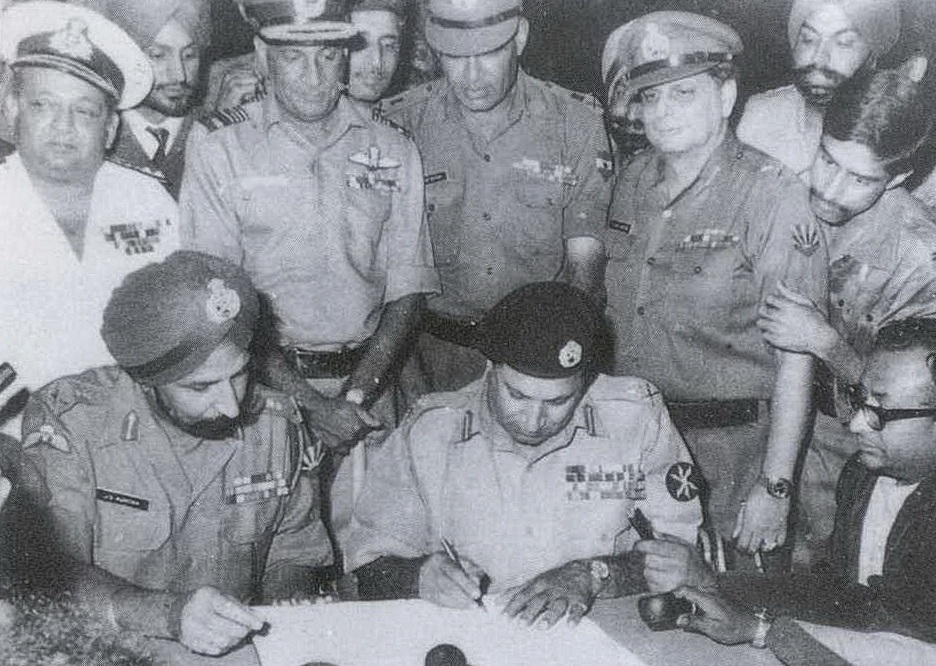
India under the leadership of Indira Gandhi further emphasized on national interest. India took tough decisions under the stern central leadership. The major change was evident during the 1971 India Pakistan War. A lot of changes were visible from a Foreign Policy stand point. The Indian leadership was aware of the human rights violations happening in the then East Pakistan Region. However, initially, India’s response was that of a non-interventionist. India was still vocal at the U.N. as it raised the issue multiple times at the global forum. But it was tough not to act as India saw an inflow of millions of refugees from East Pakistan. During the war in East Pakistan, in 1971, which led to the formation of Bangladesh, around 10 million refugees (80 percent of them Hindu) crossed the border into India of which an estimated 35,000 remained in India, mostly in West Bengal.
The then Assistant for National Security Affairs Henry Kissinger visited India in July, 1971. He warned Indira Gandhi against any attack on Pakistan. However, just a month later, India did something no one would have expected in the international realm. India and Soviet Union signed a security pact with each other in August, 1971. This was a major moment for Indian Foreign Policy which also showcased India’s move away from its non-alignment strategy. The South Asian giant broke away from its non-alignment strategy and principle in favour of its national interest. It was indeed a major turning point in the history of Indian Foreign Policy. Indira Gandhi outwitted West and Pakistan with this move. Pakistan pre-emptively attacked India on December 3rd. This paved the way for a full-fledged war between India and Pakistan. U.S. tried to bluff India by sending their war ships to Bay of Bengal. However, India’s security pact with the Soviet Union made sure Soviet’s send their warships as well to counter U.S. U. S’s bluff was called out and India won the war against Pakistan on December 16. It was a major Indian Foreign Policy win by external force. India not only diffused a possible three front war scenario but also split half their enemy nation. It was a major moment for the India Soviet partnership as well. The Soviets were more sensitive to India’s causes like that of the Kashmir issue. USSR vetoed UN resolutions on the Kashmir issue in 1957, 1962 and 1971. In total, they vetoed six times in favour of India in the U.N. India’s strategic alliance with Soviet Union in 1971 saw them moving away from Non-Alignment Movement.
However, the Soviet Union was doomed as the Berlin Wall fell in 1989. The Cold War symbol, Berlin Wall was brought down thus uniting West Berlin and East Berlin. Soon after, various Soviet Republics began announcing their independence and Soviet Union’s flag furled for the last time in 1991. This was shocking for India as one of their strategic allies was brought down. India was dependent on Soviet Union for a lot of things out of which military equipments contributed the most. The break-up of the Union therefore disrupted defence production and deliveries to foreign customers. Indian officials spent some time trying to identify the estimated 3500 suppliers scattered around the new republics who manufactured the military equipment that India needed.
India had to reshape it’s Foreign Policy in a new reality of the world that was a unipolar world order. In the absence of Soviet Union, U.S. became the sole superpower in the world. India already had an improvement of relations with the U.S. from 1980’s. India’s economic crisis in 1991 paved the way for the LPG (liberalization, privatization and globalization) reforms. As a result, Indian economy opened up and India moved towards economic pragmatism. They had an inflow of foreign capital especially from the Western countries. This led to globalization of Indian economy. Relations with the West went in the upward trajectory from the 90’s. However, the 1999 Kargil War with Pakistan enhanced opportunities for multi alignment. U.S.A played a role of non-interference as it did not support any country publicly during the war. It also cut off the access of GPS to India to balance the odds and deprive India of any major advantage in the war against Pakistan. The U.S. took a moral high ground when India needed its support. But Sweden provided indirect military support to India through the immediate sale of Bofors artillery guns. Russia and France swiftly delivered spare parts for some of India’s fighter jets while Israel quickly delivered Heron Unmanned Aerial Vehicle, laser-guided bombs. At a time when certain countries delayed military equipment orders during the Kargil War, certain other countries came in support of India by providing quick delivery of military equipment. Israel’s military help during the Kargil War kick started ministerial level meetings between the two nations for the first time in history. On the other side, Russia saw a major power change as Vladimir Putin became the Russian President in 1999. Though the power shift was not immediate but the appointment held a massive change for the coming years.
Another milestone that further pushed India towards the U.S. was the India – U.S. nuclear deal in 2008. The 123 agreements between the two nations paved the way for India to trade with other countries for civil nuclear deals. All this while maintaining their stance of not signing the NPT agreement. Despite, China’s protest against the deal, U.S. worked through its clout to make the deal happen which showcased India’s growing strategic relationship with the West.
However, the 2008 terrorist attack in Mumbai caused a lot of disbalances. India highly advocated for tough sanctions on Pakistan and its proxy terrorists. But the call fell on deaf ears. Multilateral forums and countries could only condemn of what happened. U.S. did not do much to hurt Pakistan for its misadventure across the border. This has been a major issue for India where Pakistan uses its proxy terrorists, trains them and sends them to India to destabilize the country. India has been advocating for a tough action on certain individuals as well as Pakistan as a country but so far not much has been achieved.
Soon, Narendra Modi bagged a massive majority on 16th May 2014. The Prime Minister elect showed early signs of a robust foreign policy as he invited all the SAARC (South Asian Association for Regional Cooperation) leaders for his swearing in ceremony. All the leaders accepted the invitation and attended the event. Surprisingly, the then Pakistan Prime Minister, Nawaz Sharif too accepted the invitation and attended Narendra Modi’s swearing in ceremony. This was a perfect start for Narendra Modi’s Neighbourhood First Policy with all the regional head of states attending his oath taking ceremony. The year 2014 showed what was to come in terms of foreign policy for India under the new leadership. Prime Minister Narendra Modi visited various countries in his first year of power itself. He started off by visiting Bhutan. Narendra Modi then made trips to Brazil, Nepal, Japan, U.S., Myanmar, Australia, Fiji and again Nepal in his first year in power. Narendra Modi attended a SAARC Summit, BRICS Summit and UN General Assembly Session. He also hosted Chinese Premier Xi Jinping in Ahmedabad the same year. Narendra Modi reached out to multiple poles of power to further strengthen India’s role in the global order. It was important for the Prime Minister to start on such a strong note and repair some relationships with other countries. Relationship with the U.S. grew stronger in the initial years of Narendra Modi’s leadership. He also batted for further strengthening ties with Russia giving mixed signals to Washington. Back home, he also sought to give more prominence to the neighbourhood by attending SAARC summits.
However, Pakistan’s constant misadventure nullified India’s efforts vis a vis SAARC. The last functional SAARC summit that happened was back in 2014 in Nepal. The next nation to host the SAARC summit was Pakistan and since then the summit is consistently getting cancelled as India has refused to visit Pakistan until it amends its ways vis a vis India and Kashmir. However, boycotting SAARC gave a lifeline to BIMSTEC. BIMSTEC like SAARC is a regional organization that consists of South Asian Countries. Bay of Bengal Initiative for Multi-Sectoral Technical and Economic Cooperation (BIMSTEC) consists of Bangladesh, Bhutan, India, Nepal, Sri Lanka, Myanmar, Thailand. Though only three summits of BIMSTEC have taken place since 2014, but its prominence has massively increased as a regional multilateral forum for India. India is also a key funder of the projects in BIMSTEC led initiatives. Important game changing projects like Kaladan Multimodal Project (linking India and Myanmar), Asian Trilateral Highway (linking India and Thailand through Myanmar) are already underway. The passage holds the potential to link India and a handful of ASEAN countries. In terms of trade and strategic importance, BIMSTEC is a key multilateral organization in the region.
India, with a population of 1.5 billion people, landmass such big that it holds the position of 7th largest country in the world. India is also the fourth largest economy in the world. However, it has still not gotten its fair share at the United Nations Organization. Narendra Modi and his foreign policy makers have been aggressively advocating for U.N. reforms and permanent U.N. Security Council membership. India has been constantly working with other nations to get as much support as it can muster for its pursuit of a permanent seat in the United Nations Security Council. It has already bagged support from four permanent members of the Security Council – U.S., Russia, U.K., France. Similarly, India garnered votes of many countries to get into the NSG group. But China had a tough stance every time and India was blocked the entry.
The China challenge for India has been ever growing in these few years. The Doklam crisis in 2017 warned India of what was to come. India was tight lipped about China under the leadership of Narendra Modi until 2020 Border clashes with China. The border clashes came as a shock to many but it was long expected in the strategic circles that an aggressive China would definitely make a move against India sooner than later. China is also a factor in India’s multi alignment approach. China’s string of pearls move has led India to counter with another strategy. The term ‘String of Pearls’ was initially published in 2005, in a document titled ‘Energy Futures in Asia’ presented to the United States Secretary of Defence Donald H Rumsfeld by Booz Allen Hamilton. The strategy of the ‘String of Pearls’ revolves around the construction of infrastructure networks in littoral countries from the South China Sea to the Middle East.
India has been working with different countries to counter China’s string of pearls. So far, India is building a deep-sea Port in Sabang, Indonesia. India built a deep-water port in Sittwe in 2016. India has signed agreements to access strategically located Naval facilities in Oman. India has signed an agreement to access Changi Naval Base of Singapore. India has also aligned itself with the QUAD group under its multi alignment approach to counter China in the Indian Ocean. Australia, US, Japan and India currently hold the QUAD membership. Though, the members themselves say it is not a security pact or organization but QUAD could well be the answer to China’s aggression in the Indian Ocean Region. QUAD stands for an open, prosperous and inclusive Indo Pacific region. Currently, India is working with the QUAD members in various fields like Vaccines, Technology, AI etc. However, this does not mean that India is completely aligned with the West like every other country in the QUAD group. India is also a part of BRICS, SCO group which seeks for a change in the global order that also challenges the authority of the U.S. and the West in the current global order. BRICS has been a major voice for the developing countries. SCO, too has helped India let her voice be heard in the global arena of geopolitics. India still gets an invitation for nearly every G7 summit including the latest one in Canada. This shows that both West and (Russia, China led groups) see India as a responsible and important player in the global order. India’s presence in QUAD, SCO, BRICS groups shows its multilateral approach in today’s world order. When it comes to bilateral engagements, India has maintained warm relations with every major country barring a few with which it has strategic concerns like Turkey, Canada (Relation with Canada may see a change in the coming future though) China.
The Indian Foreign Policy has been under tremendous pressure in the course of the Russian-Ukraine war. India has been wooed by both Russia and Ukraine with West to take a particular side that suits their own interests. However, India rather took a stance which supports its interests in the domestic and international realm. As a result of that, India has come under massive criticism from the Western circles be it media or even the citizens. Everyone has an opinion on India’s moral encompass. The West cannot entirely be trusted entirely either, that is why a multi-lateral approach is the best way forward. However, during these testing times, India has to walk on a tight rope to sustain on a path of national interest. Under the China challenge, the present government has not been able to make much progress. Even the Russia Ukraine conflict can be taken as an example where there is much more room for improvement vis a vis India’s overall approach.
With Western alliances weakening, particularly in the wake of Donald Trump’s return to power, India’s diplomatic agility becomes even more critical. Trump’s unpredictable stance on NATO and his reluctance to engage in European security challenges suggest a weakening of traditional Western cohesion. Meanwhile, Russia’s resurgence and China’s expansionist policies in the Indo-Pacific further complicate global alignments.
India has always played a long game in diplomacy, avoiding permanent entanglements. This strategic flexibility allows it to engage with both the West and its historical allies without being constrained by ideological divisions. It also underscores India’s role as a stabilising force in an increasingly multipolar world.
The war in Ukraine, instability in the Middle East, and Trump’s political resurgence have shaken the foundations of transatlantic unity. Trump’s transactional approach to global leadership—undermining NATO, questioning America’s commitment to Europe, and advocating isolationist policies—contradicts the post-World War II liberal order. His disdain for Europe, his willingness to engage with autocrats like Vladimir Putin, and his unpredictable foreign policy have left traditional allies scrambling for new strategies.
In this fractured landscape, India’s balancing act becomes even more significant. While the US and its allies push for a more rigid ideological alignment, India continues to assert its independence. Its response to the Russia-Ukraine war—prioritising energy security over Western pressure—demonstrates its commitment to national interest over ideological conformity. Similarly, India’s role in the Indo-Pacific, countering China’s assertiveness through QUAD, while maintaining economic engagement with Beijing, underscores its strategic dexterity.
India’s multi-alignment is not just about hedging bets; it is about positioning itself as a stabilising force. This approach is evident in its engagement with West Asia, where it maintains strong ties with Israel, the Gulf nations, and Iran, ensuring both economic security and diplomatic influence.
As the US retreats into unpredictability and Europe struggles with its strategic identity, India emerges as a key global player. Its leadership in the Global South, advocacy for climate justice, and role in emerging economic corridors like the India-Middle East-Europe Corridor (IMEC) signal its growing influence. India’s foreign policy trajectory will continue to emphasise strategic autonomy while deepening ties with key players. The Atmanirbhar Bharat initiative focuses on self-reliance in defence and technology, reinforcing India’s ability to act independently. As PM Narendra Modi stated: “A strong and self-reliant India will contribute to a stable and prosperous world.”
Ultimately, India’s global role is no longer that of a passive observer but an active shaper of international governance. As Kautilya (Chanakya) advised in Arthashastra: “A wise king neither rushes into alliances nor rejects them outright but chooses them based on national interest.” India’s evolving strategy exemplifies this timeless principle, positioning it as a pivotal player in global geopolitics. And in such a scenario, multi-alignment policy is not an option for India, it is a mandatory agenda for becoming a global superpower and for using its own leverage in the ever-changing geopolitical dynamism in the New Global Order.
Sources- BRICS Portal, PIB, MoEA( GOI), The Indian Express, EPW, IJFMR, SAARC Secretariat.