HPV Vaccine and National HPV Vaccination Campaign

What is HPV?

  • Human Papillomavirus (HPV) is a group of viruses, some of which cause cervical cancer.
  • Types 16 and 18 are responsible for the majority of cervical cancer cases worldwide and in India.
  • Cervical cancer is one of the leading causes of cancer-related deaths among women in India.

HPV Vaccine

  • It is a preventive vaccine that protects against high-risk HPV types that cause cervical cancer.
  • Works best when given before exposure to the virus (ideally to adolescent girls before sexual debut).
  • Available vaccines in India: Gardasil (quadrivalent), Gardasil-9 (nonavalent), Cervarix (bivalent), and India’s indigenous Cervavac (quadrivalent, developed by Serum Institute of India).

National HPV Vaccination Campaign 2026

  • Launched by Prime Minister Narendra Modi on 28 February 2026.
  • First nationwide public HPV vaccination drive in India.
  • Aim: Prevent cervical cancer by vaccinating adolescent girls.

Key Features

  • Target group: Girls aged 14 years (those who have completed 14 years but not yet 15 years).
  • Single-dose schedule (based on emerging global evidence supporting single-dose efficacy).
  • Provided free of cost at government health facilities.
  • Facilities include: Ayushman Arogya Mandirs, Primary Health Centres (PHCs), Community Health Centres (CHCs), Sub-District Hospitals, District Hospitals, and Government Medical Colleges.
  • Participation is voluntary and requires parental consent.
  • Coverage is tracked digitally through the U-WIN portal.

Progress (as of November 2026)

  • More than 1 crore doses administered within about 9 months of launch.
  • Approximately 87% of the annual target cohort (~1.2 crore girls) covered.
  • Several states including Gujarat, Uttar Pradesh, Andhra Pradesh, Bihar, Madhya Pradesh, and Mizoram achieved very high or near-100% coverage of their target populations.

Significance

  • Major step towards reducing India’s cervical cancer burden.
  • Aligns with WHO’s global strategy to eliminate cervical cancer as a public health problem.
  • Complements screening and early treatment efforts under the broader cancer control programme.
  • Strengthens adolescent health and women’s health initiatives under the Viksit Bharat vision.

Important Points

  • Single-dose approach reduces logistical challenges and improves completion rates.
  • Indigenous vaccine (Cervavac) promotes self-reliance in vaccine production.
  • Parental consent and voluntary nature are important from an ethical and governance perspective.

PM Vishwakarma Scheme

  • Central Sector Scheme launched on 17 September 2023 (Vishwakarma Jayanti) by the Ministry of MSME.
  • Fully funded by the Union Government with an outlay of ₹13,000 crore for FY 2023-24 to FY 2027-28.
  • Aims to provide end-to-end support to traditional artisans and craftspeople (Vishwakarmas) working in the unorganised sector.
  • Built on three pillars: Samman (Respect), Samarthya (Capability) and Samriddhi (Prosperity).
  • Seeks to strengthen the Guru-Shishya parampara and integrate artisans into domestic and global value chains.

Implementing Agencies

  • Ministry of Micro, Small and Medium Enterprises (Nodal Ministry).
  • Ministry of Skill Development and Entrepreneurship.
  • Department of Financial Services, Ministry of Finance.

Eligibility

  • Artisans/craftspeople aged 18 years or above.
  • Engaged in one of the 18 notified family-based traditional trades.
  • Working in the unorganised sector on a self-employment basis (with hands and tools).
  • Must not have availed similar government self-employment/credit schemes (e.g., PMEGP, Mudra, PM SVANidhi) in the previous 5 years (exceptions for fully repaid loans).
  • Only one member per family eligible.
  • Government employees and their families are excluded.

18 Covered Trades
Carpenter (Suthar), Boat Maker, Armourer, Blacksmith (Lohar), Hammer & Tool Kit Maker, Locksmith, Goldsmith (Sonar), Potter (Kumhaar), Sculptor/Stone Carver/Stone Breaker, Cobbler/Footwear artisan, Mason (Rajmistri), Basket/Mat/Broom Maker/Coir Weaver, Doll & Toy Maker (Traditional), Barber (Naai), Garland Maker (Malakaar), Washerman (Dhobi), Tailor (Darzi), Fishing Net Maker.

Key Benefits / Components

  • Recognition: PM Vishwakarma Certificate and ID Card.
  • Skill Upgradation: Basic training (5–7 days) and Advanced training (15+ days); stipend of ₹500 per day.
  • Toolkit Incentive: Up to ₹15,000 (e-voucher) for modern tools.
  • Credit Support: Collateral-free Enterprise Development Loan up to ₹3 lakh in two tranches:
    • First tranche: Up to ₹1 lakh (18 months).
    • Second tranche: Up to ₹2 lakh (30 months).
    • Concessional interest rate of 5% (government subvention up to 8%).
  • Digital Transaction Incentive: ₹1 per eligible digital transaction (capped, typically up to 100 transactions/month).
  • Marketing Support: Branding, packaging, quality certification, e-commerce linkage, GeM, trade fairs, etc.

Registration Process

  • Free registration at Common Service Centres (CSCs) with Aadhaar biometric authentication on the official portal (pmvishwakarma.gov.in).
  • Verification by local/district screening committees before benefits are processed.

Progress (as of around 2026)

  • Target of 30 lakh beneficiaries largely achieved.
  • Lakhs of artisans completed skill training and received toolkits.
  • Significant number of loans sanctioned under the credit component.

The scheme provides holistic support combining recognition, skilling, tools, affordable credit, digital incentives and market linkages to uplift traditional artisans.

VB-G RAM G (VBGRAMG)

Full Form
Viksit Bharat – Guarantee for Rozgar and Ajeevika Mission (Gramin)

Overview

  • Enacted under the VB-G RAM G Act, 2025.
  • Came into force on 1 July 2026, replacing the Mahatma Gandhi National Rural Employment Guarantee Act (MGNREGA), 2005.
  • Nodal Ministry: Ministry of Rural Development.
  • Aligned with the broader Viksit Bharat @2047 vision.
  • Aims to provide enhanced livelihood security through wage employment while creating durable, productive rural assets.

Key Features

  • Employment Guarantee: Statutory guarantee of 125 days of unskilled manual wage employment per rural household per financial year (increased from 100 days under MGNREGA).
  • Eligibility: Every rural household whose adult members volunteer to do unskilled manual work.
  • Unemployment allowance payable by the State if work is not provided within 15 days of demand.
  • Agricultural season pause: States can notify up to 60 days of pause during peak sowing and harvesting to avoid labour shortage for farming.
  • Minimum wage floor introduced (around ₹300 per day nationally, with state-wise variations higher in many states).
  • Wages paid through Direct Benefit Transfer (DBT).

Funding Pattern

  • General Category States: 60:40 (Centre:State).
  • North-Eastern and Himalayan States: 90:10.
  • Union Territories without legislature: 100% Central funding.
  • Shift from MGNREGA’s demand-driven open-ended funding to normative state-wise allocations fixed by the Centre. Expenditure beyond the allocation is borne by the State.

Focus Areas of Works
Works prioritised under four themes:

  • Water security (groundwater recharge, pond rejuvenation, etc.).
  • Core rural infrastructure (roads, connectivity).
  • Livelihood-related infrastructure (storage, local markets).
  • Mitigation of extreme weather events and climate-resilient works.

Planning done through Viksit Gram Panchayat Plans using geospatial tools (Yuktdhara, PM Gati Shakti, Bhuvan, etc.).

Other Provisions

  • Stronger digital monitoring, biometric authentication, real-time dashboards and social audits.
  • Grievance redressal through Ombudspersons and Appellate Authorities.
  • Emphasis on convergence with other schemes, transparency and productive asset creation.

Difference from MGNREGA (Summary)

  • Days: 100 → 125.
  • Funding: Centre bore 100% wages → shared (mostly 60:40).
  • Nature: Demand-driven → Normative allocations.
  • Additional: Agricultural pause, stronger tech and asset focus, higher minimum wage floor.

Recent Context
Implemented from July 2026 with digital systems in place from day one. Early data shows significant person-days generated, high women’s participation (around 61%), and focus on asset creation, though some states have reported lower initial work generation due to monsoon and transition factors. Budget allocation for 2026-27 is substantial (Centre’s share around ₹95,000+ crore).

This scheme represents a recalibrated rural employment framework combining livelihood guarantee with planned rural development under the Viksit Bharat vision.

Punitive Measures under the VB-G RAM G Act, 2025

Under the Viksit Bharat – Guarantee for Rozgar and Ajeevika Mission (Gramin) Act, 2025 (VB-G RAM G Act), the main punitive provision is contained in Section 27: Penalties for contravention.

  • Section 27 states: “Whoever contravenes any provision of this Act, shall be liable to pay the penalty which may extend to ten thousand rupees.”

This is a monetary penalty (fine) applicable to any person or authority who violates any provision of the Act. It is a civil penalty rather than a criminal punishment involving imprisonment.

Related Accountability and Compensatory Measures

While not strictly “punitive fines” in the criminal sense, the Act and related rules also include the following enforcement mechanisms:

  • Delay Compensation for Wages: Wages must be paid weekly or within 15 days of completion of work. In case of delay beyond this period, compensation is payable on the unpaid wages at the rate of 0.05% per day.
  • Unemployment Allowance: If work is not provided within 15 days of demand, the State is required to pay unemployment allowance (one-fourth of the notified wage for the first 30 days and half thereafter).
  • Grievance Redressal: A structured multi-tier mechanism (Gram Panchayat, Block, and District levels) with District Ombudspersons. Complaints must be enquired into within 7 working days and resolved within 15 days. Orders of Ombudspersons can include recovery of penalties/delay compensation.
  • Social Audit and Transparency: Strengthened social audits by Gram Sabhas, digital monitoring, and public disclosure to deter irregularities.

In short, the primary punitive measure in the Act itself is a penalty of up to ₹10,000 for any contravention, supported by compensatory provisions for workers and a formal grievance redressal system.

Viksit Bharat 2047

Overview

  • Long-term vision to make India a developed, high-income, self-reliant, inclusive and globally influential nation by 2047 (100 years of Independence).
  • Announced by PM Narendra Modi in the 2022 Independence Day address.
  • Period 2022–2047 is called Amrit Kaal.
  • Coordinated by NITI Aayog; it is an overarching national mission, not a single scheme.

Key Economic Targets

  • GDP: From ~$4 trillion (2025) to $30–40 trillion by 2047.
  • Per capita income: From ~$2,700–2,760 to $18,000–21,000.
  • Required growth: Sustained 7.5–9%+ annually.
  • Manufacturing share: From ~15% of GVA to ~25% of output.
  • Core goals: Economic growth, inclusion and sustainability with climate resilience.

Four Core Pillars (GYAN / Amrit Pillars)

  • Yuva (Youth): Skill development (Skill India, PMKVY), NEP 2020, Startup India, MY Bharat, employment generation and digital literacy.
  • Garib (Poor): Zero extreme poverty, universal basic amenities (housing, electricity, water, sanitation), Jan Dhan, DBT and Ayushman Bharat.
  • Mahilayen / Nari (Women): Women-led development, higher female labour force participation, Mudra, Stand-Up India, SHGs, education, health and safety.
  • Annadata (Farmers): Higher incomes, agri-tech (drones, AI, precision farming), e-NAM, PM Fasal Bima Yojana, irrigation, food processing and exports.

Saptadhara (Seven Streams of Strength)

  • Manufacturing Excellence (Make in India / Make for the World + PLI schemes).
  • Technology & Innovation (AI, semiconductors, Digital Public Infrastructure, R&D).
  • Gati Shakti (multi-modal infrastructure; logistics cost target 8–10%).
  • Soft Power (yoga, Ayurveda, culture, tourism, creative economy).
  • Agriculture & Food Processing (value addition, millets, exports).
  • Green & Blue Economy (renewables, green hydrogen, ocean economy; net-zero by 2070).
  • Defence Shakti (indigenisation, strategic autonomy, defence exports).

Major Supporting Initiatives

  • PM Gati Shakti National Master Plan.
  • PLI schemes and Aatmanirbhar Bharat.
  • Digital India and Digital Public Infrastructure (Aadhaar, UPI, BharatNet).
  • Startup India and deep-tech innovation programmes.
  • PM Viksit Bharat Rozgar Yojana.
  • National Green Hydrogen Mission and non-fossil capacity push (500 GW target).
  • Viksit Bharat Sankalp Yatra (2023–24) for scheme saturation and public participation.
  • Voice of Youth platform for citizen inputs.

Challenges

  • Sustaining high growth for two decades amid global shocks.
  • Job quality, inequality and large informal sector.
  • Human capital gaps in education, health and skilling.
  • Risk of middle-income trap.
  • Digital divide and climate vulnerabilities.
  • Need to raise R&D spending toward ~2% of GDP.
  • Governance, federal coordination and implementation speed.

COP31

COP31 (Antalya, Türkiye, 9–22 November 2026) was the 31st Conference of the Parties to the UN Framework Convention on Climate Change (UNFCCC). It ended without consensus on an overarching cover decision (the proposed “Antalya Pact”), the first such failure since Copenhagen in 2009, after becoming the longest COP in history due to two days of overtime.

Background and Organisation

COP31 was hosted by Türkiye at the Antalya Expo Center. It featured a shared presidency arrangement agreed at COP30 in Belém: Türkiye held the formal COP Presidency (Murat Kurum, Minister of Environment, Urbanisation and Climate Change), while Australia led the negotiations (Chris Bowen, Minister for Climate Change and Energy, as President of Negotiations). This resolved a bidding deadlock between the two countries within the Western Europe and Others regional group.

The conference brought together representatives from nearly 200 Parties, along with observers from business, civil society, science, and Indigenous communities. A World Leaders’ Summit took place on 11–12 November. Türkiye’s hosting marked the country’s first time organising a COP; it has ratified the Paris Agreement and set a 2053 net-zero target.

Main Negotiating Issues

Core disputes centred on:

  • Fossil fuels: Climate-vulnerable countries, the EU, UK, and others demanded explicit language on transitioning away from or phasing out fossil fuels, building on the COP28 Dubai agreement. Oil-producing countries (including Saudi Arabia and other OPEC members) blocked any such mention, favouring technology solutions such as carbon capture and storage (CCS) and arguing for national circumstances.
  • Climate finance: Developing countries pressed for clearer scaling of adaptation finance (including references to tripling it toward targets such as $120 billion by 2035) and delivery on existing commitments. Developed countries resisted binding new figures or burden-sharing formulas.
  • Related issues included the 1.5°C overshoot, loss and damage, just transition, trade measures, and the pace of emissions cuts.

Multiple draft texts circulated by the co-presidents were rejected. The final proposed Antalya Pact was described by objecting parties as the “lowest common denominator” for omitting fossil fuels and insufficient finance language.

Outcomes

Failure on the cover decision: On 22 November, Parties failed to adopt the Presidency-led Antalya Pact after formal objections from the EU, UK, Pacific island states (including the Marshall Islands), and others. UN Secretary-General António Guterres called the result “deeply disappointing,” stating: “There may be no consensus in the negotiating room. There is no ambiguity in the science.” He noted that global temperatures continue to break records, emissions remain high, and the world is on course to overshoot the 1.5°C limit.

Areas of progress (adopted decisions and Action Agenda advances):

  • Just transition: The UAE Just Transition Work Programme was continued for an additional three years. Parties agreed to operationalise a just transition mechanism in a phased manner (detailed decisions deferred to COP32), focusing on international cooperation, technical assistance, capacity building, and equitable transitions. References to critical minerals were included; explicit fossil-fuel transition language was not.
  • Electrification: A major presidency priority was the “35×35” goal of 35% global electrification of final energy use by 2035. Countries representing roughly half the global economy (around 80 nations) backed it or committed to faster progress. Supporting analysis from the IEA indicated this could raise the electrification rate substantially. Related delivery packages involved grids, investment, and green corridors.
  • Climate finance: The Climate Finance Work Programme advanced with renewed focus on scaling adaptation finance, transitioning the Adaptation Fund to serve the Paris Agreement exclusively, and improving access and efficiency.
  • Adaptation: Progress on operationalising Belém Adaptation Indicators (via a task force), reinforcing the Baku Adaptation Road Map, and work under the Warsaw International Mechanism and Santiago Network on loss and damage technical assistance.
  • Second Global Stocktake (GST2): Launched as a core Paris Agreement process (information collection, technical assessment, and consideration of outputs), to conclude at COP33 in 2028.
  • Other decisions covered technology, transparency (including Biennial Transparency Reports), carbon markets (Article 6), gender, and various procedural items. Turkish President Recep Tayyip Erdoğan stated that 46 decisions were adopted. The Global Climate Action Agenda recorded concrete real-economy results across electrification, forests (including Tropical Forest Forever Facility pledges), oceans, health, and resilience.

UNFCCC Executive Secretary Simon Stiell acknowledged disappointment over the cover decision but highlighted the dual tracks of formal negotiations and the Action Agenda, noting real-world progress on electrification and other implementation items.

Reactions and Analysis

The outcome exposed deep divisions between countries prioritising rapid fossil-fuel phase-out and climate finance for vulnerable nations, and those protecting fossil-fuel interests or seeking more flexible, technology-neutral language. Activists staged protests with signs reading “Shame” and “Step Up.” Some commentators labelled it the “worst COP ever”; others noted that existing COP28 language on transitioning away from fossil fuels remains intact and that voluntary coalitions (including fossil-fuel transition roadmaps) continued outside the formal text.

Guterres and Stiell both stressed that the lack of a pact does not alter the scientific reality or the urgency of action, and that multilateral cooperation has already shifted the world off the worst possible warming pathways—though far more is required.

Looking Ahead

COP32 will be hosted by Ethiopia in Addis Ababa from 8–19 November 2027. Ethiopia’s Foreign Minister Gedion Timothewos is President-Designate. Stated priorities include restoring hope, rebuilding trust in the process, and mobilising collective action, with an expected emphasis on African and Global South priorities such as adaptation, finance, and implementation. Unresolved issues from Antalya—especially fossil fuels, finance scale-up, and mitigation ambition—will carry forward.

COP31 demonstrated both the continuing difficulties of consensus under the UNFCCC when fossil fuels and finance are on the table, and the persistence of incremental progress on specific work programmes and real-economy initiatives.

Summary- Gist of COP31 (Antalya, Türkiye, 9–22 November 2026)

COP31 was the longest UN climate summit ever. It ended without agreement on the overarching “Antalya Pact” — the first time since Copenhagen 2009 that a COP failed to adopt a cover decision.

The breakdown was driven by fossil fuels: vulnerable countries, the EU, and others demanded clear language on transitioning away from them, while oil producers blocked any mention. Climate finance was another major sticking point.

Some progress was still made:

  • Just transition work programme extended and a new mechanism agreed in principle
  • Strong push for 35% global electrification by 2035 (backed by ~80 countries)
  • Advances on adaptation indicators, climate finance processes, and the launch of the second Global Stocktake

UN Secretary-General Guterres called the outcome “deeply disappointing” but stressed that the science remains clear.

Next: COP32 in Addis Ababa, Ethiopia (8–19 November 2027).

Major World Events of 2026

This year has been marked by major political upheavals, armed conflicts, cultural milestones, and memorable moments in sports. The following timeline highlights some of the notable developments of 2026.

January

  • January 1: Zohran Mamdani, a self-described democratic socialist, is sworn in as mayor of New York City.
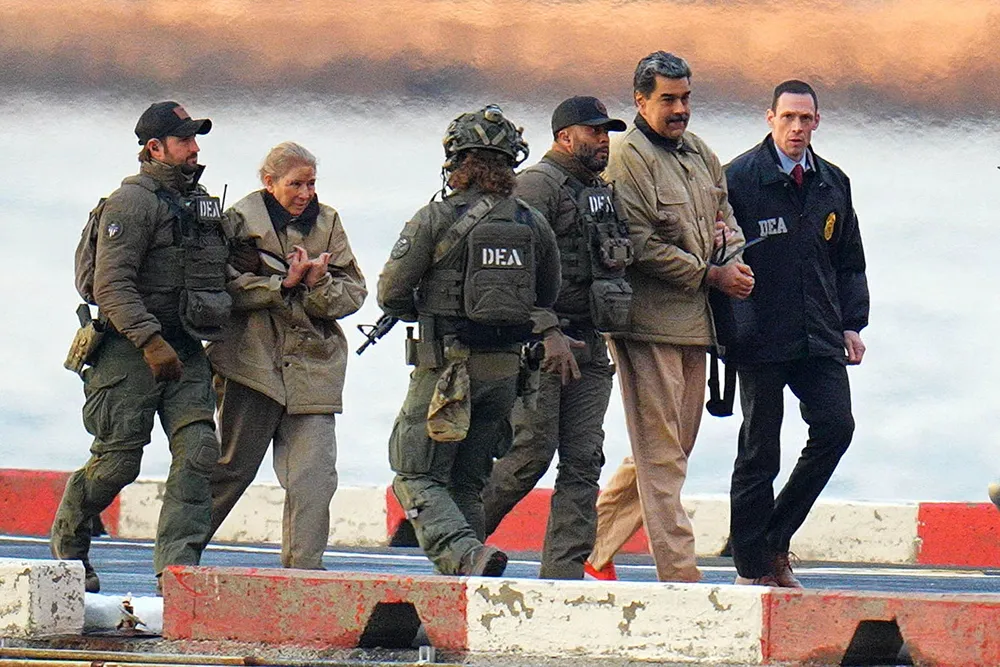
  • January 3: The U.S. military captures Venezuelan Pres. Nicolás Maduro and his wife, Cilia Flores, during a large-scale attack on the South American country. The couple is swiftly flown to the United States, where Maduro is charged with various crimes, including narco-terrorism and cocaine trafficking.
  • January 5: Two days after being captured in Venezuela, Pres. Nicolás Maduro and his wife, Cilia Flores, were escorted by federal agents to a courthouse in New York City.
  • January 8: Iranian forces launch a crackdown on nationwide protests amid an economic crisis. It marks the deadliest incident of repression since the Islamic Republic took power in 1979, with death tolls ranging from 12,000 to 30,000.
  • January 19: The Indiana Hoosiers defeat the Miami Hurricanes, 27–21, in the College Football Playoff championship game to win the first national title in the program’s history.
  • January 24: American nurse Alex Jeffrey Pretti is fatally shot by federal officials in Minneapolis, Minnesota. His death comes amid growing unrest over U.S. Immigration and Customs Enforcement (ICE) deployments in the state—and only weeks after fellow citizen Renee Nicole Macklin Good was fatally shot by an ICE agent.
  • January 30: The U.S. Department of Justice releases more than three million pages that are part of the Epstein files.

February

  • February 1: Kendrick Lamar becomes the hip-hop artist with the most Grammys after winning 5 awards, bringing his total to 27.
  • February 6–22: The Winter Olympics take place in Milan (Milano) and Cortina d’Ampezzo, Italy. Norway claims a record-setting 41 medals, led by cross-country skier Johannes Høsflot Klæbo, who wins the most gold medals at a single Winter Olympics: six.
  • February 8: The Seattle Seahawks defeat the New England Patriots, 29–13, to win the team’s second Super Bowl title. Bad Bunny makes history at the game’s half time show, marking the first time the event’s headlining performance is presented primarily in Spanish.
  • February 28: The United States and Israel launch an attack on Iran, which retaliates with its own strikes. The first weeks of the conflict leave thousands dead—including Iran’s Supreme Leader Ali Khamenei—and millions displaced, while also upending the world economy.

March

  • March 3: Plume of smoke rising from the Iranian capital, Tehran, from U.S.-Israeli strikes on March 3, 2026.
  • March 8: India defeats New Zealand to win its third Men’s T20 World Cup.
  • March 15: At the Academy Awards ceremony, Paul Thomas Anderson’s One Battle After Another wins six Oscars, including best picture. Sinners, which had a record-setting 16 nominations, garners four awards; notably, writer and director Ryan Coogler wins for best original screenplay, and Michael B. Jordan is named best actor.
  • March 25: Sarah Mullally is formally installed as the archbishop of Canterbury, becoming the first woman to hold the post.

April

  • April 1: Artemis II—the first flight of astronauts to the Moon since 1972—is launched. The crew sets a new record for humans journeying the farthest from Earth, reaching a distance of 252,756 miles (406,771 km), before returning to Earth on April 10.
  • April 6: Michigan defeats UConn, 69–63, to win the NCAA men’s basketball championship, one day after UCLA defeated South Carolina, 79–51, in the women’s tournament.
  • April 8: American architect Rex Heuermann pleads guilty to murdering seven women and admits to killing an eighth woman; in June he is sentenced to life in prison without the possibility of parole. The Gilgo Beach serial killings, as they are known, began in the early 1990s and continued through about 2010.
  • April 9–29: India holds elections in four states and a union territory. Votes are counted on May 4 with dramatic results as governments change in three states: The Bharatiya Janata Party unseats Mamata Banerjee’s Trinamool Congress in West Bengal, actor Vijay makes a blockbuster political debut in Tamil Nadu, and Kerala votes out a communist-led coalition.
  • April 12: Hungarian Pres. Viktor Orbán is defeated in the country’s general elections amid allegations of corruption and growing frustration with his right-wing populist government. Péter Magyar succeeds him on May 9.
  • April 24: Michael, a film about pop star Michael Jackson’s early career, is released in the United States, and it becomes the second highest-grossing music biopic in the world, grossing more than $600 million globally.

May

  • May 1: The United Arab Emirates withdraws from OPEC, a multinational organization that was established to coordinate the petroleum policies of its members, among other aims.
  • May 2: Golden Tempo wins the Kentucky Derby, marking the first time that a horse trained by a woman (Cherie DeVaux) places first in the race.
  • May 6: Ted Turner, an American broadcasting entrepreneur who founded a number of TV channels, notably CNN, dies at age 87.
  • May 17: The WHO declares a public health emergency amid a growing Ebola outbreak in the Democratic Republic of the Congo and Uganda.
  • May 21: Health workers wearing protective equipment disinfect an isolation ward inside the General Referral Hospital during the Ebola outbreak response on May 21, 2026, in Mongbwalu, Democratic Republic of Congo.
  • May 24: In the closest finish in the race’s history, Sweden’s Felix Rosenqvist wins the Indianapolis 500, edging out David Malukas (U.S.) by 0.0233 seconds.
  • May 25: Pope Leo XIV releases his first encyclical, Magnifica humanitas (Latin: “Magnificent Humanity”). The 42,300-word document warns about the risks of AI and its potential to negatively impact humanity, especially workers.

June

  • June 1: The 100th anniversary of Marilyn Monroe’s birth is celebrated.
  • June 10: Pope Leo XIV blesses the Sagrada Família’s tower of Jesus during festivities that also commemorate the 100th anniversary of the death of Antoni Gaudí, the architect who designed the Barcelona basilica.
  • June 12: SpaceX makes history with its IPO, raising a record $75 billion. The company is valued at $1.77 trillion, and CEO Elon Musk becomes the world’s first trillionaire.
  • June 13: The New York Knicks defeat the San Antonio Spurs in five games to win the franchise’s third NBA championship; Jalen Brunson is named MVP of the finals.
  • June 14: The Carolina Hurricanes win the Stanley Cup, defeating the Vegas Golden Knights in six games.
  • June 14: UFC Freedom 250 is held on the South Lawn of the White House. In attendance at the invitation-only event is Pres. Donald Trump, whose 80th birthday is also that day.
  • June 19: The Obama Presidential Center opens to the public in Chicago. The sprawling complex centers on a museum dedicated to the 44th U.S. Pres. Barack Obama.
  • June 24: A pair of earthquakes with moment magnitudes of 7.2 and 7.5 strike northwestern Venezuela, causing widespread damage and numerous fatalities. While some 1,430 are confirmed dead, thousands more are missing.
  • June 25: Building collapses caused by the powerful earthquakes that struck Venezuela on June 24, 2026, trapping survivors in rubble in the city of Catia La Mar.

July

  • July 3: Pop sensation Taylor Swift and football star Travis Kelce are married at Madison Square Garden in New York City; some 1,000 people attend the event, and thousands of fans gather outside.
  • July 4: The United States celebrates its 250th anniversary on the semiquincentennial of the adoption of the Declaration of Independence. As part of the festivities, a time capsule is buried at Philadelphia’s Independence National Historic Park; it contains materials from all three branches of the federal government, the U.S. states and territories, and national partner organizations.
  • July 5: Australia defeats England to win the Women’s T20 World Cup. It is the seventh time the country has won the event.
  • July 12: Italy’s Jannik Sinner defends his singles title at Wimbledon, defeating Alexander Zverev (Germany) in four sets. The previous day Linda Mosková of the Czech Republic had bested fellow countrywoman Karolína Muchová to win her first Grand Slam title.
  • July 17: Christopher Nolan’s highly anticipated The Odyssey is released in theaters in the United States. The film, which is based on Homer’s epic poem of the same name, stars Matt Damon, Tom Holland, Zendaya, Robert Pattinson, and Anne Hathaway.
  • July 19: Spain defeats Argentina in extra time, 1–0, to win the 2026 FIFA World Cup. The previous day England finished third after besting France, 6–4.
  • July 20: Several days after being elected leader of the Labour Party, Andy Burnham becomes prime minister of the United Kingdom, replacing Keir Starmer.
  • July 26: Tadej Pogačar of Slovenia wins the Tour de France for a record-tying fifth time.

August

  • August 12: A total solar eclipse passes over Greenland, Iceland, Portugal, and northern Spain.
  • August 26: The collapse of a glacier triggers flash flooding in Nepal and Tibet, causing widespread devastation and killing hundreds.
  • August 28: Haakon VIII becomes king of Norway following the death of his father, Harald V; Mette-Marit becomes queen.
  • August 31: Duane “Keffe D” Davis is found guilty of first-degree murder for orchestrating the 1996 killing of Tupac Shakur; Davis is the uncle of Orlando Anderson, the longtime suspected shooter, who died in 1998.

September

  • September 11: The 25th anniversary of the 9/11 attacks is marked with ceremonies in the United States.
  • September 12: Elena Rybakina of Kazakhstan defeats Aryna Sabalenka (Belarus) to win the women’s singles event at the U.S. Open. The next day Alexander Zverev of Germany wins the men’s singles title after besting Ben Shelton (U.S.).
  • September 14: Widow’s Bay is the big winner at the Emmy Awards ceremony, winning 14 statuettes, including best comedy and best lead actor (Matthew Rhys); The Pitt wins best drama, and Jean Smart and Allison Janney tie the record for most acting Emmys.

October

  • October 5–12: The Nobel Prizes are announced. Notable winners include Anne Carson (literature) and Navi Pillay (peace).
  • October 25: The runoff in Brazil’s presidential election takes place, and incumbent Pres. Luiz Inácio Lula da Silva defeats Flávio Bolsonaro.
  • October 26: British footballer Harry Kane wins his first Ballon d’Or, and Spanish midfielder Alexia Putellas claims her third Ballon d’Or Féminin.
  • October 27: Israel holds legislative elections to determine the makeup of the Knesset and the next prime minister; early results indicate that neither the bloc led by incumbent Prime Minister Benjamin Netanyahu nor that led by Gadi Eisenkot has secured a majority, meaning that both will need additional support to form a government.
  • October 28: The Milwaukee Brewers defeat the Tampa Bay Rays in five games to win the franchise’s first World Series title.
  • October 31: The Golden State Valkyries win their first WNBA championship, defeating the Atlanta Dream in a thrilling seven-game series.

November

  • November 3: The U.S. midterms are held, and the Democrats rout the Republicans, seizing control of the Senate and House of Representatives. The results include a number of historic firsts: Keisha Lance Bottoms (Georgia) is elected the country’s first African American governor; Deb Haaland (New Mexico), its first Native American governor; and Abdul El-Sayed (Michigan), its first Muslim senator.
  • November 11: The iconic U.S. highway Route 66 will celebrate the 100th anniversary of its opening.

Upcoming Events

  • November 11: The iconic U.S. highway Route 66 will celebrate the 100th anniversary of its opening.