



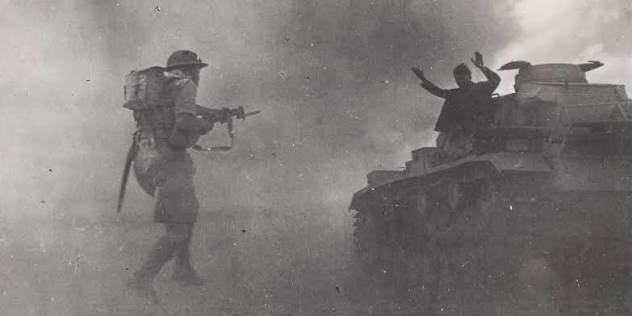
Here is a comprehensive timeline of the most important events of World War II, broken down year by year from its prelude to its conclusion.
Pre-War Prelude & Outbreak (1939)
- March 15, 1939: Germany violates the Munich Agreement by occupying Czechoslovakia.
- September 1, 1939: Germany invades Poland, marking the official outbreak of World War II in Europe.
- September 3, 1939: Great Britain and France declare war on Germany in fulfillment of their alliance with Poland.
- September 17, 1939: The Soviet Union invades Poland from the east, per the secret Molotov-Ribbentrop Pact.
The Phoney War & Western European Campaign (1940)
- April 9 – June 9, 1940: Germany launches Operation Weserübung, successfully invading and occupying Denmark and Norway.
- May 10, 1940: Germany invades France, Belgium, the Netherlands, and Luxembourg using Blitzkrieg (lightning war) tactics. Winston Churchill becomes British Prime Minister.
- May 26 – June 4, 1940: The historic Allied evacuation of over 330,000 troops takes place from the beaches of Dunkirk.
- June 22, 1940: France officially signs an armistice with Germany, leading to the division of the country into an occupied zone and the Vichy puppet regime.
- July 10 – October 31, 1940:The Battle of Britain: The Royal Air Force successfully defends the UK against the German Luftwaffe air assaults.
- September 27, 1940: Germany, Italy, and Japan sign the Tripartite Pact, formally establishing the Axis powers.
Global Expansion & The Eastern Front (1941)
- April 6 – 30, 1941: Axis forces invade and quickly conquer Yugoslavia and Greece.
- June 22, 1941:Operation Barbarossa: Germany launches a massive surprise invasion of the Soviet Union, shattering the non-aggression pact.
- August 9–14, 1941: U.S. President Franklin D. Roosevelt and British Prime Minister Winston Churchill issue the Atlantic Ground Rules/Charter.
- December 7, 1941:Attack on Pearl Harbor: Japan launches a surprise carrier-based air strike on the U.S. Pacific Fleet in Hawaii.
- December 8, 1941: The United States, Great Britain, and their allies declare war on Japan, officially entering WWII.
Turning Tides in the Pacific & Europe (1942)
- January 20, 1942: Nazi officials hold the Wannsee Conference, formalizing the “Final Solution” for the systematic genocide of European Jews (the Holocaust).
- June 4–7, 1942:Battle of Midway: The U.S. Navy decisively defeats the Imperial Japanese Navy, turning the tide of the Pacific War.
- August 23, 1942 – February 2, 1943:Battle of Stalingrad: The Red Army traps and defeats the German 6th Army. This marks the catastrophic turning point on the Eastern Front.
- November 8–16, 1942:Operation Torch: Allied forces successfully invade French North Africa, driving Axis troops out of the region.
The Siege Narrows on the Axis (1943)
- July 5 – August 23, 1943:Battle of Kursk: The largest tank battle in history ends in a definitive Soviet victory, breaking German offensive power in the East.
- July 9 – August 17, 1943:Allied Invasion of Italy (Operation Husky): Allied troops invade Sicily, leading to the collapse of Benito Mussolini’s fascist regime in Italy.
- September 3, 1943: Italy secretly signs an armistice with the Allies and drops out of the Axis alliance.
- November 28 – December 1, 1943:Tehran Conference: Roosevelt, Churchill, and Joseph Stalin meet to coordinate strategy and plan the cross-channel invasion of Europe.
The Liberation of Europe & The Pacific Push (1944)
- June 6, 1944:D-Day (Operation Overlord): Allied forces land on the heavily fortified beaches of Normandy, France, opening the long-awaited Western Front.
- August 25, 1944: Paris is officially liberated from Nazi occupation by French and Allied forces.
- October 23–26, 1944:Battle of Leyte Gulf: The largest naval battle of World War II virtually destroys the remaining offensive capabilities of the Japanese surface fleet.
- December 16, 1944 – January 25, 1945:Battle of the Bulge: Germany launches its final desperate counter-offensive on the Western Front, ultimately failing against determined Allied resistance.
Final Collapse & The Dawn of the Atomic Age (1945)
- January 27, 1945: Soviet forces liberate Auschwitz-Birkenau, revealing the full horror of the Nazi concentration camps.
- February 4–11, 1945:Yalta Conference: Allied leaders meet to plan the post-war reorganization of Europe and Germany’s unconditional surrender.
- February 19 – March 26, 1945:Battle of Iwo Jima: U.S. Marines capture the strategic island, immortalized by the iconic flag-raising photograph.
- April 12, 1945: U.S. President Franklin D. Roosevelt passes away; Vice President Harry S. Truman assumes the presidency.
- April 30, 1945: Adolf Hitler commits suicide in his Berlin bunker as Soviet troops close in.
- May 8, 1945:V-E Day (Victory in Europe Day): Germany officially signs its unconditional surrender, ending the war in Europe.
- July 16, 1945: The United States successfully detonates the first atomic bomb during the Trinity test in New Mexico.
- August 6 & 9, 1945: The U.S. drops atomic bombs on the Japanese cities of Hiroshima (Aug 6) and Nagasaki (Aug 9).
- September 2, 1945:V-J Day (Victory over Japan Day): Japan formally signs surrender documents aboard the USS Missouri in Tokyo Bay, officially bringing World War II to a close.
