Election- Democracy in India- Interesting Facts

The EVM was designed by a team led by A.G. Rao and Ravi Poovaiah, professors at IIT Bombay. The system was developed for the Election Commission of India by state-owned Electronics Corporation of India (ECIL) and Bharat Electronics Ltd (BEL). Starting in the late 1990s, they were introduced in Indian elections in a phased manner.

The EVMs were first trialled in May 1982 in the by-election to Paravur assembly constituency in Kerala in a limited number of polling stations.

In 1998, the machines were used on an experimental basis across 25 state assembly constituencies during the assembly elections in Rajasthan, Madhya Pradesh and Delhi.

In May 2001, EVMs were used in all constituencies for the state assembly elections in Tamil Nadu, Kerala, Puducherry and West Bengal. In 2004, in the General Election, the EVMs were used in all 543 Parliamentary Constituencies for the first time. Since the time, all state assembly and parliamentary elections are held using the EVMs.

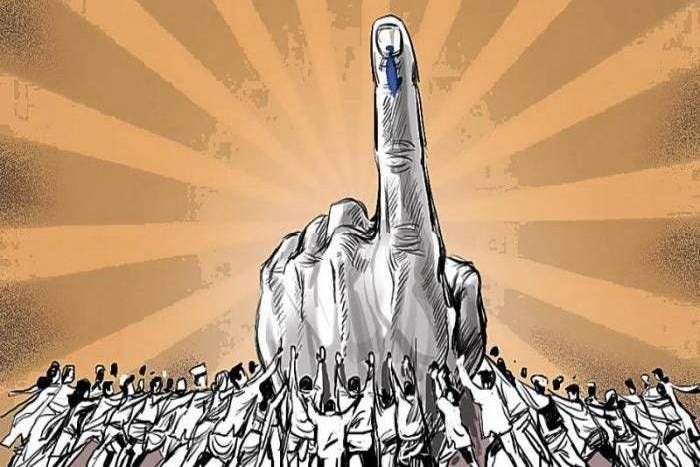
Speaking about innovative solutions, the photosensitive indelible ink was developed to mark the fingers of those who cast their vote, to prevent electoral fraud like double voting. To this day, the special formula to create this ink has not been made public. Research into indelible ink was commenced by the Council of Scientific and Industrial Research (CSIR). In the 1950s, M. L. Goel worked on this research at the Chemical Division of the National Physical Laboratory of India. The ink used contains silver nitrate, which makes it photo-sensitive.

Chaudhary Charan Singh was the only PM of India who did not face the parliament.

Morarji Desai was the oldest PM of India at the time of taking oath (84 years) and he was the first PM to resign. He ws also the first non-Congress PM of India.

BR Ambedkar was defeated in the 1951 LS Election.

Bhairon Singh Shekhawat was the first Vice-President to resign. Jagdeep Dhankhar was the second.

VP Singh was the first PM to step down after facing no confidence motion.

The only person who worked twice as the Acting Prime Minister for 13 days each – Gulzarilal Nanda.

The original name of Lal Bahadur Shastri was Lal Bahadur Varma. He got the surname Shastri (Scholar) after passing out from Kashi Vidyapeeth in Varanasi.

Indira Gandhi was the first person who belonged to Rajya Sabha during nomination as Prime Minister.

Rajiv Gandhi was Pilot by profession. He was the youngest ever Prime Minister of India. He was sworn in as Prime Minister the same day when Indira Gandhi was assassinated.

P V Narsimha Rao was the first Prime Minister from non-Hindi belt (South India).

P V Narsimha Rao was the only PM who was multilinguist and knew and speak 14 languages – Marathi, Hindi, Oriya, Bengali, Gujrati, Tamil, Urdu, English, French, Arabic, Spanish, German and Parsian apart from mother tongue Telugu.

First visually impaired person to become member of parliament – Sadhan Gupta. He belonged to CPI(M) from West Bengal.

The Delimitation Commission, set up under the Delimitation Act, 2002, was entrusted with the task of readjusting all parliamentary and assembly constituencies in the country in all the states of India, except the state of Jammu and Kashmir, based on population ascertained in 2001 Census.

Atal Bihari Vajpayee was the first parliamentarian to give a speech in Hindi to the United Nations General Assembly.

Between 1952 and 2020, two seats were reserved in the Lok Sabha for members of the Anglo-Indian community. They were nominated by the President of India on the advice of the Government of India. In 2020, it was abolished under the 104th Constitutional Amendment Act, 2019.

Lok Sabha constituency in India in terms of number of electors.

Largest: Malkajgiri

State/UT: Telangana

Smallest: Lakshadweep

State/UT: Lakshadweep

Lok Sabha constituency in India in terms of area.

Largest: Ladakh

Smallest: Chandni Chowk

Parliament Library is the second largest library in India after National Library of Belvedere Estate, Kolkata. Parliament library was founded in year 1921.

The old Parliament building was designed by Edwin Lutyens and Herbert Baker and was inaugurated by Lord Irvin, the then Governor General of India in 1927.

Narendra Modi was born in the year India became a Republic, 1950.

in 1980, Dr Prannoy Roy and Ashok Lahiri conducted the first exit poll for India Today magazine, which they repeated during the 1984 election. In 1996, an exit poll was conducted by Doordarshan, by journalist Nalini Singh, with the fieldwork and data gathering carried out by Centre for the Study of Developing Societies (CSDS).

The first IAS officer to become a Member of Parliament (MP) was Yashwant Sinha. He served as an IAS officer before resigning to enter politics and later became an MP. He served as the Minister of Finance from 1990 to 1991 and again from 1998 to 2002, and also as the Minister of External Affairs from 2002 to 2004.

In November 2013, NOTA was introduced in five state elections. Even if the number of electors opting for the NOTA option is more than the number of votes polled by any of the candidates, the candidate who secures the largest number of votes has to be declared elected.

Postal voting in India is done only through the “Electronically Transmitted Postal Ballot Papers (ETPB)” system of the Election Commission of India, where ballot papers are distributed to the registered eligible voters, and they return the votes by post. When the counting of votes commences, these postal votes are counted before those from the Electronic Voting Machines.

During the first election, India’s population was 36 Crore out of which 17.3 crore had the right to vote and the voter turnout was 45.7%

There were 489 seats in the first LS Election. The number of constituencies was increased to 543 in 1977.

The Indian Constitution’s 61st Amendment lowered the age of majority from 21 to 18 for voting in the Lok Sabha and Legislative Assemblies. The Constitution (61st Amendment) Act, 1988, amended Article 326 of the Indian Constitution.

n the 2014 general election, VVPAT was operational in 8 constituencies (Lucknow, Gandhinagar, Bangalore South, Chennai Central, Jadavpur, Raipur, Patna Sahib and Mizoram) as a pilot project.

 The last election in India cost around Rs 1 Lakh crore in comparison to a meagre Rs 38 Crore in the first election in 1951.

Indian Railways- Amazing Facts

Contrary to popular belief, the first train in India was the Red Hill Railway, which ran from Red Hills to Chintadripet bridge in 1837. Sir Arthur Cotton was credited with building the train, which was mainly used for transporting granite. However, India’s first passenger train started its service on 16 April 1853, covering a stretch of 33 km from Mumbai to Thane. The train carried 400 passengers. Interestingly, this day was also declared a public holiday.

The first electric train in India ran on 3 February 1925, between Bombay Victoria Terminal and Kurla Harbour. Later, the electric line was extended to Nashik’s Igatpuri district and then to Pune.

​​​​​​​Bholu the guard elephant is the mascot of the Indian Railways. Bholu was designed by the National Institute of Design in 2002 in honour of the 150th anniversary of the Indian Railways. Bholu is seen holding a signal lamp with a green light in it, which symbolises movement, assurance to trains and passengers to go ahead without fear.

The Vivek Express (Train Number 22503/22504) is the longest train route in India, running between Dibrugarh and Kanyakumari

The first Rajdhani Express train in India was the Howrah-New Delhi Rajdhani Express, which began operations on March 1, 1969

In 1956, the first air-conditioned train plied between Howrah and New Delhi.

Hubli station in Karnataka now has the longest railway platform in India surpassing the earlier renewed platform at Gorakhpur Railway Station in Uttar Pradesh.

Indian Railways’ longest tunnel is Pir Panjal that links Kashmir Valley with Banihal in Jammu.

Station with the shortest name is Odisha

Venkatanarasimharajuvaripeta is the station with the longest name.

Lalu Prasad Yadav, who remained Railways Minister from 2004 to May 2009, presented the railway budget 6 times in a row.

In 1986, computerized ticketing and reservations were introduced

In 1994, the first live telecast of the railway budget took place.

Four sites of Indian Railways have been declared as “World Heritage sites” by the UNESCO. They are Darjeeling-Himalayan Railway, Nilgiri Mountain, Mumbai CST, and Kalka-Shimla Railways.

The world’s highest rail bridge is owned by Indian Railways, and it is being constructed over Chenab River in Jammu and Kashmir. It is five times the length of the Qutub Minar.

In 1988, the first Shatabdi Express was introduced between New Delhi and Jhansi.

As of 2025, it manages the fourth largest national railway system in the world.

​​​​​​​Bori Bunder, located in Mumbai was the first railway station in India.

In the year 1999, Mamata Banerjee became the first female Railway Minister. In 2000, she became the first female to present the Railway budget and is the only woman to do so for two different governing coalitions (NDA and UPA).

Indian Railways is divided into 18 administrative zones (17 operational), headed by general managers which are further subdivided into 68 operating divisions, headed by divisional railway managers (DRM)

The first locomotive manufacturing unit was commissioned in 1950 at Chittaranjan with the first coach manufacturing unit set-up at Madras in 1955.

John Matthai presented the first Railway Budget for Independent India on 20 November,1947 which was Interim Railway Budget and only after 3 months he presented his second Railway Budget on 24 February,1948

In 1951, the Indian Railways was established by the amalgamation of 42 different railway companies operating in the country, spanning a total of 55,000 km (34,000 mi).

The first railway budget was presented in 1924.

The Railway Budget was presented every year, a few days before the Union budget, till 2016. Modi government on 21 September 2016 approved merger of the Rail and General budgets from the next year, ending a 92-year-old practice of a separate budget for the nation’s largest transporter.

​​​​​​​Mathura junction is the largest railway junction in India, with as many as 7 routes emerging from this station. Mathura junction also has 10 platforms, with connectivity to all major cities of India.

Soon to be Launched Offline Courses @ Adhyayan Academy

If you are serious about getting coached by us at Adhyayan Academy, here are the details of the forthcoming offline courses offered by us. Please note that we are in a phase of overhauling our academic structure and therefore the deadlines mentioned in the article must be followed seriously. When we had announed the slab system of fees for the Eklavya Descriptive Bengali-English batch, many had doubts whether this system would work or not. Eventually it went on to become our most popular course and 90% of the seats are already filled up even 3 weeks before the course kicks off. Those respecting the deadline provided were lucky to get the course at just Rs 3333 while others playing a waiting game for the price to drop had to repent. Further, with a policy of Merit First by screening the candidates before admission, we are going to reduce the number of seats in each course. Therefore, it is essential that you read the details of the courses carefully.

Offline Combined WBCS Batches in Kolkata and Siliguri

Admission starts from October 10.

No of Seats- 25 at each center. Under no circumstances, request for admission will be entertained once the seats are filled up.

Fee – Rs 40,000/- ( Non-negotiable, can be paid in two installments with upfront payment of Rs 25,000/-. The rest is to be paid before the classes start from December 1st)

Pre-booking Facility– Yes. For that you need to send a WhatsApp to 6295350330 with a request to reserve a seat for you. We’ll send you a QR code and upon the payment of Rs. 2500/- you can book your seat. You can also attend the classes of existing batches to get acquainted with our academic system.

Inclusions –Guidance for Preliminary, Mains and Interview. Special session before the Main Examination once you qualify. Interview guidance. Also, if you clear the preliminary of other equivalent examinations, you will get our guidance for the mains examination without any additional fees.

Facilities– Printed notes, library, academic counselling, mock tests, writing evaluation.

Duration of the Course– 11 months. However, you can renew your course with just a nominal fee of Rs. 5000/- annually to prolong your relation with us.

Class Schedule – Twice a week. On Saturdays and Sundays from 11 am to 5.30 pm. Additional classes if needed will be in online mode.

Hostel Facility – We do not have any hostels/PG of our own but we facilitate the students in getting such accommodations at cheap prices.

How do we communicate– Once you pay the first installment/Pre-booking amount, you will be included in our WhatsApp group. Regular communications will be made there.

When does the pre-booking start? Already started as you read this article

Address of the Centers-

Kolkata Center- Near Rajabazar Science College, 294/3, Acharya Prafulla Chandra Rd, opp. Kolkata, Garpar, Raja Bazar, Kolkata, West Bengal 700009

Siliguri Center- Milan Mandir Road, Ward 19, Subhas Pally, Siliguri, West Bengal 734001

To stay updated, subscribe to our Telegram Channel using the link below

https://t.me/theadhyayanacademy

India in Decades- Part 3- 2000s

2000                                     US President Bill Clinton makes a groundbreaking visit to improve ties.

                                                India marks the birth of its billionth citizen.

                                                Miss India Lara Dutta crowned Miss Universe 2000 in Cyprus.

Pen Power, an Encyclopedia of published letters to the editors from some 200 letter writers was released by M.V.Kamath, Chairperson of Prasar Bharati. The veteran journalist declares that Pen-Power should be prescribed as a text book in all Journalism colleges.

Rajesh Pilot, a senior member of the opposition Congress party, dies in a car crash.

More than 50 people are killed when a Boeing 737 passenger plane crashes in a residential area of Patna.

The government announces the launch of a National Population Stabilization Fund to help promote family planning programs in the country

Nanoor massacre by Communist Party of India (Marxist) workers in West Bengal.

Thousands of women demonstrate in New Delhi in support of the government’s proposed “reservations bill” which will guarantee women one-third of all parliamentary seats

1 November – Chhattisgarh, carved out of Madhya Pradesh, becomes India’s 26th state.

6 November – Buddhadeb Bhattacharjee was sworn in as the new chief minister of West Bengal following the retirement of Jyoti Basu, the world’s longest-serving elected communist leader.

9 November – Uttaranchal, now known as Uttarakhand, carved out of Uttar Pradesh, becomes India’s 27th state.

15 November – Jharkhand, carved out of Bihar, becomes India’s 28th state.

Miss India first runner-up Priyanka Chopra wins the Miss World 2000 title.

The Information Technology Act 2000 comes into force

In 2000 Olympics, the country’s only medal was a bronze won by Karnam Malleswari in the women’s 69 kg weightlifting event. It was the first Olympic medal won by an Indian woman.

21st century

2001                                     1 January – Calcutta officially becomes Kolkata, reverting to its precolonial name.

                                                Gujarat earthquake shakes Western India with a maximum Mercalli intensity of X (Extreme), leaving 13,805–20,023 dead and about 166,800 injured.

JULY- Vajpayee meets Pakistani President Pervez Musharraf in the first summit between the two neighbours in more than two years. The meeting ends without a breakthrough or even a joint statement because of differences over Kashmir.

More than 100 million people – almost 2% of the world’s population – attend the Maha Kumbh Mela festival in Allahabad, making it the largest gathering of human beings in history.

As per 2001 Census of India, India becomes the second nation in the world to register one billion people in its population. The first was China in 1979

Tehelka Sting operation. Disgrace for Defence Minister George Fernandez and BJP leader Bangaru Laxman

The famous Eden test victory by India

The country’s first ever private FM radio station – Radio City – is launched in Bangalore.

Famed Bandit Queen turned M.P. Phoolan Devi is assassinated by masked gunman at the gate of her New Delhi residence at the age of 37.

Madhavrao Scindia dies.

Keshubhai Patel resigns his position as chief minister of Gujarat following the poor showing of his BJP in elections there. He is replaced by the BJP’s general secretary, Narendra Modi.

Sikkim becomes the first state in India to launch online lottery, Playwin.

The Energy Conservation Act, 2001

Deaths- RK Narayanan (Novelist), Sivaji Ganesan, Ashok Kumar, Harshad Mehta

Attack on Parliament

2002                                     Direct flights to China are set to resume for the first time in 40 years after diplomatic talks between the two countries.

                                                One of the worst violence unleashed against Muslims after 59 Hindu pilgrims killed aboard a fire in a train allegedly started by a local Muslim mob in Godhra.

                                                Dr. Avul Pakir Jainulabdeen Abdul Kalam , India’s Missile Man became President.

                                                2002 Gujarat violence: Three day violence against Muslim community in the city of Ahmedabad, Gujarat and surroundings begins leaving over 500 dead. The violence came after the death the previous day of 58 who died in Godhra, near Vadodara (the exact circumstances remain unclear).

Gulbarg Society massacre: During the 2002 Gujarat riots, a mob attacked the Gulbarag Society, a lower-middle-class neighborhood in Chamanpura, Ahmedabad. Most of the houses were burnt, and at least 35 victims including a former Congress Member of Parliament Ehsan Jafri, were burnt alive, while 31 others went missing after the incident, later presumed dead, bringing the total of the dead to 69.

Bilkis Bano case

The Delimitation Commission, set up under the Delimitation Act, 2002, was entrusted with the task of readjusting all parliamentary and assembly constituencies in the country in all the states of India, except the state of Jammu and Kashmir, based on population ascertained in 2001 Census.

President’s rule is imposed on the northern state of Uttar Pradesh as no party could command a majority after the recent elections.

Vice President Krishan Kant dies of a heart attack.

Russian President Vladimir Putin visits India

Dhirubhai Ambani dies

2003                                     PM Vajpayee is in China. India concedes that Tibet is an integral part of China. China agrees to recognise Sikkim’s accession to India

                                                The first Pravasi Bharatiya Divas (PBD) was celebrated in 2003

                                                Prime Minister Vajpayee announced India’s first lunar mission, Chandrayaan-1, during his Independence Day address.

                                                Kalpana Chawla, Indian-American Astronaut and first Indian woman to go to space dies in Space Shuttle Columbia disaster.

                                                India put up a great show at the ICC Cricket World Cup in South Africa after poor performances in the past and go on to the Finals. They were defeated by Australia in the Finals.

                                                Anju Bobby George won a bronze medal in the women’s long jump at the World Athletics Championships, becoming the first Indian to achieve this feat

2004                                     Groundbreaking meeting is held between government and moderate Kashmir separatists.

                                                Surprise victory for Congress Party in general elections. Manmohan Singh is sworn in as prime minister.

India, along with Brazil, Germany and Japan, launches an application for a permanent seat on the UN Security Council.

                                                India begins to withdraw some of its troops from Kashmir.

Thousands are killed when tsunami, caused by the 2004 Indian Ocean earthquake off the Indonesian coast, devastate coastal communities in the south and in the Andaman and Nicobar Islands.

Karnataka khadi gramodyoga samyukta sangha (kkgss) becomes the official flag maker of India.

Bandit Veerappan Killed by Tamil Nadu and Karnataka Special Task Force members

2005                                     The National Consumer Disputes Redressal Commission in a landmark judgement rule that hospitals are duty bound to accept accident victims, that patients in critical condition and that doctors cannot first demand fees before agreeing to treat the patient and that a relative’s consent is not necessary if there is no family member present at the time.

                                                The Right to Information Act, which grants citizens the right to access government records, came into force, marking a significant step towards transparency and accountability in governance.

                                                A major oil-for-food scandal involving former External Affairs Minister Natwar Singh and others came to light, shaking the political landscape.

                                                The year 2005 was also designated as the International Year of Microcredit by the United Nations.

                                                Disaster Management Act, 2005: This act established a framework for effective disaster management in India, including the creation of the National Disaster Management Authority.

                                                Protection of Women from Domestic Violence Act, 2005

                                                State Emblem of India (Prohibition of Improper Use) Act, 2005

                                                The Mahatma Gandhi National Rural Employment Guarantee Act, 2005

Kashmir earthquake strikes with a maximum Mercalli intensity of VIII (Severe), leaving 86,000–87,351 people dead, 69,000–75,266 injured, and 2.8 million homeless.

In line with the suggestions of the Supreme Court, the Election Commission asks the chief electoral officers of Bihar, Jharkhand and Haryana to do videography of proceedings inside polling stations without violating the secrecy of vote.

2006                                     NREGA -India’s largest-ever rural jobs scheme is launched, aimed at lifting around 60 million families out of poverty.

US and India sign a nuclear agreement during a visit by US President George W. Bush. The US gives India access to civilian nuclear technology while India agrees to greater scrutiny for its nuclear programme.

2006 Varanasi bombings: A terrorist attack in Varanasi killed at least 15 people and left more than 50 injured.

11 July 2006 Mumbai train bombings: A series of coordinated bomb attacks struck several commuter trains in Mumbai, India during the evening rush hour.

Singur protests begins against Tata Nano factory

The Nathula Pass between India and China, sealed during the Sino-Indian War, re-opened for trade after 44 years.

A suspected terrorist attack killed five people on a train in Belakoba a remote area Jalpaiguri of West Bengal.

A 90% iron meteorite weighing 6.8 kilograms fell in Kanvarpura village in Rajasthan, near Rawatbhata, where the Rajasthan Atomic Power Station is located

2007                                     Nandigram violence – Clashes between opposition parties, the governing Communist Party of India (Marxist) and police in Nandigram, West Bengal. On 14 March, 14 villagers were killed in police firing.

India and Pakistan sign an agreement aimed at reducing the risk of accidental nuclear war.

Samjhota 68 passengers, most of them Pakistanis, are killed by bomb blasts and a blaze on a train travelling from New Delhi to the Pakistani city of Lahore.

Maoist rebels in Chhattisgarh state kill more than 50 policemen in a dawn attack.

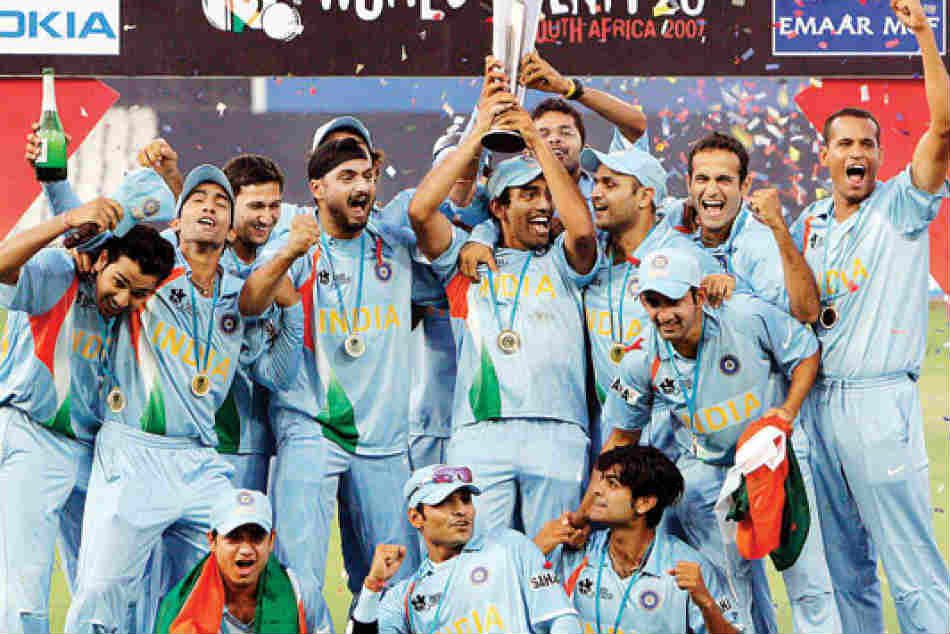
India won the ICC t20 world cup 2007 by beating their rivals Pakistan in the final

Protests over Bangladeshi feminist writer Taslima Nasreen turn into deadly riots; troops are deployed

                                                India’s first commercial space rocket is launched, carrying an Indian satellite.

Government announces its strongest economic growth figures for 20 years – 9.4% in the year to March.

                                                Pratibha Patil becomes first woman to be elected president of India

                                                Maintenance and Welfare of Parents and Senior Citizens Act, 2007

2008                                      Indian car manufacturer Tata launches the Nano, claimed to be the world’s cheapest car.

                                                Union Health and Family Welfare Minister Anbumani Ramadoss dedicates to the nation the first in-vitro fertilisation (IVF) facility in the public sector set up at the All-India Institute of Medical Sciences (AIIMS) in New Delhi.

                                                Central government launches Dhan Laxmi scheme in seven states. Under this scheme an insurance cover of ₹ 100,000 would be provided for the girl child at her birth. The scheme aims to improve the girl-child ratio.

                                                Tata Motors buys two British automobile manufacturing companies, Jaguar and Land Rover, from Ford, their American owners.

                                                First Field Marshal of Indian Army Sam Manekshaw died.

                                                Pope Benedict XVI announces the canonization of Sister Alphonsa Muttathupadathu, the first woman of Indian origin to be canonized as a saint by the Roman Catholic Church, and the first canonized saint of the Syro-Malabar Catholic Church.

                                                Following approval by the US Congress, President George W. Bush signs into law a nuclear deal with India, which ends a three-decade ban on US nuclear trade with Delhi. Known as 123 Agreement.

                                                Aravind Adiga, is awarded the 2008 Man Booker Prize for his debut novel, The White Tiger.

                                                India successfully launches its first mission to the moon, the uncrewed lunar probe Chandrayaan-1.

The 2008 Mumbai attacks (often called the 26/11 attacks) kill 174 people, including 9 of the 10 terrorists from Lashkar-e-Taiba, an Islamic terrorist organisation based in Pakistan. India decides not to attack Pakistan in retaliation.

Shooter Abhinav Bindra wins the gold in the 10 m Air Rifle event at the 2008 Summer Olympics in Beijing. He became the first Indian to win an individual gold medal at the Olympic Games.

Wrestler Sushil Kumar wins a bronze medal in the Men’s 66 kg Freestyle Wrestling category at 2008 Summer Olympics in Beijing.

 Boxer Vijender Kumar became the first Indian boxer to win an Olympic medal when he won bronze medal in the middleweight category at 2008 Summer Olympics in Beijing.

Cricketer Sourav Ganguly announces retirement from Test Cricket.

2009                                     Kapil Dev, Sunil Gavaskar and Bishan Singh Bedi figure among the 55 players in the ICC’s inaugural Hall of Fame list.           

India and Russia sign deals worth $700 million, according to which Moscow will supply Uranium to Delhi.

                                                Resounding general election victory gives governing Congress-led alliance of PM Manmohan Singh an enhanced position in parliament, only 11 seats short of an absolute majority.

                                                Indian Member of Parliament Meira Kumar becomes the first female Speaker of the House of the People.

                                                Delhi court decriminalizes gay sex

                                                Cyclone Aila ravages the east coast

                                                India launches its first nuclear submarine, the INS Arihant.

India successfully test-fires its nuclear-capable “Dhanush” missile off the Orissa coast

Right of Children to Free and Compulsory Education Act (RTE), 2009

2009 Andhra Pradesh helicopter crash: A Bell 430 helicopter crashes during a flight in southern India. Fatalities included Y. S. Rajasekhara Reddy, the Chief Minister of the Indian state of Andhra Pradesh

We All Came out from Ray’s ‘Alien’

Saptarshi Nag

Just imagine a movie produced by the Columbia Pictures, starring the great Marlon Brando and Peter Sellers. And who is behind the camera directing the film on a story written by himself? None other than the maestro Satyajit Ray. Yes, it was about to happen in the 1960s. ‘The Alien’ based on Ray’s own short story ‘Bankubabur Bandhu’ was very much in the pipeline to be made into a Hollywood film when Ray discovered that his own script written for the film in 1967 had already been copyrighted by one Michael Wilson, Ray’s own representative in Hollywood. The script was copyrighted as Wilson as the co-writer whereas he had nothing to do with it and it was solely written by Ray. When the disputes started, Brando walked out of the film. Columbia Pictures tried to convince James Coburn, the famous action hero to star in the film. Disillusioned, Ray came back to India.

The original story revolves around a friendly alien, a slightly dim-witted village boy who becomes the alien’s friend, a greedy Calcutta businessman, a local journalist and an American scientist. It was written for ‘Sandesh’ magazine in 1962. Arthur C Clarke, Satyajit’s friend and the legendary science fiction writer himself was impressed reading the story and he persuaded Ray to try his luck in Hollywood. Only after this, Ray had an initial deal with the Columbia Pictures through Miachael Wilson, a small-time producer. It is to be noted that Wilson was recommended by Clarke only.

While the talks of ‘The Alien’ were going on, Steven Spielberg, the world-famous director was only 21. He made his debut as a filmmaker in 1969. But it was in 1977 he made his first commercially successful movie ‘Close Encounters of the Third Kind’. And those who were aware of the pictorial script of ‘The Alien’ were taken aback by the striking similarities between Ray’s imagination and the execution of Spielberg. However, as there was no direct connection between the plots, the controversy went unnoticed.

In 1982 Spielberg made his biggest blockbuster ‘ET- The Extra Terrestrial’ about the companionship of a group of kids with a friendly alien. This time Arther C Clarke watched the film and noticed striking similarities with Ray’s ‘The Alien’. He immediately informed Ray about this. But no legal action was initiated by Ray as advised by Clarke. Clark later confronted Spielberg and accused him of plagiarism to which the renowned filmmaker scoffed.

Satyajit revealed that making ‘Close Encounters’ or ‘ET’ would not have been possible for Spielberg without the support of his own script and Spielberg must have had access to his script from mimeographed copies of the same which were made available by the notorious Wilson at hefty prices. Satyajit never indulged further dream of pursuing his career in Hollywood. Later on, many alien movies throughout the world had their roots in Ray’s immortal story.

When the US Academy of Motion Pictures, Arts and Sciences awarded him the prestigious Oscar for a “lifetime achievement” in films, the story came to a full circle. He was in the same league where the greats including Greta Garbo, Cary Grant, Sophia Loren, Sir Charles Chaplin and Akira Kurosawa belonged. Spielberg went to acknowledge Ray’s influence on his overall filmmaking but he never publicly accepted the charges of plagiarism in ‘ET’ or’ The Close Encounter’.

From Jagadish Chandra Bose to Satyajit Ray, the great Bengalis often deceived by the foreigners will be remembered forever for not how they reacted to being deprived of their due credits by the international societies but how they went on with their works, their creations, their gifts to the mankind, making them immortals in their respective fields. Today’s parents reading this piece must visit the bookstore and buy some of Satyajit’s books for their kids, as we all come out from Ray’s Alien, not ‘Gogol’s Overcoat’.

India in Decades- Part 2- 1990s

1990                                     Muslim separatist groups begin campaign of violence against Hindus in Kashmir resulting in Exodus of Kashmiri Hindus.

                                                Indian Airlines Flight 605 crashes near the HAL Airport in Bangalore.

Leander Paes He won the 1990 Wimbledon junior title and was briefly ranked the number one junior player in the world.

                                                The last Indian troops are withdrawn from Sri Lanka

                                                The government devalued the rupee and initiated economic reforms.

                                                Operation Floodlight (a literacy drive in Ernakulam)

                                                V P Singh announces implementation of Mandal commission report.

Rajiv Goswami, a commerce student in Deshbandhu College attempted Self-immolation as part of Mandal Commission protests of 1990.

V.P. Singh resigns as prime minister and is succeeded by Janata Dal dissident Chandra Shekhar.

TN Sheshan- 10th Chief Election Commissioner of India

1991                                     Rajiv Gandhi is assassinated by a suicide bomber sympathetic to Sri Lanka’s Tamil Tigers.

                                                Indian National Congress leader P.V. Narasimha Rao becomes Prime Minister.

                                                The Government of India constitutes the Company Law Board as an independent quasi-judicial body thus giving up direct control on matters of company law.

An economic reform programme or Economic liberalisation in India is begun by Prime Minister P. V. Narasimha Rao.

The government of India announces its New Industrial Policy, marking the start of India’s economic reforms.

J. Jayalalithaa is sworn in as chief minister of Tamil Nadu for the first time.

Shiv Sena workers led by Shishir Shinde vandalised Wankhede Stadium Cricket pitch to stop a cricket match between India and Pakistan.

Rapid Action Force established by Union Home Ministry.

Union Territory of Delhi was given the special status of ‘National Capital Territory of Delhi.’ 69th Amendment.

1992                                     Scam of Harshad Mehta was exposed by journalist Sucheta Dalal, which consisted of SBI 500 Crore Scam and illegal usage of loophole in banking system. December    

The demolition of the Babri Masjid, triggering the Bombay riots.

                                                Over 200 people die in Cuttack in Odisha, after drinking illegally brewed                                                  liquor in the 1992 Odisha liquor deaths incident.

Konkani language, Nepali language and Meitei language (officially known as Manipuri language) included in the constitutional scheduled languages’ list and made one of the official languages of the Indian Republic through 71st amendment of Constitution of India.

Zee Television, a Hindi language satellite and cable television station, a first officially regular broadcasting service to start in Mumbai.

Indian Rupee exchange rate collapsed. It was 20 Rs to 1 dollar in January 1992 and it became 30 Rs to 1 dollar in December 1992. A huge 50% depreciation in value

Government of India establishes SEBI, stock exchange regulator.

73rd and 74th Amendment Act, 1992

Panchayati Raj institutions and Urban local bodies were given constitutional status.

India bags no medal at the Olympics

1993                                     A series of bomb blasts, thought to be planted by underworld figures, rock the country’s commercial capital of Bombay, killing some 260 people

                                                Latur earthquake shakes Maharashtra

                                                The All Parties Hurriyat Conference is formed in Kashmir.

                                                supreme court recognised a fundamental right to primary education in the right to life under article 21

                                                The Indian Voter ID card, also known as the Electors Photo Identity Card (EPIC), was introduced nationwide in 1993

1994                                     Kupwara massacre in J&K

                                                S. R. Bommai v. Union of India verdict by Supreme Court of India.

                                                Plague breakout in India from Surat

National Telecommunications policy (NTP) in 1994 which brought changes in the ownership, service and regulation of the national telecommunications infrastructure.

                                                Aishwarya Rai was crowned Miss World 1994 in Sun City, South Africa

                                                Pre-Conception and Pre-Natal Diagnostic Techniques Act, 1994

Sushmita Sen became the first Indian woman to win the Miss Universe title

                                                Airports Authority of India Act 1994

1995                                     West Bengal Chief Minister Jyoti Basu made the first call from Kolkata to inaugurate the cellular services in India.

                                                India joins the World Trade Organization (WTO) which has replaced GATT.

                                                Purulia arms drop case

                                                India’s first internet service started by VSNL

                                                Delhi Metro Rail Corporation Limited founded.

1996                                     Congress suffers its worst electoral defeat ever as BJP emerges as the largest single party.                               

The Amarnath Yatra tragedy in which at least 194 pilgrims are reported to have frozen to death in northern Kashmir after being stranded by violent rain and snow storms.

TN Sheshan received the Ramon Magsaysay Award for government service

In general elections the ruling Congress Party is defeated and Bharatiya Janata Party becomes the largest single party in parliament. Phoolan Devi, former bandit queen is elected to Parliament from the Samajwadi Party.

Atal Bihari Vajpayee, leader of the Bharatiya Janata Party, is elected the new prime minister of India, replacing P. V. Narasimha Rao of the Indian National Congress. However, the party does not receive an overall majority and Vajpayee resigns thirteen days later rather than face a no confidence vote, and is replaced by the United Front, led by Deve Gowda. 13 days Government by Vapayee.

Deve Gowda is sworn in as the head of the United Front, a coalition of 13 parties which Congress supported but did not join. Gowda’s new cabinet brings in powerful regional figures, mixing low-caste and Muslim leaders with veterans of the socialist movement.

At least 194 pilgrims are reported to have frozen to death in northern Kashmir after being stranded by violent rain and snow storms in the Amarnath Yatra tragedy.

Michael Jackson arrived in Mumbai as a part of his History World Tour

Chinese President Jiang Zemin begins his three-day visit, the first visit by a Chinese head of state to India.

Leander Paes won a bronze medal for India in men’s singles at the 1996 Atlanta Olympic Games making him the first Asian in Olympic history to win a tennis medal and the only Indian to date. It was India’s sole medal in 1996 Olympics.

World Cup Cricket in India. India loses in Semi Final against Sri Lanka in Kolkata.

1997                                     India’s Missionaries of Charity chooses Sister Nirmala to succeed Mother Teresa as its leader.

                                                Inder Kumar Gujral, a new leader acceptable to Congress, is sworn in as prime minister.

                                                Jagmohan Dalmiya elected as the president of International Cricket Council

                                                K.R. Narayanan is elected president, defeating T.N. Seshan. First Dalit President.

                                                Mother Teresa dies of heart failure in Kolkata.

                                                Elizabeth II pays a state visit to India.

Arundhati Roy wins Booker Prize for her debut novel The God of Small Things.

 In 1997, an autonomous body was established in the name of Prasar Bharti to take care of the public service broadcasting under the Prasar Bharti Act. All India Radio and Doordarshan, which earlier were working as media units under the Ministry of I&B became constituents of the body.

                                                TRAI (telecom regulator) is established.

1998                                     BJP forms coalition government under Prime Minister Atal Bihari Vajpayee.

India and Pakistan carry out nuclear tests, leading to widespread international condemnation.

EVM machines were used on an experimental basis across 25 state assembly constituencies during the assembly elections in Rajasthan, Madhya Pradesh and Delhi.

The National Highway Development Project is launched.

Netaji Subhas Open University started functioning in Kolkata

Gulzarilal Nanda, Interim Prime Minister of India died.

1999                                     Vajpayee makes a historic bus trip to Pakistan to meet Premier Nawaz Sharif and to sign bilateral Lahore peace declaration.

                                                India’s 13-month-old BJP-led Second Vajpayee government falls after losing a no confidence motion in the Lok Sabha by just one vote

                                                Australian Christian missionary Graham Staines and his two sons were burned to death by Bajrang Dal activists in Kendujhar district, Odisha

Indian Army launches operations to evict Pakistani forces occupying Indian positions on the icy heights in Kargil district, known as the Kargil War.

The Odissa Cyclone devastates eastern state of Odisha, leaving at least 10,000 dead.

Leander Paes and Mahesh Bhupathi became the first Indian pair to win doubles title in Wimbledon Championship.

Two crowded trains collide head-on at a railway station in Gaisal, West Bengal killing 286 people.

Parliamentary elections are held, in which the National Democratic Alliance led by Prime Minister Vajpayee’s BJP wins 298 seats, the Congress-led Alliance 134, and others 105.

Heavily armed hijackers take over an Indian Airlines Airbus carrying 189 people from Kathmandu (Nepal) to New Delhi. After a detour to the United Arab Emirates, it lands at Kandahar, Afghanistan, on 25 December. On 28 December the hijackers make three demands, including the release of 35 terrorists and a sum of $200 million. On 31 December the hijackers, who stabbed a man on the plane to death, free their hostages after reaching agreement with India for the release of three terrorists in Kashmir.

Shankar Dayal Sharma, former president of India and Chief Minister of MP died.

India in Decades- First Part 1980s

1980                                     Indira Gandhi returns to power heading the Congress party splinter group, Congress (Indira).

                                                Sanjay Gandhi is killed in a plane crash near Safdarjung Airport.

BJP formed

The Indian Hockey team won the Gold in the Olympics, the last till date.

B. P. Mandal, chairman of the Backward Classes Commission, submitted his report to the government.

The infamous Bhagalpur blinding case which was later depicted in the Bollywood movie ‘Gangajal’

                                                The Forest (Conservation) Act, 1980

1981                                     Subhas Mukhopadhyay, Physician created World’s second IVF died

                                                Infosys is founded in Pune.

                                                Nargis Dutta died

                                                Census in India

Around 45 people got killed due to a stampede at Qutb Minar resulting in closure of Minaret for tourists

1982                                     INSAT-1A launched; deactivated in September.

NABARD established through act of Parliament following B. Sivaraman Committee recommendation.

                                                9th Asian Games held in Delhi.
                                                Doordarshan begins testing of Colour television broadcast in India

                                                Acharya Vinoba Bhave died

Bijon Setu massacre seventeen Ananda Margis were set ablaze at Bijon Setu in Dhakuria in south Kolkata. No one has been convicted of the murders

EVMs introduced in India

Future Prime Minister of India Manmohan Singh becomes Governor of the Reserve Bank of India

1983                                     N. T. Rama Rao NTR’s nine-month-old Telugu Desam assumes power in AP becoming a challenger post Loknayak Jayprakash Narayan against Indira Gandhi.

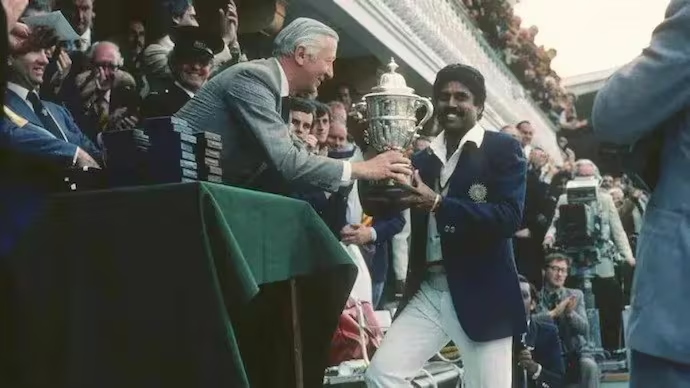
India won World Cup for the first time, in one day international Cricket led by Kapil Dev.

                                                Bandit queen Phoolan Devi surrenders.

Subrahmanyan Chandrasekhar received the Nobel Prize in Physics

Nellie massacre: over 2,000 people, mostly Bangladeshi Muslims, were massacred during the Assam agitation

1984                                     Squadron Leader Rakesh Sharma is launched into space, aboard the Soyuz T-11.

Troops storm Golden Temple, the Sikhs’ most holy shrine, after Jarnail Singh Bhindranwale seeks refuge inside. There are a movement to flush out Sikh separatism and calls for secularism, called Operation Blue Star. “Anti-Sikh Riots 1984”.

Indira Gandhi is assassinated by her bodyguards; her son, Rajiv, takes over.

Many Sikhs were killed due to the assassination of Indira Gandhi. see 1984 anti-Sikh riots.

Bachendri Pal becomes first Indian women to reach the summit of Mount Everest

India’s first metro Kolkata metro started

India bags no medal at the Olympics

Bhopal disaster: A methyl isocyanate leak from a Union Carbide pesticide plant in Bhopal, Madhya Pradesh, kills more than 2,000 people outright and injures anywhere from 15,000 to 22,000 others

The first 3D film in India My Dear Kuttichathan was released

1985                                     Karamchedu massacre of Dalits in Andhra Pradesh.

                                                Narmada Bachao Andolan started by Medha Patkar

                                                Bombing on Air India Flight 182- Kanishka

Terrorist and Disruptive Activities (Prevention) Act TADA came into effect after presidential assent.

India wins B&H World Champion Cricket Trophy. Ravi Shastri Player of the Series.

Indira Gandhi National Open University is established by an Act of Indian Parliament.

The Narcotic Drugs and Psychotropic Substances Act is passed by Parliament came into force.

The Administrative tribunals in Delhi, Mumbai, Calcutta and Allahabad were established by Administrative Tribunals Act, 1985.

Chakravarty Committee was set up by the RBI to review the working of monetary system. Its recommendations had far reached consequences eventually removing India from the 500-year-old silver standard

The 52nd Amendment of the Indian Constitution, enacted in 1985, is also known as the Anti-Defection Law

1986                                      Contract signed between the Government of India and Swedish arms company Bofors for supply of 410 155 mm Howitzer field guns. (Bofors deal)

Operation Black Thunder conducted to flush out remaining Sikh extremists from the Golden Temple

                                                a new National Policy on Education announced by the Government

                                                Inland Waterways Authority of India came into existence.

Supreme Court of India delivered landmark judgement which upholds Freedom of speech and expression in Bijoe Emmanuel Vs State of Kerala case. In this case court said that no law mandates singing National Anthem of India compulsory

Environment Protection Act that was passed in month of May in consequence to Bhopal disaster, came into force.

                                                Consumer Protection Act

Australia-India test cricket match ends in a tie at the M. A. Chidambaram Stadium, Chepauk, Chennai, becoming only the second tied test in the history.

1987                                     India deploys troops for peacekeeping operation in Sri Lanka’s ethnic

conflict.

Board for Industrial and Financial Reconstruction set up and became operational with effect from May reflecting concerns related to Industrial Sickness and republic day

Sunil Gavaskar becomes the first man to score 10,000 runs in Test cricket

The Union territory was split, and Goa was elevated as India’s twenty-fifth state, with Daman and Diu remaining Union Territories

Operation Poomalai by India in Jaffna.

Roop Kanwar case – last known incident of Sati in India, occurred at Sikar district

The South Asian Games are held in Calcutta

World Cup Cricket in India for the first time

Mizoram became the 23rd state of India on February 20, 1987

Arunachal Pradesh became a state on February 20, 1987

1988                                     SEBI was established by The Government of India on 12 April 1988 and given statutory powers in 1992 with SEBI Act 1992 being passed by the Indian Parliament.

                                                Viswanathan Anand became first Grandmaster (chess) from India

                                                Janata Dal formed under the leadership of V. P. Singh.

                                                The National Housing Bank established as an apex body of housing finance and to promote activities in housing development.

                                                Rajya Sabha passes the Sixty-first Amendment of the Constitution of India which brings down voting age from 21 to 18

                                                First Cabinet meeting outside New Delhi held at Sariska, Rajastham

                                                The infamous Rupan Deol Bajaj case involving KPS Gill.

India bags no medal at the Olympics

                                                Maximum lending rate abolished. Banks free to charge customers according to their credit record.

                                                Death of Raj Kapoor

1989                                     Falling public support leads to a Congress defeat in general election.

                                                The National Front (India), headed by V. P. Singh and led by Janata Dal, is formed and storms into power with outside support from BJP and CPI(M).

                                                16-year-old Sachin Tendulkar makes his test debut against Pakistan

                                                The first Darjeeling Gorkha Hill Council elections took place and Gorkha National Liberation Front under leadership of Subhash Ghisingh.

                                                India’s first Intermediate-range ballistic missile, Agni was successfully launched from Chandipur, Odisha. It elevated India into a prestige league of only five nations in world with IRBM strategic capability. This was a landmark moment under Integrated Guided Missile Development Programme

Please note that this additions may be made to this content. So, keep checking.

Duare Sarkar- An Analysis

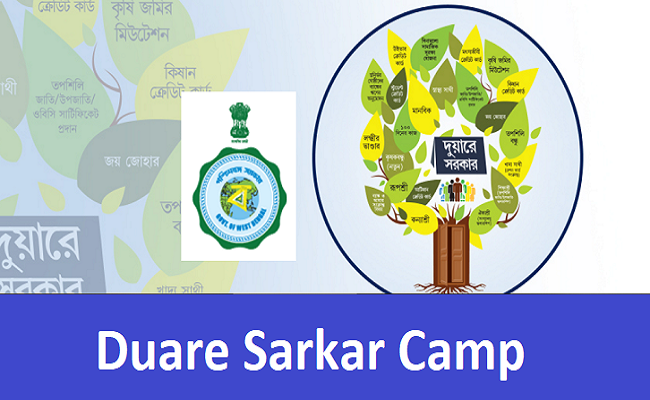
West Bengal government’s flagship governance model – Duare Sarkar. Duare Sarkar is a paradigm shift from traditional public administration to an e-governance-driven service delivery mechanism, in which the government is found available at the doorsteps of citizens, “Leaving no one behind.” The scheme was launched in December, 2020. Through this outreach camps are held at Gram Panchayat level at the blocks and ward level at the municipalities. So far, approximately 1 lakh such outreach camps have been held in different editions of Duare Sarkar and more than 60% of the state population reaped the benefits of such schemes. Schemes like Lakshmir Bhandar, Rupashree, Caste certificate, Swasthya Saathi, Kanyashree, Taposhili Bondhu, Shikshashree, Kisaan Credit Card have been facilitated through Duare Sarkar. As of the latest edition, total 37 schemes have been brought under the umbrella of Duare Sarkar. Under this governance model, intimation is given to the residents about the schedule of such camps and in the first phase, facilitation is done to apply for the schemes whereas in the later phases, applications are collected and services are delivered. Linking of Duare Sarkar with innovative schemes like Paray Samadhan has increased its outreach.

In addition, the Duare Sarkar campaign includes the Paray Samadhan component, which was designed to address the numerous petitions and applications received from citizens. These petitions often highlighted gaps in infrastructure, supply and services, and manpower in public institutions. Through Paray Samadhan, the government seeks to resolve local issues through small interventions and community participation, with the ultimate goal of solving community-level problems at the local level. As part of the project, the West Bengal government has identified the key stakeholders – State Government, Common Service Centres (CSCs), and citizens. A citizen can book an appointment at the Common Service Centre (CSC) to avail of any service. A CSC member will visit the citizen’s address as per the scheduled appointment. During the visit, the CSC executives will provide information and assistance on the service chosen by the citizen

For this unique model of governance, the West Bengal government received ‘platinum award’ from President Draupadi Murmu at the ‘Digital India Awards’, instituted by the Centre’s ministry of Electronics & IT apart from the prestigious SKOCH Award and Duare Sarkar has been universally hailed as a paradigm shift from the regular mode of governance.

How the scheme has changed the governance landscape?

  • Doorstep service delivery
  • Time bound approach
  • All-inclusive approach
  • A shift from bureaucratic red-tapism
  •  Single window mode of governance
  • Humanitarian approach of governance
  • Digital governance
  • Strengthening of the Panchayati Raj Institutions

Criticisms

  • Political manoeuvring in venue selection
  • Growth of intermediaries in the name of facilitation
  • Increase in number of frivolous applications
  • Undeserving beneficiaries are reaping benefits due to lack of scrutiny
  • Lack of accountability in case of failure of service delivery
  • Heavily dependent of internet connectivity which is often below par in rural areas

Way Forward

However, the impact of Duare Sarkar in changing the dynamics of governance in West Bengal is undeniable. It has certainly improved the interaction between the state government and its citizens; between the rural and urban areas. It has bridged the gap between the public and the government while ensuring that public services are extended to the rural populace in a better way. It has brought effectiveness, efficiency, and accountability to the processes that were otherwise lacking in the delivery of public services. The roll-out of the project has led to the seamless delivery of various government welfare programs and initiatives to its citizens in a timely and transparent fashion, bringing about positive change for the betterment of the state. For better governance, the time frame should be enhanced for better scrutiny of the applications. Use of AI may be encouraged for screening of applications. The number of venues may be increased for better dispersion. Overall, holistic management, better accountability with more vigilant approach is recommended for such novel initiative to reach out to maximum beneficiaries.

To get admission in our Sociology Optional, download our app now using the following link

https://play.google.com/store/apps/details?id=co.penny.oecgd&pcampaignid=web_share

Sociology Course Link

https://oecgd.courses.store/679799

Lakshmir Bhandar- An Analysis

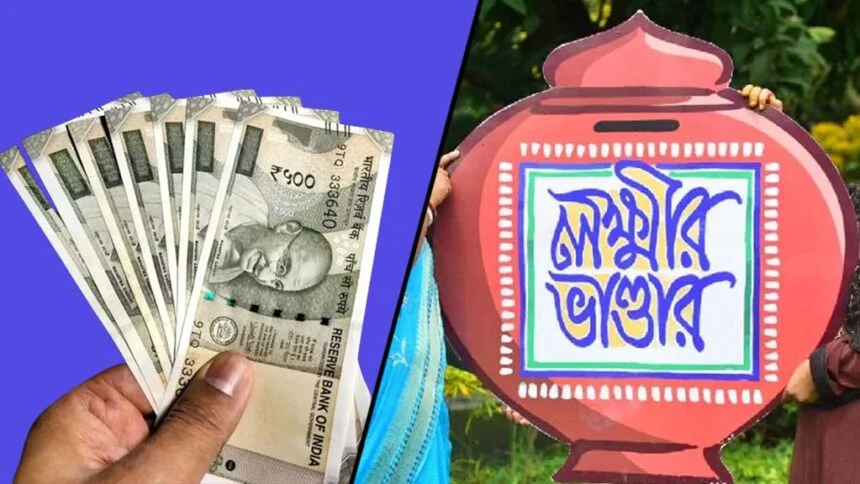
“Lakshmir Bhandar” Scheme is a flagship program launched by the West Bengal Government in February 2021, to provide financial assistance to women from economically weaker sections of society. The acclaimed SKOCH Award in the Women and Child Development category has been bestowed upon West Bengal in recognition of the scheme.

Benefits of 1,200/- every month to women SC/ST households and ₹ 1,000/- per month to other beneficiaries are provided. The scheme aims to empower women and make them financially independent by providing them with a one-time grant to buy essential goods and services. The scheme has already reached approximately 18 million households in the state.

How has it changed the socio-economic scenario in West Bengal?

Women empowerment without empowering the women financially is like day dreaming. Financial liberty however small it may be, can influence the decision-making ability of the women. This scheme has touched this cord of human psyche and therefore succeeded in earning the faith of the women especially the homemakers of rural Bengal. Its benefits for the women in terms of socio-economic perspectives are manifolds

  • Economic liberation
  • Increased Household Income
  • Self-pride
  • Filling up critical gaps in running a family
  • Boosting rural economy
  • Financial inclusion
  • Increasing cash flow in the hands of ordinary people stimulates local markets, benefiting the entire community.
  • Boost to rural level micro business activities
  • Gender equality
  • A strategic and political challenge to non-disbursement of funds under MGNREGA by the Central Govt.

A recent study indicates that rural households’ monthly expenses in West Bengal have increased by 10-12 per cent, reflecting an improvement in living standards. The per person monthly expenditure on essential needs such as food, health, education and household costs has risen from Rs 1,764 to Rs 1,940 since the introduction of the scheme.

Why has it been criticized?

  • Pressure on the Government exchequer
  • Critics argue that it ‘incapacitates’ the women financially instead of empowering them.
  • It has been targeted as a ‘Vote Bank Political Ploy’ of the Government
  • Its success in the urban areas is limited
  • While the scheme aims to provide economic cushioning, it might not focus enough on implementing sustainable livelihood programs that could empower beneficiaries in the long run. This could limit the scheme’s ability to create lasting improvements in their economic conditions

There cannot be any denial of the fact that Bengal’s socio-economic dynamics especially that in rural areas changed drastically after the scheme was introduced. Many of its critics are in reality the beneficiaries of this novel scheme. However, addressing these criticisms and shortcomings is crucial for the scheme’s continued success and to ensure it achieves its objectives of promoting inclusive growth and reducing economic disparities in West Bengal. This necessitates a vigilant approach in overseeing the implementation and outcomes to ascertain its sustainability and effectiveness in the long run. Failure to exercise rigorous oversight might expose the scheme to potential shortcomings and compromises, thereby impeding its capacity to deliver the intended socio-economic benefits to the targeted beneficiaries. Further, unless the women are equipped with learnings to utilize the financial resources to long term economically viable, livelihood options, sustainable economic development may not be possible. Hence, stringent monitoring mechanisms and comprehensive evaluation processes of the Government of West Bengal are indispensable in fostering the scheme’s resilience and substantiating its efficacy in fostering inclusive growth and addressing the prevailing socio-economic disparities in the state.

To get admission in our Sociology Optional, download our app now using the following link

https://play.google.com/store/apps/details?id=co.penny.oecgd&pcampaignid=web_share

Sociology Course Link

https://oecgd.courses.store/679799

Abbreviations- Concluding Part (3)

R

RAC: Reservation Against Cancellation

RAW: Research & Analysis Wing

RBI: Reserve Bank of India

RDX: Research Department Explosive or Royal Demolition Explosive

ROPA: Revision of Pay and Allowances

 RE: Revenue Expenditure

 REC: Rural Electrification Corporation

 RIDF: Rural infrastructure development fund

 RR: Revenue Receipts

 RRB: Regional Rural Bank

 RRPI: Rural Retail Price Index

 RSETI: Rural Self Employment Training Institute

 RTGS: Real Time Gross Settlement

 R&D: Research and Development

 RSS: Rastriya Swayam Sevak Sangh

 RADAR: Radio Detection and Ranging

 RAF: Rapid Action Force

RCC: Reinforced Cement Concrete

 RAM: Random Access Memory

 RLV: Reusable Launch Vehicle

 RPM: Revolution Per Minute

 RPO: Recruitment Process Outsourcing; Regional Passport Officer

 RTI: Right to Information

RSVP: Répondez s’il vous plait (Respond, if you please)

RITES: Rail India Technical and Economic Service

RGSA: Rashtriya Gram Swaraj Abhiyan

                S

SBI: State Bank of India.

SEO:       Search Engine Optimization

SAT: Scholastic Aptitude Test

 SCO: Shanghai Cooperation Organisation

Scuba: Self Contained Underwater Breathing Apparatus

 SCOPE: Standing Conference on Public Enterprises

SATA: Serial Advanced Technology Attachment

SCSI:      Small Computer System Interface

SAI: Sports Authority of India

SWAN: State Wide Area Network

 SDR: Special Drawing Rights

 SEBI: Securities and Exchange Board of India

 SEWA: Self-employed women’s association

 SEZ: Special Economic Zone

 SFC: State Financial Corporation

 SIDBI: Small Industries Development Bank of India

 SLR: Statutory Liquidity Ratio

SGML:   Standard Generalized Markup Language

SGOT:    Serum Glutamic Oxaloacetic Transaminase

SGPT:     Serum Glutamic-pyruvic Transaminase

 SSI: Small-Scale Industries

 SEATO: South East Asia treaty Organisation

 SAARC: South Asian Association for Regional Cooperation

 SAFTA: South Asian Free Trade Area

 SAIL: Steel Authority of India Limited

 SAPTA: SAARC Preferential Trading Agreement

 SARS: Severe Acute Respiratory Syndrome

SICA:     Sick Industrial Companies (Special Provisions) Act,1985

SIDC:     State Industrial Development Corporation

 SAVE: SAARC Audio Visual Exchange

SOS: Save Our Souls distress signal

 SPG: Special Protection Group

 SPIN: Software Process Improvement Networks

 SQUID: Superconducting Quantum Interference Device

 SRE: Space Capsule Recovery Experiment

 SRV: Submarine Rescue Vessel

 SSN: Social Security Number

 STARS: Satellite Tracking and Ranging Station

 START: Strategic Arms Reduction Treaty

 STD: Subscriber Trunk Dialling; Sexually Transmitted Diseases

 STEP: Science and Technology Entrepreneurship Park

 STT: Securities Transaction Tax

T

 TDS: Tax Deduction at Source

 TIFR: Tata Institute of Fundamental Research

 TIN: Tax Information Network

 TISCO: Tata Iron and Steel Company

 TPDS: Targeted Public Distribution System

 TRAI: Telecom Regulatory Authority of India

 TRIMS: Trade-Related Investment Measures

 TRIPS: Trade-Related Intellectual Property Rights

 TRYSEM: Training Of Rural Youth for Self-Employment

TELEX: Teleprinter Exchange

 TADA: Terrorist and Disruptive Activities (Prevention) Act

 TAPS: Tarapur Atomic Power Station

 TCP: Transfer Call Protocol

TDSAT: Telecom Dispute Settlement Appellate Tribunal

 TELCO: Tata Engineering and Locomotive Company

 TERLS: Thumba Equatorial Rocket Launching Station

 TFT: Thin-Film Transistor

TNT: Tri-nitro-toluene (high explosive)

 TOEFL: Test of English as a Foreign Language

 TPP: 20-Point Programme

TRP: Television Rating Points; Tax Return Preparer

 TTE: Travelling Ticket Examiner

 TTF: Tourism Task Force

 TVS: T.V Sundaram (Co-Founder)

                                U

UNCTAD: United Nations Conference on Trade and Development

 UNFCCC: United nation framework convention on climate change

 UNFPA : United Nations Fund for Population Activities

 UNHCR: United Nations High Commissioner for Refugees

 UNHRC: United Nations Human Rights Commission

 UNICEF: United Nations International Children’s (Emergency) Fund

 UNIDO: United Nations Industrial Development Organisation

 UNRRA: United Nations Relief and Rehabilitation Administration

 UNDP: United nations Development Programme

 UNO: United Nations Organisation

 UAE: United Arab Emirates

 UAV: Unmanned Aerial Vehicle

UEFA: Union of European Football Associations

 UFO: Unidentified Flying Object

 UGC: University Grants Commission

 ULFA: United Liberation Front of Assam

UPS: Uninterruptible Power Supply

USGS: United States Geological Survey

USSR: Union of Soviet Socialist Republics

USAID: United States Agency for International Development

 UN: United Nations

ULIP: Unit Linked Insurance Plan

UBI: Union Bank of India

USIEF: United States–India Educational Foundation

 UNDP: United Nations Development Programme

 UNEF: United Nations Emergency Force

 UNEP: United Nations Environment Programme

 UNESCO: United Nations Educational, Scientific and Cultural Organisation

UIDAI- Unique Identification Authority of India

UDDI: Universal Description, Discovery, and Integration

V

VAT: Value-Added Tax

 VC: Venture Capital

VSAT: Very Small Aperture Termina

VGA: Video Graphics Array

VOD: Video on Demand

 VRS: Voluntary Retirement Scheme

VCR: Video Cassette Recorder

 VDIS: Voluntary Disclosure of Income Scheme

 VHRR: Very High-Resolution Radiometer

 VIRUS: Vital Information Resources Under Siege

 VOIP: Voice Over Internet Protocol

VVPAT: voter-verified paper audit trail (VVPAT)

 VPN: Virtual Private Network

W

 WMO: World Meteorological Organisation

 WADA: World Anti-Doping Agency

 WAP: Wireless Application Protocol

 WAVE: Wireless Access for Virtual Enterprise

 WDF: Wasteland Development Force

 WEF: World Economic Forum

 WFP: World Food Programme

 WFTU: World Federation of Trade Unions

 WGIG: Working Group on Internet Governance

 WIPO: World Intellectual Property Organisation

 WIPRO: Western Indian Products

 WIPO: World Intellectual Property Organisation

WHO: World Health Organization

WMD: Weapon of mass destruction

WTC: World Test Championship

WWF: World Wide Fund for Nature

WWE: World Wrestling Entertainment

 WMO: World Meteorological Organisation

 WTO: World Trade Organisation

WAN: Wide Area Network

WAP: Wireless Application Protocol

WFP: World Food Programme

WTA: Women’s Tennis Association

WEBEL: West Bengal Electronics Industry Development Corporation Limited

WBSETCL : West Bengal State Electricity Transmission Company Limited

WBSEDCL: West Bengal State Electricity Distribution Company Limited

To get admission in our Sociology Optional, download our app now using the following link

https://play.google.com/store/apps/details?id=co.penny.oecgd&pcampaignid=web_share

Sociology Course Link

https://oecgd.courses.store/679799