Indian States- Fact Sheet

In 1947, at the time of India’s independence, there were 12 states in the newly formed Indian Union. These were Assam, Bengal, Bihar, Bombay, Central India, Central Provinces, Madras, Mysore, Orissa, Punjab, Rajputana, and United Provinces. 

Punjab is the state with no National Parks

Madras Presidency was renamed as Tamil Nadu in 1969

In 1973, the Mysore state was renamed Karnataka

Arunachal Pradesh became a Union Territory in 1972 and then an independent state of India in 1987, with Itanagar as its capital. It was earlier known as North East Frontier Agency

Nyishi is the most major tribe of Arunachal Pradesh. The vast majority of Arunachal Pradesh speaks Tani languages of the Tibeto-Burman language family.

The first state in India to be formed on a linguistic basis was Andhra Pradesh, officially created on October 1, 1953.

The Andhra Pradesh Reorganisation Act, 2014, resulted in the bifurcation of Andhra Pradesh into two states: Telangana and residuary Andhra Pradesh. 

Following the ‘Swachh Survekshan 2020,’ Chhattisgarh once again gained the title of the cleanest state

Goa has the greatest GDP per capita of any Indian state, more than two and a half times that of the country as a whole.

Haryana is home to the legendary Bharata dynasty, after which the country was named Bharat. First state in India to achieve 100% electrification back in 1970.  Haryana was carved out of Punjab in 1966. Haryana has produced the highest number of Olympic medalists. Specifically, Haryana has produced 8 individual Olympic medalists, more than any other Indian state,

The Neelakurinji (Strobilanthes kunthiana) is a flower that blooms once every 12 years. It is known for its mass blooming, which transforms hillsides into a sea of blue. This phenomenon typically occurs in the Western Ghats of India, particularly in the Nilgiri Hills.

The world’s only floating post office is also on Srinagar’s Dal Lake. The post office is inside a houseboat and it has a philately museum too.

Gahirmatha is a beach and marine sanctuary in Odisha, India, renowned as the world’s largest nesting ground for Olive Ridley Sea turtles. It’s located in the Kendrapara district, separating the Bhitarkanika Mangroves from the Bay of Bengal

Indian Giant Squirrel is the state animal of Maharashtra.

Uttar Pradesh currently holds the highest number of GI (Geographical Indication) tags in India. As of recent reports, Uttar Pradesh has 75 GI-tagged products, surpassing Tamil Nadu which previously held the top position.

Madhya Pradesh has the highest number of national parks in India, with a total of 11. The state also boasts 7 tiger reserves and 25 wildlife sanctuaries.

Manipur is the state with highest number of President Rules in India.

Uttar Pradesh (UP) has consistently reported the highest number of dowry deaths in India.

Mr Ziona Chana of Mizoram is the head of the biggest family in the world, consisting of 181 members. Chana has 39 wives, 94 children, 14 daughters-in-law and 33 grandchildren. He lives in a 100-room house in the Baktawng village.

According to the 2011 Census, Tamil Nadu is the most urbanized major state in India, with 48.4% of its population residing in urban areas. While Goa has a higher overall urbanization rate (62.17%), it’s a smaller state, and Tamil Nadu has a significantly larger urban population due to its larger size and population.

The state of Uttar Pradesh has given India the maximum number (8) of Prime Ministers.

The state of Tamil Nadu has given the maximum number of Presidents. It has given four Presidents of India

Nagaland has consistently reported the lowest crime rate in India. The state has seen the lowest incidence of crime based on percentage of share of the nation and the lowest registered crime rate per lakh population

According to recent reports, Uttar Pradesh (UP) has the highest crime rate in India.

Barsana in Uttar Pradesh celebrates Holi in a one-of-its-kind way. In this festival, women beat up men in playfulness with long sticks. According to the folklore, Lord Krishna had visited the village and had teased Radha and her friends. The women got offended and chased him away. During Lath Mar Holi, men from the Nandgaon village, where Krishna was brought up, go to Barsana, the village of Radha to celebrate the festival of colours.

According to the National Crime Records Bureau (NCRB), Assam has consistently reported the highest rate of crimes against women for the last five consecutive years.

Madhya Pradesh has the largest forest cover area in India. However, when considering forest cover as a percentage of the total geographical area, Mizoram holds the highest percentage. Haryana has the lowest percentage of forest cover among all Indian states. Specifically, it covers only 3.59% of its area in forest.

Bihar has the lowest literacy rate among all Indian states. Bihar is also considered the Indian state with the lowest per capita income. For the financial year 2024-25, Karnataka has the highest per capita income in India, surpassing the ₹2 lakh mark.

UP is the state with highest incidents of honour killings in India.

In the 2025 Happiness Index of India, Himachal Pradesh is ranked as the happiest state overall. Conversely, Uttar Pradesh is identified as the least happy state in India.

The state with the lowest population in India is Sikkim. The Indian state with the lowest population density is Arunachal Pradesh, with a density of 17 people per square KM.

Uttar Pradesh, Bihar, and Rajasthan have the highest numbers of child laborers in India.

The Indian state with the highest maternal mortality rate is Assam. Kerala has the lowest maternal mortality rate (MMR) in India Kerala also has the lowest IMR whereas In India, Madhya Pradesh generally has the highest infant mortality rate.

Chhattisgarh is reported to have the lowest unemployment rate among Indian states, according to the Centre for Monitoring Indian Economy (CMIE)

The world’s highest golf course, The Yak Golf Course, is also in our nation. It entered the Guinness Book of World Records in the year 2006. Himalayas, gurgling streams and sweeping lush greenery surround the hilly golf course. The Yak Golf Course in Kupup, East Sikkim is at an altitude of about 13,025 feet.

India in Decades- Part 4- 1970s

1971                                     3–16 December                 Third war with Pakistan, culminating in the creation of Bangladesh

                                                Himachal Pradesh becomes the 18th Indian state

                                                A cyclone in the Bay of Bengal, in Orissa State in India, kills 10,000.

                                                16 December – Victory Day of Bangladesh: The Pakistan Army surrenders to the Joint Force i.e. Mukti Bahini (Freedom Force) and the Indian Armed Forces, officially ending the Bangladesh Liberation War and creating the new nation state of Bangladesh.

                                                24th Constitutional amendment act​:

Affirmed the power of Parliament to amend any part of the constitution including Fundamental Rights.

India defeated West Indies in Port of Spain Trinidad for the first time ever to clinch the rubber 1-0. Sunil Gavaskar creates world record for scoring 774 runs in four tests. Ajit Wadekar was the captain.

India defeated England in the third and the final Test at the Oval. This happens to be India’s first victory ever on the English soil.

Contempt of Courts Act, 1971

North-Eastern Council Act, 1971

North-Eastern Areas (Reorganisation) Act, 1971

Twenty-year treaty of friendship signed with Soviet Union.

1972                                     Manipur, Tripura and Meghalaya get statehood.

Japan Air Lines Flight 471 crashed at Palam, Delhi killing 82 of the 87 on board.

India and Bangladesh sign a friendship treaty, after the withdrawal of the Indian troops.

Following Pakistan’s surrender to India in the Indo-Pakistani War of 1971, both nations sign the historic bilateral Simla Agreement, agreeing to settle their disputes peacefully.

Expulsion of Indians from Uganda under Idi Amin regime

M. G. Ramachandran, forms the All-India Anna Dravida Munnetra Kazhagam by splitting from Dravida Munnetra Kazhagam starting a new phase in Dravidian movement

Jharkhand Mukti Morcha was formed for independent statehood of Jharkhand from Bihar on birthday of Birsa Munda

Armed Forces (Assam and Manipur) Special Powers (Amendment) Act amended to include new states and union territories of Northeast India.

Supreme Court of India began hearing of Kesavananda Bharati v. State of Kerala case

Wild Life (Protection) Act, 1972 enacted.

Postal Index Number (PIN Code) introduced in India.

India won Bronze in Hockey in Olympics. India’s only medal in that edition.

1973                                     P. V. Narasimha Rao resigns as Chief minister of Andhra Pradesh following the resignation of ministers from Coastal Andhra post the 1972 Jai Andhra movement.

Verdict of Kesavananda Bharati v. State of Kerala pronounced. Supreme Court of India upholds basic structure doctrine

Project Tiger launched

Finance Minister Yashwantrao B. Chavan presented a budget with a large deficit, leading to it being called the “Black Budget”.

State of Mysore is renamed Karnataka State.

Chipko movement in Garhwal division

Indira Gandhi inaugurates world’s first Women Police Station in the world at Kozhikode

Bharatiya Jana Sangh leader Atal Bihari Vajpayee and two other leaders drove a Bullock cart to the Parliament of India on the first day of winter session to protest against fuel price hike in India following the oil crisis.

Foreign Exchange Regulation Act was passed.

Code of Criminal Procedure (CrPC) was enacted

1974                                     18 May the Smiling Buddha is the first nuclear device in underground test.

Bihar Movement started as a movement by students in Bihar led by the veteran Gandhian socialist Jayaprakash Narayan, against misrule and corruption in the Government of Bihar.

smallpox epidemic in East India

A railway strike started by 1.7 million workers of Indian Railways. The strike lasted for 20 days till 27 May 1974 and was the largest recorded industrial action in the world.

Sirima–Gandhi Pact signed to solve the statelessness of Sri Lankan Tamils

India played the first ever ODI. Opposition- England. Played in England.

Coal Mines (Nationalisation) Act, 1973

Thirty-fourth Amendment:

This amendment primarily focused on land reforms and included revised ceiling laws in the Ninth Schedule of the Constitution.

Thirty-fifth Amendment:

This amendment related to the status of Sikkim, granting it the status of an “Associate State” of India.

1975                                     15 May Sikkim becomes part of Indian Union after a referendum in the Sikkim Assembly.

                                                Satyajit Ray’s documentary Sikkim banned.

                                                Indira Gandhi became the first Prime Minister of India to testify in a court. She appeared before Allahabad High Court in State of Uttar Pradesh v. Raj Narain case

                                                The first Indian satellite, Aryabhata, goes into Earth’s orbit.

                                                Farakka Barrage across Ganges commissioned in West Bengal.

                                                Justice Jagmohanlal Sinha declared PM Indira Gandhi’s election to parliament from Rae Bareli (Lok Sabha constituency) in 1971 Indian general election null and void.

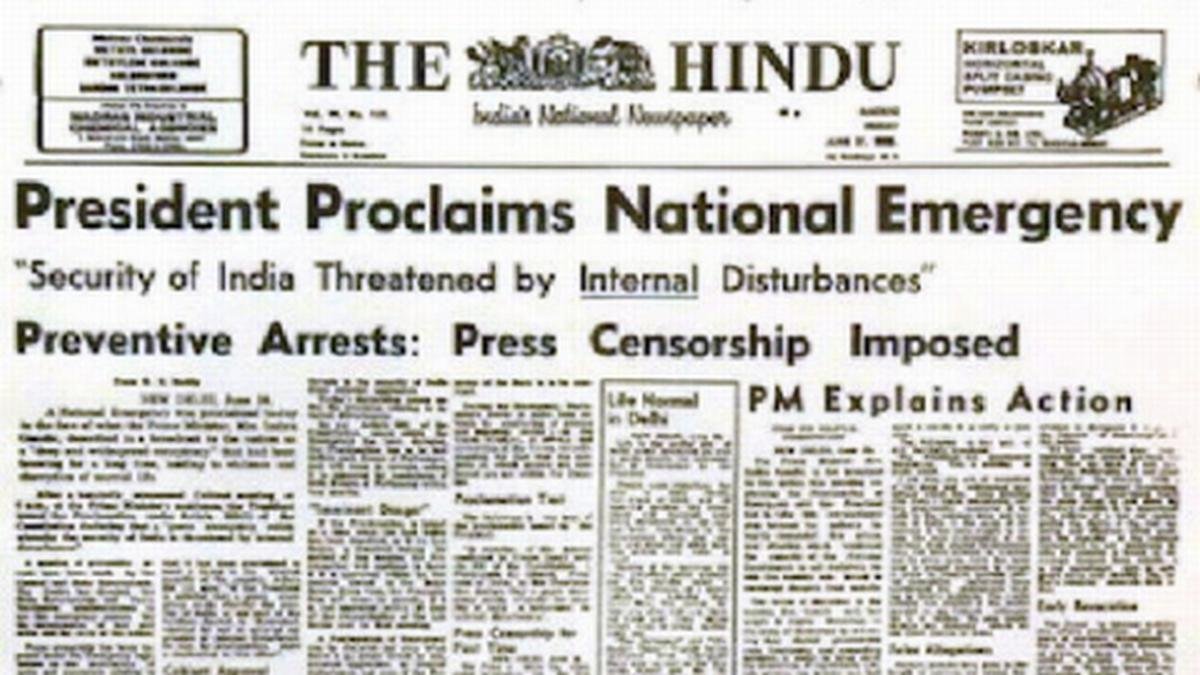
                                                A state of emergency is declared by Prime Minister Indira Gandhi during which the press is censored and 100,000 are jailed.

                                                Kerala Legislative Assembly passed the Kerala Scheduled Tribes (Restriction on Transfer of Lands and Restoration of Alienated Lands) Act, 1975, for restoring land rights to tribals

                                                India’s pathetic performance in 1975 World Cup Cricket. Only victory against East Africa.

                                                Sarvepalli Radhakrishnan, philosopher and statesman, first Vice President of India and second President of India died.

1976                                     The Rajan case, an infamous case of Police brutality during the Emergency Period. The victim, P. Rajan, a final year Engineering student at Regional Engineering College, Calicut was arrested by police, taken to Kakkayam and allegedly tortured severely which led to his death. It is believed that his body was thrown into the Kakkayam Dam.

                                                A family planning initiative involves the vasectomy of thousands of men and tubal ligation of women, either for payment or under coercive conditions. (The minimum age for marriage is also raised to 21 years for men and 18 years for women.) The son of then-Prime Minister Indira Gandhi, Sanjay Gandhi, is largely blamed for what turned out to be a failed program.

                                                The 42nd amendment Act, 1976, was enacted during the Emergency by the Indian National Congress government headed by Indira Gandhi, changing “Sovereign Democratic Republic” to “Sovereign Socialist Secular Democratic Republic” and modifying “unity of the Nation” to “unity and integrity of the Nation”.

                                                The Regional Rural Banks Act, 1976:

This act established Regional Rural Banks to provide credit and other facilities to small and marginal farmers, agricultural laborers, and artisans in rural areas

India competed at the 1976 Summer Olympics in Montreal, Quebec, Canada and won no medal. This was the first Olympics since 1928 in which the Indian Men’s hockey team did not win an Olympic Medal.

Death of singer Mukesh.

The Indian cricket team defeated the West Indies in a test match at Port of Spain, successfully chasing a then-record target of 403 runs.

Mother Teresa was nominated for the Nobel Peace Prize.

An Indian Airlines Boeing 737 was hijacked to Lahore.

1977                                     Prime Minister Indira Gandhi, via a radio broadcast, announced that the Lok Sabha would be dissolved and fresh elections would be held in March.

Indira Gandhi’s Congress Party loses general elections. Janata Party comes to power. The Communist Party of India (Marxist) comes into power in West Bengal.

The first non-Congress government sweeps to power following Indira Gandhi’s defeat at the general elections. Morarji Desai becomes prime minister.

M. G. Ramachandran sworn in as Chief Minister of Tamil Nadu. He became the first film actor to be the Chief Minister of an Indian state.

More than 10,000 people die when the 1977 Andhra Pradesh cyclone hits India’s southeast coast. The storm disrupts life for 5.4 million people in 830 villages, and damages 14,000 km2 of cropland.

Emergency was withdrawn in March.

1978                                     Air India Flight 855, a Boeing 747 passenger jet, crashes into the Arabian Sea after taking off shortly near Bombay, killing all 213 on board.

                                                Morarji Desai led government demonetizes high denomination banknotes

                                                Indira Gandhi is re-elected to the Indian parliament

                                                Indira Gandhi is arrested and jailed for a week for breach of privilege and contempt of parliament.

                                                Operation Barga was a land reform initiative launched in West Bengal, India, in 1978.

                                                The 44th Amendment of the Indian Constitution, enacted in 1978, primarily aimed to address the excesses of the Emergency period (1975-1977) and restore some of the fundamental rights that had been curtailed. It made significant changes to the constitution, including removing ‘Right to Property’ from the list of fundamental rights and making it a legal right. It also introduced safeguards regarding the declaration of national emergencies and strengthened the powers of the judiciary.

                                                India won 15 medals at the Commonwealth Games.

                                                Air Chief Marshal Idris Hassan Latif: He became the first Muslim Chief of Air Staff of the Indian Air Force.

                                                The Janata Party’s internal strife created an opening for Indira Gandhi’s political comeback.

                                                Launch of District Industrial Centre by Minister of Industries George Fernandes

1979                                     President of India makes official the decision to set up the Mandal Commission

                                                The police under direction of Jyoti Basu, Chief Minister of Communist Party of India (Marxist) -led government of West Bengal, surrounds and opens fire on unarmed refugee settlement of Morichjhapi island in Sunderbans, West Bengal. (Marichjhapi massacre)

The Janata Party splits. Chaudhary Charan Singh becomes Prime Minister.

Charan Singh of Bharatiya Lok Dal, coalition partner of Janata Party became Prime Minister of India with outside support of Congress (I).

C. H. Mohammed Koya sworn in as Chief minister of Kerala. He is the first Muslim League leader to become Chief Minister of an Indian state.

Morvi dam burst, the worst flood disaster in independent India, happens in Gujarat, killing 15000 people

Mother Teresa was awarded Nobel Peace Prize at Oslo

TRYSEM scheme launched.

Dhyan Chand, legendary field hockey player died

Jay Prakash Narayan died.

Current Affairs 2025- January- India & the World

World

The United Nations has declared 2025 as the International Year of Glaciers’ Preservation.

Poland takes over the Presidency of the Council of the European Union, after the Hungarian presidency

Bulgaria and Romania complete the process of joining the Schengen Area, lifting land border controls. The first country to legalize same-sex marriage was the Netherlands, which did so on April 1, 2001

The reports have raised alarm over Chronic Wasting Disease (CWD), also known as “zombie deer disease,” and its potential to jump to humans.

Greater Los Angeles experiences the most destructive wildfires in its history, fuelled by strong winds and prolonged drought conditions. A firenado is a fire whirl, defined as a spinning column of hot air and gases rising from a fire. It can vary in size, with diameters ranging from less than one foot to over 500 feet. This was seen during the wildfire in LA.

Indonesia becomes the tenth member to join BRICS. The BRICS economic partnership currently includes 10 member countries: Brazil, Russia, India, China, South Africa, Egypt, Ethiopia, Iran, Indonesia, and the United Arab Emirates. BRICS was initially formed by Brazil, Russia, India, and China, with South Africa joining later.

Mount Ibu, located in North Maluku, Indonesia, erupted, sending ash clouds up to 3 kilometres high.

The President of South Korea, Yoon Suk Yeol, is successfully arrested after a second attempt by police following a martial law declaration and successful impeachment motion last December.

Thailand Banned Plastic Waste Imports in 2025

The World Economic Forum (WEF) hosted Annual Meeting from January 20 to 24, 2025, in Davos, Switzerland.  The WEF was founded in 1971 by Klaus Schwab, a German professor.

The Extraordinary African Union Summit on the Comprehensive Africa Agriculture Development Program (CAADP) concluded in Kampala, Uganda, on January 11, 2025.

Germany reported its first outbreak of foot and mouth disease (FMD) in nearly 40 years.

The government of Trinidad and Tobago has declared a state of emergency due to increase in violence.

In early January 2025, US President-elect Donald Trump announced plans to rename the Gulf of Mexico to the “Gulf of America”

The President of South Korea, Yoon Suk Yeol, is successfully arrested after a second attempt by police following a martial law declaration and successful impeachment motion last December.

Storm Éowyn hits Ireland and the United Kingdom. Record high wind speeds of 183 km/h (114 mph) are recorded in Ireland, while over a million homes are left without power.

Liechtenstein becomes the 37th country to legalize same-sex marriage.

Thailand becomes the 38th country and the first in Southeastern Asia to legalize same-sex marriage.

Global technology shares outside China fall sharply in response to the release of DeepSeek’s chatbot, a Chinese competitor to OpenAI’s ChatGPT. Chip giant Nvidia loses almost $600 billion of its value, the biggest drop for a single company in U.S. stock market history.

Africa Energy Summit took place in Dar es Salaam, Tanzania.

President Donald Trump unveiled Project Stargate, an initiative aimed at establishing a robust artificial intelligence (AI) infrastructure in the United States.

Ahmed al-Sharaa is appointed as the president of Syria, after a one-month vacancy following the fall of the Assad regime.

Nigeria was officially admitted as a partner country of the BRICS group

India

The first HMPV Virus case in India is detected in Bengaluru.

Nine miners are killed in the flooding of a coal mine in Dima Hasao district, Assam.

The Andhra Pradesh government launched the “Mana Mitra” initiative. This programme aims to enhance governance through WhatsApp.

The Sonamarg Tunnel in Jammu and Kashmir is inaugurated in a ceremony attended by Prime Minister Narendra Modi

The Nagoba Jatara is an important tribal festival celebrated by the Mesram clan of Adivasi Gonds in Keslapur village, Telangana. This eight-day event started on January 28

Elephant Spotted in Namdapha National Park, Arunachal Pradesh after 12 Years.

The India-Middle East-Europe Economic Corridor (IMEEC) is gaining momentum with recent initiatives by RITES. This project aims to enhance trade and connectivity between India and the Middle East.

Gujarat Biodiversity Board announced the designation of the ‘Inland Mangrove Guneri’ in Kutch as the state’s first Biodiversity Heritage Site (BHS).

Actor Saif Ali Khan is stabbed by an unknown man during an alleged robbery at his Mumbai residence.

Indore and Udaipur became the first cities from the country to be accredited as Wetland Cities under the Ramsar Convention.

Kanuma Panduga is a vibrant festival celebrated in Andhra Pradesh, India, coinciding with the Makar Sankranti harvest celebrations.

Tamil Nadu unveiled India’s First Glass Sea Bridge.

The chief guest for the 2025 parade was Prabowo Subianto, the President of Indonesia, marking his first visit to India as President after assuming office in October 2024

The Pravasi Bharatiya Samman Award has been awarded to Christine Carla Kangaloo, the President of Trinidad and Tobago.

CRED became the first fintech company to launch a beta version of its e-rupee wallet, enabling transactions using India’s central bank digital currency (CBDC).

Punjab National Bank (PNB) made headlines by becoming the first Indian bank to implement Clari5’s National Cybercrime Reporting Portal (NCRP) Integration Solution.

13 January–26 February: 2025 Prayag Maha Kumbh Mela

Uttar Pradesh’s Chief Minister Yogi Adityanath inaugurated ‘Maa Ki Rasoi’ on January 10, 2025. This community kitchen initiative aims to provide affordable meals for the economically weaker sections. This initiative is alleged to be a copy of West Bengal’s Maa canteen scheme.

The Unified Pension Scheme (UPS) was officially notified on January 24, 2025. This scheme offers government employees a new choice for retirement benefits

Tamil Nadu has witnessed a concerning rise in the number of dead olive ridley turtles washing ashore, particularly in Chennai.

The Bima Sakhi Yojana was recently launched in Goa, aiming to provide insurance access to all citizens.

Madhya Pradesh has recently taken step towards prohibition by banning liquor sales in 17 religious towns.

The National Tribal Health Conclave 2025 took place on 20th January 2025 at Bharat Mandapam, New Delhi.

On January 7, 2025, the Government of India announced the appointment of V Narayanan as the new Chairman of the Indian Space Research Organisation (ISRO)

Mission Mausam was inaugurated by Prime Minister Narendra Modi on January 14, 2025. This initiative marks the 150th anniversary of the India Meteorological Department (IMD)

Larsen & Toubro (L&T) successfully launched the second multi-purpose vessel (MPV) for the Indian Navy, named INS Utkarsh.

Assam Chief Minister Himanta Biswa Sarma announced that Dibrugarh would be upgraded to a full-fledged city and serve as the second capital of Assam.

India Meteorological Department (IMD) reported that 2024 was the hottest year in India since records began in 1901.

The Government of India launched a revamped e-auction portal named ‘Baanknet’.

IIT Madras partnered with the Ministry of Agriculture and Farmer Welfare to launch Project VISTAAR. This initiative aims to enhance the agricultural extension system through digitalisation.

10 Years of UJALA Scheme the UJALA scheme, launched on 5th January 2015, has transformed India’s approach to energy efficiency. This initiative was initially known as the Domestic Efficient Lighting Programme

India’s first tactical quasi-ballistic missile, Pralay was showcased at the Republic Day parade

India’s First Green Hydrogen Hub Launched in Pudimadaka, Anakapalli district, Andhra Pradesh.

The Lokpal of India has designated January 16 as “Lokpal Day”.

Nimisha Priya, an Indian nurse from Kerala, is on death row in Yemen for the 2017 killing of a Yemeni national.

India’s Ministry of Defence  declared 2025 as the “Year of Reforms.”

Thirteen people are killed and 15 others are injured after a passenger train collides with a group of people that disembarked from another train following a false fire alarm near Pachora, Maharashtra.

স্যাম্পল প্রতিবেদন /প্রবন্ধ লেখা | WBCS- Clerkship Main -ডেসক্রিপটিভ

তোমাদের কিছু খাতা দেখছিলাম। বিষয় ছিল নাগরিক জীবনে বিজ্ঞাপনের প্রভাব। লেখাতে বেশিরভাগই একটা সীমার বাইরে যেতে পারছো না। চিন্তাভাবনা শুধু শহরের হোর্ডিং এই আটকে থাকছে। তাই ভাবলাম ভোর ভোর কলম চালাই। একবারে কোনো এডিট না করে যে লেখাটা লিখলাম সেটাই শেয়ার করছি। প্রবন্ধ বা প্রতিবেদন যেভাবেই আসুক চিন্তা এমন রাখলে অনেক সুবিধা পাবে। হয়তো লেখার দৈর্ঘ্য একটু বেশি। সেটা জেনেশুনেই করা যাতে যেভাবেই প্রশ্ন হোক সবদিক কভার করা যায়। আর শেষের মজাটা নিতে ভুলো না। 😊

বিজ্ঞাপনের স্বার্থে আমরা নাকি আমাদের স্বার্থে বিজ্ঞাপন? রাজপথ থেকে কানাগুলি, খবরের কাগজ থেকে মোবাইল ফোন, রেডিও থেকে ওটিটি বিজ্ঞাপনের বাড়বাড়ন্ত দেখে এই প্রশ্ন ওঠা স্বাভাবিক। একবিংশ শতকের একসিকিভাগ পেরিয়ে আসবার পরে তথাকথিত ‘কনসিউমার কালচারের’ করাল গ্রাসে গোটা মানবজাতির নিজস্বতা যখন বিপন্ন, পৃথিবীব্যাপী বিজ্ঞাপনের দাম্ভিক আস্ফালন যেন এই অস্তিত্বসংকটেরই জানান দেয়।

বিজ্ঞাপন তো অবশ্যই প্রয়োজন। গ্রাহকের চাহিদা অনুসারে পণ্যের পসরা থাকবে আর নিজের রুচি,সামর্থ্য, তাগিদ অনুযায়ী গ্রাহক খরচ করবেন। এটাই তো স্বাভাবিক। এটাই তো অর্থনীতি সচল রাখবে। এটাই তো ‘মনোপলি’ বা একচেটিয়া কারবার বন্ধ করে বাজারে ভারসাম্য আনবে। এটাই তো কাম্য। তাছাড়াও বিজ্ঞাপন সরকারি পরিষেবা জনসমক্ষে আনা বা নাগরিক সচেতনতার এক বড় মাধ্যম। বিজ্ঞাপনের ওই কয়েক সেকেন্ড কত প্রতিভার সৃজনশীলতার সঙ্গে পরিচিত করেছে দুনিয়াকে। বিজ্ঞাপন যে কত সুন্দরভাবে দেশের আয়না হতে পারে ‘আমূল’ তার জলজ্যান্ত উদাহরণ।

কিন্তু সেলিব্রিটির মুখ ব্যবহার করে যখন গ্রাহকের প্রয়োজন আর অপ্রয়োজনের ফারাক ঘুচিয়ে দেওয়া হয় প্রশ্ন ওঠে সেখানেই। ফর্সা হওয়ার ক্রিমের বিজ্ঞাপন যখন গ্রাহকের নিজস্ব অস্তিত্বকে, তাঁর স্বাভাবিকতাকে আড়াল করে এক নতুন সত্ত্বার প্রলোভন দেখায় আপত্তি সেখানেই। কুরুচিপূর্ণ ইশারাভরা বিজ্ঞাপন যখন খবরের কাগজের পাতা ভরায় আর এক সরল কিশোরের মননে অহেতুক হিন্দোল জাগায়, আপত্তি তো সেখানেই। নিয়মনীতির তোয়াক্কা না করে দেশের তথাকথিত সুপারস্টাররা যখন নিষিদ্ধ পণ্যের বা জুয়ার প্রচার করেন সরকারকে বুড়ো আঙ্গুল দেখিয়ে আর সামান্য আয়ের চক্করে সরকার বাহাদুর ঠুঁটো জগন্নাথ হয়ে থাকেন, প্রশ্ন ওঠে সেখানেই। বিজ্ঞাপন তো মানুষের স্বার্থে তৈরি হওয়া উচিৎ ছিল। কিন্তু যুগের হাওয়ায় মানুষের চাহিদা, রুচি, ভালোলাগা, ভালোবাসা সব যেন বিজ্ঞাপনের স্বার্থেই বদলাতে থাকে। তাই শহরের রাস্তায় হাজারো গর্ত থাকলেও হোর্ডিং ঝলমল করবে তারকার মুখের জৌলুসে। তাই ভালোবাসা মানে আর্চিস গ্যালারি। লর্ডসে সেঞ্চুরি তো মানুষের মনে থাকবে দিনকয়েক। সেঞ্চুরির পরে তোলা ব্যাটটায় যে সংস্থার স্টিকার তার পোয়াবারো চলবে আদিঅনন্তকাল।

গ্রাহক সচেতনতা বিজ্ঞাপন ও তার প্রভাবকে নিয়ন্ত্রণ করতে পারে। কিন্তু সেই ঐক্য কি আছে দেশ বা দুনিয়াজুড়ে? চাকচিক্যকে তুড়ি মেরে জনতা কি বাঁচতে পারে? বা পারে বাছতে কোনটা ঠিক আর কোনটা ভুল? শুধুই আইন রাখলেই তো হবে না তা বলবৎ করতেও সরকারকে সচেষ্ট হতে হবে। শুধু করলাভের অছিলা দিয়ে নয়, ভবিষ্যৎ ভেবে সরকারকে নিতে হবে কড়া পদক্ষেপ। আইনের চোখে তো সবাই সমান। তাহলে গুটকা বেচা সেলিব্রিটি বা জুয়ার অ্যাপ বেচা মহান ক্রিকেটার নয় কেন? ভাবতে হবে সকলকেই। নইলে যে বড্ড পিছিয়ে পড়তে হবে I

এত গেল প্রতিবেদন বা প্রবন্ধ। শীর্ষক তোমরাই দিয়ে নিও। আর বিজ্ঞাপনের একটা সুপ্রভাব বলি, এরকম লেখা আমার কাছে হাতে ধরে শিখতে ঝটপট একলব্য ব্যাচে চলে এসো। নিয়মনীতি ওখানে একটু কড়া। সেটা জানতে নিচের লিঙ্কে দেওয়া লেখা পড়ে নাও I আর তাছাড়া ক্লার্কশিপ মেইনের ও ব্যাচ শুরু হয়ে গেছে। জানতে হোয়াটস্যাপ করে নাও Adhyayan Academy র অফিসিয়াল নম্বর 6295350330 তে।

IT & Telecommunication in India- Interesting Facts

The first mobile phone call in India was made on July 31, 1995. The phone used was a Nokia handset on the Modi Telstra network (India’s first mobile network), which operated in Kolkata (then Calcutta). The first call was made by Jyoti Basu, then Chief Minister of West Bengal, to Sukh Ram, then Union Communications Minister. However, the first mobile phone set in India was Motorola DynaTAC 8000X.

Prof. S. P. Chakravarti is known as the father of electronics and telecommunications engineering in India

India’s telecommunication network is the second largest in the world by number of telephone users (both fixed and mobile phones) with over 1.19 billion subscribers as of September 2024. India is also home to the second highest internet users in the world.

In 1850, the first experimental electric telegraph line was started between Kolkata and Diamond Harbour.

First wireless telegraph station established between Sagar Island and Sandhead island, UK.

1913–1914 – First Automatic Exchange installed in Shimla.

First Electronics and Telecommunications Engineering department started in India at the Government Engineering College, Jabalpur IN 1947

1960 – First subscriber trunk dialling (STD) route commissioned between Lucknow and Kanpur.

1995 – First mobile telephone service started on non-commercial basis on 15 August 1995 in Delhi.

1995 – Internet Introduced in India starting with Laxmi Nagar, Delhi 15 August 1995

Radio broadcasting was initiated in 1927 but became state responsibility only in 1930. In 1937 it was given the name All India Radio and since 1957 it has been called Akashvani.

In 1997, an autonomous body was established in the name of Prasar Bharti to take care of the public service broadcasting under the Prasar Bharti Act. All India Radio and Doordarshan, which earlier were working as media units under the Ministry of I&B became constituents of the body.

In 1985, the Department of Telecom (DoT) was separated from Indian Post & Telecommunication Department. DoT was responsible for telecom services in entire country until 1986 when Mahanagar Telephone Nigam Limited (MTNL) and Videsh Sanchar Nigam Limited (VSNL) were carved out of DoT to run the telecom services of metro cities (Delhi and Mumbai) and international long-distance operations respectively

National Telecommunications policy (NTP) in 1994 which brought changes in the ownership, service and regulation of the national telecommunications infrastructure.

In 1997, the government set up TRAI (Telecom Regulatory Authority of India) which reduced the interference of Government in deciding tariffs and policymaking.

the Indian mobile market has turned into a four-player market, with Jio as the number-one player, with revenue market share of 34%, Airtel India in second position, with revenue market share of 28% and Vi, with revenue market share of 27%. The government operator BSNL/MTNL is in the distant 4th position, with an approximate market share of 11%

Television broadcasting began in India in 1959 by Doordarshan

FM broadcasting began on 23 July 1977 in Chennai, then Madras.

Radio City Bangalore, started on 3 July 2001, is India’s first private FM radio station.

India’s first colour television broadcast was a test run by Doordarshan on April 25, 1982. This marked a significant step in Indian television history, transitioning from black and white to vibrant colour broadcasts. The official launch of colour television transmissions followed on August 15, 1982.

India’s first television serial was Hum Log, which began airing on Doordarshan on July 7, 1984.

In October 1992, India saw the launch of Zee TV, the first privately owned Indian channel to broadcast over cable followed by the Asia Television Network (ATN).

The first Indian over-the-top (OTT) platform was BigFlix, launched by Reliance Entertainment in 2008.

In 2010 Digivive launched India’s first OTT mobile app called nexGTv.

India’s first publicly available internet service, which included broadband options, was launched by Videsh Sanchar Nigam Limited (VSNL) on August 15, 1995.

The first male VJ in India was Kenny (of Irish-Italian descent), who joined Channel [V] soon after its launch according to Hindustan Times.

Ameen Sayani is widely recognized as India’s first radio jockey. He is best known for hosting the popular “Binaca Geet Mala” program on Radio Ceylon starting in 1952.

The first live sports broadcast in India was a cricket match, specifically the India vs. England Test match in 1982

Election- Democracy in India- Interesting Facts

The EVM was designed by a team led by A.G. Rao and Ravi Poovaiah, professors at IIT Bombay. The system was developed for the Election Commission of India by state-owned Electronics Corporation of India (ECIL) and Bharat Electronics Ltd (BEL). Starting in the late 1990s, they were introduced in Indian elections in a phased manner.

The EVMs were first trialled in May 1982 in the by-election to Paravur assembly constituency in Kerala in a limited number of polling stations.

In 1998, the machines were used on an experimental basis across 25 state assembly constituencies during the assembly elections in Rajasthan, Madhya Pradesh and Delhi.

In May 2001, EVMs were used in all constituencies for the state assembly elections in Tamil Nadu, Kerala, Puducherry and West Bengal. In 2004, in the General Election, the EVMs were used in all 543 Parliamentary Constituencies for the first time. Since the time, all state assembly and parliamentary elections are held using the EVMs.

Speaking about innovative solutions, the photosensitive indelible ink was developed to mark the fingers of those who cast their vote, to prevent electoral fraud like double voting. To this day, the special formula to create this ink has not been made public. Research into indelible ink was commenced by the Council of Scientific and Industrial Research (CSIR). In the 1950s, M. L. Goel worked on this research at the Chemical Division of the National Physical Laboratory of India. The ink used contains silver nitrate, which makes it photo-sensitive.

Chaudhary Charan Singh was the only PM of India who did not face the parliament.

Morarji Desai was the oldest PM of India at the time of taking oath (84 years) and he was the first PM to resign. He ws also the first non-Congress PM of India.

BR Ambedkar was defeated in the 1951 LS Election.

Bhairon Singh Shekhawat was the first Vice-President to resign. Jagdeep Dhankhar was the second.

VP Singh was the first PM to step down after facing no confidence motion.

The only person who worked twice as the Acting Prime Minister for 13 days each – Gulzarilal Nanda.

The original name of Lal Bahadur Shastri was Lal Bahadur Varma. He got the surname Shastri (Scholar) after passing out from Kashi Vidyapeeth in Varanasi.

Indira Gandhi was the first person who belonged to Rajya Sabha during nomination as Prime Minister.

Rajiv Gandhi was Pilot by profession. He was the youngest ever Prime Minister of India. He was sworn in as Prime Minister the same day when Indira Gandhi was assassinated.

P V Narsimha Rao was the first Prime Minister from non-Hindi belt (South India).

P V Narsimha Rao was the only PM who was multilinguist and knew and speak 14 languages – Marathi, Hindi, Oriya, Bengali, Gujrati, Tamil, Urdu, English, French, Arabic, Spanish, German and Parsian apart from mother tongue Telugu.

First visually impaired person to become member of parliament – Sadhan Gupta. He belonged to CPI(M) from West Bengal.

The Delimitation Commission, set up under the Delimitation Act, 2002, was entrusted with the task of readjusting all parliamentary and assembly constituencies in the country in all the states of India, except the state of Jammu and Kashmir, based on population ascertained in 2001 Census.

Atal Bihari Vajpayee was the first parliamentarian to give a speech in Hindi to the United Nations General Assembly.

Between 1952 and 2020, two seats were reserved in the Lok Sabha for members of the Anglo-Indian community. They were nominated by the President of India on the advice of the Government of India. In 2020, it was abolished under the 104th Constitutional Amendment Act, 2019.

Lok Sabha constituency in India in terms of number of electors.

Largest: Malkajgiri

State/UT: Telangana

Smallest: Lakshadweep

State/UT: Lakshadweep

Lok Sabha constituency in India in terms of area.

Largest: Ladakh

Smallest: Chandni Chowk

Parliament Library is the second largest library in India after National Library of Belvedere Estate, Kolkata. Parliament library was founded in year 1921.

The old Parliament building was designed by Edwin Lutyens and Herbert Baker and was inaugurated by Lord Irvin, the then Governor General of India in 1927.

Narendra Modi was born in the year India became a Republic, 1950.

in 1980, Dr Prannoy Roy and Ashok Lahiri conducted the first exit poll for India Today magazine, which they repeated during the 1984 election. In 1996, an exit poll was conducted by Doordarshan, by journalist Nalini Singh, with the fieldwork and data gathering carried out by Centre for the Study of Developing Societies (CSDS).

The first IAS officer to become a Member of Parliament (MP) was Yashwant Sinha. He served as an IAS officer before resigning to enter politics and later became an MP. He served as the Minister of Finance from 1990 to 1991 and again from 1998 to 2002, and also as the Minister of External Affairs from 2002 to 2004.

In November 2013, NOTA was introduced in five state elections. Even if the number of electors opting for the NOTA option is more than the number of votes polled by any of the candidates, the candidate who secures the largest number of votes has to be declared elected.

Postal voting in India is done only through the “Electronically Transmitted Postal Ballot Papers (ETPB)” system of the Election Commission of India, where ballot papers are distributed to the registered eligible voters, and they return the votes by post. When the counting of votes commences, these postal votes are counted before those from the Electronic Voting Machines.

During the first election, India’s population was 36 Crore out of which 17.3 crore had the right to vote and the voter turnout was 45.7%

There were 489 seats in the first LS Election. The number of constituencies was increased to 543 in 1977.

The Indian Constitution’s 61st Amendment lowered the age of majority from 21 to 18 for voting in the Lok Sabha and Legislative Assemblies. The Constitution (61st Amendment) Act, 1988, amended Article 326 of the Indian Constitution.

n the 2014 general election, VVPAT was operational in 8 constituencies (Lucknow, Gandhinagar, Bangalore South, Chennai Central, Jadavpur, Raipur, Patna Sahib and Mizoram) as a pilot project.

 The last election in India cost around Rs 1 Lakh crore in comparison to a meagre Rs 38 Crore in the first election in 1951.

India in Decades- Part 3- 2000s

2000                                     US President Bill Clinton makes a groundbreaking visit to improve ties.

                                                India marks the birth of its billionth citizen.

                                                Miss India Lara Dutta crowned Miss Universe 2000 in Cyprus.

Pen Power, an Encyclopedia of published letters to the editors from some 200 letter writers was released by M.V.Kamath, Chairperson of Prasar Bharati. The veteran journalist declares that Pen-Power should be prescribed as a text book in all Journalism colleges.

Rajesh Pilot, a senior member of the opposition Congress party, dies in a car crash.

More than 50 people are killed when a Boeing 737 passenger plane crashes in a residential area of Patna.

The government announces the launch of a National Population Stabilization Fund to help promote family planning programs in the country

Nanoor massacre by Communist Party of India (Marxist) workers in West Bengal.

Thousands of women demonstrate in New Delhi in support of the government’s proposed “reservations bill” which will guarantee women one-third of all parliamentary seats

1 November – Chhattisgarh, carved out of Madhya Pradesh, becomes India’s 26th state.

6 November – Buddhadeb Bhattacharjee was sworn in as the new chief minister of West Bengal following the retirement of Jyoti Basu, the world’s longest-serving elected communist leader.

9 November – Uttaranchal, now known as Uttarakhand, carved out of Uttar Pradesh, becomes India’s 27th state.

15 November – Jharkhand, carved out of Bihar, becomes India’s 28th state.

Miss India first runner-up Priyanka Chopra wins the Miss World 2000 title.

The Information Technology Act 2000 comes into force

In 2000 Olympics, the country’s only medal was a bronze won by Karnam Malleswari in the women’s 69 kg weightlifting event. It was the first Olympic medal won by an Indian woman.

21st century

2001                                     1 January – Calcutta officially becomes Kolkata, reverting to its precolonial name.

                                                Gujarat earthquake shakes Western India with a maximum Mercalli intensity of X (Extreme), leaving 13,805–20,023 dead and about 166,800 injured.

JULY- Vajpayee meets Pakistani President Pervez Musharraf in the first summit between the two neighbours in more than two years. The meeting ends without a breakthrough or even a joint statement because of differences over Kashmir.

More than 100 million people – almost 2% of the world’s population – attend the Maha Kumbh Mela festival in Allahabad, making it the largest gathering of human beings in history.

As per 2001 Census of India, India becomes the second nation in the world to register one billion people in its population. The first was China in 1979

Tehelka Sting operation. Disgrace for Defence Minister George Fernandez and BJP leader Bangaru Laxman

The famous Eden test victory by India

The country’s first ever private FM radio station – Radio City – is launched in Bangalore.

Famed Bandit Queen turned M.P. Phoolan Devi is assassinated by masked gunman at the gate of her New Delhi residence at the age of 37.

Madhavrao Scindia dies.

Keshubhai Patel resigns his position as chief minister of Gujarat following the poor showing of his BJP in elections there. He is replaced by the BJP’s general secretary, Narendra Modi.

Sikkim becomes the first state in India to launch online lottery, Playwin.

The Energy Conservation Act, 2001

Deaths- RK Narayanan (Novelist), Sivaji Ganesan, Ashok Kumar, Harshad Mehta

Attack on Parliament

2002                                     Direct flights to China are set to resume for the first time in 40 years after diplomatic talks between the two countries.

                                                One of the worst violence unleashed against Muslims after 59 Hindu pilgrims killed aboard a fire in a train allegedly started by a local Muslim mob in Godhra.

                                                Dr. Avul Pakir Jainulabdeen Abdul Kalam , India’s Missile Man became President.

                                                2002 Gujarat violence: Three day violence against Muslim community in the city of Ahmedabad, Gujarat and surroundings begins leaving over 500 dead. The violence came after the death the previous day of 58 who died in Godhra, near Vadodara (the exact circumstances remain unclear).

Gulbarg Society massacre: During the 2002 Gujarat riots, a mob attacked the Gulbarag Society, a lower-middle-class neighborhood in Chamanpura, Ahmedabad. Most of the houses were burnt, and at least 35 victims including a former Congress Member of Parliament Ehsan Jafri, were burnt alive, while 31 others went missing after the incident, later presumed dead, bringing the total of the dead to 69.

Bilkis Bano case

The Delimitation Commission, set up under the Delimitation Act, 2002, was entrusted with the task of readjusting all parliamentary and assembly constituencies in the country in all the states of India, except the state of Jammu and Kashmir, based on population ascertained in 2001 Census.

President’s rule is imposed on the northern state of Uttar Pradesh as no party could command a majority after the recent elections.

Vice President Krishan Kant dies of a heart attack.

Russian President Vladimir Putin visits India

Dhirubhai Ambani dies

2003                                     PM Vajpayee is in China. India concedes that Tibet is an integral part of China. China agrees to recognise Sikkim’s accession to India

                                                The first Pravasi Bharatiya Divas (PBD) was celebrated in 2003

                                                Prime Minister Vajpayee announced India’s first lunar mission, Chandrayaan-1, during his Independence Day address.

                                                Kalpana Chawla, Indian-American Astronaut and first Indian woman to go to space dies in Space Shuttle Columbia disaster.

                                                India put up a great show at the ICC Cricket World Cup in South Africa after poor performances in the past and go on to the Finals. They were defeated by Australia in the Finals.

                                                Anju Bobby George won a bronze medal in the women’s long jump at the World Athletics Championships, becoming the first Indian to achieve this feat

2004                                     Groundbreaking meeting is held between government and moderate Kashmir separatists.

                                                Surprise victory for Congress Party in general elections. Manmohan Singh is sworn in as prime minister.

India, along with Brazil, Germany and Japan, launches an application for a permanent seat on the UN Security Council.

                                                India begins to withdraw some of its troops from Kashmir.

Thousands are killed when tsunami, caused by the 2004 Indian Ocean earthquake off the Indonesian coast, devastate coastal communities in the south and in the Andaman and Nicobar Islands.

Karnataka khadi gramodyoga samyukta sangha (kkgss) becomes the official flag maker of India.

Bandit Veerappan Killed by Tamil Nadu and Karnataka Special Task Force members

2005                                     The National Consumer Disputes Redressal Commission in a landmark judgement rule that hospitals are duty bound to accept accident victims, that patients in critical condition and that doctors cannot first demand fees before agreeing to treat the patient and that a relative’s consent is not necessary if there is no family member present at the time.

                                                The Right to Information Act, which grants citizens the right to access government records, came into force, marking a significant step towards transparency and accountability in governance.

                                                A major oil-for-food scandal involving former External Affairs Minister Natwar Singh and others came to light, shaking the political landscape.

                                                The year 2005 was also designated as the International Year of Microcredit by the United Nations.

                                                Disaster Management Act, 2005: This act established a framework for effective disaster management in India, including the creation of the National Disaster Management Authority.

                                                Protection of Women from Domestic Violence Act, 2005

                                                State Emblem of India (Prohibition of Improper Use) Act, 2005

                                                The Mahatma Gandhi National Rural Employment Guarantee Act, 2005

Kashmir earthquake strikes with a maximum Mercalli intensity of VIII (Severe), leaving 86,000–87,351 people dead, 69,000–75,266 injured, and 2.8 million homeless.

In line with the suggestions of the Supreme Court, the Election Commission asks the chief electoral officers of Bihar, Jharkhand and Haryana to do videography of proceedings inside polling stations without violating the secrecy of vote.

2006                                     NREGA -India’s largest-ever rural jobs scheme is launched, aimed at lifting around 60 million families out of poverty.

US and India sign a nuclear agreement during a visit by US President George W. Bush. The US gives India access to civilian nuclear technology while India agrees to greater scrutiny for its nuclear programme.

2006 Varanasi bombings: A terrorist attack in Varanasi killed at least 15 people and left more than 50 injured.

11 July 2006 Mumbai train bombings: A series of coordinated bomb attacks struck several commuter trains in Mumbai, India during the evening rush hour.

Singur protests begins against Tata Nano factory

The Nathula Pass between India and China, sealed during the Sino-Indian War, re-opened for trade after 44 years.

A suspected terrorist attack killed five people on a train in Belakoba a remote area Jalpaiguri of West Bengal.

A 90% iron meteorite weighing 6.8 kilograms fell in Kanvarpura village in Rajasthan, near Rawatbhata, where the Rajasthan Atomic Power Station is located

2007                                     Nandigram violence – Clashes between opposition parties, the governing Communist Party of India (Marxist) and police in Nandigram, West Bengal. On 14 March, 14 villagers were killed in police firing.

India and Pakistan sign an agreement aimed at reducing the risk of accidental nuclear war.

Samjhota 68 passengers, most of them Pakistanis, are killed by bomb blasts and a blaze on a train travelling from New Delhi to the Pakistani city of Lahore.

Maoist rebels in Chhattisgarh state kill more than 50 policemen in a dawn attack.

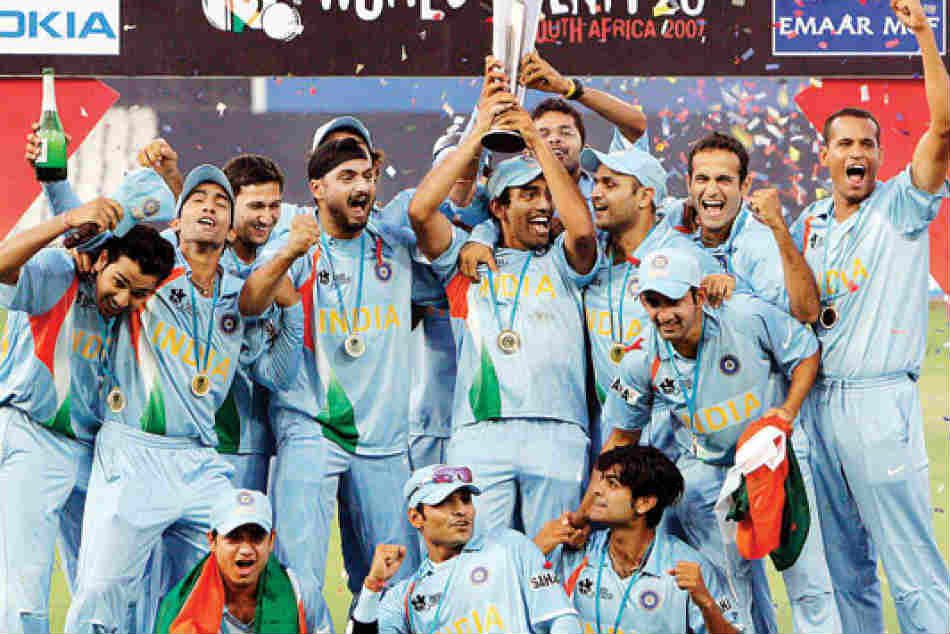
India won the ICC t20 world cup 2007 by beating their rivals Pakistan in the final

Protests over Bangladeshi feminist writer Taslima Nasreen turn into deadly riots; troops are deployed

                                                India’s first commercial space rocket is launched, carrying an Indian satellite.

Government announces its strongest economic growth figures for 20 years – 9.4% in the year to March.

                                                Pratibha Patil becomes first woman to be elected president of India

                                                Maintenance and Welfare of Parents and Senior Citizens Act, 2007

2008                                      Indian car manufacturer Tata launches the Nano, claimed to be the world’s cheapest car.

                                                Union Health and Family Welfare Minister Anbumani Ramadoss dedicates to the nation the first in-vitro fertilisation (IVF) facility in the public sector set up at the All-India Institute of Medical Sciences (AIIMS) in New Delhi.

                                                Central government launches Dhan Laxmi scheme in seven states. Under this scheme an insurance cover of ₹ 100,000 would be provided for the girl child at her birth. The scheme aims to improve the girl-child ratio.

                                                Tata Motors buys two British automobile manufacturing companies, Jaguar and Land Rover, from Ford, their American owners.

                                                First Field Marshal of Indian Army Sam Manekshaw died.

                                                Pope Benedict XVI announces the canonization of Sister Alphonsa Muttathupadathu, the first woman of Indian origin to be canonized as a saint by the Roman Catholic Church, and the first canonized saint of the Syro-Malabar Catholic Church.

                                                Following approval by the US Congress, President George W. Bush signs into law a nuclear deal with India, which ends a three-decade ban on US nuclear trade with Delhi. Known as 123 Agreement.

                                                Aravind Adiga, is awarded the 2008 Man Booker Prize for his debut novel, The White Tiger.

                                                India successfully launches its first mission to the moon, the uncrewed lunar probe Chandrayaan-1.

The 2008 Mumbai attacks (often called the 26/11 attacks) kill 174 people, including 9 of the 10 terrorists from Lashkar-e-Taiba, an Islamic terrorist organisation based in Pakistan. India decides not to attack Pakistan in retaliation.

Shooter Abhinav Bindra wins the gold in the 10 m Air Rifle event at the 2008 Summer Olympics in Beijing. He became the first Indian to win an individual gold medal at the Olympic Games.

Wrestler Sushil Kumar wins a bronze medal in the Men’s 66 kg Freestyle Wrestling category at 2008 Summer Olympics in Beijing.

 Boxer Vijender Kumar became the first Indian boxer to win an Olympic medal when he won bronze medal in the middleweight category at 2008 Summer Olympics in Beijing.

Cricketer Sourav Ganguly announces retirement from Test Cricket.

2009                                     Kapil Dev, Sunil Gavaskar and Bishan Singh Bedi figure among the 55 players in the ICC’s inaugural Hall of Fame list.           

India and Russia sign deals worth $700 million, according to which Moscow will supply Uranium to Delhi.

                                                Resounding general election victory gives governing Congress-led alliance of PM Manmohan Singh an enhanced position in parliament, only 11 seats short of an absolute majority.

                                                Indian Member of Parliament Meira Kumar becomes the first female Speaker of the House of the People.

                                                Delhi court decriminalizes gay sex

                                                Cyclone Aila ravages the east coast

                                                India launches its first nuclear submarine, the INS Arihant.

India successfully test-fires its nuclear-capable “Dhanush” missile off the Orissa coast

Right of Children to Free and Compulsory Education Act (RTE), 2009

2009 Andhra Pradesh helicopter crash: A Bell 430 helicopter crashes during a flight in southern India. Fatalities included Y. S. Rajasekhara Reddy, the Chief Minister of the Indian state of Andhra Pradesh

India in Decades- Part 2- 1990s

1990                                     Muslim separatist groups begin campaign of violence against Hindus in Kashmir resulting in Exodus of Kashmiri Hindus.

                                                Indian Airlines Flight 605 crashes near the HAL Airport in Bangalore.

Leander Paes He won the 1990 Wimbledon junior title and was briefly ranked the number one junior player in the world.

                                                The last Indian troops are withdrawn from Sri Lanka

                                                The government devalued the rupee and initiated economic reforms.

                                                Operation Floodlight (a literacy drive in Ernakulam)

                                                V P Singh announces implementation of Mandal commission report.

Rajiv Goswami, a commerce student in Deshbandhu College attempted Self-immolation as part of Mandal Commission protests of 1990.

V.P. Singh resigns as prime minister and is succeeded by Janata Dal dissident Chandra Shekhar.

TN Sheshan- 10th Chief Election Commissioner of India

1991                                     Rajiv Gandhi is assassinated by a suicide bomber sympathetic to Sri Lanka’s Tamil Tigers.

                                                Indian National Congress leader P.V. Narasimha Rao becomes Prime Minister.

                                                The Government of India constitutes the Company Law Board as an independent quasi-judicial body thus giving up direct control on matters of company law.

An economic reform programme or Economic liberalisation in India is begun by Prime Minister P. V. Narasimha Rao.

The government of India announces its New Industrial Policy, marking the start of India’s economic reforms.

J. Jayalalithaa is sworn in as chief minister of Tamil Nadu for the first time.

Shiv Sena workers led by Shishir Shinde vandalised Wankhede Stadium Cricket pitch to stop a cricket match between India and Pakistan.

Rapid Action Force established by Union Home Ministry.

Union Territory of Delhi was given the special status of ‘National Capital Territory of Delhi.’ 69th Amendment.

1992                                     Scam of Harshad Mehta was exposed by journalist Sucheta Dalal, which consisted of SBI 500 Crore Scam and illegal usage of loophole in banking system. December    

The demolition of the Babri Masjid, triggering the Bombay riots.

                                                Over 200 people die in Cuttack in Odisha, after drinking illegally brewed                                                  liquor in the 1992 Odisha liquor deaths incident.

Konkani language, Nepali language and Meitei language (officially known as Manipuri language) included in the constitutional scheduled languages’ list and made one of the official languages of the Indian Republic through 71st amendment of Constitution of India.

Zee Television, a Hindi language satellite and cable television station, a first officially regular broadcasting service to start in Mumbai.

Indian Rupee exchange rate collapsed. It was 20 Rs to 1 dollar in January 1992 and it became 30 Rs to 1 dollar in December 1992. A huge 50% depreciation in value

Government of India establishes SEBI, stock exchange regulator.

73rd and 74th Amendment Act, 1992

Panchayati Raj institutions and Urban local bodies were given constitutional status.

India bags no medal at the Olympics

1993                                     A series of bomb blasts, thought to be planted by underworld figures, rock the country’s commercial capital of Bombay, killing some 260 people

                                                Latur earthquake shakes Maharashtra

                                                The All Parties Hurriyat Conference is formed in Kashmir.

                                                supreme court recognised a fundamental right to primary education in the right to life under article 21

                                                The Indian Voter ID card, also known as the Electors Photo Identity Card (EPIC), was introduced nationwide in 1993

1994                                     Kupwara massacre in J&K

                                                S. R. Bommai v. Union of India verdict by Supreme Court of India.

                                                Plague breakout in India from Surat

National Telecommunications policy (NTP) in 1994 which brought changes in the ownership, service and regulation of the national telecommunications infrastructure.

                                                Aishwarya Rai was crowned Miss World 1994 in Sun City, South Africa

                                                Pre-Conception and Pre-Natal Diagnostic Techniques Act, 1994

Sushmita Sen became the first Indian woman to win the Miss Universe title

                                                Airports Authority of India Act 1994

1995                                     West Bengal Chief Minister Jyoti Basu made the first call from Kolkata to inaugurate the cellular services in India.

                                                India joins the World Trade Organization (WTO) which has replaced GATT.

                                                Purulia arms drop case

                                                India’s first internet service started by VSNL

                                                Delhi Metro Rail Corporation Limited founded.

1996                                     Congress suffers its worst electoral defeat ever as BJP emerges as the largest single party.                               

The Amarnath Yatra tragedy in which at least 194 pilgrims are reported to have frozen to death in northern Kashmir after being stranded by violent rain and snow storms.

TN Sheshan received the Ramon Magsaysay Award for government service

In general elections the ruling Congress Party is defeated and Bharatiya Janata Party becomes the largest single party in parliament. Phoolan Devi, former bandit queen is elected to Parliament from the Samajwadi Party.

Atal Bihari Vajpayee, leader of the Bharatiya Janata Party, is elected the new prime minister of India, replacing P. V. Narasimha Rao of the Indian National Congress. However, the party does not receive an overall majority and Vajpayee resigns thirteen days later rather than face a no confidence vote, and is replaced by the United Front, led by Deve Gowda. 13 days Government by Vapayee.

Deve Gowda is sworn in as the head of the United Front, a coalition of 13 parties which Congress supported but did not join. Gowda’s new cabinet brings in powerful regional figures, mixing low-caste and Muslim leaders with veterans of the socialist movement.

At least 194 pilgrims are reported to have frozen to death in northern Kashmir after being stranded by violent rain and snow storms in the Amarnath Yatra tragedy.

Michael Jackson arrived in Mumbai as a part of his History World Tour

Chinese President Jiang Zemin begins his three-day visit, the first visit by a Chinese head of state to India.

Leander Paes won a bronze medal for India in men’s singles at the 1996 Atlanta Olympic Games making him the first Asian in Olympic history to win a tennis medal and the only Indian to date. It was India’s sole medal in 1996 Olympics.

World Cup Cricket in India. India loses in Semi Final against Sri Lanka in Kolkata.

1997                                     India’s Missionaries of Charity chooses Sister Nirmala to succeed Mother Teresa as its leader.

                                                Inder Kumar Gujral, a new leader acceptable to Congress, is sworn in as prime minister.

                                                Jagmohan Dalmiya elected as the president of International Cricket Council

                                                K.R. Narayanan is elected president, defeating T.N. Seshan. First Dalit President.

                                                Mother Teresa dies of heart failure in Kolkata.

                                                Elizabeth II pays a state visit to India.

Arundhati Roy wins Booker Prize for her debut novel The God of Small Things.

 In 1997, an autonomous body was established in the name of Prasar Bharti to take care of the public service broadcasting under the Prasar Bharti Act. All India Radio and Doordarshan, which earlier were working as media units under the Ministry of I&B became constituents of the body.

                                                TRAI (telecom regulator) is established.

1998                                     BJP forms coalition government under Prime Minister Atal Bihari Vajpayee.

India and Pakistan carry out nuclear tests, leading to widespread international condemnation.

EVM machines were used on an experimental basis across 25 state assembly constituencies during the assembly elections in Rajasthan, Madhya Pradesh and Delhi.

The National Highway Development Project is launched.

Netaji Subhas Open University started functioning in Kolkata

Gulzarilal Nanda, Interim Prime Minister of India died.

1999                                     Vajpayee makes a historic bus trip to Pakistan to meet Premier Nawaz Sharif and to sign bilateral Lahore peace declaration.

                                                India’s 13-month-old BJP-led Second Vajpayee government falls after losing a no confidence motion in the Lok Sabha by just one vote

                                                Australian Christian missionary Graham Staines and his two sons were burned to death by Bajrang Dal activists in Kendujhar district, Odisha

Indian Army launches operations to evict Pakistani forces occupying Indian positions on the icy heights in Kargil district, known as the Kargil War.

The Odissa Cyclone devastates eastern state of Odisha, leaving at least 10,000 dead.

Leander Paes and Mahesh Bhupathi became the first Indian pair to win doubles title in Wimbledon Championship.

Two crowded trains collide head-on at a railway station in Gaisal, West Bengal killing 286 people.

Parliamentary elections are held, in which the National Democratic Alliance led by Prime Minister Vajpayee’s BJP wins 298 seats, the Congress-led Alliance 134, and others 105.

Heavily armed hijackers take over an Indian Airlines Airbus carrying 189 people from Kathmandu (Nepal) to New Delhi. After a detour to the United Arab Emirates, it lands at Kandahar, Afghanistan, on 25 December. On 28 December the hijackers make three demands, including the release of 35 terrorists and a sum of $200 million. On 31 December the hijackers, who stabbed a man on the plane to death, free their hostages after reaching agreement with India for the release of three terrorists in Kashmir.

Shankar Dayal Sharma, former president of India and Chief Minister of MP died.

India in Decades- First Part 1980s

1980                                     Indira Gandhi returns to power heading the Congress party splinter group, Congress (Indira).

                                                Sanjay Gandhi is killed in a plane crash near Safdarjung Airport.

BJP formed

The Indian Hockey team won the Gold in the Olympics, the last till date.

B. P. Mandal, chairman of the Backward Classes Commission, submitted his report to the government.

The infamous Bhagalpur blinding case which was later depicted in the Bollywood movie ‘Gangajal’

                                                The Forest (Conservation) Act, 1980

1981                                     Subhas Mukhopadhyay, Physician created World’s second IVF died

                                                Infosys is founded in Pune.

                                                Nargis Dutta died

                                                Census in India

Around 45 people got killed due to a stampede at Qutb Minar resulting in closure of Minaret for tourists

1982                                     INSAT-1A launched; deactivated in September.

NABARD established through act of Parliament following B. Sivaraman Committee recommendation.

                                                9th Asian Games held in Delhi.
                                                Doordarshan begins testing of Colour television broadcast in India

                                                Acharya Vinoba Bhave died

Bijon Setu massacre seventeen Ananda Margis were set ablaze at Bijon Setu in Dhakuria in south Kolkata. No one has been convicted of the murders

EVMs introduced in India

Future Prime Minister of India Manmohan Singh becomes Governor of the Reserve Bank of India

1983                                     N. T. Rama Rao NTR’s nine-month-old Telugu Desam assumes power in AP becoming a challenger post Loknayak Jayprakash Narayan against Indira Gandhi.

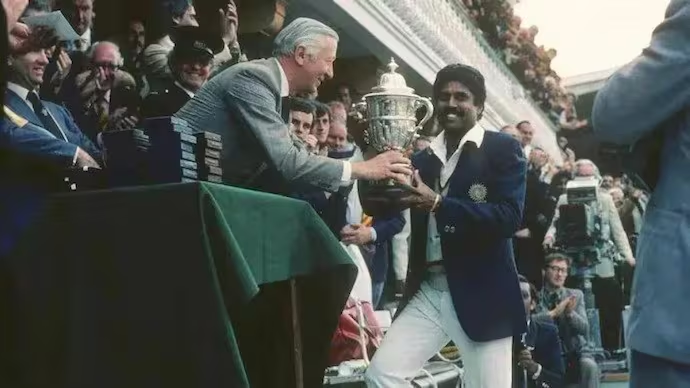
India won World Cup for the first time, in one day international Cricket led by Kapil Dev.

                                                Bandit queen Phoolan Devi surrenders.

Subrahmanyan Chandrasekhar received the Nobel Prize in Physics

Nellie massacre: over 2,000 people, mostly Bangladeshi Muslims, were massacred during the Assam agitation

1984                                     Squadron Leader Rakesh Sharma is launched into space, aboard the Soyuz T-11.

Troops storm Golden Temple, the Sikhs’ most holy shrine, after Jarnail Singh Bhindranwale seeks refuge inside. There are a movement to flush out Sikh separatism and calls for secularism, called Operation Blue Star. “Anti-Sikh Riots 1984”.

Indira Gandhi is assassinated by her bodyguards; her son, Rajiv, takes over.

Many Sikhs were killed due to the assassination of Indira Gandhi. see 1984 anti-Sikh riots.

Bachendri Pal becomes first Indian women to reach the summit of Mount Everest

India’s first metro Kolkata metro started

India bags no medal at the Olympics

Bhopal disaster: A methyl isocyanate leak from a Union Carbide pesticide plant in Bhopal, Madhya Pradesh, kills more than 2,000 people outright and injures anywhere from 15,000 to 22,000 others

The first 3D film in India My Dear Kuttichathan was released

1985                                     Karamchedu massacre of Dalits in Andhra Pradesh.

                                                Narmada Bachao Andolan started by Medha Patkar

                                                Bombing on Air India Flight 182- Kanishka

Terrorist and Disruptive Activities (Prevention) Act TADA came into effect after presidential assent.

India wins B&H World Champion Cricket Trophy. Ravi Shastri Player of the Series.

Indira Gandhi National Open University is established by an Act of Indian Parliament.

The Narcotic Drugs and Psychotropic Substances Act is passed by Parliament came into force.

The Administrative tribunals in Delhi, Mumbai, Calcutta and Allahabad were established by Administrative Tribunals Act, 1985.

Chakravarty Committee was set up by the RBI to review the working of monetary system. Its recommendations had far reached consequences eventually removing India from the 500-year-old silver standard

The 52nd Amendment of the Indian Constitution, enacted in 1985, is also known as the Anti-Defection Law

1986                                      Contract signed between the Government of India and Swedish arms company Bofors for supply of 410 155 mm Howitzer field guns. (Bofors deal)

Operation Black Thunder conducted to flush out remaining Sikh extremists from the Golden Temple

                                                a new National Policy on Education announced by the Government

                                                Inland Waterways Authority of India came into existence.

Supreme Court of India delivered landmark judgement which upholds Freedom of speech and expression in Bijoe Emmanuel Vs State of Kerala case. In this case court said that no law mandates singing National Anthem of India compulsory

Environment Protection Act that was passed in month of May in consequence to Bhopal disaster, came into force.

                                                Consumer Protection Act

Australia-India test cricket match ends in a tie at the M. A. Chidambaram Stadium, Chepauk, Chennai, becoming only the second tied test in the history.

1987                                     India deploys troops for peacekeeping operation in Sri Lanka’s ethnic

conflict.

Board for Industrial and Financial Reconstruction set up and became operational with effect from May reflecting concerns related to Industrial Sickness and republic day

Sunil Gavaskar becomes the first man to score 10,000 runs in Test cricket

The Union territory was split, and Goa was elevated as India’s twenty-fifth state, with Daman and Diu remaining Union Territories

Operation Poomalai by India in Jaffna.

Roop Kanwar case – last known incident of Sati in India, occurred at Sikar district

The South Asian Games are held in Calcutta

World Cup Cricket in India for the first time

Mizoram became the 23rd state of India on February 20, 1987

Arunachal Pradesh became a state on February 20, 1987

1988                                     SEBI was established by The Government of India on 12 April 1988 and given statutory powers in 1992 with SEBI Act 1992 being passed by the Indian Parliament.

                                                Viswanathan Anand became first Grandmaster (chess) from India

                                                Janata Dal formed under the leadership of V. P. Singh.

                                                The National Housing Bank established as an apex body of housing finance and to promote activities in housing development.

                                                Rajya Sabha passes the Sixty-first Amendment of the Constitution of India which brings down voting age from 21 to 18

                                                First Cabinet meeting outside New Delhi held at Sariska, Rajastham

                                                The infamous Rupan Deol Bajaj case involving KPS Gill.

India bags no medal at the Olympics

                                                Maximum lending rate abolished. Banks free to charge customers according to their credit record.

                                                Death of Raj Kapoor

1989                                     Falling public support leads to a Congress defeat in general election.

                                                The National Front (India), headed by V. P. Singh and led by Janata Dal, is formed and storms into power with outside support from BJP and CPI(M).

                                                16-year-old Sachin Tendulkar makes his test debut against Pakistan

                                                The first Darjeeling Gorkha Hill Council elections took place and Gorkha National Liberation Front under leadership of Subhash Ghisingh.

                                                India’s first Intermediate-range ballistic missile, Agni was successfully launched from Chandipur, Odisha. It elevated India into a prestige league of only five nations in world with IRBM strategic capability. This was a landmark moment under Integrated Guided Missile Development Programme

Please note that this additions may be made to this content. So, keep checking.

Duare Sarkar- An Analysis

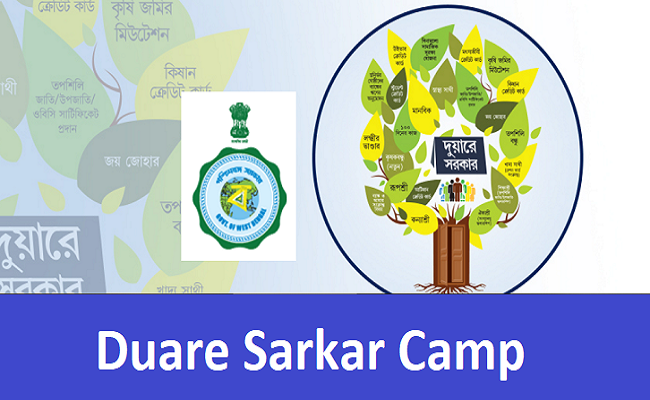
West Bengal government’s flagship governance model – Duare Sarkar. Duare Sarkar is a paradigm shift from traditional public administration to an e-governance-driven service delivery mechanism, in which the government is found available at the doorsteps of citizens, “Leaving no one behind.” The scheme was launched in December, 2020. Through this outreach camps are held at Gram Panchayat level at the blocks and ward level at the municipalities. So far, approximately 1 lakh such outreach camps have been held in different editions of Duare Sarkar and more than 60% of the state population reaped the benefits of such schemes. Schemes like Lakshmir Bhandar, Rupashree, Caste certificate, Swasthya Saathi, Kanyashree, Taposhili Bondhu, Shikshashree, Kisaan Credit Card have been facilitated through Duare Sarkar. As of the latest edition, total 37 schemes have been brought under the umbrella of Duare Sarkar. Under this governance model, intimation is given to the residents about the schedule of such camps and in the first phase, facilitation is done to apply for the schemes whereas in the later phases, applications are collected and services are delivered. Linking of Duare Sarkar with innovative schemes like Paray Samadhan has increased its outreach.

In addition, the Duare Sarkar campaign includes the Paray Samadhan component, which was designed to address the numerous petitions and applications received from citizens. These petitions often highlighted gaps in infrastructure, supply and services, and manpower in public institutions. Through Paray Samadhan, the government seeks to resolve local issues through small interventions and community participation, with the ultimate goal of solving community-level problems at the local level. As part of the project, the West Bengal government has identified the key stakeholders – State Government, Common Service Centres (CSCs), and citizens. A citizen can book an appointment at the Common Service Centre (CSC) to avail of any service. A CSC member will visit the citizen’s address as per the scheduled appointment. During the visit, the CSC executives will provide information and assistance on the service chosen by the citizen

For this unique model of governance, the West Bengal government received ‘platinum award’ from President Draupadi Murmu at the ‘Digital India Awards’, instituted by the Centre’s ministry of Electronics & IT apart from the prestigious SKOCH Award and Duare Sarkar has been universally hailed as a paradigm shift from the regular mode of governance.

How the scheme has changed the governance landscape?

  • Doorstep service delivery
  • Time bound approach
  • All-inclusive approach
  • A shift from bureaucratic red-tapism
  •  Single window mode of governance
  • Humanitarian approach of governance
  • Digital governance
  • Strengthening of the Panchayati Raj Institutions

Criticisms

  • Political manoeuvring in venue selection
  • Growth of intermediaries in the name of facilitation
  • Increase in number of frivolous applications
  • Undeserving beneficiaries are reaping benefits due to lack of scrutiny
  • Lack of accountability in case of failure of service delivery
  • Heavily dependent of internet connectivity which is often below par in rural areas

Way Forward

However, the impact of Duare Sarkar in changing the dynamics of governance in West Bengal is undeniable. It has certainly improved the interaction between the state government and its citizens; between the rural and urban areas. It has bridged the gap between the public and the government while ensuring that public services are extended to the rural populace in a better way. It has brought effectiveness, efficiency, and accountability to the processes that were otherwise lacking in the delivery of public services. The roll-out of the project has led to the seamless delivery of various government welfare programs and initiatives to its citizens in a timely and transparent fashion, bringing about positive change for the betterment of the state. For better governance, the time frame should be enhanced for better scrutiny of the applications. Use of AI may be encouraged for screening of applications. The number of venues may be increased for better dispersion. Overall, holistic management, better accountability with more vigilant approach is recommended for such novel initiative to reach out to maximum beneficiaries.

To get admission in our Sociology Optional, download our app now using the following link

https://play.google.com/store/apps/details?id=co.penny.oecgd&pcampaignid=web_share

Sociology Course Link

https://oecgd.courses.store/679799