


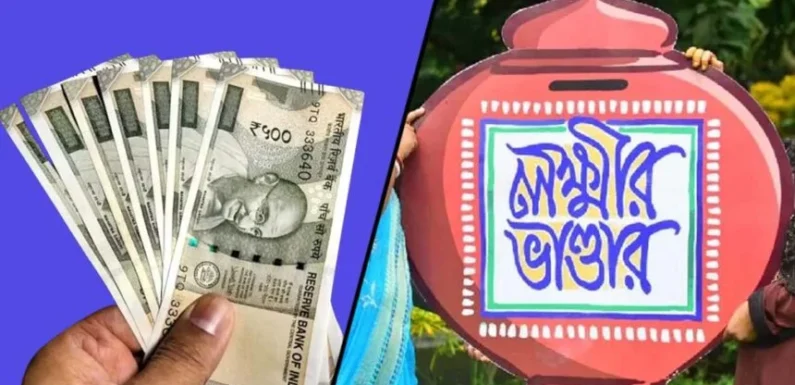
“Lakshmir Bhandar” Scheme is a flagship program launched by the West Bengal Government in February 2021, to provide financial assistance to women from economically weaker sections of society. The acclaimed SKOCH Award in the Women and Child Development category has been bestowed upon West Bengal in recognition of the scheme.
Benefits of 1,200/- every month to women SC/ST households and ₹ 1,000/- per month to other beneficiaries are provided. The scheme aims to empower women and make them financially independent by providing them with a one-time grant to buy essential goods and services. The scheme has already reached approximately 18 million households in the state.
How has it changed the socio-economic scenario in West Bengal?
Women empowerment without empowering the women financially is like day dreaming. Financial liberty however small it may be, can influence the decision-making ability of the women. This scheme has touched this cord of human psyche and therefore succeeded in earning the faith of the women especially the homemakers of rural Bengal. Its benefits for the women in terms of socio-economic perspectives are manifolds
- Economic liberation
- Increased Household Income
- Self-pride
- Filling up critical gaps in running a family
- Boosting rural economy
- Financial inclusion
- Increasing cash flow in the hands of ordinary people stimulates local markets, benefiting the entire community.
- Boost to rural level micro business activities
- Gender equality
- A strategic and political challenge to non-disbursement of funds under MGNREGA by the Central Govt.
A recent study indicates that rural households’ monthly expenses in West Bengal have increased by 10-12 per cent, reflecting an improvement in living standards. The per person monthly expenditure on essential needs such as food, health, education and household costs has risen from Rs 1,764 to Rs 1,940 since the introduction of the scheme.
Why has it been criticized?
- Pressure on the Government exchequer
- Critics argue that it ‘incapacitates’ the women financially instead of empowering them.
- It has been targeted as a ‘Vote Bank Political Ploy’ of the Government
- Its success in the urban areas is limited
- While the scheme aims to provide economic cushioning, it might not focus enough on implementing sustainable livelihood programs that could empower beneficiaries in the long run. This could limit the scheme’s ability to create lasting improvements in their economic conditions
There cannot be any denial of the fact that Bengal’s socio-economic dynamics especially that in rural areas changed drastically after the scheme was introduced. Many of its critics are in reality the beneficiaries of this novel scheme. However, addressing these criticisms and shortcomings is crucial for the scheme’s continued success and to ensure it achieves its objectives of promoting inclusive growth and reducing economic disparities in West Bengal. This necessitates a vigilant approach in overseeing the implementation and outcomes to ascertain its sustainability and effectiveness in the long run. Failure to exercise rigorous oversight might expose the scheme to potential shortcomings and compromises, thereby impeding its capacity to deliver the intended socio-economic benefits to the targeted beneficiaries. Further, unless the women are equipped with learnings to utilize the financial resources to long term economically viable, livelihood options, sustainable economic development may not be possible. Hence, stringent monitoring mechanisms and comprehensive evaluation processes of the Government of West Bengal are indispensable in fostering the scheme’s resilience and substantiating its efficacy in fostering inclusive growth and addressing the prevailing socio-economic disparities in the state.
To get admission in our Sociology Optional, download our app now using the following link
https://play.google.com/store/apps/details?id=co.penny.oecgd&pcampaignid=web_share
Sociology Course Link
