


The first mobile phone call in India was made on July 31, 1995. The phone used was a Nokia handset on the Modi Telstra network (India’s first mobile network), which operated in Kolkata (then Calcutta). The first call was made by Jyoti Basu, then Chief Minister of West Bengal, to Sukh Ram, then Union Communications Minister. However, the first mobile phone set in India was Motorola DynaTAC 8000X.
Prof. S. P. Chakravarti is known as the father of electronics and telecommunications engineering in India
India’s telecommunication network is the second largest in the world by number of telephone users (both fixed and mobile phones) with over 1.19 billion subscribers as of September 2024. India is also home to the second highest internet users in the world.
In 1850, the first experimental electric telegraph line was started between Kolkata and Diamond Harbour.
First wireless telegraph station established between Sagar Island and Sandhead island, UK.
1913–1914 – First Automatic Exchange installed in Shimla.
First Electronics and Telecommunications Engineering department started in India at the Government Engineering College, Jabalpur IN 1947
1960 – First subscriber trunk dialling (STD) route commissioned between Lucknow and Kanpur.
1995 – First mobile telephone service started on non-commercial basis on 15 August 1995 in Delhi.
1995 – Internet Introduced in India starting with Laxmi Nagar, Delhi 15 August 1995
Radio broadcasting was initiated in 1927 but became state responsibility only in 1930. In 1937 it was given the name All India Radio and since 1957 it has been called Akashvani.
In 1997, an autonomous body was established in the name of Prasar Bharti to take care of the public service broadcasting under the Prasar Bharti Act. All India Radio and Doordarshan, which earlier were working as media units under the Ministry of I&B became constituents of the body.
In 1985, the Department of Telecom (DoT) was separated from Indian Post & Telecommunication Department. DoT was responsible for telecom services in entire country until 1986 when Mahanagar Telephone Nigam Limited (MTNL) and Videsh Sanchar Nigam Limited (VSNL) were carved out of DoT to run the telecom services of metro cities (Delhi and Mumbai) and international long-distance operations respectively
National Telecommunications policy (NTP) in 1994 which brought changes in the ownership, service and regulation of the national telecommunications infrastructure.
In 1997, the government set up TRAI (Telecom Regulatory Authority of India) which reduced the interference of Government in deciding tariffs and policymaking.
the Indian mobile market has turned into a four-player market, with Jio as the number-one player, with revenue market share of 34%, Airtel India in second position, with revenue market share of 28% and Vi, with revenue market share of 27%. The government operator BSNL/MTNL is in the distant 4th position, with an approximate market share of 11%
Television broadcasting began in India in 1959 by Doordarshan
FM broadcasting began on 23 July 1977 in Chennai, then Madras.
Radio City Bangalore, started on 3 July 2001, is India’s first private FM radio station.
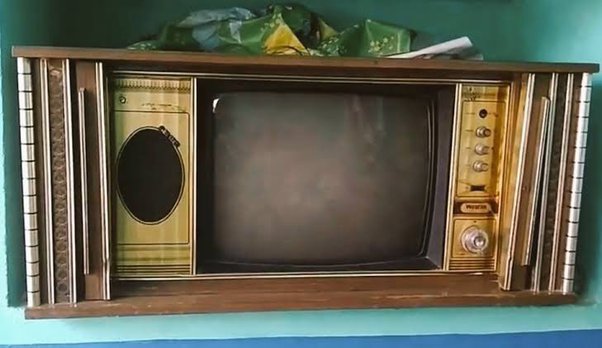
India’s first colour television broadcast was a test run by Doordarshan on April 25, 1982. This marked a significant step in Indian television history, transitioning from black and white to vibrant colour broadcasts. The official launch of colour television transmissions followed on August 15, 1982.
India’s first television serial was Hum Log, which began airing on Doordarshan on July 7, 1984.
In October 1992, India saw the launch of Zee TV, the first privately owned Indian channel to broadcast over cable followed by the Asia Television Network (ATN).
The first Indian over-the-top (OTT) platform was BigFlix, launched by Reliance Entertainment in 2008.
In 2010 Digivive launched India’s first OTT mobile app called nexGTv.
India’s first publicly available internet service, which included broadband options, was launched by Videsh Sanchar Nigam Limited (VSNL) on August 15, 1995.
The first male VJ in India was Kenny (of Irish-Italian descent), who joined Channel [V] soon after its launch according to Hindustan Times.
Ameen Sayani is widely recognized as India’s first radio jockey. He is best known for hosting the popular “Binaca Geet Mala” program on Radio Ceylon starting in 1952.
The first live sports broadcast in India was a cricket match, specifically the India vs. England Test match in 1982
