

1901- December 10: First Nobel Prizes awarded.
1904- U.S. began construction of the Panama Canal
1905- Albert Einstein’s formulation of special relativity
1907- Bakelite, the world’s first fully synthetic plastic, invented in New York by Leo Baekeland, who coins the term “plastics”.
1911- Roald Amundsen first reaches the South Pole
1912- The African National Congress is founded. End of the Chinese Empire. Republic of China established. First Balkan war.
1913- Second Balkan war
1914- Panama Canal opens. In the Banana Wars, the United States occupation of Haiti begins. World War I started.
1917- Russian Revolution. The first Pulitzer Prizes announced. October Revolution in the Russian Republic.
Spanish Flu- 1918-1920
1918- The Armistice of 11 November 1918 ends World War I.
1919- Paris Peace Conference writes Treaty of Versailles that punishes Germany. Communist International established in the Kremlin to coordinate Communist parties worldwide. The International Labour Organization is established.
1920- January 10: League of Nations founded. Prohibition in the United States begins.
1921- The Italian National Fascist Party is established by Benito Mussolini.
1922- British Broadcasting Corporation (BBC) established. Irish Free State is established, while the province of Northern Ireland is created within The United Kingdom. Fascism first appeared in Italy with the rise to power of Benito Mussolini in 1922
1923- Time Magazine is first published. Mustafa Kemal Atatürk becomes the first President of the newly established Republic of Turkey.
1924- Vladimir Lenin died. The first edition of the Winter Olympic Games is hosted in Chamonix, France. The Caliphate is abolished by Kemal Atatürk. Ramsay MacDonald becomes Prime Minister of the United Kingdom; first Labour Party prime minister.
1925- Hitler’s Mein Kampf is published.
1927- The United Kingdom of Great Britain and Ireland officially becomes the United Kingdom of Great Britain and Northern Ireland. The Jazz Singer, the first “talkie”, is released. World population reaches two billion. Soviet general secretary Joseph Stalin becomes dictator of the Soviet Union.
1929- The first Academy Awards are presented. Wall Street Crash of 1929 and the beginning of the Great Depression.
1931- Statute of Westminster creates the British Commonwealth of Nations. Christ the Redeemer, one of the seven wonders of the world completed.
1932- The neutron is discovered by James Chadwick. The Nazi party becomes the largest single party in the German parliament.
1933- January 30: Adolf Hitler becomes Chancellor of Germany. Prohibition in the United States is abolished. Germany announces its withdrawal from the League of Nations and the World Disarmament Conference, after the U.S., the U.K. and France deny its request to increase its defence armaments under the Versailles Treaty. Japan announces it will leave the League of Nations.
1934- With the death of Paul von Hindenburg, Hitler declares himself Führer of Germany. Mao Zedong begins the Long March.
1935- Reza Shah of Iran asks the international community to formally adopt the name “Iran” to refer to the country, instead of the name “Persia”.
1936- Beginning of the Spanish Civil War.
1937- Snow White and the Seven Dwarfs is the first feature-length animated movie released.
1939- End of Spanish Civil War; Francisco Franco becomes dictator of Spain. Nazi invasion of Poland triggers World War II in Europe. Soviet invasion of Poland begins 16 days later. Britain and France declare war on Germany; World War II begins. World War II officially began on 1 September 1939, when Hitler unleashed his Blitzkrieg, or lightning war, against Poland
1940- Battle of Britain, the first entirely aerial military campaign, becomes the first significant defeat for the Axis powers. Leon Trotsky is assassinated in Mexico.
1941- December 7: The Japanese Attack on Pearl Harbor leads to the USA joining World War II.
1943- A famine in Bengal kills up to 3 million people.
1944- June 6: D-Day landings in Normandy. Adolf Hitler survives the 20 July plot to assassinate him led by Claus von Stauffenberg. First operational electronic computer, Colossus, comes online.
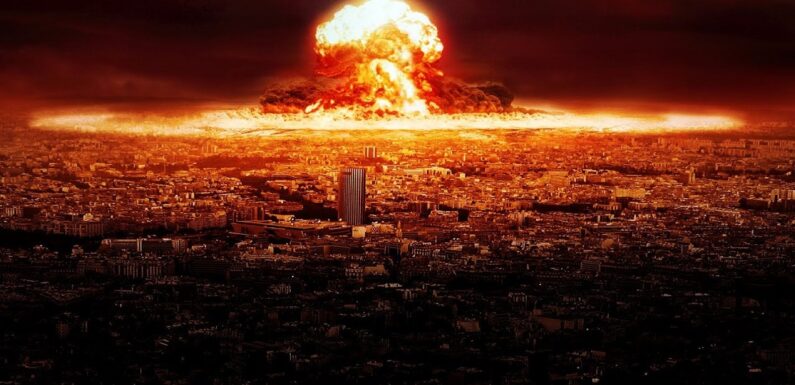
1945- In early February 1945, the three Allied leaders, Franklin Roosevelt, Winston Churchill, and Joseph Stalin, met at newly liberated Yalta in the Crimea in the Soviet Union in the Yalta Conference. Hitler committed suicide on 30 April 1945. Execution of Mussolini. End of World War II in Europe. The Holocaust ends after ~12 million deaths, including 6 million Jews. The Allied team produced two nuclear weapons for use in the war, one powered by uranium-235 and the other by plutonium as fissionable material, named “Little Boy” and “Fat Man”. These were dropped on the Japanese cities of Hiroshima and Nagasaki on 6 and 9 August 1945 each. Following the end of the war, the Allies famously prosecuted numerous German officials for war crimes and other offenses in the Nuremberg Trials
June 26: United Nations founded (UN Charter).
1946- First images of the Earth taken from space. In March 1946, Winston Churchill gave a now famous speech while visiting Westminster College in the US which is usually credited as the first use of the term Iron Curtain to refer to the separation of Soviet and Western areas of influence in Europe
1947- Harry Truman establishes the Truman Doctrine of containment of Communism.
1948- The World Health Organization (WHO) founded. The Organisation for Economic Co-operation and Development (OECD) founded. The Soviet Sever-2 expedition becomes the first party to indisputably set foot on the North Pole. The Marshall Plan, an American initiative for foreign aid of $13 billion to 16 Western European countries, comes into effect. The Arab–Israeli War begins. December 10: The Universal Declaration of Human Rights adopted by the United Nations General Assembly.
Beginning of apartheid in South Africa.
1949- The First Indo-Pakistani War ends. COMECON founded by USSR and the Eastern Bloc. The Creation of NATO. Creation of NATO-backed Federal Republic of Germany (West Germany). Albert II became the first mammal launched into space. October 1: Chinese Communist Revolution: Establishment of the People’s Republic of China under CCP Chairman Mao Zedong; The Republic of China relocates to Taiwan. Creation of the socialist German Democratic Republic (East Germany).
1950- North Korean invasion of South Korea begins the Korean War. UN forces reclaim Seoul and invade North Korea. Alan Turing publishes the Turing test, one of the most influential yet controversial concepts in artificial intelligence research.
1952- Queen Elizabeth II becomes Monarch of the Commonwealth realms. Egyptian Revolution under Gamal Abdel Nasser overthrows King Farouk and ends British occupation.
1953- Death of Stalin. Coronation of Elizabeth II. The first colour television is produced.
1955- Death of Albert Einstein. The first large-scale Asian–African or Afro–Asian Conference also known as the Bandung Conference, was a meeting of Asian and African states, most of which were newly independent, which took place on 18–24 April 1955 in Bandung, West Java, Indonesia. Signing of the Warsaw Pact.
1956- Nasser’s nationalisation of the Suez Canal triggers the Suez crisis.
1957- Launch of Sputnik 1 and the beginning of the Space Age. Treaty of Rome, which would eventually lead to the European Union. Laika becomes the first animal launched into Earth orbit. Beginning of the Asian flu in China, leading to a worldwide pandemic that lasts until the following year.
1958- NASA formed.
1959- Beginning of the Vietnam War, which lasts until 1975. First documented AIDS cases.
1960- First crewed descent to the deepest point on Earth, the Mariana Trench. Sirimavo Bandaranaike becomes Prime Minister of Ceylon and the first female Prime Minister in the world. The Beatles form in Liverpool. Year of Africa: Independence of 17 African nations.
1961- Construction of the Berlin Wall. UN Secretary General Dag Hammarskjöld dies in a plane crash.
1962- The Cuban Missile Crisis nearly causes nuclear war.
1963- Martin Luther King Jr. delivers “I Have a Dream” speech at the March on Washington for Jobs and Freedom. Assassination of John F. Kennedy. Vice President Lyndon B. Johnson assumes office as President of the United States.
1967- The Six-Day War, a conflict between Israel and Arab states that resulted in Israel occupying the Gaza Strip, the Sinal Peninsula, the West Bank and the Golan Heights. Association of Southeast Asian Nations (ASEAN) founded.
1968- Assassination of Martin Luther King Jr.
1969- June 20- Apollo 11 Moon landing, in which Neil Armstrong and Buzz Aldrin become the first two humans on the Moon.
1971- Idi Amin seizes power in Uganda.
1972- September 5–6: The Munich massacre, perpetrated by the Black September terrorist organization and aimed at the Israeli Olympic team, results in 17 total deaths.
1973- The first space station, Skylab, is launched. The Yom Kippur War also known as the 1973 Arab–Israeli War, the fourth Arab–Israeli War, the October War or the Ramadan War was fought from 6 to 25 October 1973 between Israel and a coalition of Arab states led by Egypt and Syria.
1974- Watergate scandal: Resignation of Richard Nixon; Vice President Gerald Ford assumes office as President of the United States, the first person not elected as either President or Vice President to take the role.
1975- Microsoft founded in Albuquerque, New Mexico, by Bill Gates and Paul Allen. The Fall of Saigon ends the Vietnam War.
1976- 1976 Argentine coup d’état leads to a military dictatorship in Argentina. Steve Wozniak invents the Apple I and Steve Jobs then convinces Wozniak to sell the system, giving birth to Apple Computer. Operation Entebbe, a successful counter-terrorist hostage-rescue mission carried out by commandos of the Israel Defense Forces (IDF) at Entebbe Airport in Uganda.
1978- The War in Afghanistan begins with the Saur Revolution. Discovery of Pluto’s moon Charon. The Camp David Accords are signed between Israel and Egypt. Louise Brown is the first child successfully born after her mother received in vitro fertilisation treatment. Invention of artificial insulin.
1979- The Iranian Revolution ends. Shah Reza Pahlavi is overthrown and forced into exile. Margaret Thatcher becomes the first female Prime Minister of the United Kingdom. The Uganda–Tanzania War ends with defeat for Uganda and the exile of Idi Amin. The Iran hostage crisis begins. The Soviet–Afghan War begins with the Soviet invasion of Afghanistan. Implementation of China’s one-child policy.
1980- WHO announces the eradication of smallpox. Launch of Cable News Network (CNN). Beginning of the Iran–Iraq War.
1981- Iran releases the 52 U.S. hostages held in Tehran after 444 days. The AIDS epidemic officially begins in the United States, having originated in Africa; making this to be an ongoing pandemic.
1982- The Hama massacre in Syria, a conflict between Syria and the Muslim Brotherhood, results in a decisive Syrian victory and about 10,000 deaths. Falklands War between UK and Argentina. The Falklands War) was a ten-week undeclared war between Argentina and the United Kingdom in 1982 over two British dependent territories in the South Atlantic: the Falkland Islands and its territorial dependency, South Georgia and the South Sandwich Islands. The conflict began on 2 April 1982, when Argentina invaded and occupied the Falkland Islands, followed by the invasion of South Georgia the next day.
First Israeli invasion of Lebanon begins. Michael Jackson releases his landmark album Thriller, the best-selling album of all time.
1983- The Bombing of U.S. Embassy in Beirut results in 63 deaths. Sri Lankan Civil War begins. End of dictatorship in Argentina.
1984- The human immunodeficiency virus (HIV) is recognized as the cause of HIV/AIDS, and research on zidovudine and other treatments gets underway.
1985- 73 years after its infamous disaster, the wreck of the Titanic is found off the coast of Newfoundland by a joint French–American expedition led by Jean-Louis Michel of IFREMER and Robert Ballard of the Woods Hole Oceanographic Institution. Windows 1.0, the first Microsoft Windows operating system, released. First use of DNA fingerprinting.
1986- The Space Shuttle Challenger breaks apart 73 seconds into its flight, killing all seven crew members aboard. Return of Halley’s Comet. The Chernobyl disaster in Ukraine.
1987- The Intermediate-Range Nuclear Forces Treaty is signed in Washington, D.C., by U.S. President Ronald Reagan and Soviet leader Mikhail Gorbachev.
1988- Beginning of the perestroika (“restructuring”), a political movement for reformation within the Communist Party of the Soviet Union during the 1980s associated with Gorbachev and his glasnost (“openness”) policy reform. Morris worm, first computer virus distributed through the Internet. Israeli–Palestinian conflict; beginning with the independent State of Palestine being proclaimed from Algiers.
1989- Revolutions of 1989 bring down Communist and authoritarian regimes around the world. Tiananmen Square Massacre, in which troops armed with assault rifles and accompanied by tanks fired at student-led demonstrations held in Tiananmen Square, Beijing, resulting in an undisclosed number of deaths (estimated in hundreds to thousands). An unknown Chinese protester, “Tank Man”, stands in front of a column of military tanks on Chang’an Avenue in Beijing, temporarily halting them, an incident which achieves iconic status internationally through images taken by Western photographers. November 9: Fall of the Berlin Wall; the Revolutions of 1989 and the collapse of the Soviet Bloc begin in Europe, which leads to the end of the Cold War. The Communist government of Czechoslovakia falls during the Velvet Revolution.
1990- Nelson Mandela is released from Victor Verster Prison, Robben Island outside Cape Town, South Africa after 27 years as a political prisoner. End of the dictatorship of Augusto Pinochet in Chile. Gulf War begins. German reunification. Tim Berners-Lee publishes the first web site, which described the World Wide Web project. Myanmar Armed Forces place Aung San Suu Kyi under house arrest.
1991- The Gulf War ends in US withdrawal and a failed uprising. Elizabeth II becomes the first British monarch to address the U.S. Congress during a 13-day royal visit in Washington, D.C. Boris Yeltsin becomes the first President of Russia. Michael Schumacher, regarded as one of the greatest Formula One drivers in history, makes his Formula One debut at the Belgian Grand Prix.
1992- The Maastricht Treaty is signed, creating the European Union. The Bosnian War begins.
1993- Velvet Divorce between Czech Republic and Slovakia. Oslo accords end First Intifada between Israel and Palestine. Battle of Mogadishu (Black Hawk Down) leaves over 3,000-4,000 people dead. Colombian drug lord Pablo Escobar is gunned down by police.
1994- Establishment of North American Free Trade Agreement (NAFTA). End of apartheid in South Africa and election of Nelson Mandela. The First Chechen War begins. Construction of the Three Gorges Dam begins in Hubei, China.
1995- Establishment of the World Trade Organization. NATO bombing raids in Bosnia end the Bosnian War. Release date of Windows 95.
1996- A sudden storm engulfs Mount Everest with several climbing teams high on the mountain, leaving eight people dead. By the end of the month, at least four other climbers die in the worst season of fatalities on the mountain to date. Dolly the sheep becomes the first successful cloned mammal. The Taliban government takes control of Afghanistan, creating the Islamic Emirate of Afghanistan.
1997- Diana, Princess of Wales is killed in a car accident in Paris. Handover of Hong Kong from the United Kingdom to China.
1998- Nicholas II of Russia and his family are buried in St. Catherine Chapel, 80 years after he and his family were killed by the Bolsheviks in 1918. Google is founded by Larry Page and Sergey Brin. The impeachment of Bill Clinton begins as a result of the Clinton–Lewinsky scandal.
1999- Hugo Chavez becomes President of Venezuela. Euro introduced to the international markets. Coins and banknotes enter circulation in participating countries in 2002. The Second Chechen War begins. Vladimir Putin becomes the President of Russia. The U.S. turns over complete administration of the Panama Canal to the Panamanian Government, as stipulated in the Torrijos–Carter Treaties of 1977
2000- Dot-com bubble bursts, causing stock markets worldwide to crash. Pope John Paul II apologizes for the wrongdoings by members of the Roman Catholic Church throughout the ages. Vladimir Putin is elected President of Russia. Israeli withdrawal from Lebanon. The 2000 Camp David Summit, aimed at reaching a “final status” agreement between the Palestinians and the Israelis, was held between United States president Bill Clinton, Israeli prime minister Ehud Barak and Palestinian Authority chairman Yasser Arafat.
The Battle of the Atlantic took place from 1942 to 1944 and was described as “longest, largest, and most complex naval battle in history”
Johannes Erwin Eugen Rommel popularly known as The Desert Fox was a German field marshal during World War II
Two wars and a near-war in the 1950s became the focus for capitalist versus communist struggle. The first war was the Korean War, fought between People’s Republic of China-backed North Korea and mainly United States-backed South Korea. The Korean Peninsula was a Japanese colony between 1910 and 1945, when Soviet and American troops invaded and divided it along the 38th parallel. A communist government controlled the territory north of the border and a capitalist one controlled the South, with both authorities considering the other one illegitimate and claiming sovereignty over the entire peninsula. North Korea’s invasion of South Korea on 25 June 1950 led to United Nations intervention. General Douglas MacArthur led troops from the United States, Canada, Australia, Great Britain, and other countries in repulsing the Northern invasion. However, the war reached a stalemate after Chinese intervention pushed U.N. forces back, and an Armistice ended hostilities in July 1953, leaving the two Koreas divided and tense for the rest of the century.
After the second war, the Vietnam War, was perhaps the third most visible war of the 20th century. After the French withdrawal from its former colony, on 21 July 1954, Vietnam became partitioned into two halves, much like Korea, along the 17th parallel. Fighting between North and South eventually escalated into a regional war. The United States provided aid to South Vietnam and contributed to propaganda efforts against the North, but was not directly involved until the Gulf of Tonkin Resolution, passed in reaction to a supposed North Vietnamese attack upon American destroyers, brought the U.S. into the war as a belligerent. The war was initially viewed as a fight to contain communism, but, as more Americans were drafted and news of events such as the Tet Offensive and My Lai massacre leaked out, American sentiment turned against the war. U.S. President Richard Nixon was elected partially on a promise to end the war. This Nixon Doctrine involved a gradual pullout of American forces; South Vietnamese units were supposed to replace them, backed up by American air power. The plan went awry, with Nixon deliberately sabotaging peace talks for political gain, and the war spilled into neighboring Cambodia while South Vietnamese forces were pushed further back. Eventually, the U.S. and North Vietnam signed the Paris Peace Accords, ending U.S. involvement in the war. With the threat of U.S. retaliation gone, the North proceeded to violate the ceasefire and invaded the South with full military force. Saigon was captured on 30 April 1975, and Vietnam was unified under Communist rule a year later, effectively bringing an end to one of the most unpopular wars of all time
The Cuban Missile Crisis illustrates just how close to the brink of nuclear war the world came during the Cold War. Cuba, under Fidel Castro’s socialist government, had formed close ties with the Soviet Union. This was obviously disquieting to the United States, given Cuba’s proximity. When Lockheed U-2 spy plane flights over the island revealed that Soviet missile launchers were being installed, U.S. President John F. Kennedy instituted a naval blockade and publicly confronted the Soviet Union. After a tense week, the Soviet Union backed down and ordered the launchers removed, not wanting to risk igniting a new world war
With Cold War tensions running high, the Soviet Union and United States took their rivalry to the stars in 1957 with the Soviet launch of Sputnik. The USSR reached several important milestones, such as the first craft on the Moon (Luna 2) the first human in space (Yuri Gagarin) and the first spacewalk (Alexey Leonov on Voskhod 2). The U.S. pulled ahead eventually with its Mercury, Gemini, and Apollo programs, which culminated in Apollo 11 astronauts landing on the Moon on 20 July 1969
On 26 December 1991, the Soviet Union was officially disbanded into its constituent republics, thus putting a final line under the already exhausted Cold War
