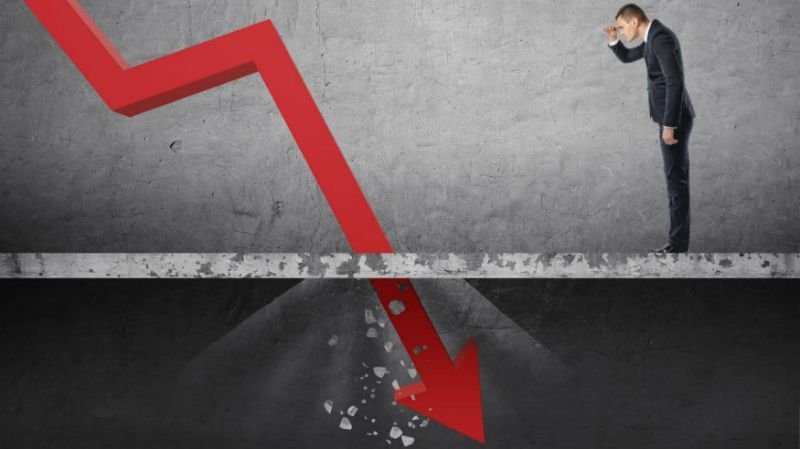
Many of us keep wondering why the share prices in the stock market keep changing. In this article we shall discuss about how such changes occur, what are the factors that cause such changes and how behavioral economics plays a key role in the changes.
Let’s start with two practical examples. During the initial phases of lockdown, the hand sanitizer was the most in-demand product in the market. But as the Indian companies were not prepared for such unforeseen situation, the production and supply were very less. Hence the prices of such sanitizers shot up. Those few companies with ready stock of the product kept on supplying the market and made merry while we paid heavy prices for the product. Soon, all the companies started making such items. Product mobility and movement also normalized to certain extent and the market was flooded with such products. Thus, even though the demand was high, supply was overwhelming and the prices started falling. Nowadays such sanitizers are available everywhere at bare minimum prices.
Shares of a company are also of the same nature. There are buyers and sellers in the market who trade in the equity shares. Suppose a company has one hundred shares. Let us assume that the price of each share is Rs 10/ only. Now there is a news in the market that the company is going to pay a dividend of rupees two per share. Now suddenly people will start buying the share. There will be huge demand for the share. But people owing the shares are not in a mood to sell their shares. They are waiting for the prices to explode. Now there is a hue and cry in the market to get the share of the company. And the prices start shooting up. Now the price comes to say, fifteen rupees per share. Company pays dividend. Now, in the imminent future there is no expectation of a positive news from that company. People have already bagged their dividends. Suppose one person had bought ten shares at rupees ten. His total investment was rupees hundred. Now his share value has become rupees one hundred and fifty and his dividend income is rupees twenty. So, his profit from an investment of rupees hundred is rupees seventy. So, he sells his share. Now this is a common trend and the shareholders are in a mood to book profit and sell the shares. As a result, suddenly there is a huge supply of the same share in the market. And the share price starts dropping. Remember what happened with the price of sanitizers when the supply was enormous? Same pattern is followed here as well. The prices kept falling till the price of each share was rupees nine and then there was some stability in the share as the share was now available at an attractive price. Suddenly, there is a news of the quarterly results of the company and there is a speculation that the company is doing wonderful business and may show brilliant returns in the quarterly reports. So again, there is the resumption the buying psychology in the market and people start investing in the shares with the hope of booking profit after the results are out. The price again starts shooting and as the results are out, it is found that the company has underperformed and its profit has lessened than the previous quarter and even lower than the same quarter in the previous year on a year-on-year basis. Now, the investors become panicked and start selling the shares. Result, the prices start falling once again. This cycle goes on and the trade continues.
What are the scenarios that affect the prices of a share?
- Dividend payout
- Quarterly results
- Annual results
- Market boom
- Stock split, bonus or buyback
- Merger of the company or acquisition
- Share delisting
- Change in the management
- Major corporate decision
- Any scam or scandal of the company
- Major national or international incident
- Other social, economic or political factors
Overall, the trades largely depend on the behavioral economics. When there is a feel good about a company, people start investing more in the company and whilst there is a negativity the market sentiments pull back and the prices drop. There are however, exception to this normal scenario. But that is an advanced level discussion and not a subject matter of this article. That will be covered in a future article.
I hope that your idea about the topic is now very much clear. For any doubts, you may leave a comment. You can also read the first chapter of this ongoing series here. However, the part one of the series may not be suitable for the students.
And do not forget to read